
King George VI at Glamis Castle: a royal love story in Scotland
I was so excited to see the sign. Glamis Castle. Just a simple little road sign on Dundee Road in Angus, pointing to the right and sporting a neat little silhouette of a castle. I had never been to Scotland before, but here I was. Haunted, storied, enchanted, wonderful Glamis.
Going to Glamis was sort of a distant dream - somewhere I longed to go, but never really thought I would. When I saw the sign I almost could not believe it. I knew what to expect - the long, unhurried ride up the driveway, the medieval turrets, the pink-toned sandstone. But it was seeing the sign that first hit me. I’d arrived.
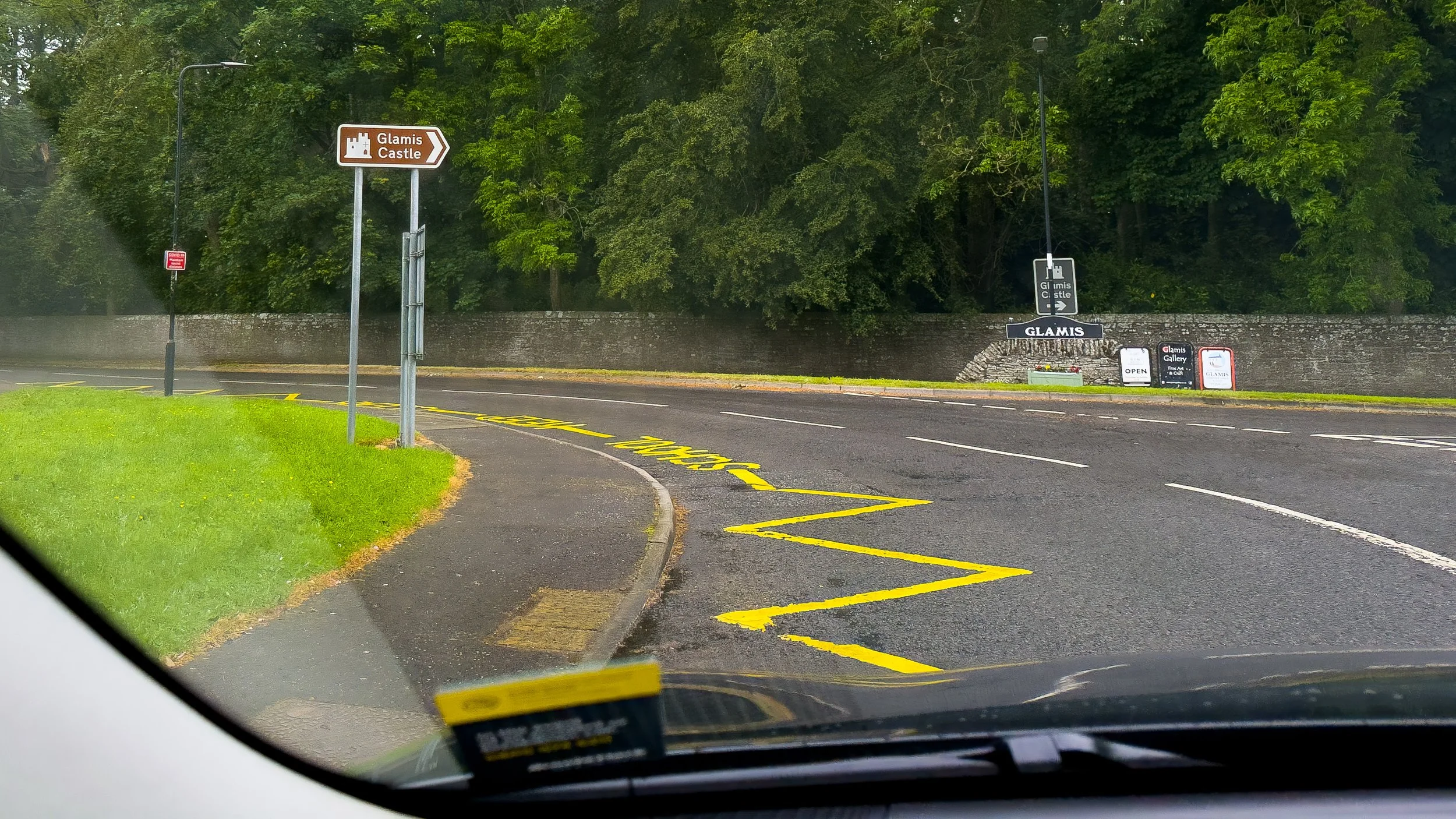
What’s that signpost ahead? It’s Glamis Castle! All photos by John O’Boyle / The Empty Nest Explorers unless otherwise credited.
Let me explain. For the last few years I’ve had a little passion project. I’ve become a bit of an amateur historian - or maybe it’s more accurate to say a keen student, since I’m always learning - of King George VI.
Glamis Castle (pronounced “glahms”) holds a very special place in Royal history, as it was the Scottish childhood home of Queen Elizabeth The Queen Mother, and the birthplace of Princess Margaret, the younger sister of Queen Elizabeth II, the longest reigning British monarch in history. The two young princesses would visit Glamis for summer holidays, and to this day, you can view letters they wrote to their grandparents on display at the castle.
But in the center of that connection, and something that often seems overlooked or brushed over, is King George VI.
He affectionately referred to his family unit as “we four”. But it seems to me when I read an article about Glamis, it’s only three members of the family that are ever referenced. The Queen Mother grew up there, Queen Elizabeth II spent youthful holidays there, Princess Margaret was born there. The king somehow gets left out of the mix.
As much as these royal ladies are adored, they would all be lost to history if it weren’t for the man who made them all “royal” - Prince Albert, aka “Bertie”, second son of King George V, who would later reluctantly take the throne as King George VI after his brother’s impulsive abdication.
As the shy Duke of York, he fell hard for the vivacious Lady Elizabeth, and Glamis Castle was a backdrop to, and perhaps even a character in, their protracted courtship, and later to their happy marriage.
He not only fell in love with her, but with the warmth of the family atmosphere that he experienced at Glamis, and also at the Bowes Lyons’ Hertfordshire home, St Paul’s Walden Bury.
What he experienced there was what he always longed for. A closeknit, affectionate and happy family. He himself had grown up in a somewhat stuffy and rigid formal household, and he never really felt the warmth of his parents’ devotion. It was there - just not readily demonstrated. King George V and Queen Mary worried more about their children being virtuous than being happy.
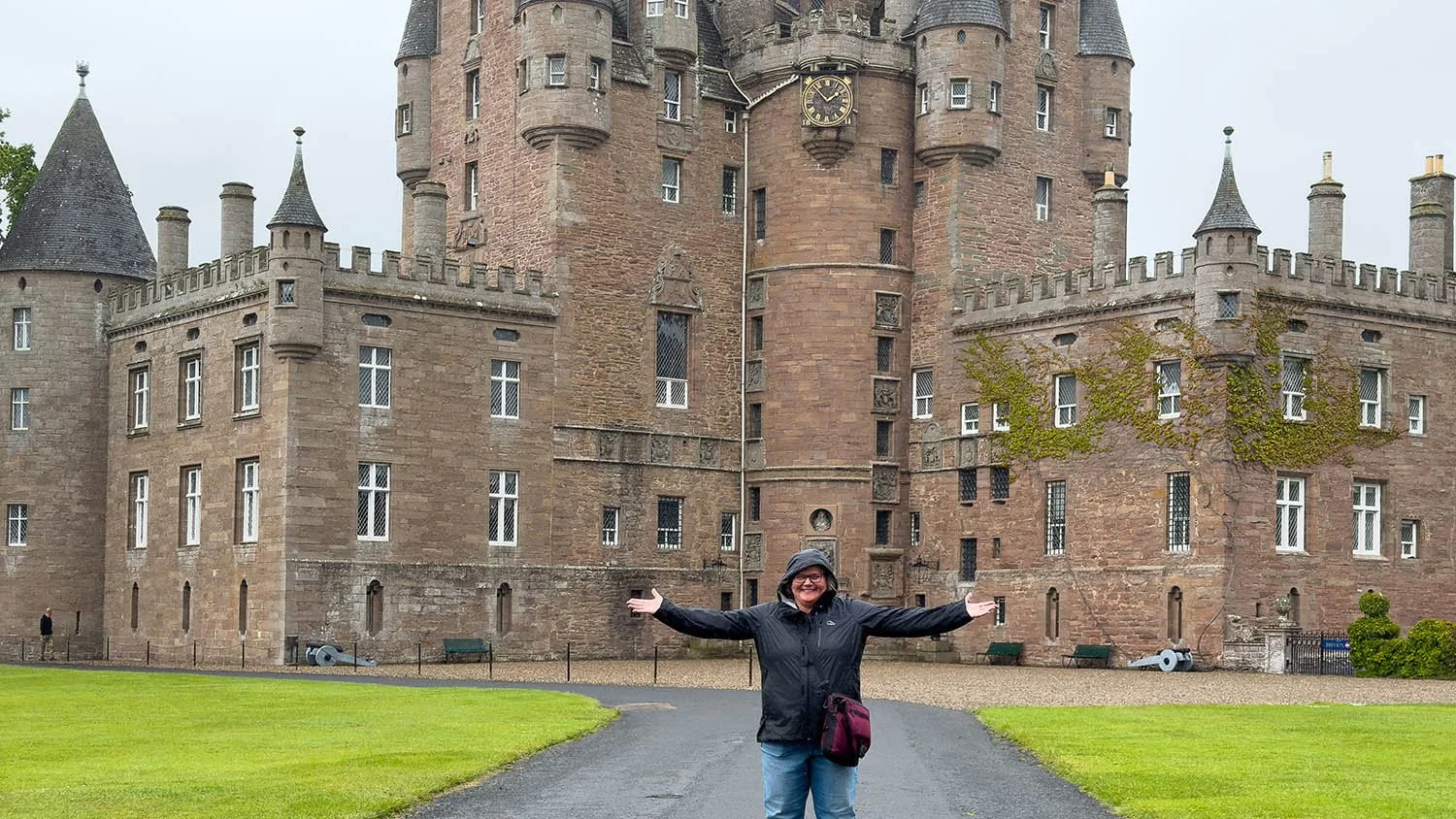
Arrived! Debbie at Glamis Castle.
There is no doubt that his interest in Elizabeth is what brought the Duke to Glamis in the first place, - in fact, the cheeky prince first invited himself! - but in my mind, the experience he would have at Glamis is what sealed it for him. It would also affect how he himself would behave as a parent.
So while the ghost stories associated with Glamis are a bit of fun, to me it’s a house that holds a love story. And that is the kind of ghost-hunting that interested me. The human story.
Visiting Glamis Castle today
It’s actually pretty awesome that you can visit Glamis Castle today, some one hundred years after these events took place, and stand in the footsteps of Bertie and Elizabeth. (Yes I’m going to go ahead and refer to them that way for the rest of this post, because, hey, I’ve stood in their bedroom, we are on that level now. 😉).
Thanks to the continued hospitality of the more recent Earls of Strathmore, parts of the castle and the formal gardens are open to the public, though the interior is only by guided tour.
We had a full and happy day visiting Glamis and taking the tour, and you can read all about it, with our impressions and all the practical information you need to plan your own visit, in our post Visiting Glamis Castle in 2026: Our Complete Guide.
But for now, it’s all about the love.
| 📍 Location | Glamis, Angus, in eastern Scotland. Put postcode DD8 1QJ into your sat nav. |
| 🎟️ Tickets | Castle Tour around £19.50 adult, which includes the gardens, grounds and any seasonal exhibition. Gardens and Grounds only from £9.50. Book at glamis-castle.co.uk. |
| 🕐 Hours | Open daily 20 March to 31 October 2026, 10am to 5pm. Last entry and final tour at 4.30pm. Gardens and grounds stay open 1 November to 22 December, but the castle interior closes. |
| 🏰 The Tour | The castle interior is guided only and no photos are allowed inside. Your ticket is general admission for the day, so you arrive and join the next available tour. Tours run about 50 minutes. |
| ⏳ Time Needed | A full day does it justice. Allow time for the guided tour, the gardens, and lunch. |
| 👑 Royal Link | Childhood home of Queen Elizabeth the Queen Mother and birthplace of Princess Margaret in 1930. |
| 🚗 Getting There | Driving is really the only practical option. Around 25 to 30 minutes from Dundee and roughly an hour and a half from Edinburgh. Free parking is included with your ticket. |
| 🍽️ Eat | Castle Kitchen Restaurant, set in the original Victorian kitchen. Casual counter service, with afternoon tea by reservation. |
Royal romance - the courtship of Bertie and Elizabeth (future King George VI and Queen Elizabeth)
The quiet and tender romance that developed over time between Bertie and Elizabeth often gets overlooked in the landscape of louder, more dramatic (or just more recent) royal relationships.
Think about it. There is the histrionics of Edward & Wallis, the steady longevity of Elizabeth & Philip, the tragedy of Charles & Diana, the exhausting melodrama of Harry & Meghan, and the domestic cuteness of William & Catherine. Against that landscape, demure Bertie & Elizabeth get a little lost.
As a result, and due to the fact that the Queen Mother lived a very long life, outliving her husband by fifty years and remaining very private and loyal to him about such things, in earlier biographies what was written about their courtship was vague and mostly speculation.
After the Queen Mother’s passing in 2002, William Shawcross was asked to write her official biography and was given wide access to her letters and diaries. This was when a full timeline of how their early relationship developed was finally revealed. And it’s actually quite touching. Reading it, you can feel yourself rooting for Bertie and getting charmed by Elizabeth yourself.
However, it wasn’t without angst. Elizabeth “dithered along” (her own words later in life) and kept lovestruck Bertie tortuously dangling. But he “played the waiting game” (his own words) and refused to give up.
After his first visit to Glamis, Bertie wooed Elizabeth ardently for two and half years. And though she would refuse his proposals twice before finally accepting the third in 1923, Elizabeth could never quite turn him away.
What happened along the way: they truly became friends. I think this was the secret of their marriage being a great success. They really were friends first. Once they were married, they became inseparable.
Bertie would later claim that he had fallen in love with Elizabeth on the very night they met, when they had danced at a RAF ball in July of 1920, though he just “didn’t realise it” at the time. It’s touching that he was being romantic about it like that, but I think what makes their story real and relatable is the fact that it wasn’t necessarily love at first sight (for her anyway); that it grew over time. And in that way, it was quite a modern relationship.
By today’s standards, we might think of them as a very traditional couple - The Old Guard, so to speak. But for their day, theirs was considered a very modern marriage.
Elizabeth was the first ‘commoner’ to marry ‘a prince of the blood’ in something like 700 years. (Hence her hesitation - who would want to deal with the judgement associated with that?) I put “commoner” in quotes because she wasn’t exactly “common” in the regular sense. As the daughter of an earl, she was certainly aristocratic, but not royal, making her marriage to the son of a reigning British monarch unusual at the time.
No one even really knew how she should be addressed at first. Technically, she was entitled to be called Princess but she never used it, sticking to her Duchess designation instead.
She famously gave him the right kind of support he needed to be king. He was shy, nervous, and earnest; she was outgoing, breezy, and friendly. But she never upstaged him. They were very much equal partners, best friends and each other’s most important confidant.
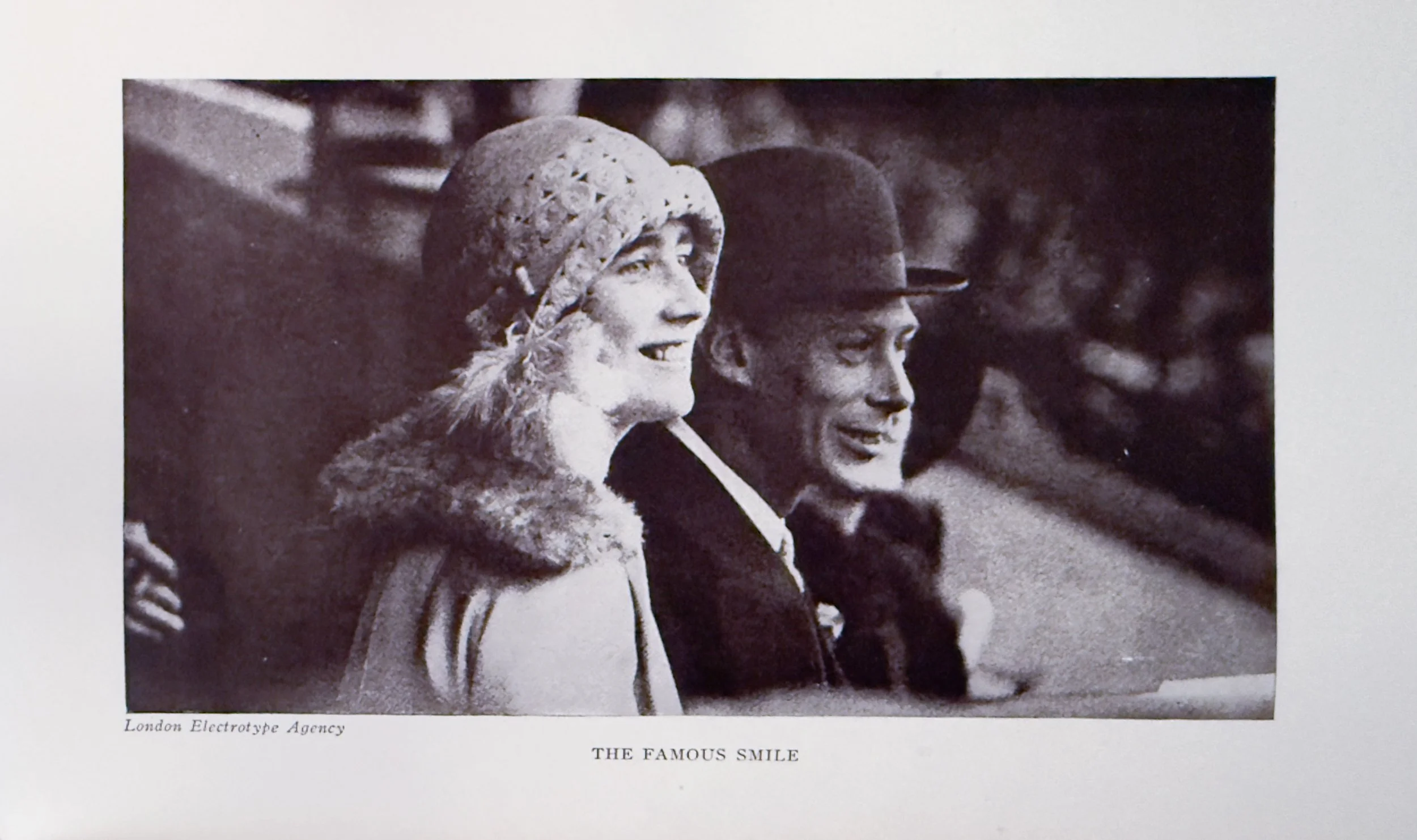
The Duke and Duchess of York early in their marriage. Copied from a book in my private collection.
The Duke of York’s early visits to Glamis
In Prince Albert’s bachelor days, an invitation to Glamis was a happy occasion for the younger set of aristocrats. It was a fun country house - not stuffy or formal like some of the other grand houses could be.
These weekend parties orbited around young Lady Elizabeth. Long before she became the celebrated ‘Queen Mother’, Elizabeth was one of the most popular debutantes of her day. Men and women alike adored her and joviality buzzed around her. She had many suitors and several proposals. “You don’t know what a wag she was,” described a lifelong admirer.
Bertie first stayed at Glamis in September of 1920 for a shooting weekend. Encouraged by the vicar at Crathie Kirk (the church attended by the royals at Balmoral) who had held the same position at Glamis and suspected the Duke was a little in love with Lady Elizabeth, Bertie “proposed himself” for the weekend - not an unusual thing for royalty to do back then - who would say no?
(Bertie later apologized to Elizabeth’s mother for “the abrupt way I proposed myself”. But he had enjoyed himself immensely.)
Following that first dance back in July, the two had encountered each other a number of times over the summer social season, with Bertie’s interest growing into a full-on crush. He had tentatively held her hand on a boat ride during a weekend house party at Bisham Abbey. “It was worth it to see the look on Nina’s [their hostess’] face,” Elizabeth admitted to a friend.
The impending royal visit to Glamis that September caused a scramble in the house, Elizabeth quickly enlisting some of her friends to come and help entertain the prince and his sister Princess Mary, who would also be spending a day there.
Bertie and Mary got a personal tour of the house from Elizabeth, who took them to all the “haunted” rooms, where she spooked them with ghost stories and they played childish games of hide and seek. “They really are babies”, Elizabeth would write to a close friend.

When I toured the Castle and saw the Crypt, I imagined Elizabeth showing Bertie and Mary around on that first visit. And playing hide & seek! (Sounds silly but it was a popular house party game at that time.)
By all accounts the weekend was a success, but what made it tricky for Elizabeth is that she was somewhat romantically involved with Bertie’s equerry, James Stuart, who accompanied him on the weekend visit, as equerries do. Can you imagine how awkward?
Exactly how thick Elizabeth and James were at that time is hard to pin down, (Stuart had just broken off an engagement to someone else!) but she had known him for about a year by then and he was a regular visitor to Glamis. Clearly, they were fond of each other; and the two men were in competition for her attention, whether they realized it or not.
An interesting side note: Bertie himself was still getting over his first flame, a married Australian socialite by the name of Sheila Loughborough. (She was the inspiration behind the term “the original Sheila”.) Though he had promised his father he would do the right thing and give up the potentially scandalous relationship, he was still quietly pining for her during that social season, even as his interest in Elizabeth was blossoming.
Nevertheless, Bertie came away enchanted. Glamis had worked its magic.
The Duke of York would be invited by Elizabeth for shooting weekends for the following two Septembers, in 1921 and 1922. Proposing himself was no longer necessary!
These weekends can be seen as pillars in the timeline of their early relationship. Much water passed under the bridge between these visits. The first proposal happened in February of 1921, at St Paul’s Walden Bury, which Elizabeth gently turned down, then sort of escaped to Glamis for a few weeks afterward!
But they remained friends, and Bertie’s continued interest prompted a visit to Glamis from Queen Mary, Bertie’s formidable mother.
The Queen had come to check out the girl who her son couldn’t seem to get over, making an “expedition” from nearby Airlie Castle, where she was staying with her close friend and lady-in-waiting Lady Airlie. Elizabeth had to play hostess as her own mother was suffering from a prolonged illness. She made a good impression on the queen, who came away convinced that Elizabeth was “the only girl who could make Bertie happy.” And she was willing to help him, despite her claims that mothers “should not meddle in their children’s love affairs.”
A photo from Queen Mary’s visit is displayed at Glamis Castle today. They always seemed to pose these group photos by the main entrance. So I had to stand there too!
The plot would thicken as the Queen just might have influenced a close family acquaintance to offer Stuart a more lucrative position - in the United States. Bye-bye James. He would leave for the US in early 1922, even receiving an MVO from the King on his way out the door. As a third son, he had to earn a living, as he would not inherit his father’s earldom. But it doesn’t seem that he and Elizabeth had made any promises to each other, and she took on new suitors. If there was a proposal, she obviously didn’t accept it.
Bertie proposed again in March of 1922, a week or so after his sister Mary’s wedding, in which Elizabeth was a bridesmaid - which illustrates her continued involvement with the family. This time, after turning him down again, she escaped to Paris, from which she wrote to Bertie telling him what a great time she was having. That must’ve hurt.
But in June there is a curious story told in one of Helen Hardinge’s letters of Elizabeth surprising her by getting into a car with Bertie as he was leaving a dinner party with the whole friend group in London. Right in front of all of them.

It’s obvious Elizabeth liked him, because she never quite let him go; they always remained friends, and you could even say she encouraged him. They played tennis, saw each other socially, and wrote to each other. He never forgot her birthday, sending her small but thoughtful gifts.
And despite her always full dance card, she certainly didn’t seem in a hurry to marry anyone else.
The reason given for her hesitation from any reliable source was that she really didn’t want to be a royal, which would mean giving up her carefree existence for a scrutinized public life. This most obvious answer I think is the truth.
Even much later in life, when asked about it, she spoke of being young and busy, and “unsure of everything.” All her life, she was notoriously evasive about making decisions - something that drove her staff crazy throughout her widowhood. So it all tracks.
Through their letters, you can feel Bertie and Elizabeth getting to know each other better. They already had inside jokes - something that would be a mainstay of their future marriage.
After the 1921 visit to Glamis, Elizabeth warned him to “stay away from FASTY - she’s dangerous.” (Fasty was their nickname for Elizabeth’s good friend Doris Gordon-Lennox. I always wondered if Doris might possibly have been a little sweet on Bertie. But that’s based on nothing but my own opinion - so sorry to be needlessly gossipy!)
He was also growing closer to Elizabeth’s brothers, Michael and David. A different style of shooting was introduced to him at Glamis, less formal “walking days” that he enjoyed. These were more conservation minded than what went on on royal shoots, and Bertie would take these ideas with him to the royal residences when he became King.
Something seemed to shift in Bertie & Elizabeth’s relationship after the 1922 visit to Glamis. For whatever reason, it was a marked turning point, and Elizabeth’s attitude toward him took on a different tone. She was no longer treating his interest as a lark, and was now seeing him as “more than an ordinary friend”.
In a lot of “condensed versions” of their story, I’ve noticed that this important transition - when Elizabeth’s attitude notably changed - is often left out, going from the two refusals to a sudden inexplicable volte-face and acceptance. (And trying to put a purposefully negative spin on it, I think.) But what happened in those few months between Glamis and the proposal at St Paul’s Walden in January 1923 is everything.
They started spending a lot more one-on-one time together, “in a quiet way”, in Bertie’s words. (The word ‘quiet’ often denoting a serious mindset - i.e., to ‘talk quietly’, usually meant to have a serious conversation.)
Interestingly, Elizabeth was often coyly the initiator now. She flirted, writing wistfully that she played the gramophone records he had given her, and beckoned, “do come around.”
In November, the Duke was invited by Elizabeth’s father for a small private shooting weekend at St. Paul’s Walden Bury. Bertie described it in a letter as a “wonderful day, wonderful shoot & wonderful time”. He also thanked Elizabeth for spending “all the afternoon'“ with him that Saturday.
Rolling into December, they were often together at a series of parties, dances and nights out for theatre & dinner that read a lot to me like “double dates” with Elizabeth’s brothers and Bertie’s friends. (In other words - no old people chaperoning, just their peers.)
Elizabeth did not forget his birthday that December 14th (as she had the previous year!), and at a private lunch date at St Paul’s Walden Bury, she gave him a very thoughtful gift - a set of amusing books by a popular satirist that appealed to his subtle sense of humor. This was an intimate gift that showed she knew him quite well by then. They also apparently had a wonderful time at a birthday dinner/dance given in his honor by society hostess extraordinare Mrs. Ronnie Greville. Afterward, Bertie immediately wrote Elizabeth to thank her for being “very kind to me…in giving me so many dances & all the rest of it.”
He went on to say, “I have never enjoyed an evening more, & I rather think, at least I hope that you did, too. I only wished that we had sat next to each other at dinner. That was a slight mistake on our hostess's part!! What do you think?”
This letter clearly shows Bertie’s confidence growing as his efforts were starting to make some real progress at last.
They were obviously enjoying each other’s company - so much so that society gossips were taking notice, which of course trickled over to Queen Mary. The royal matriarch was starting to find the whole situation “tiresome” - she had already written Elizabeth off, and had thought her son had done the same. But he definitely had not! I imagine she thought the prince was embarrassing himself chasing a girl who was unwilling to commit, and in turn, embarrassing the royal family. (He later apologized to “Mama” for keeping her in the dark about his “relations with Elizabeth” and said that for that last few months, she had been “charming to me in every way”.)
Through her own channels, Mama put the kibosh on Elizabeth attending a weekend house party in Pitsford that Bertie had also been invited to for the Pytchley Hunt Ball. Elizabeth was very disappointed and worried she had upset the Queen. Bertie was furious over the apparent meddling, souring things just as they seemed to be going his way.
“It is the limit the way other people mix themselves in things which do not concern them,” Bertie penned furiously in a late night letter to Elizabeth, distressing over the trouble his mother had caused for them.
Though they continued to insist they were merely “great friends” (denial, denial, denial!!), they both knew they needed to make a decision about where the relationship was going. Encouraged by a letter from Lady Airlie (which was never published so we don’t know what it actually said, but it has been referred to in other correspondence), Bertie proposed one last time, on January 3, 1923, sometime during a night of dancing at Claridge’s that Elizabeth described afterward as “a dream”.
In typical Elizabeth ‘dithering’ fashion however, she made him wait eleven more days before saying yes!!!!!
Unnecessary drama perhaps, but I really just think she wanted to be sure she was making the right decision. For his part, Bertie was willing to give her time to decide, fearing “she would have said no, had I pressed her for an answer before now.” It was a serious choice after all - and for life. The Bowes Lyons were a rather devout family - Elizabeth had been brought up not to believe in divorce. She had to be sure. Let’s not forget that she was only 22 years old at this moment in time. I think we can give her some grace in making such a life-changing decision.
The romance had, in Bertie’s words, “taken a long time to adjust itself” but once it did, neither one of them ever looked back.
Their engagement was like a dam breaking; their affection for each other now flowed unreservedly. In “darling angel” letters that would continue throughout their marriage whenever they had to be apart - which wasn’t very often - they professed undying devotion and a playful love.
Now tell me, what other castle can tell a love story like that?
(Funny note - FASTY Doris announced her engagement to Clare Vyner just days after Elizabeth finally said yes to Bertie. Like she was waiting to see what they were doing - JUST SAYIN’! —— sorry, cheeky, I know! Apologies to Doris’ descendants.)
If royal history is your thing too, you might love visiting The Royal Yacht Britannia. It’s very easy to get to if you are staying in Edinburgh - not a journey like Glamis or Balmoral! Plus, it has a George VI connection that not many people know about. I’ve written all about that and the great time we had there in our post Visiting the Royal Yacht Britannia, a floating palace in Edinburgh.
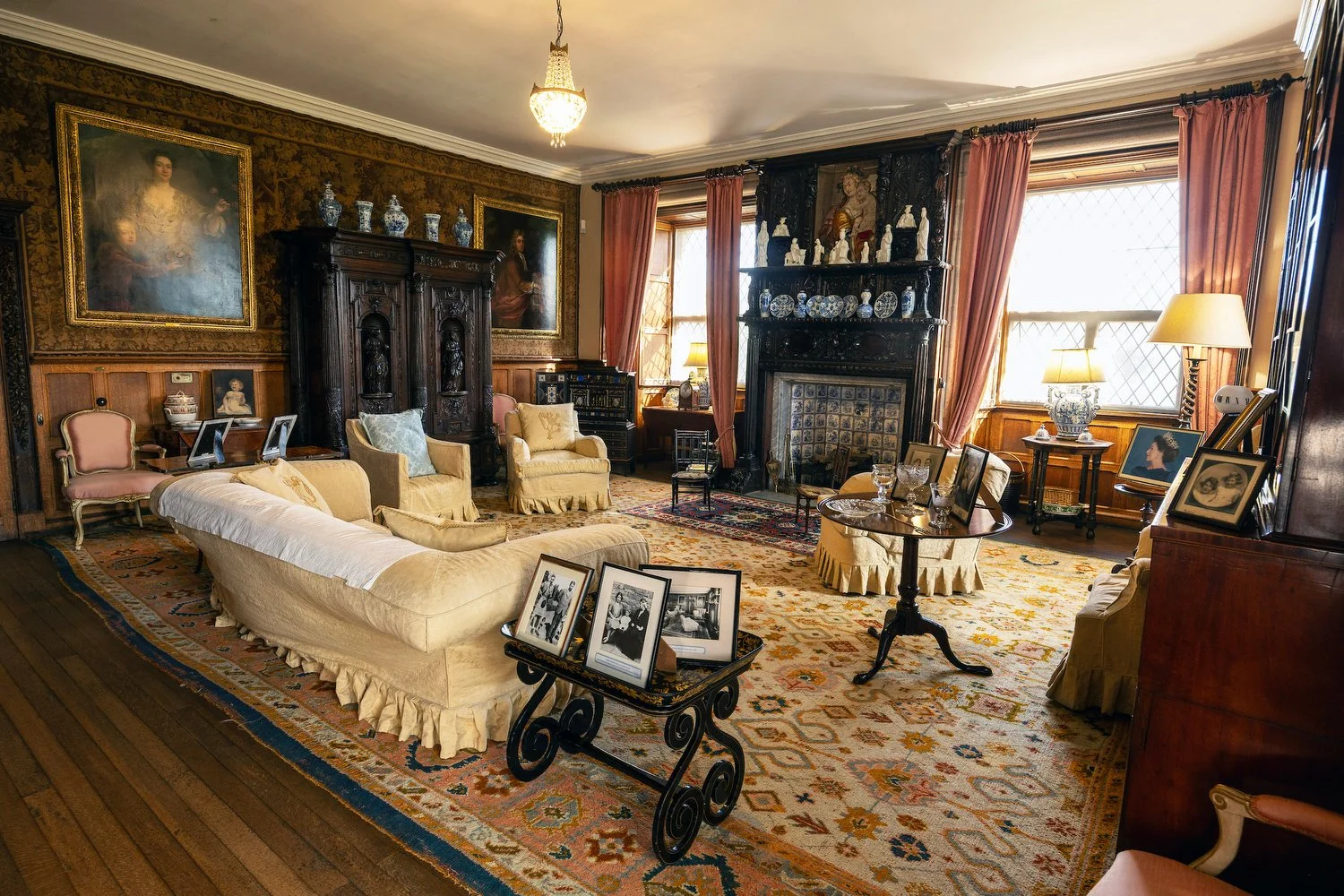
The Queen Mother’s Sitting Room at Glamis Castle. Photo is courtesy of Glamis Castle.
An intimate suite of rooms for a modern royal couple
Glamis doesn’t have the royal cache of Balmoral or Windsor, which have been homes to many generations of monarchy. It was only significant to Bertie & Elizabeth, and to their daughters, and for that reason I find it particularly special. Cozy, if you can say that about a castle. A part of royal history that belongs only to them.
They spent the second part of their honeymoon at Glamis, (the first couple of weeks were spent at Polesdon Lacey, in Surrey) using a set of rooms set up by Cecilia that they would continue to use throughout their marriage whenever they stayed at Glamis. Seeing these rooms in person was the highlight of the guided tour for me!
I find it very endearing that, like many young married couples, they had to divide their time between two sets of in-laws for their Scotland holidays. It’s a very relatable situation to modern couples I think! Even being royal doesn’t spare you the in-law situation!
At this point in time - and up until they became King and Queen really - the couple preferred Glamis to Balmoral. This was because under Bertie’s parents’ reign, the guest list at Balmoral was old and stuffy, and the timeline rigid. The young people had to do exactly what was expected of them, and there was little free time for diversion. Although Bertie enjoyed the shooting on the grouse moors, the atmosphere at the castle could be tense, and they just had more freedom and more fun at Glamis.
When Bertie and Elizabeth themselves would take over Balmoral in 1936, they tried to make it a friendlier, more relaxed and inviting place for their daughters and for their guests. The princesses’ friends were frequently invited to stay, and there were games, music and dancing, much in the spirit of what they had known at Glamis. They all grew to love being at Balmoral very much.
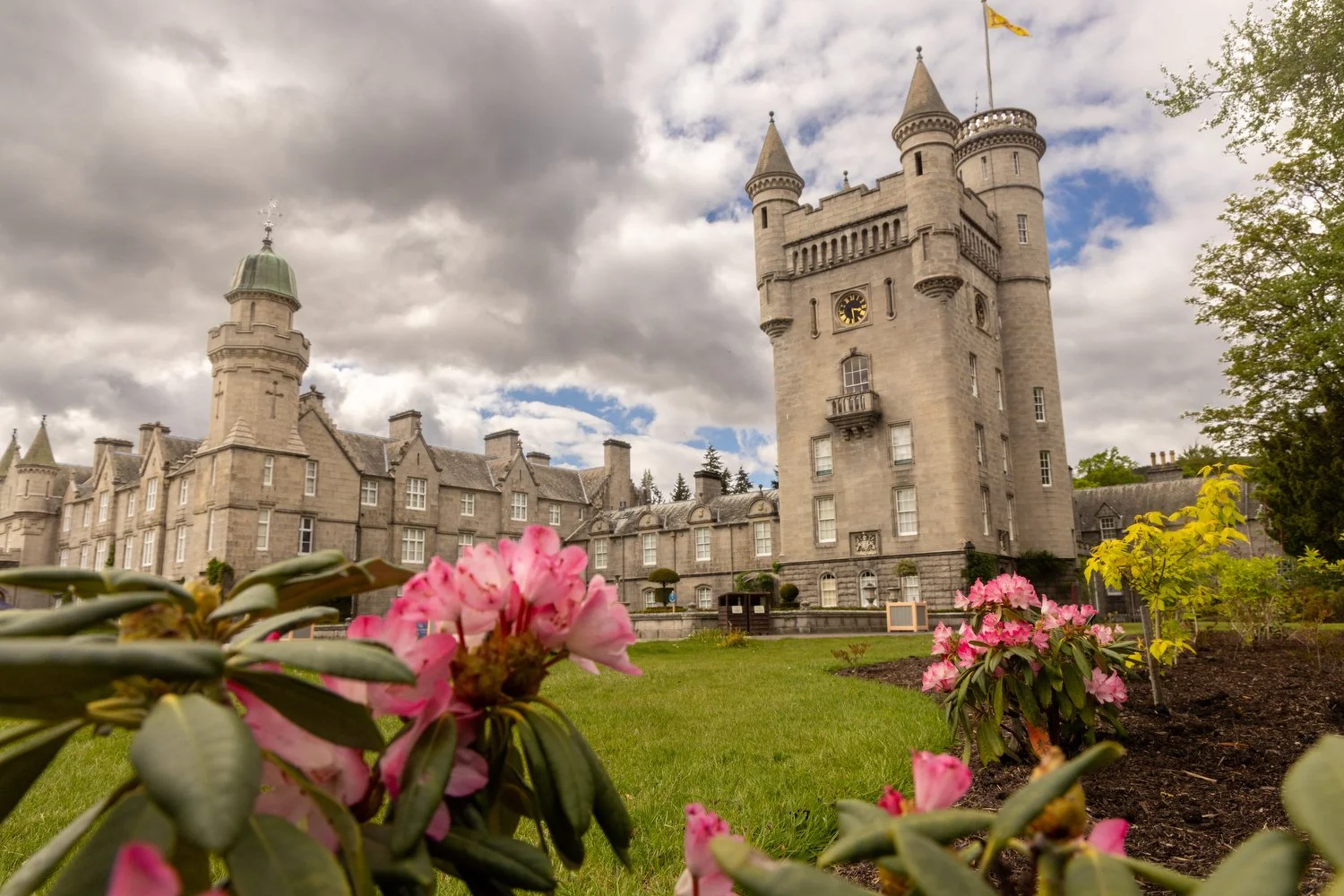
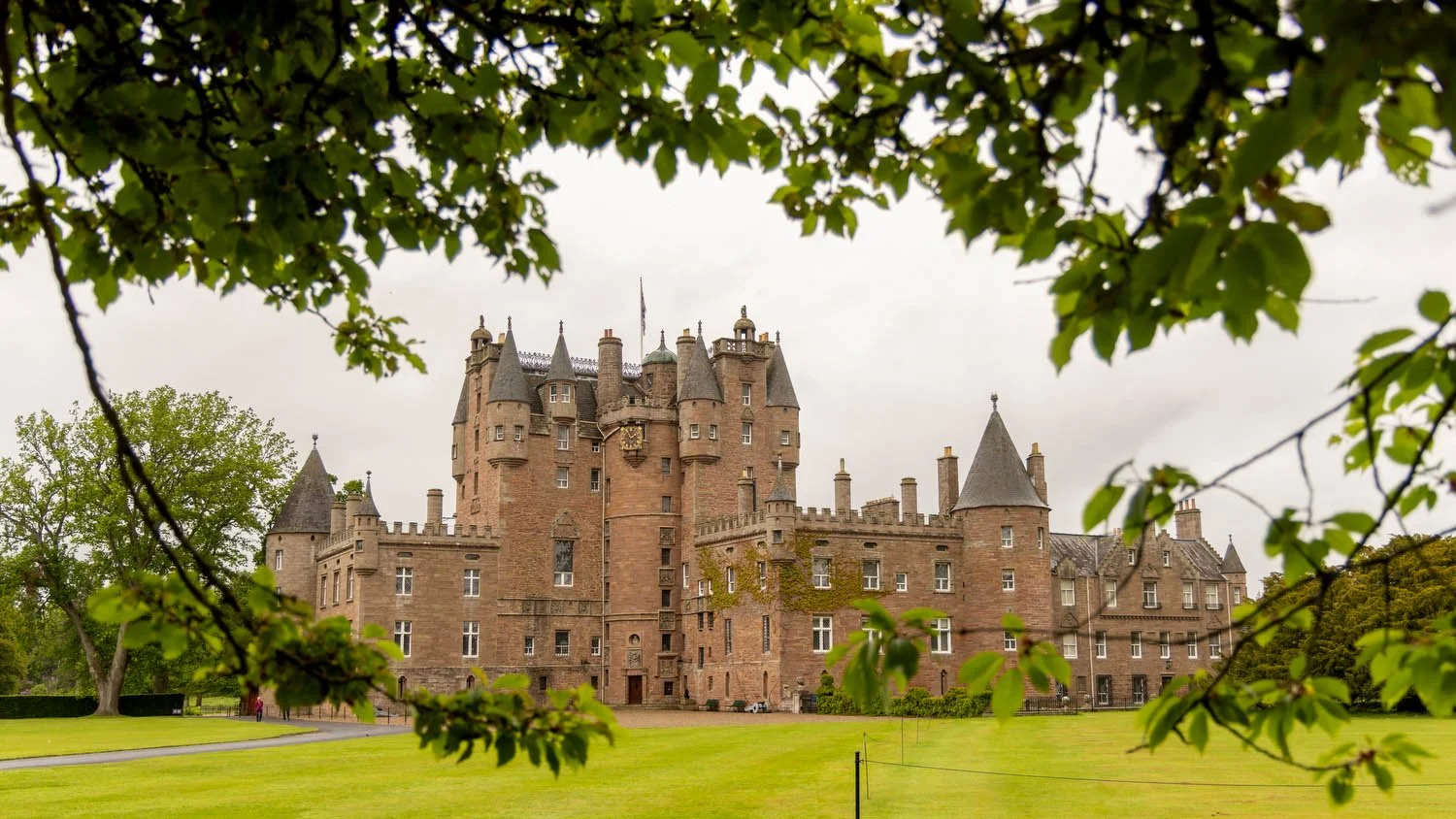
Like Bertie & Elizabeth, sometimes we travelers have to make choices! We compared the experience for the modern visitor to Glamis and Balmoral in our post Glamis vs Balmoral: Which Scottish Castle Should You Visit?
Or check out our in depth post about Balmoral - Visiting Balmoral Castle, what to see and is it worth it.
But that was in the future. For now, they had to divide their time, and once their daughters came along, there were definitely some negotiations about the grandchildren spending some of their holiday with each set of grandparents, just like any other young family.
Even when Princess Margaret was just newly born, Bertie’s father (King George V) expected him to drop everything and come shooting with him at Balmoral, business as usual, much to the exasperated Duke’s consternation. (But he did it!)
Elizabeth sometimes got away with staying at Glamis for other random reasons while Bertie would have to show his face at Balmoral. While they were apart, they wrote romantic letters full of longing across the moors. She “missed him terribly” and he was looking forward to being back by lunch, for “two lunches of course. One from you I hope darling in XXX etc, and one of the ordinary culinary kind”.
Other times she offered advice in dealing with his mercurial father - “Stick up for yourself. Remember you are an elderly married man now and won’t be patronized.”
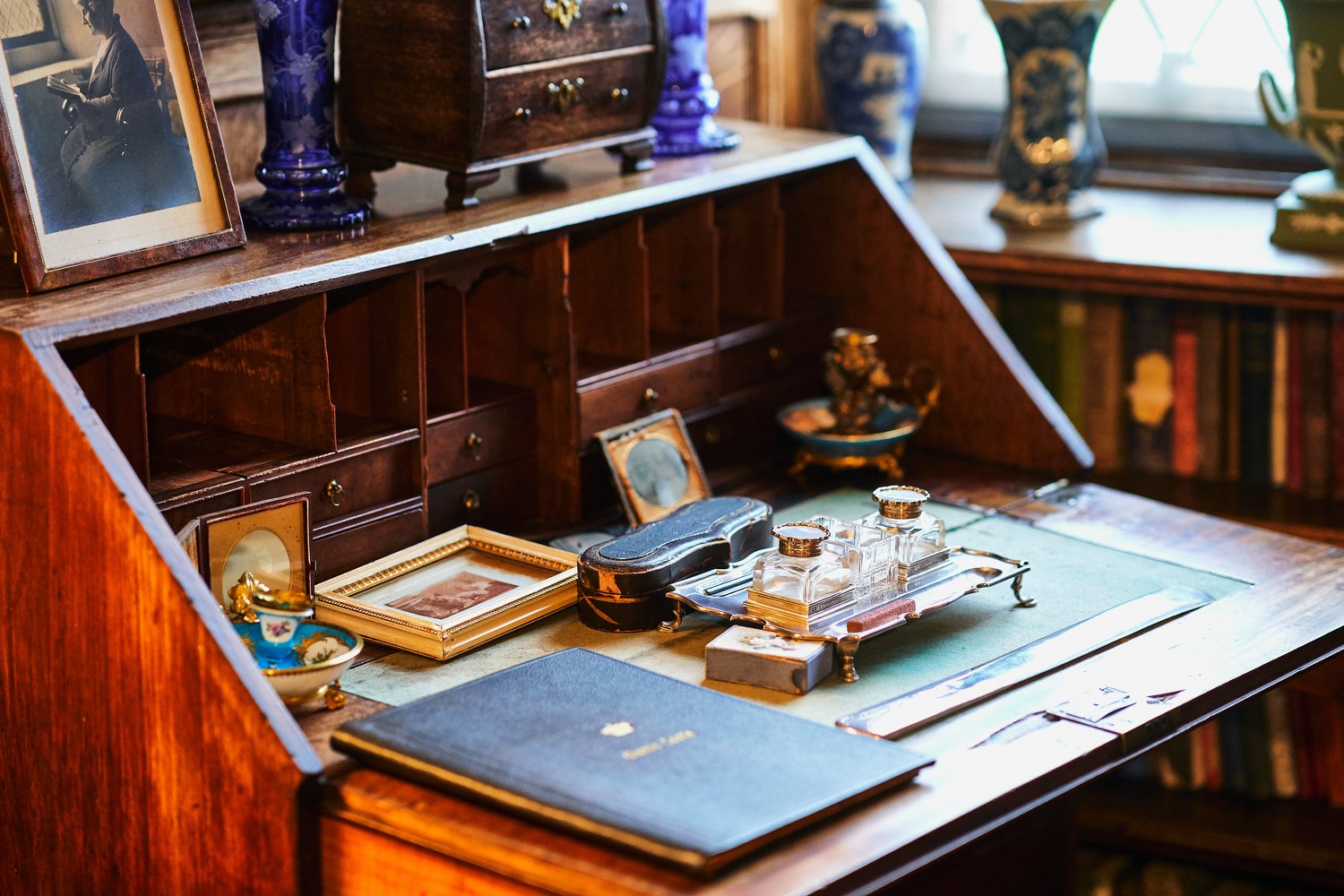
The Queen Mother’s writing desk at Glamis Castle. Photo is courtesy of Glamis Castle.
When you see her writing desk in a little nook by a window in the Queen Mother's Sitting Room, you can easily imagine her writing these letters. The room is cozy and informal, with comfortable chairs and lots of family photographs.
Bertie wrote: “Don’t get frightened darling, sleeping in that enormous bed all alone at night.”
You can see that “enormous bed” (which really isn’t very enormous!) in the Queen Mother’s bedroom today in the Royal Apartments. (Although it is quite obvious from the letter she wasn’t the only occupant!)
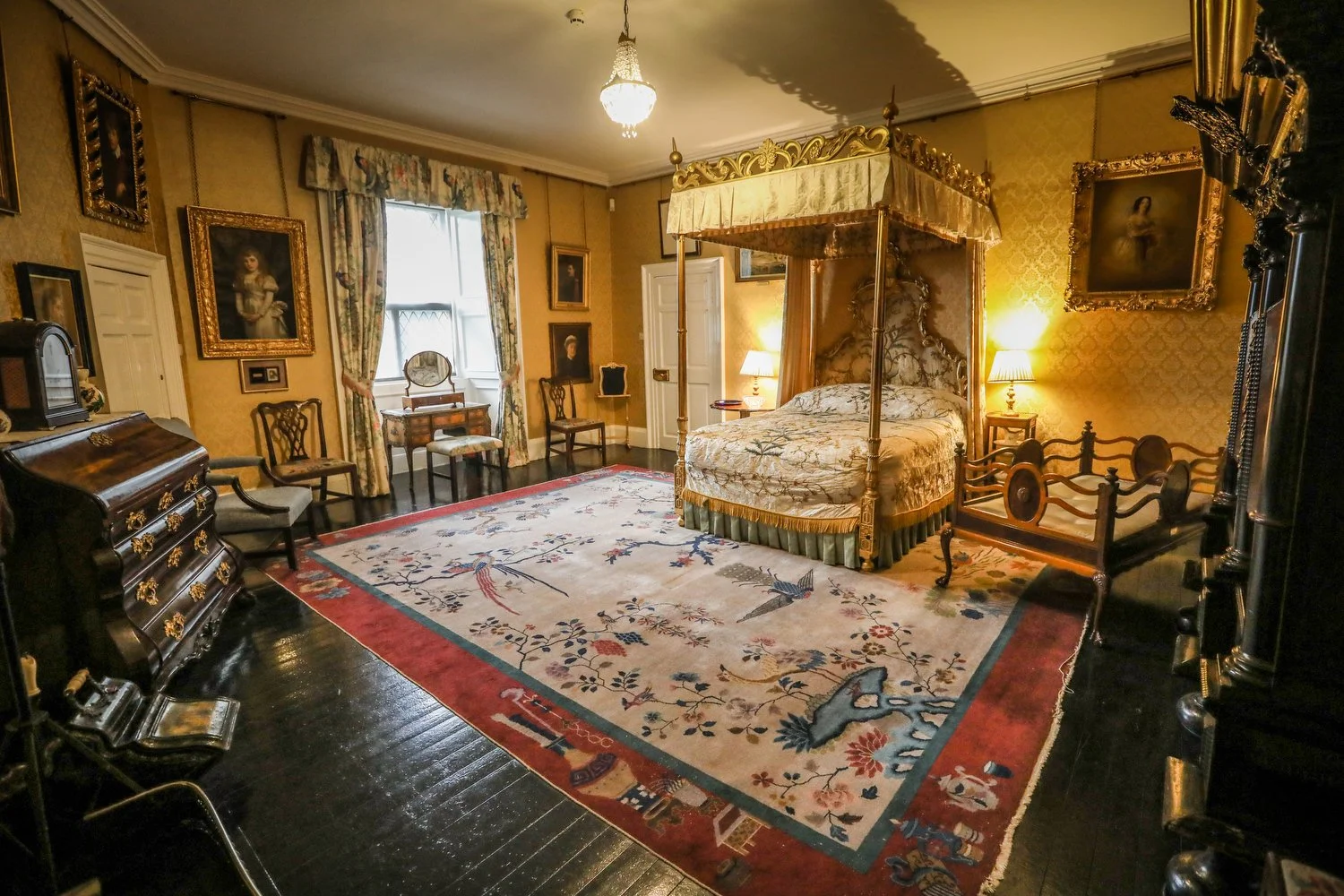
The Queen Mother’s Bedroom at Glamis Castle. Photo is courtesy of Glamis Castle.
I stood in there as long as I could (because you have to move along with the tour and not linger), taking it in. Honestly, it felt a little invasive being there in such a personal space but fascinating at the same time. I suppose that is exactly the sort of thing that made Elizabeth hesitate about the marriage in the first place - years later, strangers like myself would be pondering their love life! How dreadful!
There is a beautiful carved baby cot in the room that was used by Princess Elizabeth with her initials on it. Of course, it would have been in a nursery but it is displayed here.
Countess Cecilia’s embroidered handiwork can be seen on the bedclothes, including the canopy where she stitched the names of all her children. You can see Elizabeth’s name second to last. (I do hope that it is just displayed here; the thought of such a thing hanging over their honeymoon bed is a little, I don't know… unromantic? Like your mother-in-law is watching you!)
I suppose I have to mention that Elizabeth contracted whooping cough during the Glamis part of their honeymoon. But I think some writers make too big a thing of that. They still managed to go out dancing in London with the Prince of Wales, so I can’t imagine it was really that bad. It did get her out of a few royal appearances though.
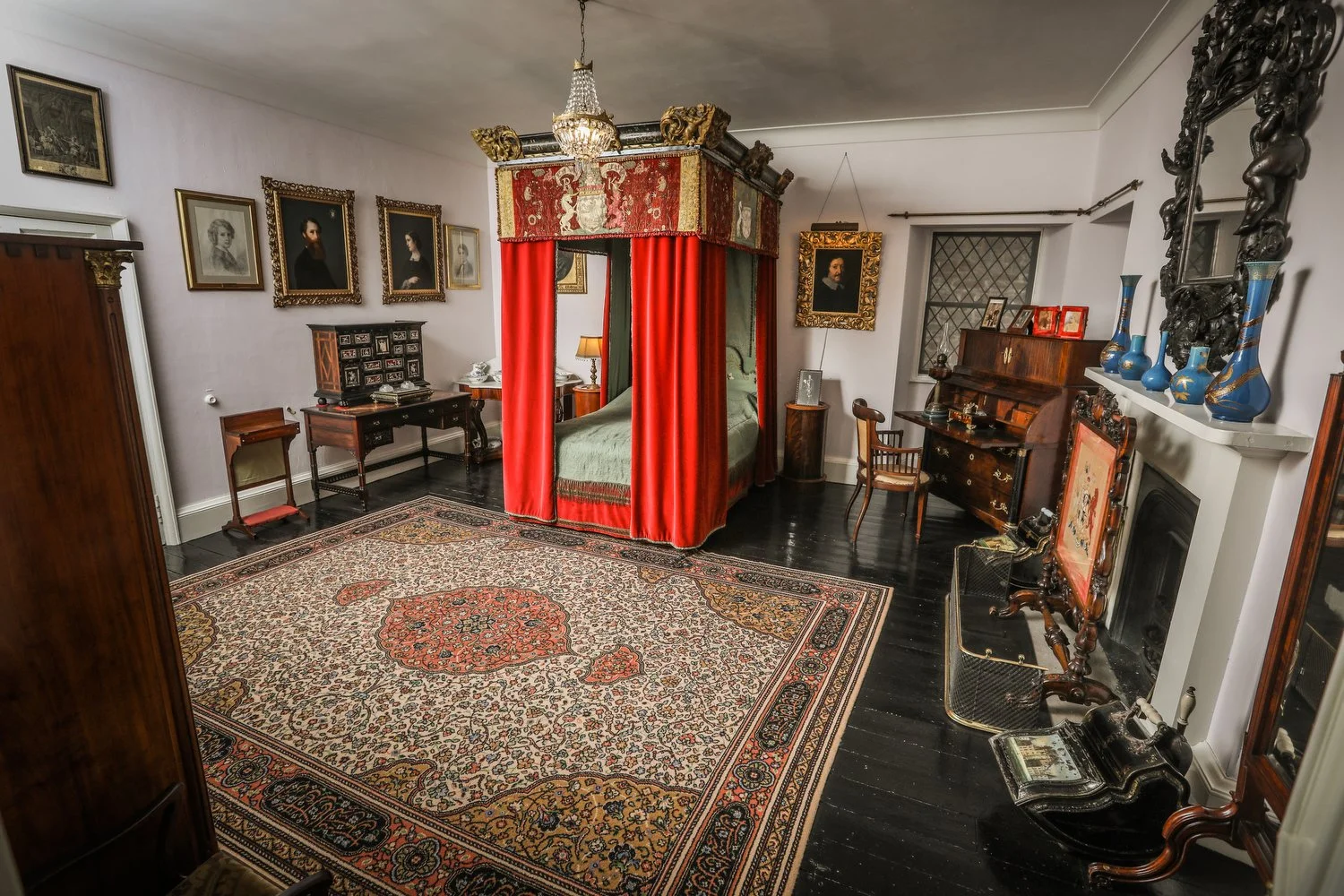
The King’s Dressing Room at Glamis Castle, with the desk used by King George VI in the corner. Photo is courtesy of Glamis Castle.
The King’s dressing room
The only thing at Glamis that is specifically connected to King George VI alone is a desk he used in the room they call the King’s Dressing Room.
The small, modest desk is where Bertie worked while he was at Glamis, first as Duke of York and later as King. It seems hardly fit for a king, and one wonders how those red dispatch boxes of important papers would even fit on the simple drop-front desk. It really is “so Bertie”, to use such a humble desk.
It’s nice that you can get close enough to take a good look at it. That was the one disappointing thing about all the family photos in the Sitting Room - you just couldn’t see them very well and you are not allowed to take photos, so no studying the photos later as I like to do!
There is other significant furniture in the room, like the Kinghorne Bed, which has a storied history, but I don’t think anything that’s there today was used by George VI except the desk.
Just a note of interest - I’m learning a little more about these old grand houses from my various studies, and a room referred to as a “dressing room” wasn’t always just for dressing and keeping one’s clothes. It sometimes just refers to an individual’s private space. In a house that was often full of servants and staff, not to mention extended family members, it may have been used to do work or write letters, or to have private conversations. So the King’s “work desk” there makes perfect sense.
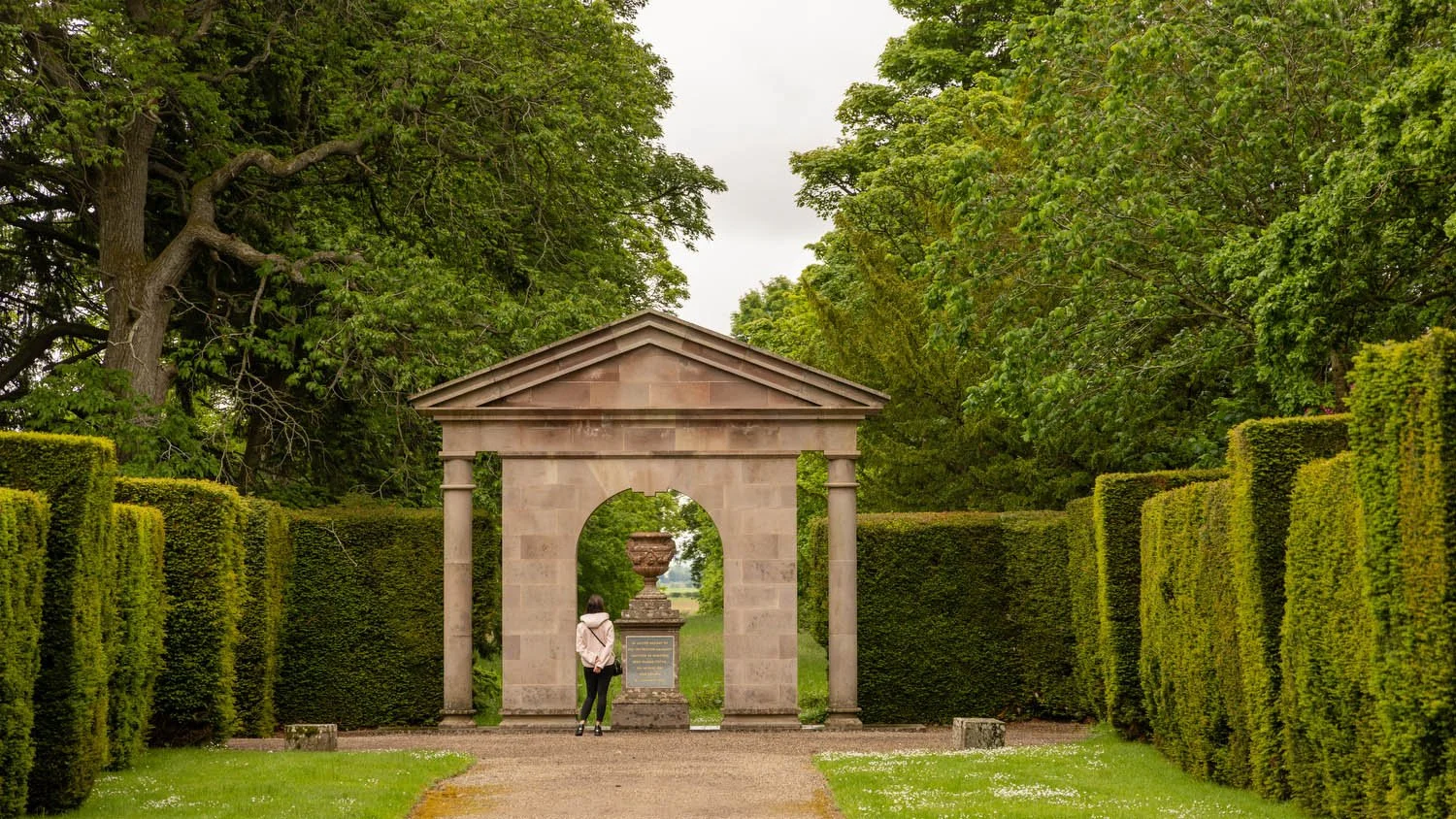
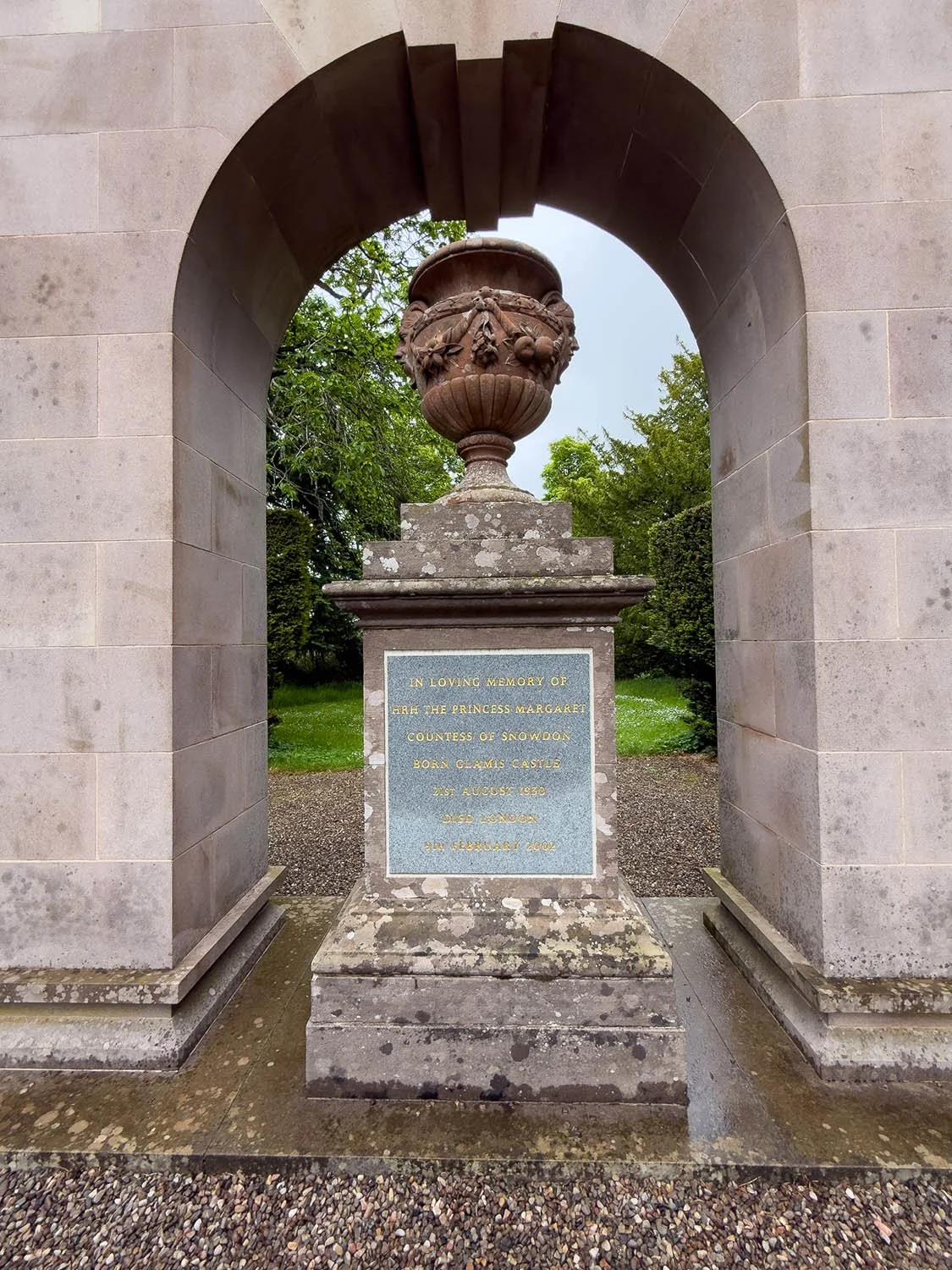
A memorial to Princess Margaret at the end of a trail of hedgerows near the Italian Garden at Glamis.
Glamis Castle as the birthplace of Princess Margaret
Though this is a post primarily about King George VI, I couldn’t close it out without giving some special space to Princess Margaret, his beloved younger daughter.
Margaret Rose was born at Glamis on August 21, 1930. She was the first princess or prince to be born in Scotland in over 300 years, and there was much celebration, with bonfires lit, sonnets written, and a lot of very proud Scots.
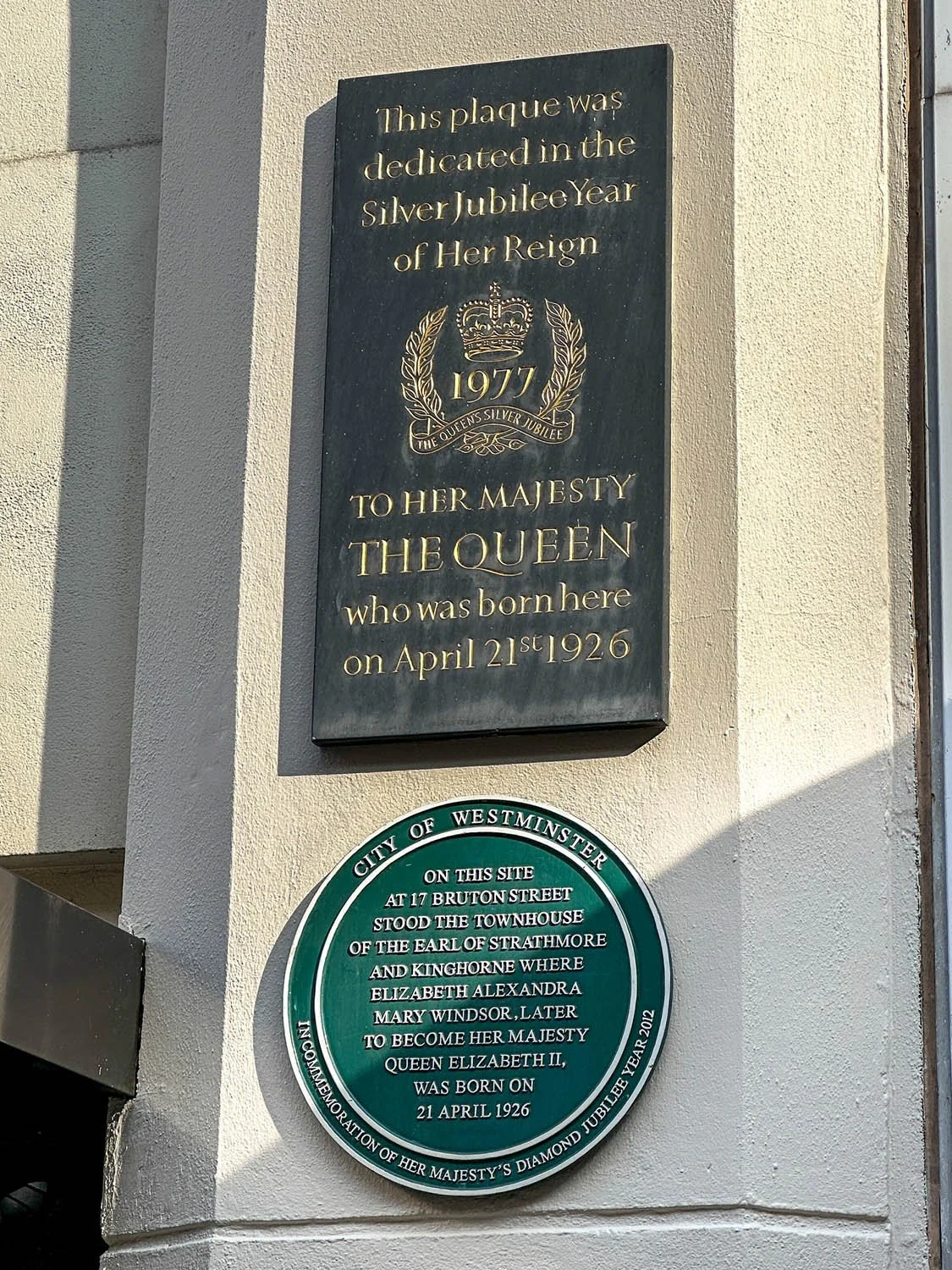
The Duke and Duchess’ first daughter, Princess Elizabeth had been born at 17 Bruton St, the London home of the Strathmores. (there’s a ‘green plaque' at the site today, where the house no longer stands.) The Yorks had been a little nomadic at that time; they really didn’t like the home the King had given them in Richmond Park, as it was too expensive to maintain and too far from the center of London. After occupying a few rentals, they decided to have the baby at Elizabeth’s parents’ place.
By the time the duchess learned she was expecting her second child, the Yorks were happily settled at 145 Piccadilly in London. But since the baby was due in the summer month of August, when they would normally be in Scotland, they decided that the birth would take place at Glamis.
In those days, the Home Secretary had to be “present” at the birth of anyone in direct line to the throne (not in the room, but present in the house). King George himself would later do away with the rule when his own daughter was pregnant, calling it “archaic” - but when Margaret was born, he still had to deal with it.
But the anxious Home Secretary arrived too early. So the Strathmores and the Yorks had to entertain him for more than two weeks! The situation was getting on everyone’s nerves, and Elizabeth was feeling like a watched pot. Fortunately, good ol’ Lady Airlie came to their rescue and invited him to stay at nearby Airlie Castle.
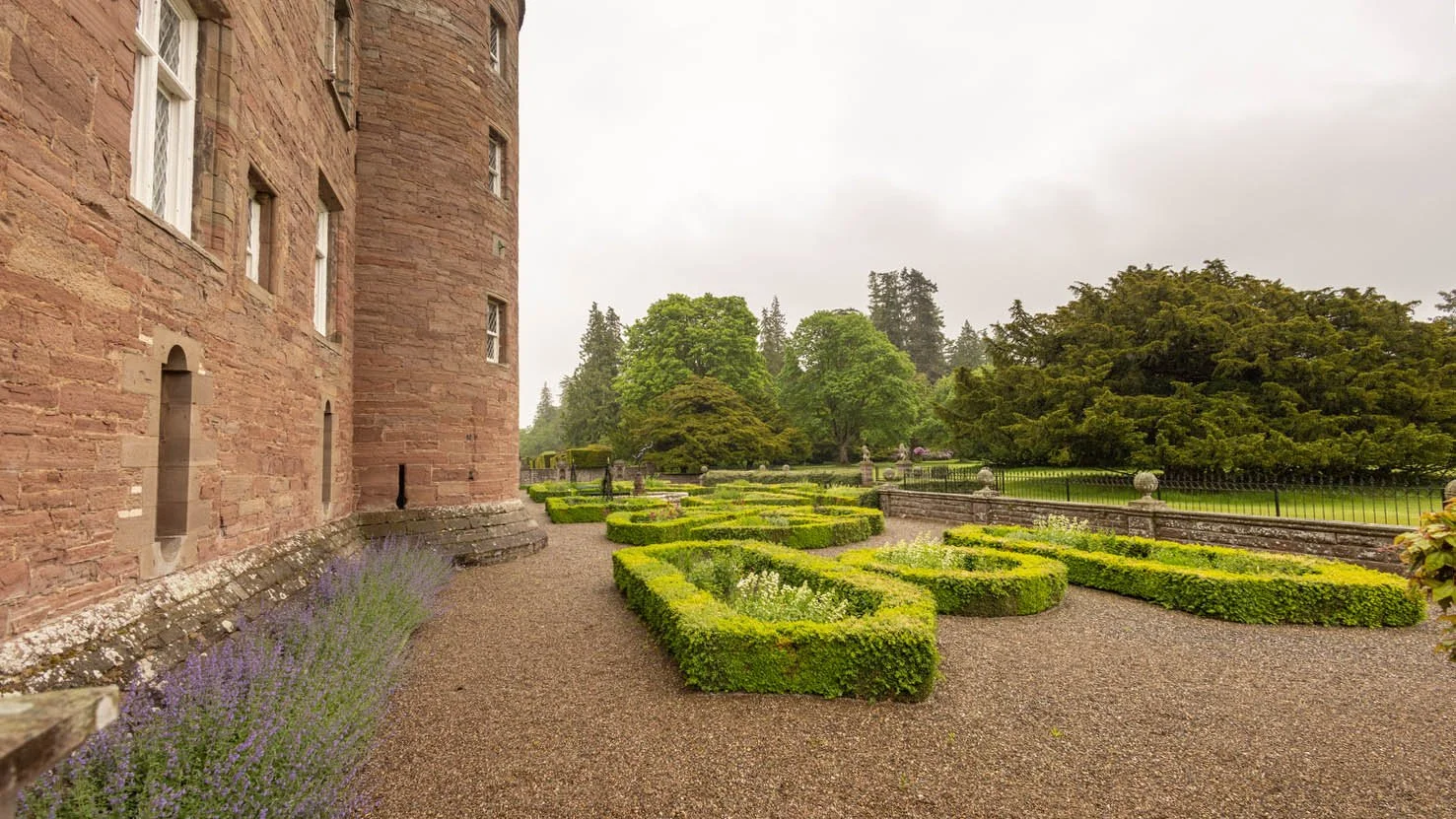
A private garden at Glamis Castle. It was from the other side of that low wall on the right that the Duke took a photo of the Duchess with Princess Elizabeth that I like!
There’s a great photo taken by Bertie (he was a keen amateur photographer ❤️) of the two Elizabeths, mother and daughter, leaning on the wall of the rose garden, during the time they were waiting for baby Margaret to arrive. The strategically placed wall and dog sitting in front of them hides Elizabeth’s “baby bump”, which she felt self-conscious about - different times indeed! Kudos for the modest framing, Papa Bertie.
Having the baby at Glamis did not turn out to be as pleasant as they were hoping, though. It was a little too quiet, and Elizabeth missed getting visits from friends dropping in with cadeaux for the baby. In the photo mentioned above you do get the vibe that they were hanging around trying to entertain themselves.
Shortly after Margaret was born, they were already talking about having “the next one in London in the winter”. Of course, there would not be a next one - Margaret completed their family. The fourth of “we four”.
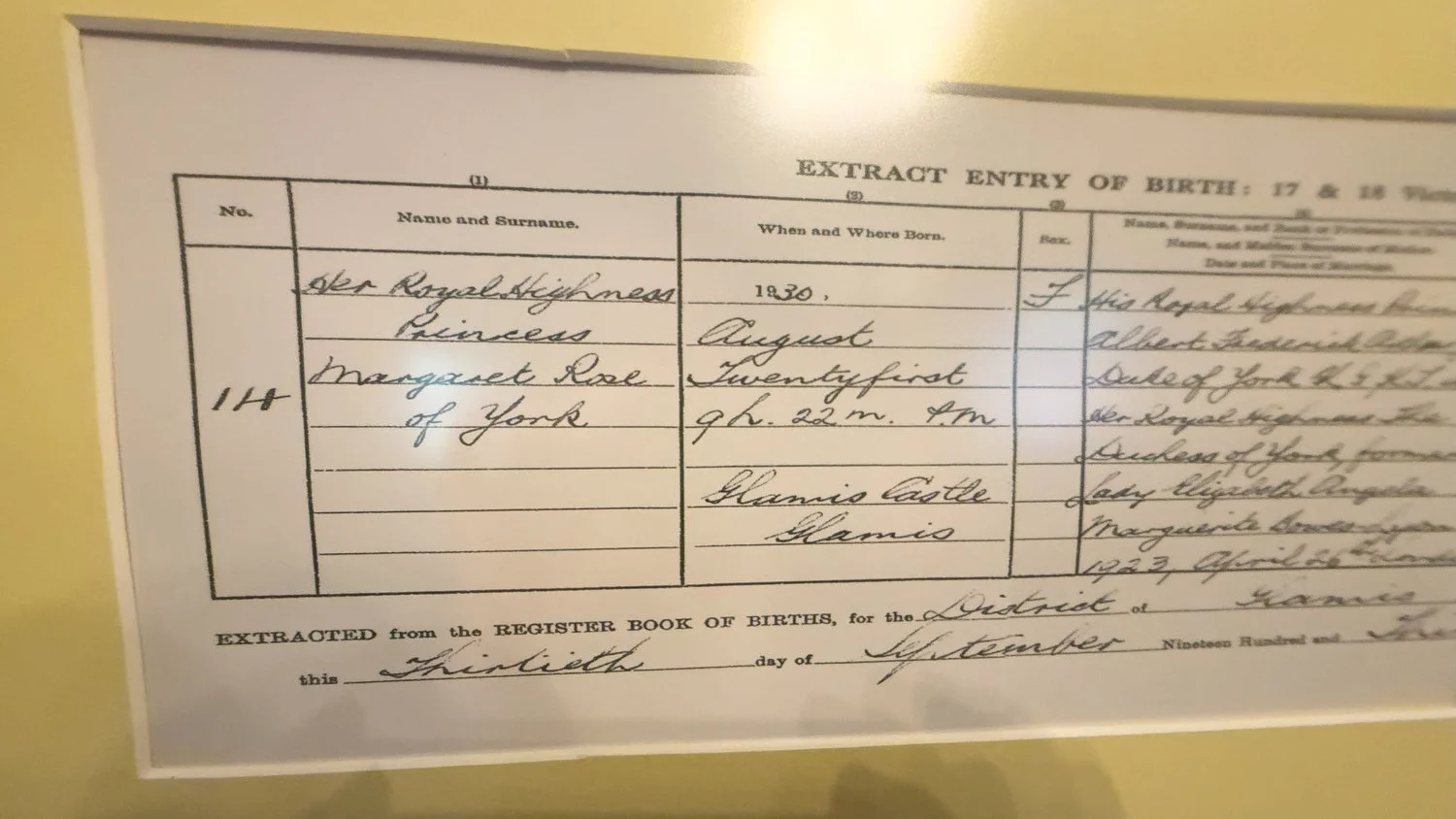
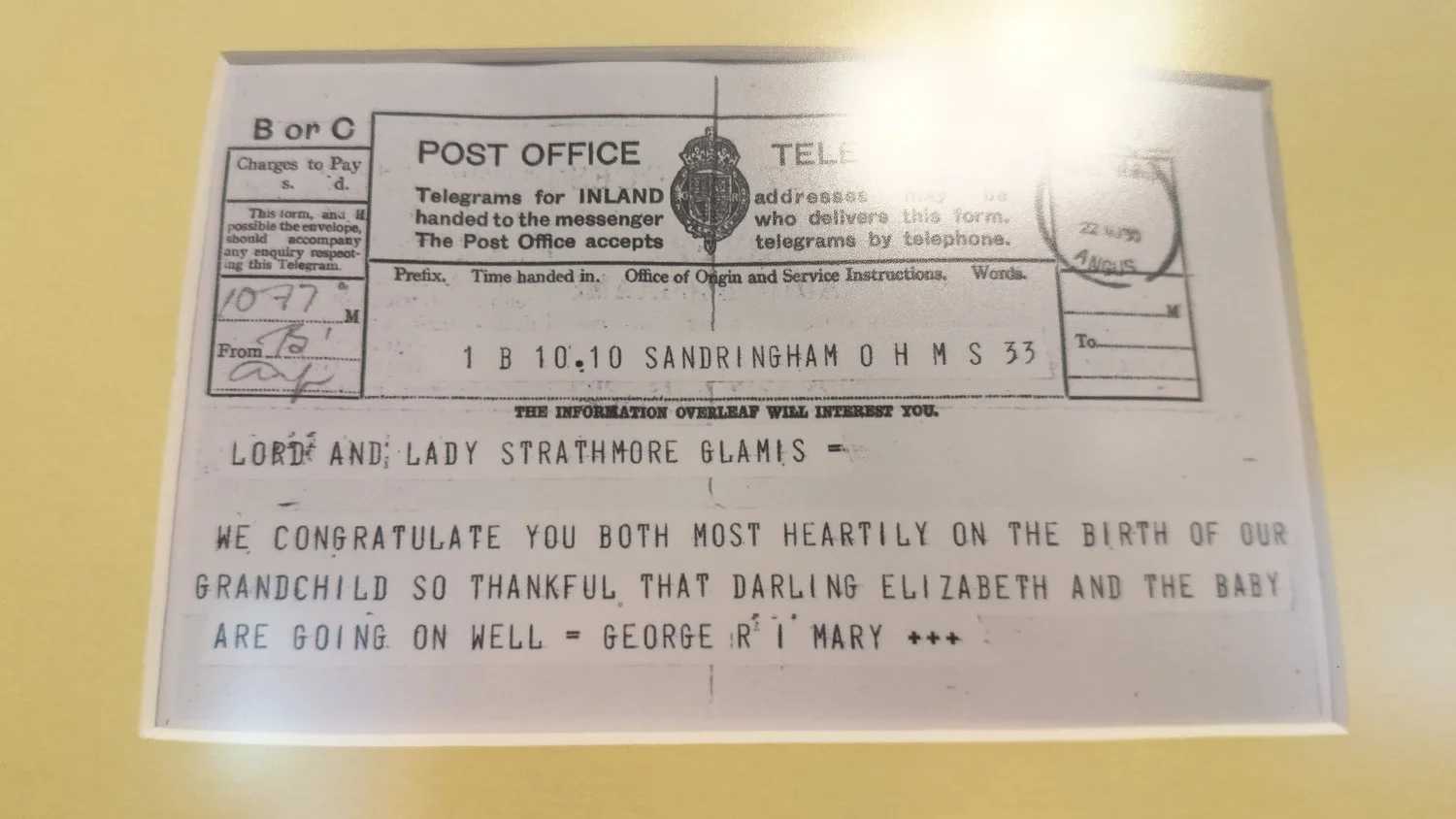
I saw some delightful memorabilia about Princess Margaret’s birth displayed in the Coach House - telegrams from her paternal grandparents, King George V & Queen Mary, to the Strathmores congratulating them on the arrival of “our grandchild” and a copy of the registration of her birth, which there’s a funny story about.
The Duke of York waited a little while before registering the birth at the village post office, as was customary. This was because he did not want her to be Birth #13 (bad luck!) So he waited for another child to be born in the village in order to secure #14 for his daughter.
Sure enough, the registration is clearly numbered “14”.
An affectionate memorial to the Princess now occupies a peaceful spot near the Italian Garden.
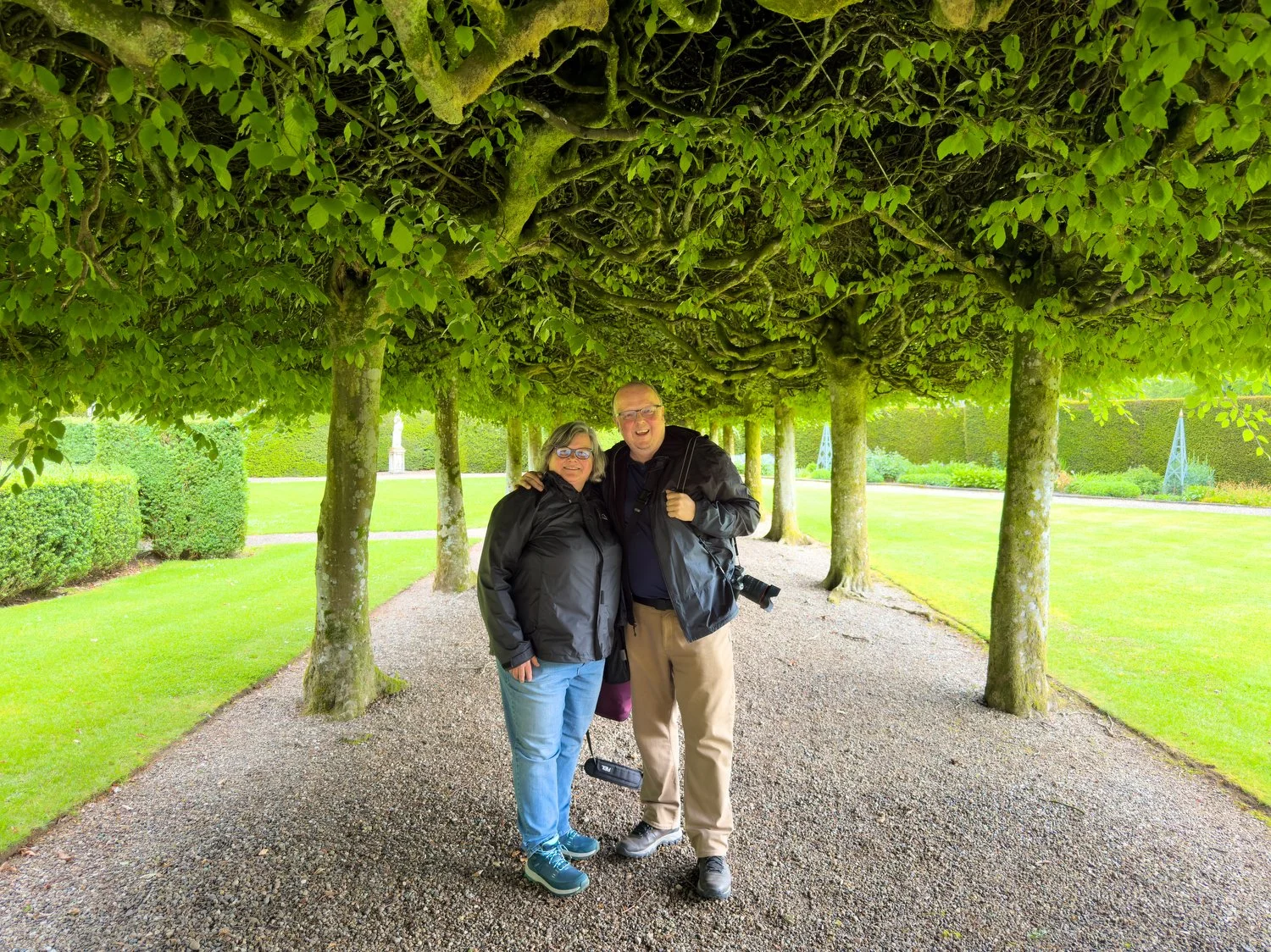
Debbie and John exploring the gardens on the grounds of Glamis Castle.
Royal research for this post
I’ve been researching George VI’s life for so long, and have read so many books and articles, that I still have to pinch myself when I think about actually being at Glamis. It really felt like a connection to him that I can’t quite explain.
I love all kinds of traveling, but I think my favorite kind of travel of all is when it involves a bit of personal pilgrimage. Going somewhere to see something meaningful to yourself is the best sort of “going”.
It just hits different.
Everyone has their thing. For me, it means anything to do with King George VI.
Walking in the footsteps of ghosts? Perhaps. But it’s always the human stories that grab you.
So c’mon royal travelers, do check out Glamis Castle if you are coming to Scotland! We have more royal traveling adventures in Scotland our posts about visiting Balmoral Castle, and visiting the Royal Yacht Britannia. And in England, our post about visiting Buckingham Palace and our post about Windsor Castle.
Many thanks to the good folks at Glamis Castle for letting us use some of their photos of the interior rooms.
All the opinions, observations and impressions in this post are my own, but I’ve learned to be pretty discerning with my sources. As with most topics, not every book about royalty is created equal.
That last sentence may sound a little bold, but the spread of misinformation has never been more prevalent. In this day of AI, there are so many fake photos and narratives I see across the internet, that it can be disheartening. My background is in photojournalism, so that hits me particularly hard. If we keep heading down that path as a society, there may be no more historical photos that we can really trust. And that would be a great loss.
Specific facts and quotes in this post come from these highly recommended books:
Queen Elizabeth the Queen Mother, the Official Biography, by William Shawcross
George VI and Elizabeth:The Marriage that Saved the Monarchy, by Sally Bedell Smith
Counting One’s Blessings, the Selected Letters of Queen Elizabeth the Queen Mother, by William Shawcross
The King in His Country, a Biography of King George VI as a Sportsman, by Aubrey Buxton
A quick note: some links here are affiliate links. That means if you book or buy something through them, we earn a small commission. You pay nothing extra, and it helps keep this blog going. We only recommend things we actually believe in.
About the Authors

|
John and Debbie O'Boyle are the team behind The Empty Nest Explorers. John is a professional photographer whose work has been published by The New York Times, NBC News, and Getty Images. He is a member of the American Society of Media Photographers, has been part of a Pulitzer Prize-winning team, and has received two New York Emmy nominations. Debbie is a writer with 30+ years of professional photography experience, formerly with The Star-Ledger and NJ.com. Together, they create in-depth travel guides for couples and empty-nest travelers who want to make the most of every destination. |