Segovia Day Trip from Madrid: What to See, Eat, and Know Before You Go (2026)

Segovia Aqueduct in the late afternoon sun. All photos by John O’Boyle / The Empty Nest Explorers Like this photo? See it in our Print Store
Segovia has all the ingredients for a great day trip - it’s a small walkable city, it’s close to Madrid, has easy train access, a few marquis attractions, and lots of restaurants.
The Romans captured the city in 80 BC, and its history goes back even further. During the Middle Ages, Segovia was a major textile producer.
It's an easy half-day or full-day trip from Madrid. It packs in a Roman aqueduct, a Gothic cathedral, and one of the most photogenic castles in all of Spain.
Segovia sits about 85 km northwest of Madrid and has been a UNESCO World Heritage Site since 1985. The whole old city qualifies, not just one monument, but the entire place.
| 📍 Location | 85 km northwest of Madrid — about 1 hour by train or 1.5 hrs by bus |
| 🚆 Train from Madrid | High-speed Renfe Avant from Chamartín Station — approx. 27 mins. Book in advance. |
| 🚌 Bus from Madrid | Avanza Bus from Moncloa Station — approx. 90 mins, ~€11 round trip |
| 🚌 Train station to city | #11 bus outside the station — €2 cash only. Taxi also available. |
| 🏰 Alcazar tickets (2026) | €7 adults (palace + museum) · €10 with tower · Book online in high season |
| ⛪ Cathedral tickets (2026) | ~€5 adults · Free entry Sunday mornings 9:00–10:00 (Apr–Sep) |
| 🕐 How long to allow | Full day recommended — 6 to 8 hours gives you time for all three main sites |
| 🥩 Must-eat dish | Cochinillo (roasted suckling pig) — Segovia's signature dish |
| 👟 Tip | ⚠ WEAR COMFORTABLE SHOES — the streets are cobbled and hilly |
| 🌍 UNESCO status | ✓ WORLD HERITAGE SITE since 1985 |
How to get to Segovia
Train to Segovia
The train trip we took from Madrid to Segovia is only about half an hour because it’s via a high-speed train. The only catch is that the train leaves from Chamartin Station in the northern part of Madrid.
After the half-hour trip from Chamartin Station, you’ll arrive at Segovia’s shockingly uber-modern rail station. Considering how old the area is, I wasn’t expecting a super modern facility.
Directly outside the station, you'll find the #11 bus that takes you into the city. It’s very easy to find, just follow literally everyone else getting off the train. The bus costs €2 (cash only) and can be crowded.
Taking the bus to Segovia
The bus is worth knowing about, even if you end up choosing the train. Avanza runs coaches from Madrid's Moncloa bus station every half hour, the journey takes about 80 to 90 minutes, and a one-way ticket costs around €6 to €8. Round trip, you're looking at roughly €12 to €16, which is noticeably cheaper than the train.
There's another practical advantage. The bus drops you off right in the historic center of Segovia, close to the aqueduct. The train, as we mentioned, deposits you at a modern station outside town and requires the #11 bus to get in. So the time difference between the two options is smaller than the raw journey times suggest.
Moncloa station connects to metro lines 3 and 6, so if you're staying anywhere in central or western Madrid, it's easy to reach. Tickets can be bought at automated machines in the station or online at avanzabus.com. Book your return trip for a specific time when you arrive, afternoon buses back to Madrid fill up, and you don't want to be stranded waiting for the next one.

The #11 bus operates between the train station and the Aqueduct.
Take a guided tour of Segovia
If you’d prefer to leave the logistical details to a professional there are many organized tours that will take you to Segovia from Madrid. Here are a few highly rated ones:
Full-Day Tour Segovia and Ávila from Madrid
Luxury bus with air-conditioning and Wifi
Skip the line Alcazar of Segovia Admission Ticket
Skip the line Cathedral of Segovia Admission Ticket
Basílica San Vicente Admission Ticket and Convento Santa Teresa de Jesús
Learn more or book the tour here
Note - This blog post contains affiliate links. This means that if we are recommending a product, activity or a hotel, we might be receiving a small commission if you buy or book from these links. This is done at no additional cost to you. We only recommend products we have personally used or have thoroughly researched.
Segovia Walking Route
The layout of Segovia works in your favor.
The three main sights sit in a rough line from one end of the old city to the other, with the aqueduct at one end and the Alcazar at the far tip. The walk between them is just under a mile, and the streets are well signed.
When the bus drops you at the aqueduct, look for the city map in the shadow of the arches on the left side of the square. It shows a blue walking route connecting all three main sights. That's essentially the route we followed. You can follow on Google Maps, but the route is pretty obvious as you walk.
From the aqueduct, you head uphill through the old city. The main pedestrian street changes names a couple of times, but it stays the same road. You pass through the former Jewish Quarter, past some nice shops and the odd café, and arrive at Plaza Mayor with the Cathedral straight in front of you. That walk takes about 15 minutes at a normal pace.
From the Cathedral, continue west through Plaza Mayor and follow the signs toward the Alcazar. It's another 10 to 15 minutes downhill to the castle entrance. The approach through the narrow streets is part of the fun.
When you're done at the Alcazar, the walk back is the same route in reverse. Follow Calle Daoiz out of the castle, which merges into Calle Marques de Arco toward Plaza Mayor, then onto Calle Juan Bravo heading back toward the aqueduct. The whole return takes about 20 minutes.
Back at the aqueduct, Bus #11 to the train station departs from the opposite side of the street from where it dropped you off in the morning. Check the schedule posted at the stop when you arrive, so you know what time you need to be back. The afternoon buses fill up, and missing one means a wait.
The Segovia Aqueduct
The bus from the train station usually drops you right at Plaza del Azoguejo, at the base of the aqueduct.
It’s an arrival that stops you in your tracks. Two thousand years of Roman engineering, and it’s just sitting there in the middle of a regular Spanish city.
The aqueduct was built sometime in the late 1st century AD, during the height of the Roman Empire, to carry water from mountain springs about 11 miles away into the city’s fountains, public baths, and private homes. What makes it remarkable as an engineering feat is that the roughly 20,000 granite blocks are held together with no mortar. No cement, just the weight and balance of the stones against each other.
The above-ground section rises to almost 94 feet at its highest point, right where you’re standing in the square. It’s hard to get a sense of the scale from photographs.
Amazingly, the aqueduct was in active use until 1973.
Visiting the Segovia Cathedral

The Segovia Cathedral
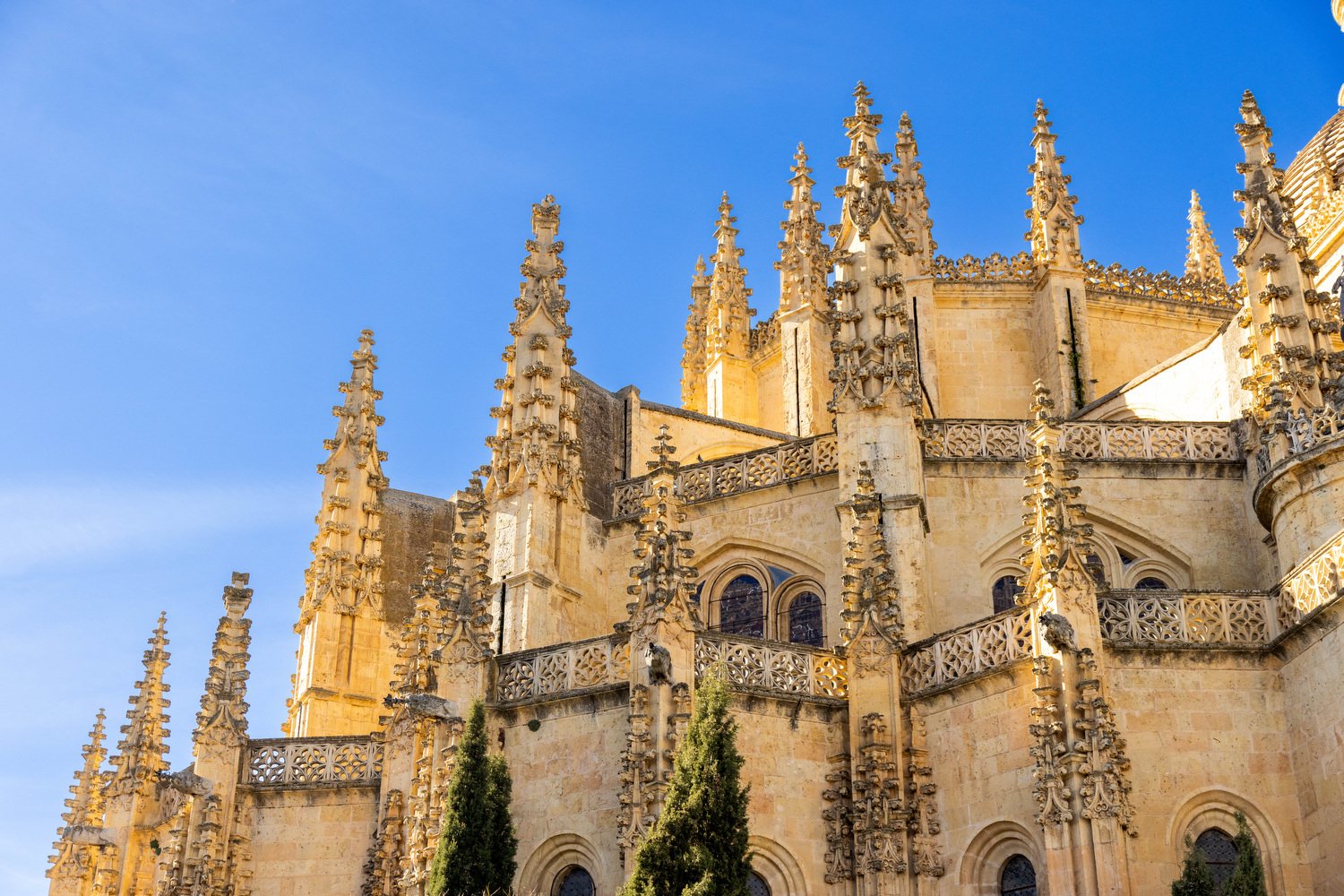
You can start a tour of the cathedral by taking in the very unusual and intricate exterior.
The cathedral was built at the highest point of the town and is impossible to miss. Construction on the Gothic-style church began in the year 1525 after a fire in the old Romanesque cathedral.
The entrance fee is €5, you can purchase the tickets at the door or in advance online. A guided tour was starting just as we entered but we chose to tour on our own.
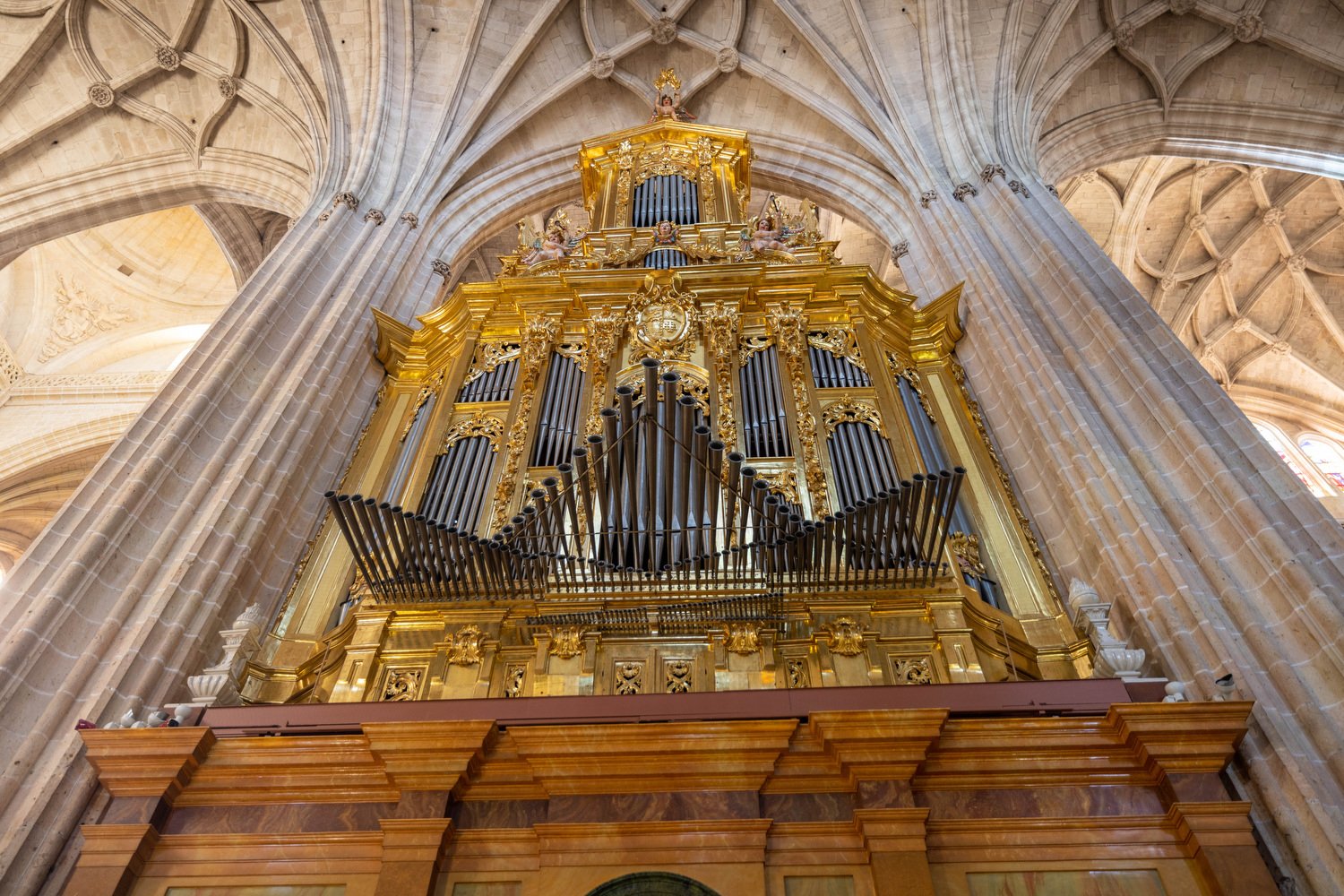
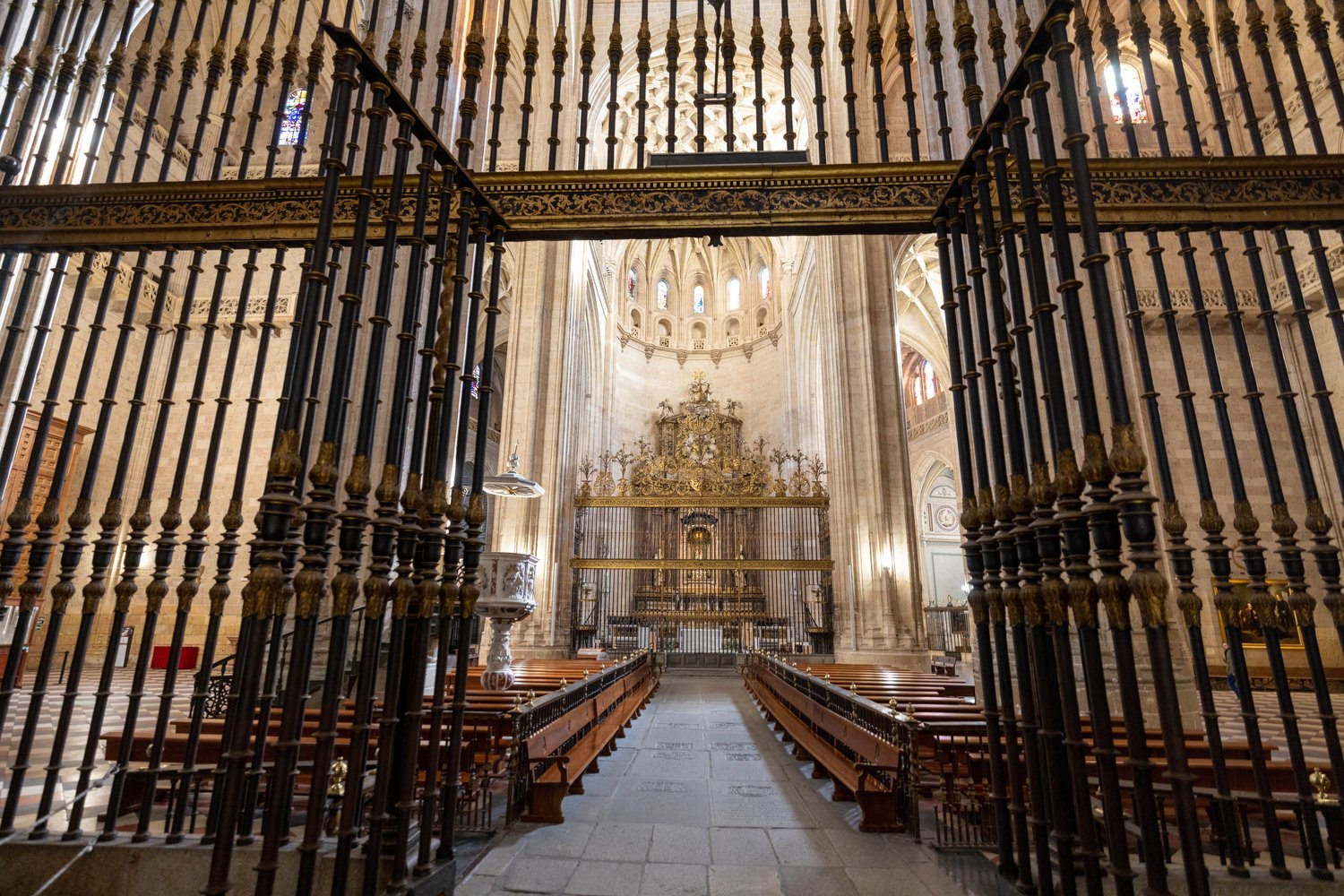
The interior is massive, and the gold pipe organ is striking.
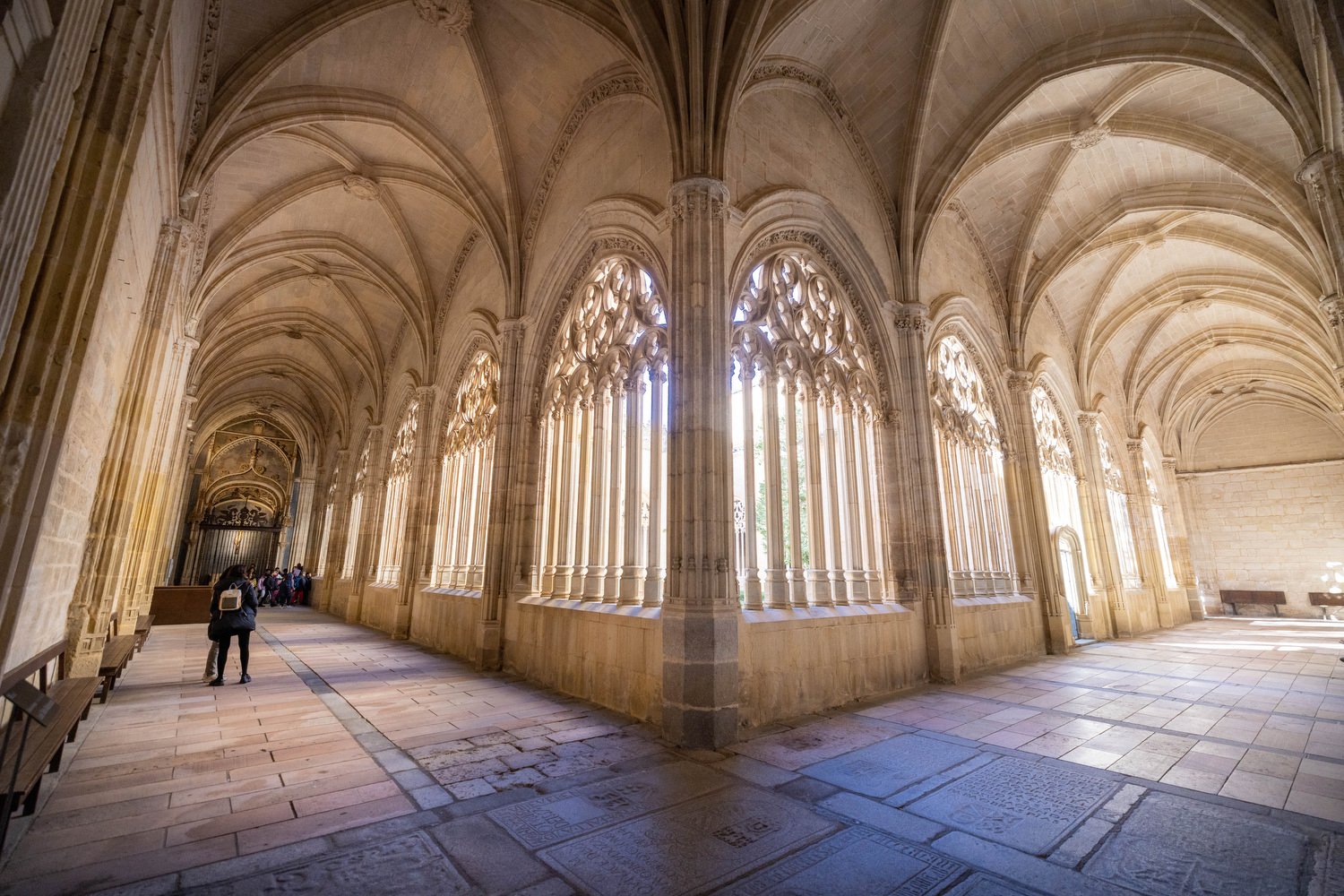
The cathedral has 21 chapels around the interior walls. Each chapel is unique so there is no shortage of things to look at.
| HOTELS | Booking.com Lots of search options. The customer reviews are very helpful. | Link ↗ |
| ACTIVITIES | Viator A wide variety of tours, food experiences and historical guides. | Link ↗ |
| AIRFARE | FareDrop Alerts for cheap flights customized by your home airport. | Link ↗ |
| PHONE | Airalo Easy to use eSIM for data and calls in every country. | Link ↗ |
| TRAIN TRAVEL | Trainline We book all our trains here. Easy to use and comprehensive listings. | Link ↗ |
Touring the Alcazar of Segovia
A short walk through the narrow streets brings you to the Alcazar. It sits at the very tip of the old city on a rocky outcrop above the point where two rivers meet, and the far end of the castle juts out in a shape that looks exactly like the prow of a ship. From a distance, with the towers rising above it, the whole thing looks like something out of a fairy tale. The rumour is that it inspired Disney's Cinderella Castle, and looking at it, that's easy to believe.
The site goes back to Roman times, but the castle as it stands today took shape in the 15th century under the Kings of Castile. It has been a royal palace, a state prison, and a military academy at various points in its history. One of its most famous residents was Queen Isabella I, who used the Alcazar as a favourite home and received Christopher Columbus here before he set off on his first voyage. That detail alone makes it worth stopping to think about as you walk through the rooms.

Alcázar of Segovia
Tickets are €7 for adults to visit the palace and museum. Tower access costs €10 and includes the climb up 152 steps to the top of the Torre de Juan II, where the views over the city and surrounding countryside are excellent. The full package with audioguide is €13.50. The castle is open daily from 10 am to 6 pm in winter and 10 am to 8 pm from April through September. It's closed on Christmas Day and New Year's Day.
Book your tickets online before you go. During high season, the wait for the security check at the entrance alone can stretch to an hour, and that's on top of any ticket queue. Buying online means you arrive with a time slot and skip the ticket line entirely.
The interior is substantial. The Throne Room, the Royal Chamber, the Hall of the Kings, and the Chapel are all worth taking your time over. The ceiling work in the Hall of the Kings alone is remarkable. The Museum of the Royal Artillery College has a large display of weapons and military equipment, which is genuinely interesting even if military history isn't usually your thing.

The throne room inside the Alcazar of Segovia

View of the Segovia countryside from inside the Alcazar of Segovia.
The view of the Alcazar from inside is impressive, but the best photographs of the castle are from the other side of the river.
When you come out of the entrance, follow the road to the right, which runs along the old city wall. At the bottom of the hill, cross the Eresma River and head uphill until you reach the main road. The viewpoint here looks back at the castle perched on its rocky outcrop, with the two rivers visible below it. If you only take one photo in Segovia, take it from here.
At the far end of the castle, there is an outdoor terrace with views out over the countryside that stretch for miles on a clear day. It's the kind of view that makes you glad you made the trip.
When you come out, Cafetería Casa de la Química is right outside the entrance. We sat at the outdoor tables for a coffee and the view of the city wall from there is lovely. Debbie and I wouldn't recommend going much further into the menu than a drink and a snack, but as a rest stop before the walk back, it's perfect.
From there, we took the road to the right, which follows the old city wall along the edge of the hill with big views of the land below. A good way to decompress after the castle before heading back through town.
Our other Spain travel posts:

View of the Cathedral and city wall from the area outside the Alcázar of Segovia
Wander the back streets
The main attractions of Segovia are basically located in a straight line and a short walk from each other.
This makes it perfect for wandering the streets without any fear of getting lost. There are numerous shops to stop in along the way.

Eat Cochinillo Segovia
Cochinillo is Segovia's dish. Every city in Spain has something it's known for, and here it's roasted suckling pig, cooked low and slow in a wood-fired oven and served in a clay dish. The skin comes out completely crispy while the meat underneath is so soft it falls apart.
The traditional test of a perfectly cooked cochinillo is that the waiter cuts it with the edge of a dinner plate rather than a knife. If it's cooked right, the plate glides straight through.
The classic side dish to order alongside is judiones de La Granja, large white beans from the nearby village of La Granja, slow-cooked with chorizo. Order both, and you have a proper Segovian lunch.
There are cochinillo restaurants all over the city, but here are three worth knowing about before you go:
Mesón Don Jimeno is small, it's on the walking route between the Alcazar and Plaza Mayor, and the prices are noticeably lower than the bigger tourist-facing restaurants. It has a loyal following among visitors who did their homework before arriving. Get there when it opens at noon or book ahead; the place only has around 30 seats.
Restaurante José María on Calle Cronista Lecea is serious about Cochinillo. The owner runs his own breeding farm, and the restaurant has a Michelin mention. Lunch here is an event, with whole pigs carved at the table. Portions run around €32 each. Book well in advance, especially on weekends.
Mesón de Cándido sits right beside the aqueduct and has been feeding visitors since the 1800s. The location alone is worth it. If your table is near someone ordering a whole pig, you'll see the owner cut it with a plate and smash it on the floor afterwards. It's touristy, yes, but it's also genuinely fun.

Late afternoon sun streams through the Segovia Aqueduct before we took the bus back to the train station.
After seeing the sights, we had a few minutes to spare before taking the bus back to catch our train. We decided to grab a coffee and snack in the plaza area near the Aqueduct, a lovely way to end our trip to Segovia.
A Few Things Worth Knowing Before You Go
The streets in Segovia are cobbled, and the old city sits on a hill. By the end of the day, you'll have done more climbing than you expected. Wear proper walking shoes; this isn't the day for sandals or anything with a heel.
Book your Alcazar tickets online before you arrive. In summer especially, the ticket queue at the door can take up to an hour. Spending that hour inside the castle is a better use of your time.
The #11 bus back to the train station leaves from the same stop where it dropped you off near the aqueduct. The schedule is posted at the stop. Check it when you arrive in the morning so you know what time you need to be back. Missing your train connection means waiting at a very quiet station outside of town with not much to do.
If you're planning a weekend trip and considering combining Segovia with another day, the walled city of Ávila is about 45 minutes away and many organised tours run on the same day. We haven't done that one yet, but it's on the list.
Check out some well-reviewed Segovia tours from Viator here.
Note - This blog post contains affiliate links. This means that if we are recommending a product, activity, or hotel, we might be receiving a small commission if you buy or book from these links. This is done at no additional cost to you. We only recommend products we have personally used or have thoroughly researched.
FAQ: Visiting Segovia from Madrid
Is Segovia worth a day trip from Madrid?
Absolutely. Debbie and I both agreed it was one of the best day trips we took during our time in Spain. You get a Roman aqueduct, a Gothic cathedral, and one of the most dramatic castles in the country, all within walking distance of each other. The city is small enough to cover in a day and easy to reach by train or bus. If you have a free day in Madrid, Segovia should be near the top of your list.
How long do you need in Segovia?
A full day gives you the most comfortable experience. Six to eight hours is enough to see all three main attractions, sit down for a proper lunch, and still have time to wander a bit. If you're short on time, you could cover the highlights in four to five hours, but you'd be rushing through the Alcazar and skipping lunch, which would be a shame given how good the food is here.
Is Segovia walkable?
Yes, but wear proper shoes. The three main attractions sit in a rough line across the old city, and the walk between the aqueduct and the Alcazar is just under a mile. The streets are cobbled and the city sits on a hill, so there's more climbing than you might expect. By the end of the day, your feet will know you've been somewhere. Sandals or heeled shoes are a bad idea here.
What is the best way to get from Madrid to Segovia?
It depends on your priorities. The high-speed Renfe Avant train from Chamartín Station takes about 27 minutes, which is hard to beat for speed. The trade-off is that the train drops you at a modern station outside the city, and you'll need the #11 bus to get into town. The Avanza bus from Moncloa Station takes about 90 minutes but drops you right near the aqueduct in the historic center, which is genuinely convenient. Both options work well. We took the train and had no complaints.
Can you do Segovia and Toledo in the same day?
Technically yes, but it makes for a very long and rushed day. Both cities deserve more time than a combined trip allows. If you want to combine Segovia with another day trip, Ávila is a better pairing. It's only about 45 minutes from Segovia and several organized tours run both cities on the same day. We haven't done that combination yet, but it's on our list.
Do you need to book Segovia attractions in advance?
For the Alcazar, yes. In high season especially, the ticket queue at the door can take up to an hour. Booking online before you go means you arrive with a time slot and skip that line entirely. The Cathedral is more relaxed, and you can usually buy tickets at the door. If you're visiting on a Sunday morning, you can get free entry between 9:00 and 10:00 from April through September.
What should you eat in Segovia?
Cochinillo. There's really no debate on this one. Roasted suckling pig is the city's signature dish and Segovia does it better than anywhere. The traditional test of a well-cooked cochinillo is that the waiter cuts it with the edge of a dinner plate instead of a knife. Order it alongside judiones de La Granja, the large slow-cooked white beans from the nearby village of La Granja, and you have a proper Segovian lunch.
About the Authors

|
John and Debbie O'Boyle are the team behind The Empty Nest Explorers. John is a professional photographer whose work has been published by The New York Times, NBC News, and Getty Images. He is a member of the American Society of Media Photographers, has been part of a Pulitzer Prize-winning team, and has received two New York Emmy nominations. Debbie is a writer with 30+ years of professional photography experience, formerly with The Star-Ledger and NJ.com. Together, they create in-depth travel guides for couples and empty-nest travelers who want to make the most of every destination. |
Other Spain blog posts you might like: