
What to do in Valley Forge, Pennsylvania in 2026

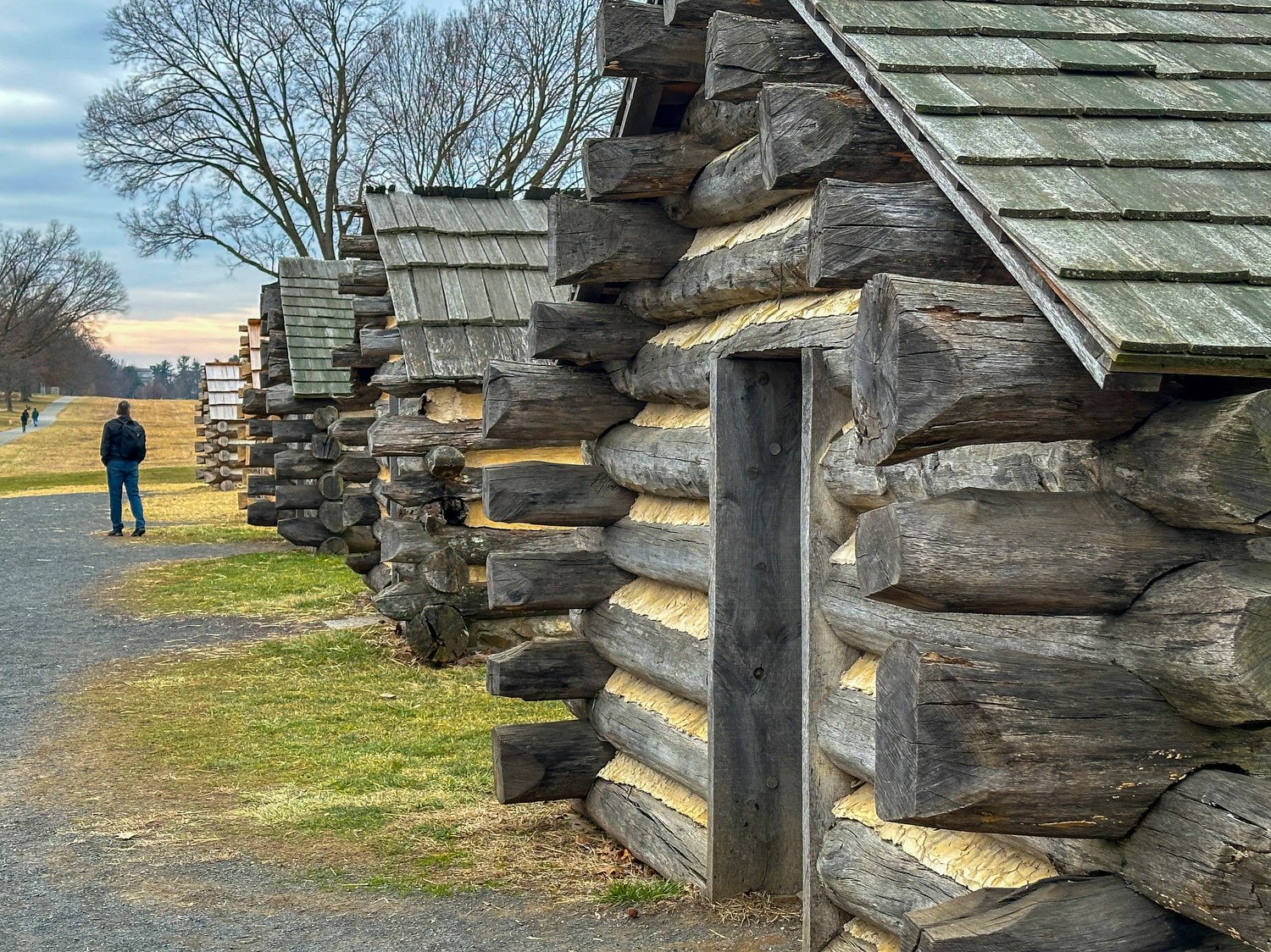
The Muhlenberg’s Brigade huts at Valley Forge National Historical Park . All photos by John O’Boyle / The Empty Nest Explorers
Updated June 2026 - Valley Forge National Historical Park is one of those places that surprises you. Debbie and I had driven past it for years before we finally stopped.
The park is about a 35-minute drive west of Philadelphia and very close to us in New Jersey. Admission is free. Parking is free. And there's enough here to fill a full day, whether you're into American history, hiking, or both.
General George Washington brought his 12,000-man Continental Army to Valley Forge in December 1777 after a difficult fall campaign. No battles were fought here. But over that brutal winter, the army lost roughly 2,000 men to disease and cold. The soldiers who came out the other side in June 1778 were a different army. Valley Forge is where the Continental Army grew up.
Today, the park’s 3,500 acres and miles of hiking and biking trails make Valley Forge a great spot for bicyclists, runners, and history buffs.
You’ll see many area residents using the park for exercise. On one of our visits, we brought our bicycles, and cycling is a very popular way of seeing the park.
Valley Forge is one of the premier sites for America's 250th anniversary celebrations in 2026. If you're planning to visit this year, it's a great time to go.
Valley Forge is celebrating two milestones at once this summer: the park’s 50th anniversary as a national park and America’s 250th birthday. The main event, “Retreat to Valley Forge,” runs July 3 through 5, 2026, with living history demonstrations, musket firing, musical performances, and special exhibits. All park-hosted events are free. The park expects large crowds that weekend, especially on July 4 — a special shuttle will run between the major stops. Plan ahead if you’re going.

The entrance to the Valley Forge Visitors Center.
| 🏛️ Valley Forge Quick Facts | |
|---|---|
| 📍 Address | 1400 North Outer Line Drive, King of Prussia, PA 19406 |
| 🚗 Distance from Philadelphia | About 18 miles west / 35-minute drive |
| 🚗 Distance from Southern New Jersey | About 45 minutes |
| 💵 Park Admission | FREE |
| 🅿️ Parking | FREE |
| 🕘 Visitor Center Hours | Daily, 9 AM – 5 PM |
| 🏞️ Park Grounds | Open daily, dawn to dusk, year-round |
| 🏠 Washington's Headquarters | Open daily March–December; weekends only in January–February. Check nps.gov/vafo for current hours. |
| 🐕 Dogs Allowed? | Yes, on leash |
| 📱 Best Planning Tool | Free NPS app — includes audio tour, maps, and event calendar |
Touring Valley Forge National Historic Park
The Visitors Center
Our most recent trip to Valley Forge was our first since the visitor center underwent a $12 million renovation and it looks great.
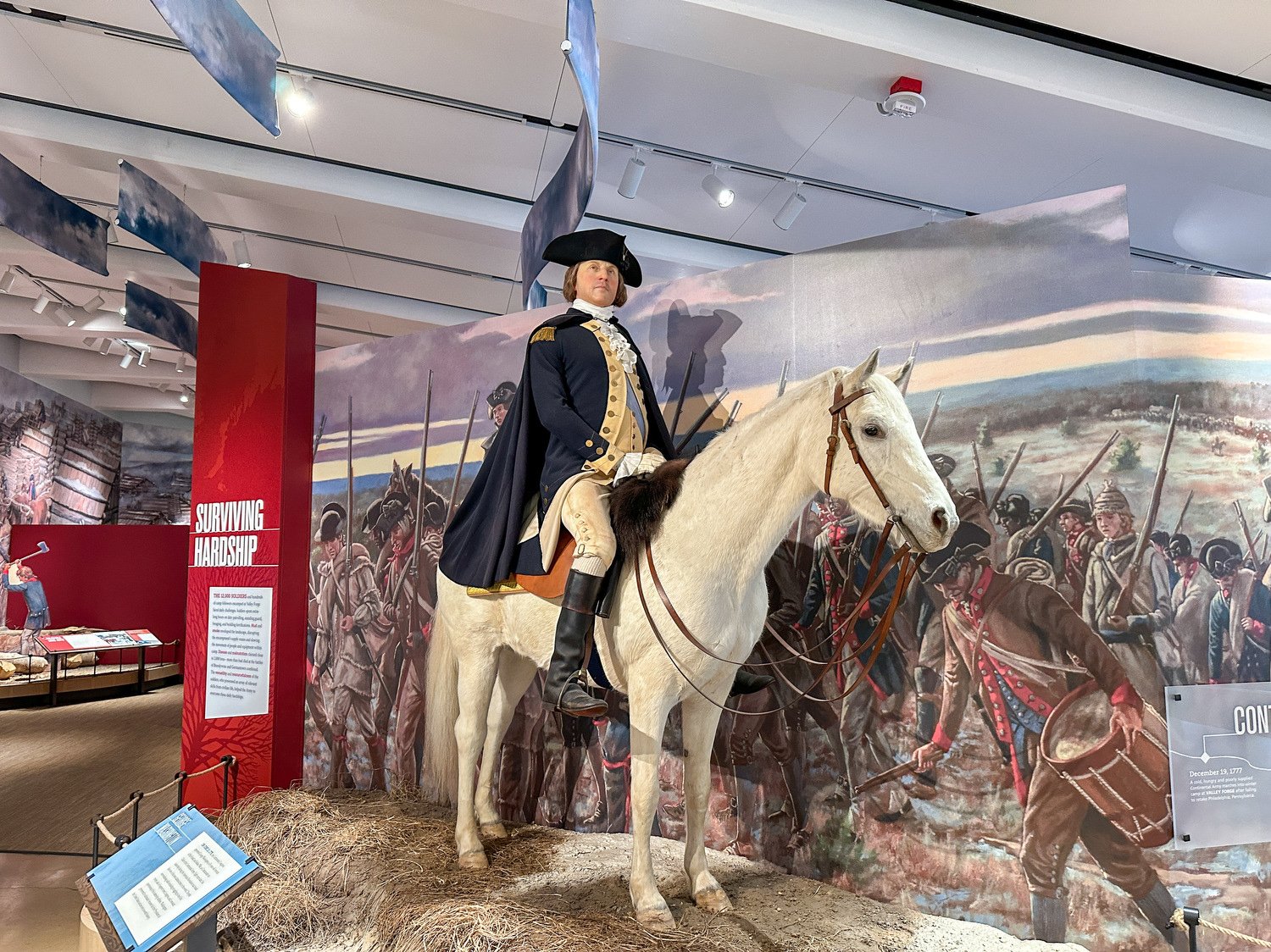
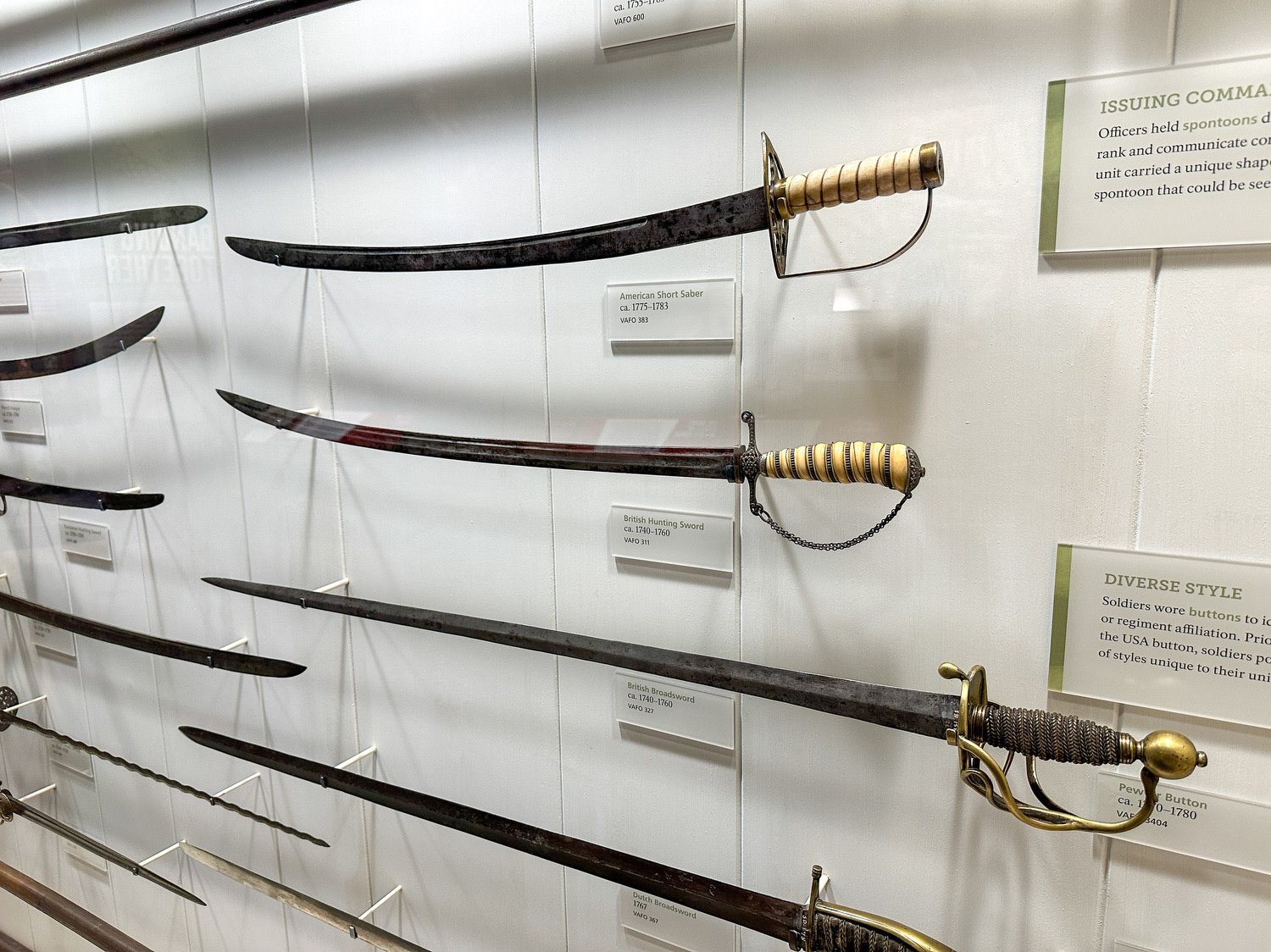
You can pick up a map (highly recommended), chat with National Park Service staff, and pick up some gifts in the store. There is also a very large display depicting life at Valley Forge as well as Revolutionary War military gear.
Encampment Tour Route
The Encampment Tour route is a 10-mile driving loop comprised of 9 major tour stops.
We would highly recommend downloading the National Park Service App. The app provides up-to-date info on what to see, an event calendar, a list of what to see, and most importantly, directions to the self-guided tour.
Muhlenberg’s Brigade
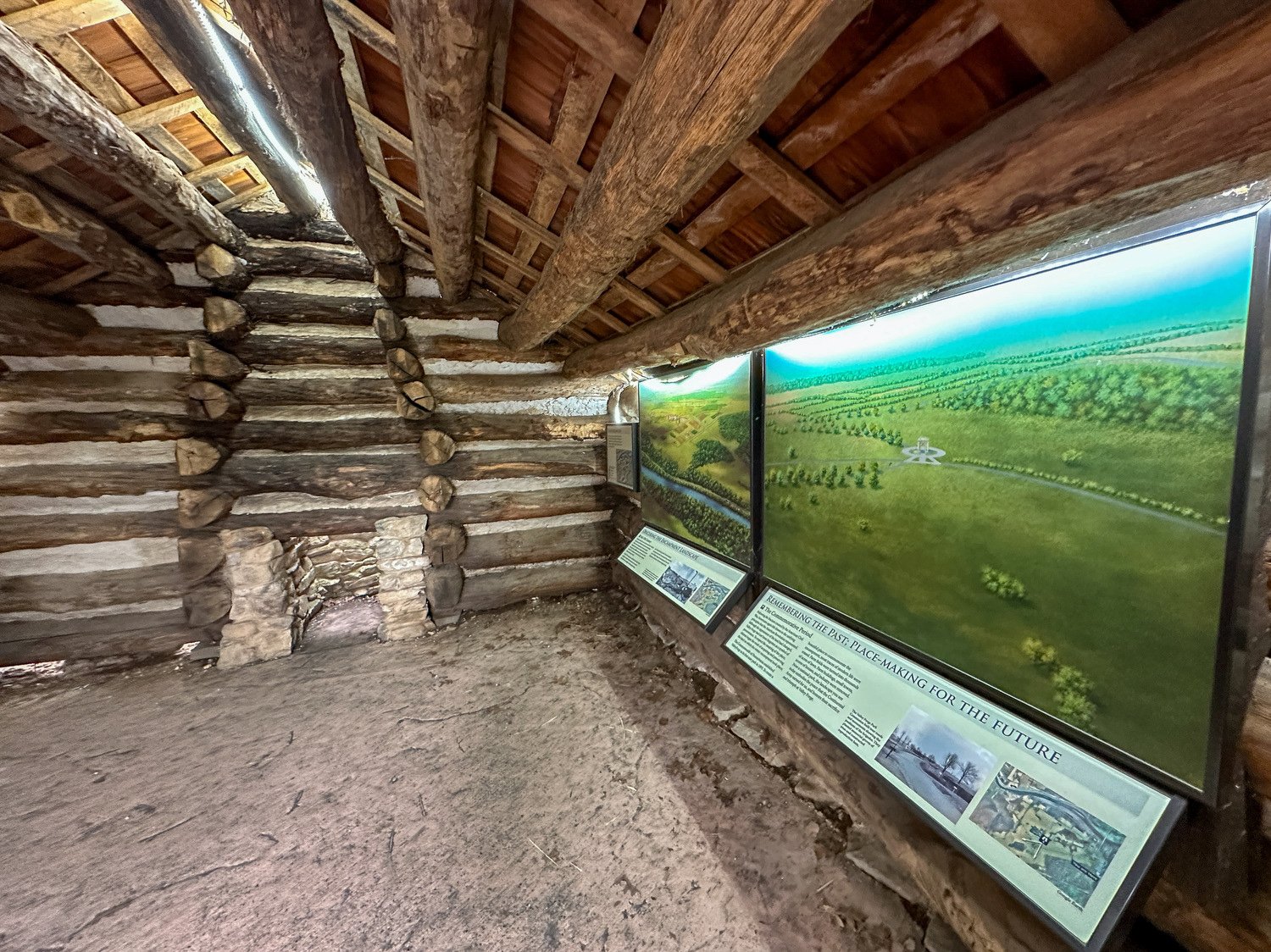
This is the site of the encampment of troops led by General Peter Muhlenberg. Today you can visit nine recreated huts. Be sure to walk inside some since they also feature exhibits inside.
A short walk from the huts, you can see a recreated earthen redoubt. These simple structures helped in the fortification of Valley Forge.
One name worth knowing before you visit is Baron Friedrich von Steuben. This Prussian military officer arrived at Valley Forge in February 1778 and spent the next few months drilling Washington's troops daily on the Grand Parade grounds. He didn't speak English and had to shout instructions through a translator.
But the results were remarkable. Many historians credit von Steuben with transforming a collection of colonial militias into a professional fighting force. There's a statue honoring him in the park. It's worth a stop.
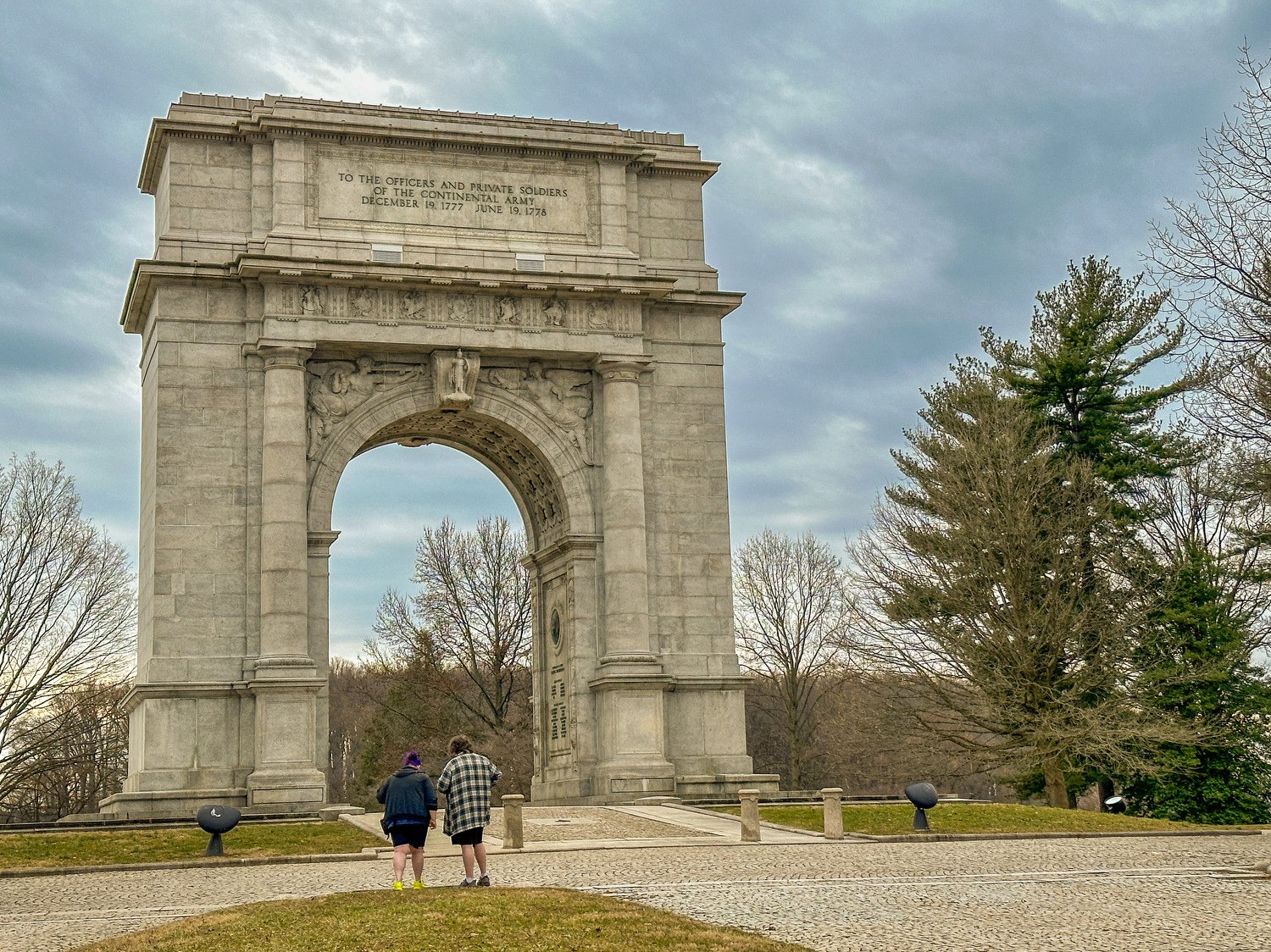
National Memorial Arch
The United States National Memorial Arch was designed by Paul Philippe Cret as a version of the Arch of Titus in Rome. It sits on the road where soldiers marched into Valley Forge on December 19, 1777, and commemorates the sacrifices of the Continental Army.
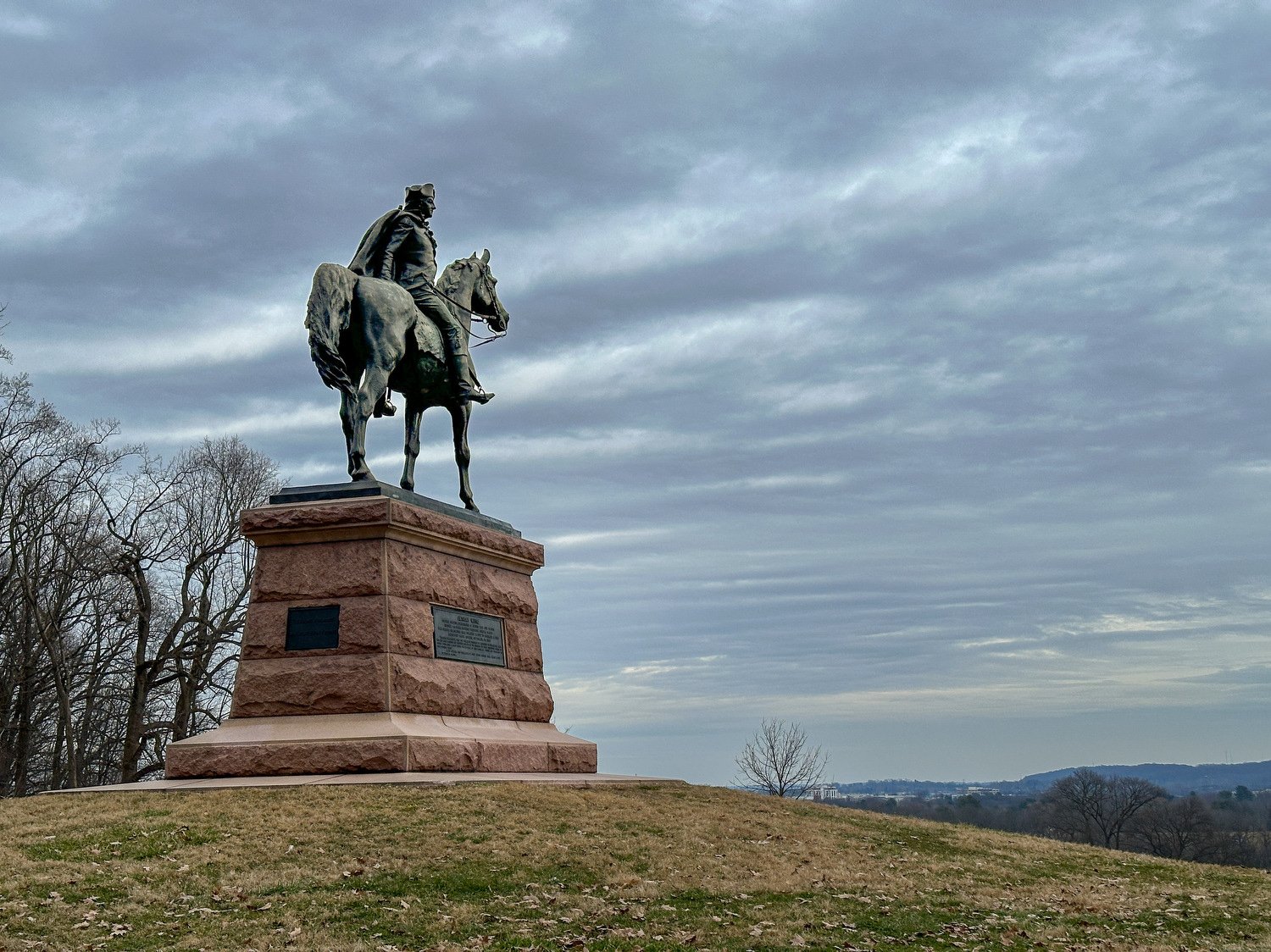
Wayne Statue
The 18-foot-long statue depicts Brigadier General Anthony Wayne on horseback. Wayne served in many roles during the country’s early history, including being part of the Pennsylvania Convention that ratified the U.S. Constitution.
Historic Valley Forge Station
The train station was built in 1911 to welcome visitors arriving at Valley Forge State Park by rail. While the train tracks are still active the building now houses exhibits instead of serving as a train station.

Washington Headquarters building
Washington's Headquarters
Heads up for 2026 visitors: Washington's Headquarters is currently closed for interior restoration and is expected to remain closed through at least 2027. You can still visit the area, see the exterior of the historic Isaac Potts house, and explore the nearby train station and replica guard huts. The trolley tour still stops here. But going inside isn't possible right now, so plan your day accordingly.
General George Washington used the Isaac Potts house during the 1777-1778 encampment. At the time, the house was being used by a relative of Potts, who rented the building to Washington. Among the aides who lived in the house with Washington was Alexander Hamilton.
Unfortunately, our most recent visit was in the winter, so the building was not open.
Washington Memorial Chapel
This one is easy to miss but worth the detour. The chapel sits just outside the main park boundary on Route 23.
It's an active Episcopal parish with stunning stained glass depicting scenes from Washington's life. The Memorial Carillon Tower, with 58 bells, is one of the largest carillons on the East Coast. No charge to visit.
Guided Walks
Ranger-led walks are scheduled daily from June through August at 10:20 AM. 40-minute walks depart from the Visitors Center and follow the paved trail to the soldier huts at Muhlenberg's Brigade.

If you are a history buff then you might enjoy a visit to the town of Gettysburg and the Civil War battlefield. Gettysburg is only two hours west of Valley Forge and features many places to stay overnight.
You can read all about Gettysburg in our post: What to do in Gettysburg; planning your visit
Fall Campfire Programs
These programs are held on select Saturdays in the fall at 7 PM.
A park ranger discusses stories of Valley Forge and the American Revolution. The hour-long programs are held at Conway’s Brigade.
The Parks Service suggests calling 610-783-1099 before 5 PM to check on the program's status.
Hiking and Biking at Valley Forge
One of the things that surprised us about Valley Forge is how much of a workout destination it is. On one of our visits, we brought our bikes, and we were far from alone. The park draws a steady crowd of cyclists, runners, and hikers year-round.
The trail to know is the Joseph Plumb Martin Trail. It's a paved loop of about 8 to 9 miles and passes the major historic sites, including the Muhlenberg huts and the National Memorial Arch. It's a great way to combine some exercise with the history.
The park has over 35 miles of designated trails in total. If you want something more challenging, the unpaved trails on Mount Joy and Mount Misery offer hillier terrain and wooded stretches along Valley Creek.
Don't have bikes with you? The Encampment Store inside the Visitor Center rents bikes seasonally.
If hiking or biking is not your thing, the Encampment Store inside the Visitor Center also sells tickets for a 90-minute guided trolley tour. It runs three times daily at 11 AM, 1 PM, and 3 PM, with stops at Muhlenberg's Brigade and Washington's Headquarters.
The trolley operates weekends only in spring and fall, and daily in summer. Reservations are recommended and can be made by phone at 610-624-5010. You can't book online.
| Season | What to Expect |
|---|---|
| Spring | Mild weather, trails in great shape. Crowds are manageable before summer. Good for cycling. |
| Summer | Trolley runs daily. Ranger programs are at their peak. Can be hot and humid. The July 4th weekend in 2026 will be especially busy. |
| Fall | Beautiful foliage. Fewer crowds than summer. A great time to bike or hike. Fall campfire ranger programs on select Saturdays in the evenings. |
| Winter | Quiet and uncrowded. Genuinely moving to see the park in cold weather — it’s a reminder of what the soldiers endured. Washington’s Headquarters has reduced hours in winter (weekends only starting January). The December March-In event commemorates the army’s arrival. |
What to do nearb
John James Audubon Center at Mill Grove
This is only about five minutes north of the park's Visitor Center and makes a nice add-on.
Mill Grove was the first American home of artist and naturalist John James Audubon, who arrived here from France in 1803 as a teenager. The 175-acre estate has more than seven miles of trails and great views of Perkiomen Creek.
The Visitor Center and exhibit hall are open Wednesday through Sunday, 10 AM to 4 PM. Admission is $7 for adults and $6 for seniors. The grounds and trails are always free from dawn to dusk.
Guided tours of the historic house run at 11 AM and 12:30 PM, Wednesday through Sunday.
One heads-up if you're bringing a dog: they're not allowed inside the park since it's an active bird sanctuary, though they can walk the paved loop around the perimeter.
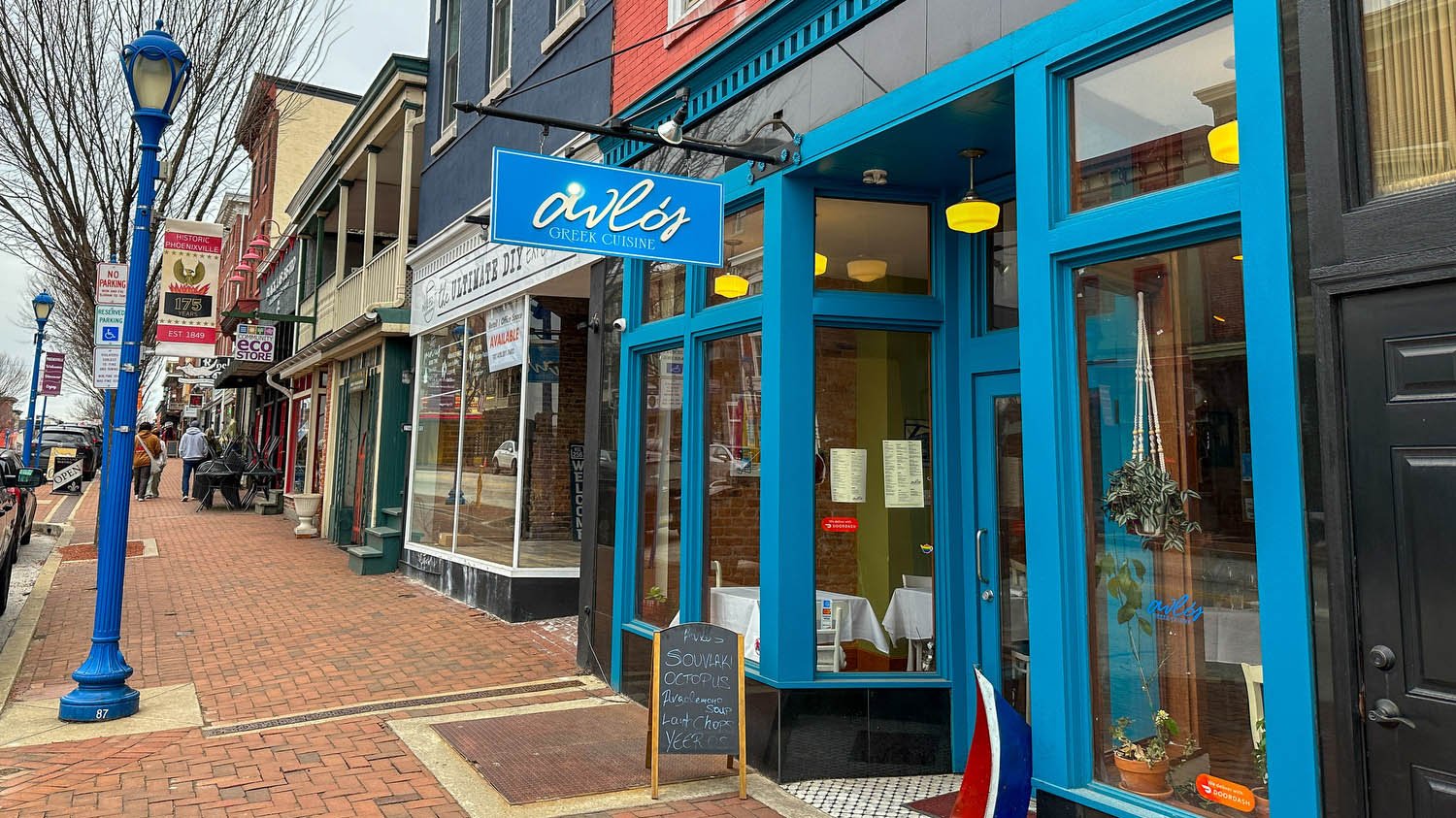
Explore Downtown Phoenixville
Phoenixville is located about 10 minutes from Valley Forge National Park.
It has a small but lovely downtown with numerous restaurants. We ate lunch at Bistro on Bridge, a fun and very large bar/restaurant with good food.
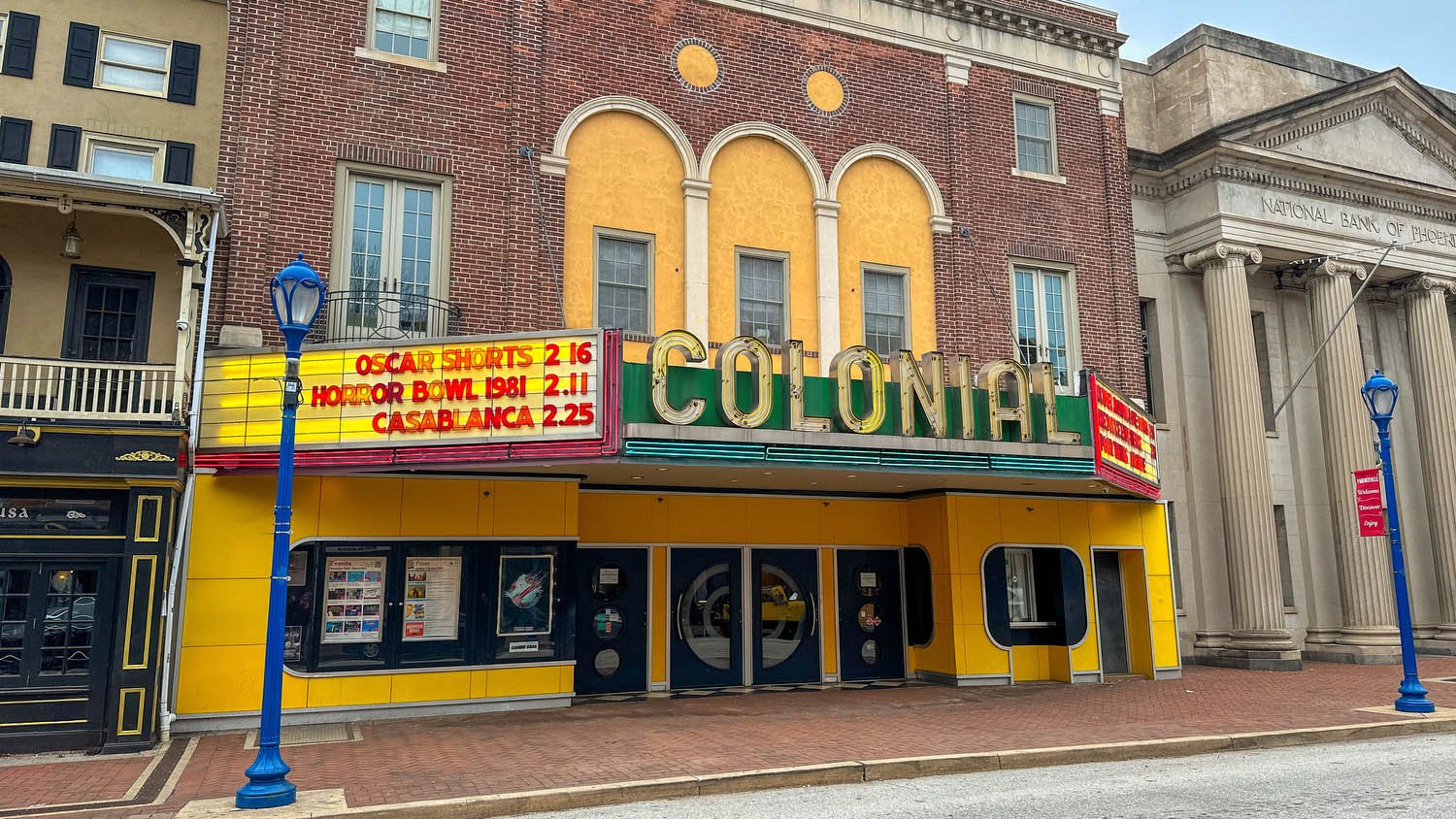
The Colonial Theater hosted Harry Houdini freeing himself from a safe in 1917 and was featured in the movie “The Blob”.
Bike the Schuylkill River Trail
The Schuylkill River Trail is a 60-mile network of trails from Philadelphia to the suburbs along the Schuylkill River. A portion of the trail passes through Valley Forge National Park and Phoenixville.
The trip from the park to Phoenixville is about 12 miles round-trip, but there are numerous other access points for shorter or longer rides.
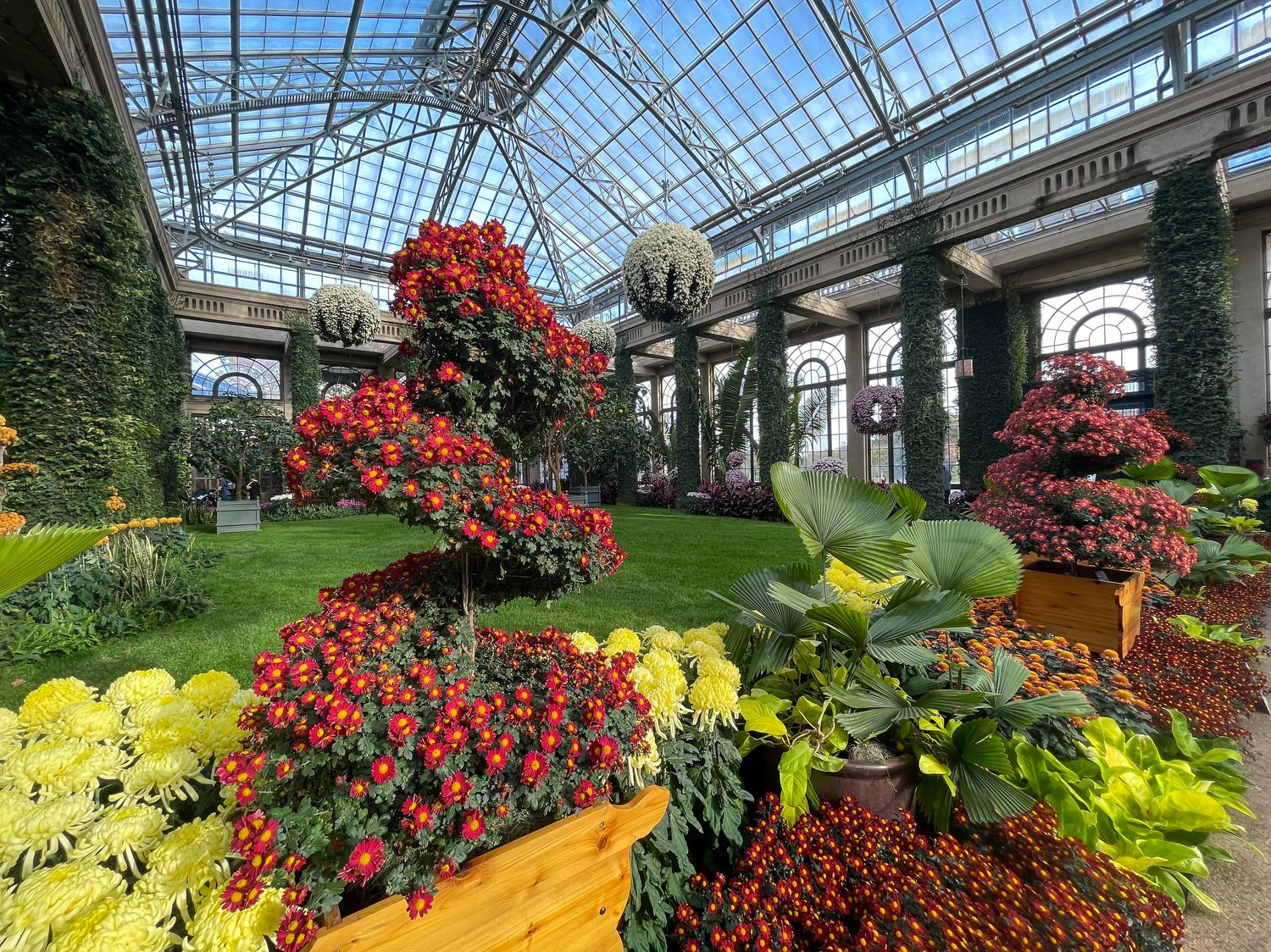
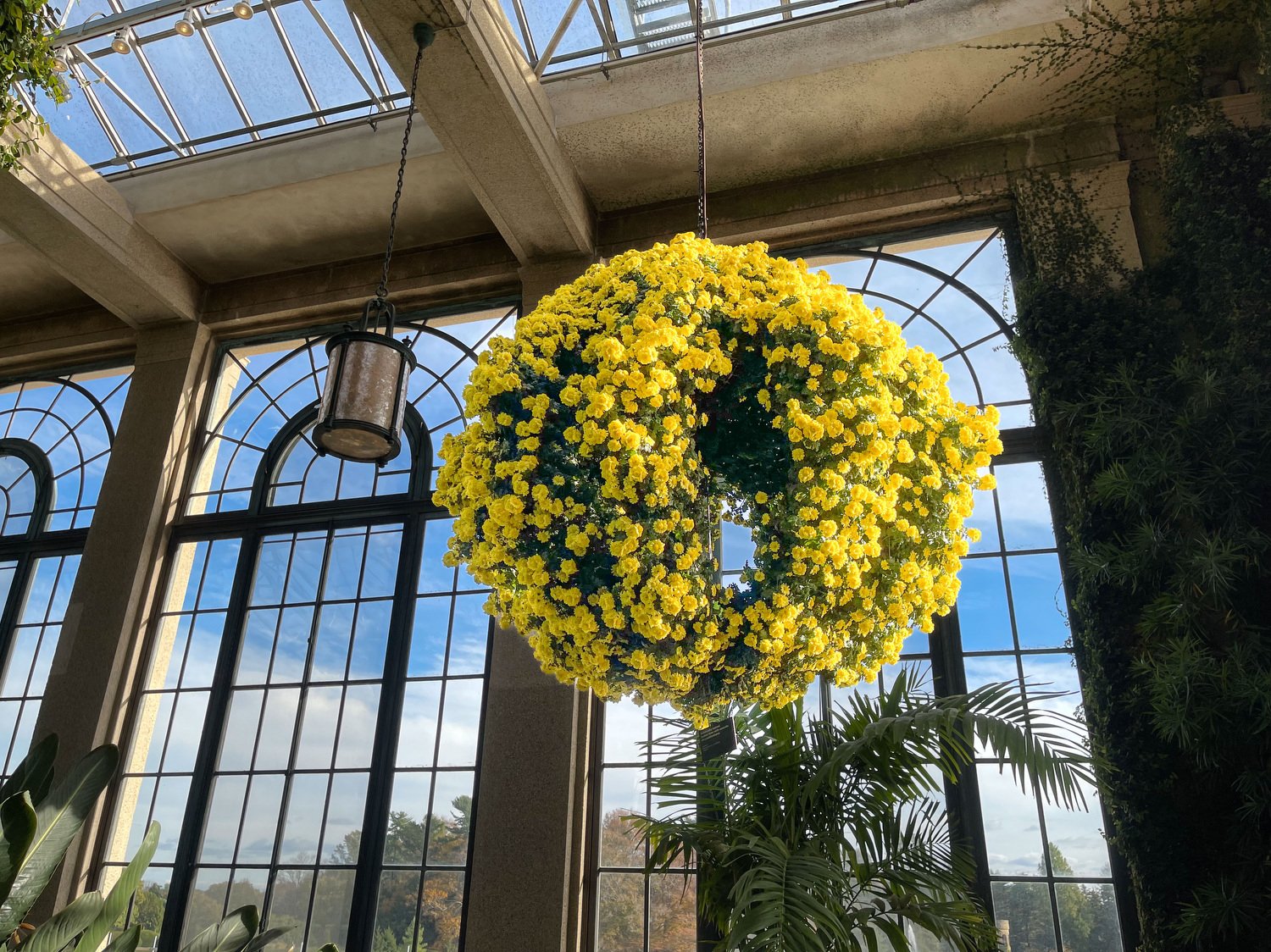
Visit Longwood Gardens
The stunning Longwood Gardens is about a 45-minute drive from Valley Forge. The gardens draw visitors from throughout the Northeast and make a great addition to a half-day trip to Valley Forge.
You can read a full blog post we have about visiting Longwood Gardens here.
Frequently Asked Questions About Valley Forge
How long should I plan to spend at Valley Forge?
We'd say two to three hours is a comfortable amount of time for the self-drive tour with stops at the main sites. If you're biking the full loop, plan for closer to three hours. Add more time if you're doing the trolley tour or spending time hiking additional trails.
Is Valley Forge good for non-hikers?
Absolutely. The 10-mile driving loop means you can do the whole park by car with short walks at each stop. The Muhlenberg huts, the National Memorial Arch, and Washington's Headquarters area all have parking right nearby. You don't have to be an outdoor person to enjoy a day here.
Can you visit Valley Forge without a car?
It's possible but not easy. SEPTA Bus 125 does serve the area. That said, the park is spread out over 3,500 acres and the encampment tour loop was really designed for cars or bikes. If you're coming from Philadelphia without a car, the guided trolley tour departing from the Visitor Center is a good option since it takes you to all the main stops.
Is Valley Forge good for couples?
Debbie and I think it's a great half-day for couples. The combination of history and outdoor scenery works really well. Bike the loop together, grab lunch in Phoenixville afterward, and you've got a really enjoyable day without spending much at all.
Is Valley Forge free?
Yes. Admission is free, parking is free. The trolley tour and bike rentals have fees, but the park itself costs nothing to enter.
About the Authors

|
John and Debbie O'Boyle are the team behind The Empty Nest Explorers. John is a professional photographer whose work has been published by The New York Times, NBC News, and Getty Images. He is a member of the American Society of Media Photographers, has been part of a Pulitzer Prize-winning team, and has received two New York Emmy nominations. Debbie is a writer with 30+ years of professional photography experience, formerly with The Star-Ledger and NJ.com. Together, they create in-depth travel guides for couples and empty-nest travelers who want to make the most of every destination. |
Some well-reviewed nearby tours:
Note - This blog post contains affiliate links. This means that if we are recommending a product, activity, or hotel, we might be receiving a small commission if you buy or book from these links. This is done at no additional cost to you. We only recommend products we have personally used or have thoroughly researched.
Other travel posts you might like:

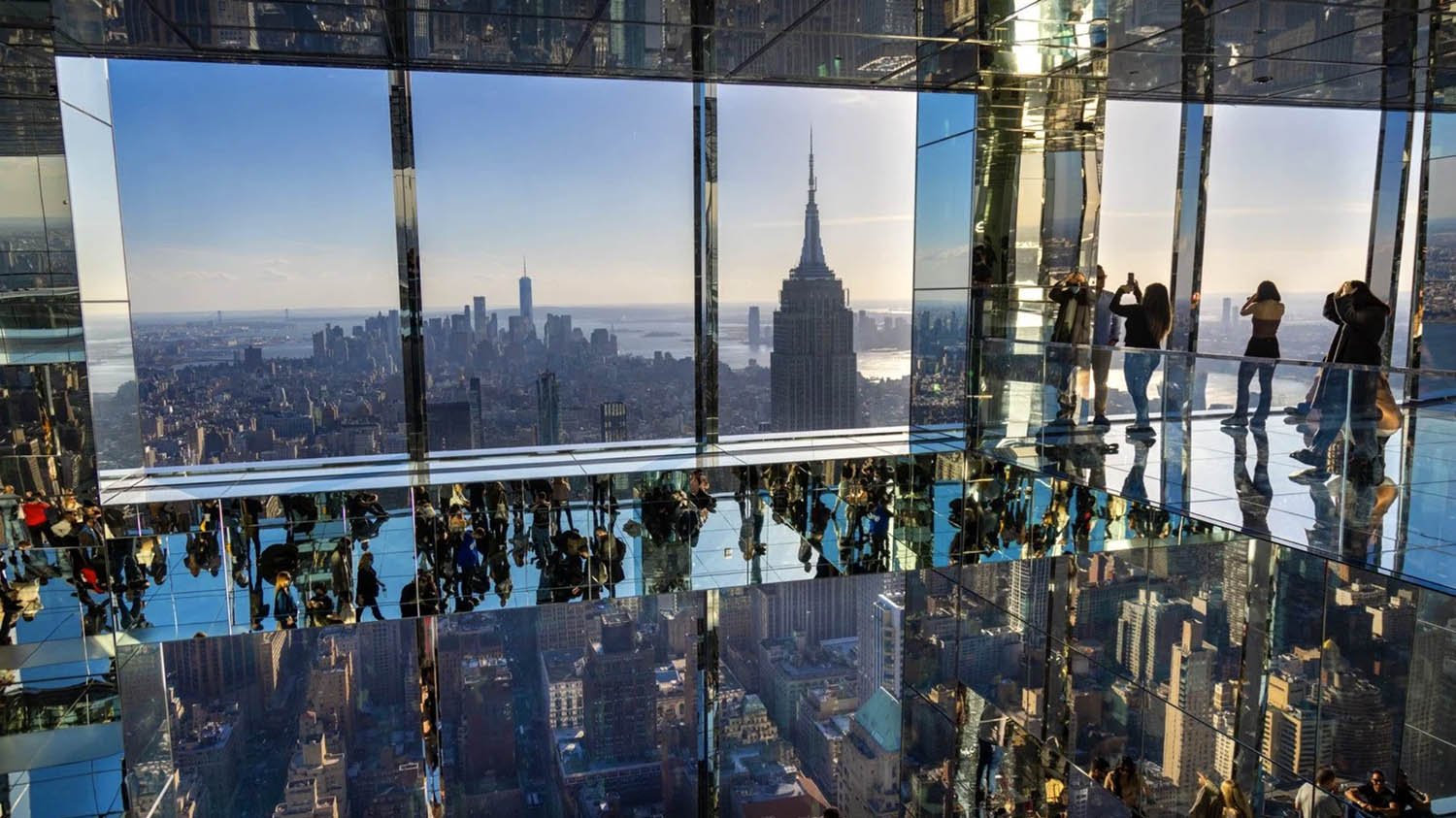

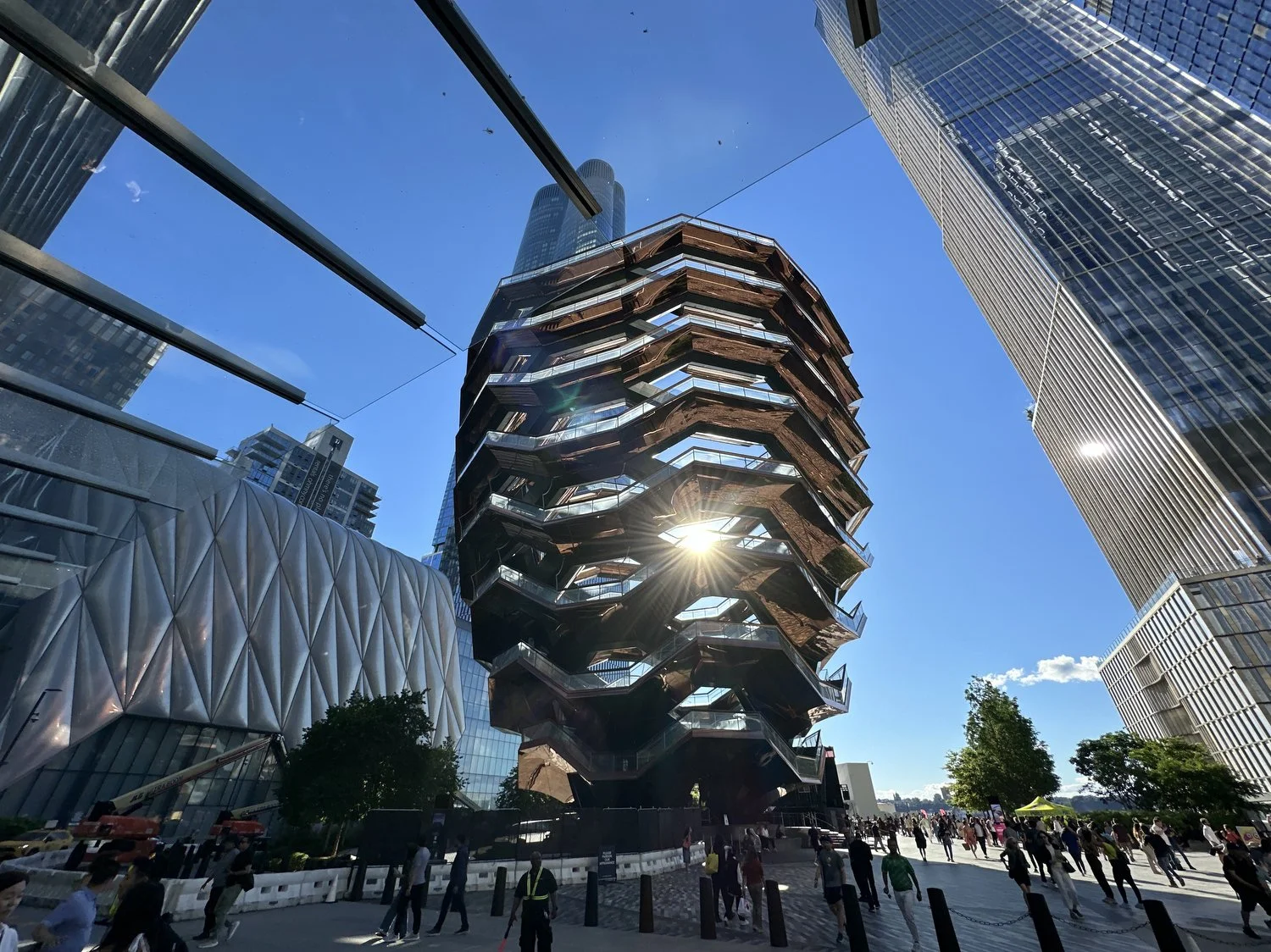

Debbie and I are in Manhattan most weeks, for work and to visit our son, and we still love showing people around.
Here are our honest picks for the best things to do, the ones worth your time, the few we would skip, and how to see the city without cramming your days.