
One Day in Chicago: 2026 Itinerary for the Loop and Beyond

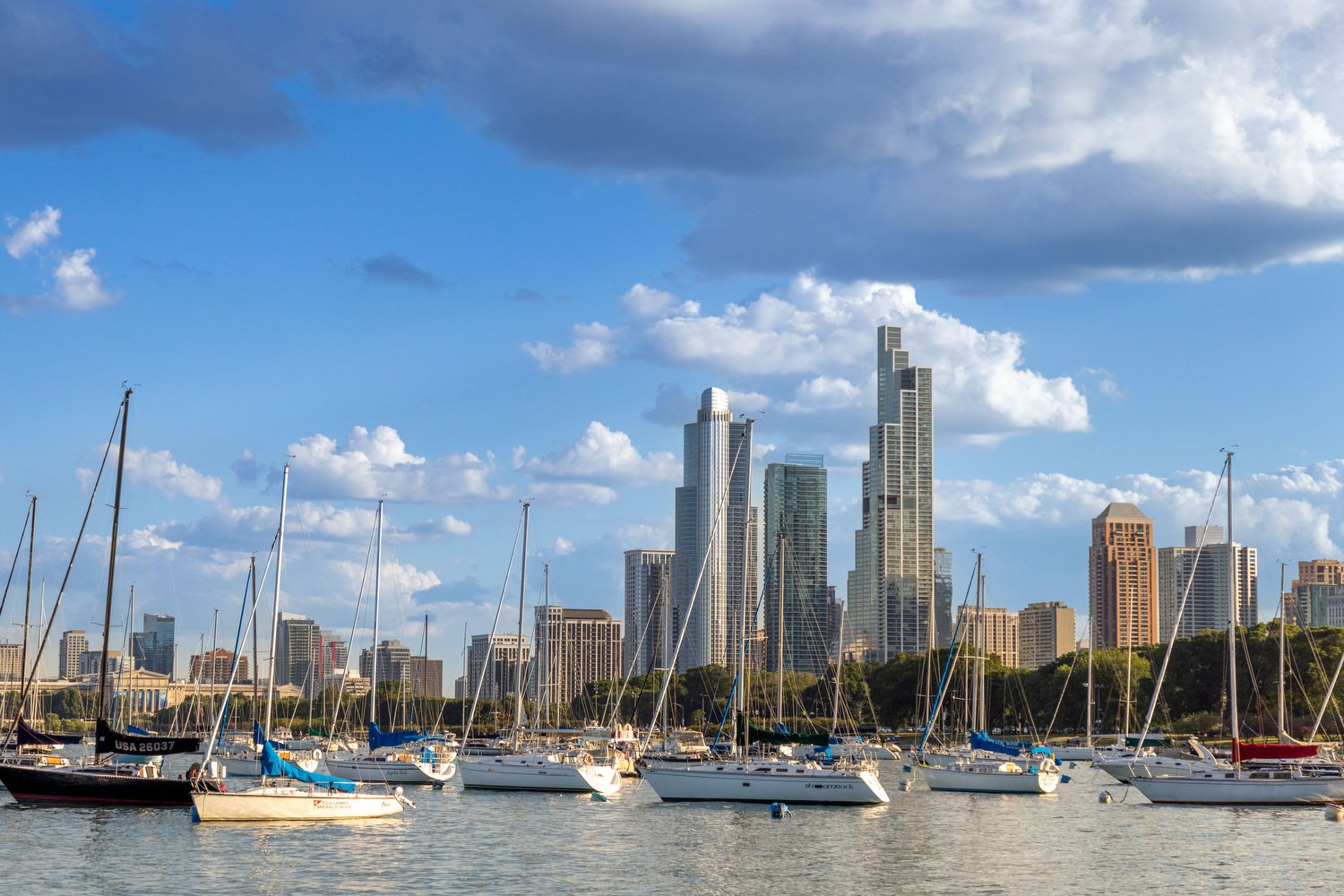
The Chicago skyline, Millennium Park and Lake Michigan. All photos by John O’Boyle / The Empty Nest Explorers
It’s easy to see many of Chicago’s major attractions during a one-day visit. Many of the must-see attractions are located in the downtown Loop area. The area is very walkable and visitor-friendly.
Recently we had a one-day business trip to Chicago to do some corporate portraits for one of our clients. We flew out the day before the photoshoot to spend an afternoon and evening enjoying some of the city's highlights.
We stayed right downtown within the Loop area (more on that later), a perfect hotel location from which to explore many of Chicago’s main attractions.
| Quick Facts | Details |
|---|---|
| 🚇 O'Hare to Downtown | Blue Line "L" train — 45 to 50 min, runs 24/7 |
| 💵 Blue Line Fare | $5 from O'Hare (airport surcharge); tap to pay accepted |
| 🏙️ Main Neighborhood | The Loop — Chicago's downtown core; most attractions are walkable from here |
| 🌊 Waterfront | Chicago Riverwalk (1.25 miles) + Lake Michigan lakefront |
| 🏛️ Willis Tower Skydeck | From $32 adults / $24 ages 3–11 / under 3 free — advance tickets recommended |
| 🎨 Art Institute | $32 adults / $26 seniors & students / under 14 free — open Thu–Mon, 11am–5pm |
| 🌭 Chicago Food | Chicago-style deep dish pizza and the classic Chicago hot dog are must-tries |
| 🎡 Navy Pier | Free to visit; Centennial Wheel tickets sold separately |
| 🏞️ Millennium Park | Free — Cloud Gate (the Bean), Crown Fountain, Lurie Garden |
| 🚗 Rideshare from O'Hare | Approx. $35–$60 depending on traffic and surge pricing |
How to get from O’Hare Airport to downtown Chicago

We decided to take the subway from the airport to our hotel downtown. The Chicago Transit Authority’s Blue Line operates 24 hours a day, 7 days a week. It was easy to navigate and took about an hour. You can transfer to other lines as needed, but the Blue Line will take you to the heart of downtown. The Blue Line can be accessed from all terminals at O’Hare, and the cost is $5 for the one-way ride.
The subway accepts tap to pay, so payment is very simple.
Besides the train option, there are also taxis, buses, and van shuttle services available. These are considerably more expensive than the subway, and take about the same time. So we recommend the subway - it was easy and convenient.
A One-Day Chicago Itinerary
If you have just one day, don't stress. The Loop puts most of what you want to see within easy walking distance of each other. Here's how John and I would structure it.
Morning: Millennium Park and the Art Institute
Start at Millennium Park. It opens at 6 am, and getting there early is worth it.
Before the crowds show up, you can actually stand in front of Cloud Gate and take in that incredible mirrored reflection of the skyline without fighting for space.
Walk over to the Crown Fountain before you leave. Two 50-foot glass towers face each other across a shallow reflecting pool, projecting the faces of real Chicagoans. In warmer months, kids wade in the water underneath them.
It's one of the most joyful pieces of public art I've ever seen, really fun. You can see the foutain in action in this brief YouTube short below.
One note for 2026 visitors: Lurie Garden is closed through early July for maintenance. Check millenniumpark.org for the latest before your trip.
From Millennium Park, the Art Institute of Chicago is a one-minute walk. The museum opens to the public at 11 am Thursday through Monday. It's closed on Tuesdays and Wednesdays.
Once inside, don't try to see everything. The Impressionist collection on the second floor alone could fill a morning. Thirty-three Monets, Seurat's A Sunday on La Grande Jatte, Hopper's Nighthawks. If you only have two hours, the museum's own "What to See in an Hour" guide on their website is genuinely useful. Free guided tours in English run daily at 1 pm and 3 pm.
Admission is $32 for adults and $26 for seniors and students. Children under 14 get in free.

Afternoon: The Loop, the Riverwalk, and Willis Tower
After the Art Institute, head into the Loop on foot. This is where Chicago's architectural story is written, and you can read a lot of it just by looking up. With the above-ground subway, there is no doubt you are in Chicago.
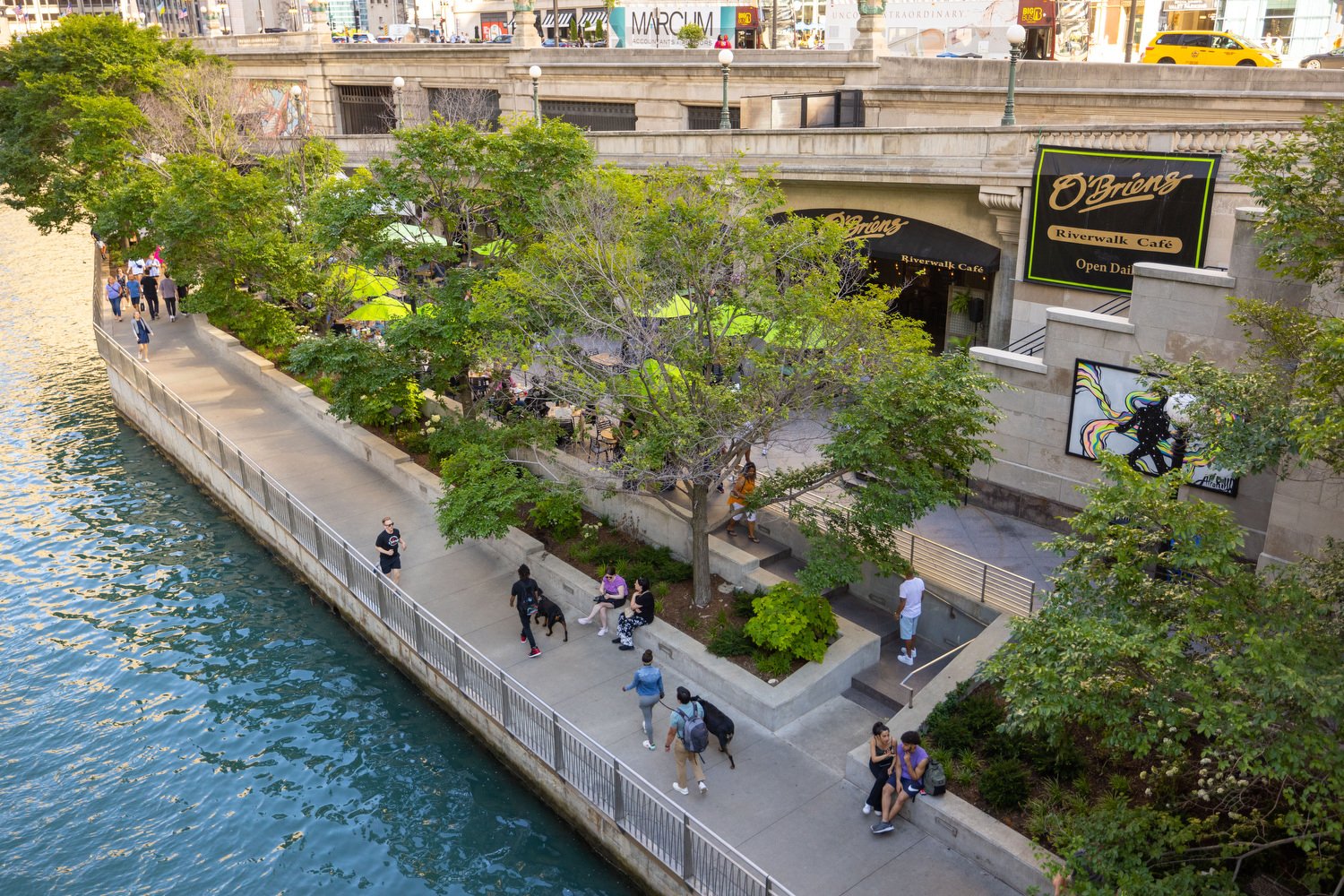
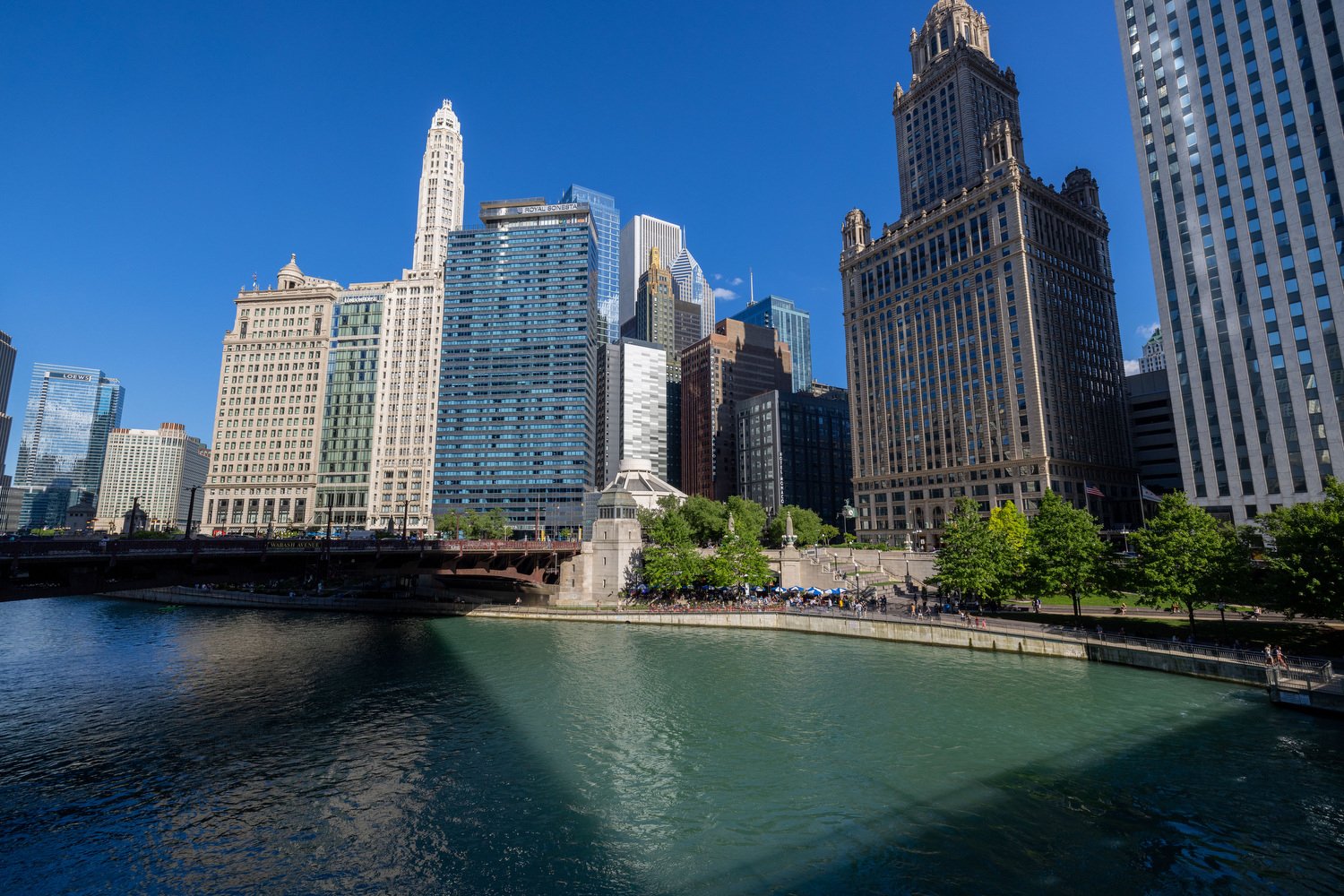
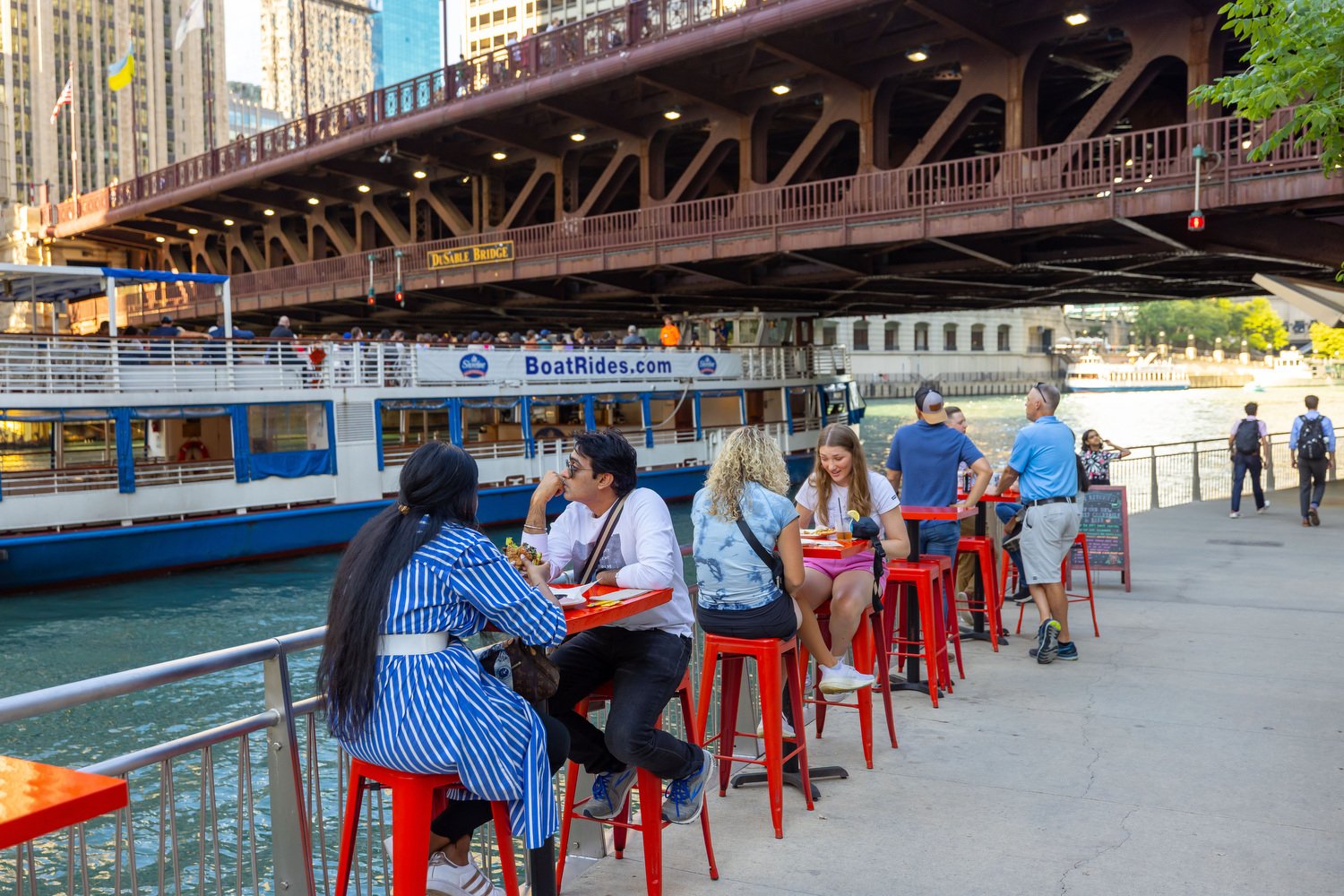
Walk along the Chicago Riverwalk, which runs 1.25 miles along the south bank of the Chicago River. The path is free and open every day from 6am to 11pm. In warm months, roughly May through October, the restaurants and bars along the river are open and busy. In cooler months, the path is still worth a walk for the skyline views and the architecture rising on both sides.
On our most recent visit, we walked and dined on the River Walk in the late afternoon, and it was vibrant with the after-work crowd.
From the Riverwalk, Willis Tower is about a 10-minute walk west. The Skydeck is on the 103rd floor and is open daily from 9 am to 10 pm. Admission starts at $32 for adults. Buy tickets in advance online. Time slots do sell out, especially on weekends and at sunset.
The glass-floor Ledge is the thing everyone talks about. You step out four feet beyond the building's face in a glass box, 1,353 feet above the street, and look straight down.
Evening: The Riverwalk and Dinner
Head back to the Riverwalk for dinner. In the evening, the whole stretch takes on a different feel. The city lights come up, the river goes quiet, and the crowds thin out.
We ate at Chicago Brew House, right on the water's edge. Classic Chicago-style hot dog, a sliced beef sandwich, cold drinks, and a perfect seat at the railing. It's pub food done right, and the location is hard to beat.
If you want a river or lake cruise to end the day, boat tour operators depart from several points along the Riverwalk. Architecture tours along the Chicago River are the most popular option and run well into the evening in summer. You can book through Viator and compare options before you go.
Chicago Food: Deep Dish Pizza and the Classic Hot Dog
No trip to Chicago is complete without trying the food. Two dishes define this city above all else: deep-dish pizza and the Chicago-style hot dog. Both are worth your time and easy to find in the Loop.

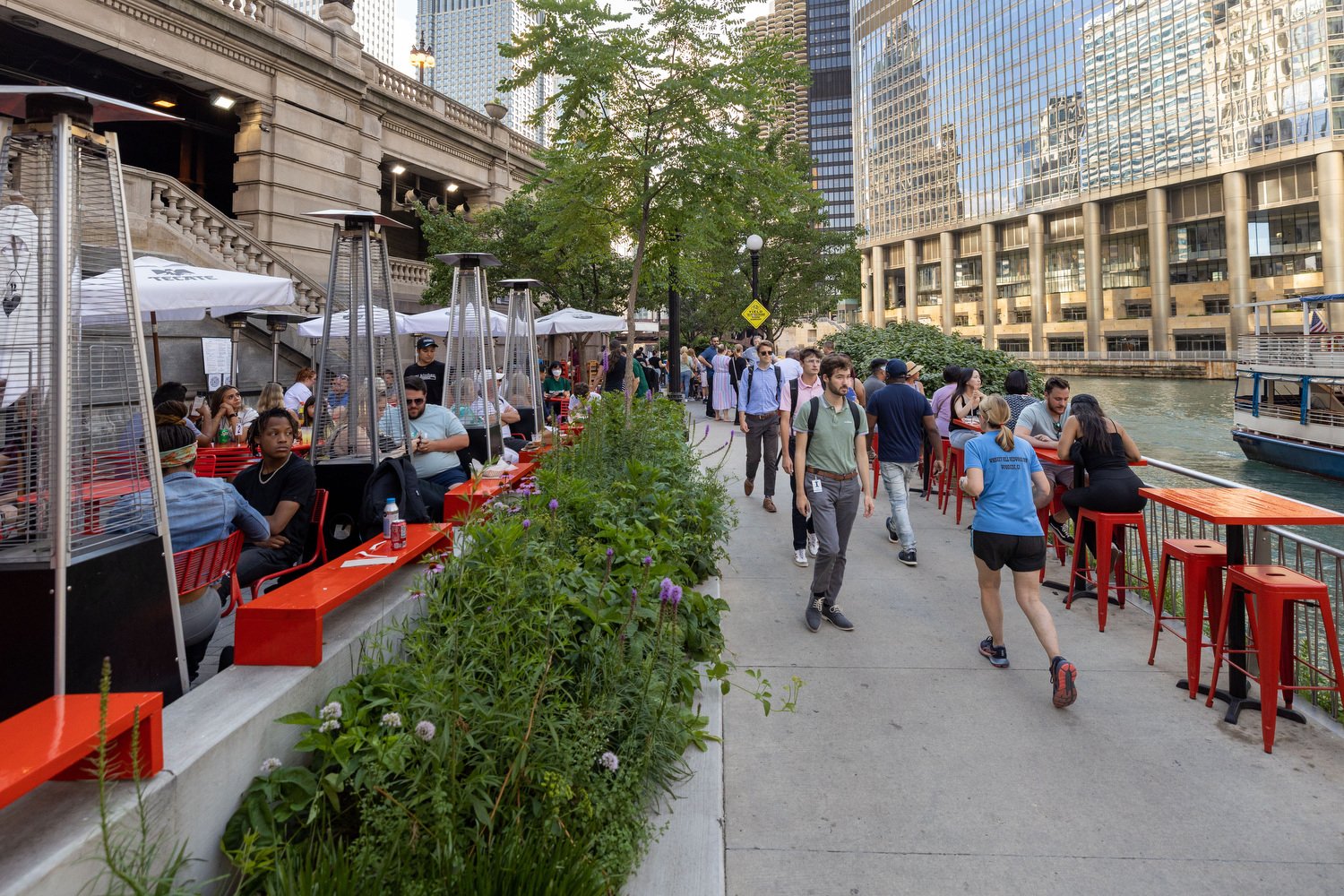
The Northman Beer and Cider Garden, one of the many bars and restaurants along the Riverwalk.
Deep Dish Pizza
Deep dish is not like any pizza you've had elsewhere. The crust is thick and buttery, the cheese goes on before the sauce, and the whole thing bakes for about 45 minutes. Plan around that. Both Lou Malnati's and Giordano's are the names you'll hear most, and they're genuinely different from each other.
Lou Malnati's is known for its flaky Buttercrust and a cleaner, more tomato-forward flavor. Giordano's makes what they call a stuffed double-crust pie, with cheese layered inside as well as on top. It's heavier and richer. Neither is wrong. It just depends on what you're after.


The Chicago-Style Hot Dog
The Chicago hot dog has rules. It starts with an all-beef frankfurter on a poppy-seed bun, topped with yellow mustard, chopped white onions, bright green relish, a dill pickle spear, tomato slices, and celery salt. No ketchup. Ever. Chicagoans feel strongly about this.
We had ours at Chicago Brew House on the Riverwalk, and it was excellent.

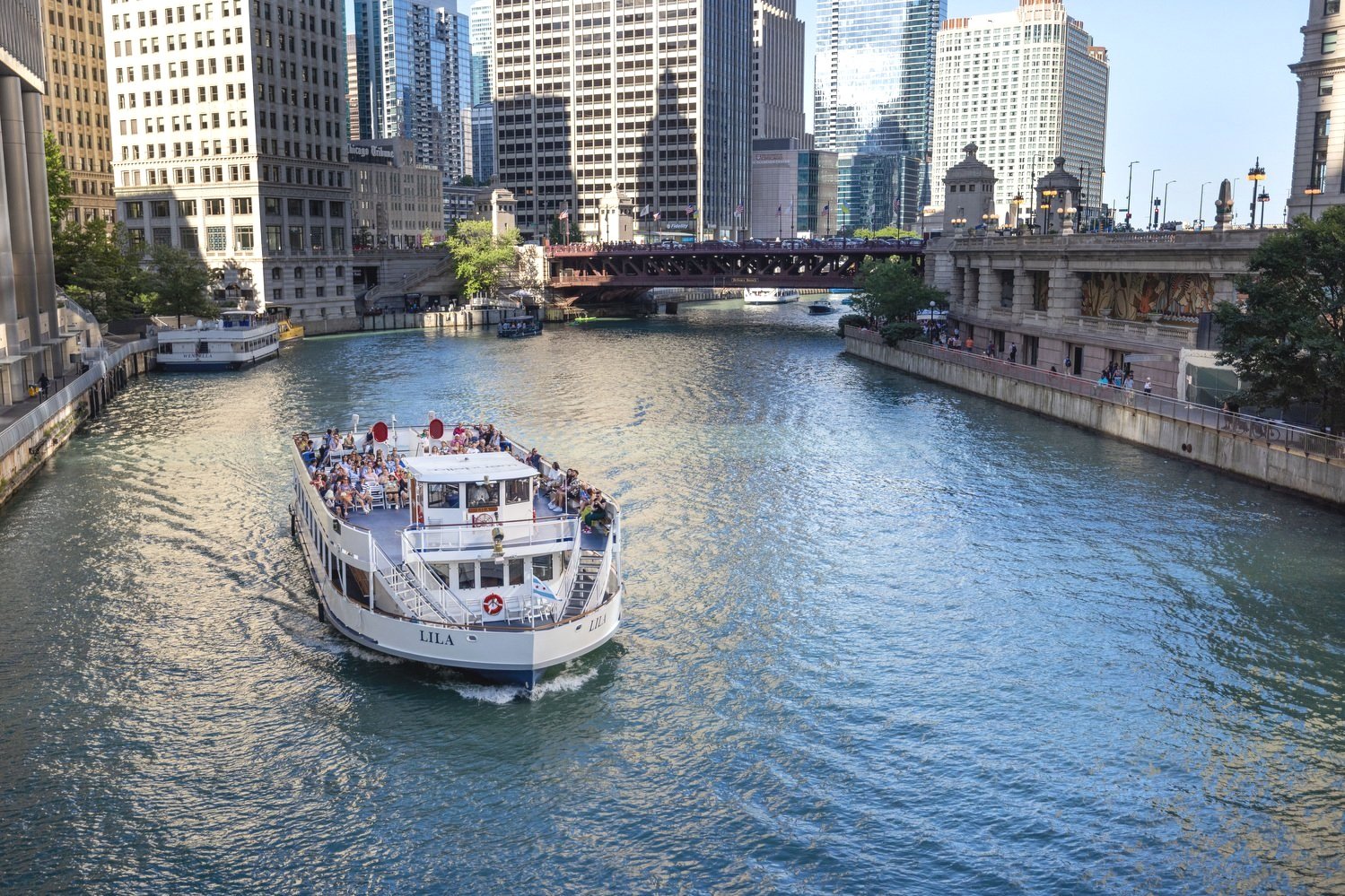
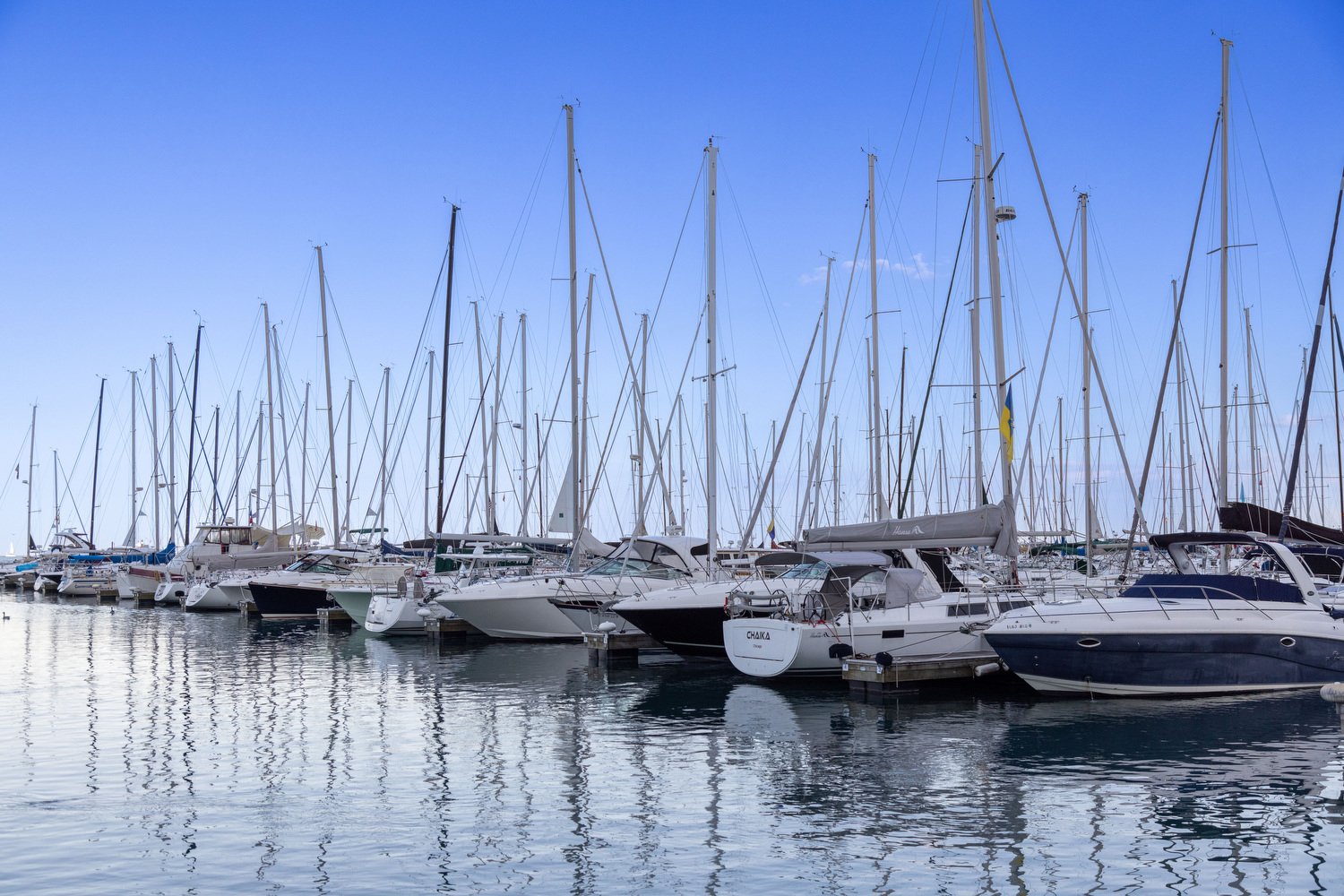
There are many ways to enjoy the Chicago River. Seen here are a kayak rental, a motor boat rental and a large sightseeing cruise boat.
Visiting Chicago’s Navy Pier
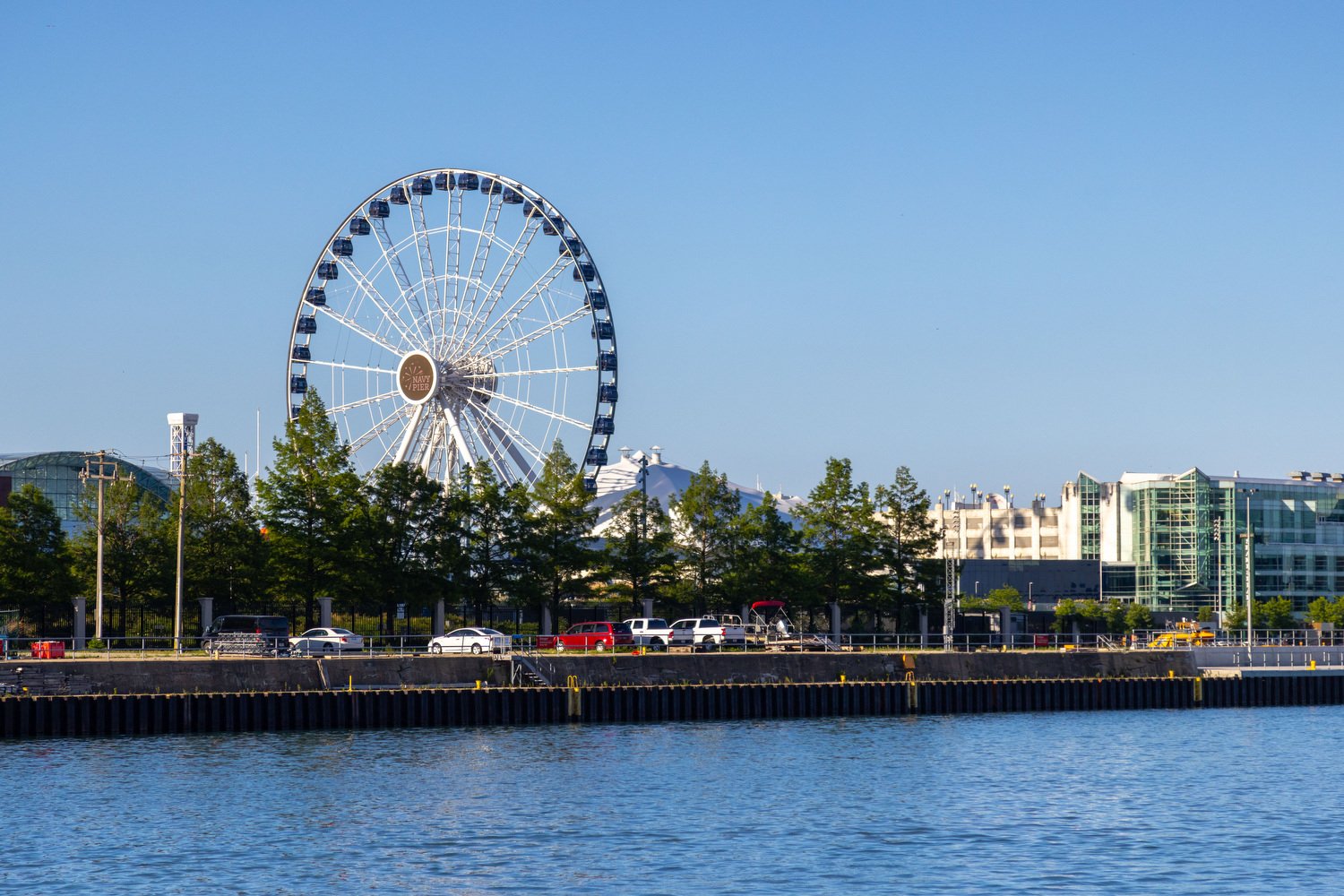
Chicago’s Navy Pier is a fun location on the Lakefront with beautiful views of Lake Michigan. It is the home of many public events and exhibits, as well as renowned restaurants, parks, rides & attractions, and is a major cruise departure point. It’s a little touristy, but it has some iconic features, like the Billy Goat Tavern and the giant Centennial Wheel ferris wheel ride. Many walking tours pass through the area, and in summer it is host to live music events, fireworks, and theater productions - well, you get the idea.
The Chicago Explorer Pass, available through the Go City app, gives you access to the attractions at Navy Pier, plus another 25 attractions and activities in Chicago at a discounted price.

Navy Pier is the location for Wednesday and Friday night fireworks during the summer.
Experiencing Millennium Park in The Loop District
We really enjoyed our walk through Millennium Park, the large lakefront green space that features many unique attractions. We passed the Jay Pritzker Pavilion & The Great Lawn where a community movie viewing was taking place. The unique curved stainless steel structure is the site of live entertainment, with a state-of-the-art sound system designed to mimic the acoustics of an indoor theater, and concert-goers can sprawl on the lawn for a great outdoor experience.
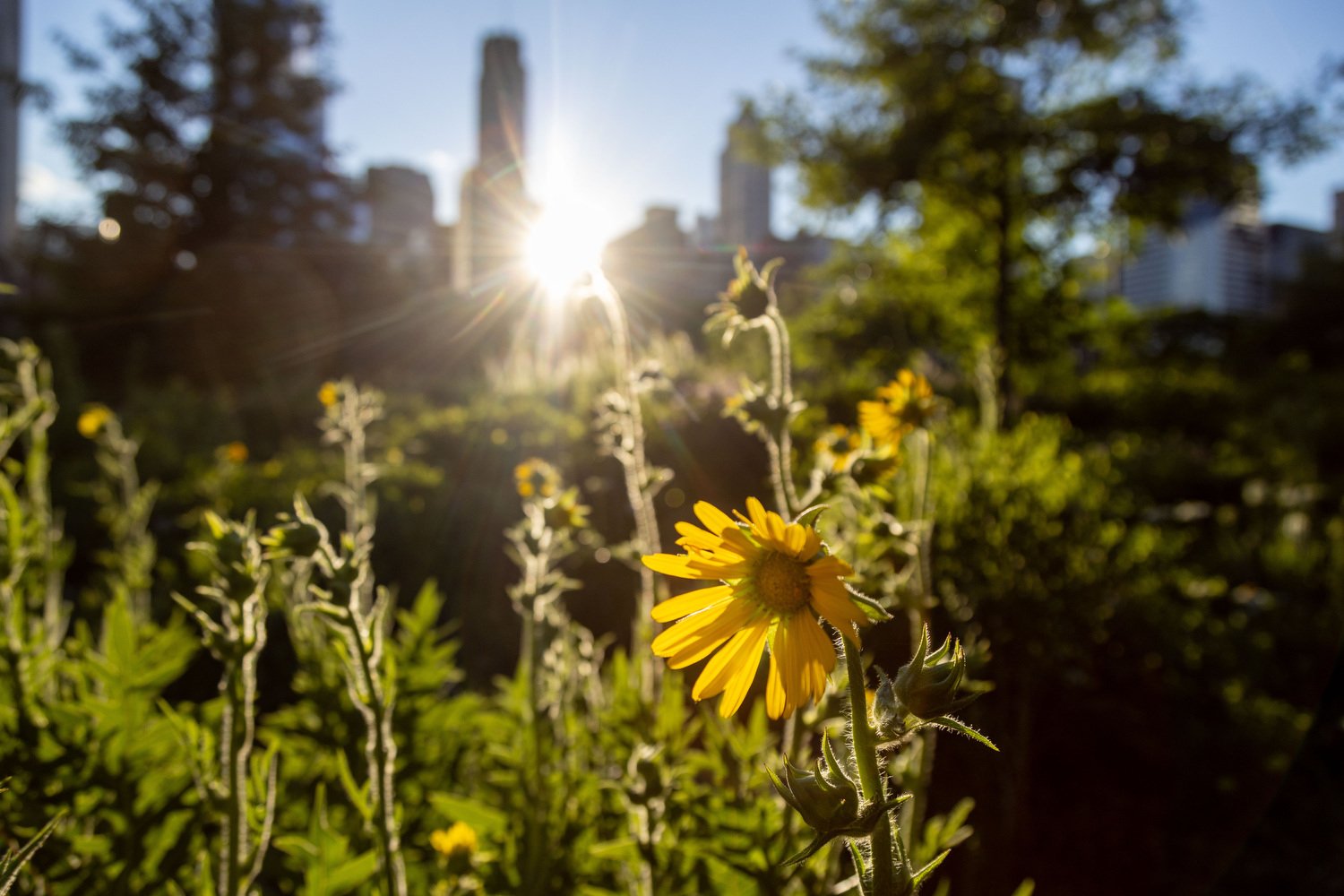
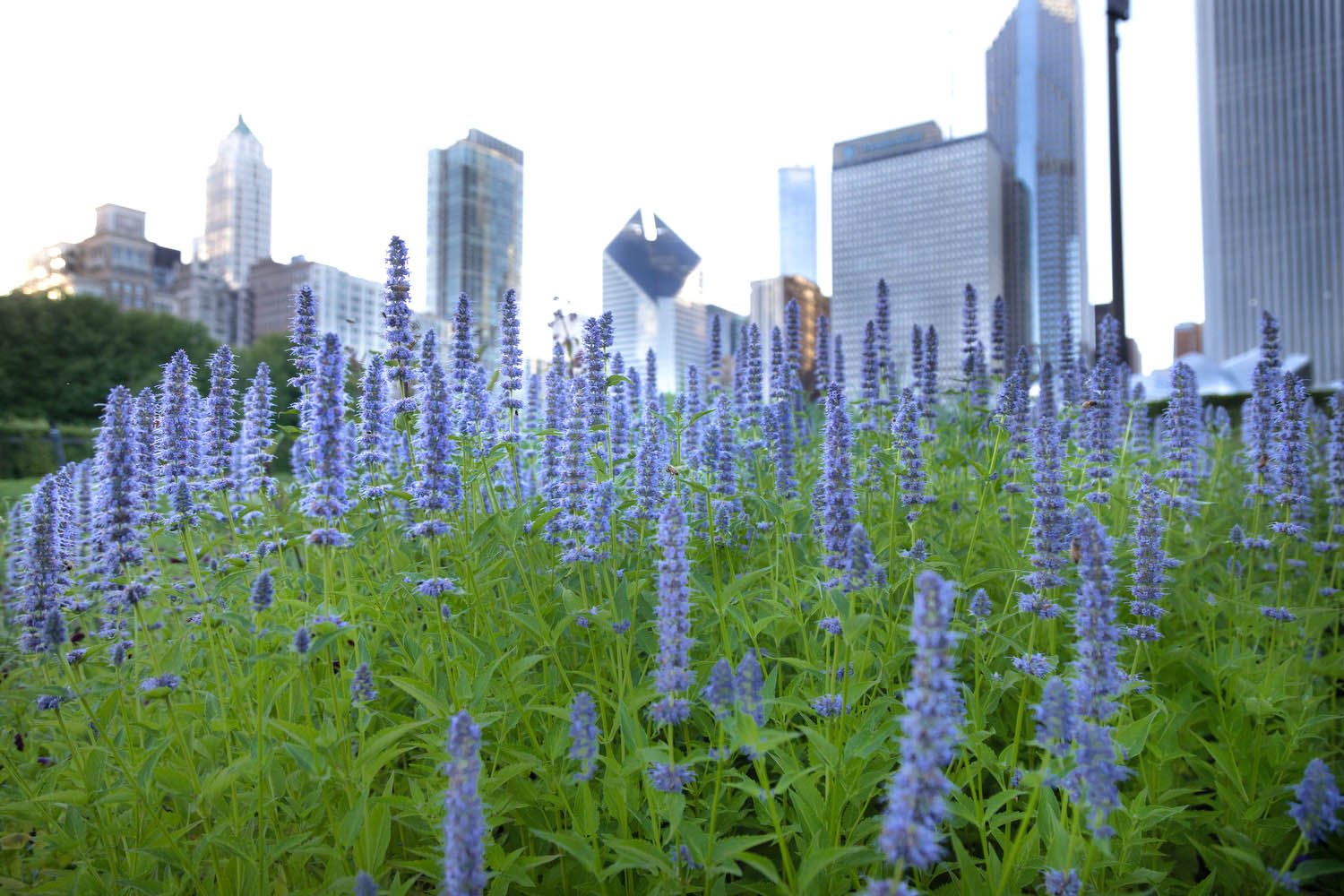
The beautiful Lurie Garden features award-winning botanical landscaping for all seasons. Utilizing native perennials and bulbs, the garden creates a haven for wildlife, birds, and insects. We were happy to get there as the sun was setting for low photo angles of the sun through the summer flowers.
Bird Nerd Alert - For my birding friends, there were signs telling visitors that Red-winged Blackbirds were nesting in the garden, so beware of a protective swoop by a dutiful mama or papa redwing! We didn’t get swooped but we did have a close encounter with a singing male atop a bloom, and that made me smile. Nice to know that beautiful wildlife is thriving in the heart of an urban environment like downtown Chicago.
Of course, we visited Cloud Gate, aka “the Bean”, the reflective blobular sculpture that’s so popular on Instagram. I have to admit, though I don’t generally buy into that type of forced tourist experience, the Bean is actually pretty cool. The visual illusion of the mirrored surface is fanciful fun. We could see it the next day from the skyscraper window where we were working. ;)
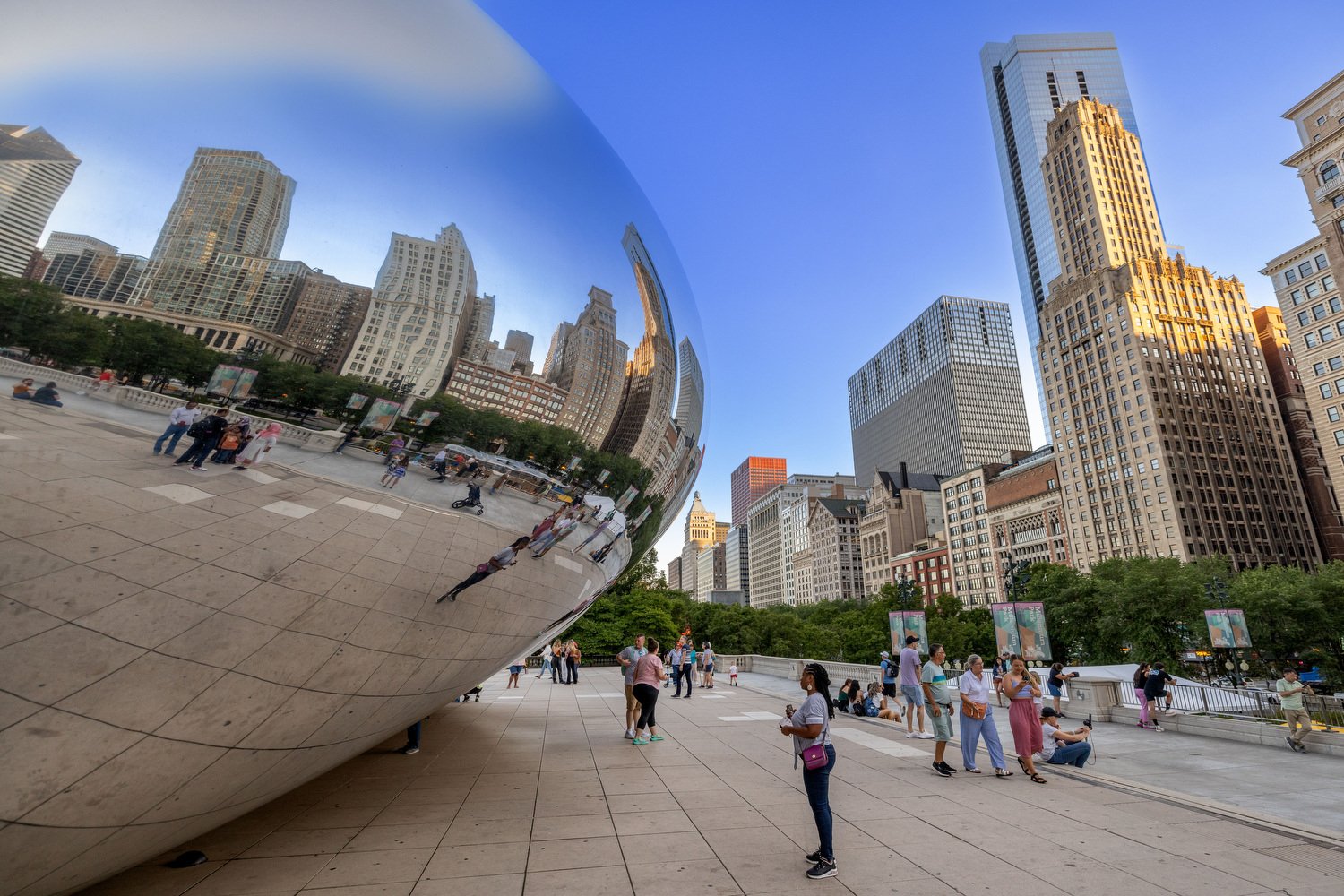
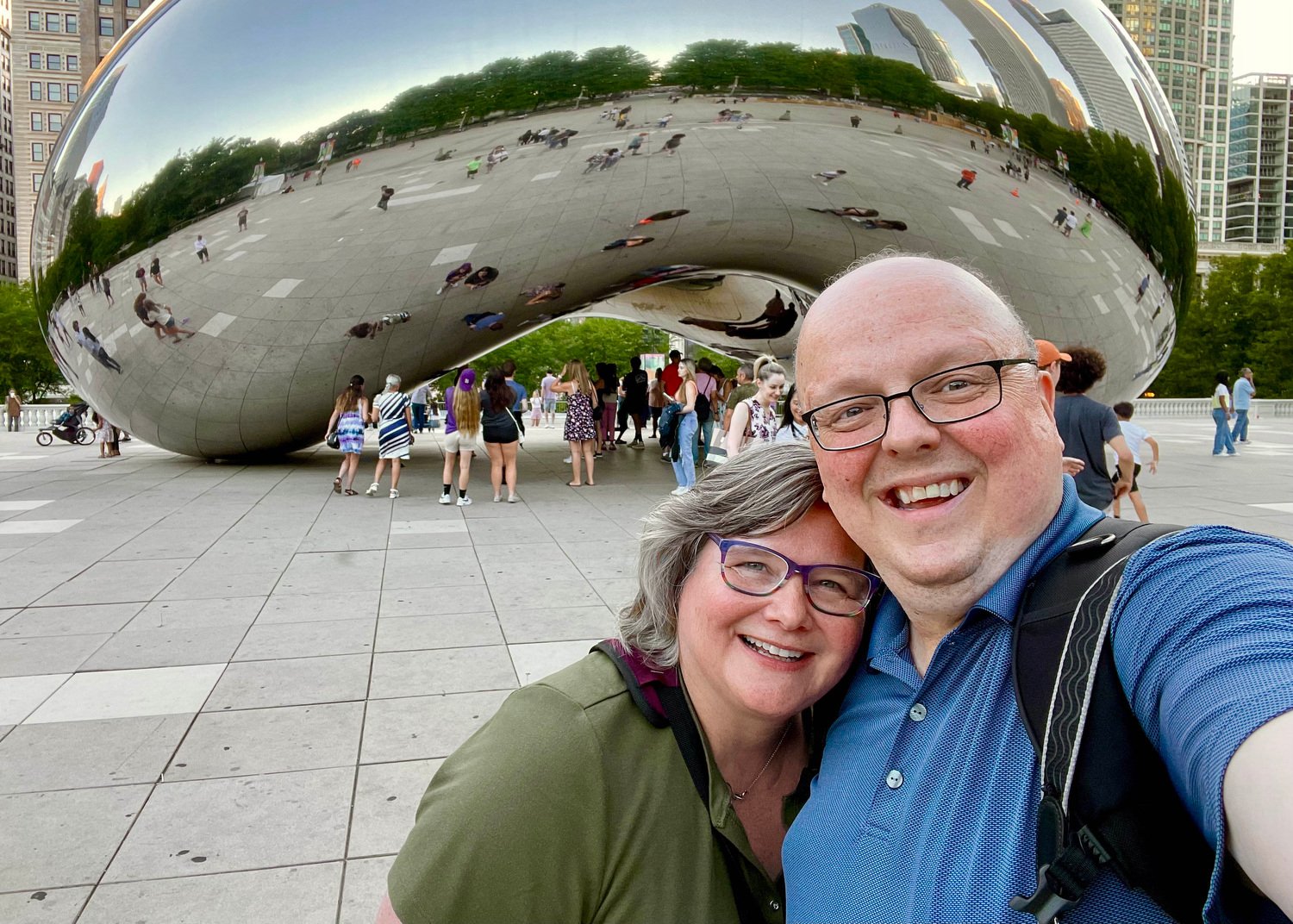
In front of the Bean is the McCormick Tribune Plaza & Ice Rink. Since we visited in July, the ice rink was converted into a pretty outdoor dining space, The Park Grill, which we thought was a great way to multi-use the space.
Our favorite spot in Millennium Park had to be the Crown Fountain. It’s just a simply joyful public attraction. Two giant pillars of glass blocks loom at each end of the shallow fountain pool, and intermittently project videos of the faces of Chicagoans.
Kids splash in the large fountain area and every so often, water is sprayed out of what appears to be the mouth of the giant faces. What fun! If I had had a change of clothes, I might have just jumped in with the kiddos! Even older folks were enjoying themselves sitting on the benches along the sides, keeping cool with the spray from the fountain.

Chicago’s Crown Fountain
There was more to the park than we were able to see for ourselves, including children’s play garden and outdoor art galleries. Overall, we would highly recommend making Millenium Park part of your Chicago experience, especially if you have limited time in the city as we did. It definitely gives you a good feel for the city culture, as it is certainly used by locals and tourists alike.
Visiting Chicago’s Museums
In the heart of downtown, adjacent to Millenium Park, sits Chicago’s best museum, the Art Institute of Chicago. The Institute was founded in 1879 as both a museum and school for fine arts. This was a critical time in Chicago’s history, as the focus was on rebuilding the city that had been destroyed by the Great Fire of 1871.
The museum has grown in size and reputation over the years, and now houses the greatest collection of Impressionist paintings outside of Paris. The most recent addition is the Modern Wing which was opened in 2009. There are two entrances to the museum: the doors to the original building are at 111 South Michigan Avenue, and the entrance to the Modern Wing is at 159 East Monroe Street.

The Modern Wing of the Art Institute of Chicago
If you don’t have a lot of time to spend, the Art Institute's website offers a “what to see in an hour” page, listing some of the most celebrated works that you won’t want to miss and what gallery to find them in. This list includes one of Van Gogh’s self-portraits, Hopper’s original “Nighthawks”, and Picasso’s “Old Guitarist”, to name a few, as well as works by current Chicagoan artists.
Further south and directly on Lake Michigan is a beautiful green space known as Chicago’s Museum Campus. It is home to three of the city’s most popular museums. The first is The Field Museum, a natural history museum containing artifacts spanning thousands of years, including the largest dinosaur ever discovered, Maximo the Titanosaur.
Right next door is the Shedd Aquarium, one of the largest aquariums in the world, boasting 32,000+ aquatic creatures, including beluga whales, dolphins, sea otters, sea lions, penguins, stingrays, and sharks.
The last museum of the campus triad is Adler Planetarium. It opened in 1930, as the first planetarium in the Western Hemisphere. Visitors can experience interactive exhibits, live planetarium shows, hands-on educational programs, and world-class collections.
Visiting Downtown Chicago Loop Retail Historic District
If museum visits are not your thing or just don’t fit into your timetable, a walk through the Loop Retail Historic District may be a more doable way to get your dose of art and culture. This area is chock full of historic buildings and landmarks. It was added to the National Register of Historic Places in 1998, boasting 74 contributing buildings and structures.
The district is most commonly associated with department store buildings, due to the seven prominent department stores that it hosted in its heyday; six of these buildings are still standing. Most significant is the Marshall Field’s building, which now houses an 8-floor Macy’s that ranks as the second largest store in the world. So if you need to do some shopping, this might be fun to check out.
The interior features a Tiffany & Co. vaulted ceiling and several balconied atria. But even if you don’t go inside, the two huge vintage Great Clocks on each corner of the building along State Street are worth seeing. The clocks were installed to encourage punctuality, as people in the early 1900’s used the store as a meeting place, loitering about, often leaving notes for companions in the windows of the store. That sounds somewhat romantic to me - imagine hurrying to the store and finding your special note!
Other significant buildings in the district include the Joffrey Tower, Palmer House, Page Brothers Building, and the Chicago Theater.
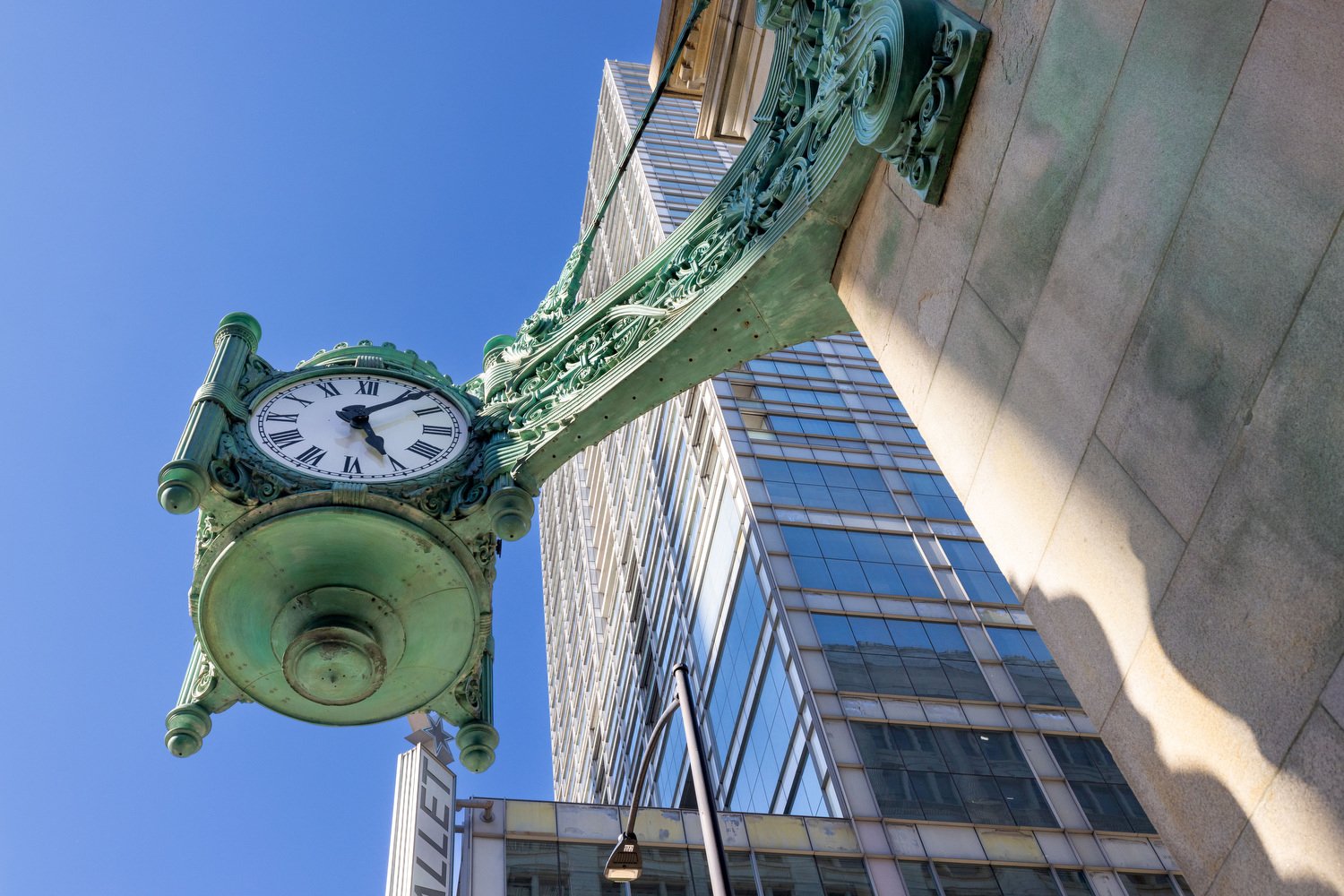
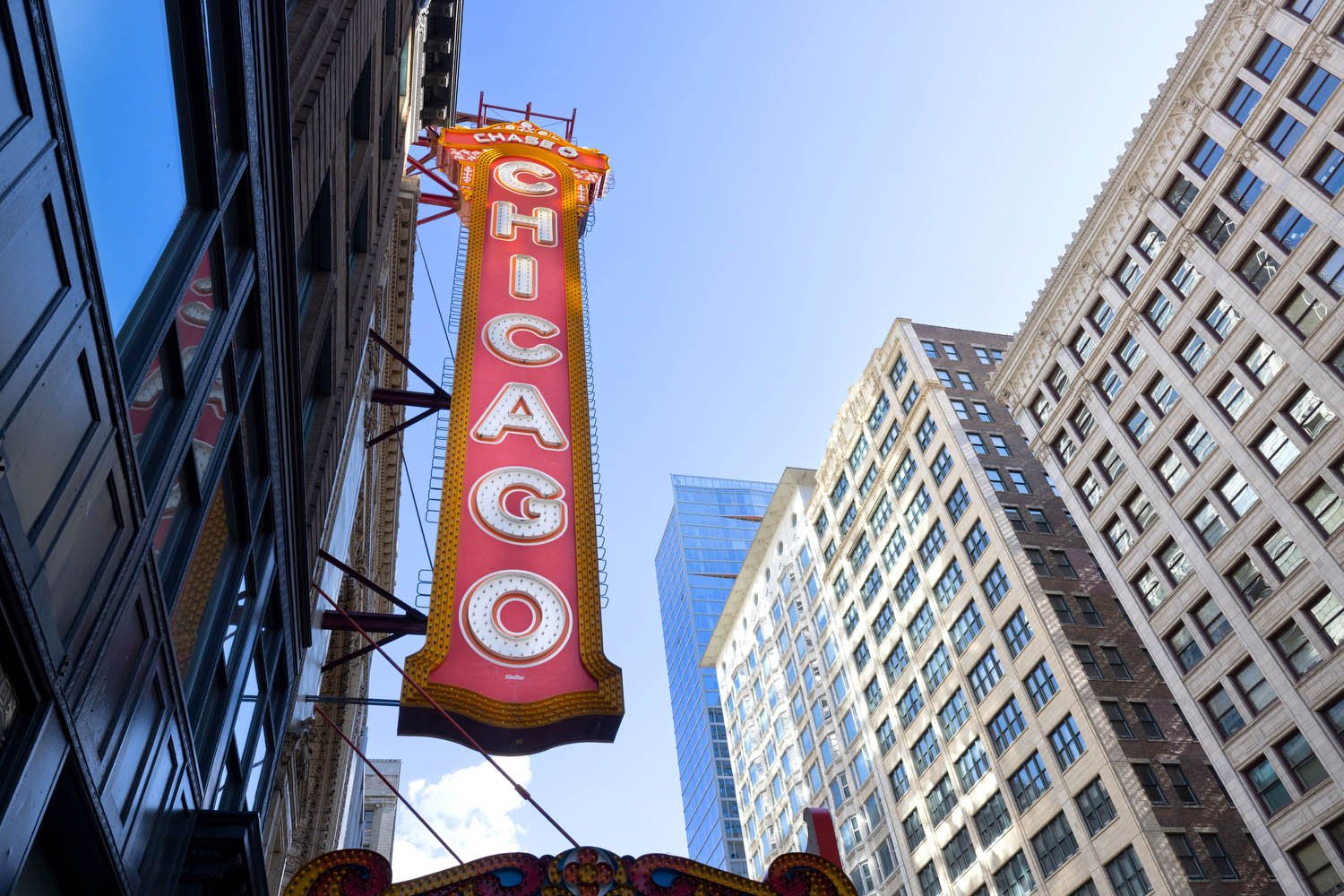
Visiting the Willis Tower (Sears Tower) in Downtown Chicago
Of course, while admiring the Chicago skyline, one can’t miss the Willis Tower, the sleek tiered black skyscraper that looms over all the others. It used to be known as the Sears Tower (more retail!) and held the bragging rights of being the tallest building in the world until the late 1990s when it was surpassed by several others. The observation deck is still the highest in the US though, at a dizzying 1,353 feet from the ground.
You can actually feel the building sway in the wind! It is a very well-done observation deck, surrounded by large windows for breathtaking views of Chicago and Lake Michigan.
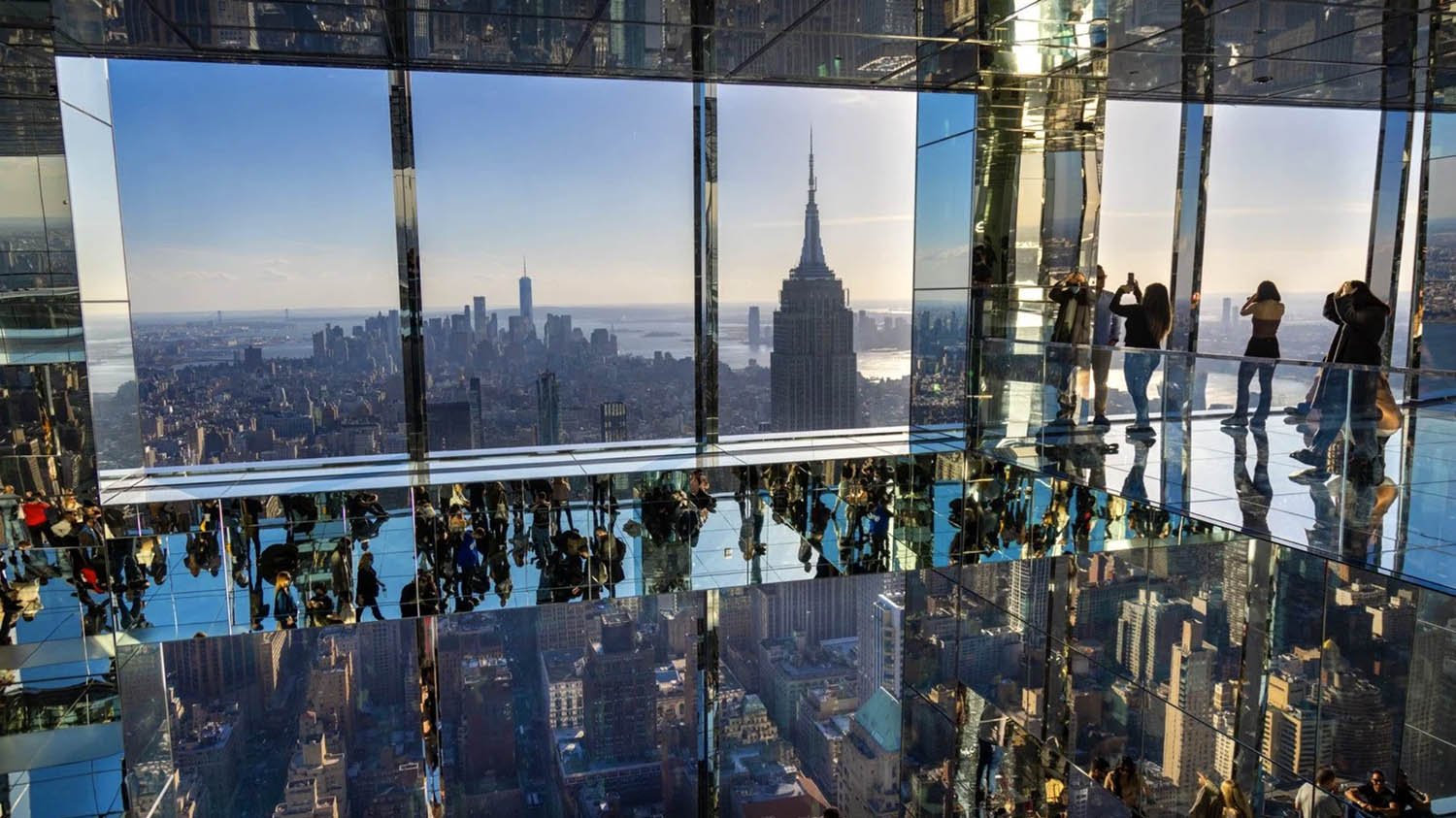
And if you are feeling even more adventurous, step out onto The Ledge - a glass-walled and glass-floored box that extends four feet from the building, where you can feel as if you are floating 103 stories above the ground. This feature is much better realized than a similar feature at The Summit at One Vanderbilt in NYC, in our opinion. Although there is a queue to experience it at both places, at The Summit, visitors are made to look up at a camera to get a photo taken with their backs to the view, which makes no sense, since they have to move right along after the photo and don’t really get to turn around and experience the suspended illusion. At Willis, visitors get more of a chance to enjoy it without the silly canned photo, which we feel is a better implementation. So that’s a point for Chicago. ;)
Advanced tickets through their website are highly recommended for the Willis Tower, as it is a very popular attraction.
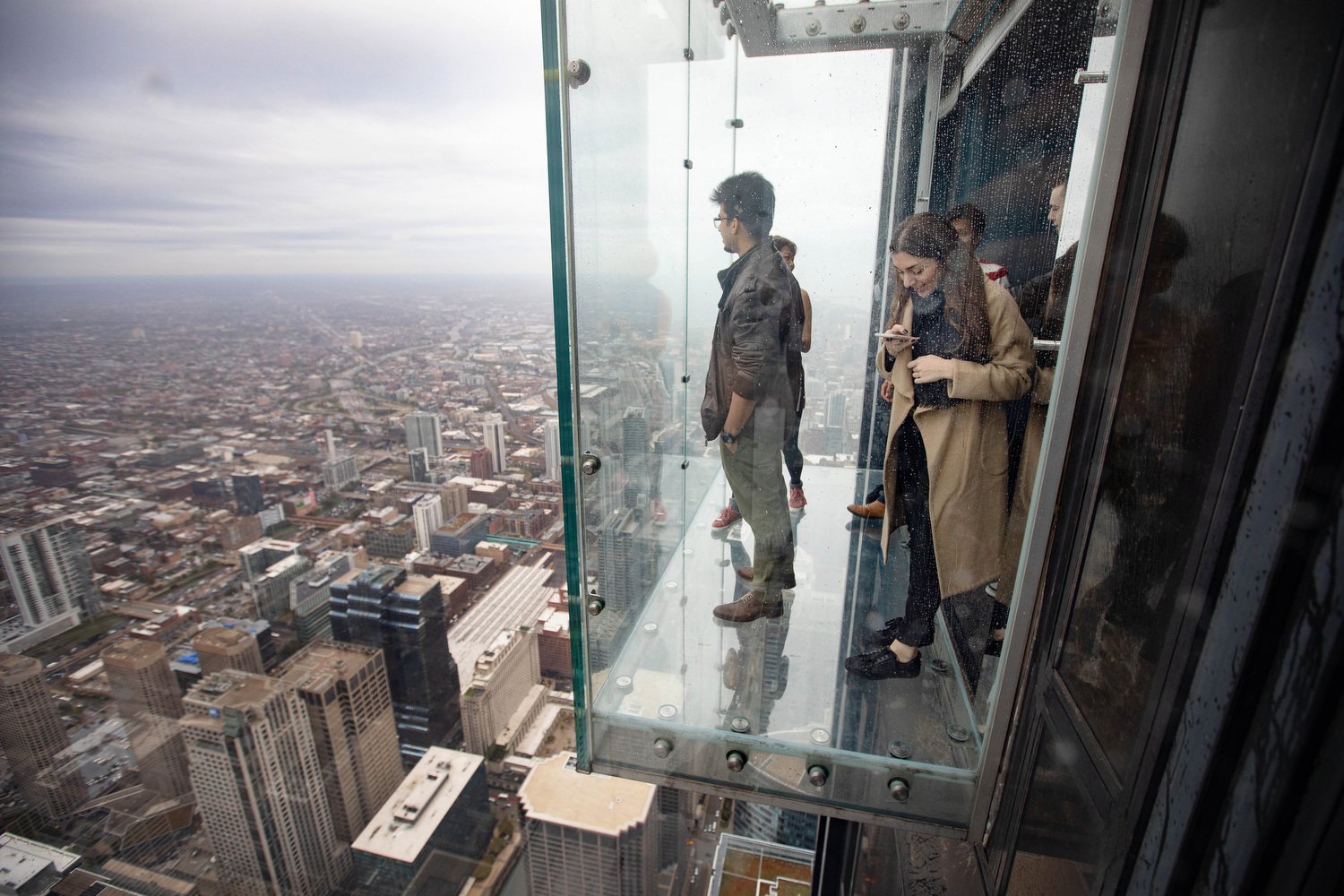
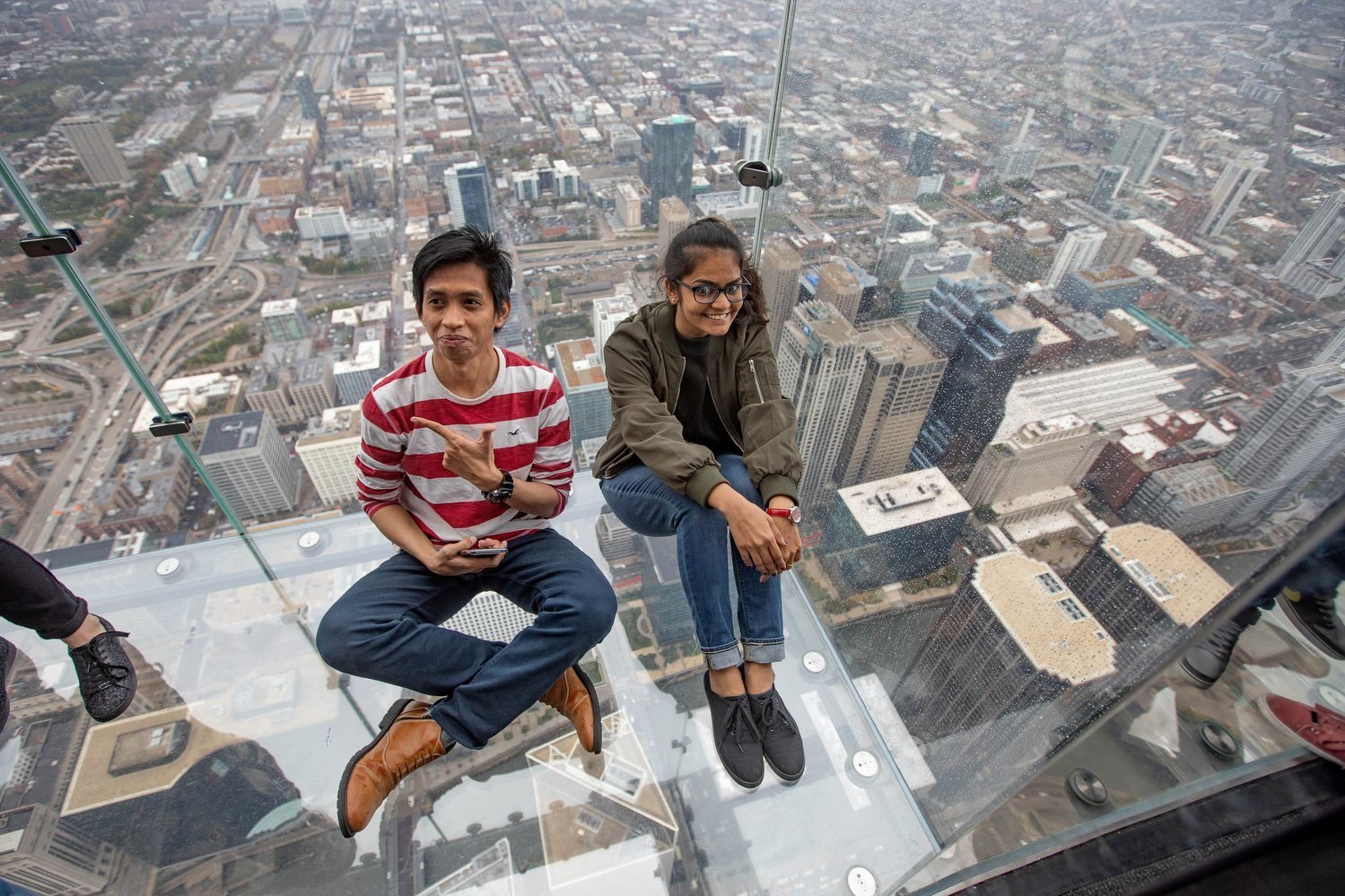
Best guided tours in Chicago
If you only have 24 hours in Chicago you might want to consider a guided tour to make the most of your time. Here are some of the best options:

The wonderful view from our room at the Westin Chicago River North. The hotel is located directly along the Chicago River and is close to all of central Chicago’s attractions.
You can find more info and rates here.
Chicago River tour
See more than 40 buildings including the Wrigley Building and Willis Tower
Lots of options, tour runs more than 20 times daily from Navy Pier and Michigan Avenue
Live commentary on board
Book the Chicago River tour here
Food, History and Architecture Walking Tour
Overview of the city and major attractions
Sample food including Chicago-style hot dogs, Pizza, and Italian Beef
Book the walking tour here
Gangsters and Ghosts Tour
Learn about gangster-era crime in “The Loop” area
Visit Palmer House Hotel, rumored to be haunted
Visit Congress Hotel, Al Capone’s headquarters
Book the Gangster and Ghost tour here
Note - This blog post contains affiliate links. This means that if we are recommending a product, activity, or hotel, we might be receiving a small commission if you buy or book from these links. This is done at no additional cost to you. We only recommend products we have personally used or have thoroughly researched.

View of the Chicago skyline, including the Willis Tower
This post was researched and written by Debbie O'Boyle of The Empty Nest Explorers.
Debbie is a professional photographer with over 30 years of experience and a former staff member at the Star-Ledger/NJ.com, where she managed the digital photography technical team. She and her husband John travel extensively and write from firsthand experience at every destination they cover. You can learn more about Debbie and the Empty Nest Explorers here.
Some well-reviewed Chicago tours:
Other travel posts you may like:

Debbie and I are in Manhattan most weeks, for work and to visit our son, and we still love showing people around.
Here are our honest picks for the best things to do, the ones worth your time, the few we would skip, and how to see the city without cramming your days.