
Visiting picturesque St. Dunstan-in-the-East Church Garden in London
Halfway between London Bridge and the Tower of London, on a quiet side street is the remains of a parish church called St. Dunstan-in-the-East that has stood for generations. Mostly destroyed during the Blitz of the Second World War, the ruins are now a public garden, and it is one of the most picturesque and romantic stops you can make when visiting the City of London.
We were really taken by this serene, historic garden. St. Dunstan’s is a photographer’s dream - what could be more photogenic than some tranquil ruins, which still resemble a church, being taken over by nature? In black-and-white, it’s almost ghostly. But it’s also so colorful that we wanted to capture it color as well!
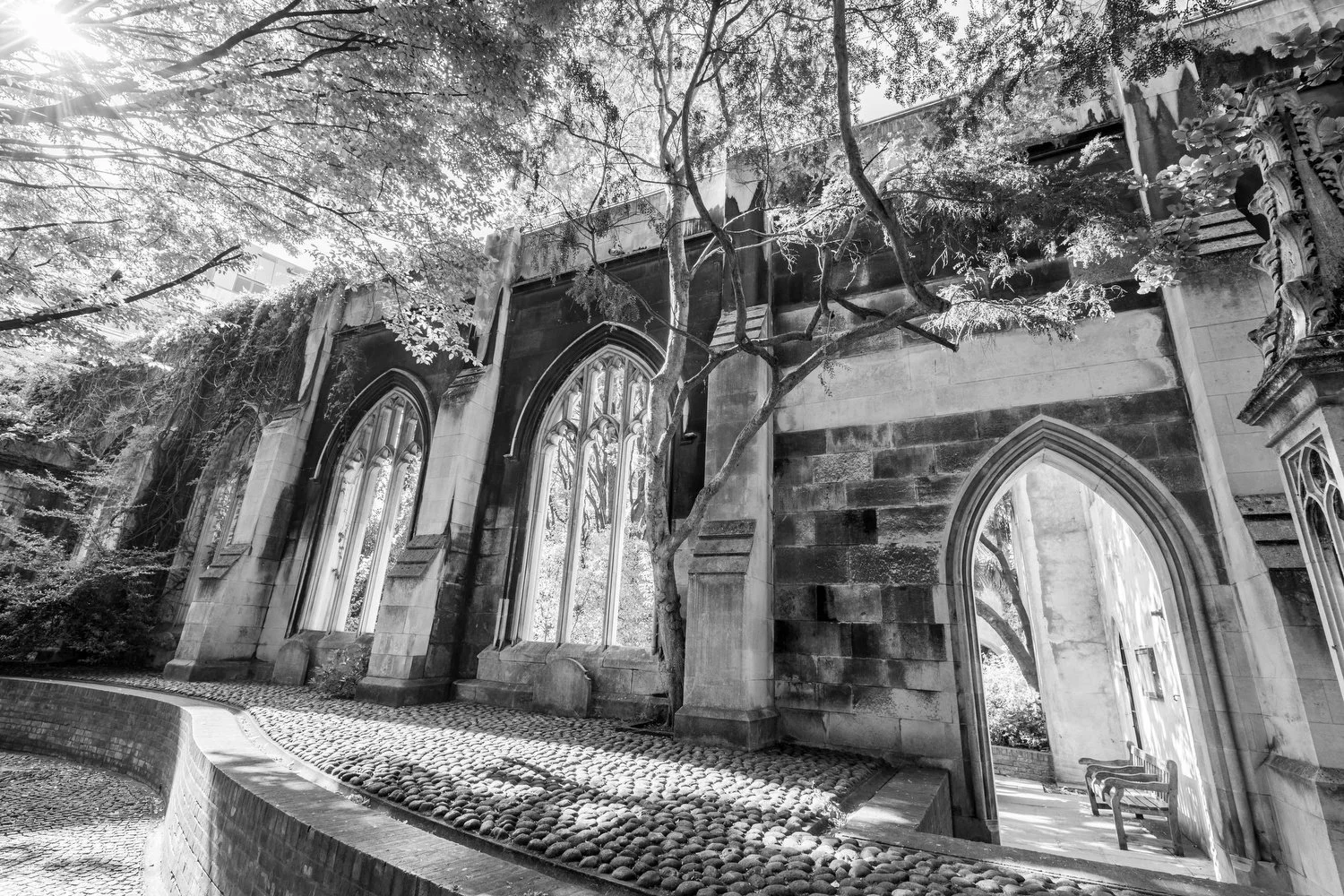
St. Dunstan-in-the-East was destroyed during the Blitz in 1941. Today, it is a serene public garden. All photos by John O’Boyle / The Empty Nest Explorers
There is no cost to enter, but it can get crowded at times with visitors. So we suggest hitting it in the morning, while setting off on your adventures for the day. We got there at around 10am and it was pretty empty. You can spend as little or as much time there as the spirit moves you! And I do think you will be moved. It’s hard not to be.
St. Dunstan’s is located in the area known as the City of London. It is easily incorporated into an exploration of the area, as suggested on our post, A walking tour through the City of London: our favorite attractions and photo spots.
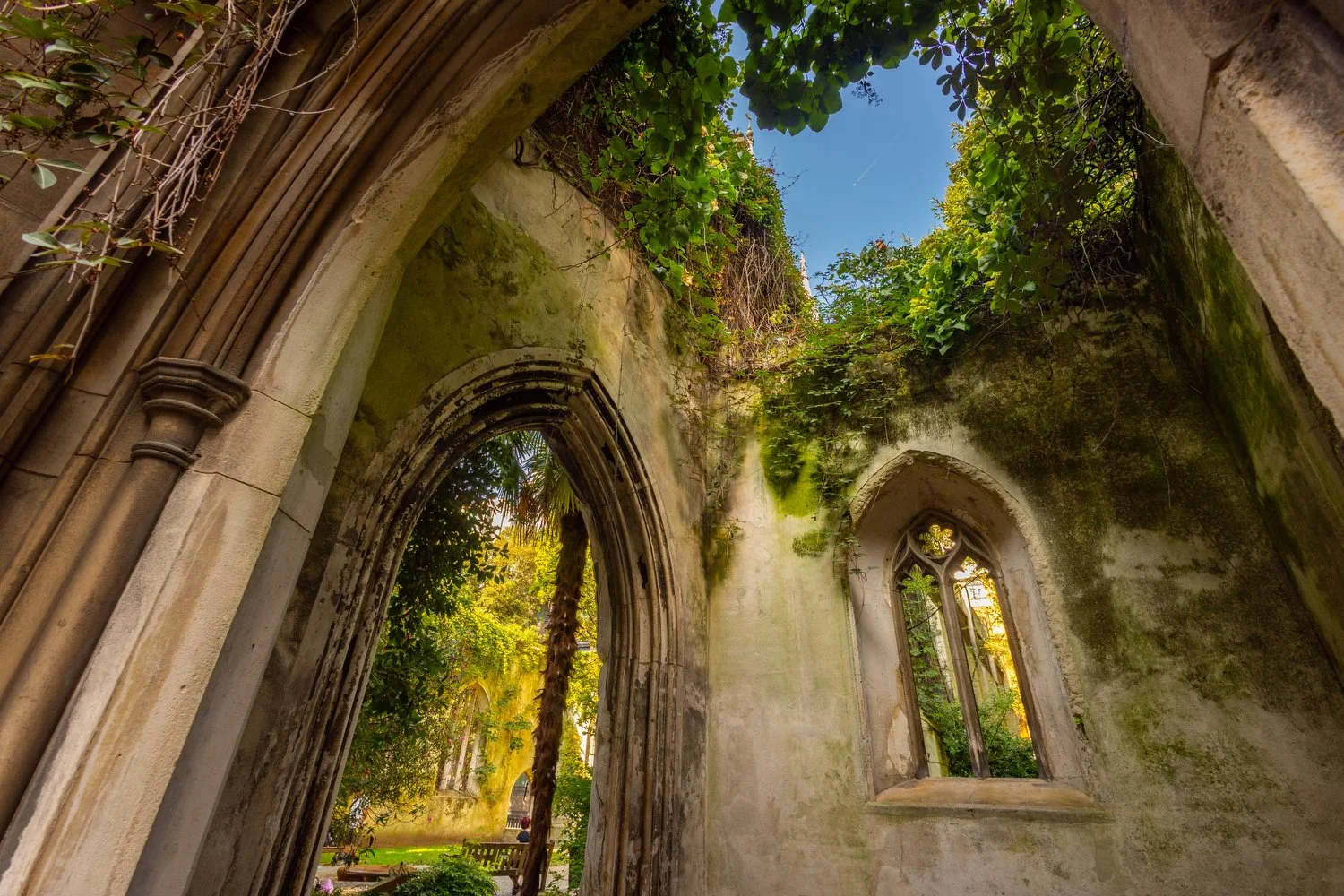
A gaping hole it the top of St. Dunstan’s reveals blue sky over the ruins.
Brief History of St. Dunstan-in-the-East Church
St. Dunstan-in-the East was originally built on St. Dunstan's Hill around the year 1100. There has continually been a church on this site ever since, though it has had its share of drama!
There were some additions and remodels in 1391, then some expensive (for the time) repairs in the 1630s. Only thirty years later, the Great Fire of London of 1666 struck, and severe damage caused the church to need patching up yet again.
During the period between 1695–1701, the famous architect Sir Christopher Wren stepped in and built a new tower and steeple in a gothic style that befit the main body of the church.
By 1817, the weight of the nave roof was thrusting the walls “out of the perpendicular” - so it was decided that the church would be rebuilt from the level of the arches. But as it turned out, the structure was in such bad shape that it had to be completely torn down and rebuilt again, this time designed by architect David Laing, assisted by William Tite.
Wren’s tower remained and was incorporated into the new structure.
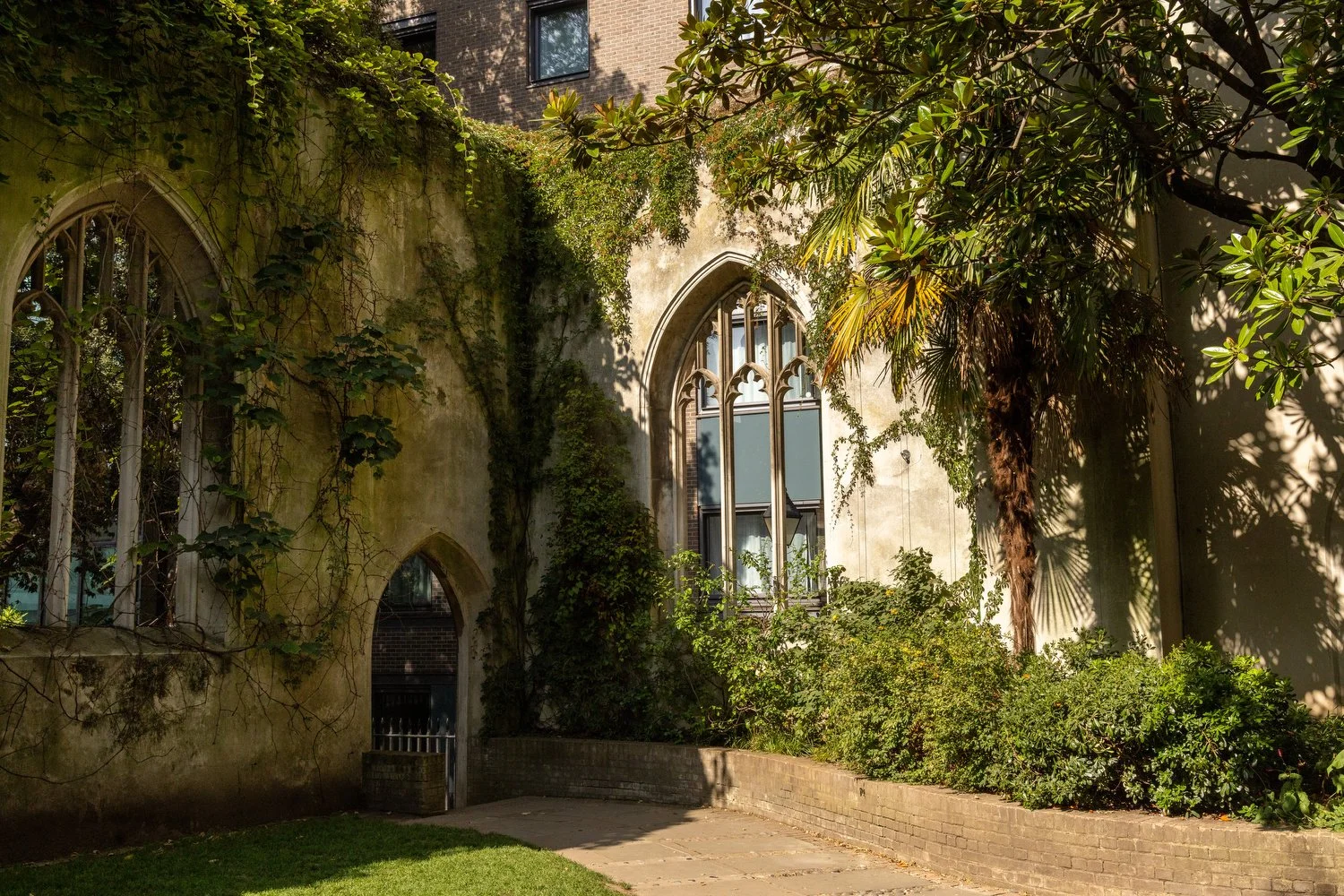
Arched windows and doorways echo St. Dunstan’s past as a historic church. Newer buildings all around the site can be seen through the windows.
The newly designed church, built of Portland stone for a whopping £36,000 at the time, re-opened for worship in January 1821.
That held for a while, until World War II and the London Blitz of 1941.
The church was bombed repeatedly. Only the north and south walls survived, along with Wren's tower and steeple. After the war, the Anglican Church was reorganized and it was decided not to rebuild St Dunstan's. But the people wanted to keep it.
Note - This blog post contains affiliate links. If we recommend a product, activity, or hotel, we might receive a small commission if you buy or book from these links. This is done at no additional cost to you. We only recommend products we have personally used or have thoroughly researched.
The City of London Corporation stepped in and turned the ruins of this historic church into a public garden, which opened in 1971. A lawn and trees were planted among the ruins, and a subtle, bubbling fountain was placed in the middle of what was once the nave. The Corporation is still responsible for maintaining the garden and the site today.
Wren’s seemingly indestructible tower now houses the All Hallows House Foundation. Since it was part of the post-fire restoration, it is the oldest part of the site today.


Interesting fact - You may notice the name “St. Dunstan” quite a lot as you travel about London, especially in the City neighborhood. That’s because St. Dunstan was the most popular saint in England for nearly two centuries! He was a monk and clergyman who served successively as Abbot of Glastonbury Abbey, Bishop of Worcester, Bishop of London and Archbishop of Canterbury, as well as a minister of state to several kings. He was considered a great man and there are many legends associated with him.
Take note that there is also a St. Dunstan-in-the-West church, (which is located on Fleet Street and is NOT in ruins; and also boasts several well-known sculptures and works of art). In fact, there are no less than seven churches dedicated to him in Greater London, as well as seventeen roads and three educational establishments.
So there’s a legacy for you!

Visiters enjoy the peaceful atmosphere around the fountain in the lush garden at St Dunstan-in-the-East
Tips for visiting St. Dunstan-in-the-East public garden today
Though you can’t exactly call St. Dunstan’s a “hidden gem”, as it is quite well known, a “gem” it certainly is! A jeweled oasis of color and stone among the modern buildings of the area. A few tips for visiting:
St Dunstan-in-the-East is located on S.t Dunstan Hill (of course it is) in the City of London.
It is easily accessed via the Tube, and it is a short walk from Tower Hill or Monument Stations.
The garden is open daily from 8 AM to dusk. There is no fee to enter and no need to “book”.
It is closed on Christmas Day, Boxing Day, and New Year's Day.
Many local people take their lunch there, so that can be a busier time. It can also be overwhelmed with instagrammers during the weekend. We suggest the morning on a weekday as the best time to go.
Bring your camera, or sketchpad, or notebook, or even just more morning coffee - as it is a very inspiring place. It is a quiet and contemplative atmosphere so be respectful to others while visiting.
Check out the bird feeders off the main courtyard for feathered visitors! ;)
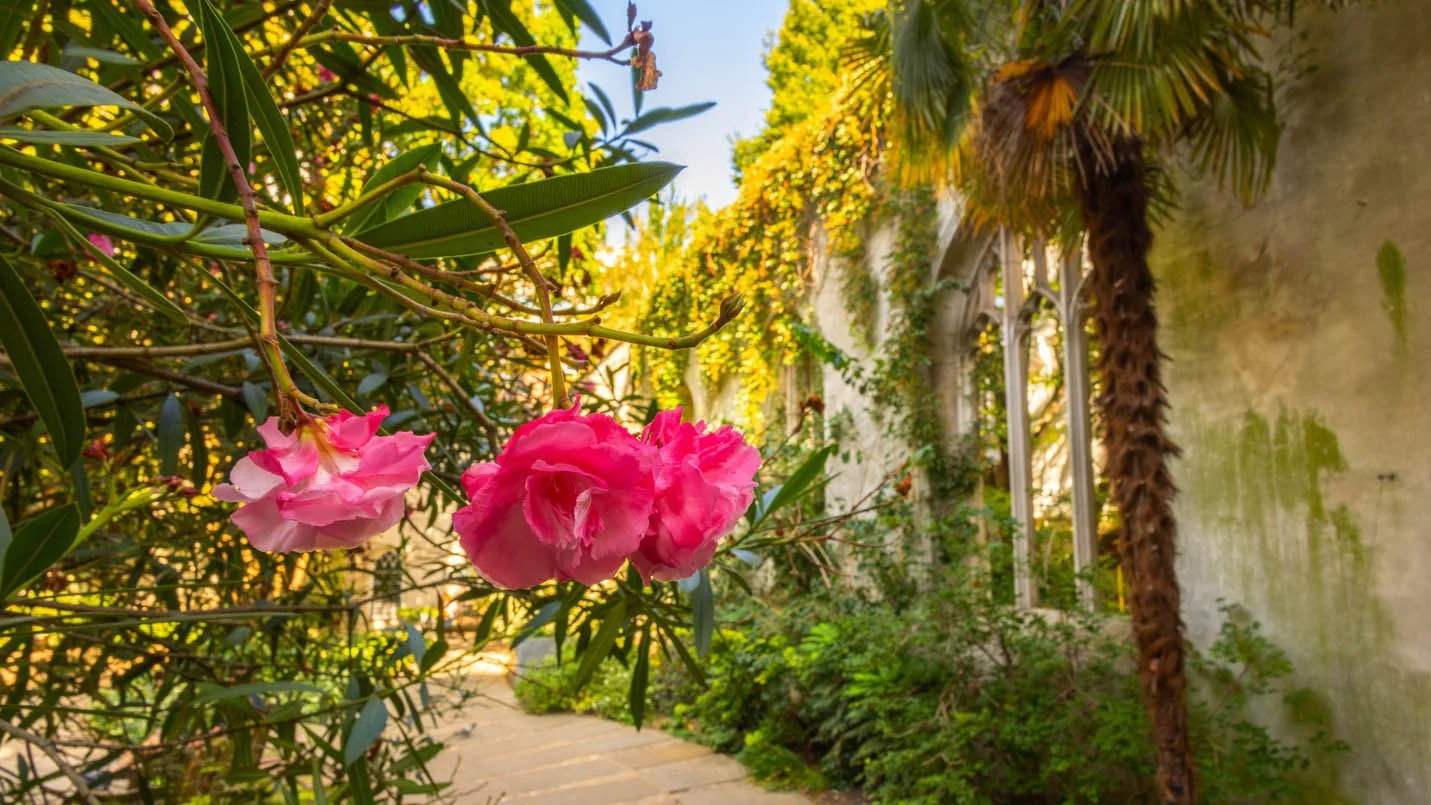
Colorful flowers, trees and ivy line the paths of the garden at St. Dunstan-in-the-East.
There are a number of these “secret” gardens in London that stand as a memorial of sorts to the Blitz. Some exist simply because there was no money to rebuild the original structures after they were destroyed by bombs. Some are more thoughtfully preserved, as in the case of St. Dunstan’s, which is the most well known.
As a WW2 history buff myself, it is almost a spiritual experience for me to visit these kinds of places. An oasis, a remembrance of resilience, a connection to the past.
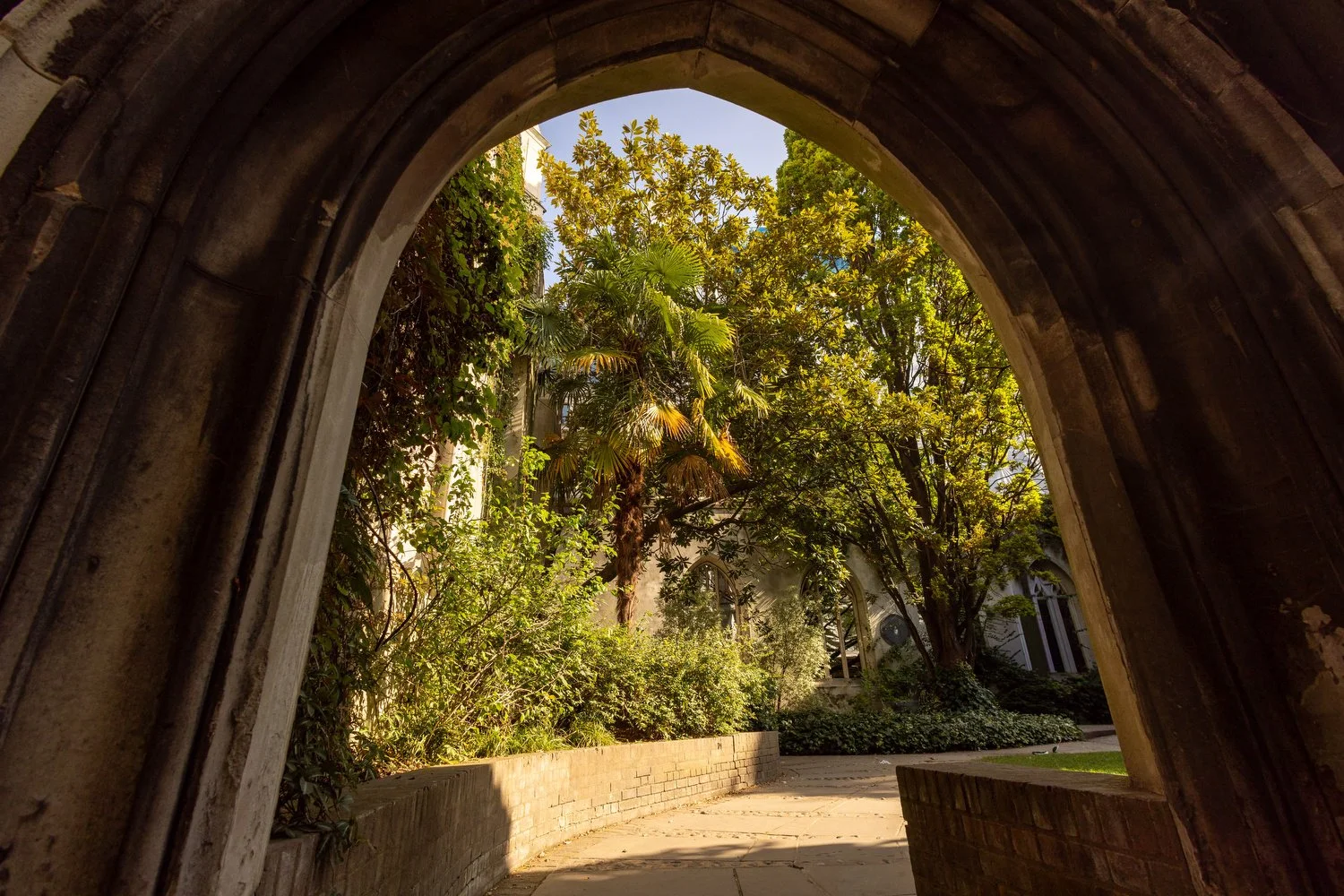
An arched passageway at St. Dunstan-in-the-East feels like a portal to another time.
For more ideas on free things to do in London, check out our post Free things to do in London.
About the Authors

|
John and Debbie O'Boyle are the team behind The Empty Nest Explorers. John is a professional photographer whose work has been published by The New York Times, NBC News, and Getty Images. He is a member of the American Society of Media Photographers, has been part of a Pulitzer Prize-winning team, and has received two New York Emmy nominations. Debbie is a writer with 30+ years of professional photography experience, formerly with The Star-Ledger and NJ.com. Together, they create in-depth travel guides for couples and empty-nest travelers who want to make the most of every destination. |
Some well reviewed London tours:
Note - This blog post contains affiliate links. If we recommend a product, activity, or hotel, we might receive a small commission if you buy or book from these links. This is done at no additional cost to you. We only recommend products we have personally used or have thoroughly researched.
Our other London travel posts:





London was the first European city we visited, and we keep going back.
Here is everything we have learned to make your first trip go smoothly, from the ETA and the Tube to where to stay and the best day trips.