
How to Use London’s Public Transportation: A Guide for Visitors
London has one of the most extensive public transportation systems in the world. Combine London’s underground metro and the iconic red buses with the new easy-to-use tap-to-pay system, and visitors can easily get anywhere in the city.
London also has river boats, famous black cabs, and Uber. So with Google Maps guiding your way, you should absolutely use London’s public transportation on your next trip.
Bonus content - below, we’ll extensively explain how to use the Elizabeth Line to travel from Heathrow to central London
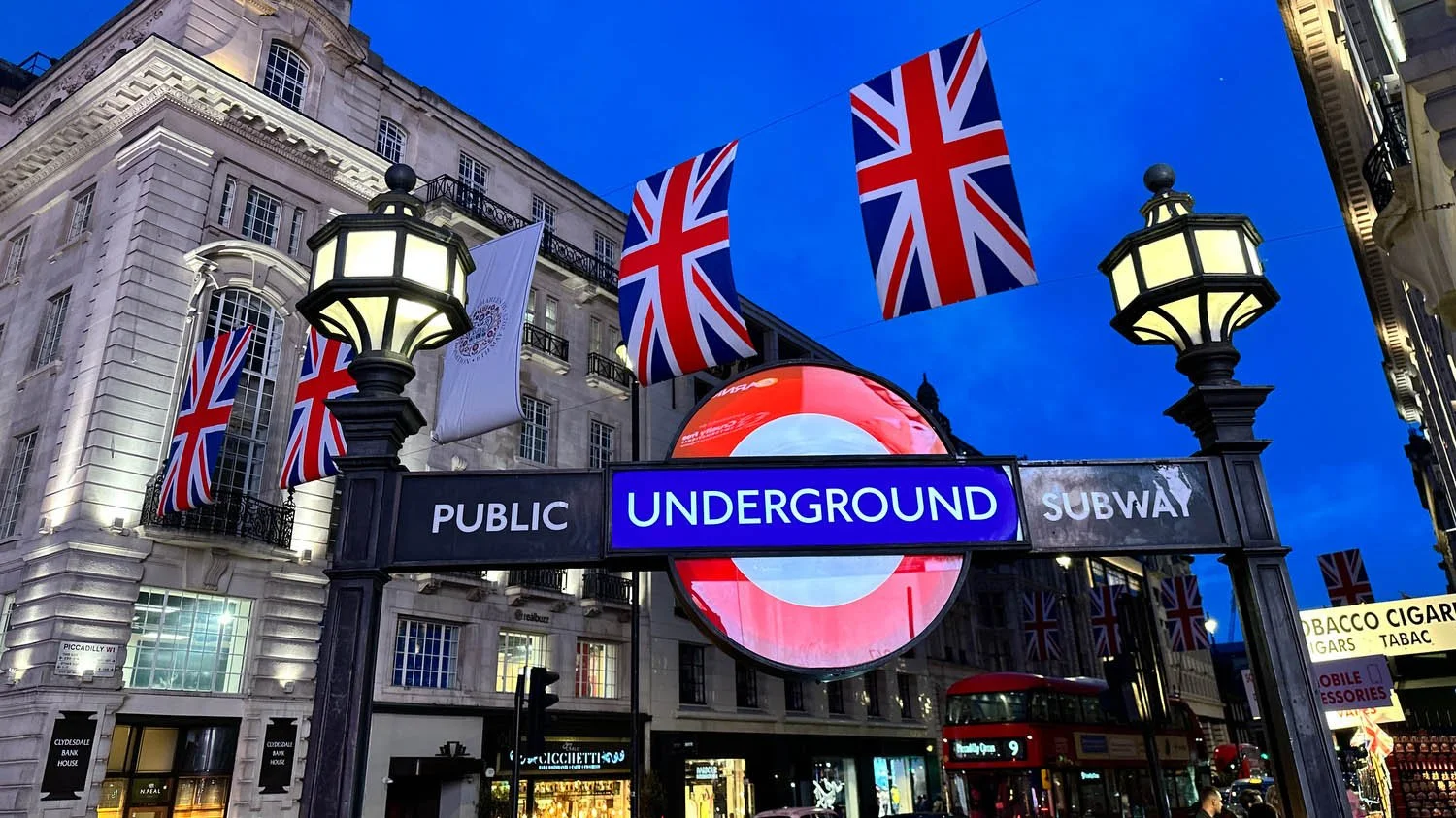
Understanding London’s Fare Zones
London’s public transport network is divided into nine zones. Tourists will spend most of their time in zones one or two.
The further away you are from Central London, the higher the zone. For example, Heathrow Airport is located in Zone 6.
The good news is that you don’t need to worry about zones at all. Just tap on and off with your credit card, phone or Oyster card and the system will automatically calculate the fare. On buses, you just need to tap on, no need to tap off.
| Payment Method | Single Fare (Zones 1-2) | Daily Price Cap | Why Use It? |
|---|---|---|---|
| Contactless / Phone | £2.90 - £3.50 | £8.70 |
THE BEST OPTION No setup needed; just tap your phone or card. |
| Oyster Card | £2.90 - £3.50 | £8.70 | Good if you don't have a contactless card, but requires a £7 deposit. |
| Paper Single Ticket | £6.70 | No Cap |
AVOID More than double the price of contactless. |
| Elizabeth Line | £13.30* | £8.70** | *Heathrow to Central. **Standard cap applies for non-Heathrow trips. |
*Official 2026 London Transport rates. Most tourist travel will be contained within Zones 1 and 2.
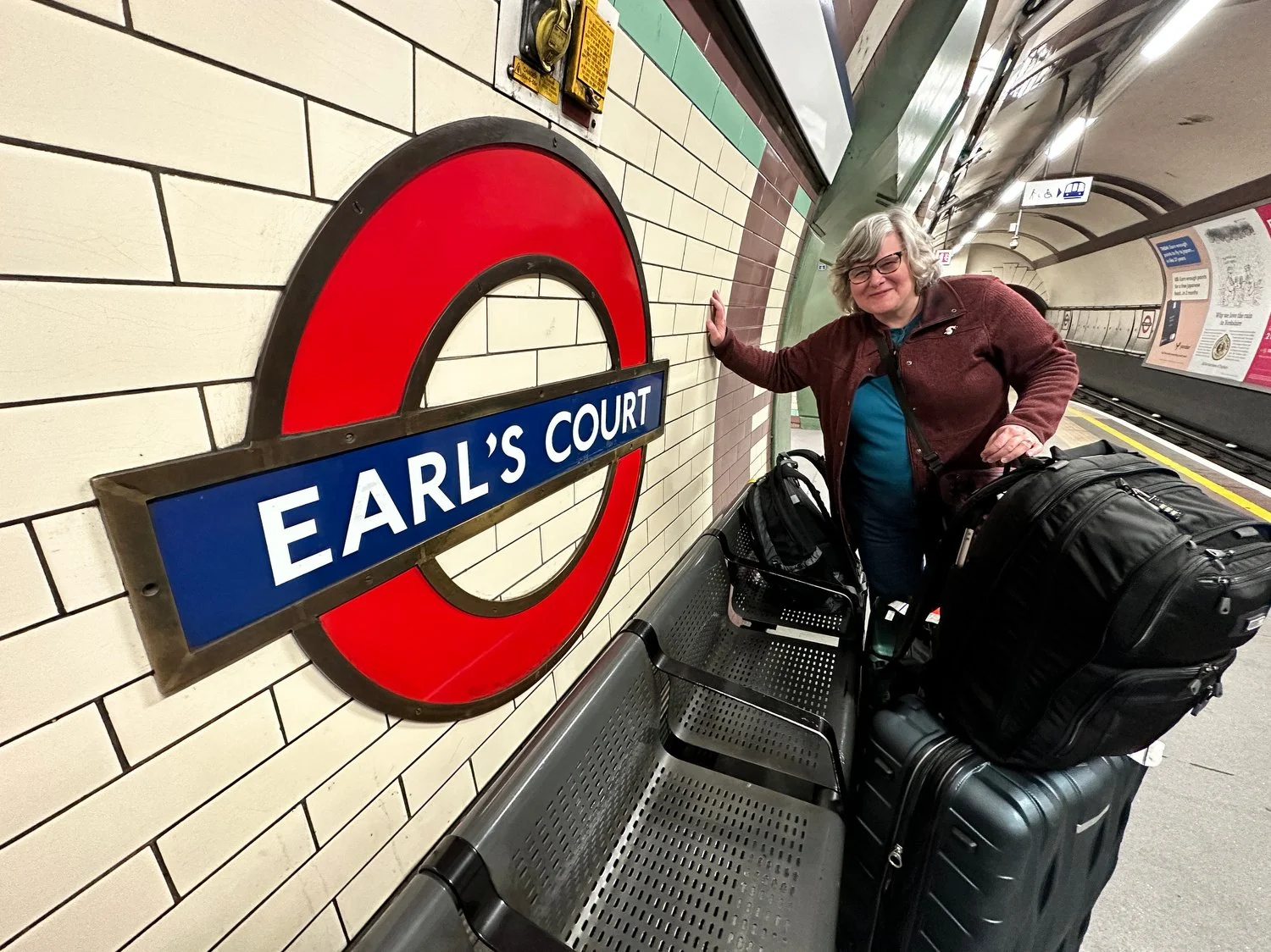
Debbie with our luggage at Earl’s Court tube station. All photos by John O’Boyle / The Empty Nest Explorers
Paying for London Mass Transportation
Since London has moved to a tap-in - tap-out system, paying for public transportation has become simple.
Contactless cards and mobile payments (Apple Pay, Google Pay, or a contactless debit/credit card) are the easiest option for most travelers. Simply tap the same card or device at the start and end of each journey, and the correct fare is calculated automatically.
Oyster cards are prepaid smartcards designed specifically for London transport. They work in the same way as contactless cards but are useful if your bank card doesn’t support contactless payments in the UK. Another good use of Oyster cards is for children; no need to hand them one of your credit cards.
There really is no practical reason to use an Oyster card anymore other than for a child who doesn’t have a credit card.
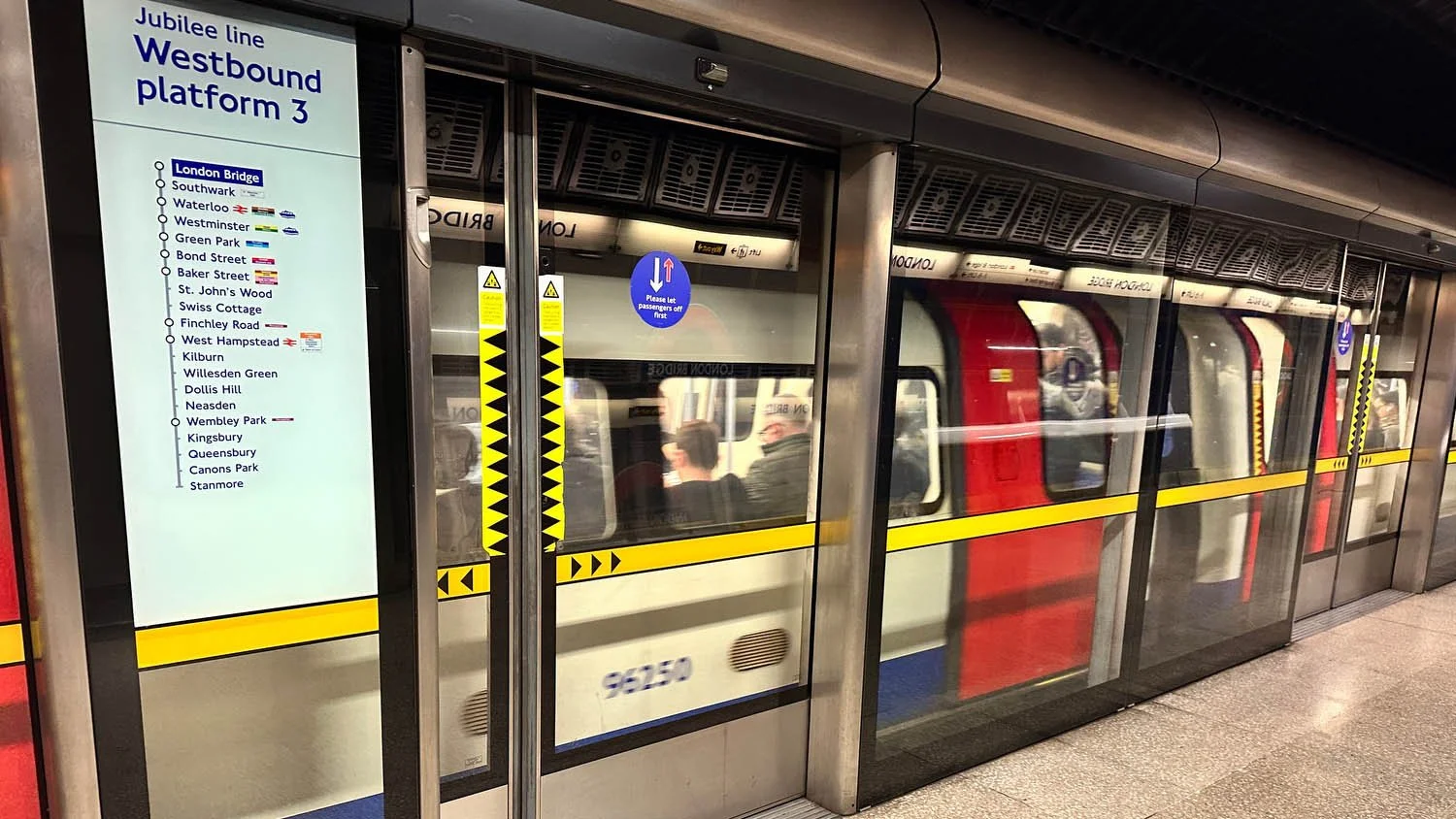
The iconic colors and shape of the Jubilee Line.
The London Underground (“The Tube”)
The London Underground, commonly known as the Tube, is one of the oldest metro networks in the world.
The Tube opened in 1863, making it the first underground railway ever built. The first trains were powered by steam locomotives, creating smoky conditions in the tunnels.
While many of the Underground stations are ultra-modern, some still remind travelers of the classic days.
Today, the Underground consists of 11 color-coded lines serving more than 272 stations.
The huge number of stations and frequent train arrivals make The Tube a fast and efficient way to get around.
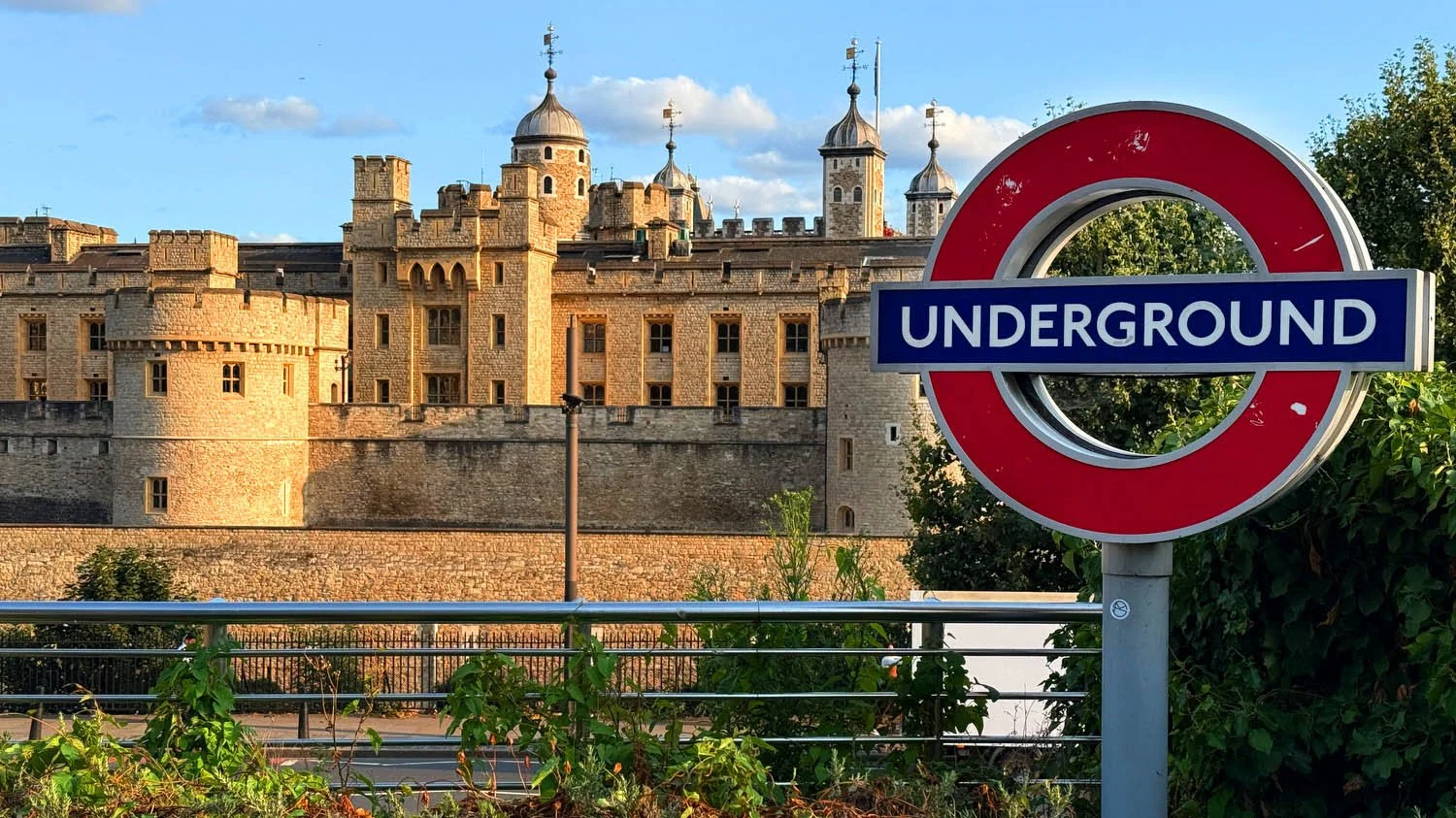
The Tower Hill Underground Station with the Tower of London in the background.
Tube Operating Hours
Trains generally run from around 5:00 am until midnight, Monday through Saturday, with slightly reduced hours on Sundays.
Night Tube services operate on selected lines—such as the Central, Jubilee, Northern, Piccadilly, and Victoria lines—on Friday and Saturday nights, offering 24-hour travel for late-night outings.
On Friday and Saturday nights, the “Night Tube” services operate on selected lines—such as the Central, Jubilee, Northern, Piccadilly, and Victoria lines allowing for 24-hour service.

Many Underground stations are very deep below the streets but others are above ground like the Earls Court Station.
London Overground, Elizabeth Line, and Docklands Light Railway (DLR)
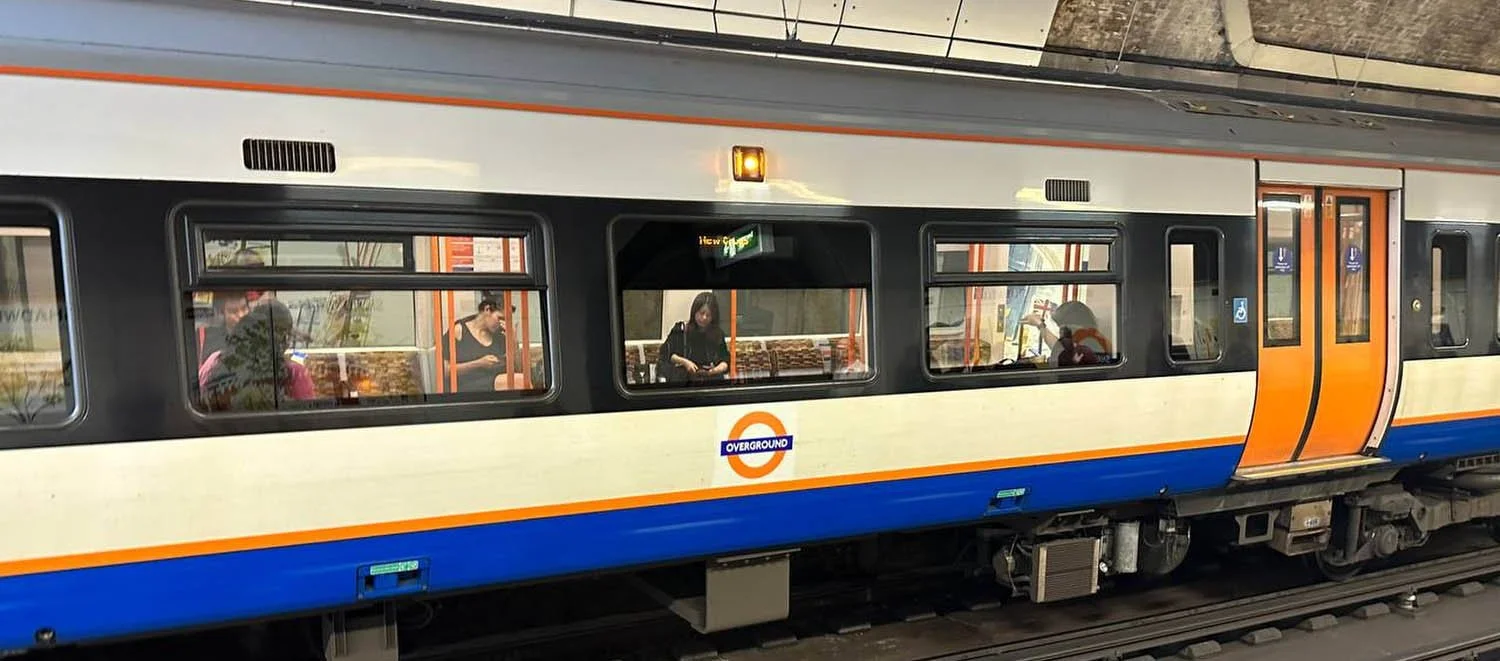
The distinctive colors of the London Overground line.
Transport for London, the governmental organization that operates London’s Underground, has simplified its complex network of lines. As a visitor, you may use the Elizabeth Line to access Heathrow Airport. The DLR lines don’t have fare gates, so you’ll need to tap on and off at the platform.
Other than that, just think of them as another colored line on the Underground map.
Day Trips outside of London
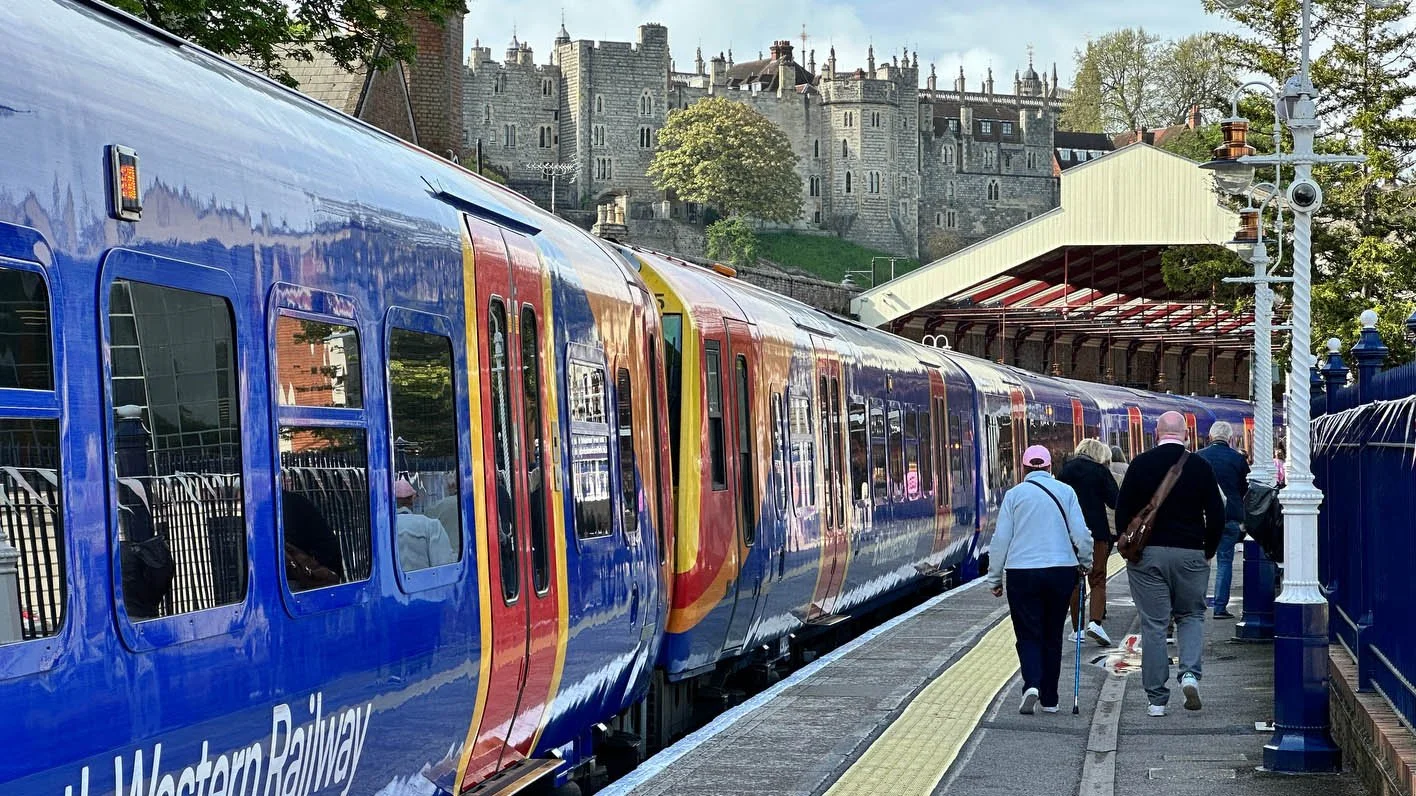
The Windsor train station has fantastic views of Windsor Castle - a wonderful and easy day trip.
If you are taking a day trip outside London by yourself, you’ll probably be taking National Rail.
We have a whole blog post about Britain’s National Rail network: Traveling by train in Britain: a guide for beginners
We also have posts on great day trips from London:
Visiting the White Cliffs of Dover: a perfect day trip from London
Best Things to Do in London: From Royal Palaces to Funky Markets
London Buses
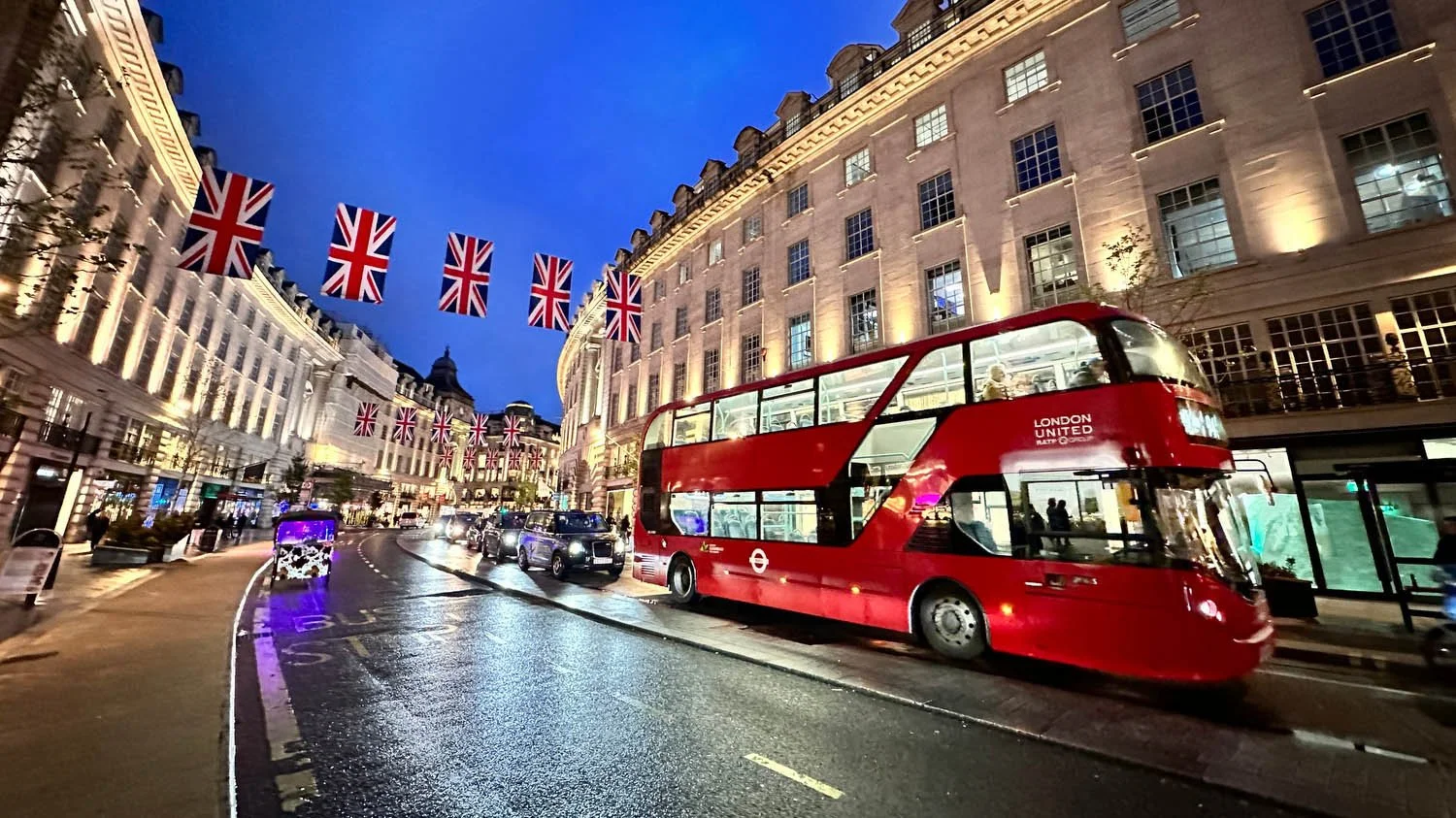
The red double-decker buses are more than just a symbol of London; they are also the city’s most used transportation system.
You’ll see buses everywhere. The buses reach nearly every section of London, and many run 24 hours a day.
All bus journeys cost a flat fare, regardless of distance, making buses one of the cheapest ways to get around London.
Unlike the Underground, you only tap in when boarding—there’s no need to tap out when you get off.
Generally speaking, buses are slower than the Underground, but they offer a wonderful tour of the city. Riding on the upper deck, especially in the front seat, never gets old.
Numerous bus lines, including line 11, take you past many of London’s iconic landmarks. A cheap and easy sightseeing tour.
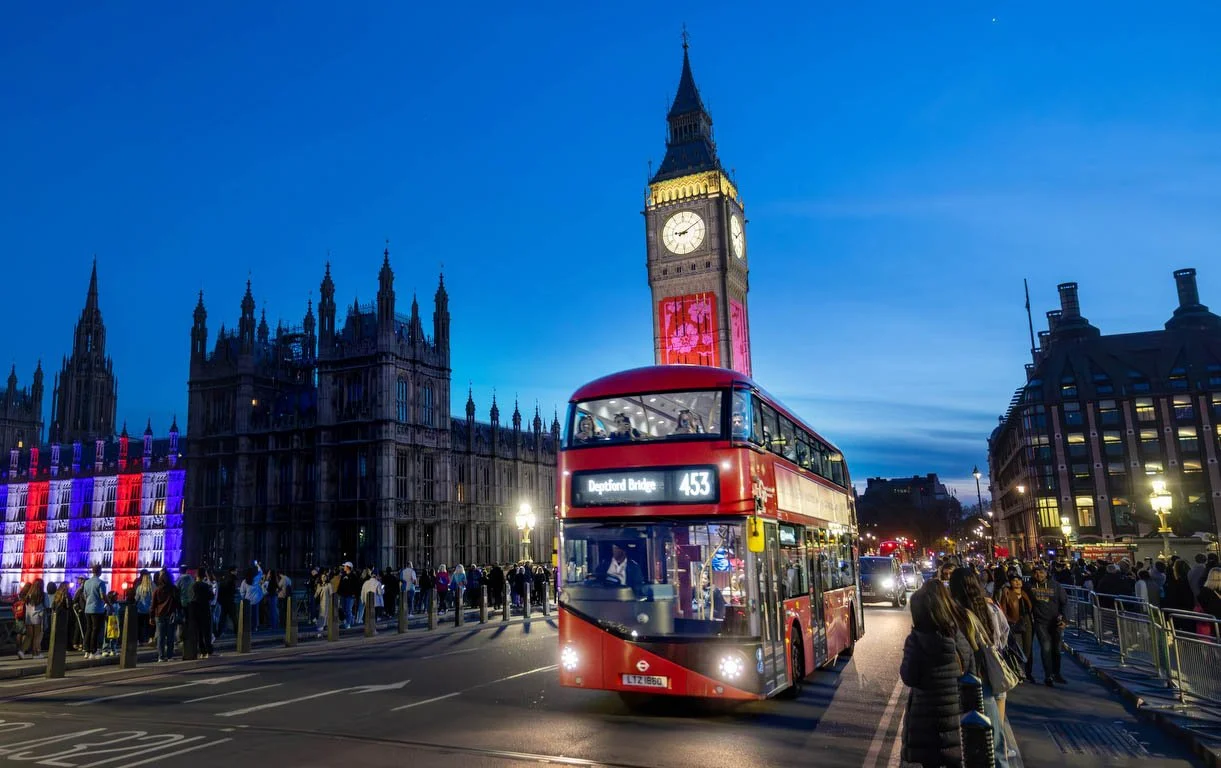
A London bus passes The Elizabeth Tower.
River Boats on the Thames
On our most recent trip to London, we took the Uber boat to visit Greenwich. It was a fun and scenic way to go. Floating under Tower Bridge is a sight to remember.
These may not be the fastest way to get around, but they certainly are memorable, giving you a fresh view of many iconic landmarks along the river.
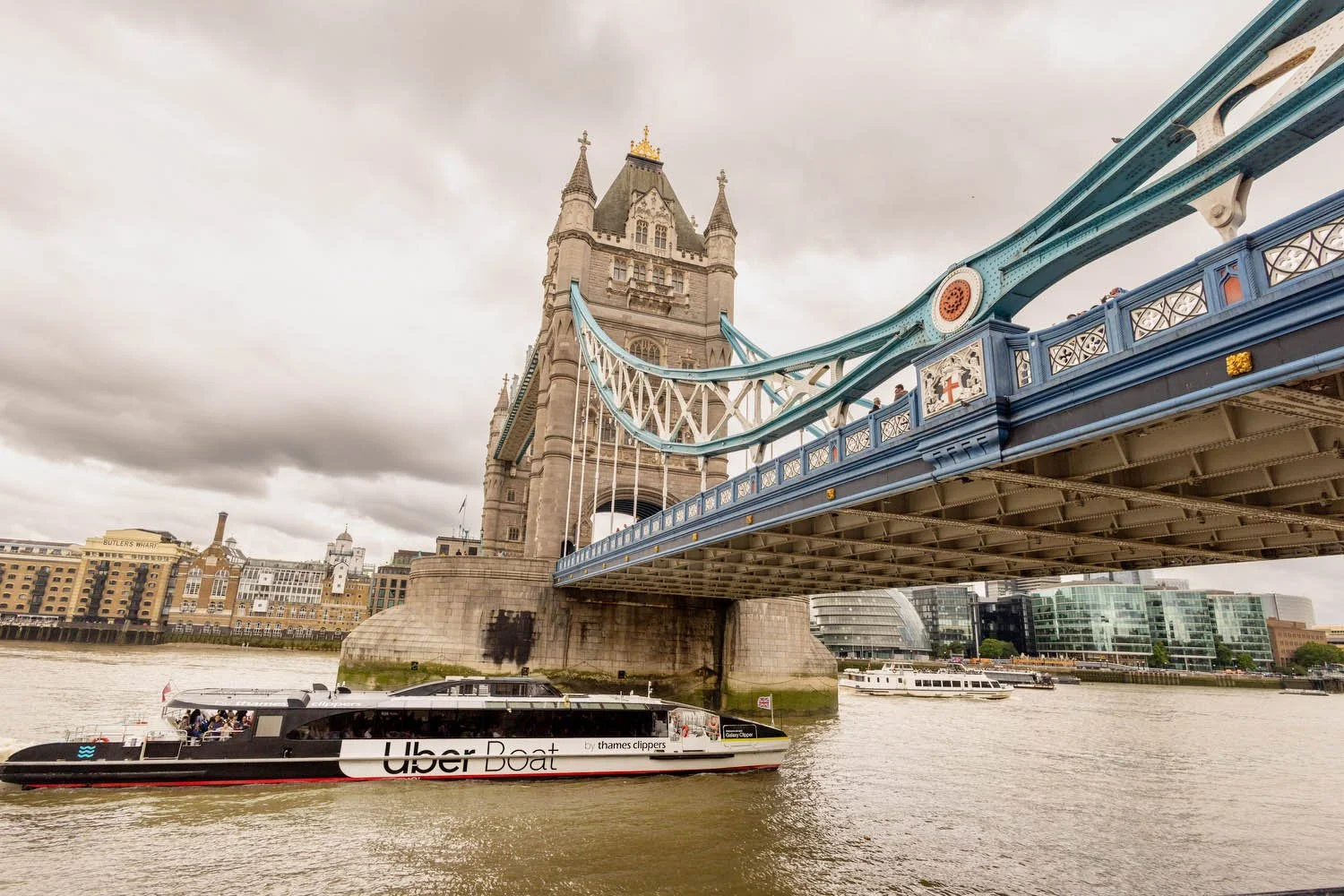
An Uber Boat goes under Tower Bridge.
Operated primarily as Uber Boat by Thames Clippers, river services run between Putney in the west and Woolwich in the east.
Boats stop at major piers near attractions such as Westminster, the London Eye, Tower Bridge, Canary Wharf, and Greenwich.
Just like the Underground, you can pay using Oyster or contactless cards by tapping in and out, or you can purchase tickets online or at the pier.
River travel is typically more expensive than buses or the Tube, but I highly recommend you try it at least once during your visit.
Black cabs and Uber
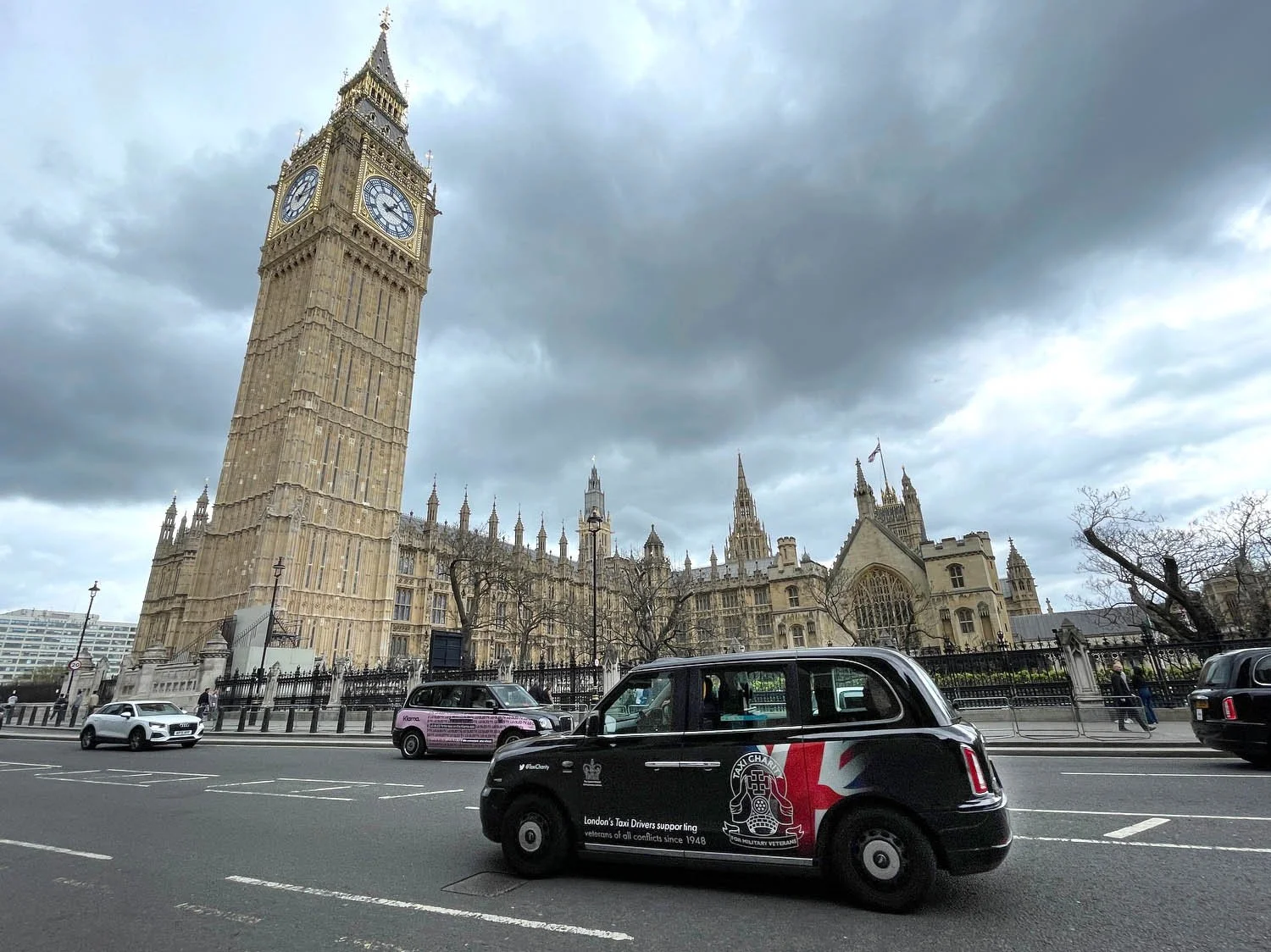
A Black cab passes the Houses of Parliament.
London’s Black cabs are not only iconic, but they are spacious. The Black cabs can fit up to 5 people, making it affordable for larger groups.
The most unique aspect of Black cabs is that the drivers are required to pass “The Knowledge” test. The notoriously difficult exam requires drivers to memorize London's streets, landmarks, and routes within a 6-mile radius of Trafalgar Square. This includes an impressive 25,000 streets and thousands of points of interest. So when you are riding with a Black cab driver, you are riding with a London expert.
Uber in London works the same as Uber in the United States. The cars are readily available, and the pricing is moderate.
Using the Elizabeth Line for Heathrow Transfers
Heathrow to Central London
Elizabeth Line Arrival Guide
Follow the Purple Signs
After Customs, look for the purple Elizabeth Line or "Trains" signs. Avoid following the generic "Underground" signs if you want the faster route.
Payment: Tap & Go
No ticket needed! Simply tap your Contactless Card or Phone (Apple/Google Pay) on the yellow reader at the gates. Fares are approx. £13.90–£15.50.
Find Your Platform
T2 & T3: 10-min walk to Heathrow Central.
T4 & T5: Stations located directly below the terminal buildings.
The Journey
Store luggage in dedicated racks. Enjoy free Wi-Fi and air conditioning. You'll reach Paddington in 28 mins or Tottenham Court Road in 33 mins.
The Elizabeth Line has quickly become the "sweet spot" for 2026 travelers arriving at Heathrow. The line offers a balance of comfort and value.
While the dedicated Heathrow Express remains the fastest route to Paddington at 15 minutes, the Elizabeth Line is only slightly slower, taking roughly 28 to 35 minutes to reach central London. The Elizabeth Line offers a more premium experience than the budget-friendly Piccadilly Line. The Elizabeth Line provides spacious, air-conditioned carriages with modern amenities like free Wi-Fi.
What makes this line a "hook" for tourists is its extensive reach across the city without the need for stressful transfers at Paddington with the Heathrow Express.
The line serves all Heathrow terminals and runs directly through key central hubs, including Bond Street, Tottenham Court Road, Liverpool Street, and Canary Wharf.
Trains run frequently - every 15 minutes to Terminals 2, 3, and 4, and every 30 minutes to Terminal 5 - so you are never left waiting long to start your London adventure.
A one-way fare on the Elizabeth line between Heathrow Airport (Zone 6) and central London (Zone 1) is typically about £13.90 to £15.50 with contactless pay-as-you-go.
TfL has confirmed proposals for this fare to rise from £13.90 to £15.50 in 2026 (subject to final approval)
Elizabeth line fares to/from Heathrow are charged at the peak rate at all times of day (i.e., there’s no cheaper off-peak fare for Heathrow–Zone 1 journeys), due to how the pricing structure for those airport tunnels works.
For those traveling with heavy suitcases, the Elizabeth Line is a game-changer because all 41 Elizabeth Line stations are designed so you can travel from the street down to the platform without having to use stairs - this is done using elevators or gently sloped ramps where present, making it far easier than many older Tube lines for people with luggage, mobility needs
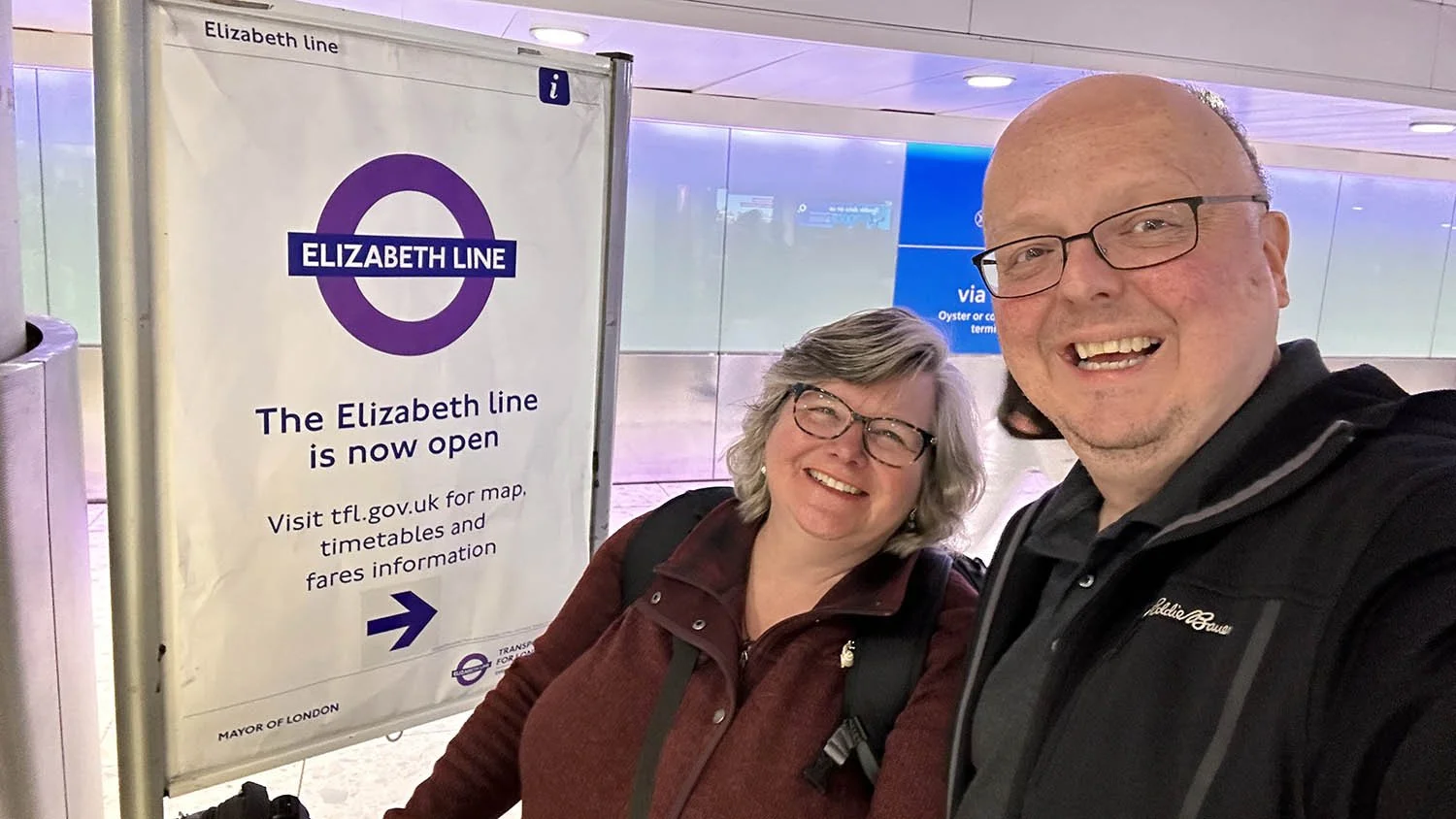
Debbie and John, The Empty Nest Explorers, first took the Elizabeth Line from Heathrow in 2023 (pictured here). We also took the Elizabeth Line from Heathrow in 2025. It’s our favorite was to get from Heathrow to central London.
Essential Pro Tips for London Transport:
The "One Card Per Person" Rule: Every traveler aged 11 and older MUST have their own payment method. You cannot "double-tap" one card or phone for two people.
Master the "Hopper Fare": London buses are a bargain at a flat £1.75 regardless of distance. The "Hopper" fare allows you to take unlimited bus or tram journeys within one hour of your first tap for that same single fare—just remember to use the same card each time. Debbie and I have used this technique - it really works.
Daily Capping: You never need to calculate your own fares. The system automatically tracks your "taps" and stops charging you once you hit the daily cap (currently £8.70 for Zones 1-2), provided you use the same card or device all day.
Escalator Etiquette:Always stand on the right side of the escalator. The left side is for those walking or running. This is the quickest way to spot a tourist
Beware of Rush Hour: To avoid being packed like a sardine, try to stay off the Tube during peak commute times: 7:30 AM – 9:30 AM and 4:30 PM – 7:00 PM on weekdays. Plus fares are also slightly cheaper during "off-peak" hours.
The "Elizabeth Line" Advantage: If you’re arriving at Heathrow Airport, the Elizabeth Line is often your best bet. It’s much faster than the standard Piccadilly Line Tube and significantly cheaper than the Heathrow Express (which costs about $31 USD vs. roughly $13.36 USD on the Elizabeth Line). The Elizabeth Line is the only way we get from Heathrow to central London. It’s the best combination of cost and luxury.
Bottom line - Many of London’s main central attractions are walkable, but walking everywhere will wear you out very quickly.
Please use London’s mass transit system. Google Maps will give you great instructions, and using tap on and tap off is very easy.
Keep your valuables out of sight and in zippered or safe pockets, and you’ll be in great shape.
About the Authors

|
John and Debbie O'Boyle are the team behind The Empty Nest Explorers. John is a professional photographer whose work has been published by The New York Times, NBC News, and Getty Images. He is a member of the American Society of Media Photographers, has been part of a Pulitzer Prize-winning team, and has received two New York Emmy nominations. Debbie is a writer with 30+ years of professional photography experience, formerly with The Star-Ledger and NJ.com. Together, they create in-depth travel guides for couples and empty-nest travelers who want to make the most of every destination. |
Well-reviewed tours you might like:
Note - This blog post contains affiliate links. This means that if we recommend a product, activity, or hotel, we might receive a small commission if you buy or book through these links. This is done at no additional cost to you. We only recommend products we have personally used or have thoroughly researched.
Other London travel posts:
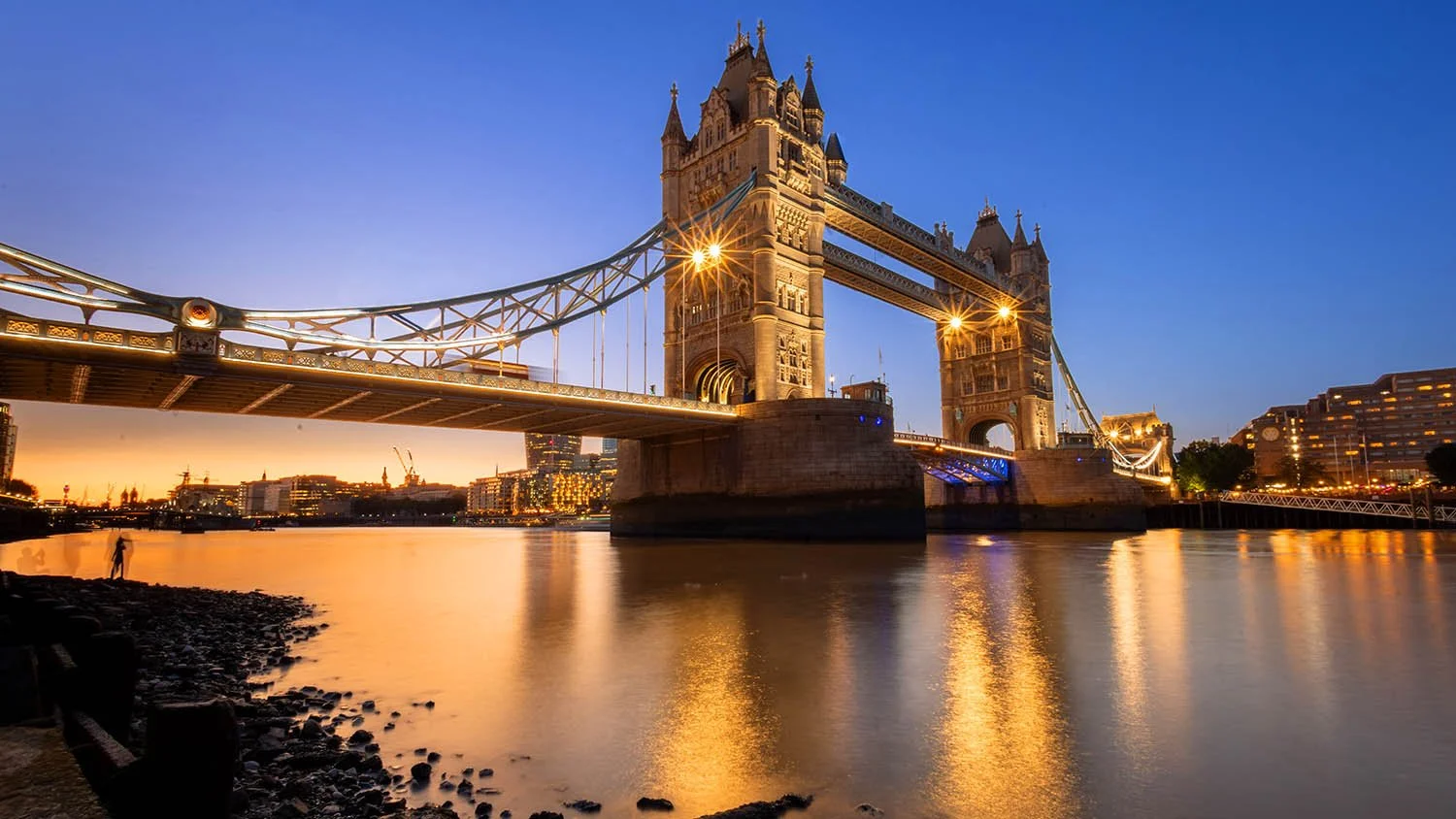






London was the first European city we visited, and we keep going back.
Here is everything we have learned to make your first trip go smoothly, from the ETA and the Tube to where to stay and the best day trips.