Visiting Palm Springs and Joshua Tree: A Complete Guide

A palm tree at sunset outside Palm Springs. All photos by John O’Boyle/The Empty Nest Explorers (except hotel photos below)
The most surprising thing about Palm Springs, California and nearby Joshua Tree National Park is the variety of things to do and see in the area.
You can enjoy the spa life, dine in trendy restaurants, enjoy a poolside drink at a glamorously vintage mid-century hotel, hike in rugged Joshua Tree National Park, or ride a tram over the canyon up into towering snow-capped cliffs.
It’s no wonder this area became a popular resort. It’s only about a 2 hour drive from central Los Angeles and you really can’t beat it for scenery and weather. Set in the Sonoran Desert and surrounded by four different mountain ranges, it’s not only extremely picturesque but protected from the wind in winter.
When I hear the name Palm Springs, I immediately think of the glamorous stars of yesterday, relaxing poolside and playing tennis. Heroes of Hollywood’s heyday like Marilyn Monroe, Cary Grant, Kirk Douglas.
Then there are the quintessential combinations of Frank Sinatra, Dean Martin & Sammy Davis Jr.; Lucy & Desi; Bob Hope & Bing Crosby. Legend has it that Irving Berlin may actually have written the holiday classic “White Christmas” while by the pool at La Quinta. Interesting story. But in my mind, the emphasis was very much on the word “yesterday”, compounded by the image of gray-haired snowbirds fluttering in during winter months.
What I didn’t realize is that Palm Springs is still popular with celebrities. Beyoncé, Jay Z and the Kardashians frequent the area. So while I was expecting a sort of dusty old curiosity of a place in the middle of the desert that was still charming but kind of done, I was pleasantly surprised to be all wrong. Palm Springs is very much alive; a very vibrant, beautiful town, as boujie as you please and worth a few days’ stay when you are traveling through southern California.
Parking $15/vehicle · Mon–Fri first tram 10am · Sat/Sun/Holidays first tram 8am
⚠ CLOSED for maintenance approx. Sept 14 – Oct 17, 2026
America the Beautiful annual pass ($80) covers all national parks — a good deal if visiting more than two
Street fair with food, crafts, live music, and free admission to the Palm Springs Art Museum
Hotels across the valley book out fast and prices spike — avoid these weekends unless you're going to the festivals ⚠ BOOK EARLY OR AVOID

Palm Spring Windmills at sunset
Touring the Palm Springs Windmills
And those canyon winds are no joke - in fact the San Gorgonio Pass, just outside of Palm Springs is one of the windiest places on Earth. Because of this constant wind, the pass is full of wind turbines, hundreds of them.
You can’t miss the impressive sight of these slender stick figures doing their spinning dance against the painterly backdrop of desert hills as you drive along I-10. Especially beautiful at sunset, it’s almost like an art installation with the purpose of generating electricity. Win-win. You can actually take tours of the windmills farms if you’d like to see more.

Downtown Palm Springs
Visiting Downtown Palm Springs
Palm Canyon Drive
The main strip in downtown is centered around Palm Canyon Drive and the surrounding streets. It’s colorful and spread out with palm tree-lined meridians and ringed in by the soft-hued canyon hills, topped by brilliant blue sky. It is easily walkable and we didn’t have trouble finding parking either on the street or in large lots just off Palm Canyon Drive.
There are plenty of top-notch restaurants to please the fussiest foodies, plus eclectic, high-end shopping. We were there in March and it was quite warm - a local shop owner told us it was 20 degrees hotter than usual for the time of year - but still very pleasant. We took advantage of the outdoor dining that’s abundantly available so we could drink in the scenery.
There is apparently quite a coffee shop culture in Palm Springs. Our son, who was using this trip as a working vacation, wound up choosing Starbucks Reserve as his outdoor office over the smaller cafes, attracted by the fine spray misters that kept the area comfortably cool. So even when it’s hot, you can chill in Palm Springs. ;)
On Thursday evenings, Palm Canyon Drive is closed to traffic and downtown becomes a pedestrian street fair with arts, crafts, food and entertainment. This event is dubbed VillageFest and runs every Thursday until 10 pm. Hours shift slightly with the seasons — 6 pm from October through May, and 7 pm from June through September.
The borders of the street festival are Indian Canyon Drive to the east and Belardo Road to the west. Many of the stores along the drive keep their doors open late that night, and the Palm Springs Art Museum offers free admission. Buskers and street artists entertain visitors as they stroll the stands and shops. This lively street party event takes place year-round as the evening weather is beautiful.
What Palm Springs does particularly well is embracing its star-studded history while still keeping up with modern trends. It feels freshly updated but still very proudly exhibits its famous mid-century architecture.
If more history is what you are after, the Palm Springs Historical Society has a small but interesting museum in the heart of downtown and is known for its excellent walking and biking tours of the city, available in different themes.
Walk of Stars
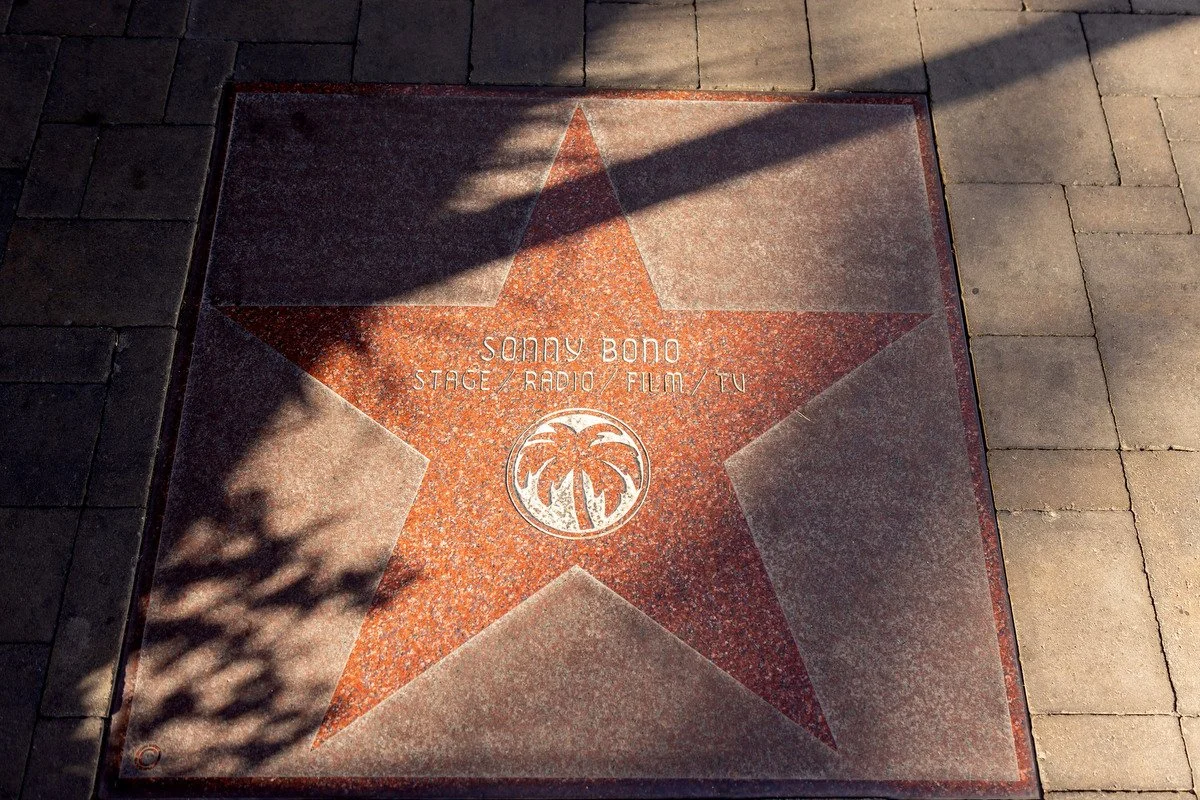
While strolling Palm Springs Drive, we checked out the Walk of Stars. Similar to the Hollywood Boulevard Walk of Fame, this world-famous sidewalk features over 400 stars bearing the names of well-known celebrities and notable local personalities associated with Palm Springs.
Marilyn Monroe statue
Many cinema stars vacationed here because of its close proximity to Hollywood, but it was also popular with sports personalities, musicians and patrons of the arts. Frank Sinatra, Trini Lopez, Sophia Loren, Marilyn Monroe, Elvis Presley, Arnold Palmer, Rock Hudson, Ronald Reagan, Dionne Warwick - the list rolls on and on. Sonny Bono, who was mayor of the town from 1988 to 1992, then later a US Congressman from 1995 till his death in 1998, has a quirky bronze statue dedicated to him along the walk.
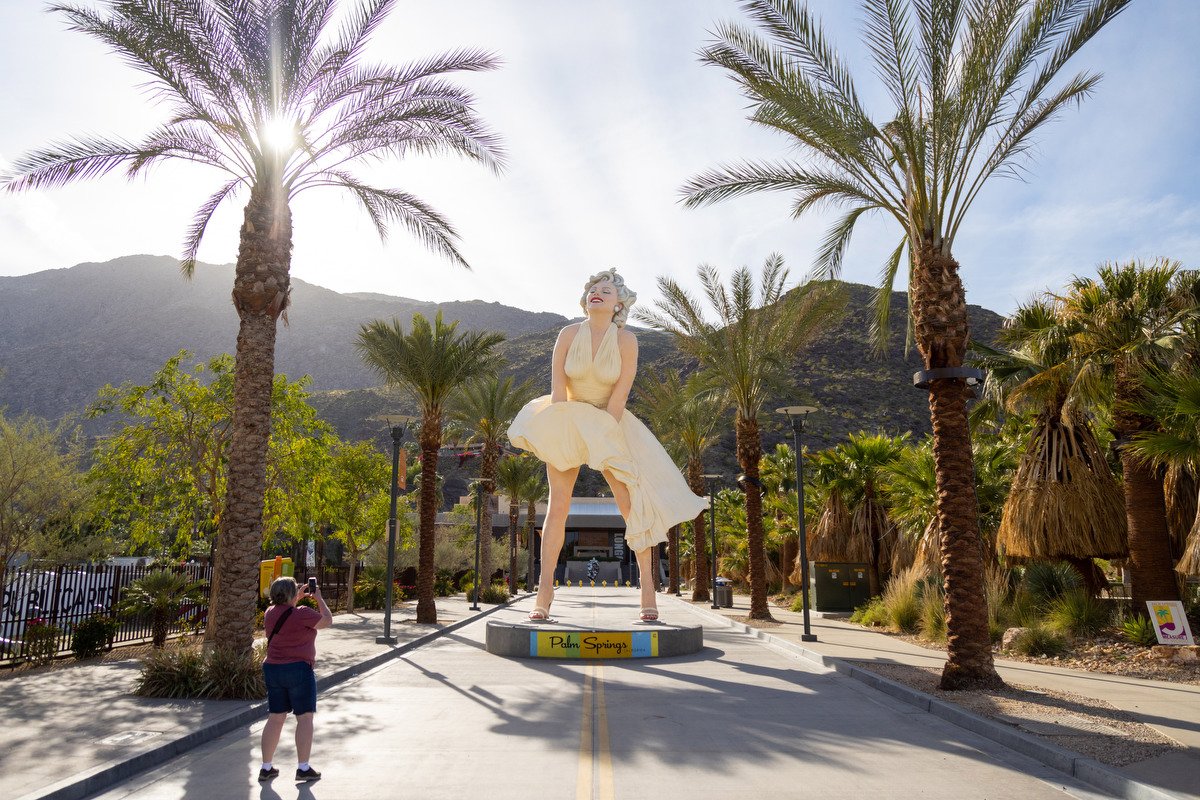
And if just a star isn’t enough Marilyn for you, you can’t miss the eye-catching 26-foot-tall sculpture called “Forever Marilyn”.
The giant figure wears that famously billowing white dress she wore in “The Seven Year Itch” while standing over a subway grate. I recognized this particular artwork from when it was on loan to the Grounds for Sculpture in our home state of New Jersey for a number of years. (There’s ALWAYS a Jersey connection everywhere we go! Long live the Garden State!) You can read about the Grounds for Sculpture here.
When she returned to Palm Springs in 2021, the placement of the statue right at the exit to the Palm Springs Art Museum apparently caused a bit of a stir. The concern is that as people exit the museum, they are presented with Marilyn’s backside and exposed underwear, and the inevitable “up-skirted” selfies are bound to happen.
In my humble opinion, it’s just a statue, folks - some art in the desert honoring a beloved star who frequented the place, so let’s just simmer down.
The Palm Springs Art Museum, just behind dear Marilyn, features many works of fine art and has been in existence since the 1930s. It houses a large collection of modern and contemporary art, Native American artifacts, natural history displays, photography, paintings and two sculpture gardens. It’s also free on Thursday nights during VillageFest.

Worth noting, a fun stop we made for dinner one evening was Rick’s Desert Grill.
After an exhausting day at Joshua Tree National Park (more on that later), we were looking for something close to our hotel, as we were too tired to go walking around downtown. We took a chance on Rick’s after checking it out on Yelp, and we were charmed by the place! The food was excellent, with deviled eggs on the house and a Key Lime Martini that was exactly what I was expecting it to be, creamy and limey! It’s kind of a diner, kind of a sports bar, kind of a tribute to Palm Springs’ heyday.
The many celebrity photos that decorate the walls got us googling people and places and engaging our college-aged son in some glamorous history. He couldn’t help smirking at the “live entertainment” - thoroughly entertained I guess, by the throwback vibe.
The service was great and very friendly, and they even remembered us when John had to stop back the next day for the credit card he had accidentally left.
They remembered exactly where we sat and were holding the card for him. Nice people. Nice place.
Hiking the Indian Canyons
Honestly, this is the one thing I wish we had made more time for in Palm Springs.
The Indian Canyons sit just ten minutes south of downtown on South Palm Canyon Drive, and they could not feel more different from the rest of the city. This is the ancestral home of the Agua Caliente Band of Cahuilla Indians. There are more than 60 miles of hiking trails spread across three canyons: Andreas Canyon, Murray Canyon, and Palm Canyon. Each one has a completely different personality.
Andreas Canyon is where I'd start, especially if you're not looking for a strenuous hike. It's an easy one-mile loop through a lush palm oasis where a mountain-fed stream trickles along and the skirts of native fan palms sway in the breeze.
You can actually see ancient bedrock mortars carved into the rock near the trailhead, where the Cahuilla people ground food centuries ago. The trail is shaded and relatively flat, which makes it a wonderful option if you want real desert beauty without a punishing climb.
Palm Canyon is the longest of the three at fifteen miles, with a moderately graded path that winds down into one of the largest undisturbed palm oases in the world. More than 2,500 adult palms line the gorge, with a gentle stream running through. You don't need to go the whole distance to appreciate it. Even walking a mile in and back gives you a sense of just how extraordinary the landscape is.
If you're feeling more adventurous, Murray Canyon is a moderate hike that takes you past a palm oasis, crossing a mountain-fed stream more than a dozen times on the way up to a seasonal waterfall called the Seven Sisters. Spring is the best time to catch it when the water is flowing well.
From October through June, ranger-led interpretive hikes are available free with paid admission. Given the rich history of this land, I would jump at that if the timing works.
Admission is $12 for adults, $7 for seniors and students, and $6 for children ages 6 to 12. The canyons are open daily 8 am to 5 pm, from October through early July, then weekends only through September. No dogs allowed.
For empty nesters who want real scenery without the hour-long drive to Joshua Tree, this is the answer. It's right there and it's unlike anything else in the Palm Springs area.
Riding The Palm Springs Aerial Tramway
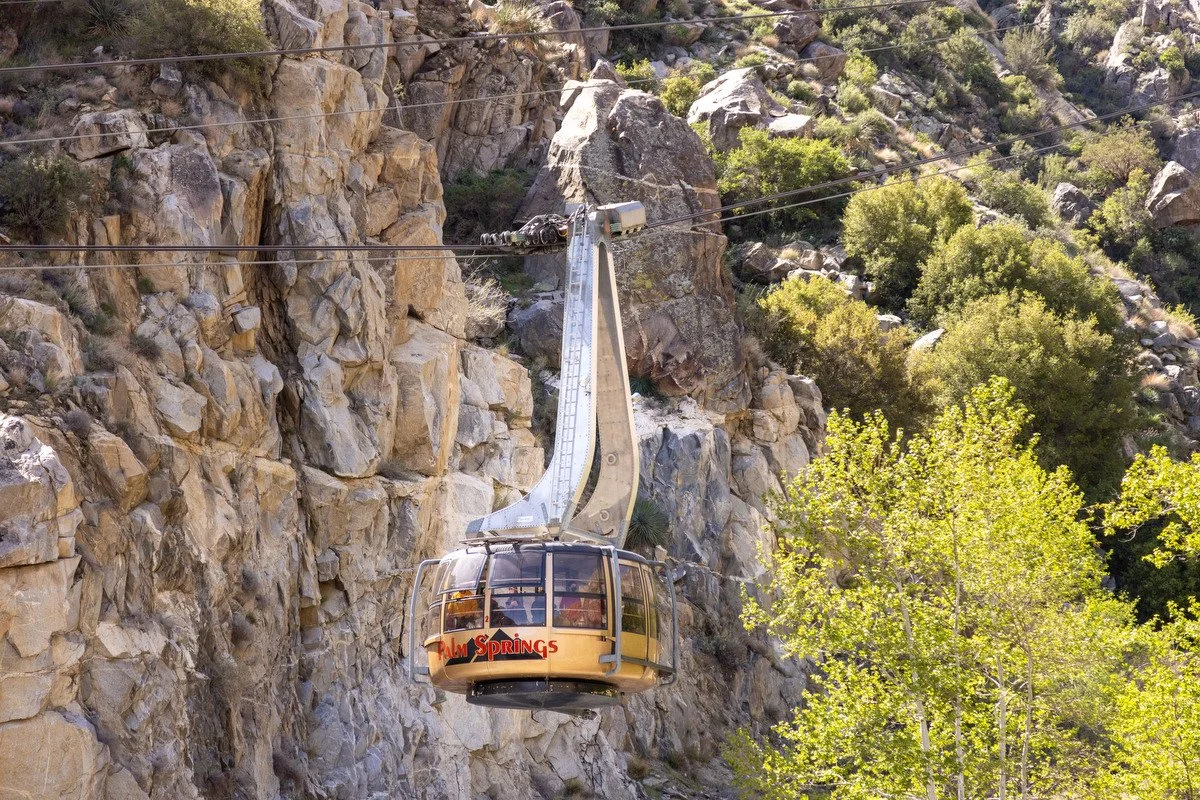
A Palm Springs Aerial Tramway car
Another bonus to our hotel’s location is it was only 5 minutes from the Palm Springs Aerial Tramway, which was my favorite thing we did in Palm Springs. I am a fan of aerial trams, gondola rides, and funiculars - I guess it’s as adventurous as I get when it comes to things in the “ride” category. But I think why I really like them is the feeling of going somewhere special that can only be reached by unique transport. And spectacular views are usually included.
The Palm Springs Aerial Tramway opened in 1963 and touts the world’s largest rotating aerial tram cars. It climbs over two-and-a-half miles along the stunning cliffs of Chino Canyon, transporting riders to Mt. San Jacinto State Park. It’s a ten-minute journey, with the car slowly rotating so you can never have a “bad spot” and never miss a view.
Tickets are available online (buy tickets here), but since we were watching the weather, we didn't book ahead of time. Even so, buying a ticket there wasn’t too inconvenient, as they hold a good number back for distribution in person. All told, between the queue to get it and then the wait after we purchased our timed ticket, we waited about an hour.
Current adult tickets are $36.95, children ages 3-10 are $20.95, and seniors 65+ are $33.95, all including a $2 online processing fee.
Tram hours: Monday through Friday, the first tram up is at 10am; Saturday, Sunday, and holidays, first tram up is at 8am. Last tram up is 8pm daily. Parking costs $15 per vehicle.
There was a comfortable waiting area at Valley Station so we hung out on the outside patio and watched the trams go up and down until our time was called for boarding. There is a snack bar and cocktail bar as well, but we did not partake. It was interesting enough watching the trams climb up into the mountains.
When we boarded the tram, there was plenty of room to see out and the views were just amazing. The driver gives interesting information about the area and the tram as you turn along the route, ears popping and the car gently swinging as it switches tower points.
It should be noted that with such a rise in elevation, the temperature at the top can be as much as 30 degrees cooler than where you started, so dress appropriately. As we climbed higher, we saw the physical change of terrain - snow on the ledges and the appearance of pine trees.
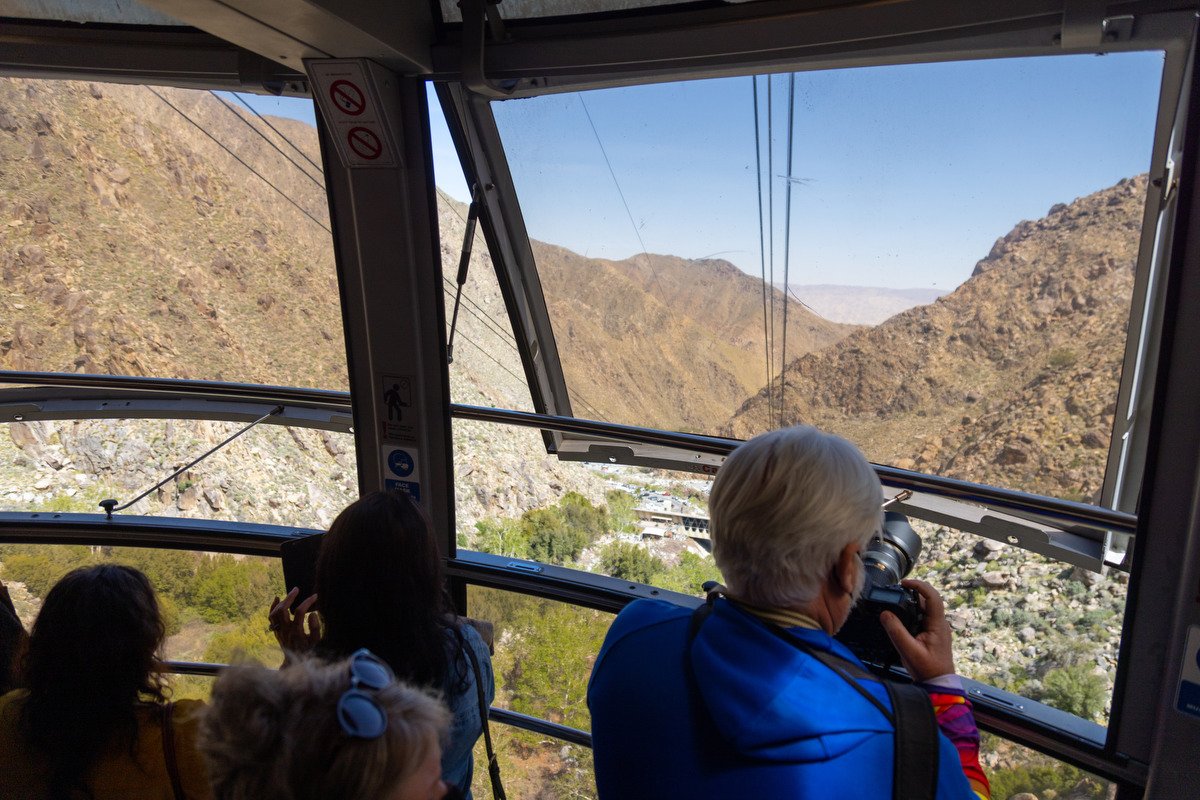
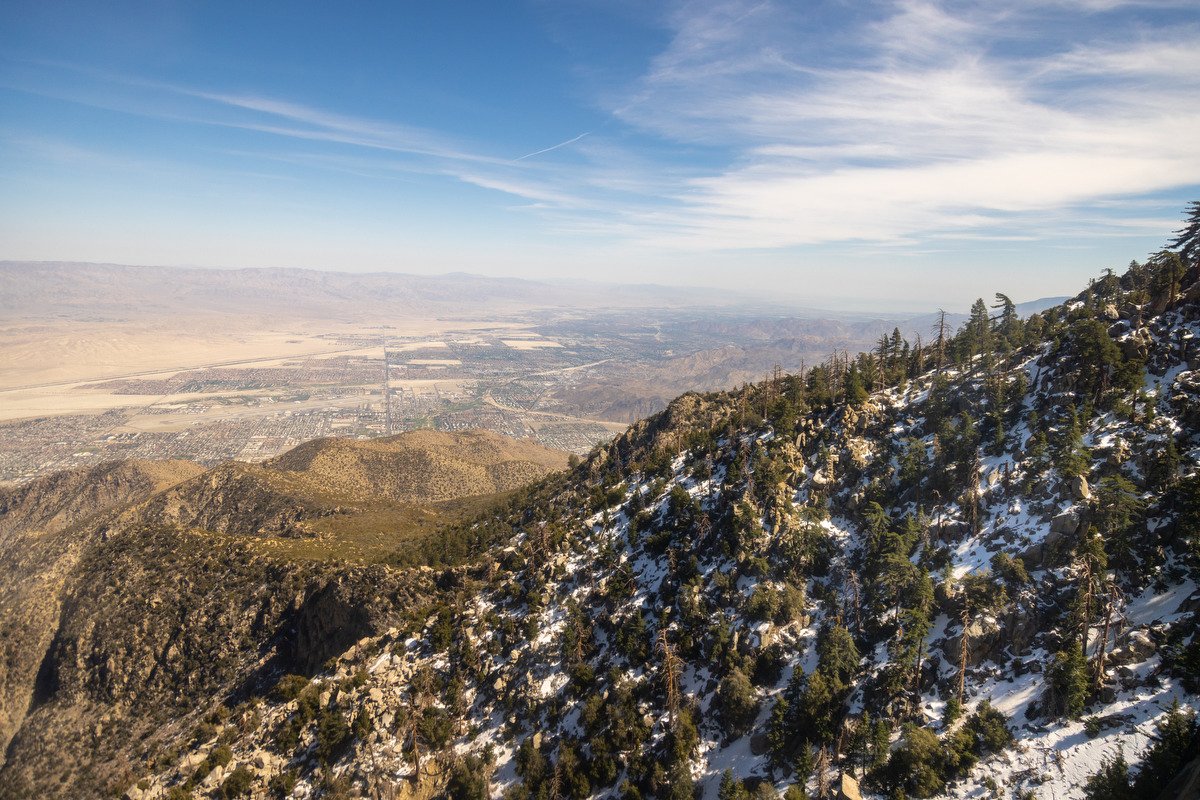
When we got to our aerial destination of Mountain Station, disembarking the tram, instantly we could feel the dip in temperature and I definitely sensed the change in elevation. 8,516 feet! But what really struck me was snow! Snow in California! Beautiful hiking trails awaited (there are 50 miles of them) so we took a short stroll. It’s pretty steep hiking, and the effect of the quick change in elevation can take you by surprise, so I would suggest not overdoing it. You don’t have to go too far to enjoy it.
After hanging out and taking photos for a while, we took a tram down again. There are restaurants at the top, as well as observation decks, a natural history museum, two documentary theaters, and a gift shop, but again we didn’t partake. We had a jolly time, group-singing “Sweet Caroline” and “My Girl” on the ride down, turning gently and taking in the last vistas, and getting a few more cell phone videos. What a fun ride!
A great day trip if you like to hike, but even just experiencing the tram is worth it. Funny to think we were swimming in an outdoor pool and hiking in the snow within just the span of a few hours.
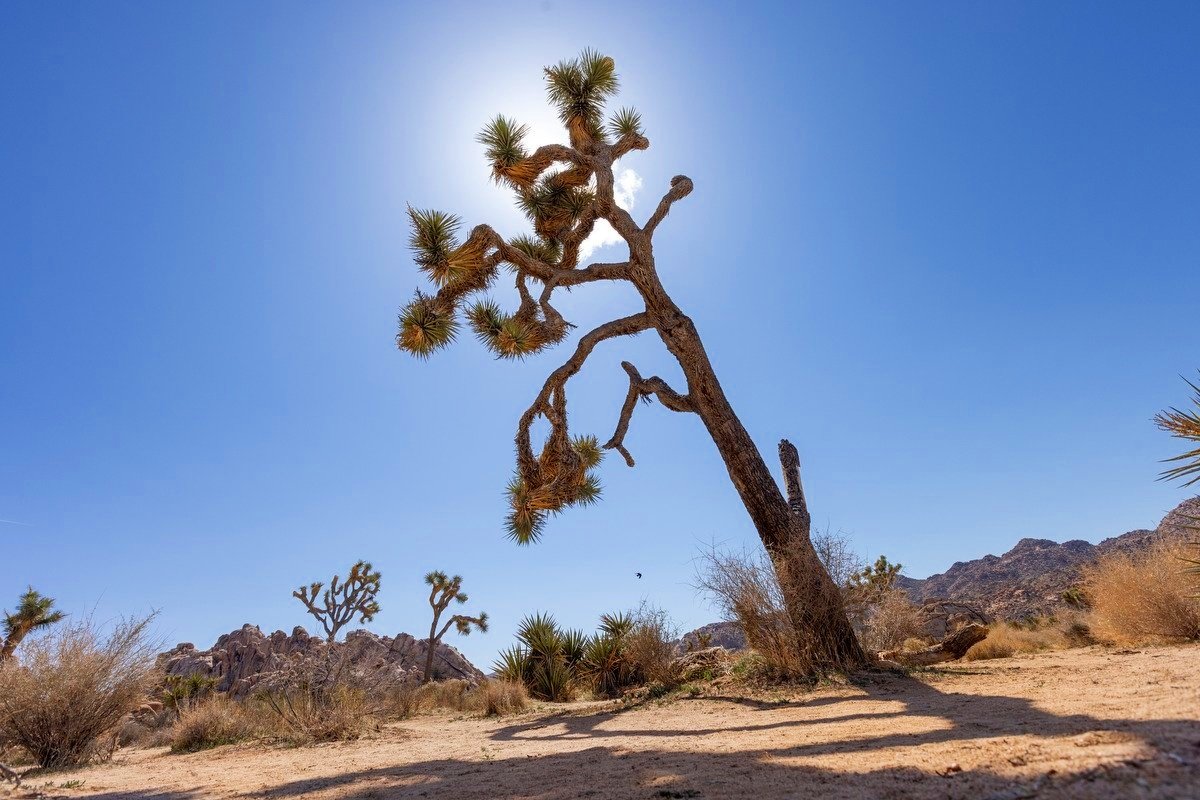
A distinctive Joshua Tree at Joshua Tree National Park.
Visiting Joshua Tree National Park
I don’t think I can emphasize the natural beauty of southern California enough. There are breathtaking views almost anywhere you look. There are hiking trails through desert canyons, soft wildflower-strewn hills and glistening beaches. And just an hour away from balmy Palm Springs, there is Joshua Tree National Park, the most unique national park I’ve ever visited. It straddles two ecosystems in the Mojave and Colorado deserts.
The awe-inspiring desert landscape of the park invokes something ancient and spiritual. Or perhaps, a scene from another planet entirely. If you’re not familiar with the tree that gives the park its name (beyond the title of the 1987 U2 album) this slow growing tree of the Yucca family is striking due to its shape resembling outstretched fingers, or as many have remarked, something out of a Dr. Seuss book. The name actually comes from Mormon settlers who were reminded of a Bible story in which Joshua reaches up to the sky in prayer.
Though they are the most famous part of the landscape, we were even more impressed by the giant rocks and boulders that make up terrain. They are massive and seem almost purposefully sculpted and then dropped from the sky into their scattered design. Hiking, rock scrambling & climbing, camping, cycling, stargazing, and taking photos of the tranquil landscape are the most popular activities in the park.
Read about how to take great photos in Joshua Tree in our post: Visiting Joshua Tree: 5 tips for better photos on your trip.
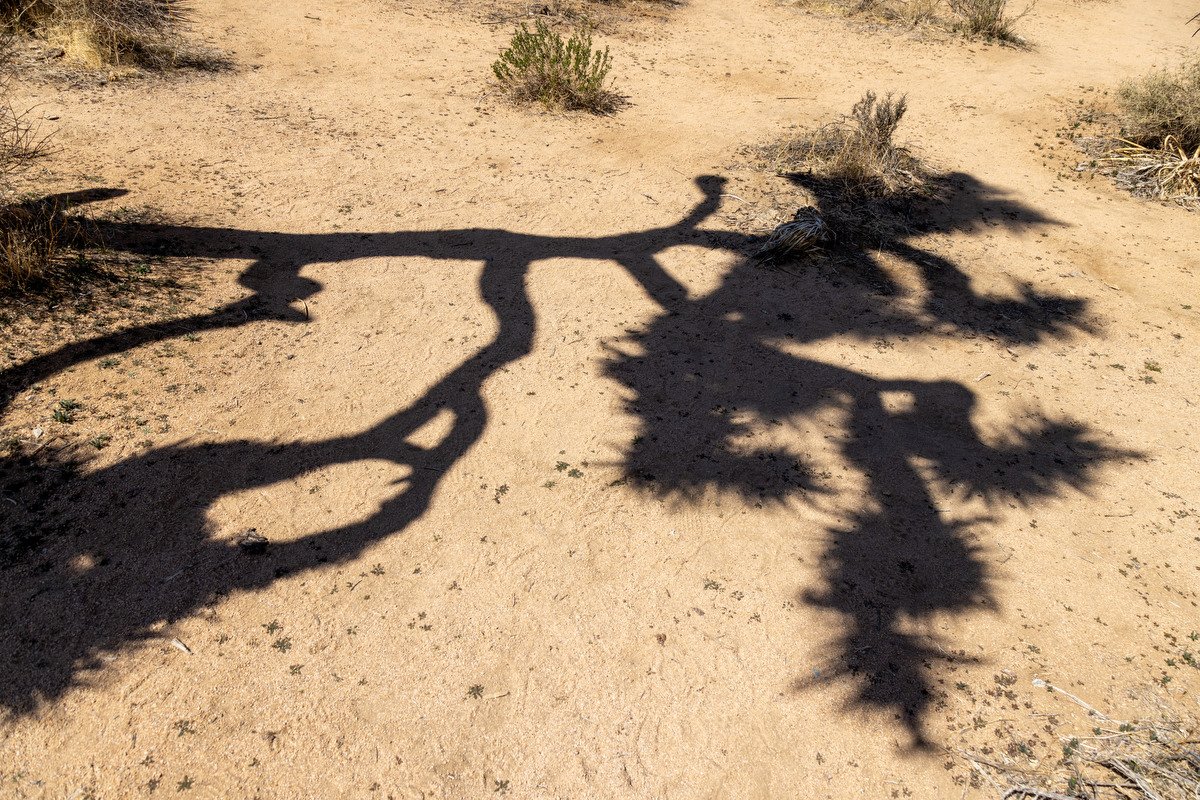
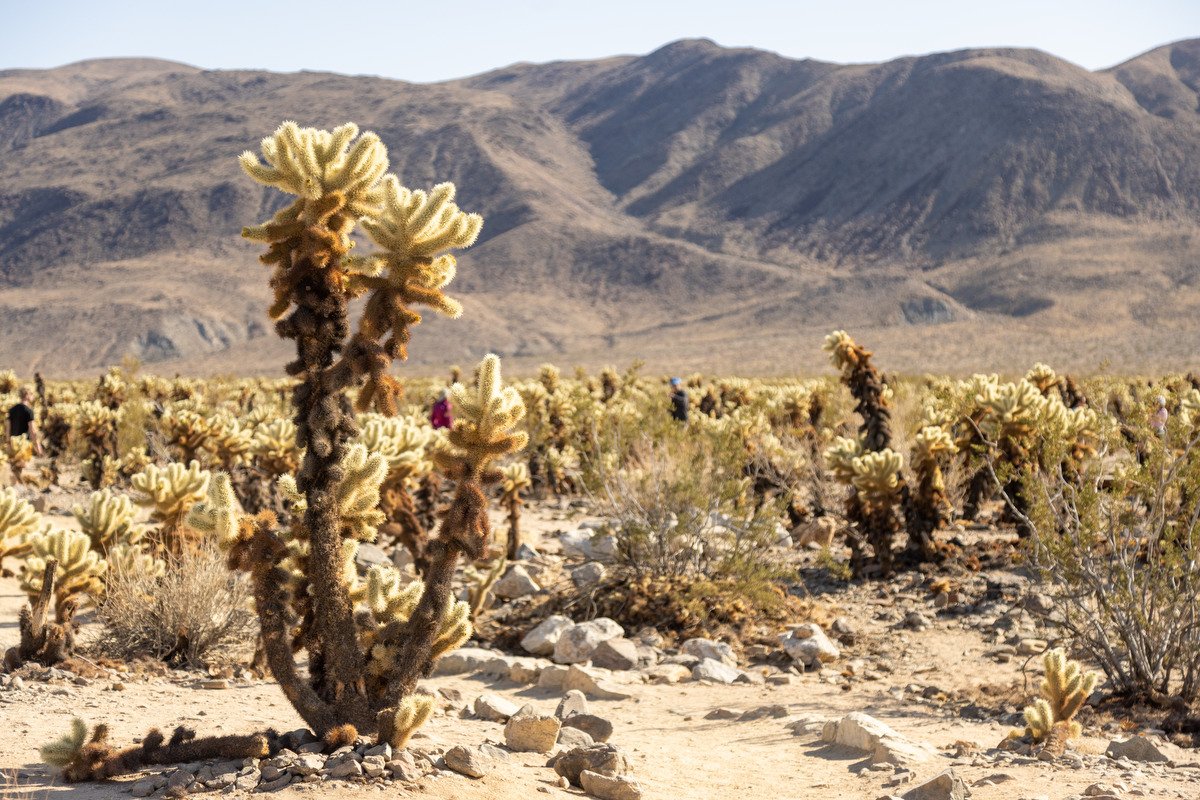
A few things to know before you go - Joshua Tree is open year-round, but desert weather can change rapidly. So check the forecast before you go and dress appropriately. We went in March and it wasn’t overly hot, but it can get extremely hot during the spring and summer months. The sun is always strong so a hat, sunscreen, and sunglasses are a must at any time of year. There aren’t a lot of places to fill your water bottle so make sure you bring enough water with you. The desert wind and sun can be insidiously parching. There is a small, rather humble visitor center and a few restrooms in the park. My advice would be to use them when you see them.
There are about 30 hiking trails in Joshua Tree, from short nature walks to strenuous desert hikes. We found we didn’t have to venture very far to really appreciate the unique terrain. Here are a few points of interest:
• Hidden Valley nature trail:
This one-mile trail gives you a good taste of everything the park has to offer without a strenuous hike. While considered an easy trail, If you don’t want to walk the whole mile, go to the left and walk as far as you like then turn back. If you go to the right instead you’ll face the more difficult scramble over the rocks first. Along the trail, you’ll get great panoramic views, especially when you first enter the Hidden Valley. You’ll see not only the famous Joshua trees but other desert plants as cacti, yucca and nolina dot the landscape. We also enjoyed watching some rock climbers doing their thing in the area.
• Cholla Cactus Garden:
A unique feature of the JTNP is the Cholla Cactus Garden, which is located where the Mojave and Colorado deserts merge. The quarter-mile loop trail offers a large concentration of the striking cholla cactus. While the chollas can be seen in other areas of the park, it is the only cacti in this natural garden, which makes for an impressive sight. But don’t be tempted to get too close for that selfie, as this “cute” specimen has a defense mechanism built for its harsh environment. It is covered in spines that will attach to your skin at the slightest touch! So be wise and stick to the trail.
• Skull Rock:
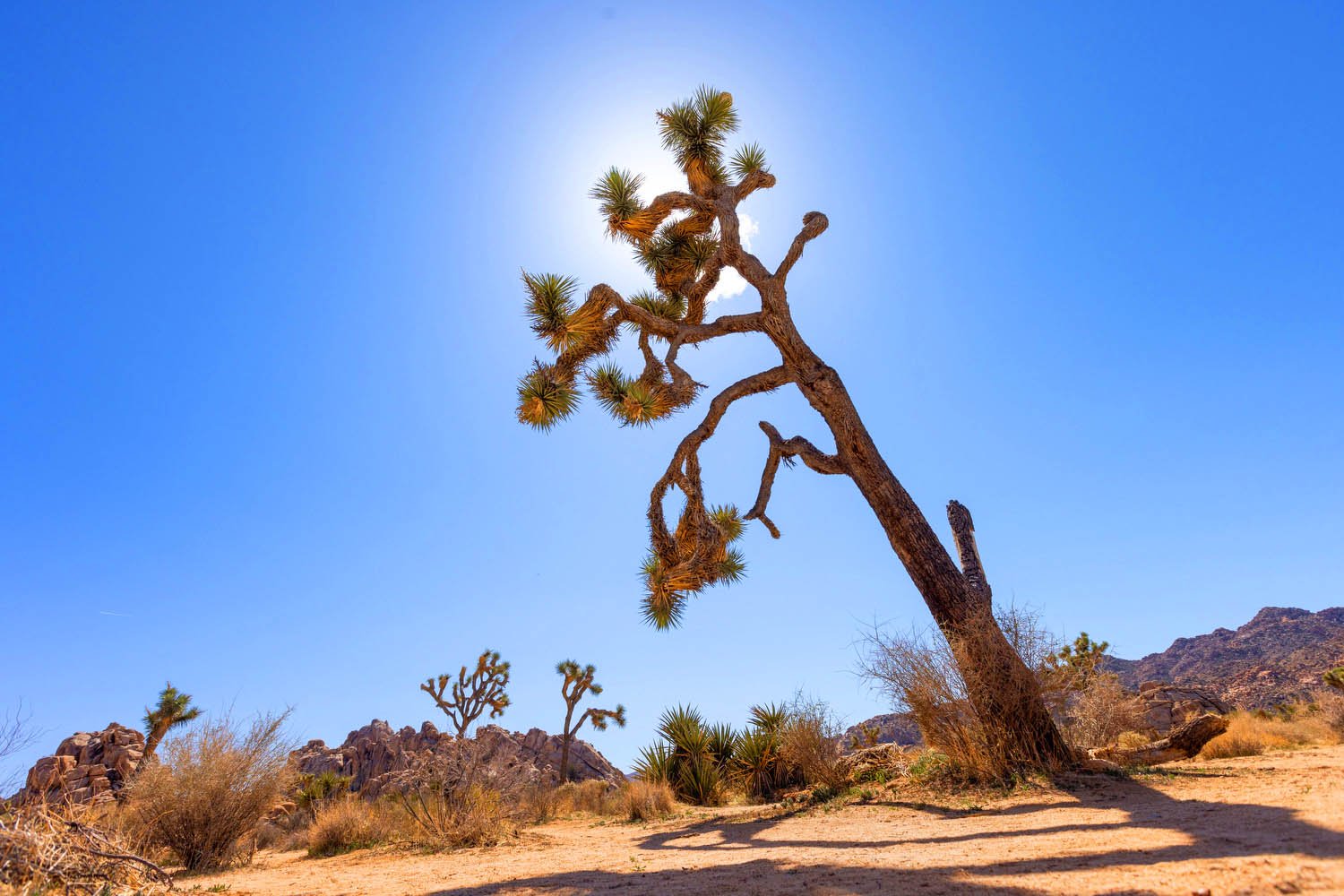
The rubble-like rock formations of JTNP are all unique and interesting. It can feel almost like cloud gazing in a way, trying to imagine what we “see” in the different scapes.
The most famous of these is Skull Rock, which absolutely looks like a skull, its face peeking out of a pile of rocks like a scene from an Indiana Jones movie.
Not to be a party poop, but we found that the popularity of this formation made it not worth an actual stop for us. There was a long line of folks waiting to take an Instagram snap in front of the stony visage. And honestly, you can see it just fine from the road, as it’s right there.
So definitely drive by - it’s worth a look. But frankly, a look is all you need.
• Arch Rock Trail:
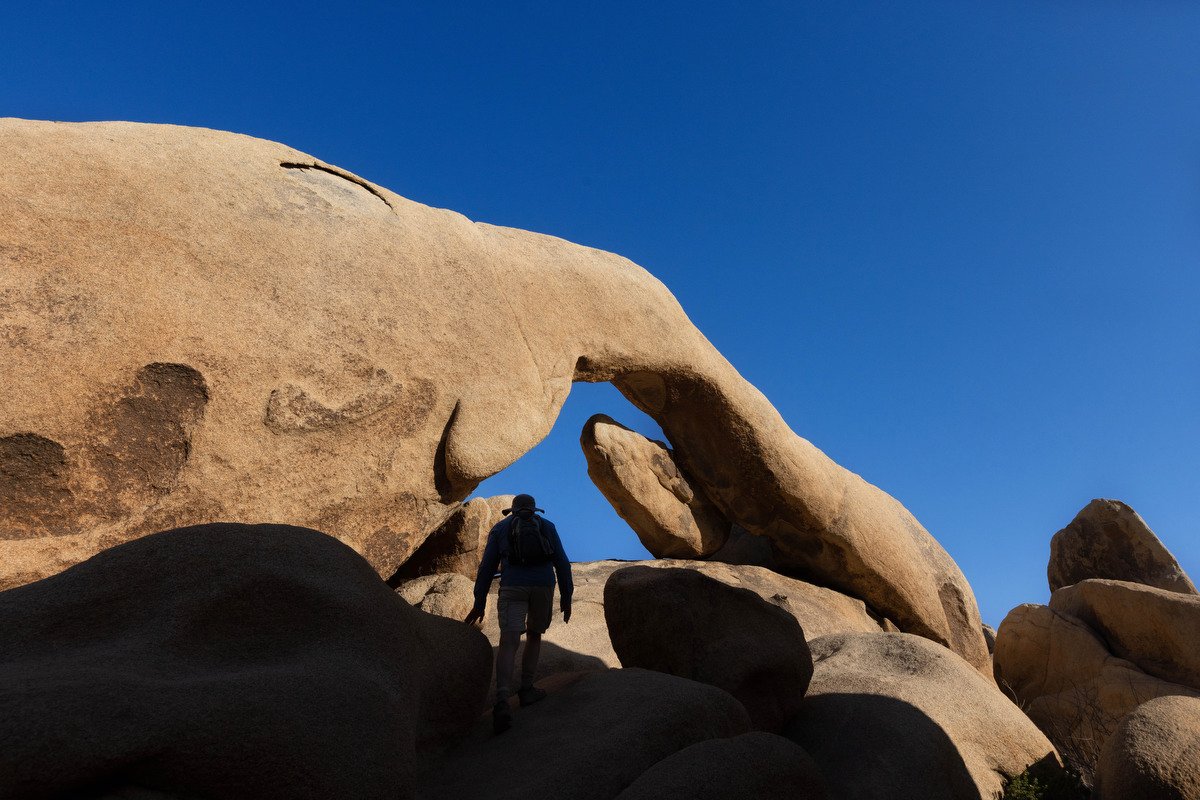
I think I enjoyed this hike most of all. It’s a “lollipop loop” trail out to a natural arch among the formations. It starts flat and then rises up into the rocks as you get closer to Arch Rock, requiring a little scrambling if you want to get in there, climb up and touch the arch. It took us about 30 minutes to get there, but it was easy.
One interesting observation - from what we read about it, we were expecting an obvious arch that could be seen from a distance, but actually, it’s kind of hidden. In fact, we almost missed it! But it was worth the trouble as we got some great photos and it was just a cool experience feeling in touch with nature. The arch is described as looking a little like a brontosaurus and I’d say that’s pretty accurate!
Joshua Tree is known for its stargazing and astrophotography opportunities as it gets very, very dark at night. Going back at night and taking star photos was something I was very much looking forward to and we made sure we brought appropriate photo gear. But as it turned out, we weren’t very realistic about these plans. After a full day hiking the park, we were pretty spent and it would be several hours before it would be dark enough to stargaze.
Our hotel was an hour away, so going back to our room and then returning later wasn’t a reasonable option, and we were already tired. In an effort to kill time, we trolled the area for dinner options and were not inspired. After being honest with ourselves about how committed to the idea of picture taking we actually were, we decided to cut bait, change plans and head back to Palm Springs, giving up the photo opportunity for this trip.
In retrospect, we would have needed to stay the night closer to the park to realistically do stargazing. This is what I would recommend you do if your heart is set on stargazing and astrophotography at Joshua Tree. There are many hotel options in the area, so it isn’t a problem, just one we didn’t plan for.
But just a thought - don’t expect the level of food choices around there that Palm Springs offers! (if you care about that, which we do!) Oh well. It’s always good to give yourself a reason to go back to someplace you enjoyed, I say! And come back, we certainly will.
Where to stay in Palm Springs
Perhaps what Palm Springs is most associated with is relaxing by a hotel pool. After all, it is the vacation spot par excellence. There is no shortage of beautiful luxury hotels in Palm Springs. The Kimpton Rowan Palm Springs Hotel, Renaissance Palm Springs Hotel, ARRIVE Palm Springs are all wonderful with a price tag to match.
Note - This blog post contains affiliate links. This means that if we are recommending a product, activity or a hotel, we might be receiving a small commission if you buy or book from these links. This is done at no additional cost to you. We only recommend products we have personally used or have thoroughly researched.
Fortunately, there are many reasonably priced hotels that are also great choices.
The Skylark Hotel
We stayed at the Skylark hotel, (Hip since 1955!) (Check Skylark rates and dates here) which features a 50s vibe and scenic views of the San Jacinto Mountains. Plus the pool and hot tub are open 24 hours, which we really appreciated since we weren’t back to the hotel till a little bit late and really enjoyed an evening swim under the tall palms.
I must confess - we were not too sure at first drive-up, as you can’t really see how it looks from the street. But inside the gates, this very private throwback of a hotel (which reminded me of some of the shore town hotels of our New Jersey summers with the addition of those very West Coast tall palm trees) was very charming, very relaxed and very Californian.
It’s not the most luxurious of accommodations but quite comfortable, and the location and scenery are just breathtaking. Waking up and looking out on the mountains that surround you as if you are nestled in the palm of their hand - well how could that never get old?
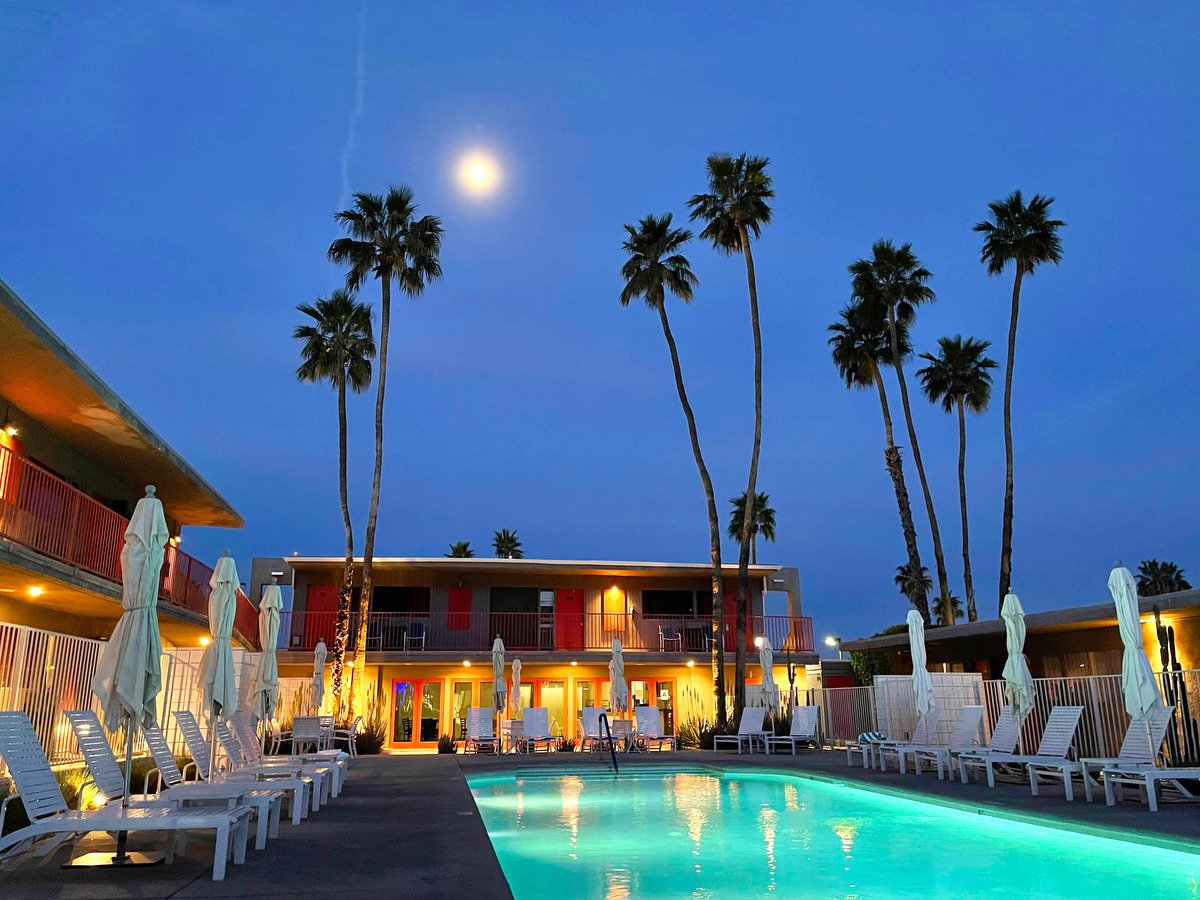
The Skylark Hotel at dusk.
I even got my birding nerd soul satisfied when we were visited poolside by several Costa’s Hummingbirds - indigenous to the Palm Desert area and a life bird for me!
But I would be remiss if I didn’t also mention the free hot breakfast, which is the best I’ve ever had at a hotel. Freshly made eggs and frittatas, though a little bit of a wait while being prepared, had a southwestern flare and were absolutely delicious. Eating poolside, sipping good coffee, and watching hummingbirds in the native plants, now that’s a vacation in my book!
Orbit In
If you’d like to step back into the 1950s then this retro hotel is for you. The decor really fits the historical flavor of Palm Springs,
The Orbit In features rooms decorated with 50s furniture, a freshwater pool, a gated hot tub with fire hearth, and an outdoor kitchen with a microwave.
Check availability and pricing here.


L'Horizon Resort & Spa
If you are looking for a luxury splurge while visiting Palm Springs then L'Horizon Resort & Spa might be for you.
In the 1950s this was a go-to spot for celebrities such as Marilyn Monroe. Today this adult-only resort features twenty-five bungalows with private patios and outdoor showers. The outdoor evening dining area is stunning.
Check availability and pricing here.


Drift Palm Springs
Drift Palm Springs offers 1-4 bedroom units.
It offers a resort-style pool with cabanas with great views of the mountains.
Check availability and pricing here.


Frequently Asked Questions About Visiting Palm Springs
What is Modernism Week?
The city has one of the most important collections of midcentury modern architecture in the world.
Modernism Week is essentially an 11-day celebration of all of it. Think Mad Men, the Rat Pack, The Brady Bunch. That clean-lined, open-plan, glass-walled aesthetic that defined the 1950s and 60s is still very much alive here. The festival runs over 450 events including guided bus tours, home tours, exhibitions, talks, cocktail parties, and film screenings.
Some of the most popular events are the double-decker architectural bus tours, which take you through the neighborhood streets where Frank Sinatra, Bob Hope, and Marilyn Monroe used to live. There are also rare opportunities to get inside homes that are almost never open to the public.
The signature February festival runs February 12 through 22, 2026. A smaller four-day version takes place each October as well, and year-round architecture tours run from October through May in a comfortable climate-controlled mini-coach. If you have any love of design history at all, try to time your trip around it. Tickets sell out fast.
Is Indian Canyons worth visiting?
Absolutely, and I say that as someone who hasn't been yet but has done a lot of reading about it.
The Indian Canyons sit just minutes from downtown Palm Springs and offer more than 60 miles of trails through three separate canyons. What makes it different from Joshua Tree is the lushness. You're walking through towering palm oases with streams running through the canyon floor, with red rock walls rising on either side. It feels almost impossibly tropical for the desert.
The trails range from a very manageable one-mile loop at Andreas Canyon to longer hikes up through Murray Canyon to a seasonal waterfall. Admission is $12 for adults, $7 for seniors, and $6 for children ages 6 to 12. The canyons are open daily 8am to 5pm from October through early July, and weekends only the rest of the summer.
It's a great option if you want genuine natural beauty without the hour-long drive to Joshua Tree.
Can you visit Palm Springs during Coachella?
Yes, but go in with your eyes open about a couple of things.
Coachella takes place in Indio, about 25 miles southeast of Palm Springs, so the festival itself doesn't crowd the city streets. The concerts run from midday into the night, and most festival-goers stay near the venue. Downtown Palm Springs restaurants and attractions are actually quite manageable during festival weekends.
The issue is hotel prices. Expect heavily inflated rates across the entire Coachella Valley during festival weekends, with even budget hotels charging several hundred dollars per night. Rooms that normally run $100 to $150 a night can jump to $600 or more. The same applies to Stagecoach, the country music festival that takes place the following weekend.
In 2026, Coachella runs from April 10 to 12 and from April 17 to 19.
Stagecoach is from April 24 to 26.
If you're not attending either festival, I'd simply avoid those three weekends. Book the weeks in between or before and you'll be just fine.
Does the Palm Springs Aerial Tramway run year-round?
Not quite. The Tramway shuts down every fall for several weeks of annual maintenance. In 2026, the closure runs from approximately September 14 through October 17. If you're planning a fall trip specifically to ride the tram, build your dates around that window.
During the rest of the year, it runs daily. Monday through Friday, the first tram up goes at 10 am. Weekends and holidays, it starts at 8 am. Last tram up is 8 pm daily.
One thing worth knowing: the top of the mountain sits at 8,516 feet, and the temperature up there can be 30 degrees cooler than the valley floor. Bring a layer even on a warm day. We went in March, and the weather in downtown Palm Springs was warm. When we stepped off the Aerial Tramway, we were hiking through snow. It was refreshing, but dress for the weather.
What's the best base for visiting both Palm Springs and Joshua Tree?
Stay in Palm Springs. Joshua Tree is about an hour's drive east, which is very doable as a day trip. The options for food, hotels, and overall comfort are much better in Palm Springs.
The one exception is if stargazing or astrophotography is a priority for you. In that case, staying a night closer to the park makes more sense, since going back after dark from Palm Springs is a long haul after a full day of hiking. There are good hotel options in Yucca Valley, just outside the park's north entrance, if you want to do it properly.
This post was researched and written by Debbie O'Boyle of The Empty Nest Explorers.
Debbie is a professional photographer with over 30 years of experience and a former staff member at the Star-Ledger/NJ.com, where she managed the digital photography technical team. She and her husband John travel extensively and write from firsthand experience at every destination they cover. You can learn more about Debbie and the Empty Nest Explorers here.
Other California travel posts you might like: