Exterior of Basilica de la Sagrada Familia. All photos by John O'Boyle / The Empty Nest Explorers
Updated July 21, 2026
Important Info 2026- This year marks the 100th anniversary of architect Antoni Gaudí’s death. Gaudí designed many of Barcelona’s most famous buildings, including Sagrada Familia.
There will be many commemorative events at the Basilica de la Sagrada Familia throughout the year. The highlight was a visit by Pope Leo XIV to Sagrada Família.
No church in Europe is as unique as the Basilica de la Sagrada Familia in Barcelona. The basilica was designed by the Catalan architect Antoni Gaudí, who is responsible for many unique buildings around the region. Construction began in 1882; it is still unfinished today.
Below we'll give you tips on which tower to choose and how to make the most of a visit to this wonderful Barcelona landmark.
| ⛪ Sagrada Familia: Quick Facts 2026 | |
|---|---|
| 📍 Address | C/ de Mallorca, 401, 08013 Barcelona |
| 🎟️ Which Tower? | Two choices, Nativity and Passion. You pick when you book and cannot switch at the door. Elevator up, narrow winding stairs down. The new Tower of Jesus Christ is not open to visitors yet. |
| 🕐 Hours | Generally 9:00 am to 6:00 pm in winter, later in spring and summer. Sundays open at 10:30 am. Shorter hours on a few holidays. Check the official calendar for your date. |
| 🎟️ Tickets | Basilica from €26, or €36 with a tower. Seniors 65+ and under-30s pay less. Guided tours cost more. Under 11s free. Book online in advance at sagradafamilia.org. |
| 👤 Book How Far Ahead? | At least 1 to 2 weeks. In summer, aim for 4 to 6 weeks. Tower tickets sell out first. |
| 👗 Dress Code | Shoulders and knees covered. No see-through clothing, hats inside, or flip flops. Enforced at the door, no refunds. |
| 🚉 Metro | L2 and L5 lines, Sagrada Família station, right outside. |
| ⏳ How Long to Allow | Plan 2 to 3 hours. Add 30 to 45 minutes for a tower. |
| 📷 Photography | Permitted. No flash, no tripods, no selfie sticks. |
| 🎒 Bags | Small bags fine. Large bags and suitcases not allowed inside. Lockers for tower visits only. |
Where is Sagrada Familia?
Basilica de la Sagrada Familia is located at C/ de Mallorca, 401, 08013 Barcelona. At a height of 566 feet, it can be seen throughout the city.
The church sits between two small parks, Plaça de la Sagrada Família and Plaça de Gaudí. The parks create a nice atmosphere and serve as a place to wait before entering with your timed ticket.

The church is designed so the morning light comes through the blue windows on one side and in the afternoon the light comes through the warm orange glass.
How to Get to the Sagrada Familia
The church is located in the city center, a little north of many of the other Barcelona attractions.
On a recent trip, our hotel was nearby, so we took a 20-minute walk but you may want to use mass transit.
Conveniently, the L2 and L5 Metro lines stop right at the church. Bus lines 19, 33, 34, D50, H10, and B24 also service the area.
We purchased a multi-day travel card that works on the metro and bus lines.
Which Sagrada Familia Tower Should You Choose?
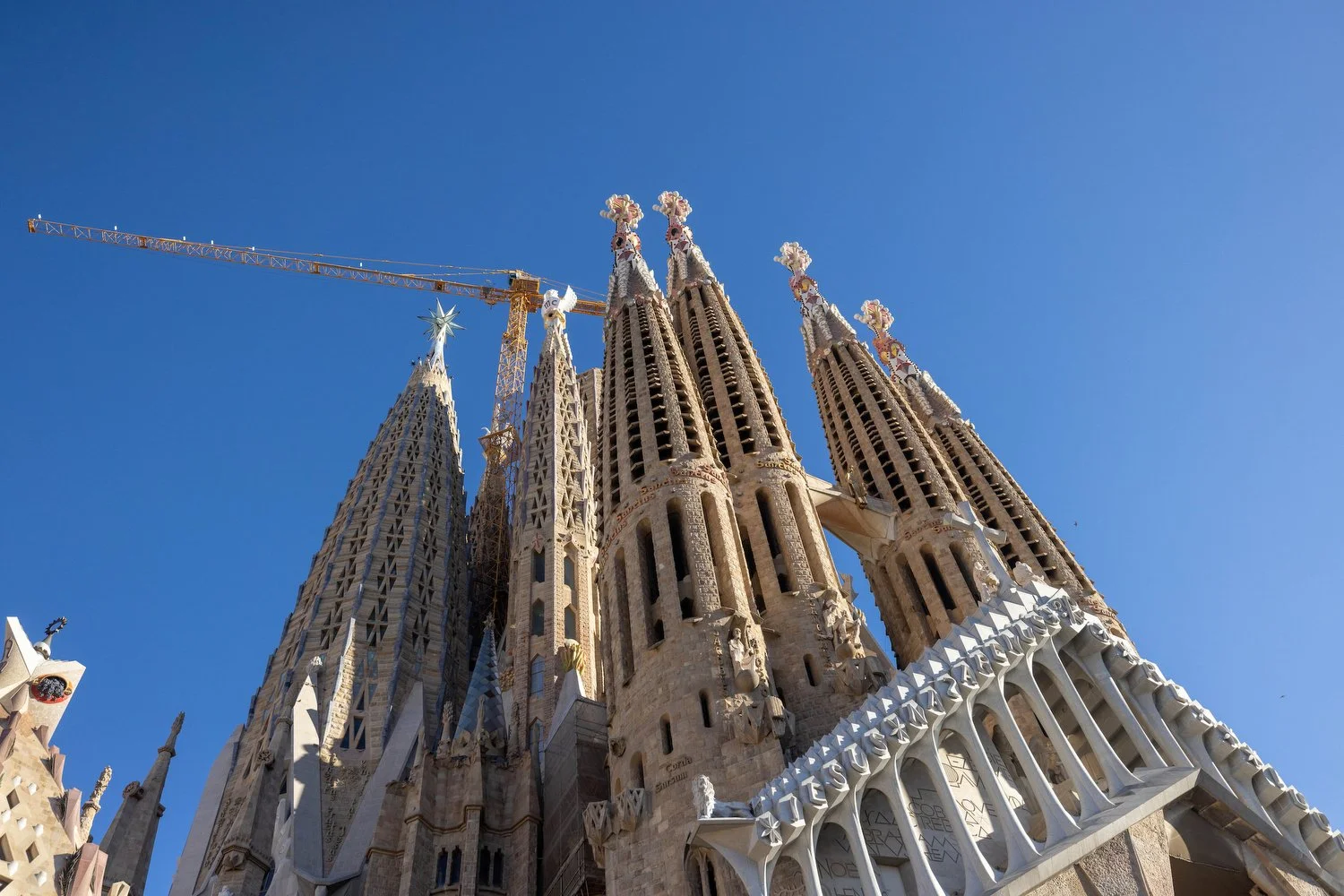
View of the Sagrada Familia Towers looking up from the ground.
This is the question we get asked most about visiting Sagrada Familia. You have two options, the Nativity Towers and the Passion Towers. You pick one when you book, and you cannot switch at the door.
Here is the short answer. There is no bad choice. They give you different views of Barcelona and slightly different history. We went up the Passion side and would do it again.
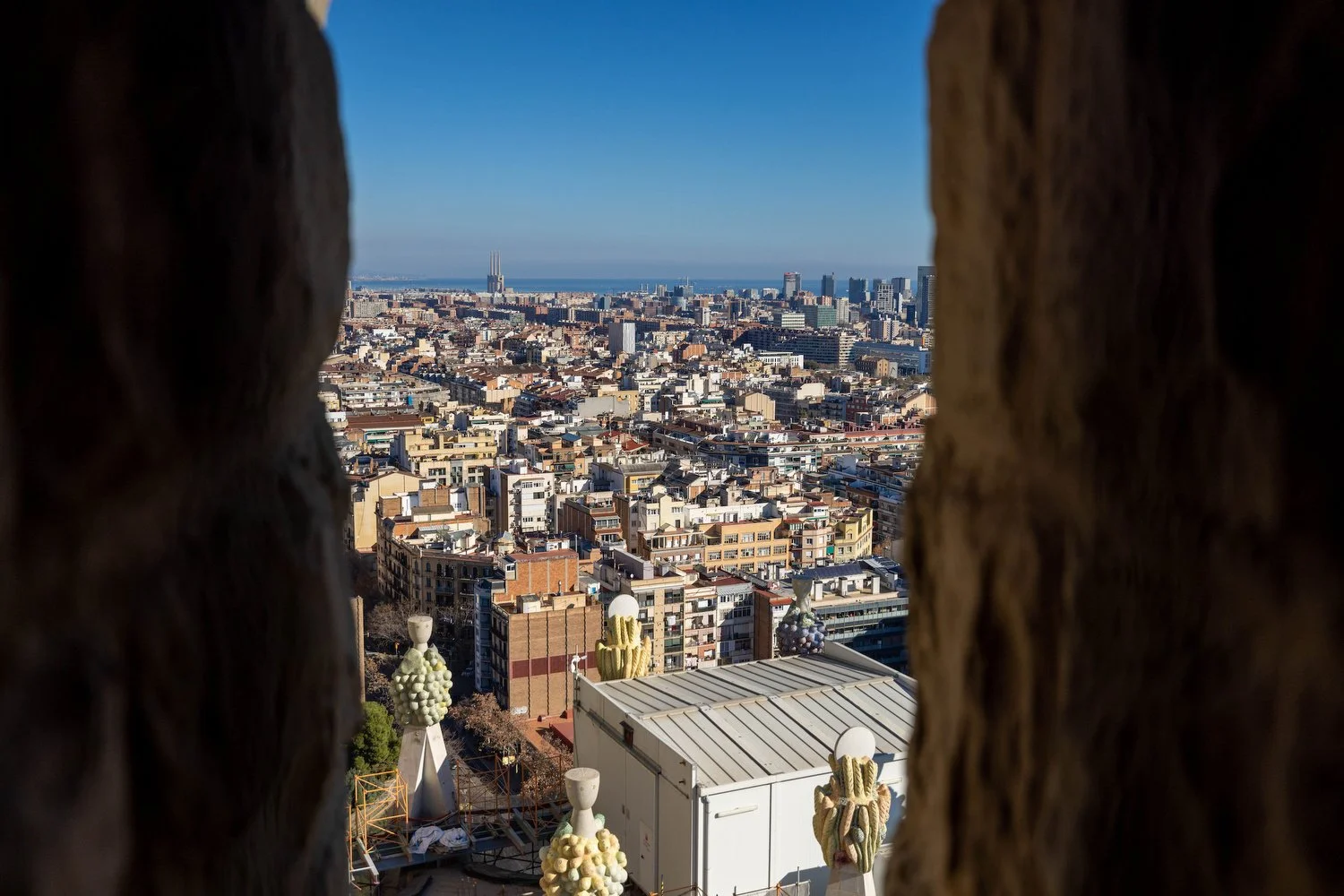
A view of Barcelona from between the stonework of the Passion Towers.
The Nativity Towers
Gaudí oversaw construction of these himself. They are the oldest part of the building and the only towers he lived to see.
A Nativity ticket lets you visit three towers. The view faces north over Plaça de Gaudí and the neighborhood beyond.
If you care about standing in something Gaudí personally supervised, this is the side to pick.
The Passion Towers

View of Barcelona from the Passion Towers.
Work on these began after Gaudí died. His plaster models guided the design, so the vision is his even though he never saw them built.
A Passion ticket covers two towers. The view faces the Gothic Quarter and the older heart of the city.
This is the side we chose. We picked it because it looks down on the parts of Barcelona we had already walked. Seeing those streets from above tied the trip together.
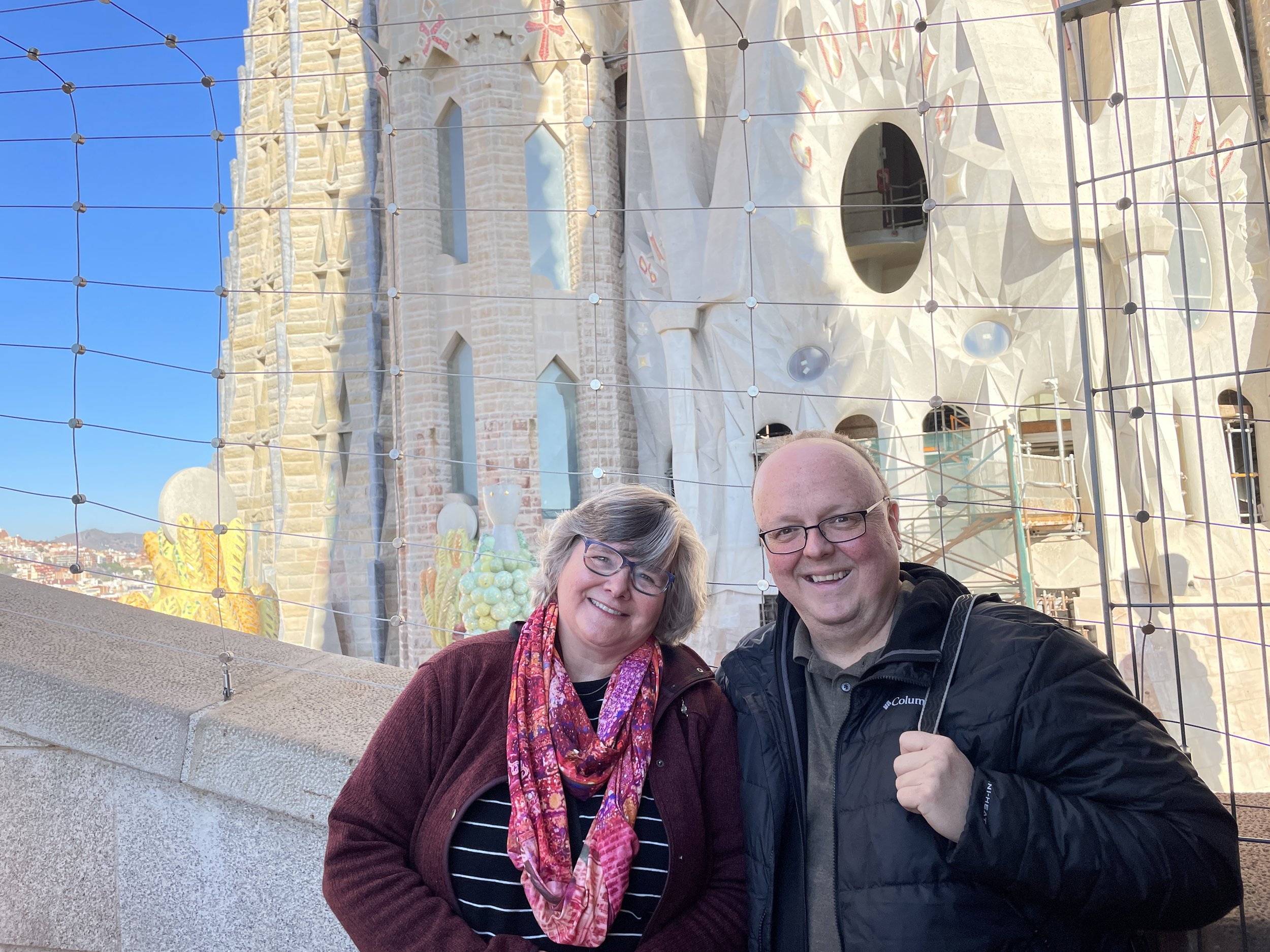
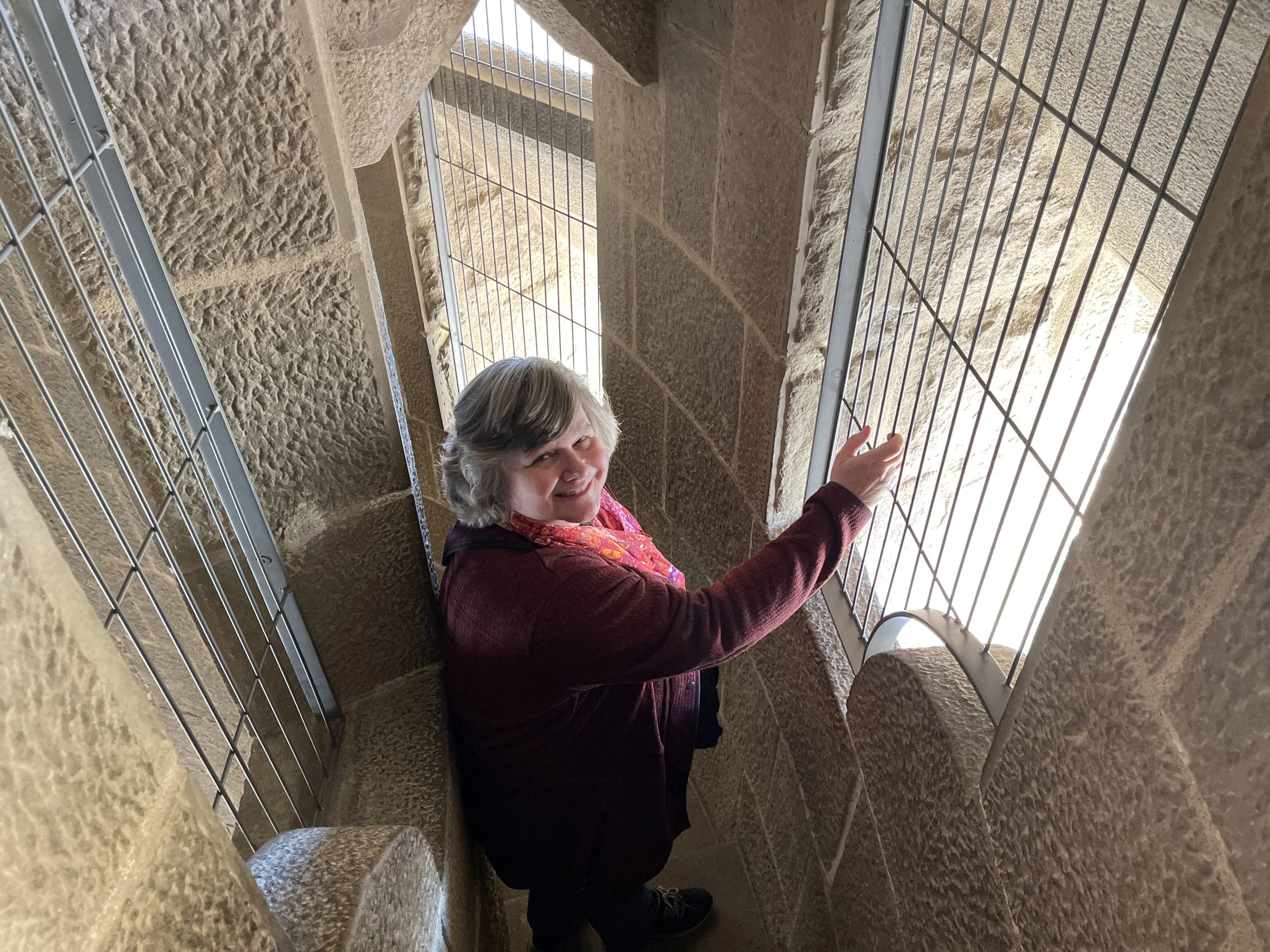
What the tower visit is actually like
An elevator takes you up. You walk back down a long, narrow, winding staircase.
That descent is the part people underestimate. If stairs or tight spaces are a problem, factor that in before you book.
Brief video of Debbie walks down the narrow winding steps of the Passion Towers.
Large bags have to be checked at the elevator entrance. The space up top is very tight and there is nowhere to put anything down.
One quirk worth knowing. The towers connect in an unusual way, so you are never quite sure when you have crossed from one into the next. It is less like visiting separate towers and more like one continuous climb.
A note on the Tower of Jesus Christ
The central Tower of Jesus Christ was completed in February 2026. At 566 feet it makes Sagrada Familia the tallest church in the world.
Pope Leo XIV blessed and inaugurated it on June 10, 2026, during a Mass marking 100 years since Gaudí's death.
You cannot go up it. Visitor access is not expected before 2027. Worth checking the official site if you are traveling later in the year.
So which one should you book?
Pick the Nativity Towers if the Gaudí connection matters most to you, or if you want three towers instead of two.
Pick the Passion Towers if you want to look out over the Gothic Quarter and the older city.
Book early either way. Tower tickets are more limited than standard entry and they go first.
When to Go and Why the Light Actually Matters
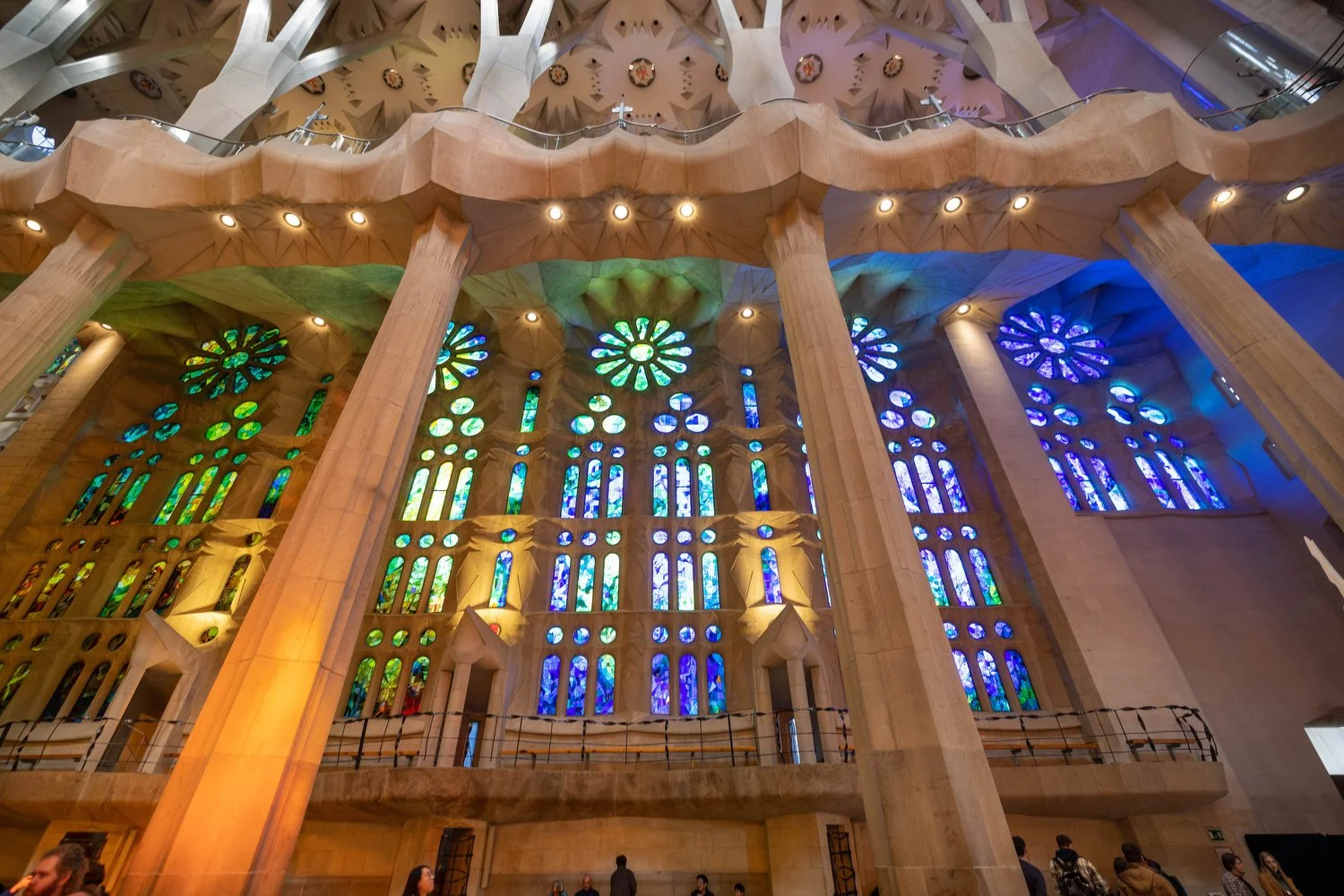
In the morning the windows are designed to bath the church in cool, blue light.
Most people book the first available slot and don't think twice about it. But the time of day you visit changes the entire experience inside Sagrada Familia.
The stained glass windows are not a random decoration.
Gaudí designed them intentionally around the movement of the sun.
In the morning, the sunlight hits the Nativity facade side. This fills the interior with blues and greens.
In the afternoon, the light shifts to the Passion side, and thenave turns warm with reds and oranges.
It is genuinely two different places depending on when you walk through the door.
Aside from the light, the mornings are quieter. The first entry of the day at 9:00 am tends to have the smallest crowds, and starting in February 2026, 9:00 to 10:00 am is officially a quiet hour with earphones and low voices required.
If you want a more contemplative visit, that's your window.
For overall trip timing, April through June and September through October are sweet spots. The weather is comfortable and crowds are more manageable than July and August.

In the afternoon warm colored light shines through the stained glass windows.
Details on visiting Sagrada Familia
The basilica is open every day of the year. We visited on the Feast of the Epiphany, January 6th, and the church was open but closed to visitors at 2 pm.
Hours shift by season. Here is roughly how it runs, but check the official site before you go:
- November through February: Monday through Saturday 9:00 am to 6:00 pm. Sundays 10:30 am to 6:00 pm.
- March and October: Monday through Saturday 9:00 am to 7:00 pm. Sundays 10:30 am to 7:00 pm.
- April through September: Monday through Saturday 9:00 am to 8:00 pm. Sundays 10:30 am to 8:00 pm.
On December 25, and 26 and January 1 and 6th, the hours are 9:00 am to 2:00 pm.
You’ll enter on the Carrer de la Marina side of the building which is the same side as the Metro stop.
Upon entering the facility, you’ll pass through an airport-style security check. At the conclusion of your visit, you’ll exit on the opposite side of the church.

The unique ceiling of Sagrada Familia in Barcelona.
What to Wear (They Do Enforce It)
This one catches people off guard. Sagrada Familia is an active Catholic basilica, and the dress code is taken seriously at the entrance. Shoulders must be covered, and trousers or skirts must reach at least mid-thigh. No see-through clothing, no hats inside the nave, and no flip flops. If you get turned away, you do not get a refund.
Also, bring earphones. The audio app is excellent, but you will need them. And make sure your phone is charged before you arrive. You will need it for your ticket QR code, the app, and photos.
How much does it cost to visit Sagrada Familia?
Ticket prices run from €26 to €40 depending on the options you choose. Seniors 65 and up and visitors under 30 pay a few euros less on every option, and children under 11 are free.
Visit with an app-based audio tour €26
Visit with a guided tour €30
Visit with an app-based audio tour and tower visit €36
Visit with a guided tour and tower visit €40
Seniors 65+ and under-30s: a few euros off each option above
On our recent visit, we chose the audio tour with a tower visit. We purchased the tickets on their website and then downloaded the excellent app. The app is fantastic, and everyone in your group should download it, especially if you purchase the audio tour.
You’ll have your choice of a shorter or longer audio tour; just remember to bring your headphones. There are clearly numbered stations throughout the church that match the audio tour on the app.
Sagrada Familia is included in Go City Explorer Pass. These kinds of compilation passes can be a great value when visiting the city, but make sure you do the math first, to see if the sights it includes mesh with your plans and that you will be making good use of it before you buy. More info here.
Note - This blog post contains affiliate links. This means that if we recommend a product, activity, or hotel, we might receive a small commission if you buy or book from these links. This is done at no additional cost to you. We only recommend products we have personally used or have thoroughly researched.

Screenshots of the official app.
Don't forget to look at the facade
Most churches have statues and artwork on the inside, Sagrada Familia has narrative artwork on the outside.
The Nativity facade faces the East, the Passion facade faces the West and the Glory facade to the South. The Nativity facade was constructed between 1893 and 1936 and is dedicated to the birth of Jesus. The intricate design was directly influenced by Gaudi’s style.
Unlike the Nativity facade, the Passion facade is bare bones with sharp lines in the sculptures. Dedicated to Jesus’ suffering it symbolically faces the setting sun.
Construction on the Glory Facade began recently in 2002 and is still under construction. It is dedicated to the glory of God.

A statue on the Passion facade.
Sagrada Familia is an active church
Sagrada Família was consecrated as a basilica by Pope Benedict XVI in November of 2010.
Mass is held every Sunday morning at 9 am and on Saturday at 8 pm and you can attend. If you want to attend Mass you should arrive early on the Nativity facade side. Attendees must dress appropriately and behave respectfully.
Our other Spain travel posts:
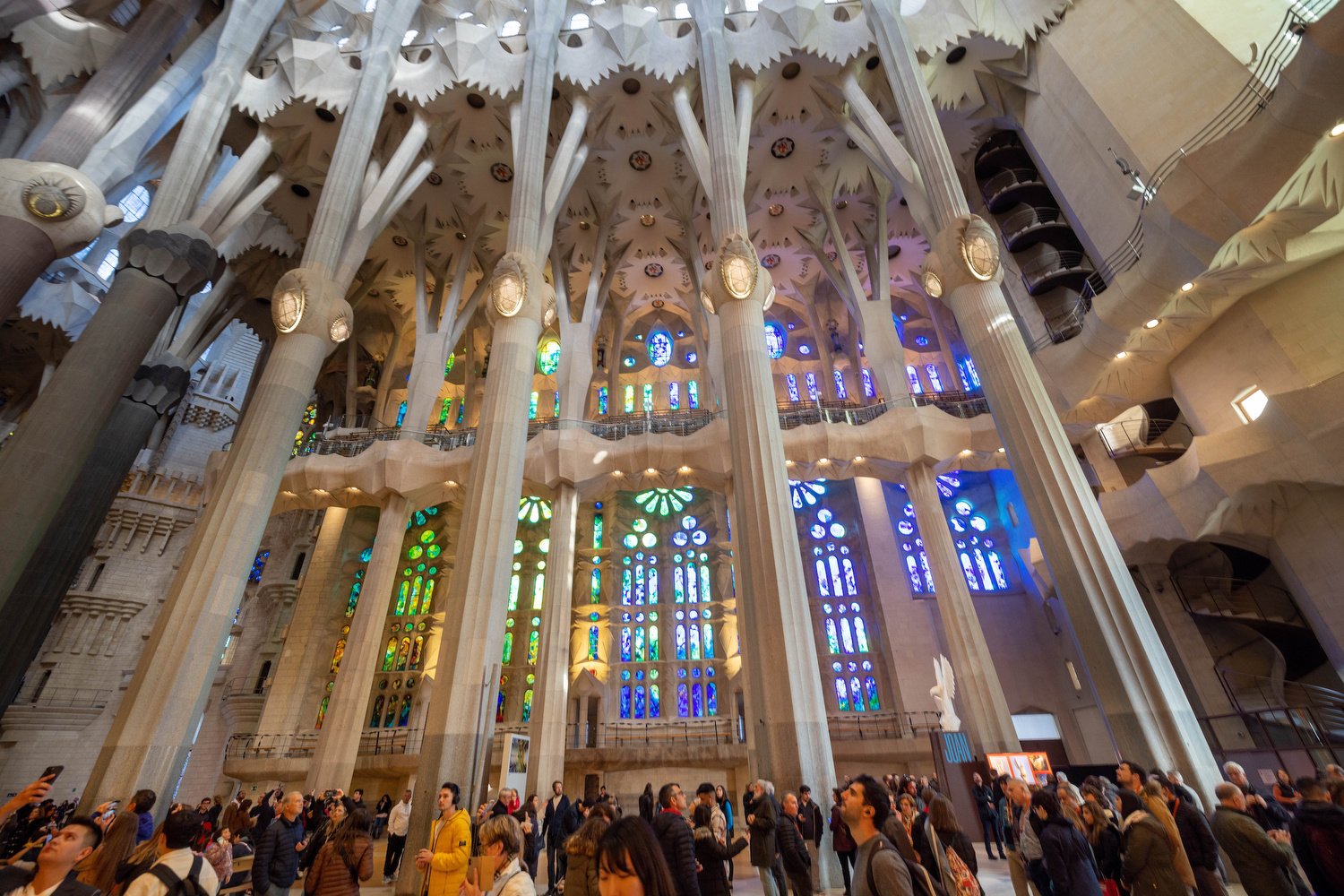
A view of the massive columns in Sagrada Familia
Visit Sagrada Familia museum
We visited the church on the Feast of the Epiphany and unfortunately didn’t have a chance to visit Sagrada Familia museum because of the early closure.
The museum was opened in 1961 and is located on the ground floor.
You can view original drawings by Gaudí and learn about the construction and design of the building.
Sagrada Família is the burial place of Gaudí
Note - as mentioned above, 2026 marks the 100th anniversary of Antoni Gaudí’s death. Be sure to check Sagrada Familia’s events page for special events that might impact your visit, especially in July.
Architect Antoni Gaudí is buried in the Sagrada Familia crypt, one floor beneath the church.
The crypt consists of four chapels and hosts a daily Mass on weekdays at 9 am and 8:15 pm.
The crypt has very limited visiting hours:
Monday - Friday: 9:00 am - 10:00 am and 6:00 pm - 9:00 pm
Saturday, Sunday, and holidays: 9:00 am - 2:00 pm and 6:00 pm - 9:00 pm
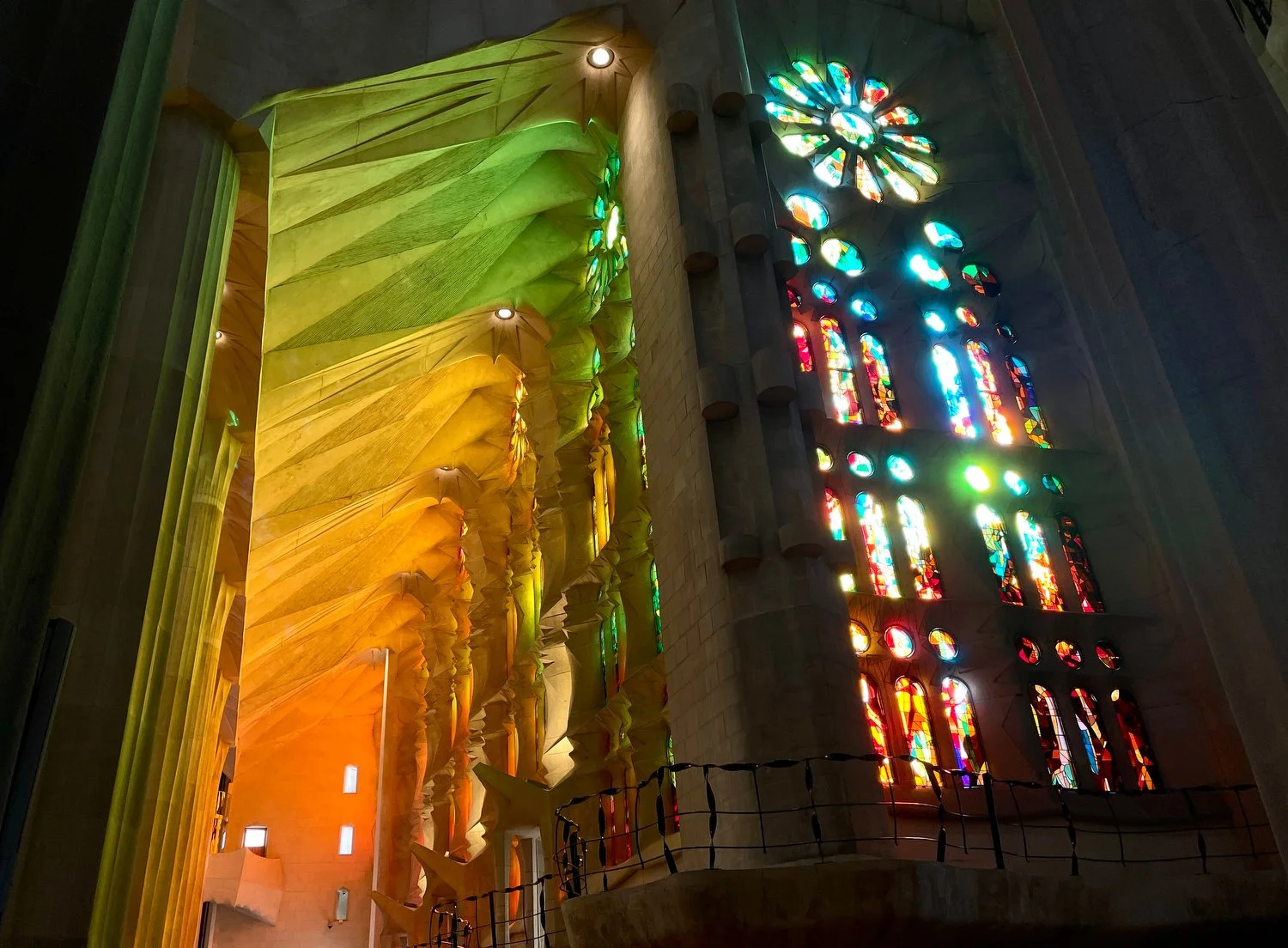
The amazing stained glass windows in Sagrada Familia.
I think the Sagrada Familia should absolutely be at the top of your list of attractions to visit in Spain.
While traveling in Europe, you’ll visit many churches. Looking back on the churches you have visited, they may start to blend together in your memory, but you’ll remember the Sagrada Familia as totally unique.
Sagrada Familia: Frequently Asked Questions
How far in advance should I book tickets?
At least one to two weeks for most of the year. In summer (June through September) and around Easter, aim for four to six weeks ahead. The first and last entry slots of the day sell out fastest. Tower tickets are more limited than standard entry, so if you want those, book early.
Can I buy tickets at the door?
Not really. There are QR codes around the building where you can try to purchase on the spot, but availability depends on how full the day is. In peak season, same-day tickets are very hard to come by. Book online through the official site at sagradafamilia.org.
Are the towers worth it?
We think yes, if you are comfortable with heights and narrow stairs. You take an elevator up and walk a very tight staircase back down. The views over Barcelona are great. One thing to know: you cannot change your tower choice at the entrance, so decide when you book. Large bags must be checked before you go up.
If you are traveling to other cities in Spain check out our blog post Traveling by train in Spain
About the Authors

|
John and Debbie O'Boyle are the team behind The Empty Nest Explorers. John is a professional photographer whose work has been published by The New York Times, NBC News, and Getty Images. He is a member of the American Society of Media Photographers, has been part of a Pulitzer Prize-winning team, and has received two New York Emmy nominations. Debbie is a writer and photographer with 30+ years of experience, formerly with The Star-Ledger and NJ.com. Together, they create in-depth travel guides for couples and empty-nest travelers who want to make the most of every destination. |
Other Spain travel posts you might like: