
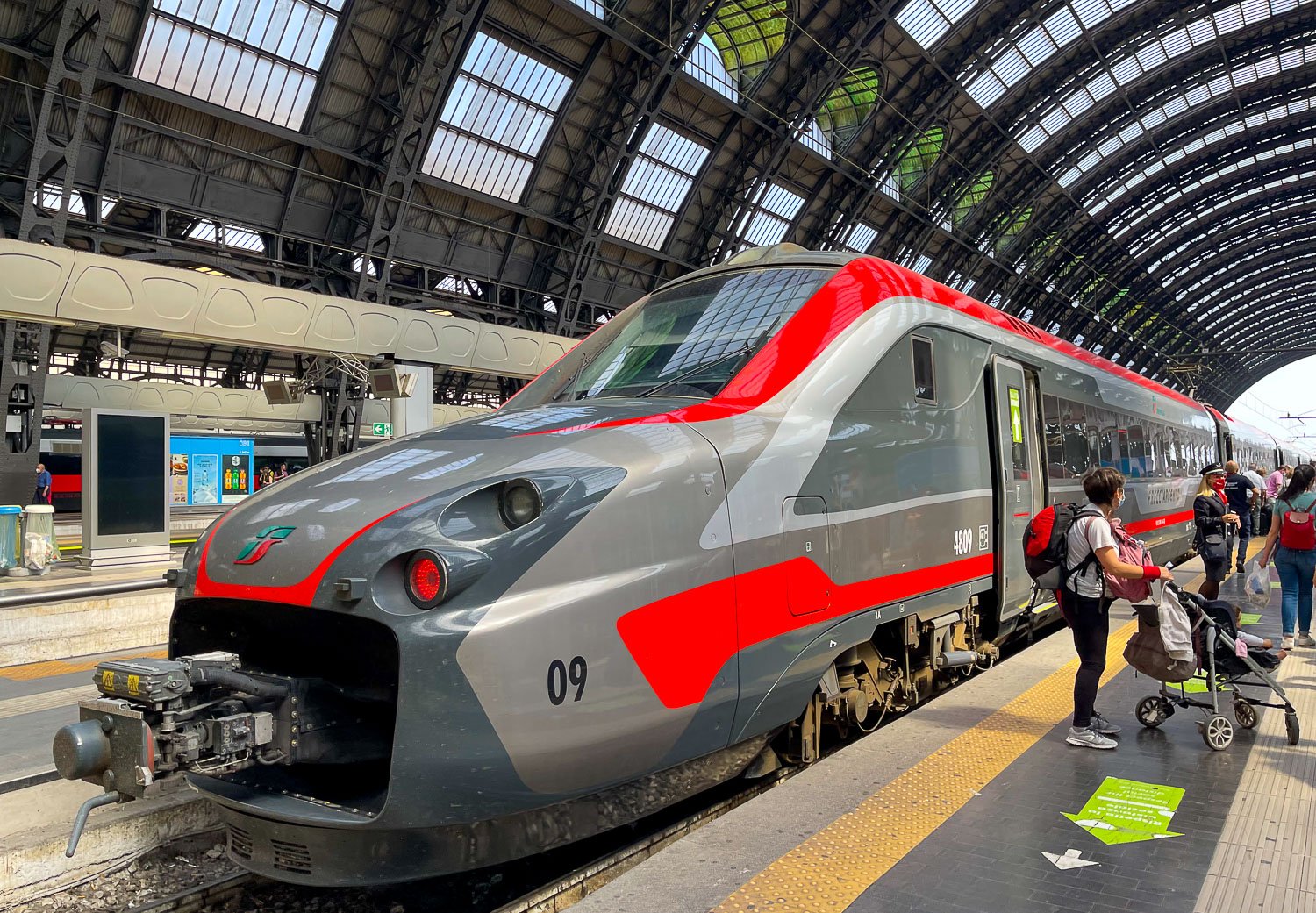
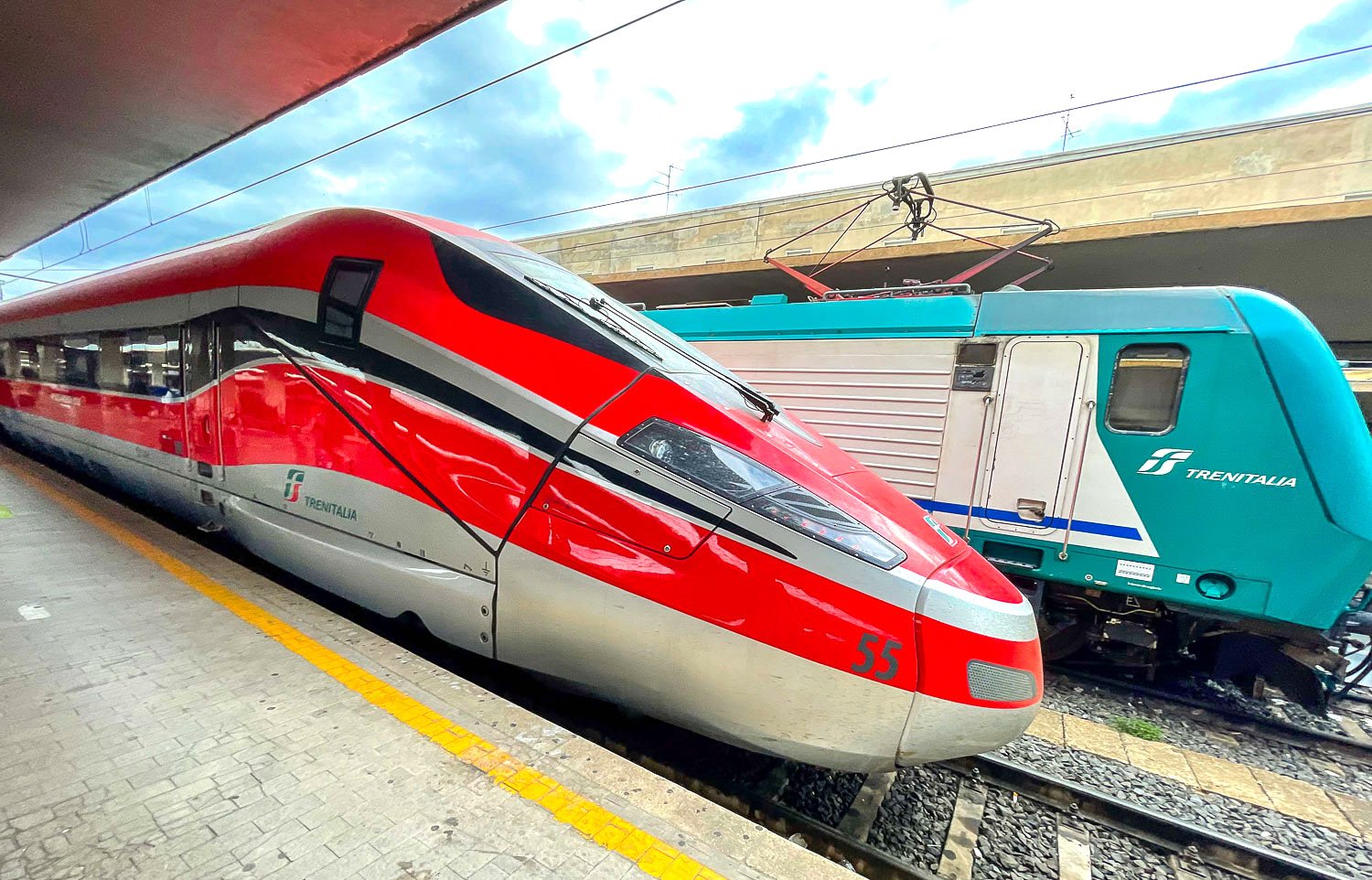
A Trenitalia high speed train at the Florence train station.
Updated July 21, 2026
Why travel by train in Italy?
Debbie and I have taken trains all over Italy and absolutely love high-speed train travel. The first time we rode the Frecciarossa from Rome to Florence, we couldn't get over it. We were at Roma Termini, then 90 minutes later, we were steps from the Duomo. No airport security lines, no baggage fees, no long taxi rides from a far-flung airport. Just a comfortable seat, a coffee, and suddenly Florence.
High-speed trains in Italy travel up to about 186 mph and connect the major cities center to center: Milan, Florence, Rome, Naples, and Venice. The seats are comfortable with plenty of legroom. Your luggage stays with you the whole trip, and you can bring your own food on board.
For getting between Italian cities, trains beat flying in almost every way.
Train companies in Italy
Trenitalia is owned and operated by the Italian government and provides more train service than any other operator. Trenitalia also operated the fastest Frecciarossa or Red Arrow trains from Florence to Rome. The Frecciarossa was the nicest of the Italian trains we used with the most comfortable seats and more leg room.
Italo is a private company that started operating in April 2012. Italo’s offerings are similar to Trenitalia’s and the company receives excellent reviews.

Trenitalia ticket kiosk at the Venice train station.
How to buy Italy rail tickets
It’s effortless to purchase tickets online directly from the rail operator or a website like Trainline.
Trenitalia generally opens bookings about three to four months out. Italo sometimes opens as far as six months ahead. Either way, book as early as you can for summer travel or holiday weeks. The cheapest "Super Economy" fares disappear fast, and prices climb steadily as the date approaches.
We are big fans of Trainline, not just in Italy but throughout Europe. Each time we use the site it process has been flawless. The website is in English, so there are no translation issues. The search is simple and well-designed, and you can save the tickets in the Trainline app or in your phone's wallet. You can easily book Trenitalia and Italo, the two big Italian train operators, on Trainline.
You can take a look at the Trainline website here.
Note - This blog post contains affiliate links. This means that if we recommend a product, activity, or hotel, we might receive a small commission if you buy or book through these links. This is done at no additional cost to you. We only recommend products we have personally used or have thoroughly researched.
You can also purchase tickets from kiosks in the train stations; these work particularly well for unreserved regional trains and specialty trains such as the non-stop train to Rome’s airport and the train to Milan’s airport.
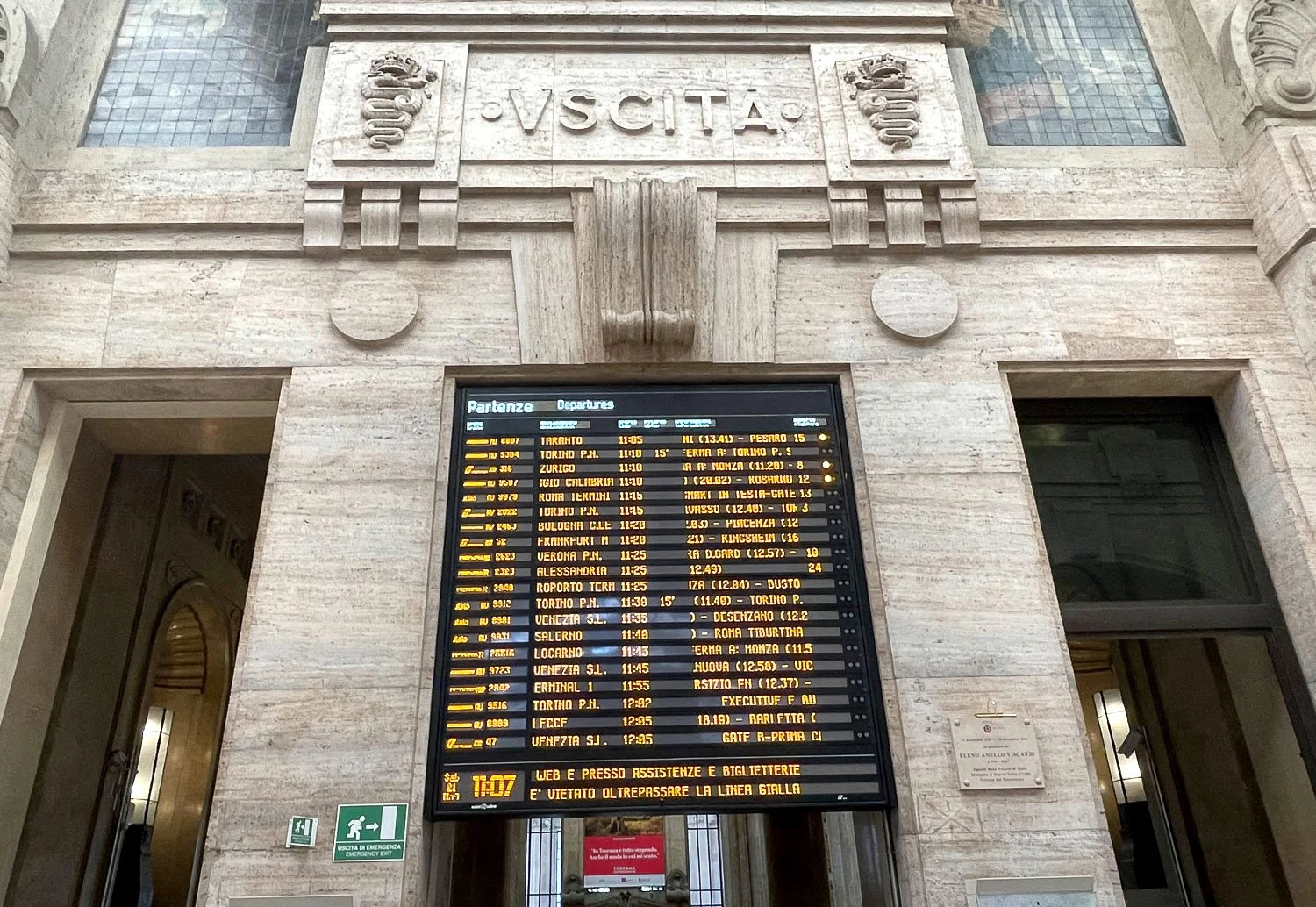
Pro Tip ✅ - When looking for your train on the large boards at a train station, be sure to look for the train number, not your destination. The boards usually list the train’s final destination only.
Major Italy train station cheat sheet:
Here are the names of the main train stations in major Italian cities:
Florence - Firenze Santa Maria Novella (SMN)
Rome - Roma Termini
Venice - Venezia Santa Lucia
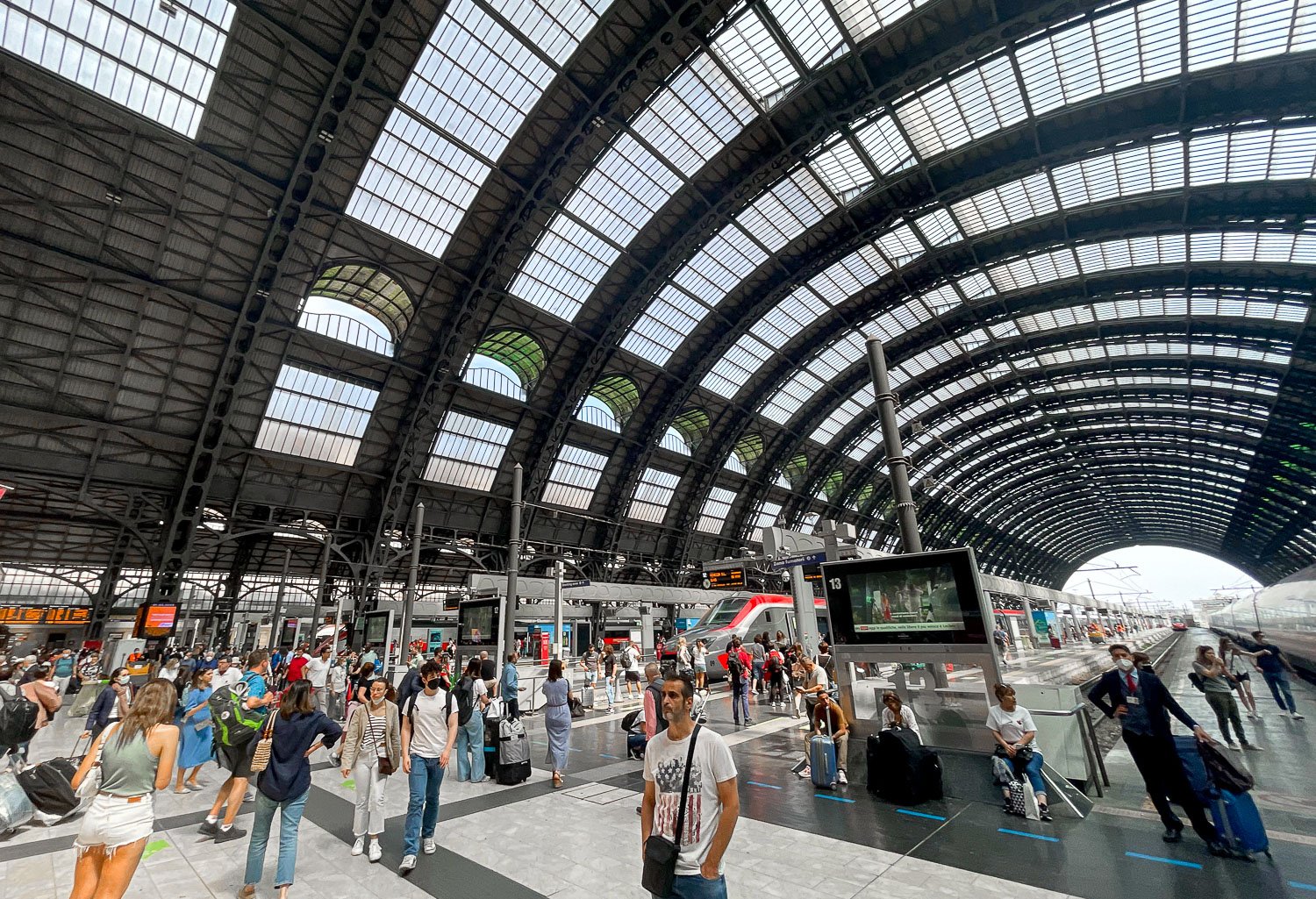
Milan - Milano Centrale
Naples - Napoli Centrale
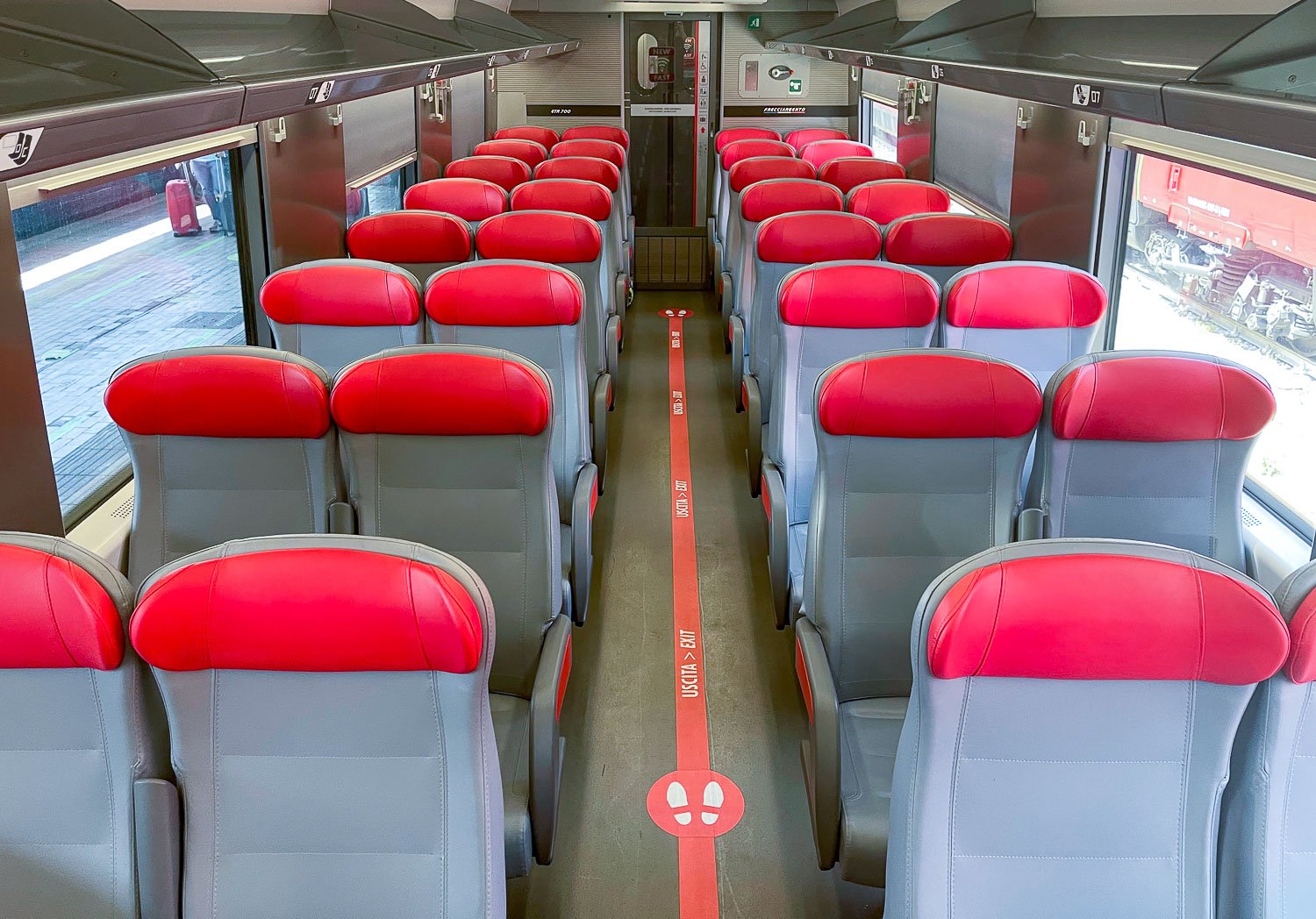
Second class seats on a Trenitalia train at the Venice train station.
What class of train ticket should I buy in Italy?
Second class (or standard class) is perfectly fine and very nice. The high-speed train trips between many of the major cities are roughly 2 to 3 hours so second-class trains are perfectly fine.
On our next trip to Italy, we may try a trip or two in first class since the additional cost is minimal (unlike air travel) and the nicer seat, fewer seats per train car, and additional luggage storage might be a nice treat.
Recently the Italian train lines have been phasing out the terms first class and second class replacing them with their own terms:
Italo offers three main, high-speed train travel classes in Italy:
Smart (Economy): The budget option, features 2+2 seating in open carriages. It is similar to standard airline economy with ample legroom.
Prima (Premium/First Class): Offers more comfort with 2+1 leather seating and extra space. It includes welcome service with snacks and drinks, priority boarding (Fast Track), and more luggage room.
Club Executive (Business/Luxury): The top-tier service featuring a small, exclusive 10-11 seat carriage. Includes access to station lounges, dedicated catering, personal screens, and the ability to book a private "Salotto" compartment.
Trenitalia’s Frecciarossa high-speed trains offer four classes
Standard : Most economical option with 4-across seating and ample space
Premium: Features 4-across leather seating, extra legroom, and a welcome service (drink/snack).
Business: Offers leather seats in a 2+1 configuration with extra room, a dedicated "Silent Area," and bistro service.
Executive : Top-tier, 10 wide, leather, 180° rotatable armchairs in a 1+1 configuration, includes high-quality meals, access to dedicated lounges, and a 5-seat meeting room.
Luggage on trains in Italy
Unlike airlines, there are no issues bringing luggage onto the trains in Italy. There are luggage storage areas at the front and back of each train car. There are also overhead racks that fit large suitcases.
While the storage options are ample it’s best to keep the luggage to a minimum. We watched numerous people struggle with their oversized bags.
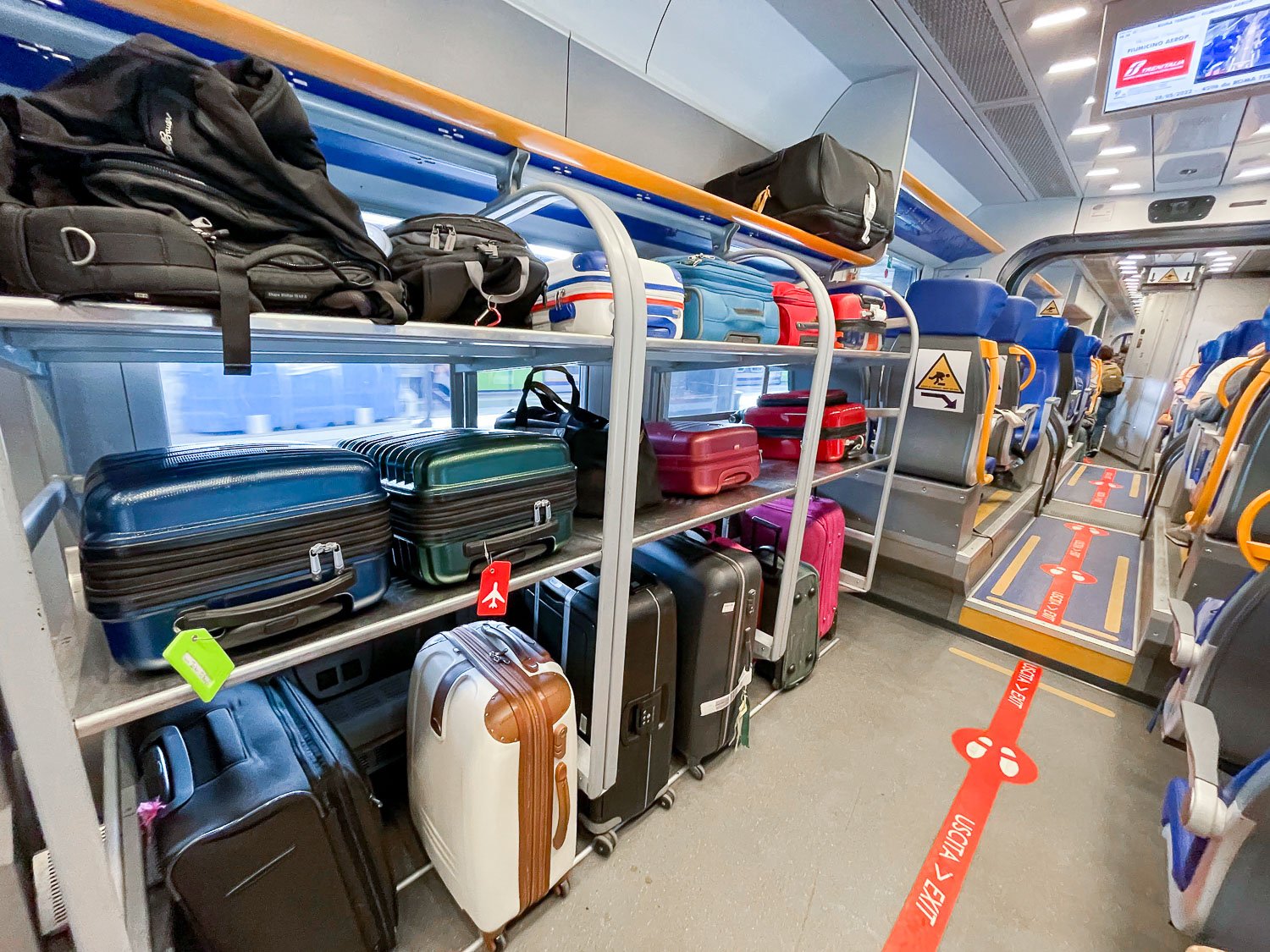
Luggage on the Leonardo express train between Roma Termini train station and Rome Fiumicino Airport.
🇮🇹 Italy Travel Pro Tip:
Don't get caught with a fine! Validation rules depend on the type of train you are taking:
- High-Speed (Frecciarossa & Italo): No validation or check-in is required because these tickets are for a specific seat and time.
- Digital Regional Tickets: You must click the 'Check-In' button in the Trenitalia app or your confirmation email before your scheduled departure time to activate it.
- Paper Regional Tickets: You must physically stamp these in the green or yellow validation machines at the station before boarding.
- Broken Machine? If you can't find a working machine, use a pen to write the date and departure time on your paper ticket before the conductor boards.
At the train station
It’s best to arrive at least 20 minutes before departure.
There is no security but your ticket may be checked before entering the platform area.
While train stations are safe be aware of pickpockets and other scams. As with all aspects of travel stay aware of your surroundings and possessions.
Check the departure board for your gate. It’s best to check by the train number.
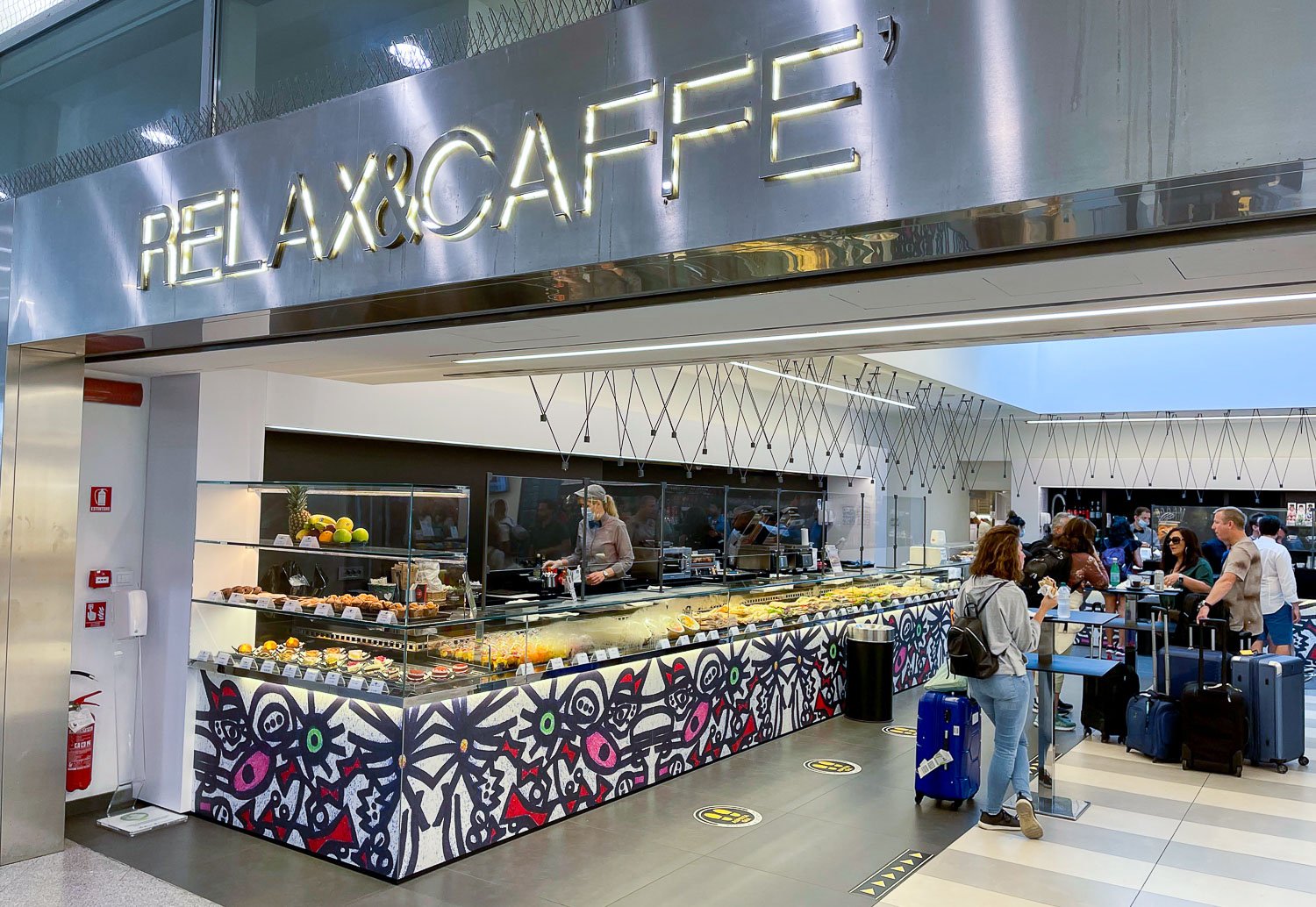
Purchase food and drinks inside or nearby the train station, it’s no problem bringing them on the train.
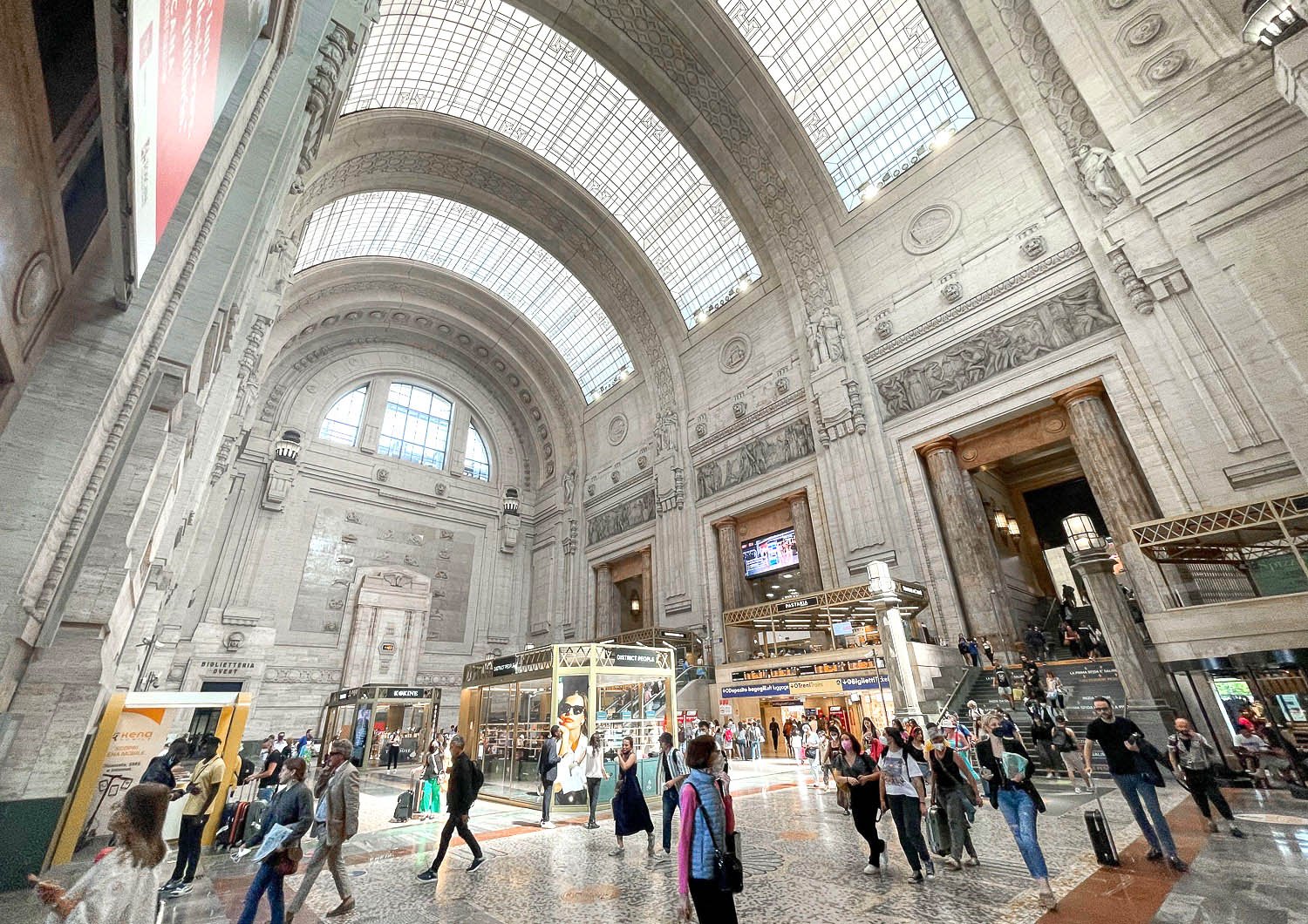
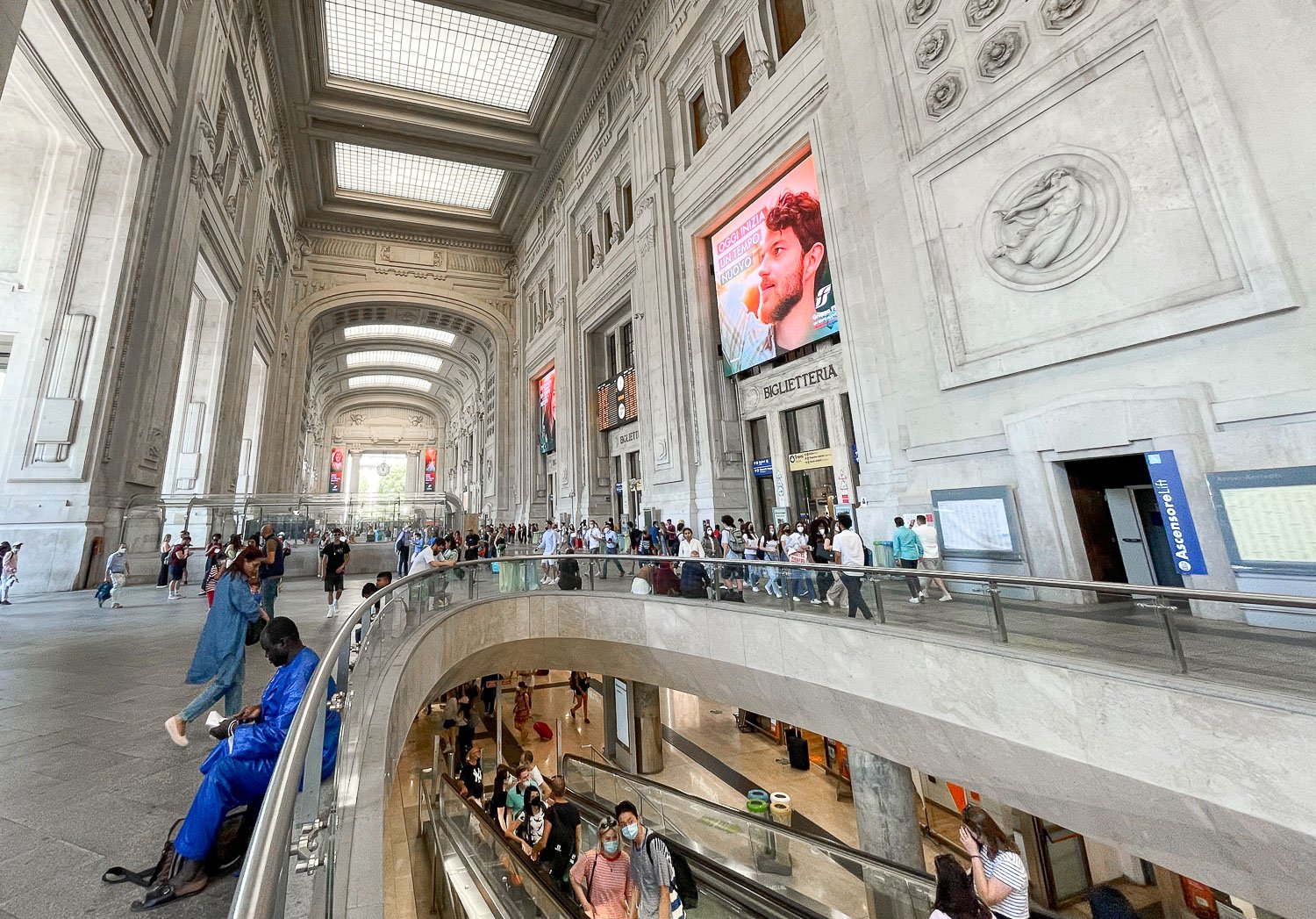
Getting to the “Last Mile”: Beyond Italy’s High-Speed Hubs
Italy’s high-speed trains are incredible for zipping between major cities like Rome, Florence, Milan, and Naples.
But they don’t reach every postcard-perfect destination. To visit places like Pompeii, Lake Como, or the Amalfi Coast, you’ll need to connect to a regional train, ferry, or local line for the final stretch.
Here’s exactly how it works.
How to Reach Pompeii and Sorrento
High-speed trains (Frecciarossa or Italo) from Rome or Florence will take you to Napoli Centrale. From there, you’ll transfer to a local railway for the final leg.
Step 1: Head to Napoli Garibaldi (Downstairs)
Inside Napoli Centrale, follow the signs downstairs to Napoli Garibaldi, where the Circumvesuviana trains depart. It’s connected internally, so you don’t need to leave the station.
Step 2: Take the Circumvesuviana
This local commuter railway runs frequently between Naples, Pompeii, and Sorrento.
For the ruins, get off at Pompei Scavi – Villa dei Misteri (this is the correct stop for the archaeological site).
For Sorrento, stay on until the final stop.
Travel times:
Naples → Pompeii: ~35–40 minutes
Naples → Sorrento: ~1 hour
Be aware: these trains can be crowded and do not have reserved seating.
A More Comfortable Option: Campania Express
During peak tourist season (generally spring through fall), you can book the Campania Express, a tourist-oriented version of the Circumvesuviana. It’s:
Air-conditioned
Less crowded
Reserved seating
Faster with fewer stops
It’s a great option if you’re traveling with luggage or simply want a more relaxed ride.
Important Ticket Tip
You cannot buy Circumvesuviana tickets on the Trenitalia or Italo websites or apps.
Tickets are sold separately via:
EAV ticket counters
Station kiosks
Tobacco shops (tabacchi)
The Unico Campania app
How to Reach Lake Como
If you’re heading to Lake Como, your high-speed train journey ends at Milano Centrale.
From there, you’ll transfer to a Trenord regional train.
Choosing the Right Stop
For the town of Como:
Take a train to Como S. Giovanni (about 40 minutes from Milano Centrale).
For Varenna (mid-lake access to Bellagio & Menaggio):
Take the regional train toward Tirano and get off at Varenna-Esino (about 1 hour).
From Varenna, you can easily connect to ferries serving Bellagio and other lake towns.
What to Know About Regional Trains
No assigned seating
No seat reservations
Sit anywhere once onboard
If you’re using a paper ticket, remember to validate it in the small green machines before boarding. Digital tickets are automatically validated.
How to Reach the Amalfi Coast
High-speed trains run as far south as Salerno, and this is often the smoothest way to reach the Amalfi Coast.
The Ferry Connection (Highly Recommended)
From Salerno station, it’s about a 10–15 minute walk to the ferry pier. From there, you can catch boats to:
Amalfi
Positano
The ferry ride is scenic, relaxing, and avoids the famously winding coastal road. If you’re prone to motion sickness, this is often a much more pleasant option than the bus.
Alternative Routes
Some travelers go:
Rome → Naples → Circumvesuviana → Sorrento → SITA bus
orNaples → direct ferry (seasonal)
But going via Salerno + ferry is often:
Less chaotic
Less crowded
More efficient
Final Tip: Don’t Fear the Transfer
These “last mile” connections may sound complicated, but in Italy they’re very normal and generally well-signed. With a little planning, they’re straightforward.
Italian Train Travel: Frequently Asked Questions
1. Do I need to book my train tickets in advance?
For high-speed trains (Frecciarossa and Italo), yes. Booking in advance often secures much lower "Super Economy" or "Smart" fares, and because these trains have assigned seating, they can sell out during peak travel seasons.
For regional trains, you do not need to book ahead; prices are fixed and there are no assigned seats, so you can simply buy your ticket at the station or via the app right before you board.
2. Is there a luggage limit or extra fee for bags?
Unlike airlines, Italian trains generally do not have weight limits or fees for luggage. However, you are responsible for carrying, lifting, and storing your own bags.
Storage: Most high-speed trains have overhead racks for small/medium bags and larger storage areas at the end of each car for heavy suitcases.
Pro Tip: If you have heavy luggage, try to book Frecciarossa Premium or Business class, which often offers more dedicated luggage space between seat backs.
While the luggage storage areas at the end of the cars are relatively safe, we have been able to slide our luggage behind the business class seats, which is a source of comfort.
3. Are there discounts for seniors (60+)?
Yes, both major rail operators offer senior incentives:
Trenitalia: Seniors 60 and older can buy the Carta Argento for €30 (free at 75+), which gives a 15% discount on InterCity, InterCity Notte, and regional trains. One important caveat: the Carta Argento does not apply to Frecciarossa or other Frecce high-speed trains. For Frecciarossa discounts, look for the FrecciaSENIOR fare through Trenitalia's CartaFRECCIA loyalty program. Its fixed-price senior fares start around €29 in standard class. Advance-purchase Super Economy fares often beat both discount cards, so always compare before buying.
Italo: Offers an "Italo Senior" rate for travelers over 60, which you can select during booking without a separate membership card.
4. What amenities can I expect on board?
High-speed trains are designed for comfort and typically include:
Wi-Fi and Power: Most offer free (though sometimes spotty) Wi-Fi and power sockets at every seat.
Food: A bar car (Bistrò) is usually available for coffee, snacks, or sandwiches. In higher classes, a welcome drink and snack may be served at your seat.
Restrooms: Modern, accessible restrooms are located in every car on high-speed lines.
5. What happens if there is a train strike (Sciopero)?
Strikes are relatively common in Italy but are almost always announced in advance.
By law, "essential services" (usually morning and evening commute hours) must still run. If a strike is called, check the Trenitalia or Italo app for a list of "guaranteed trains" to see if your journey is affected.
Unlike transit strikes in the United States and Europe, some limited service continues. We have been to Paris during a transit strike, and while it was very inconvenient, it was not a total shutdown.
Helpful links for your trip:
Trainline website - Click here
You might also like our post with tips for traveling in Italy.
About the Authors

|
John and Debbie O'Boyle are the team behind The Empty Nest Explorers. John is a professional photographer whose work has been published by The New York Times, NBC News, and Getty Images. He is a member of the American Society of Media Photographers, has been part of a Pulitzer Prize-winning team, and has received two New York Emmy nominations. Debbie is a writer and photographer with 30+ years of experience, formerly with The Star-Ledger and NJ.com. Together, they create in-depth travel guides for couples and empty-nest travelers who want to make the most of every destination. |
Italy travel posts that you might like:





The Colosseum lives up to the hype, but getting tickets is more complicated than it should be.
John and I walk you through everything, how to buy tickets, which tour is worth it, what to bring, and what to see nearby.