
Churchill War Rooms London: Tickets, Hours and Tips
Updated: October 11, 2026
Visiting Churchill’s War Rooms is one of my favorite museum experiences in London.
During the thick of World War II, bombardment was a constant threat, so Winston Churchill and his government directed the war from a heavily fortified underground command center located in the deep basement of a Whitehall office building. When the war ended in 1945, the bunker was sealed and remained undisturbed for many years exactly how it was left.
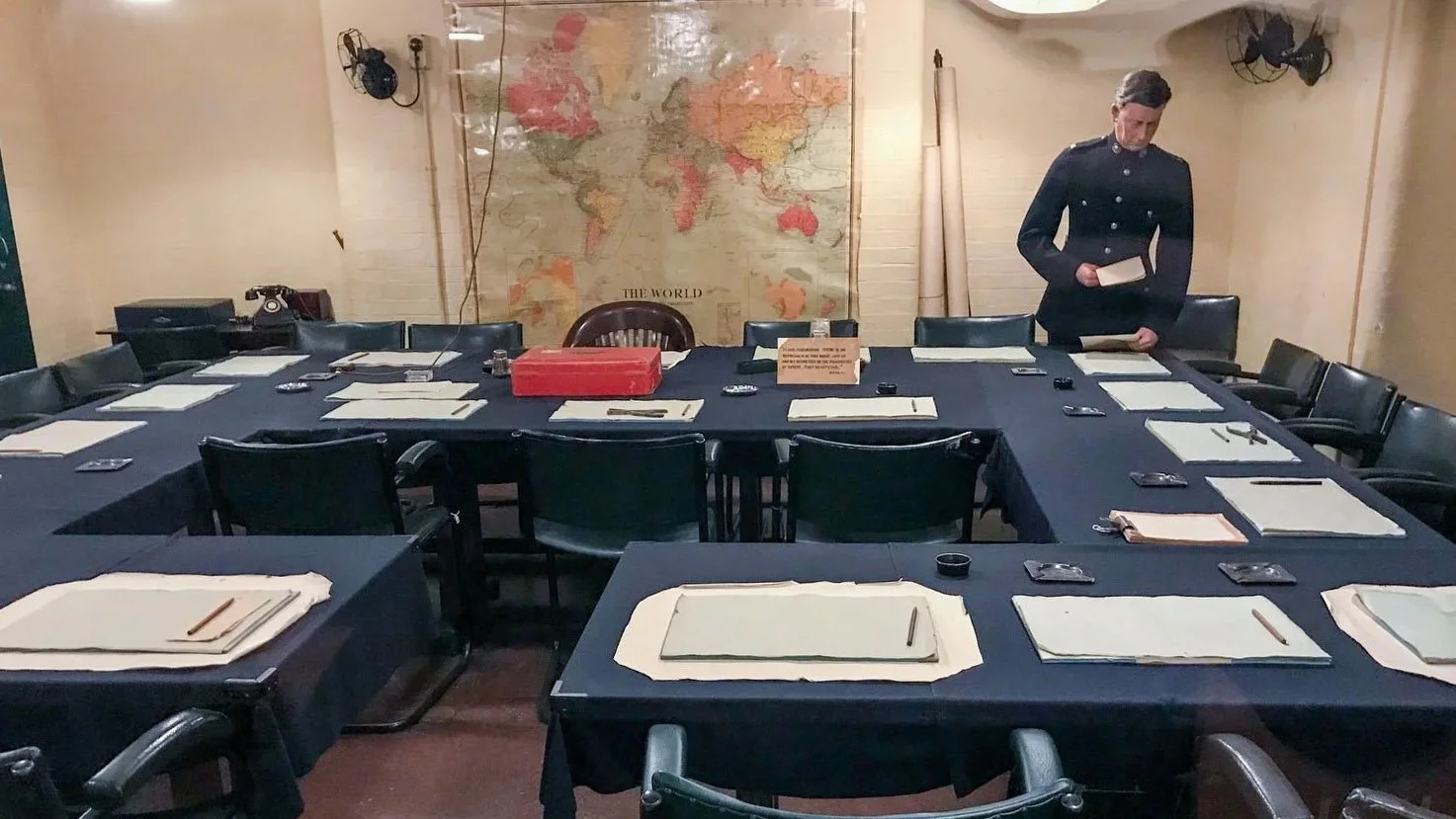
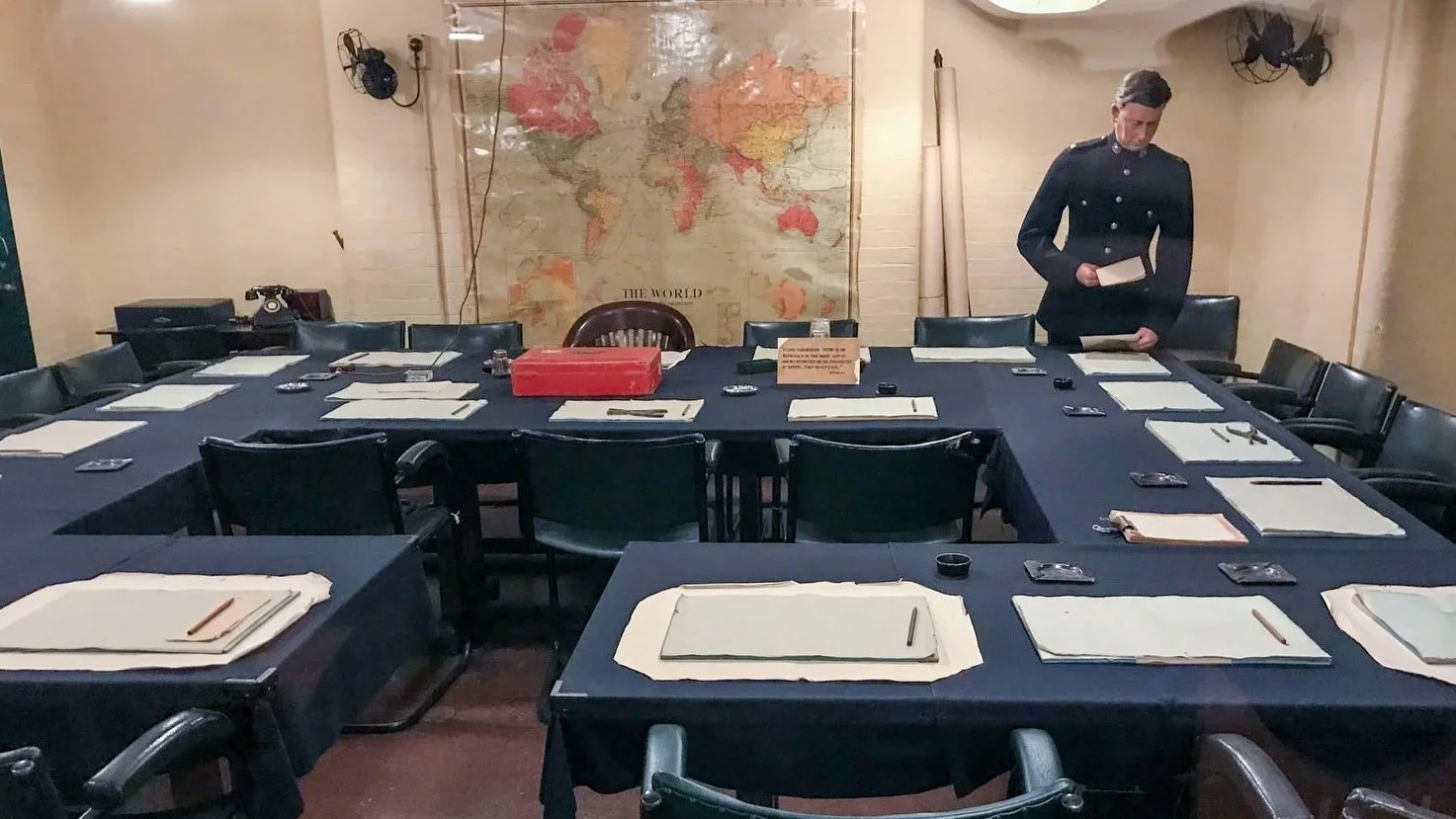
The Cabinet Room at Churchill’s War Rooms. The one armchair behind the red box was Churchill’s seat. All photos by John O’Boyle / The Empty Nest Explorers
This intriguing site is preserved and managed by the Imperial War Museums - or IWM - who also run tours of the HMS Belfast and several other museum sites in and around London.
The main war rooms were opened to the public in 1984, with continued restoration expanding public access over the years.
In 2005, a major museum dedicated to Winston Churchill was added.
| Churchill War Rooms Quick Facts | |
|---|---|
| Prices and hours checked October 2026 on the official IWM site | |
| Hours | Daily 9:30am to 6pm. Last entry is 5pm |
| Closed | December 24 to 26 |
| Adult ticket | £34, timed entry booked online |
| Kids and seniors | £17 for ages 5 to 15. Under 5s free. £30.60 for 65+, students and disabled visitors |
| Time to allow | About 2 hours for the bunker and the Churchill Museum |
| Best time to go | Right at opening, or mid-afternoon once the tour groups leave |
| Nearest tube | Westminster or St James’s Park, both a short walk |
| Address | Clive Steps, King Charles Street, London SW1A 2AQ |
| Good to know | No cloakroom, and suitcases aren’t allowed |
| Tickets | Book on the official IWM site |
Why visit the Churchill War Rooms
If you have any interest in WWII, the 1940s or Winston Churchill the man, you really shouldn’t miss this one. It is a time capsule of the Second World War, and it feels like something right out of a James Bond movie.
Exploring the labyrinth of narrow corridors and peering into the actual rooms where decisions were made and strategies discussed is endlessly fascinating to a World War II buff like myself. This type of immersive experience holds a lot of meaning - of the “actually being there” sort.
To think - you are walking in the footsteps of Winston Churchill.
From 1940 to1945, hundreds of men and women would spend thousands of vital hours working and even sleeping here, as it was the inner sanctum of the British government. Today these spaces are populated with wax figures going about their “work” among the actual equipment, furniture, maps and papers that were used there.
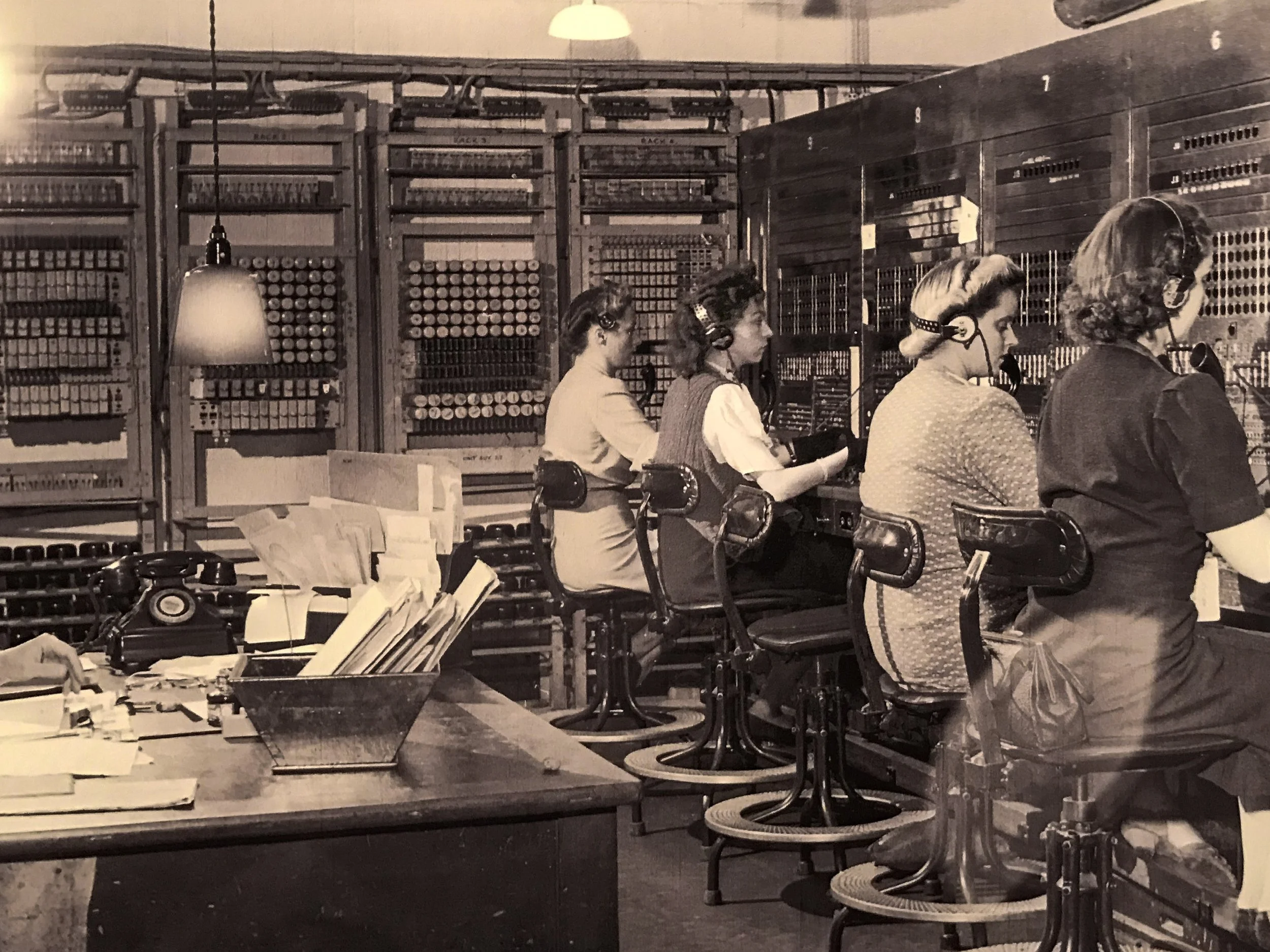
Look for lots of tiny details - sugar cubes that had been carefully stashed in a desk drawer (sugar was rationed during the war); historically recognizable names on lists and signs; pin holes in maps indicating the ever-changing nature of convoy movements. Listen to the stories of secretaries and BBC operators in recordings preserved in the audio guide.
There is even a “secret” room, disguised as a private lavatory, from where Churchill could speak directly to the US President.
An added incentive to visit: Churchill War Rooms & Museum is very centrally located in Westminster so it is easily incorporated into other activities in the area.
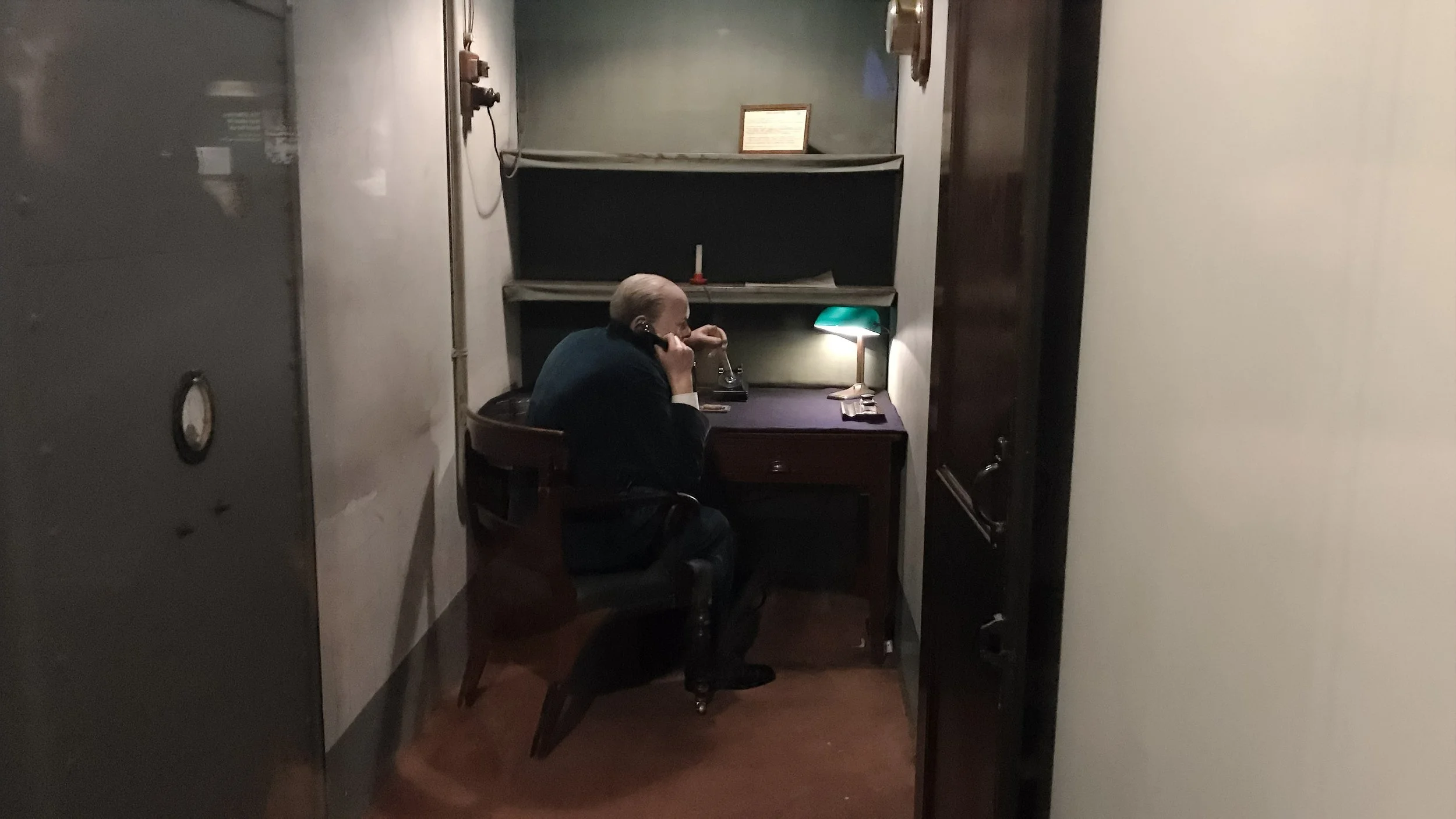
A “secret” room where Churchill could speak directly to the US President, part of the Churchill War Rooms and Museum.
Key features of Churchill’s War Rooms
The Cabinet Room
More than 100 meetings of the Cabinet were held in this space during the war, including one in 1939 while Neville Chamberlain was the Prime Minister.
Among the modest furnishings you will notice the one “nice armchair” that was used by the PM and the official red dispatch box on the table.
“This is the room from which I will direct the war”, Winston Churchill famously said of it upon first seeing it. Here he would meet with his key advisors and military leaders all throughout the war.
It’s all preserved behind glass, so don’t expect to go sit in the PM’s chair, but you will be standing only inches away from where some of the most important decisions were made.
Make sure you make use of the available Audio Tour while peering into the rooms - a definite must!
The Map Room
The Map Room was the nerve center of British intelligence during the war. It was manned around the clock by military officers producing intelligence reports, with information constantly flowing in from all over the world. The maps covering the walls are frozen in time; left as they were in 1945 when the lights went out.
Access to the Map Room was highly restricted, as it was considered the most critical room in the bunker. Winston Churchill spent the entirety of D-Day in this room, monitoring the progress of the invasion via intelligence reports. (He actually wanted to attend the invasion himself, watching from the bridge of HMS Belfast,, but the King nixed that idea. Which is kind of funny!)
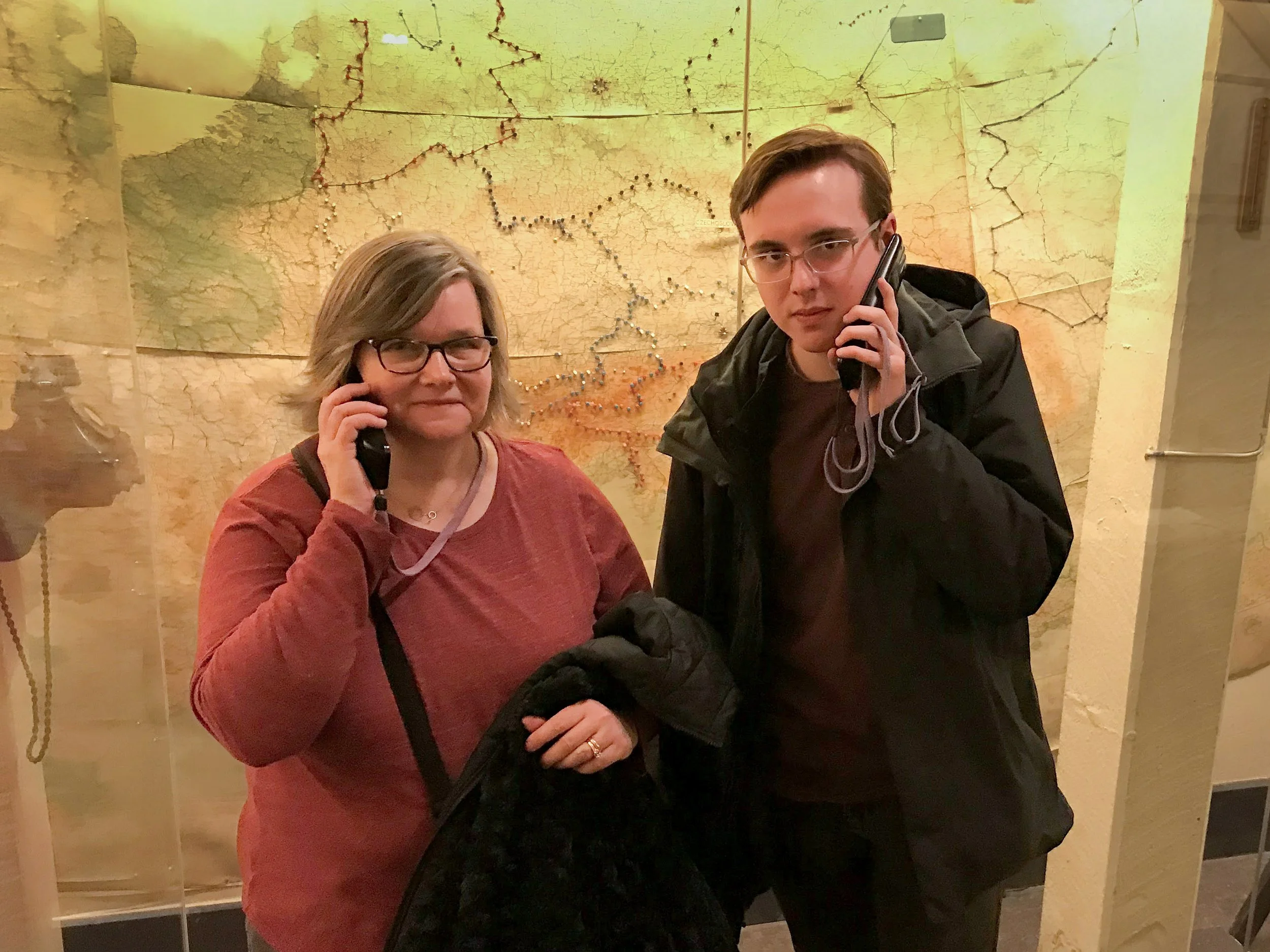
Check out all the color-coded telephones - nicknamed the "beauty chorus" and used for secure, instant communication: white phones for the armed services, black for the outside world, and green for intelligence services. A few phones also have a distinctive green handset to indicate a scrambler phone.
Fun fact: US President Franklin Roosevelt modeled his own Map Room at the White House after Churchill’s map room here in the War Rooms. A lifelong map enthusiast, Roosevelt had special world maps created for him by National Geographic, and commandeered a ladies’ cloakroom in the basement of the White House to turn it into a top secret communications center, just like Churchill’s. A reproduction of the White House Map Room is on display at the Franklin Roosevelt Presidential Library.
You can read more about FDR in our post Visiting FDR’s home and Presidential Library.
Churchill’s Bedroom & Personal Spaces
Churchill famously took “naps” during the day and life would not be any different in the bunker. In fact, a suite of rooms was kept for Churchill and his family, which included a kitchen and bedrooms.
Churchill also made some of his famous wartime speeches from his personal bedroom here, including the September 11, 1940 speech at the beginning of the Blitz. While a specific BBC broadcasting room was planned for this use within the complex, Churchill preferred to use his desk in his bedroom, which also served as his private office.
There is a special exhibit highlighting how people lived and worked - and often slept - in the underground complex, including Churchill.
The Churchill Museum
Included in your ticket is a substantial museum dedicated to Churchill's remarkable 90-year life, highlighting his leadership and legacy.
The museum features an interactive “lifeline” that contains images, documents, films and animations. There are also many interesting artifacts, including one of his famous ‘siren suits’ - a sort of onesie made to quickly slip on if disturbed at bed or bath time. Churchill rather liked these garments, and had several made for him, including one in a rich claret-colored velvet as well as one in bottle green. (For a rather serious leader, Winston had a bit of a foppish streak!)
Afternoon Tea at Churchill’s War Rooms
IWM offers a unique experience in a Churchill War Rooms-themed afternoon tea, which includes a special introductory lecture about the location and access to the War Rooms and Churchill Museum.
This is described as a luxury experience, promising “a decadent selection of sandwiches, pastries, drinks and more, with the specially curated menu offering a culinary journey through Churchill's life.”
As with his clothes, Winston also enjoyed his food!
Tea is served in the Harmsworth Room, once known as Plant Room 7, where necessary equipment was housed for regulating the airflow through the war rooms. The Harmsworth Room is now a luxury dining room.
Basic price for tea is £78.00 per adult; £86.00 for tea service with Prosecco. Guests with disabilities can bring a “carer” for a discounted price.
Reservations should be made in advance through the IWM website.
Useful Tips for Visiting the Churchill War Museum
Best time to visit the Churchill War Rooms
As with most popular attractions in London, it’s best to arrive early before the crowds arrive, or later in the afternoon (after buses and organized tours have left) for smaller crowds.
Hours:
Open every day 9:30 am to 6 pm, last entry 5 pm
Closed December 24 to 26
Booking in advance is recommended to minimize wait time. Book tickets on their website here.
Adults £34
Children 5 to 15 £17
Seniors 65+, students and disabled visitors £30.60
Members and children under 5 free
Carergivers free
Audio guide
A free multimedia guide is included with your ticket. We highly recommend using it, as it gives so many details that are easy to miss, as well as great stories of the men and women who worked there. It’s definitely necessary to appreciate the experience fully.
How long does it take to see Churchill’s War Rooms?
Allow yourself about 2 hours to fully experience it.
What is the best time to visit the Churchill War Rooms?
Go right when it opens or later in the afternoon. That’s when you miss most of the bus groups and organized tours, and the narrow corridors feel much less crowded.
Last entry is 5pm, so if you go in the afternoon, aim for around 3pm. That still gives you the two hours it takes to see everything.
Is taking photos and videos allowed at Churchill’s War Rooms?
Yes, you may take photos and videos in Churchill’s War Rooms for personal use. No tripods or selfie sticks; no flash or lighting gear (to protect dimly lit artifacts). Also note that passages can be narrow and turns are sometimes tight, so respect the space of your fellow visitors
How to get to Churchill’s War Rooms
Churchill’s War Rooms is conveniently located in the heart of London and easily accessible by public transport.
Address: Churchill War Rooms, Clive Steps, King Charles Street, London, SW1A 2AQ
Underground: Closest stops are St James's Park and Westminster
National Rail: Closest stops are Charing Cross and Victoria
Bus: Routes 3, 11, 12, 24, 87, 88, 159, and 453
New to London public transport? Read our post, How to Use London’s Public Transportation: A Guide for Visitors.
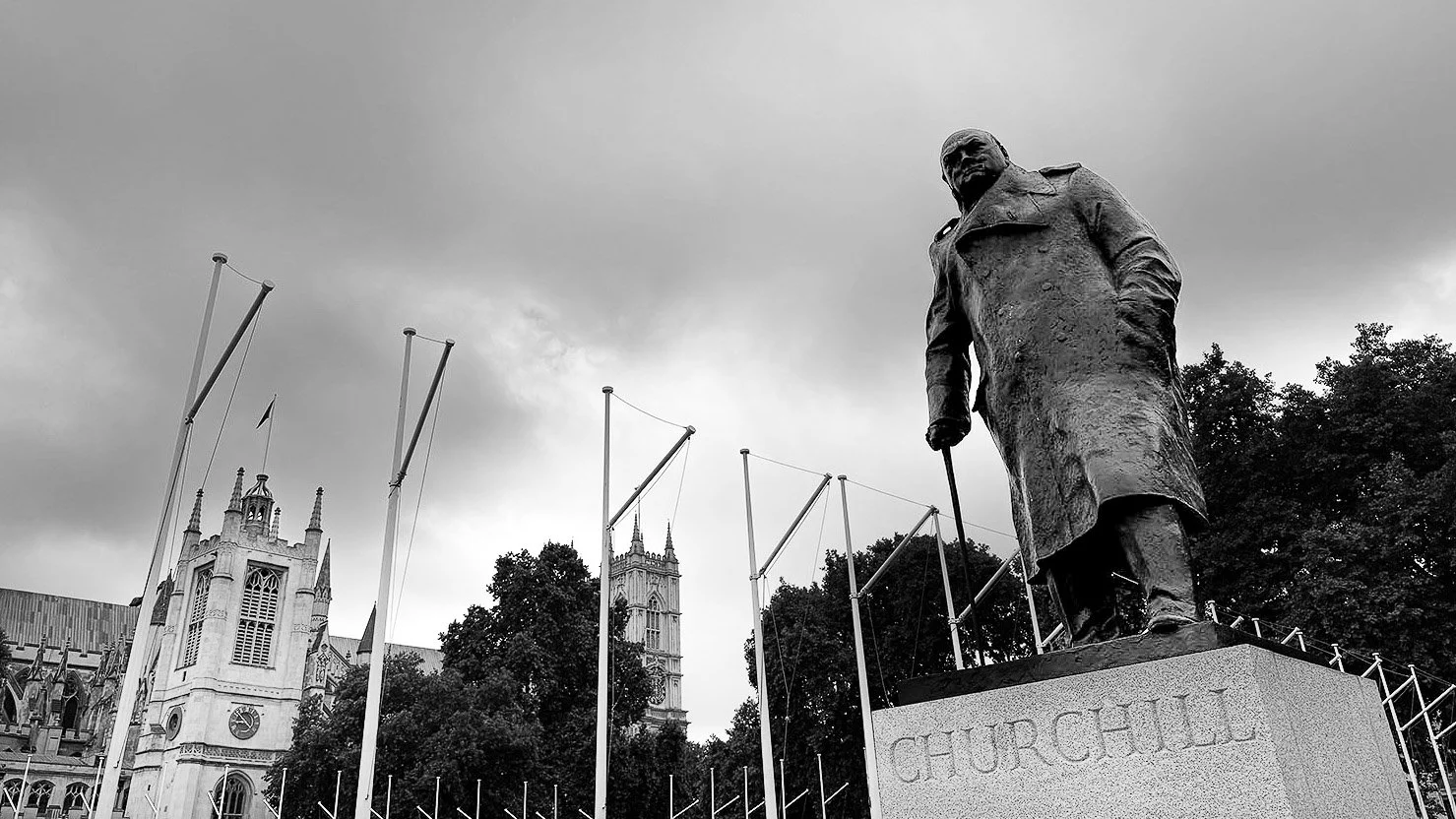
Statue of Winston Churchill in Westminster, with St Margaret’s Church in the background.
If you are very interested in Churchill and London during World War 2, Get Your Guide has a wide variety of tours covering the topic. Check them out here.
There’s plenty to do in this central area of London!
To continue your own “Churchill trail”, book a visit to the Palace of Westminster (Houses of Parliament), as it is right down the street. Also, look for Churchill’s statue at the end of Whitehall.
Or, take a short walk over to Horse Guards Parade, and catch the changing of the Horse Guards.
The War Rooms are also right across the street from St James Park, which is a lovely place to take a stroll. Read up on London’s beautiful and abundant parks in our previous post, A Guide to Exploring London Parks.
Frequently Asked Questions:
Where are the Churchill War Rooms?
They’re in Westminster, tucked under the government buildings near Parliament Square and St James’s Park. The address is Clive Steps, King Charles Street, London SW1A 2AQ.
The closest tube stops are Westminster and St James’s Park. Both are a short walk away, so it’s easy to pair with Big Ben or Westminster Abbey on the same day.
How long does it take to see the Churchill War Rooms?
Plan on about two hours. That covers the underground war rooms and the Churchill Museum, which sits right in the middle of the route.
If you like to listen to every stop on the audio guide, give yourself a little more time.
What is the best time to visit the Churchill War Rooms?
Book the first entry slot of the day if you can. The bunker corridors are narrow, so it feels a lot more comfortable before the crowds build.
Weekdays outside summer and school holidays tend to be easier. Last entry is 5pm, so don’t leave it too late in the afternoon.
Can you skip the line at the Churchill War Rooms?
The best thing you can do is book a timed ticket on the official IWM website before you go. You may still wait a few minutes for the security check at busy times.
If you really want to beat the crowds, IWM runs a daily guided tour that starts before the museum opens. It’s £54 per person and lasts about an hour. Afterward, you can keep exploring on your own with the audio guide.
Is the Churchill Museum the same as the Churchill War Rooms?
Yes. The Churchill Museum is inside the War Rooms, and one ticket gets you into both.
So if you’ve seen it called the Churchill bunker or the Winston Churchill Museum, it’s all the same place.
Can I bring luggage to the Churchill War Rooms?
No. There’s no cloakroom, and you can’t bring suitcases inside. If you’re heading to or from a train, the nearest luggage storage is at Charing Cross station.
About the Authors

|
John and Debbie O'Boyle are the team behind The Empty Nest Explorers. John is a professional photographer whose work has been published by The New York Times, NBC News, and Getty Images. He is a member of the American Society of Media Photographers, has been part of a Pulitzer Prize-winning team, and has received two New York Emmy nominations. Debbie is a writer and photographer with 30+ years of experience, formerly with The Star-Ledger and NJ.com. Together, they create in-depth travel guides for couples and empty-nest travelers who want to make the most of every destination. |
Other Well-Reviewed London Tours You Might Be Interested In:
Note - This blog post contains affiliate links. If we recommend a product, activity, or hotel, we might receive a small commission if you buy or book from these links. This is done at no additional cost to you. We only recommend products we have personally used or have thoroughly researched.
Other Blog Posts about visiting London:
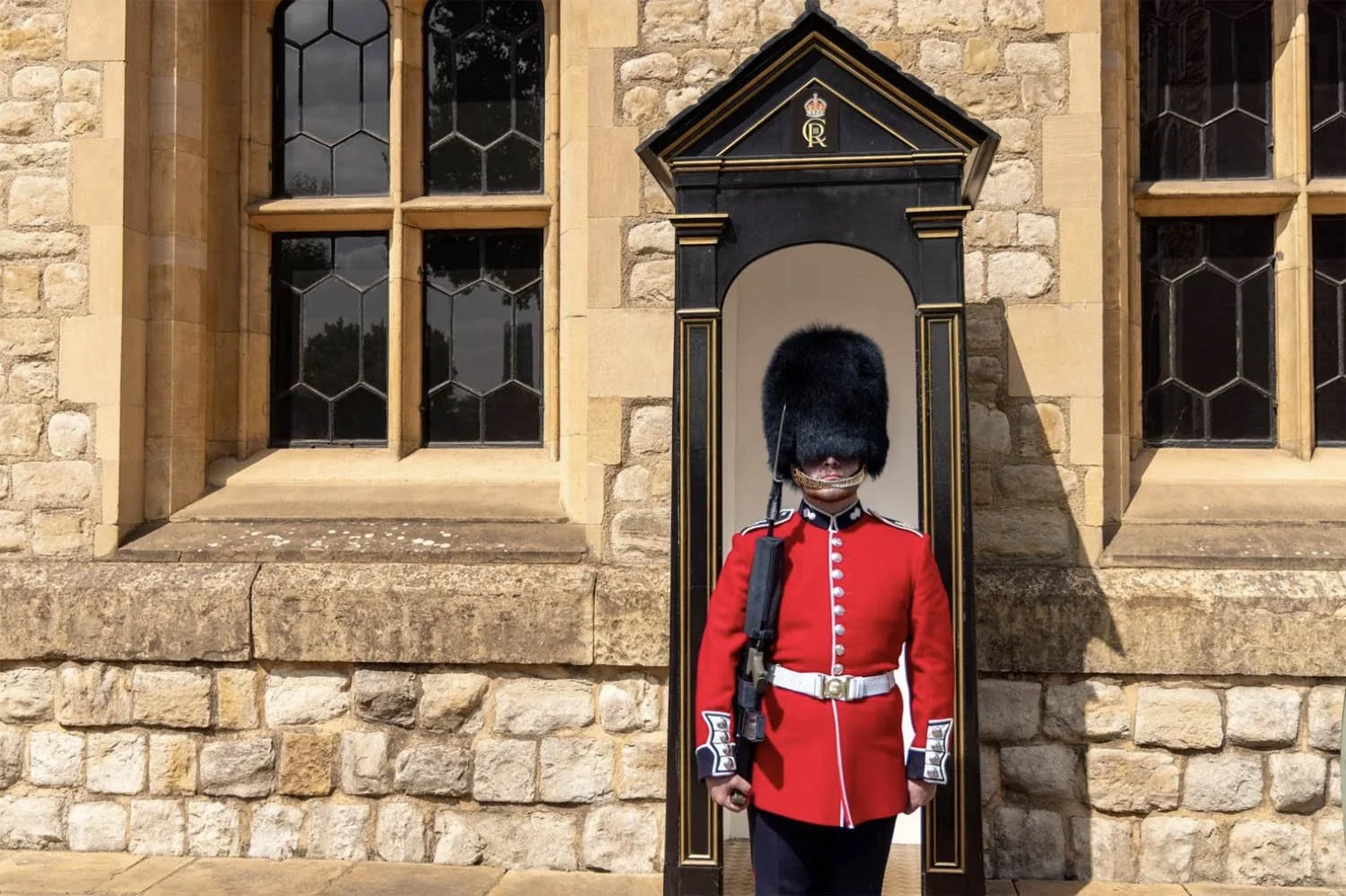
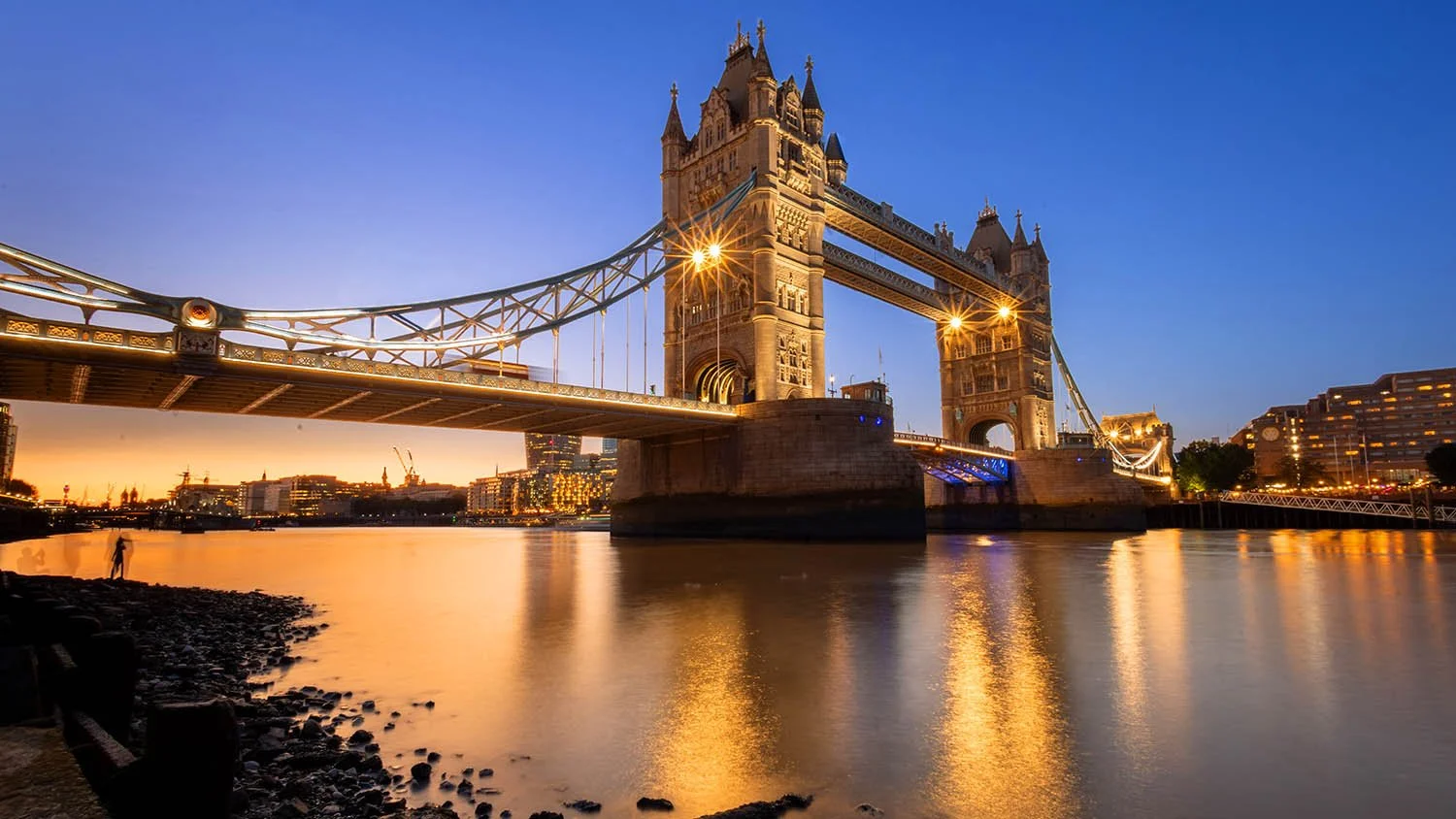
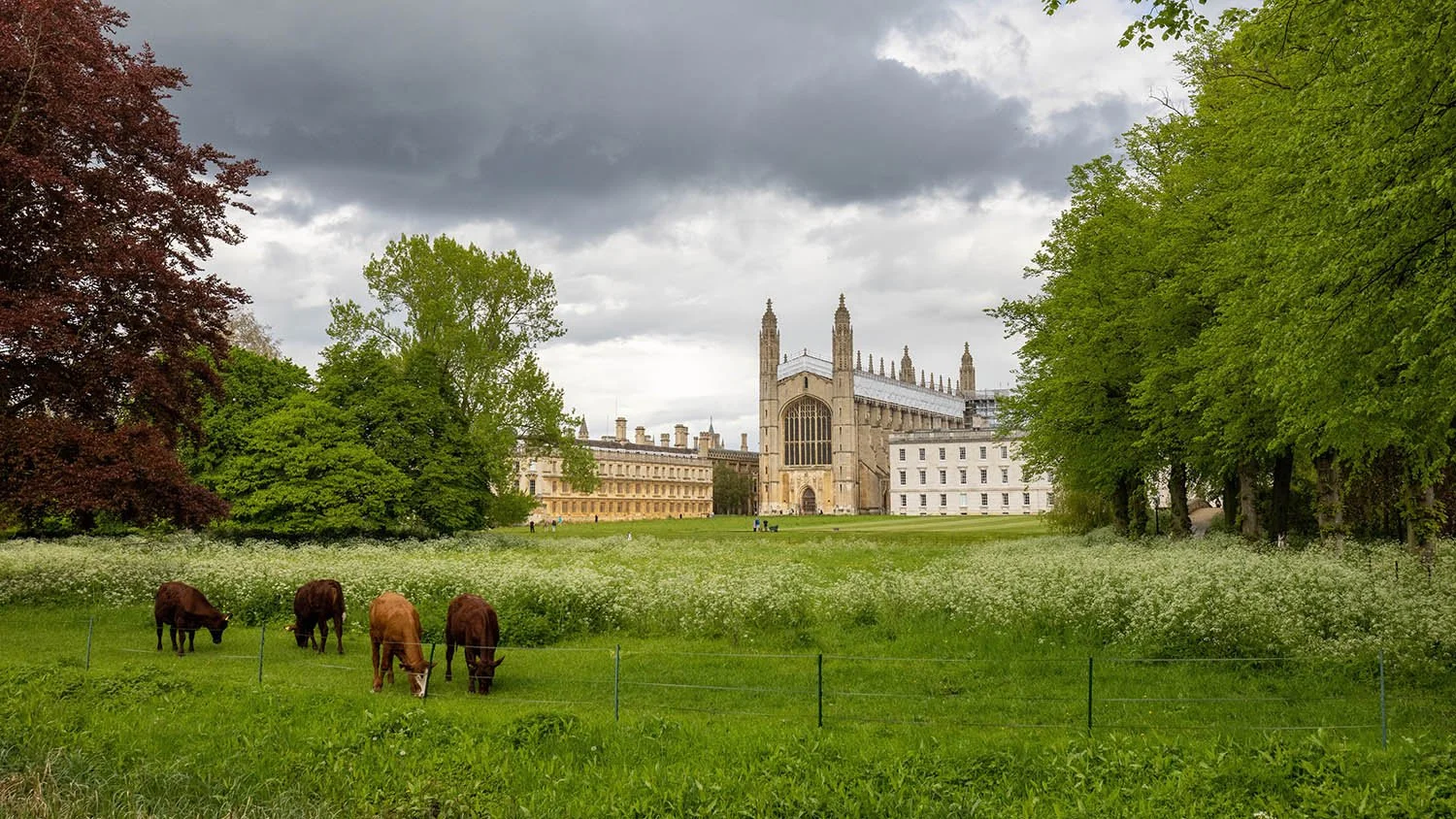




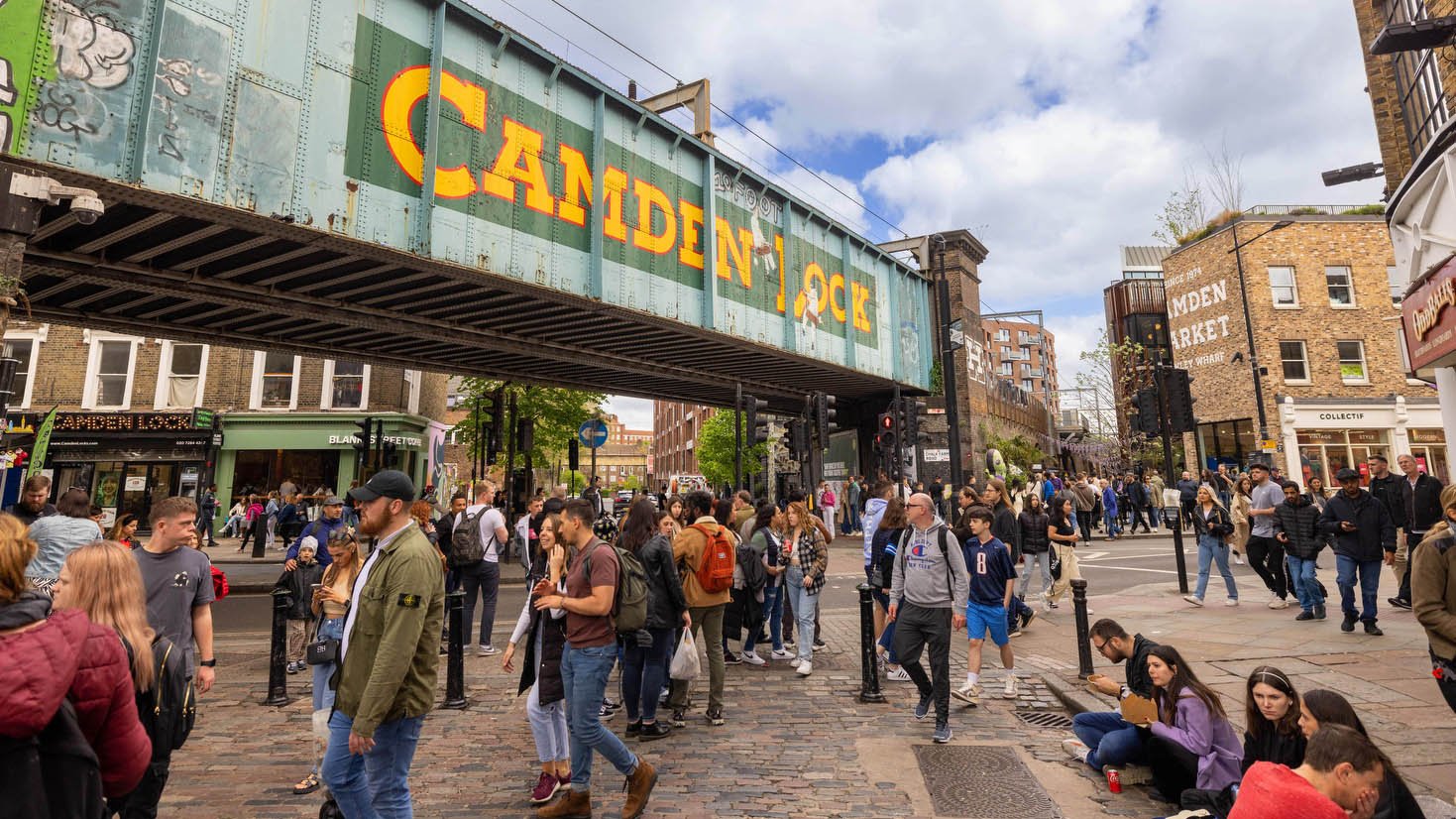


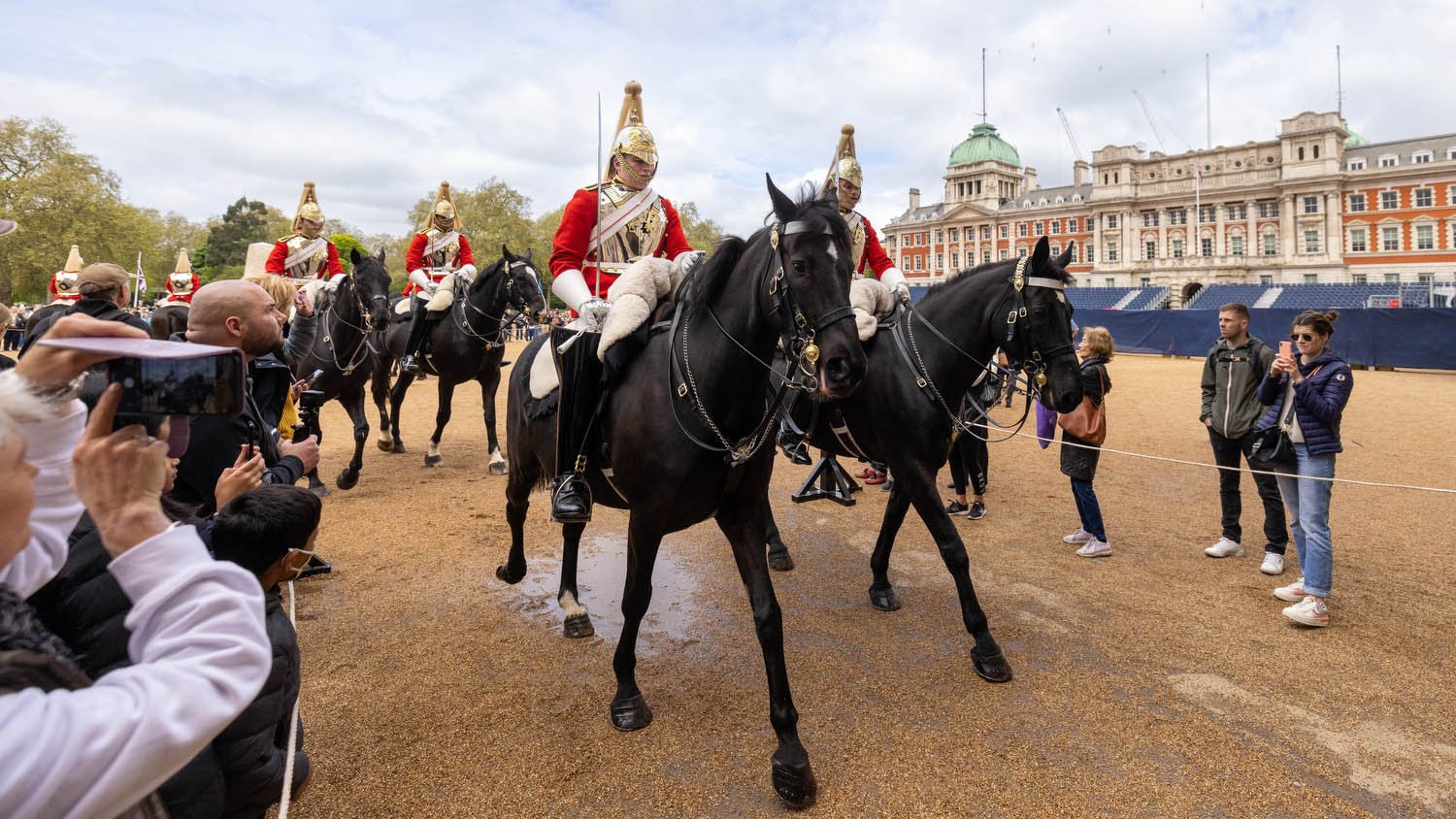
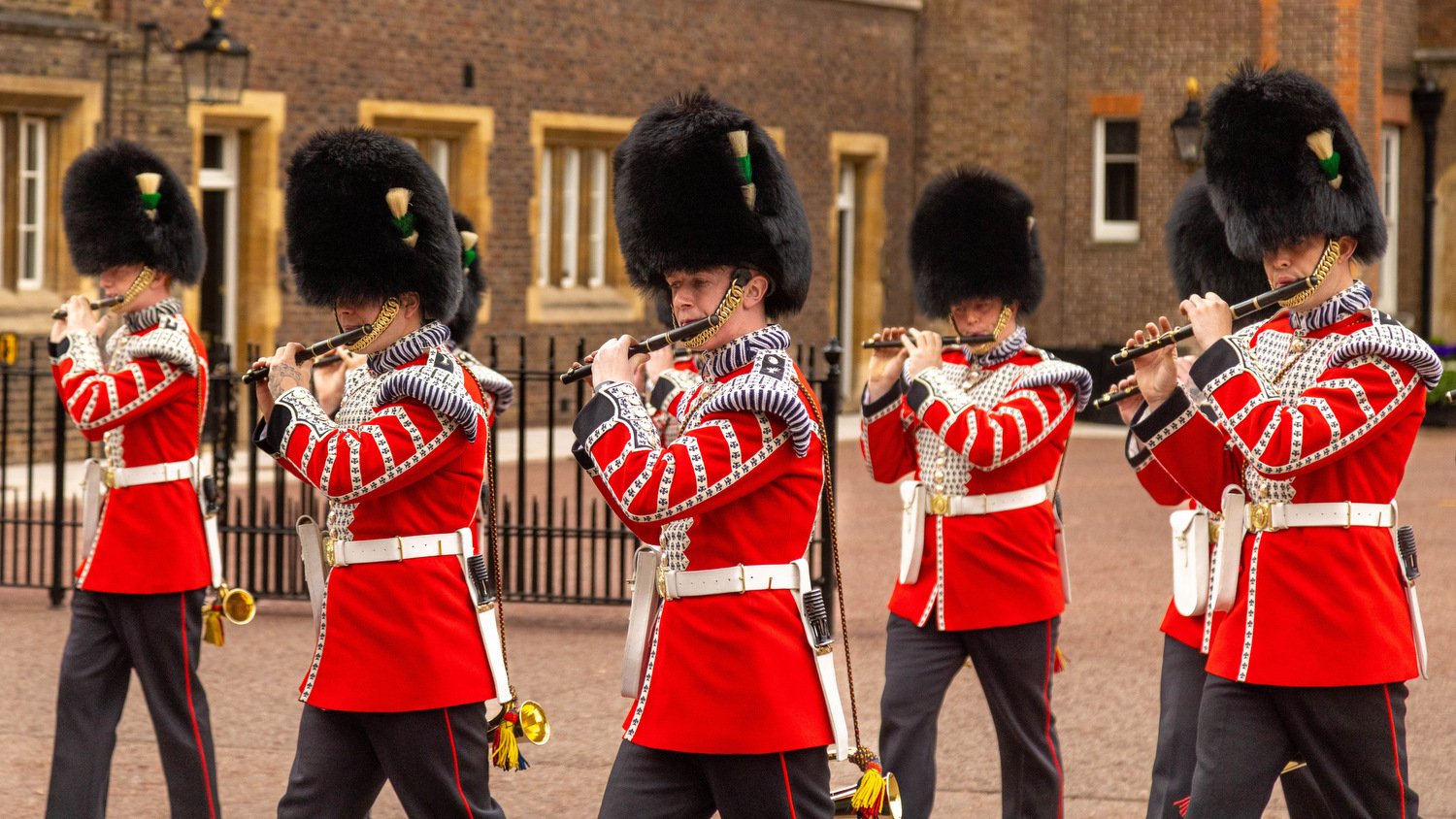
London keeps pulling us back, since our first visit 28 years ago we've covered a lot of ground.
This guide brings together the best of everything we've experienced, from royal palaces and the Changing of the Guard to funky markets, free skyline views, and the day trips we'd do again in a heartbeat.