
Bruce Springsteen Center for American Music: Is It Worth Visiting? We Think So
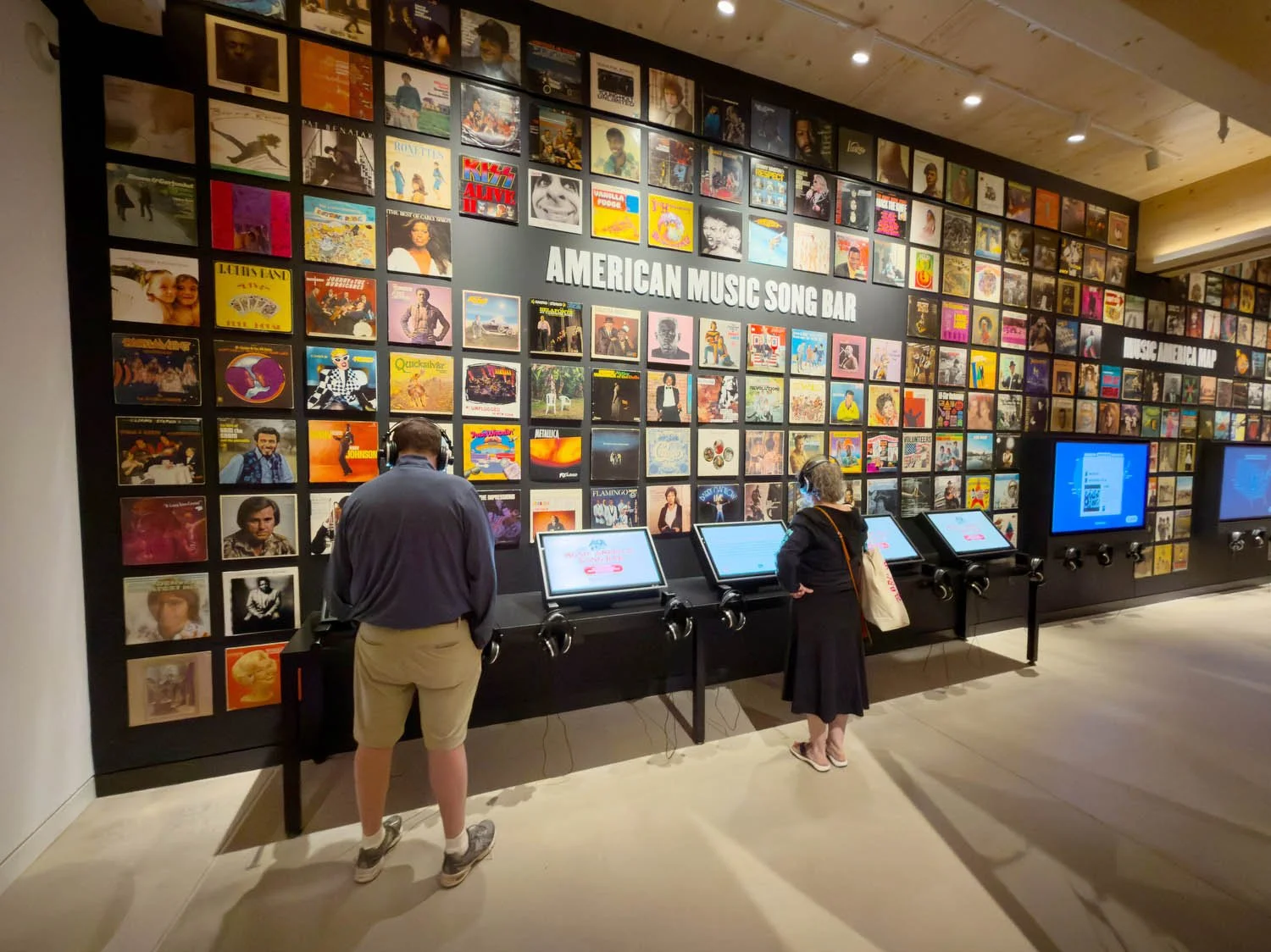
A wall of album covers and a music listening station.
Debbie and I are huge Springsteen fans, so we had a feeling we would enjoy the Bruce Springsteen Center for American Music. We just had no idea how much.
We were genuinely blown away. It was so much better than we expected.
Of course, this is Bruce Springsteen. He would never let a place honoring him just be about himself. The center traces the full history of American music, from its earliest roots to today.
The whole first floor is devoted to American music broadly. Almost nothing on that level is specifically about Bruce. The exhibits upstairs cover the Springsteen story you came for. Even there, he keeps the spotlight on his bandmates and the artists who shaped him.
| Address | 382 Cedar Ave, Long Branch, NJ (Monmouth University campus) |
| Hours | Mon–Wed, Fri–Sun: 10am–5pm | Thursdays: 10am–8pm |
| Adult Tickets | $22 | Youth (7–17): $16 | Seniors 65+: $20 | Under 6: Free |
| Website | springsteencenter.org |
| Best For | Springsteen fans, American music lovers, families |
| Parking | Large lot directly outside the building |
| Tip | GPS may take you to a service entrance — use 382 Cedar Ave and follow the boardwalk-style walkway to the main entrance |
What Is the Bruce Springsteen Center for American Music?
The center opened on June 13, 2026, on the campus of Monmouth University in Long Branch. The building itself is stunning. The $50 million, 30,000-square-foot facility was designed by COOKFOX Architects of New York and sits on land that feels deeply connected to its subject. Long Branch is where Bruce Springsteen was born.
The building houses exhibition galleries, research archives, immersive interactive experiences, and a performance theater. The staff inside are friendly and genuinely enthusiastic about what they are showing you.
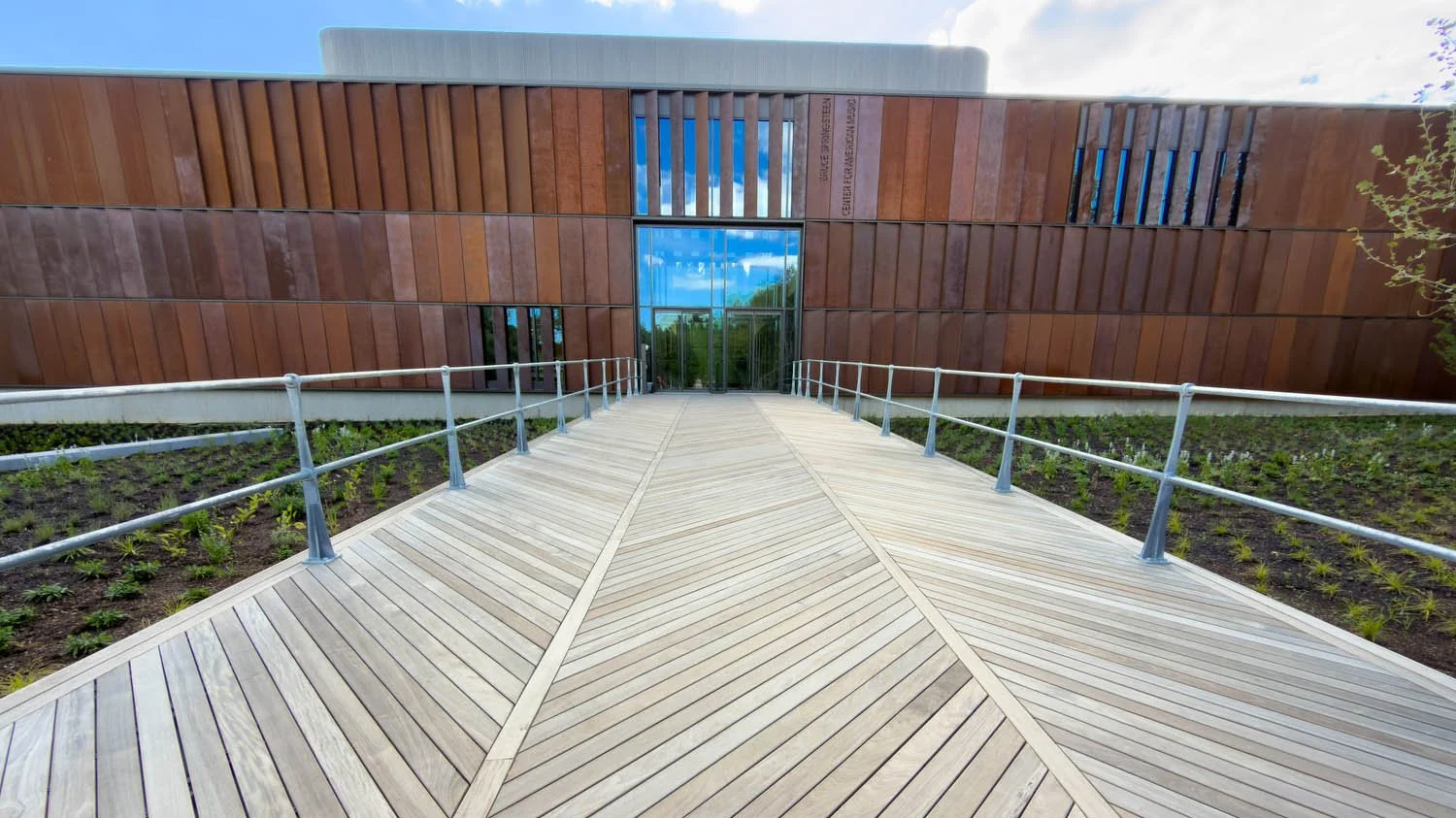
The boardwalk style entrance to the Springsteen Center.
Getting There and Parking
The center is at 382 Cedar Avenue in Long Branch, on the Monmouth University campus. Coming from the Garden State Parkway, take Exit 105 and follow signs toward West Long Branch. The drive from most of northern New Jersey is under an hour.
One heads-up: GPS sometimes routes you to a service entrance. If that happens, just keep following Cedar Avenue and look for the boardwalk-style walkway that leads to the main entrance. You will know you are in the right place.
Parking is easy. There is a large lot directly outside the building. We had no trouble at all finding a spot.
Start With the Film
Every visit begins in the beautiful 241-seat Dolby Atmos-certified theater.
The theater presents a 25-minute opening film created by director Thom Zimny, exploring Springsteen's footprint in American music. Thom Zimny has been Bruce's filmmaker for decades. It shows. The cinematography is extraordinary.
Debbie and I both felt the film alone would have been worth the drive. It moves through Glenn Miller, the birth of rock and roll, doo-wop, hip-hop, gospel, and the Civil Rights movement. The whole span of American music. Told through Bruce's eyes.
Just watching the film could be enough. But there is so much more waiting for you.
The First Floor: The Full Story of American Music
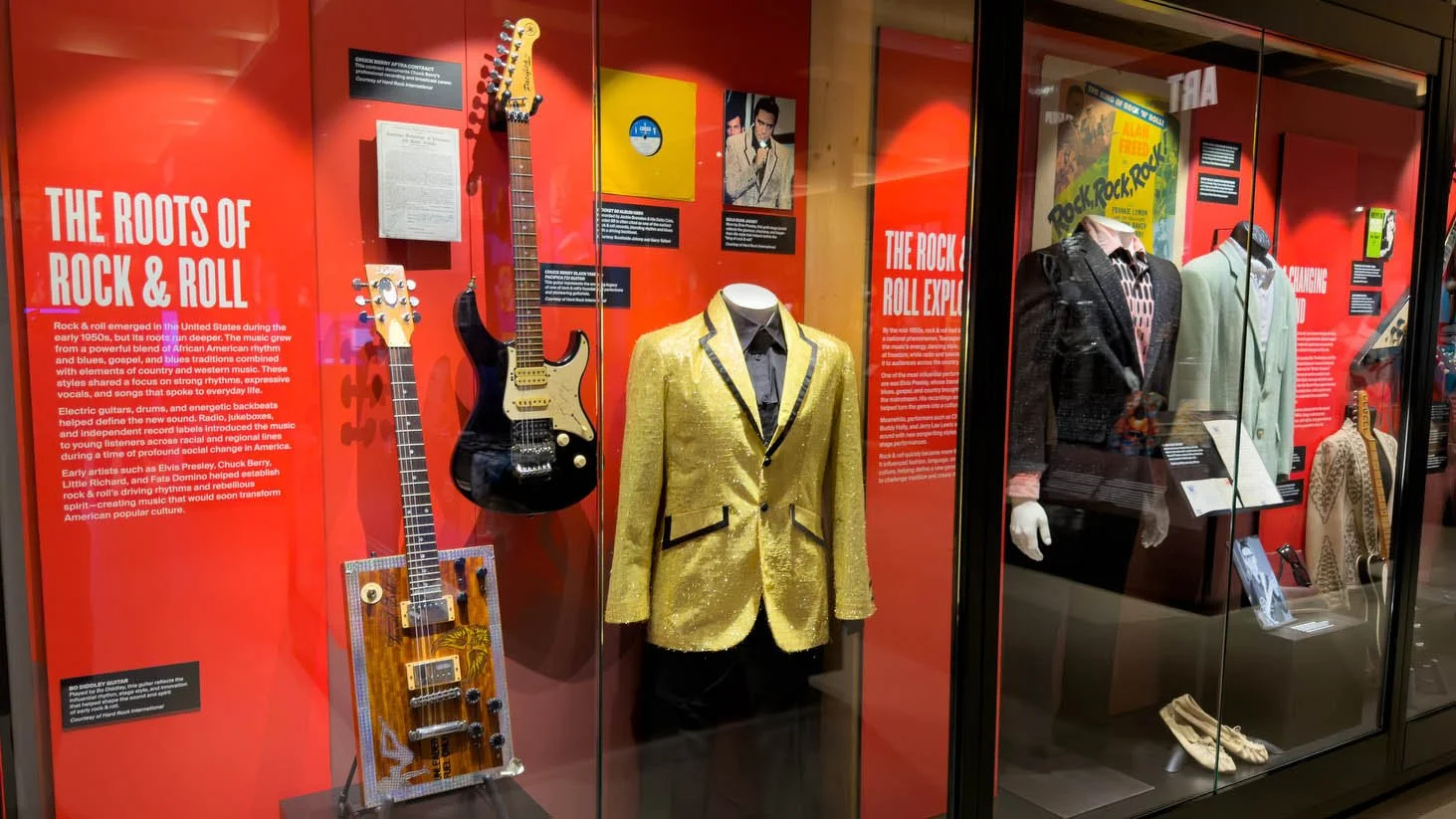
Bo Diddley's guitar, Chuck Berry's guitar, and Elvis Presley's gold jacket.
The bottom floor includes a gallery of artifacts from across the history of American music. The collection is staggering.
In one case alone, you will find Bo Diddley's guitar, Chuck Berry's guitar, and Elvis Presley's gold jacket. In another, Bob Dylan's Telecaster sits alongside Sly Stone's jacket, Jimi Hendrix's guitar and suede jacket, and Duane Allman's guitar with a Jim Morrison jacket. All in one case.
The clothing displays are extraordinary. Whitney Houston, Aretha Franklin, Al Green, Madonna, Ray Charles, George Clinton, Frank Sinatra, Leonard Bernstein. All represented. Handwritten lyrics from Chuck D, Tupac Shakur, and Smokey Robinson are on the display also.
The main gallery also has listening stations where you can sample different genres of music.
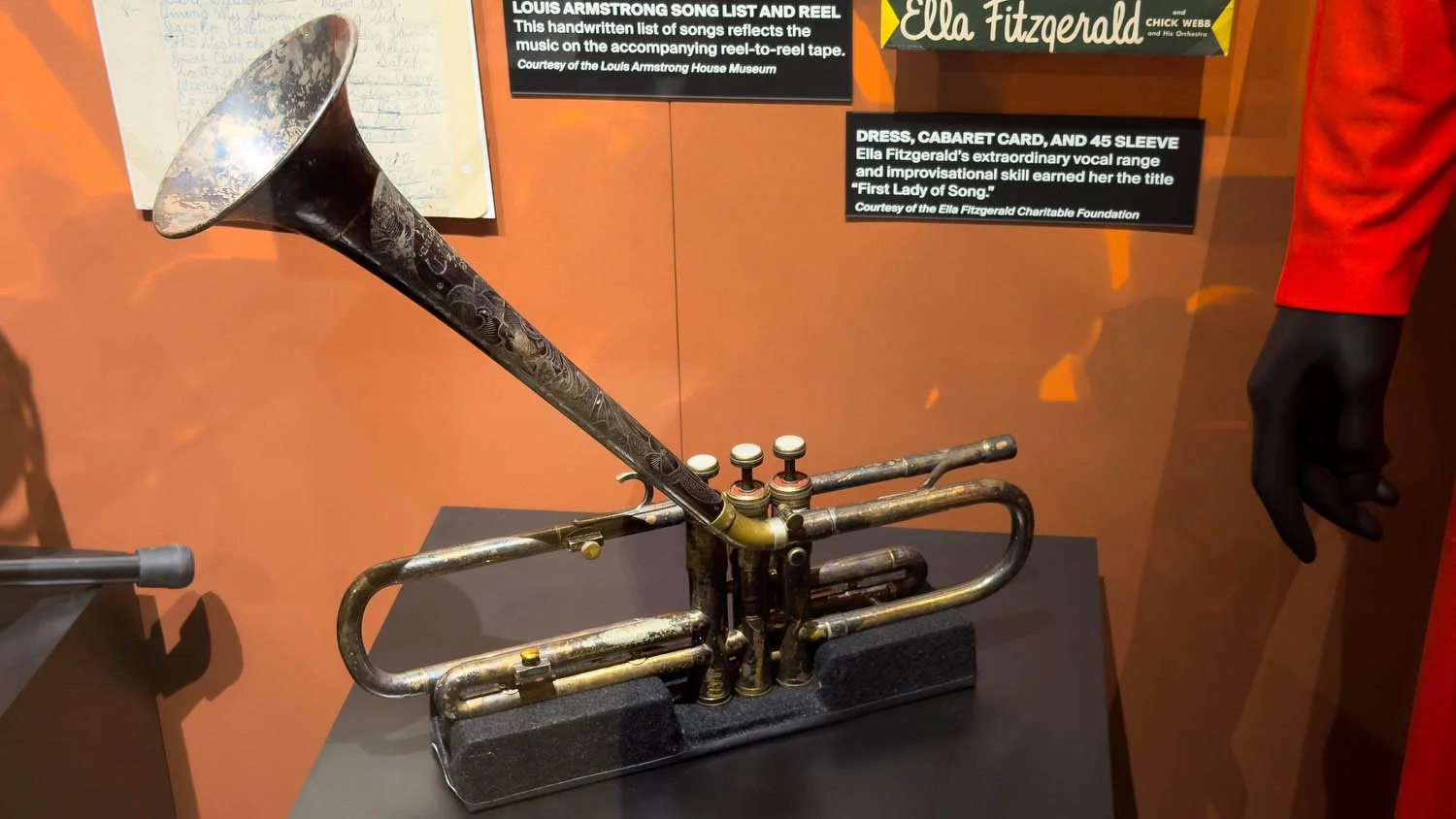
A Dizzy Gillespie trumpet
The Protest Song Gallery
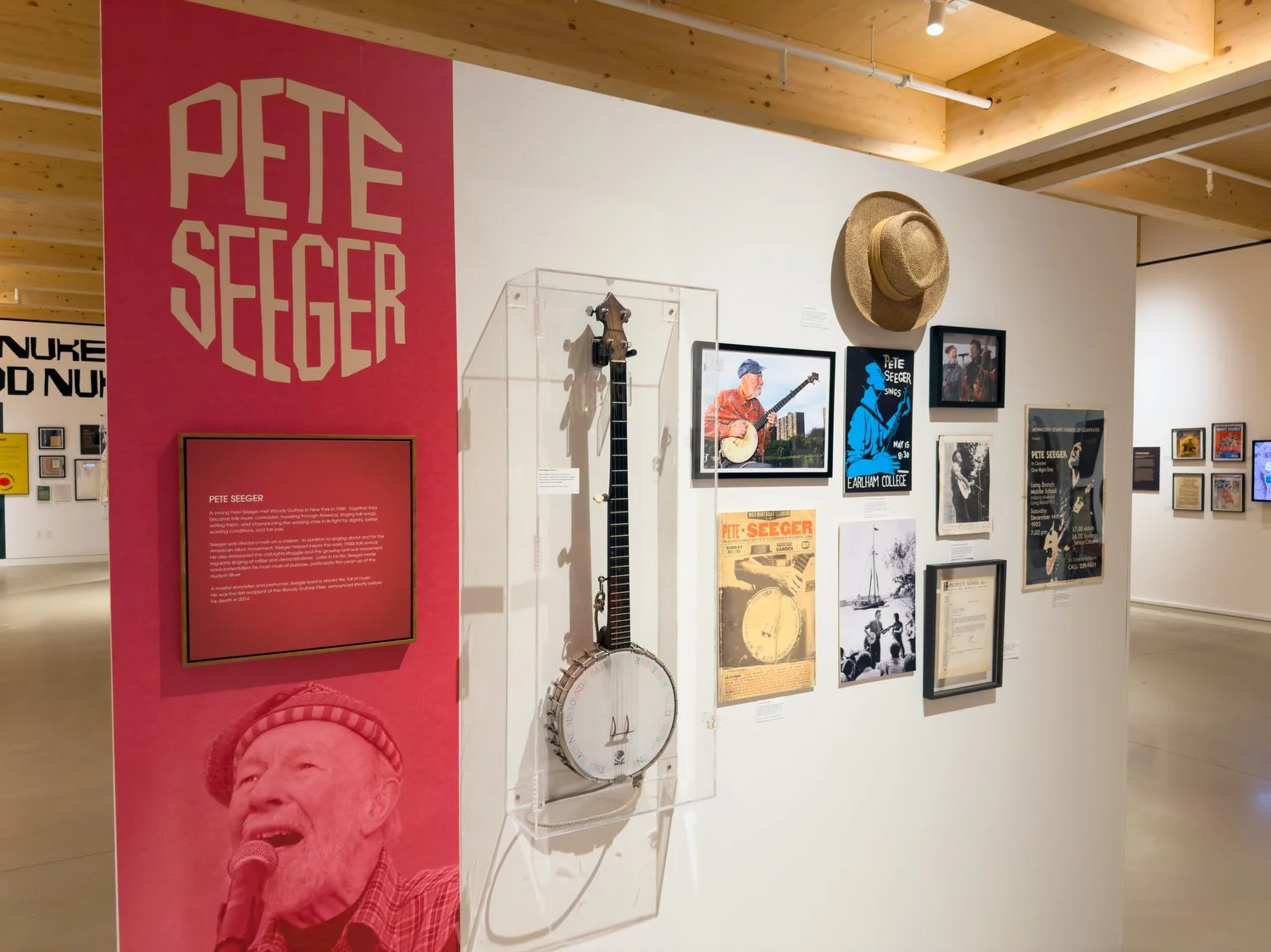
Pete Seeger guitar on display
The first floor also houses a rotating special exhibitions gallery. On our visit, the exhibit traced American protest songs from the Revolutionary War to the present day. It follows the origins of "Yankee Doodle" from the 1600s through James Cagney's version, covers plantation-era music, documents the LGBTQ rights movement through a Village People costume display, and ends with very recent material.
Woody Guthrie gets a full section, including his guitar and handwritten lyrics. The exhibit calls him the godfather of the American protest song.
The exhibit comes right up to today’s headlines with a section on the ICE protests in Minneapolis. The display includes handwritten lyrics by Bruce for "Streets of Minneapolis." There is also handwritten lyrics from Nils Lofgren for his song "No Kings, No Hate, No Fear." Debbie has always said Nils is her favorite E Street Band member. We were even lucky enough to meet him once. Seeing his handwritten words behind glass was not something either of us expected.
If you care about music and politics, this section alone is worth the drive.
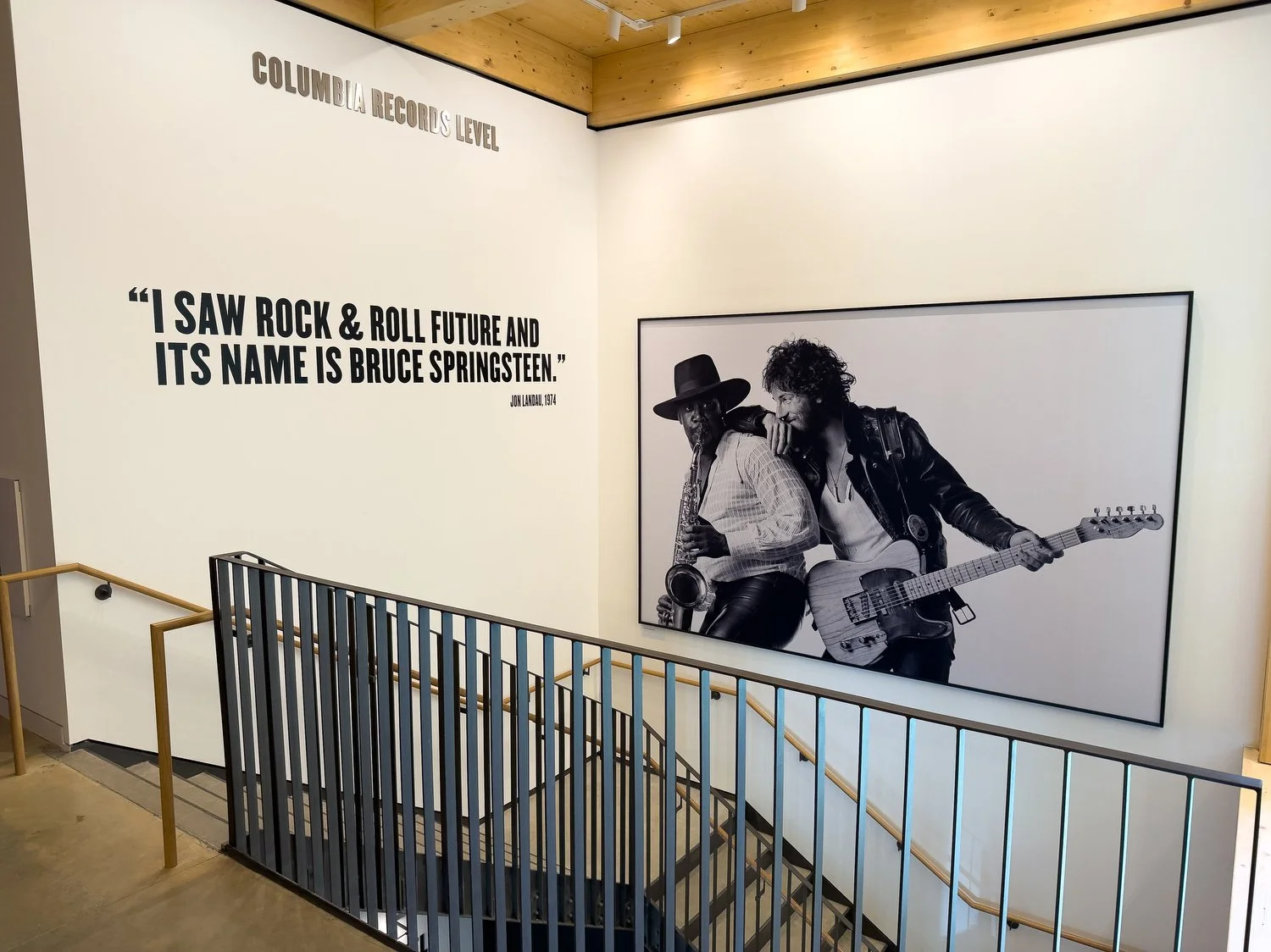
Walking upstairs to the Springsteen section on the second floor.
The Second Floor: The Bruce Springsteen Story
The Springsteen galleries upstairs are arranged across several rooms, each with its own focus. The spaces feel intimate. You feel surrounded by the story, not just walking past it.
The Photography Room
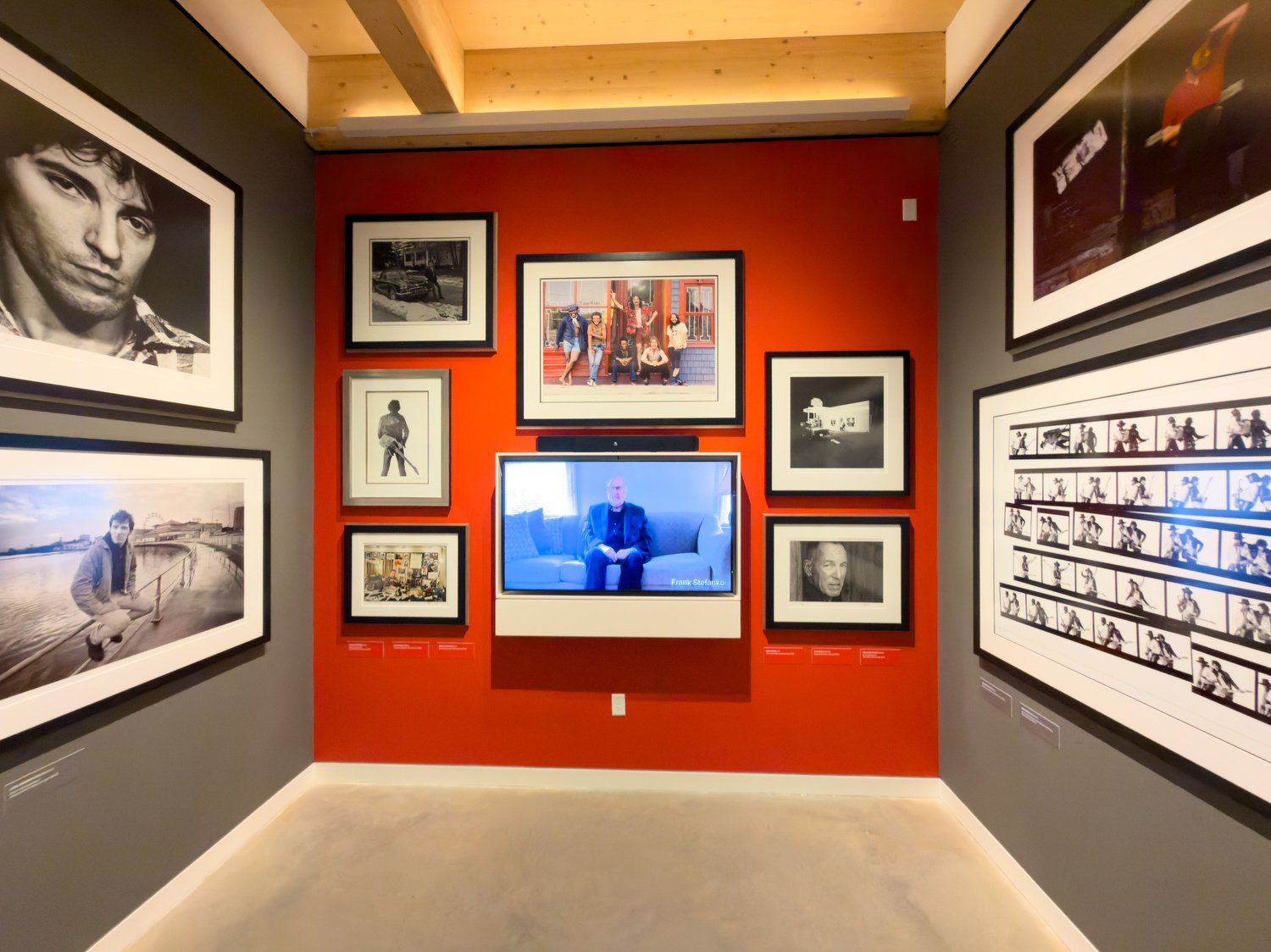
Video interviews in the photography room.
As a professional photographer, this room was a natural draw for me. Video interviews feature some of the most important photographers in Springsteen's career. Eric Meola talks about shooting the Born to Run cover. Frank Stefanko recalls the 1978 photo shoot at his home. They still work together today. Pam Springsteen shares how she approaches photographing her brother. Danny Clinch speaks about Bruce's creativity.
If you want to see more of Danny Clinch's work after your visit, his Transparent Clinch Gallery in Asbury Park is a short drive away.
The Education of Bruce Springsteen
One room traces Bruce's early years, from Freehold High School to Ocean County College. The focus is the books that shaped him, all drawn from his personal collection. We spotted "Roadside New Jersey" by my former Star-Ledger colleague Pete Genovese on the shelf. A fun moment for us.
The Main Exhibit
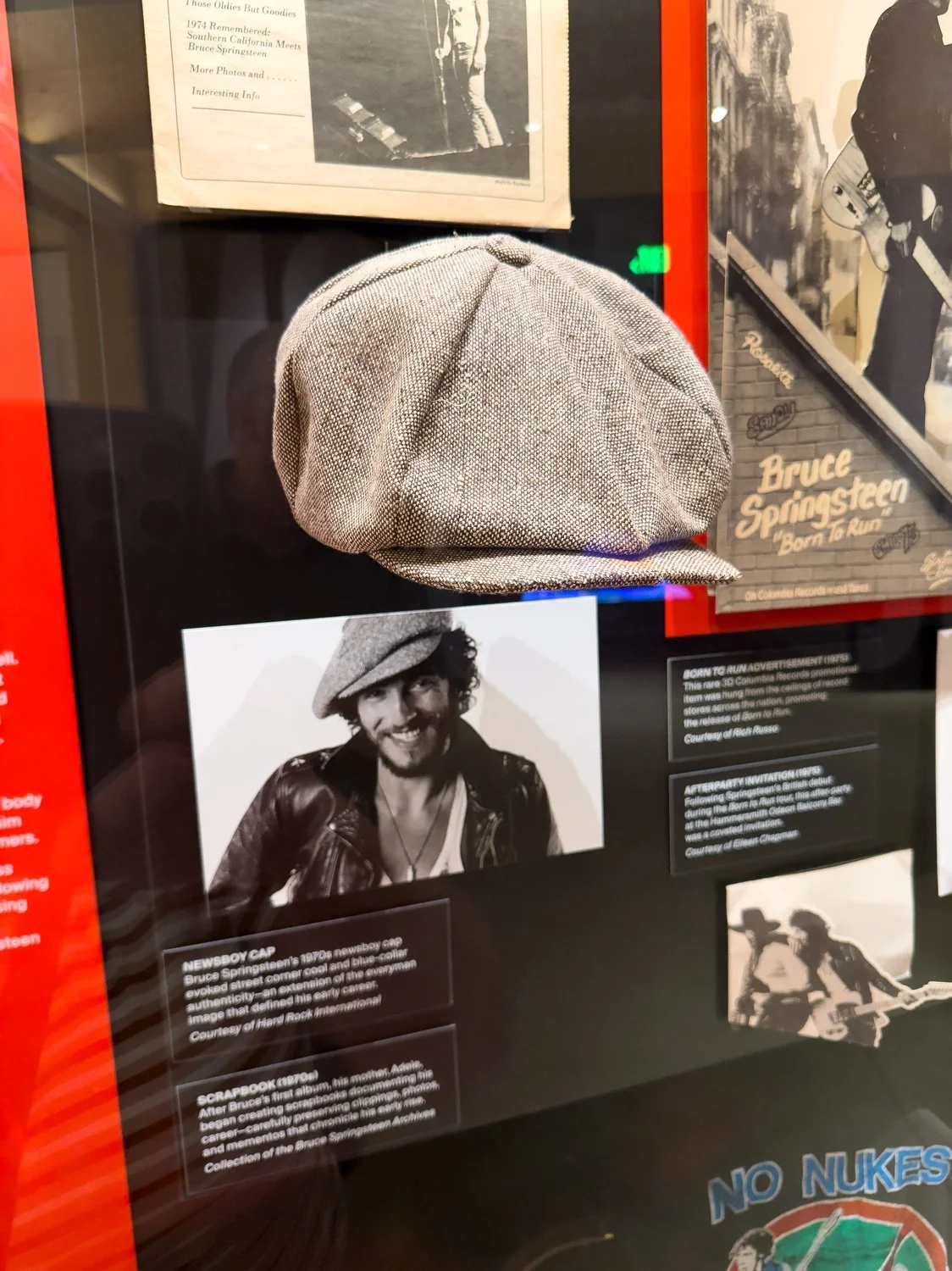
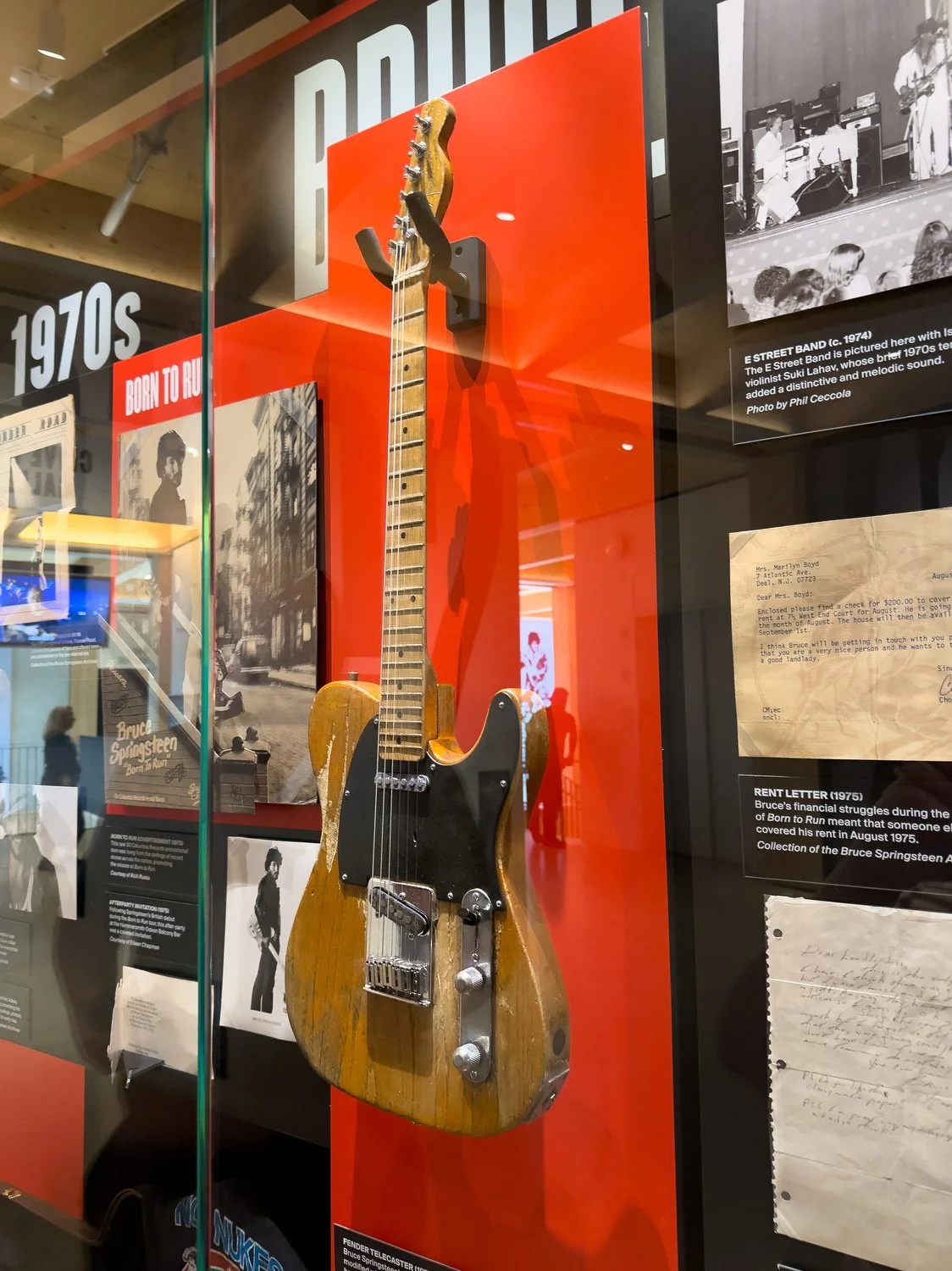
The centerpiece of the Springsteen floor is the iconic newsboy cap and his well-worn Fender Telecaster, the same guitar he plays to this day. The wear on that guitar tells its own story.
There is also an interactive New Jersey map tracing every location mentioned in a Bruce Springsteen song. It’s fun to see all the spots that make appearances in Bruce songs.
The Concert Gallery
The James F. Allen Gallery is set up like a concert hall, with a massive full-wall projection of Bruce performing live. The walls are decorated by a huge mural of a stadium crowd cheering by photographer Danny Clinch.
Play Along With the Band
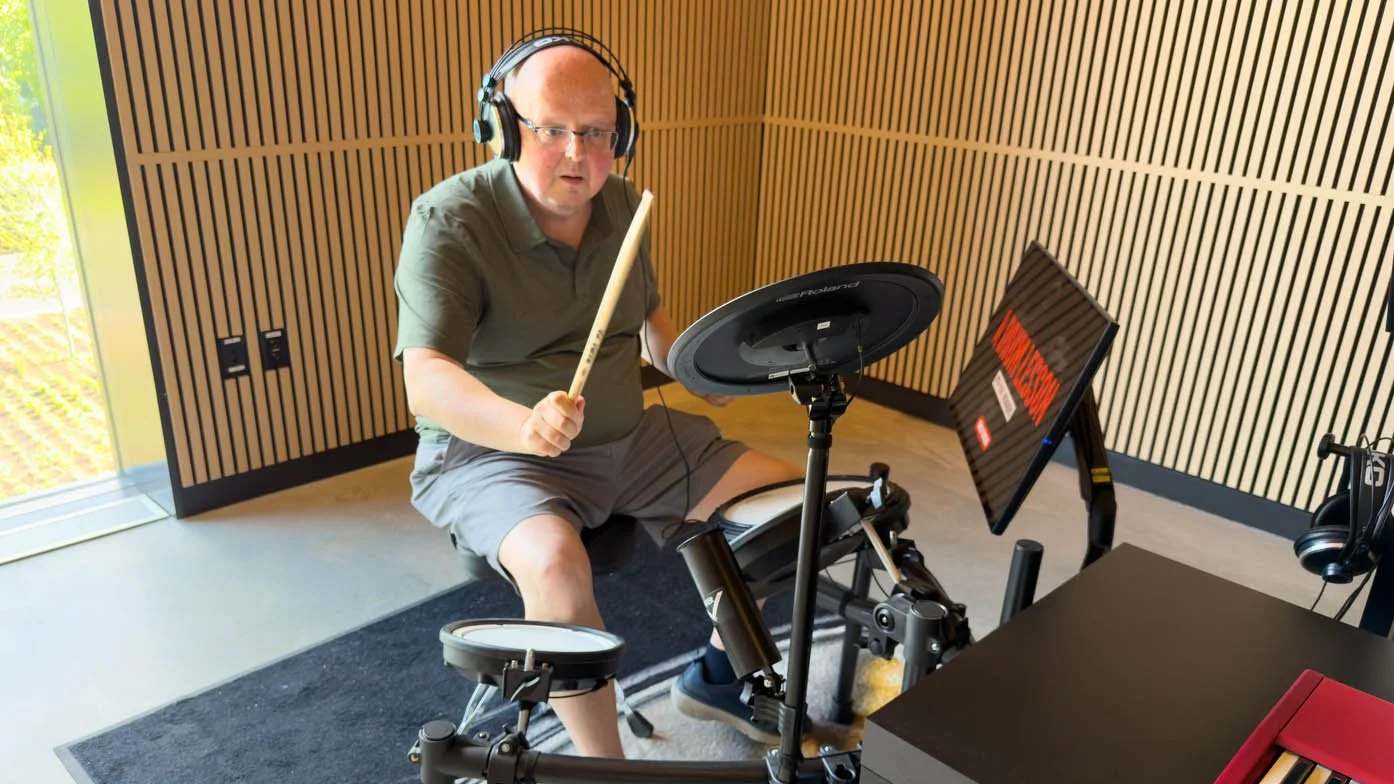
John plays drums thanks to Max Weinberg’s instructions.
One of our favorite sections lets you sit in with the E Street Band.
Roy Bittan teaches you to play "Born in the U.S.A." on a keyboard. Max Weinberg walks you through the drum parts. I put on the headphones and played along with Roy and Max. I’m sure I sounded terrible but it was a lot of fun.
Stand at the bass position and listen to Garry Tallent. Then move through Stevie Van Zandt, Bruce, and Nils Lofgren, in the same order they stand on stage. Touch the buttons on the guitar to move through each video.
We though this room was a great surprise and a lot of fun.
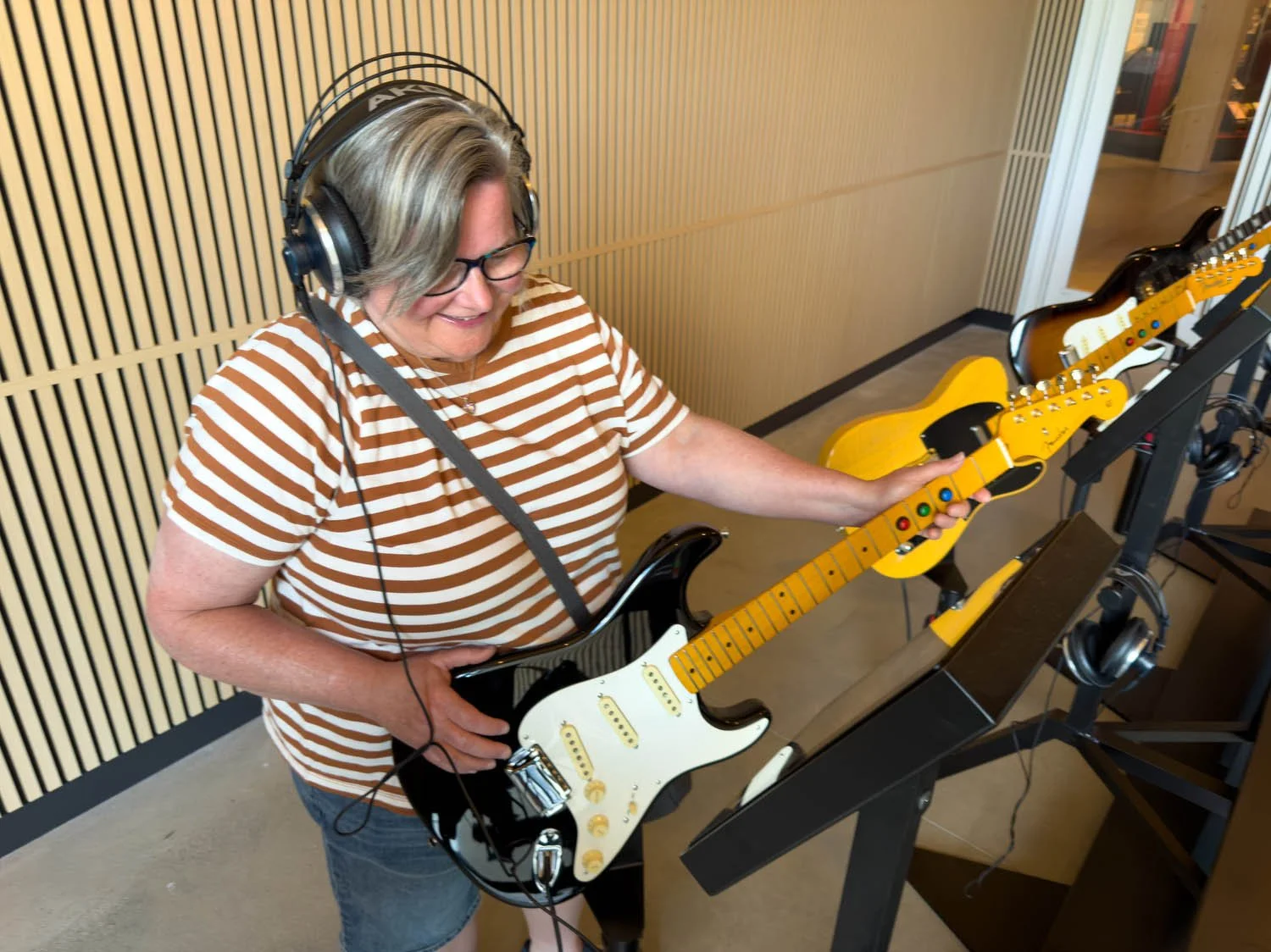
Debbie takes up the position of Nils Lofgren on the guitar.
📬 Join Hundreds of Empty Nest Explorers
We send one email a month with honest travel tips from two people who have actually been there. No spam, no clutter.
Yes, I'm InThe Wardrobe Wall and Early Career
One entire wall displays clothing worn by E Street Band members going back to the beginning. It is a genuine history of the band told through what they wore on stage. Early concert posters near the staircase trace Bruce's career all the way back to his days with The Castiles.
The room devoted to Bruce's songwriting includes the famous jeans, white shirt, and red hat from the Born in the U.S.A. album cover. Seeing them in person hits harder than you expect.
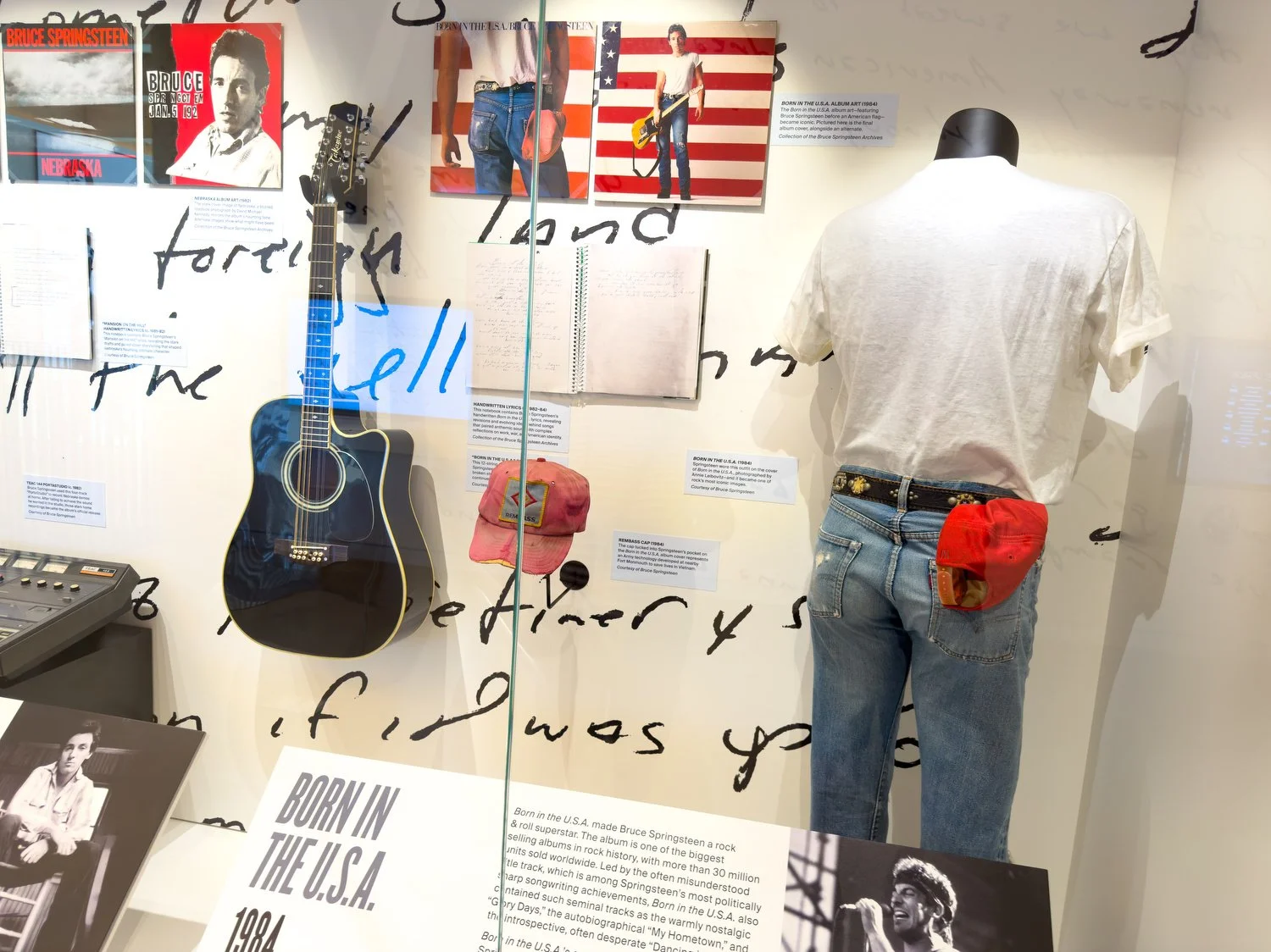
Bruce’s wardrobe from the iconic Born in the USA album cover.
While You Are in the Area: Head to Asbury Park
The center is about a ten-minute drive from Asbury Park, and the two make a perfect pairing for a full day out.
If you know Bruce Springsteen's music, you already know Asbury Park. It is where he came up, where The Stone Pony sits. Walking those streets after a visit to the center gives everything a little extra weight.
Beyond the Springsteen connection, Asbury Park is one of the best towns on the Jersey Shore full stop. Great food, a lively boardwalk, fantastic music, and a vibe unlike anywhere else on the coast.
We have written a full guide to everything worth doing there. Check it out:Asbury Park: The Coolest Shore Town in New Jersey.
And while you are there, stop into the Transparent Clinch Gallery. Danny Clinch's photography is on permanent display, including some iconic Springsteen images. You will recognize several from the museum.
Is the Bruce Springsteen Center for American Music Worth It?
Yes. Absolutely yes. And that is true whether you are a lifelong fan or someone who just loves music.
Adults pay $22, seniors $20, youth $16, and children 6 and under get in free. Plan on spending two to three hours, more if you are the type who reads every display card.
We went in as fans. We came out even more impressed by the care and humility that went into this place. Bruce could have built a monument to himself. Instead, he helped build something that puts American music first and invites him in as one part of that story.
That feels exactly right.
Fine Art Travel Prints by The Empty Nest Explorers
John and Debbie photograph the world's most iconic destinations. Available as fine art prints, framed prints, and ready-to-hang metal prints.
Browse the Print StoreFrequently Asked Questions
Do I need to buy tickets in advance?
We recommend it. Tickets are available at springsteencenter.org. The center just opened and interest is high. Buying ahead saves you the worry of showing up and finding a sold-out session.
How long should I plan to spend there?
Two to three hours is a good estimate for most visitors. Give yourself more time if you are the type who reads every display card and watches every video. We had 2pm tickets and were still there when they nicely kicked us out at the 5pm closing time.
Is it worth it if I am not a die-hard Springsteen fan?
Yes. The first floor alone covers the full sweep of American music and is a legitimate museum experience for any music lover. The protest song exhibit and the artifact galleries have something for everyone.
Is the center good for kids?
The interactive sections are genuinely fun for older kids and teenagers. The play-along instruments with Roy Bittan and Max Weinberg were a hit with younger visitors we saw there. Children 6 and under get in free.
Is there parking?
Yes. There is a large lot directly outside the building. No problem at all.
Can I combine it with other nearby attractions?
Asbury Park is about ten minutes away and makes a great pairing for a full day out. See our full guide linked above. The Danny Clinch gallery in Asbury Park is also worth a stop after your visit to the center.
Have you visited the Bruce Springsteen Center for American Music? We would love to hear about your experience in the comments below.
Other great things to do in New Jersey:
Blog post:Exploring Sandy Hook
Blog post:Visiting Asbury Park
Blog post: Visiting Princeton
Blog post: Visiting Cape May
About the Authors

|
John and Debbie O'Boyle are the team behind The Empty Nest Explorers. John is a professional photographer whose work has been published by The New York Times, NBC News, and Getty Images. He is a member of the American Society of Media Photographers, has been part of a Pulitzer Prize-winning team, and has received two New York Emmy nominations. Debbie is a writer with 30+ years of professional photography experience, formerly with The Star-Ledger and NJ.com. Together, they create in-depth travel guides for couples and empty-nest travelers who want to make the most of every destination. |
Other New Jersey Blog Posts:



Debbie and I are huge Springsteen fans, so we had a feeling we would enjoy the Bruce Springsteen Center for American Music. We just had no idea how much.
Here is everything you need to know before you visit.