
Visiting the Frick Collection in 2026: What You Need to Know
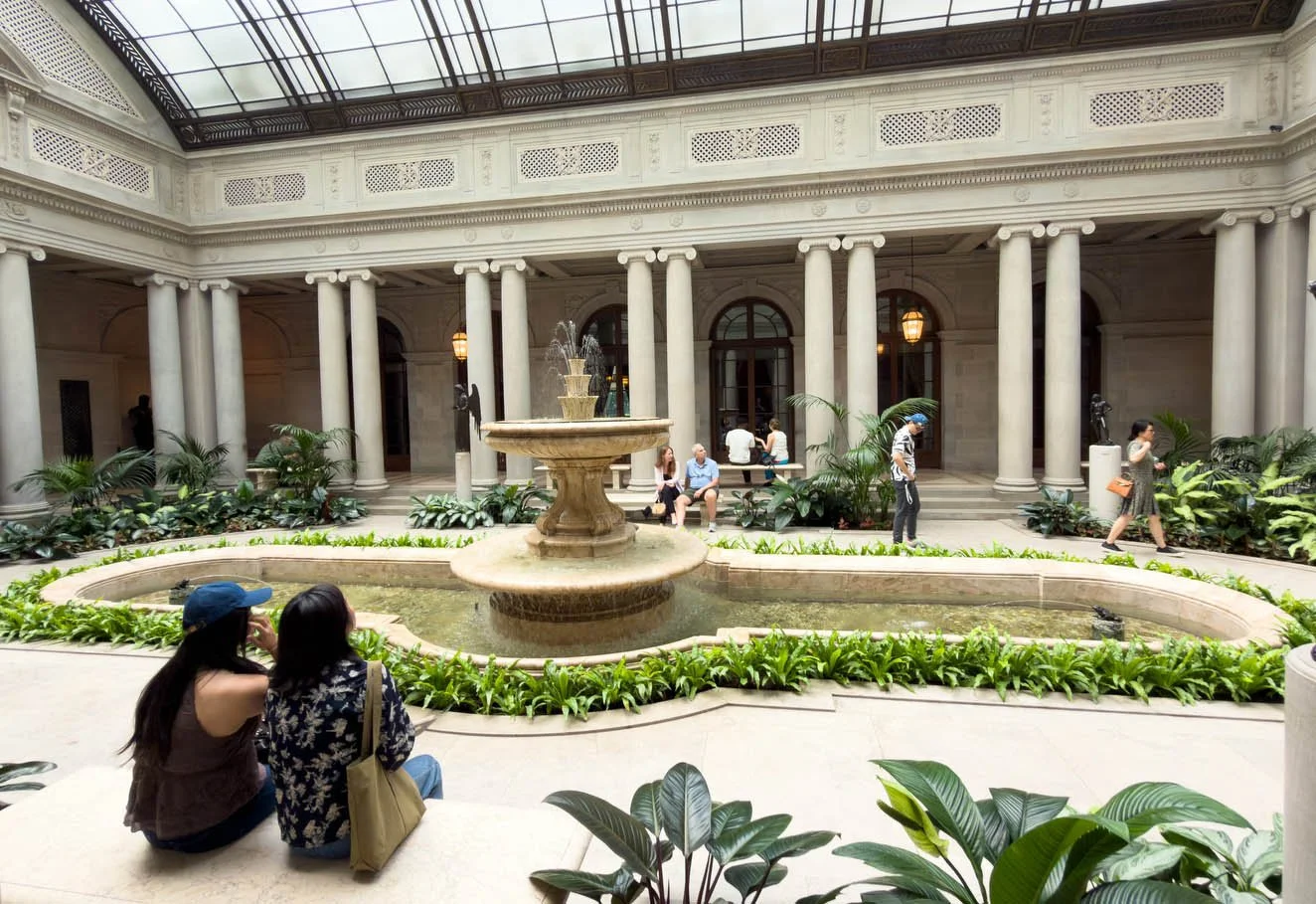
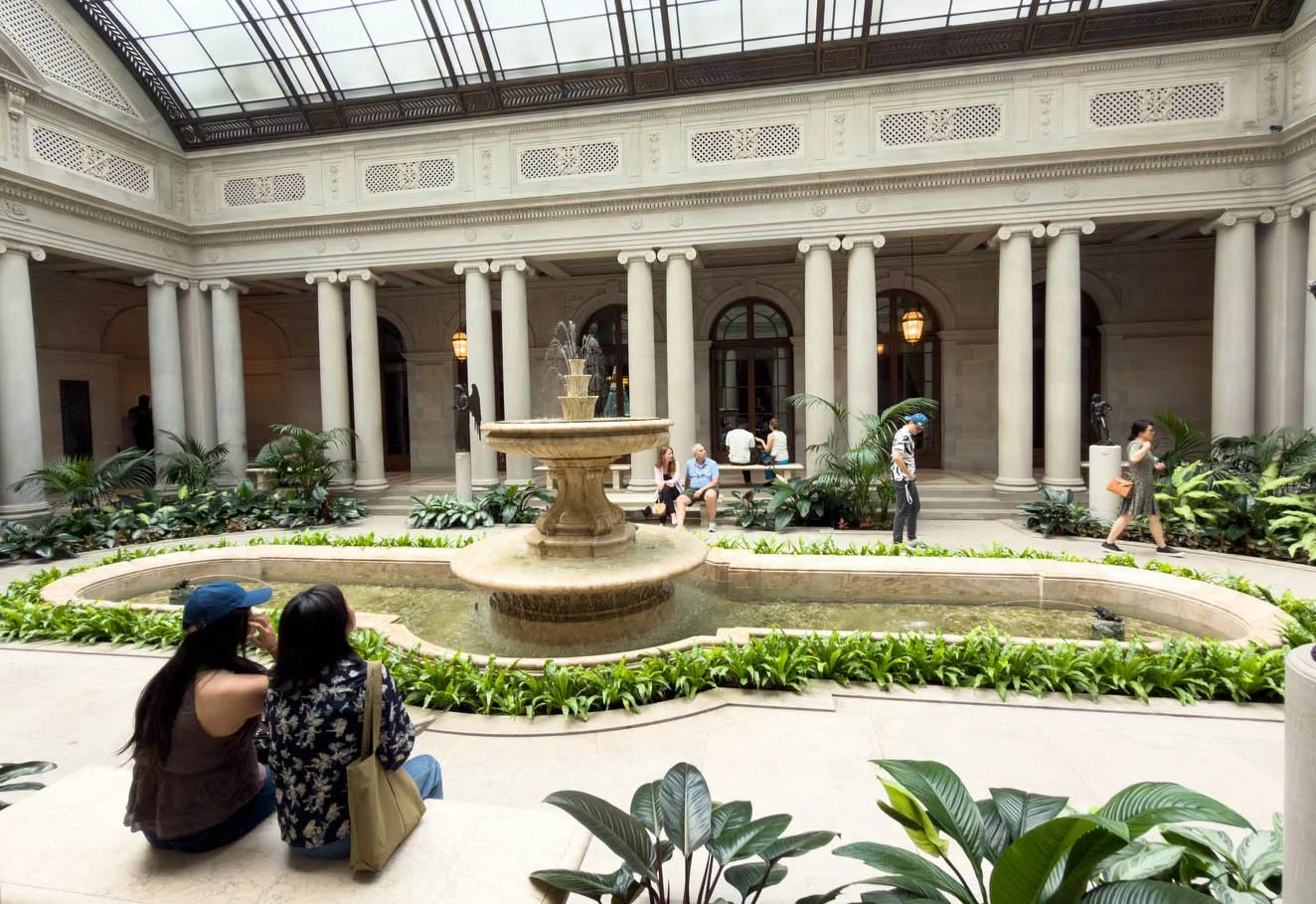
Sitting in the Garden Court at the Frick.
I received a Frick Collection membership last Christmas. I had walked past the building on Fifth Avenue more times than I can count. Somehow I had never gone in. This spring I finally did, and the timing was perfect. The Frick recently reopened after a five-year, $220 million renovation.
A lot of the museum feels new now. The biggest change is upstairs. The second floor opened to the public for the very first time. More on that in a bit.
Children must be 10 or older. The Frick does not admit kids under 10, even with a ticket. If you are traveling with little ones, this one is best saved for another trip.
Photos are allowed in one room only. You can take pictures in the Garden Court. The rest of the galleries are no photos. That is why you will not see many exhibit shots in this post.
The Frick is different from most art museums. It is the former home of Henry Clay Frick, and it still feels like one. Instead of big halls, you move from room to room. Some are wallpapered like a real house. More than once it reminded us of the castles we saw in Scotland.
| Address | 1 East 70th Street, New York, NY 10021 |
| 2026 Admission | Adults $30, Seniors $22, Students $17, Ages 10–18 free |
| Hours | Wednesday through Monday, 10:30 a.m. to 5:30 p.m. |
| Closed | Tuesdays |
| Pay What You Wish | Wednesdays, 1:30 to 5:30 p.m. |
| Time Needed | About 2 hours |
| Nearest Subway | 6 train to 68th Street, then a short walk west |
| Photos | Garden Court only |
| Good to Know | Children must be age 10 or older |
A Quick Bit of History
Frick built this mansion between 1913 and 1914. It faces Central Park. He made his fortune in coke and steel, partnered for years with Andrew Carnegie.
When he died in 1919, he left the house and his art to the public. The instruction was simple. The home should someday become a museum.
The Frick Collection opened to visitors in 1935. The art has lived in these rooms ever since. That is what makes it feel so personal.
Start in the Garden Court
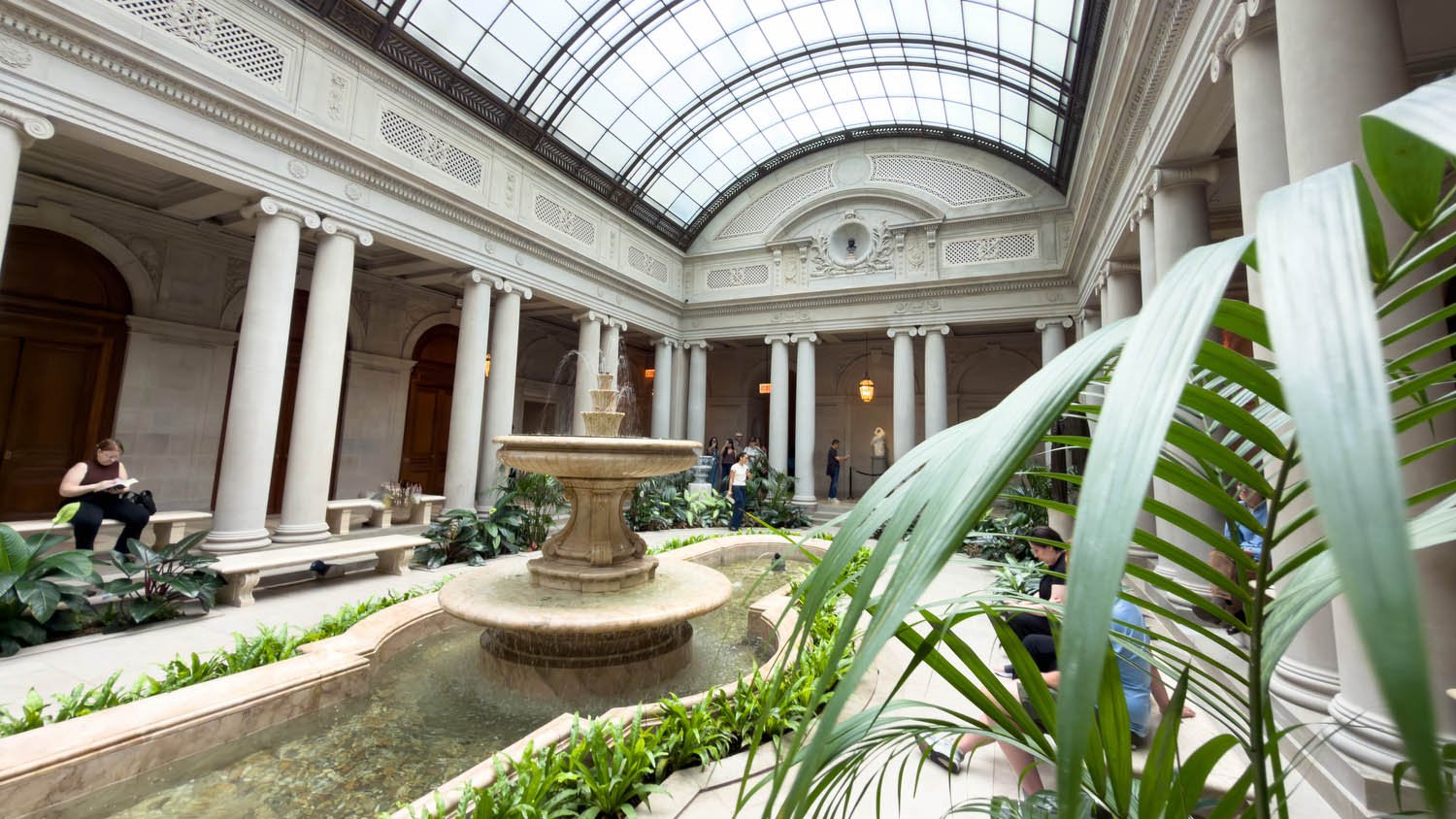
The Garden Court.
The Garden Court is the heart of the building. It sits indoors under a frosted skylight. Plants line a walkway around a fountain. Sculptures sit along the path.
Behind the big columns there is a second walkway with benches. It is a lovely place to just sit for a while.
Pro tip - This is the only room where photos are allowed. Everywhere else, cameras stay in your pocket.
Walking Through a Home
The rooms barely look like a museum at first. The Living Hall is set up like a living room, with a couch facing the fireplace. You can picture parties and gatherings filling the space.
The Library is exactly that, a library. Books fill the waist-high shelves. Artwork covers the upper half of every wall. A big painting of Henry Clay Frick hangs over the fireplace.
The art is lit from above. It makes the paintings jump off the walls. There is very little text on the walls, so grab the free digital guide. You scan the QR code on your receipt and it opens on your phone. so remember your earphones
The grand staircase is a showstopper. It is worth a slow walk up.
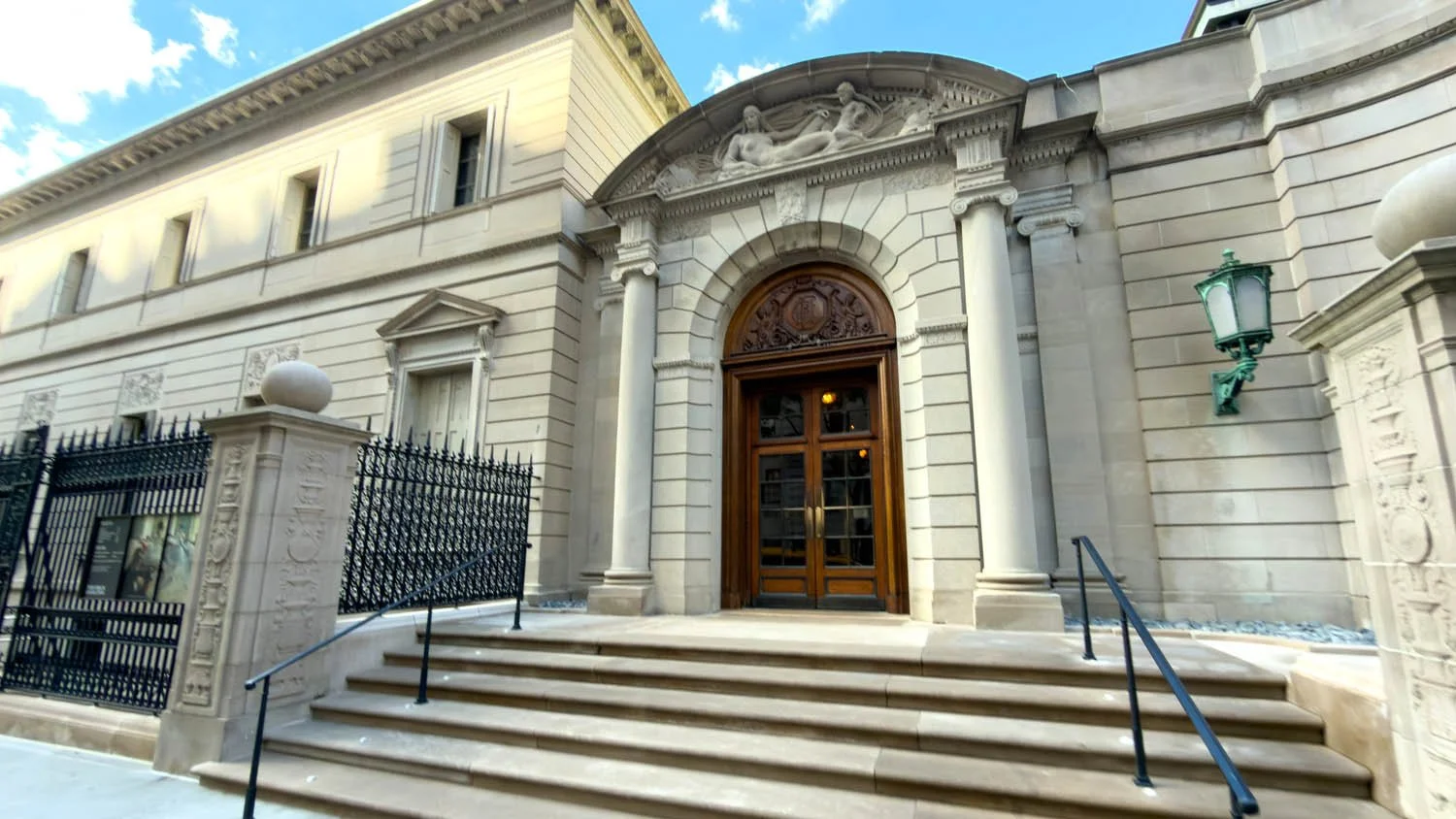
The entrance to the Frick Collection.
The George Washington Story
The Oval Room holds one of our favorite stops. There you will find Gilbert Stuart's 1795 portrait of George Washington.
For the 250th anniversary of the Declaration of Independence, it hangs here among four tall Whistler portraits.
The label explains that the painting hung at this site during World War 2. It is now back in the same spot for the anniversary.
The Portico Gallery
This one is unique. Vases, plates, and bowls sit on slim shelves that look almost too small to hold them. Each piece gets its own tall vertical display. We had not seen porcelain shown quite like this anywhere else.
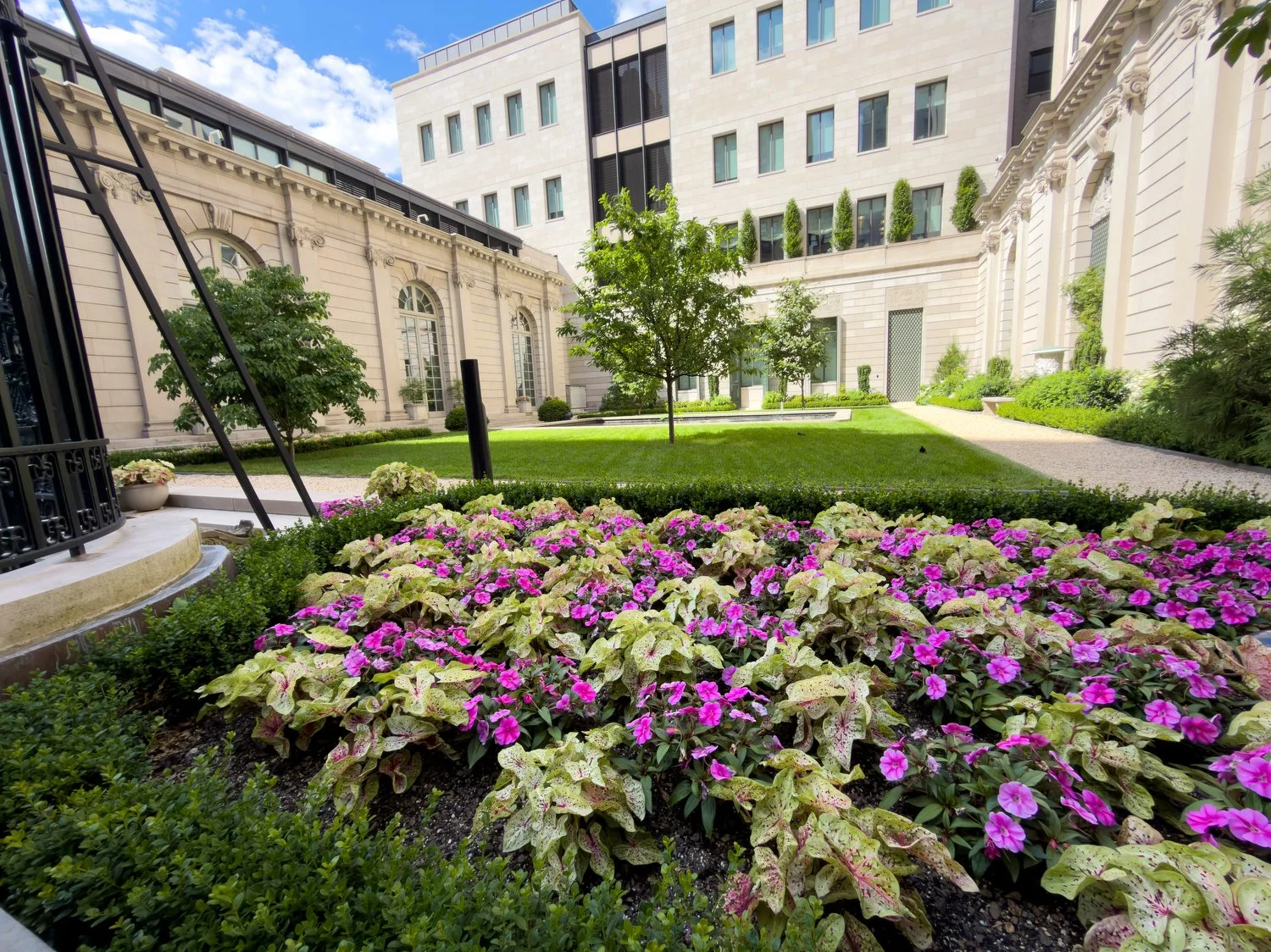
The 70th Street Garden at the Frick Collection.
Upstairs Is Brand New
Here is something most older guides will not mention. The second floor opened to the public for the first time in 2025. For decades these were the family's private rooms, then offices.
The upstairs rooms are smaller than downstairs. Many look out over Fifth Avenue and Central Park. Walking up that staircase, you really feel like you are in a home. Then you notice the giant mural running the length of the hallway ceiling, it reminds you this is no ordinary house.
The second floor takes a broader view than the first. Downstairs leans into paintings and sculpture. Upstairs adds clocks, medals, and more.
The commemorative medals room stood out to us. It traces the rise of portrait medals through the Renaissance and across Europe. The medals float inside glass frames. It is a great way to show them.
The clock collection is small but charming. It runs from tiny pocket watches to large desk clocks.
The art upstairs holds its own too. I was studying one painting when Debbie pointed out the one right behind me. It was a Monet. The piece by the door was a Degas. Not bad for a tiny room.
A few steps away is the Boucher Room. This one feels like stepping into a French palace. Painted panels run up the walls, with ornate furniture and colorful tableware.
The Cafe and the Shop
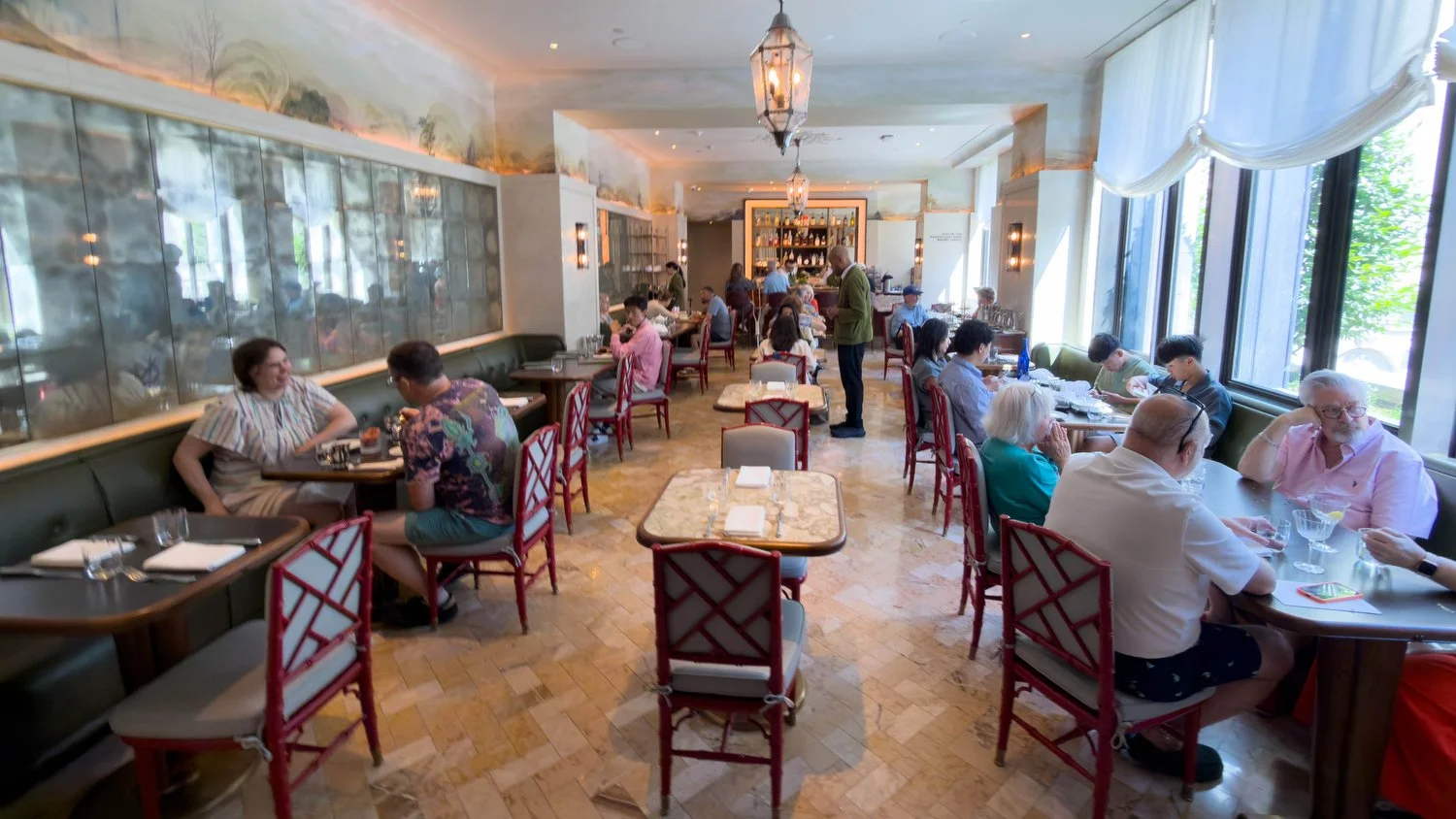
The Westmoreland cafe.
There is a full-service cafe upstairs called Westmoreland. The menu features upscale seasonal American fare by executive chef Skyllar Hughes.
A coffee bar is on a lower level if you just want a quick break.
We have never seen a line for a museum gift shop before. There was one here. We skipped the wait. From the doorway we spotted handbags, plates, and other nice pieces. Pricey, we are sure.
How to Get There
The Frick is at 1 East 70th Street, right on Fifth Avenue. The easiest route is the 6 train to 68th Street. From there it is a short walk west to Fifth, then up a couple of blocks. The M1, M2, M3, and M4 buses run nearby too.
There is no museum parking, and street parking is tough. If you drive, plan on a garage.
What Else Is Nearby

View of Billionaire’s Row from Central Park. Like this photo? See this and others on our Print Store.
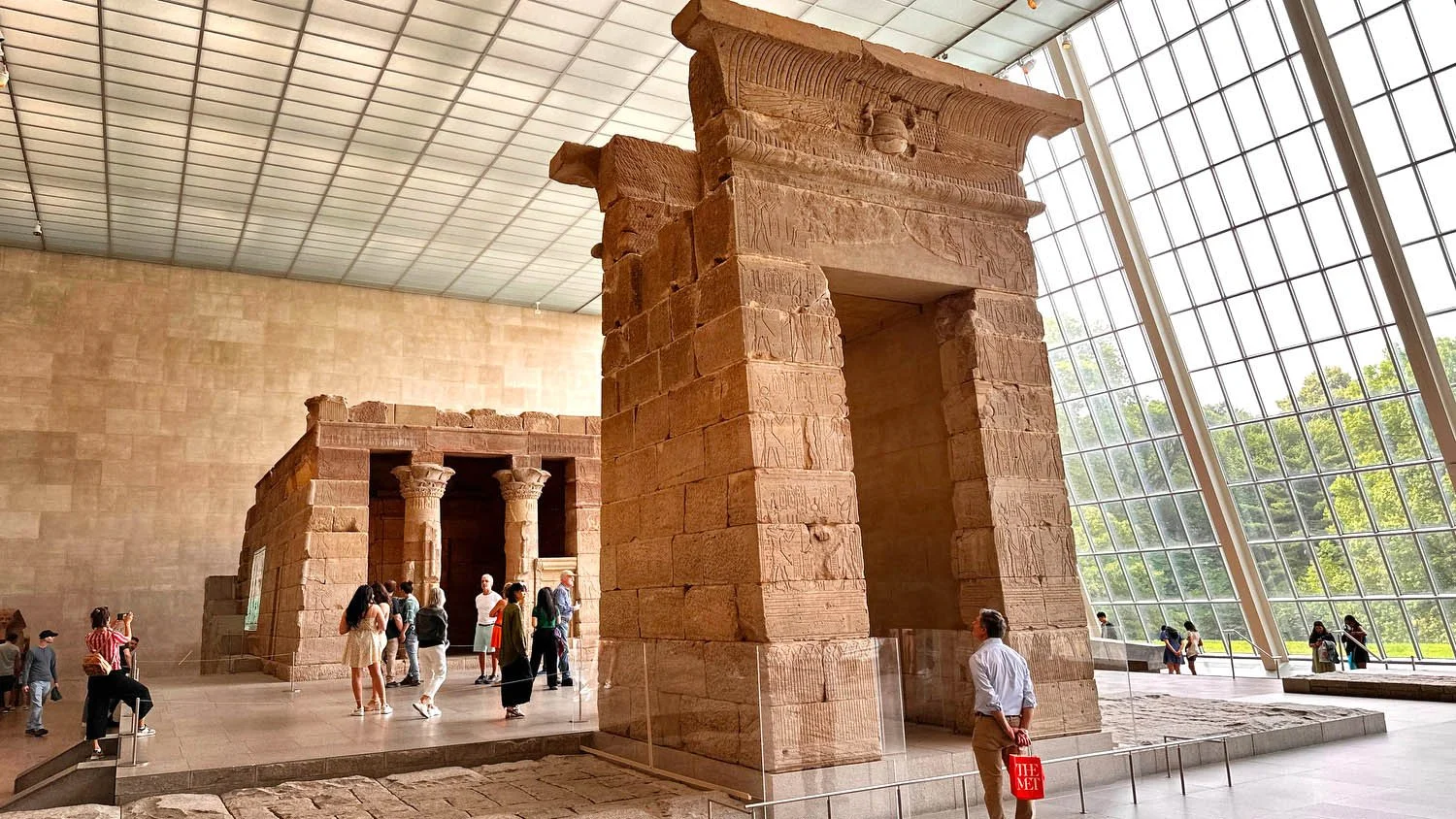
Temple of Dendur in the Metropolitan Museum.
Central Park sits right across Fifth Avenue. You can wander in before or after with no planning at all. Blog post - How to visit Central Park
The Metropolitan Museum of Art is about ten blocks north. The Met is world class. It can also feel huge fast. The Frick is the opposite kind of visit. Blog post - Visiting the Metropolitan Museum: all you need to know
A Few More Small NYC Museums We Love
New York is full of grand museums. Some of our favorite days have been at the smaller ones. They are calmer, and you can actually finish them.
If the Frick is your kind of place, you might enjoy these too (we have blog posts for each):
The Morgan Library and Museum, another collector's home turned museum. The Morgan Library and Museum, a hidden gem in New York City
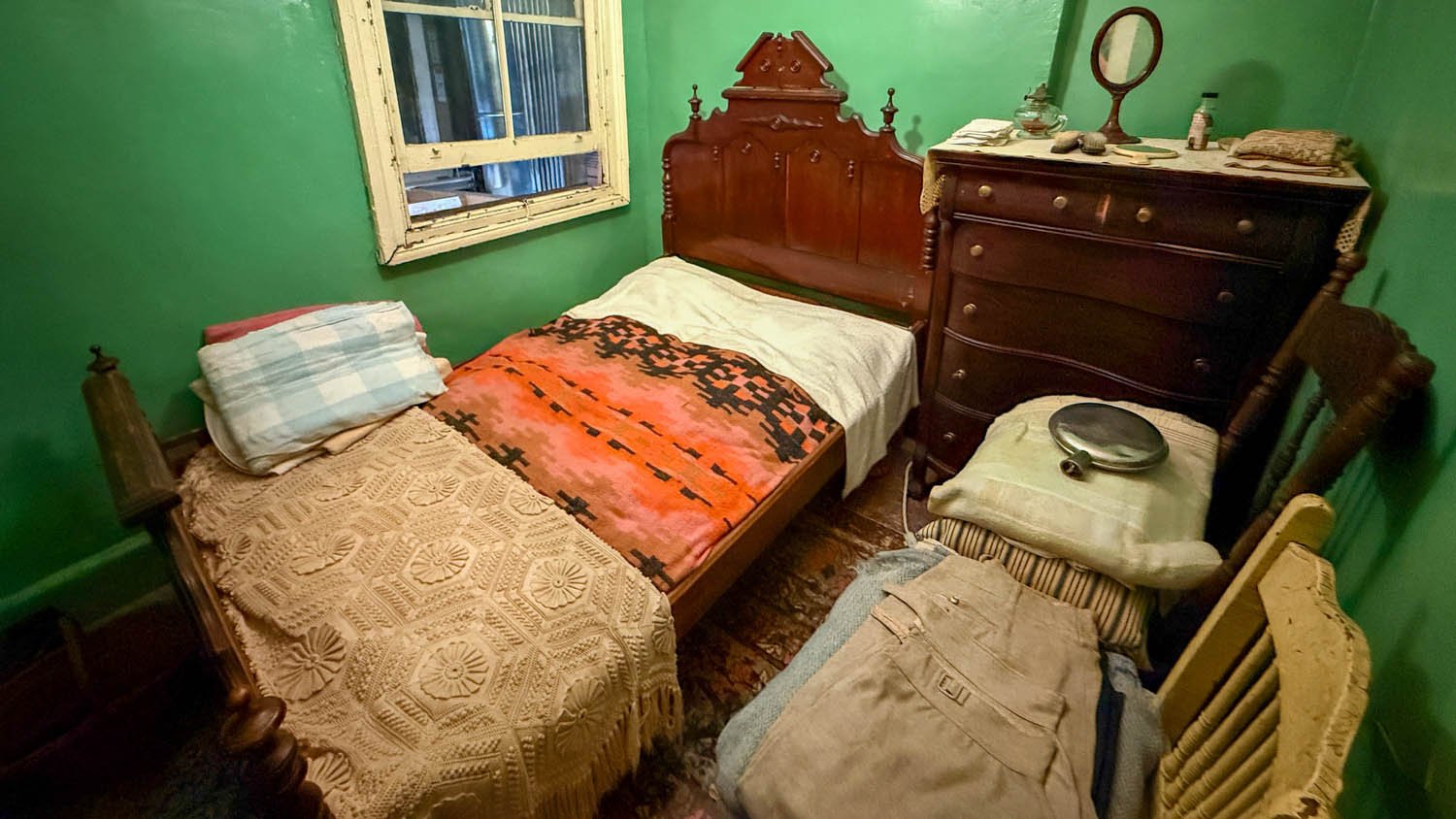
The Tenement Museum on the Lower East Side. Visiting the Tenement Museum, one of our favorite NYC museums
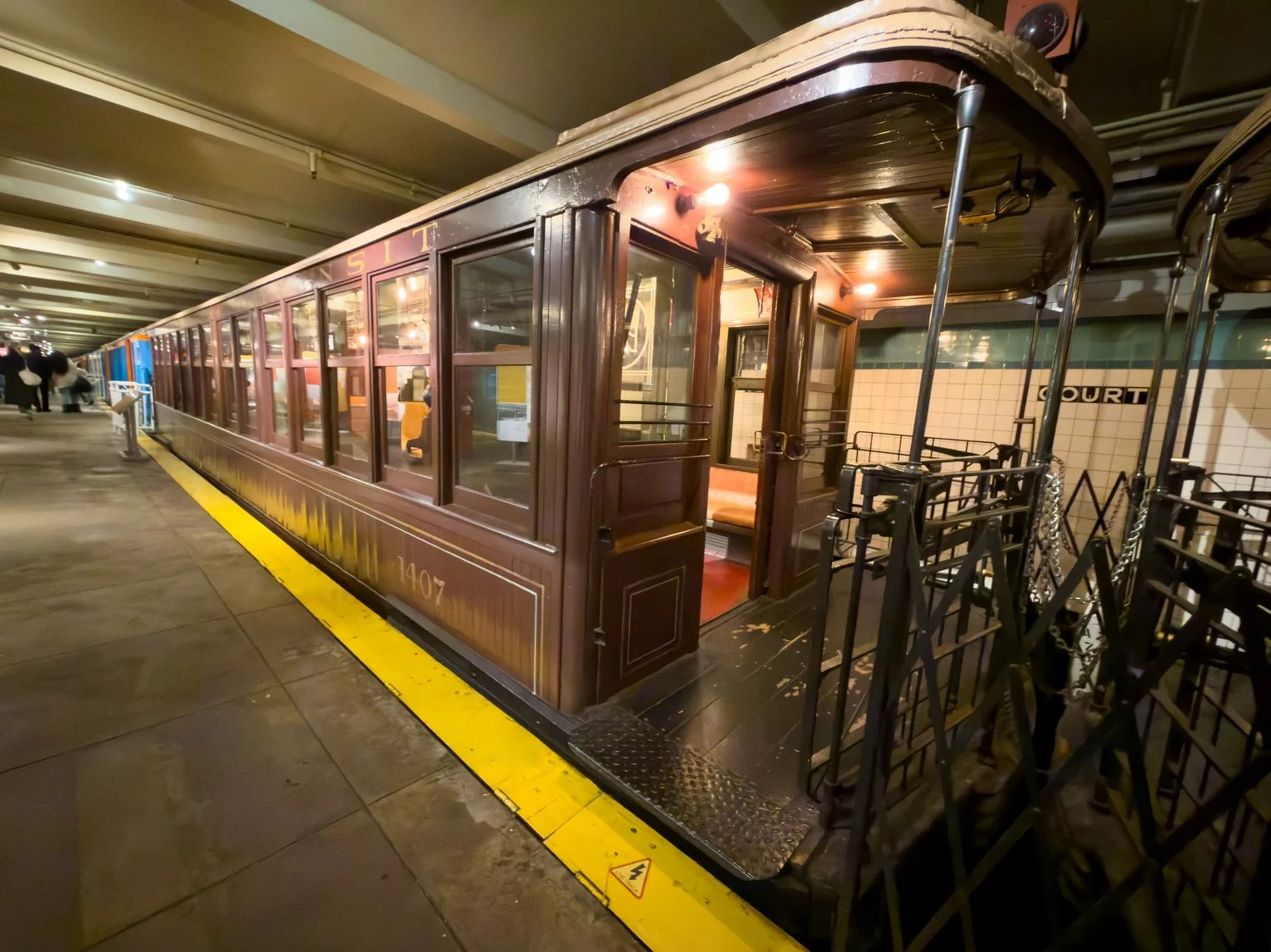
The New York Transit Museum in Brooklyn. The Ultimate Guide to the New York Transit Museum
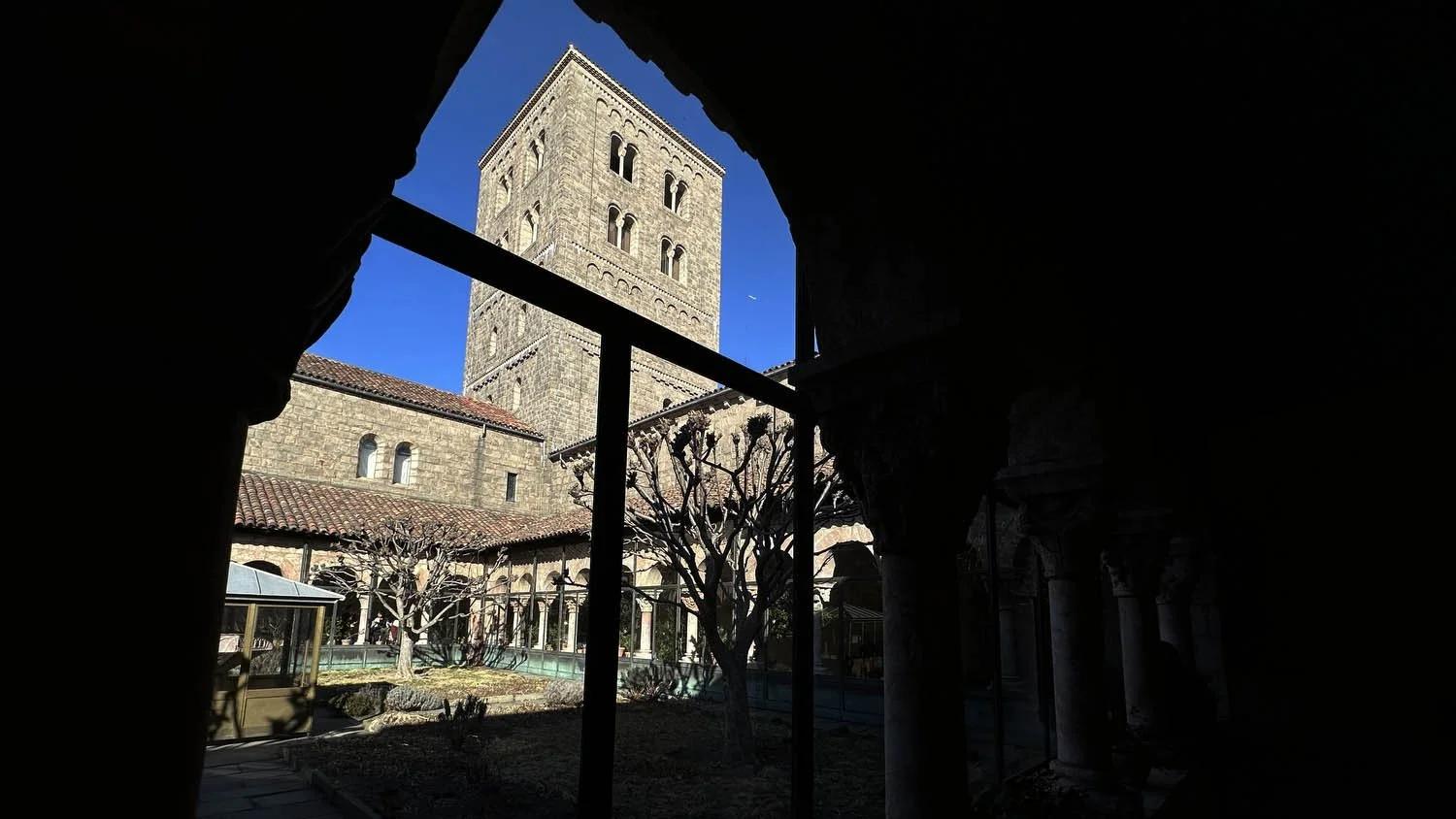
The Met Cloisters up in Fort Tryon Park. A Trip to The Met Cloisters: everything you need to know
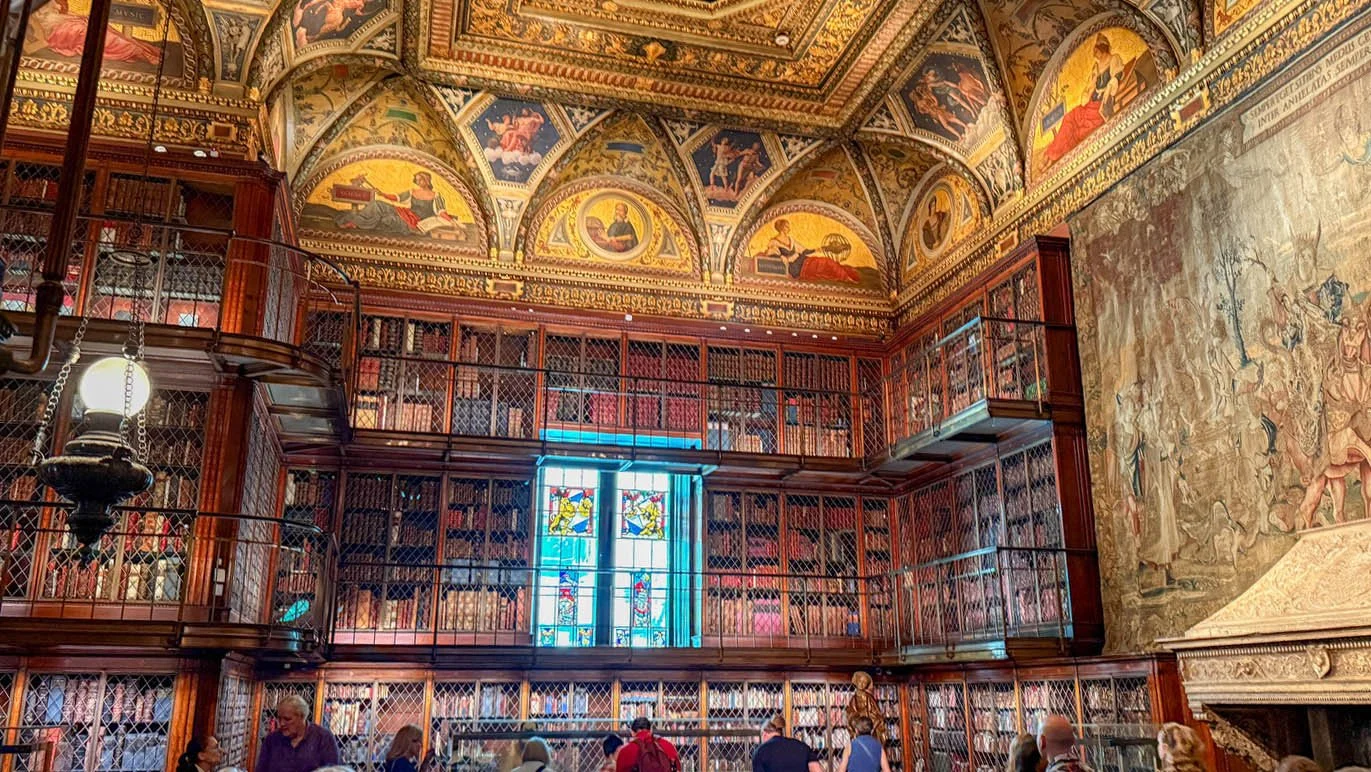
The Morgan Museum.
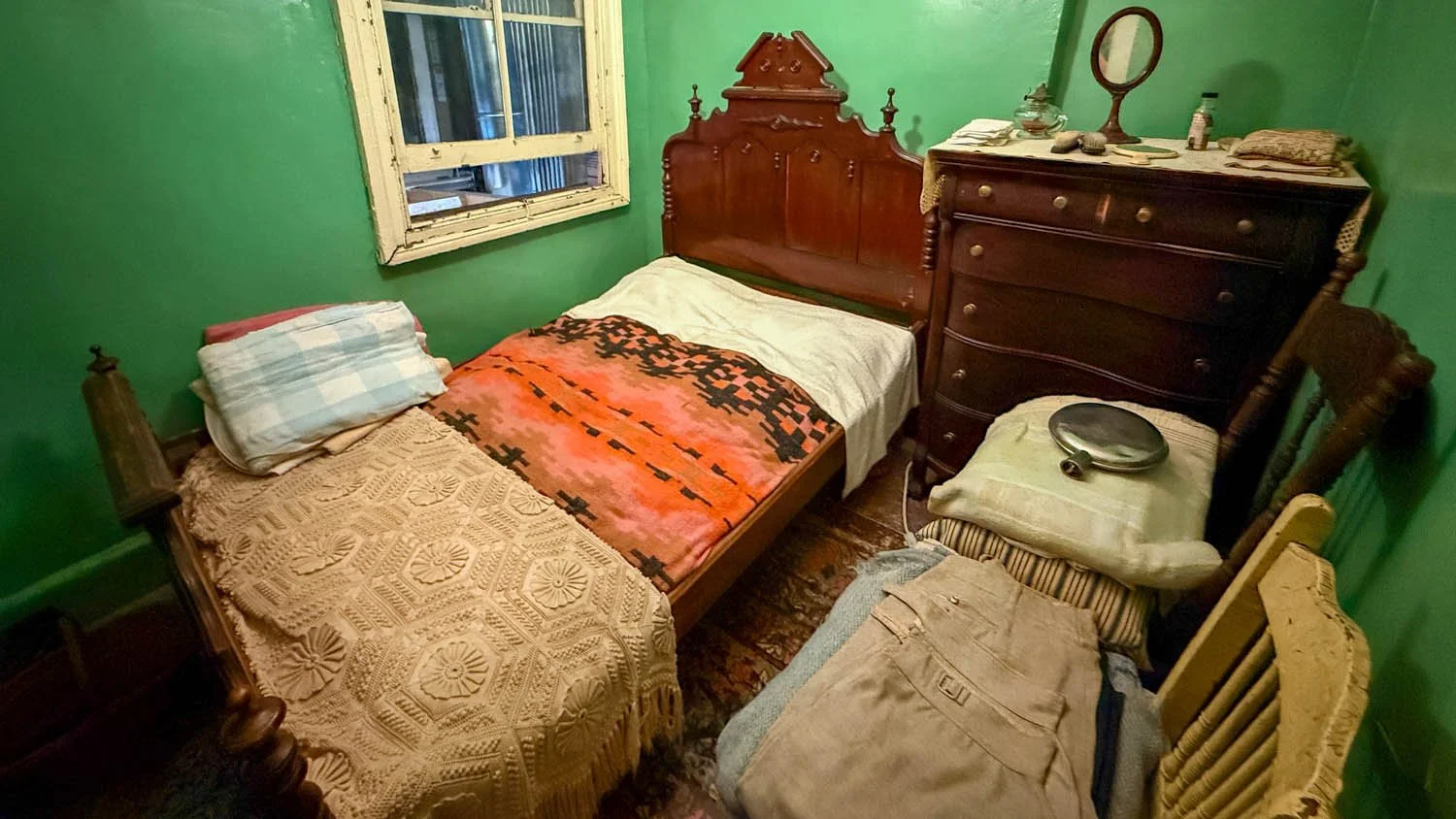
The Tenement Museum.
Is the Frick Worth It?
For us, yes. It took us about two hours, start to finish. Because it is small, the crowds stayed manageable. The visit never felt like a marathon.
You leave feeling like you visited someone's extraordinary home. Not many museums can do that.
Frequently Asked Questions
How long do you need at the Frick Collection?
Plan for about two hours. It is a smaller museum, so you can see it without rushing. If you love to linger over each room, give yourself a bit more.
Is the Frick Collection worth visiting?
We think so. The setting is the draw as much as the art. You walk through a real Gilded Age home filled with masterpieces. It is one of the calmest, most personal museum visits in the city.
Can you take photos inside the Frick?
Only in the Garden Court. The rest of the galleries are no photos. It helps keep the quiet, house-like feel.
How much does the Frick cost?
Adults are $30. Seniors are $22 and students are $17 with ID. Anyone aged 10 to 18 gets in free. There is also pay-what-you-wish admission on Wednesday afternoons.
Is the Frick good for kids?
Only children age 10 and older are admitted. If you are traveling with younger kids, this one is best saved for another trip.
What is the Frick known for?
Old Master and European paintings shown inside Henry Clay Frick's former mansion. Names you will spot include Vermeer, Rembrandt, Whistler, and Fragonard.
About the Authors

|
John and Debbie O'Boyle are the team behind The Empty Nest Explorers. John is a professional photographer whose work has been published by The New York Times, NBC News, and Getty Images. He is a member of the American Society of Media Photographers, has been part of a Pulitzer Prize-winning team, and has received two New York Emmy nominations. Debbie is a writer with 30+ years of professional photography experience, formerly with The Star-Ledger and NJ.com. Together, they create in-depth travel guides for couples and empty-nest travelers who want to make the most of every destination. |
Some well reviewed NYC activities:
Other NYC travel posts:










Debbie and I are in Manhattan most weeks, for work and to visit our son, and we still love showing people around.
Here are our honest picks for the best things to do, the ones worth your time, the few we would skip, and how to see the city without cramming your days.