
Best Things to Do in London: From Royal Palaces to Funky Markets
There is something about London that keeps pulling us back. A culturally rich city of endless things to do, it is both modern and deeply historic, and we always wind up having new experiences. Whether that means catching a special exhibit I keep pestering John about, or finding new neighborhoods to explore, London is a city that always inspires my curiosity.
From stately palaces to funky markets, London is a city full of layers, and we love them all!
Even taking a new means of public transport can be a fun adventure. It’s a well-connected city that’s easy to get around; you can even get to the beach by train - just one of the many first class day trips easily accessed from London. The well never runs dry.
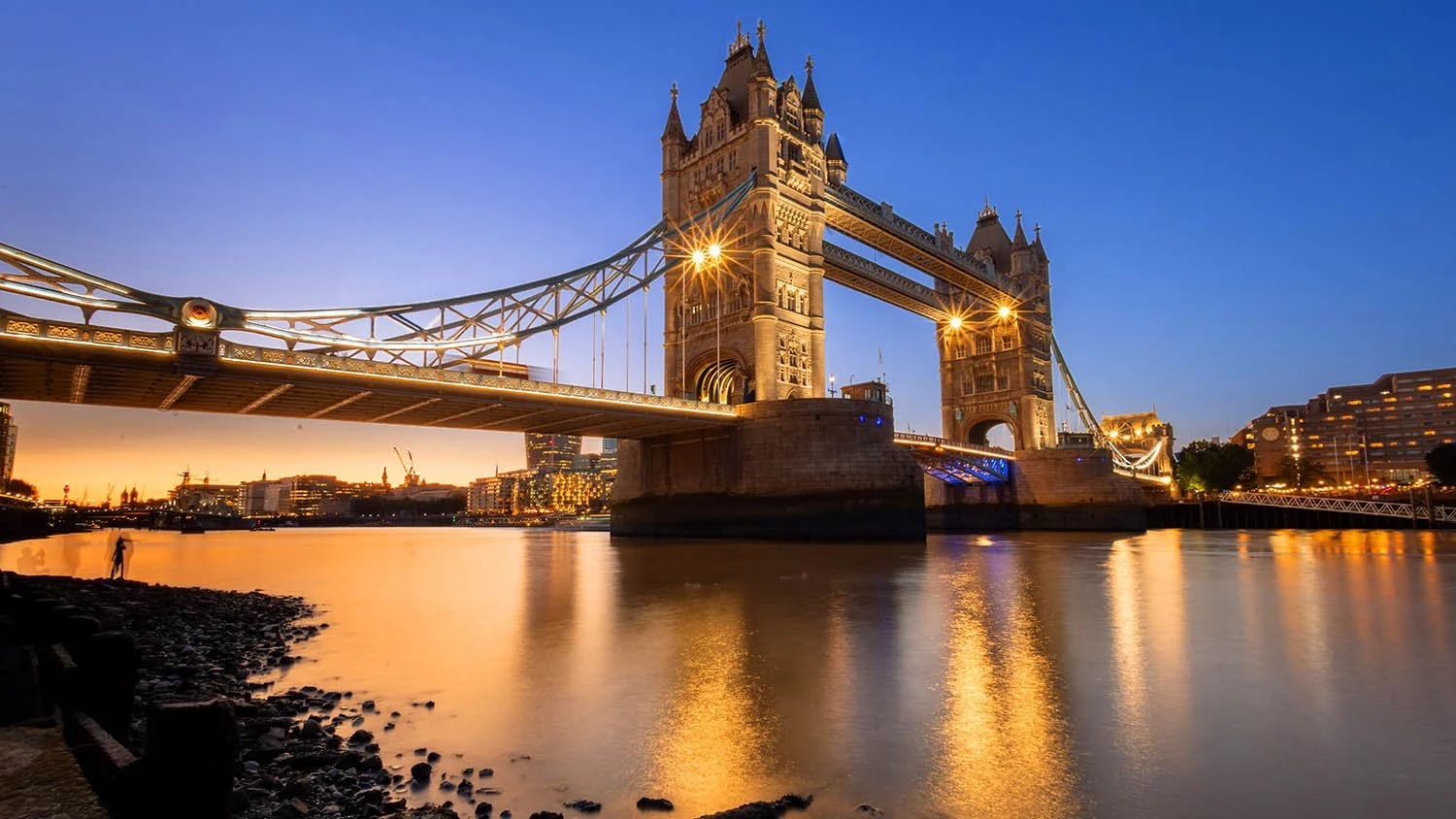
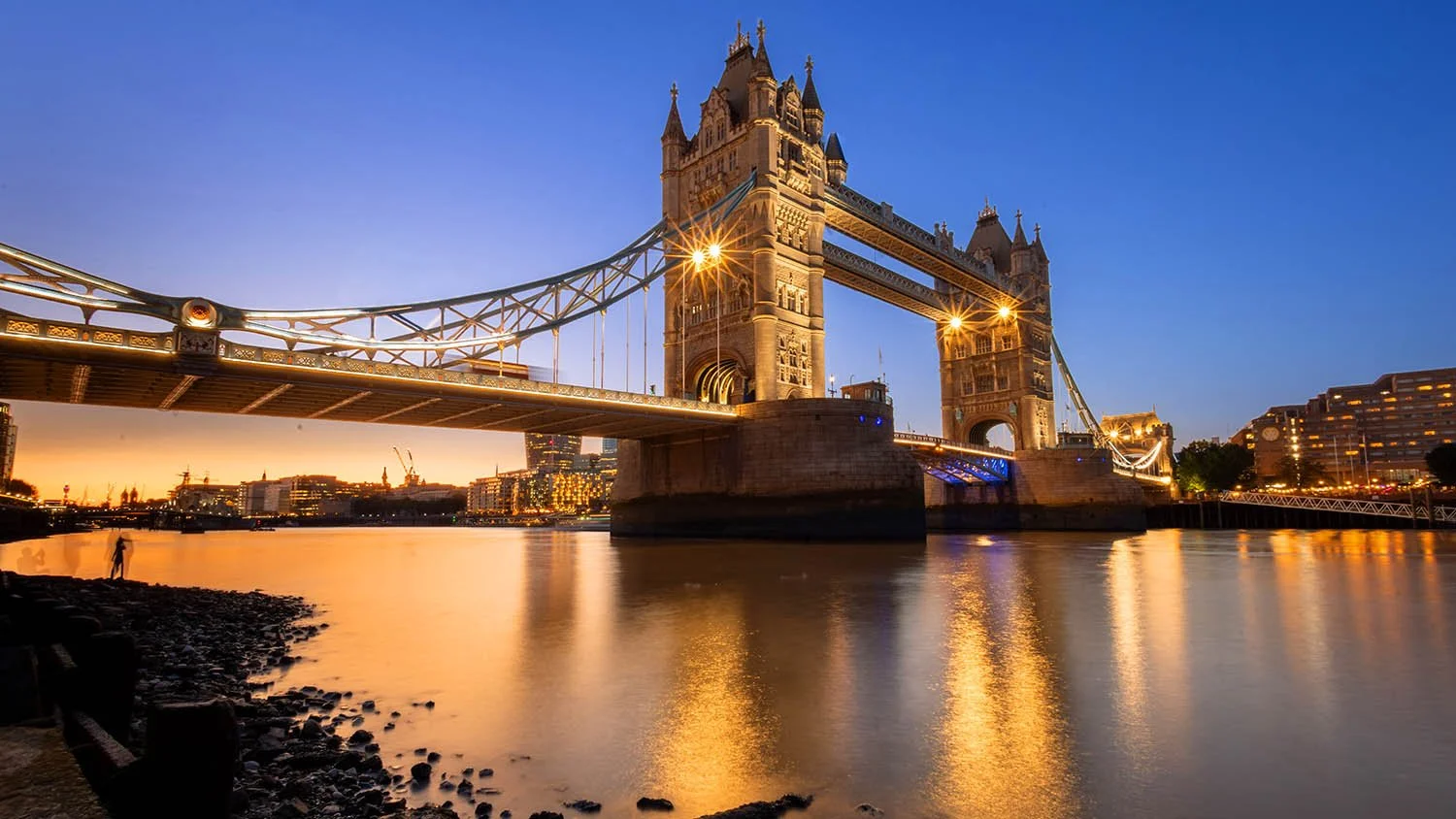
Tower Bridge at sunset. If it is low tide you can access this spot via Horselydown Old Stairs. All photos by John O’Boyle / The Empty Nest Explorers This photo and others are available in our Print Store.
But new experiences aren’t all that brings us back. Some parts of London feel as familiar as old friends. Our first time in London was on our honeymoon twenty-eight years ago, and since then we haven’t been able to stay away. Those deck chairs in St James’ Park are always ready to welcome us back.
I couldn’t resist touring beautiful Buckingham Palace in different seasons, and John never tires of photographing the majestic Tower Bridge from every possible angle. So much so, in fact, that I think of it as “John’s Bridge”.
Something in London always seems to be “calling.” Even if that’s just teatime and sausage rolls!
John and I have covered a good deal of ground in London, and this post is a guide to the best of what we’ve experienced. For more information, you can follow the links to our in-depth posts on each subject. We hope we can inspire your own curiosity to explore London.
Tap any section to jump ahead
Royal London
No city on earth does royal pageantry like London. There are other royal houses in the world, but let’s face it - the British Royal family is THE royal family - the one everyone thinks of when you talk of Kings and Queens. As far as pomp and ceremony goes, royal London has no equal.
I’ve read more books on this subject than I care to admit, as I have a little bit of a fascination with George VI, both his personal journey and his time in history. While I can’t call myself a royalist in a political sense, I find myself drawn to the human stories behind all the hoo-hah. Plus, it’s rather intriguing to me how the rituals of monarchy are still very much incorporated into the modern British democracy.
Standing in the actual locations that I’ve read about and have seen in old newsreels feels a little like time travel to me. It’s fascinating to make those connections and walk in those footsteps. It’s what I like most about traveling in general, and I feel it particularly strongly when I go to London. Plus, who doesn’t appreciate a bit of splendor in their lives? So let’s take a look at Royal London.
Buckingham Palace
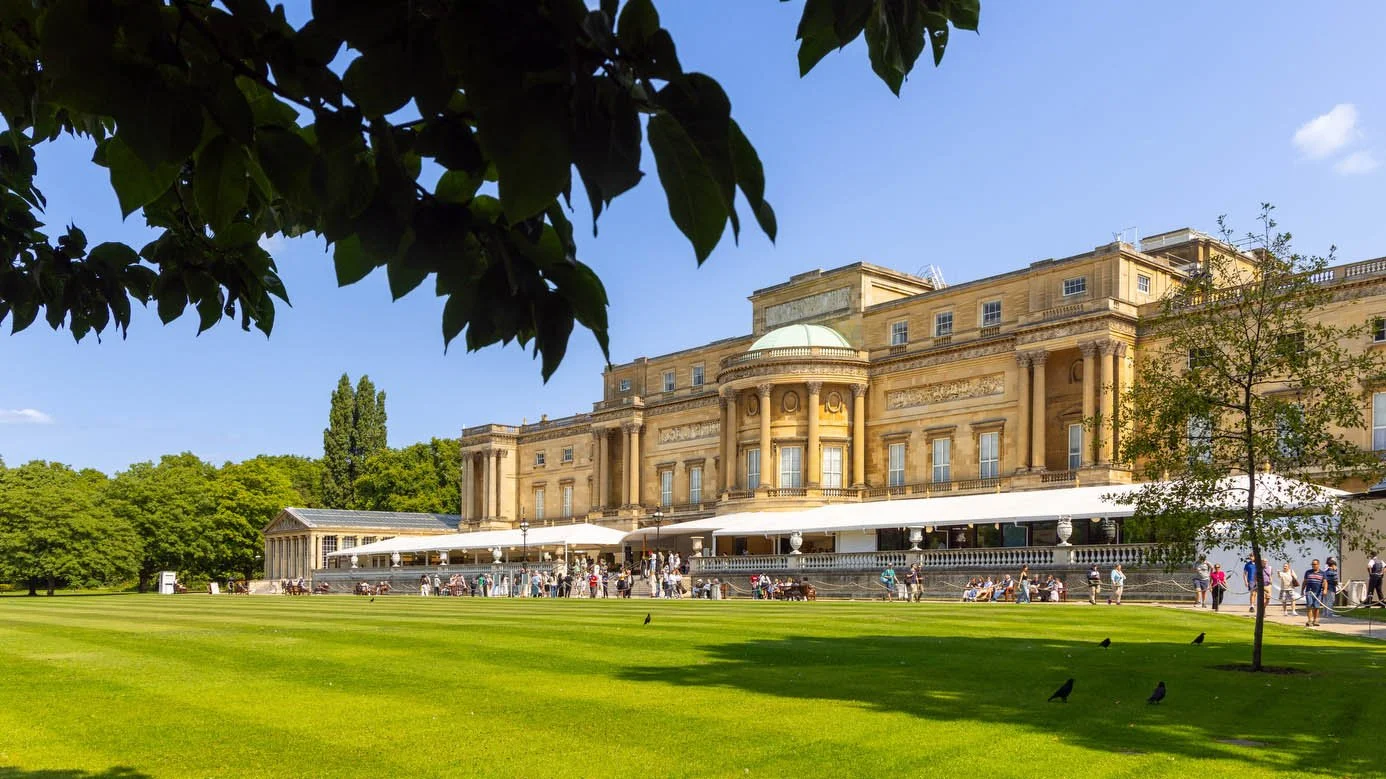
The lawn in the rear of Buckingham Palace.
Of course the center of royal life in London is Buckingham Palace. And it is magnificent. Even just a walk by is worth it. Just stroll up the Mall and it pulls you right in. The majestic landmark is bright and beautiful by day and lit up softly by night. Every time I go by, I always think about how sad it must have looked with all its windows broken and boarded over during the Blitz in 1940, when lights were put out for safety and London carried on in darkness.
We really think taking a tour inside the Palace is a highlight of visiting London; especially if you have an interest in royal history. Even if you don’t particularly, it’s an icon of British culture and the interiors are gorgeous, with more art than most museums can claim. And if you go in summer, you get to see the gardens, which is a special treat.
Unlike some other royal palaces in Europe, Buckingham Palace is the actual home of the monarch in London (although King Charles III isn’t living there right now; a lot of long overdue infrastructure work is being done on the building. He lives down the mall at Clarence House, but comes to the Palace for official functions.) This means the rooms are actually liveable, and not just museum displays for show. Of course, what you see on the tour are the formal State Rooms, and not the family’s private residences.
We’ve done both the summer public opening and the winter small group tour and both were wonderful and memorable experiences - graced with that magical royal touch of making you feel like a welcome guest. It’s not the cheapest ticket in London, but not the most expensive either and worth the spend.
You can read all about our experiences and lots of useful details in our full post How to visit Buckingham Palace
We also recommend catching the Changing of the Guard at the Palace, as British an experience as it gets. That’s up next.
The Changing of the Guard at Buckingham Palace

The Household Guard marches from Buckingham Palace to Wellington Barracks.
| Ceremony | Days | Time | Location |
|---|---|---|---|
| 💂 Changing of the Guard | Daily Jun–Jul; Mon, Wed & Fri Aug–May | 11am | Buckingham Palace forecourt |
| 🔍 Captain's Inspection | Tue, Thu & Sat | 3pm | Buckingham Palace forecourt |
| 🇬🇧 Sunday Parade | Sundays | 10am | Buckingham Palace forecourt |
| 🐎 Horse Guard Changing | Daily | 11am | Horse Guards Parade ground |
| 🕒 Mounted Sentry Change | Daily | On the hour, 10am–4pm | Horse Guards, Whitehall side |
⏰ Arrive at least 45 minutes early for the main Palace ceremony. Schedules can change for state events and weather, so check the official Household Division site before you go.
This is worth mentioning on its own because you don’t need a ticket to the Palace to watch the Changing of the Guard - it's free to all.
Although it does get crowded so you might have to do a little planning. We give our best advice for viewing the Guard change and some alternate options to lining up at the gates in our post How to see the Changing of the Guard at Buckingham Palace, St. James’ Palace and Wellington Barracks.
It may surprise you to learn that parts of the ceremony take place in all three of these locations, so you don’t necessarily have to crowd around the Palace to get a taste of it.
I sometimes can’t believe that on my very first trip to London many years ago, I had no interest in seeing the Changing of the Guard! It’s rather funny to me now, as this has become one of my favorite London experiences, and something I look forward to seeing when we visit.. A bit of pageantry taking place in the middle of everyday city life feels rather special, and well, British. The flashy red uniforms, bands and horses. C’mon! Everyday a parade!
Well, maybe not everyday. Here’s the lowdown of when the Changing of the Guard takes place.
In June - July, the Changing of the Guard takes place every day.
From August -May, the Changing of the Guard occurs every Monday, Wednesday & Friday.
The Changing of the Guard takes place at 11am in the forecourt of Buckingham Palace. (A full timeline is highlighted in our detailed post about the Changing of the Guard). You will need to get there at least 45 minutes early to get a good viewing spot as it does get busy.
There is a shorter, and usually less crowded ceremony called The Captain's Inspection that takes place on Tuesdays, Thursdays, and Saturdays at 3pm on the forecourt. It occurs on days without the full Changing of the Guard. A slightly different version of this ceremony, called the Sunday Parade, takes place on Sunday at 10am.
I’ve also become a big fan of the Guards Bands that play during the Changing ceremonies. There are a lot of snippets on Instagram and TikTok of the bands playing popular tunes - from “Pink Pony Club” to the theme from “Star Wars”. They are really great musicians and their instruments are always perfectly in tune (unlike going to your kid’s band concerts sometimes!).
Usually one of the Guards Bands will play in the forecourt of the Palace while the inspection routines are being done - a little entertainment while the “official” business is taken care of. But if you are lucky, you can often catch a warm-up tune at Friary Court before the Old Guard starts marching down the Mall to the Palace. If you get there at about 10:30am, you should be able to get a good look. Bands also sometimes play at Wellington Barracks before the new guard going on duty begins their march over to the Palace.
Kensington Palace
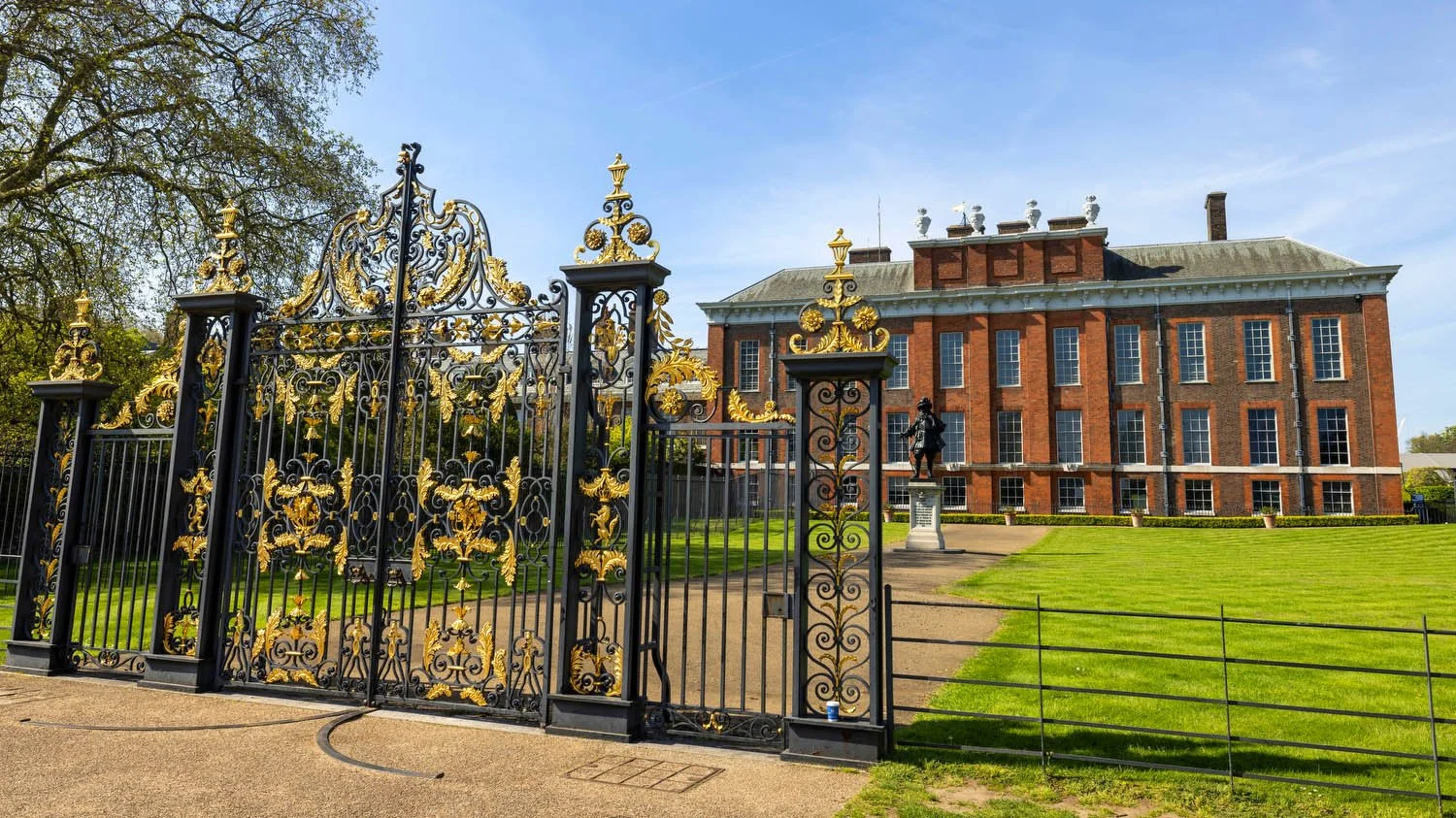
The gate at Kensington Palace.
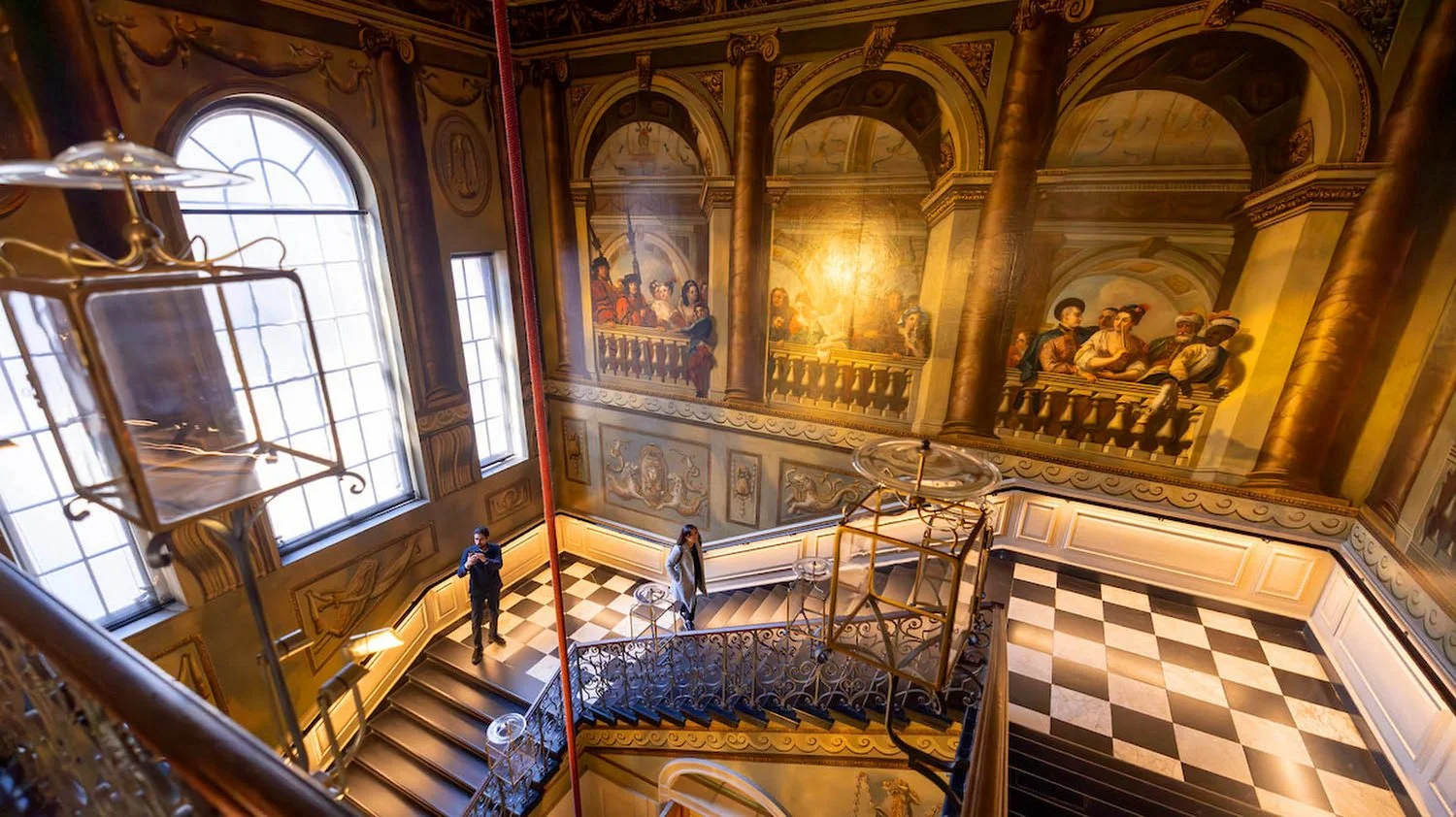
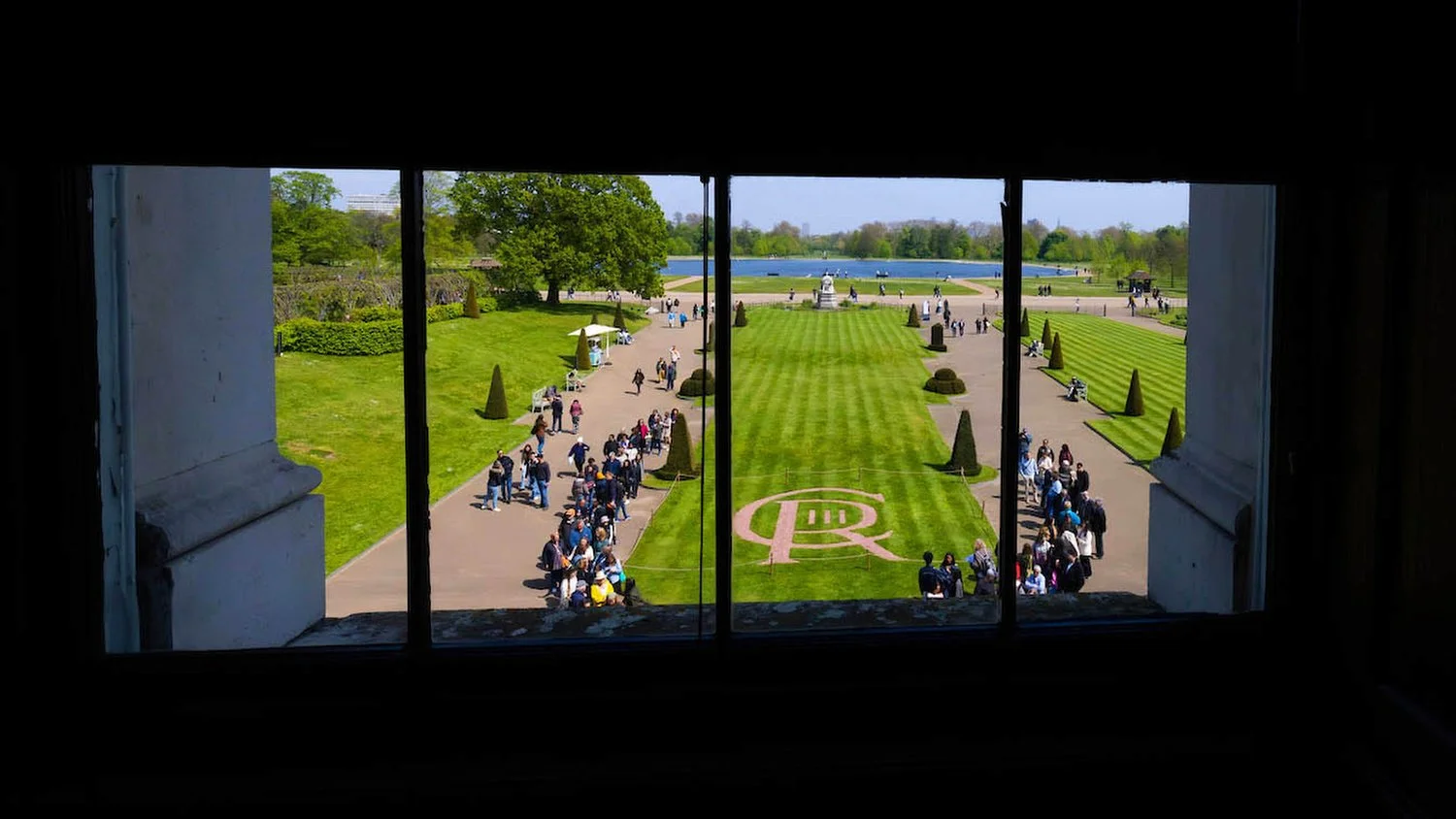
A quieter, less crowded royal palace to visit is Kensington Palace, located in the middle of picturesque Kensington Gardens, on the edge of Hyde Park. A lot of members of the royal family have lived there and still do, most notably the late Princess Diana and the current Prince and Princess of Wales, William and Catherine. It’s a pretty big complex though, with many “apartments” with private entrances; you won’t be visiting anything the current royals use.
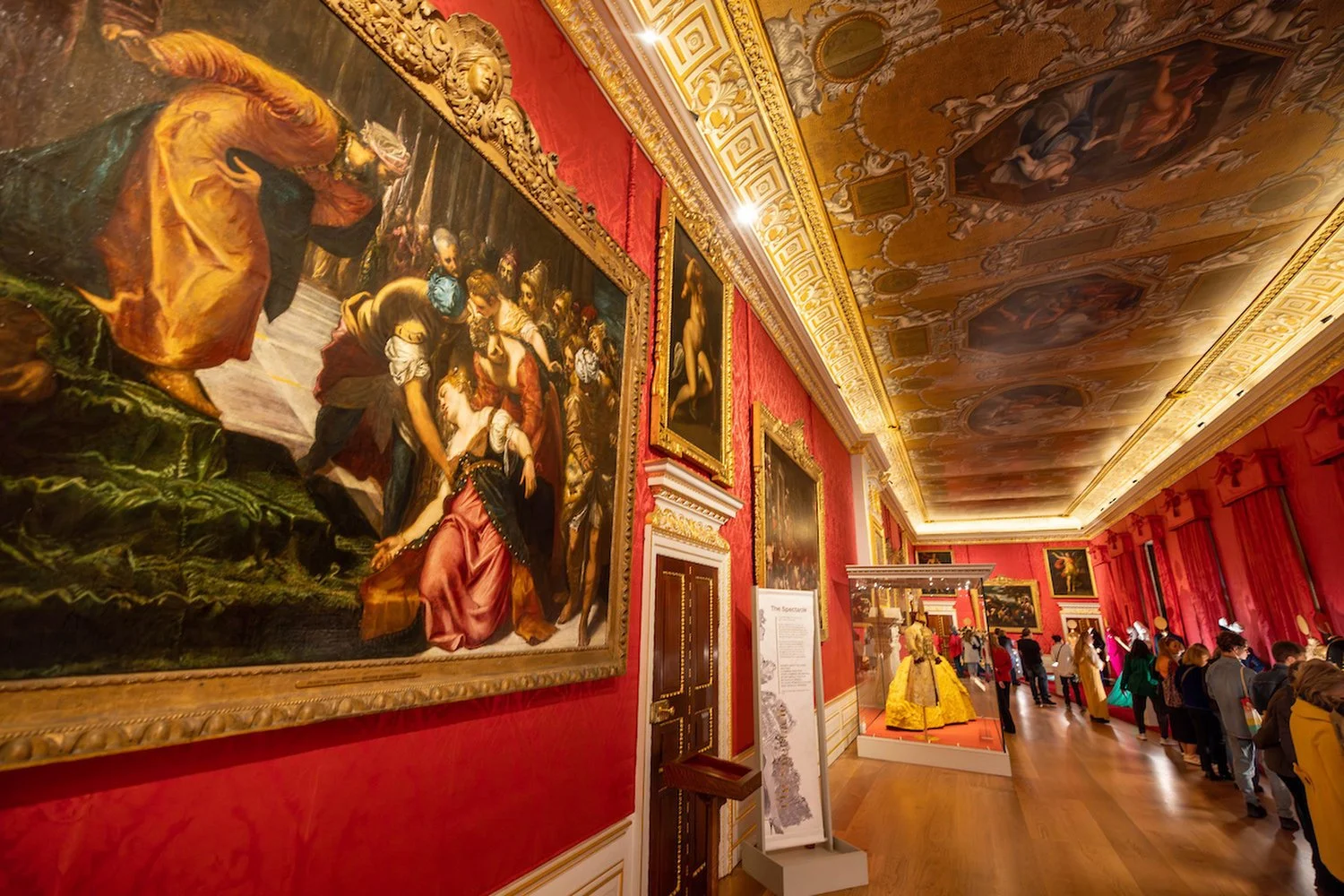
The part of the Palace tourists get to see is strictly historic - rooms where Queen Victoria lived as a young girl are a highlight. The rooms are beautiful, but the entire feel is older, less up-to-date. There is always an exhibit of some sort going on at Kensington Palace as well, that changes for the year. This is included in the price of your ticket.
To celebrate a special wedding anniversary a few years ago, John and I treated ourselves to a traditional British Tea at Kensington Palace. It was really a lovely experience, with traditional tea sandwiches, scones and sweet treats. Everything was elegant, but relaxed, and served on delicately patterned royally themed china.
Afternoon tea is served in the recently renovated Orangery, which sits in its own luxurious part of Kensington Gardens immediately next to the main palace building. It’s a fun little luxury treat.
While visiting the Gardens, we got a view of a King’s Flight Helicopter in its recognizable maroon livery color, coming in for a landing at the palace. We later learned that it had been delivering Princess Anne, the Princess Royal. A fun royal encounter.
To read more about our experience visiting Kensington Palace, we have a full blog post - Visiting Kensington Palace: All you need to know
Horse Guards Parade

Many folks don’t know much about Horse Guards Parade and why they should visit it, but it is a natural addition to your exploration of Royal London and I wouldn’t skip it. Located at the corner of St James Park and Whitehall Street, it’s an easy walk from Buckingham Palace and it’s free to visit.
Horse Guards Parade is the headquarters of the Household Cavalry in London. The parade ground hosts the annual Trooping the Colour and other ceremonial events. There is also a small museum in the Horse Guards building that is worth the nominal entry price.
If you like horses, you’ll enjoy the Horse Guard Changing ceremony, which takes place on the parade ground every day at 11am. It’s a lesser known ceremony than the foot soldier changing at the Palace, so it attracts smaller crowds. You won’t have to get there an hour ahead of time to get close to the action. For this reason, I often recommend it to people traveling with children, as this might be a more manageable changing of the guard experience for them. Also, the museum is very kid friendly. (But we enjoyed it ourselves!!)
You can get more specifics about the timing of the guard change and what to see at Horse Guards, plus learn all about the Trooping ceremony in our post Horse Guards Parade London: Complete Visitor Guide.
Around the front of the Horse Guards building, facing Whitehall Street, two sentry cavalrymen on their magnificent black horses stand guard. This was once considered the official entry into Buckingham Palace. Along with two sentries on foot in the courtyard, they still stand watch at the gates.
Every hour, these sentries on horseback do their own low-key guard change; you don’t need any special timing to see it, just be there on the hour, between 10am - 4pm. You can listen for the chiming of Big Ben and watch the change take place. It’s pretty cool!
This area has gotten pretty popular with tourists and TikTok’ers and - I’m sorry to say - they often don’t pay attention to the rules and try to get too close and provoke the horses.Please don’t do that! Pay attention to the signs and the markings on the ground. No need to get bitten by a horse!
The Royal Mews
The Gold Coach on display at the Royal Mews
Another natural addition to visiting Buckingham Palace is visiting the Royal Mews. This is the working livery stables and ground transportation center for the Palace, responsible for all road travel arrangements for the King and members of the Royal Family.
I found the Royal Mews to be a very relaxed visit where you can get a real behind-the-scenes look at what goes into the care and maintenance of the King’s working horses, ceremonial carriages, and vehicles. The star of the show naturally is the iconic 260-year-old Gold State Coach, but I was impressed with so many of the other coaches as well. So much history!
The Royal Mews can be visited as part of a “Royal Day Out” package with a Buckingham Palace ticket, or on its own. We enjoyed doing it as a stand alone visit, as I found it to be a nice, low key thing to do for a couple of hours. You are free to wander, or go on one of the docent led walks. I recommend taking the walk. You get all the good stories.
The Royal Mews is literally just around the corner from the Palace and easy to get to. This is also a very kid-friendly attraction if bringing little ones.
Check out all the info in our post Visit the Royal Mews, the working stables of Buckingham Palace.
Westminster Abbey
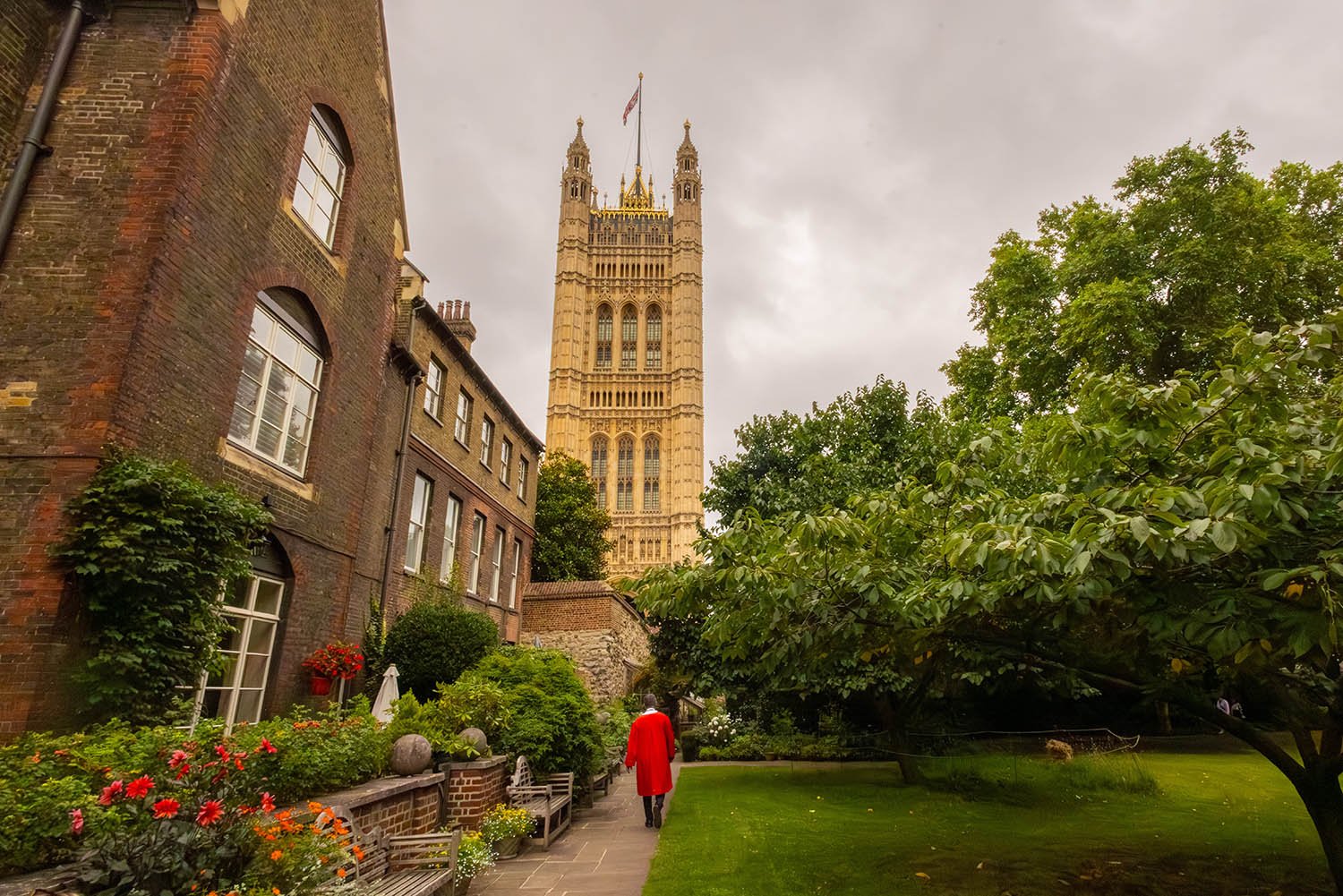
Don’t miss the College Garden in Westminster Abbey. It will be near the end of your visit near the exit. Many people miss it so it’s very peaceful.
It actually took me several visits to Westminster Abbey to really appreciate the weight of its history, both as a royal church and as a cultural center. With over a thousand years of history, the Abbey is probably the most famous place of worship in the world; the site of coronations and royal weddings, as well as the center of many national events and celebrations.
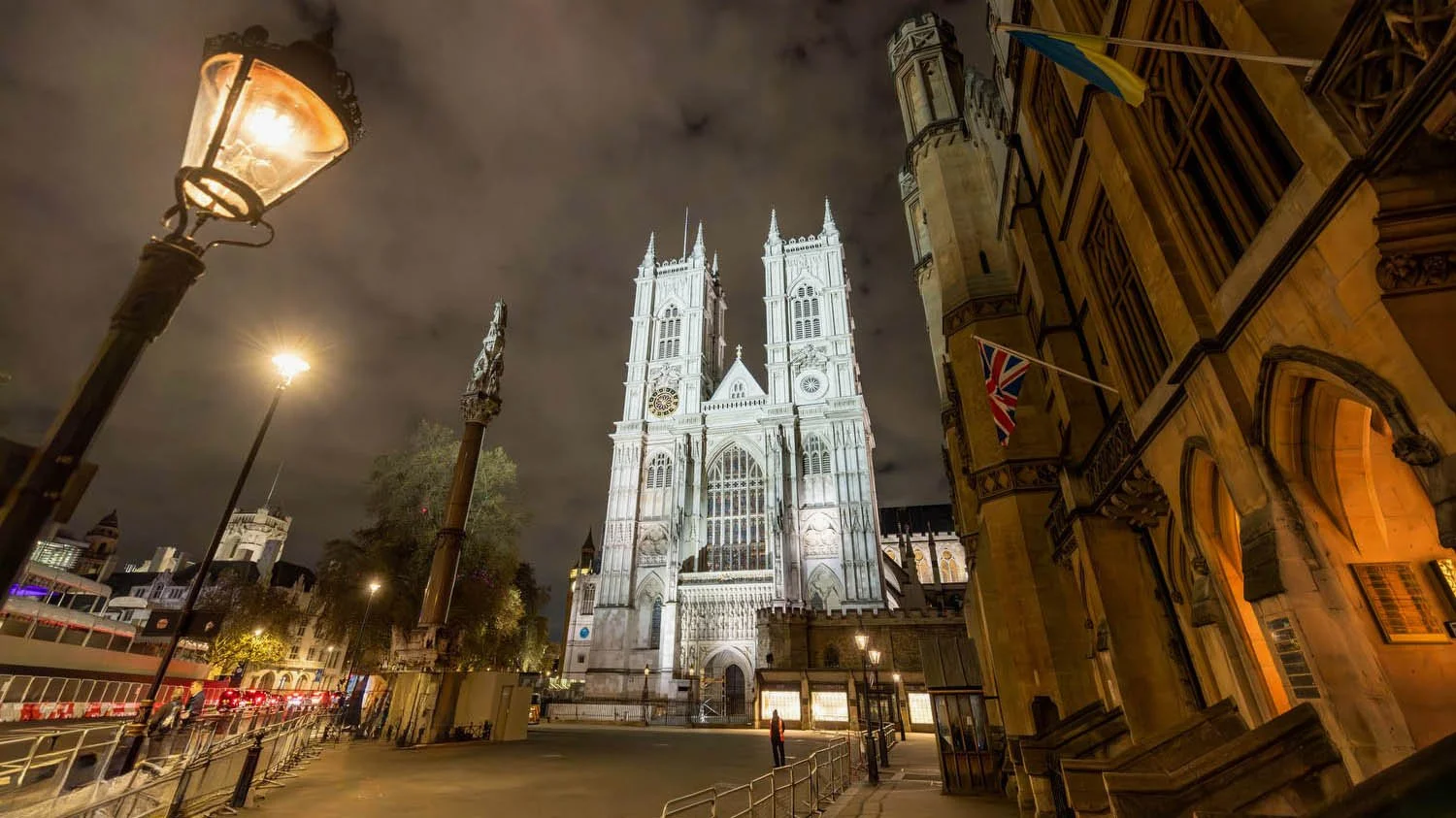
We happened to be in London during the coronation of King Charles III, so it was fun to wander down to the Abbey the night before and see preparations. He was the 40th reigning monarch to be crowned at the Abbey, and I really had the feeling of being there at a historic moment.
But it was even better to take the inside tour of the Abbey on our next trip to London. I have to admit I spent a little too much time in front of the high altar, pondering the wedding of George VI when he was Duke of York. I know he was crowned there of course, but there was something more stirring to me about his wedding - maybe because he was happy at that moment and not so at his Coronation!
It’s important to book your tour of Westminster Abbey ahead, as it is extremely popular. We booked it early in the day and were able to do the Houses of Parliament afterward, which was a great day in Westminster.
A new entrance is being built, the King Charles III Sacristy, which will allow visitors to enter the Abbey through the Great West Door, previously reserved for royalty. The new building will have state-of-the-art welcome, security and ticketing facilities, and is expected to be completed by the end of 2026.
We have lots of advice and insight about visiting Westminster Abbey in our post How to visit Westminster Abbey in London.
London history goes well beyond palaces and princes. There is lots more history to explore in London, and that’s the topic of the next section.
Historic London - the City and the Thames
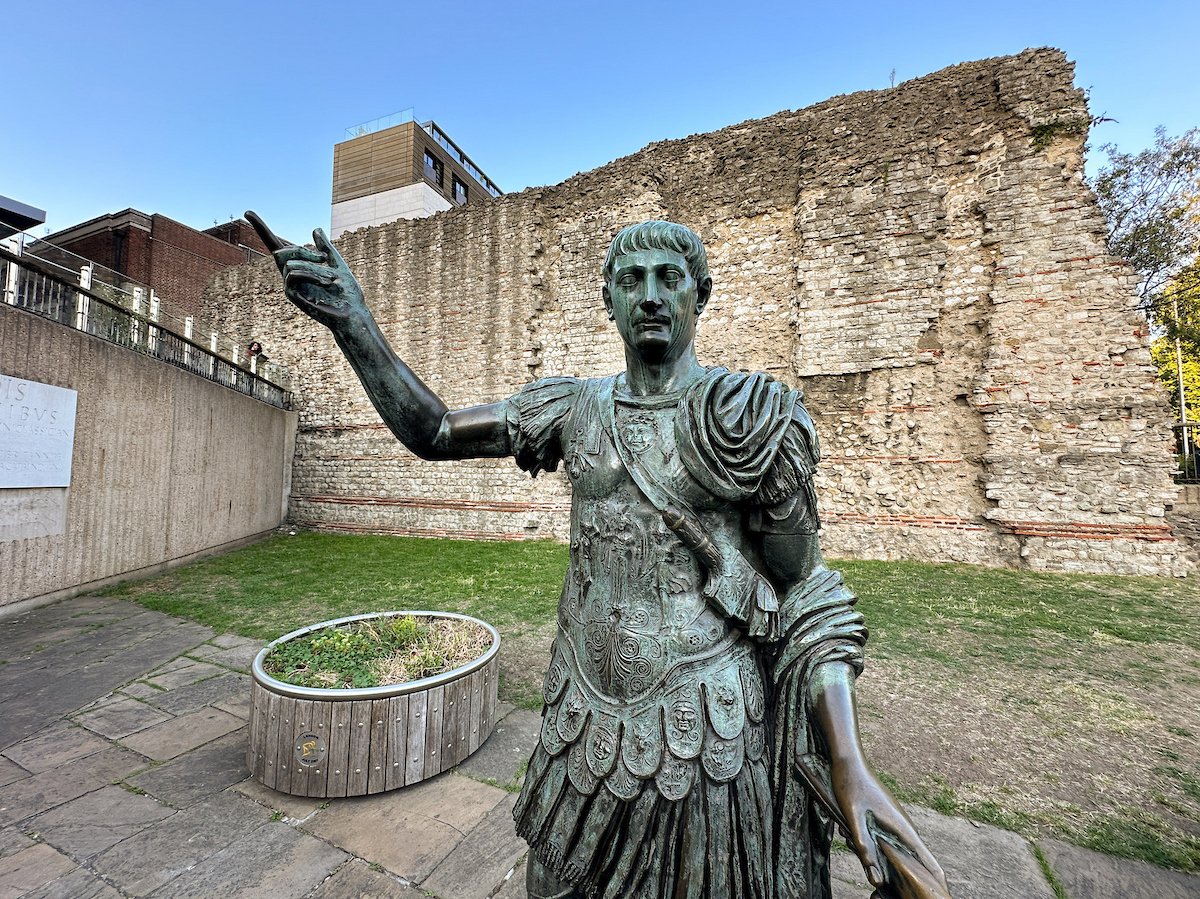
A statue of Roman emperor Trajan
London history actually predates the current royal family by many centuries. In fact, bits of what used to be Roman “Londinium” are dotted around the city and they are surprising to see as the bustling city goes about its business around them. Like so many things about this city of layers, time collects here like a living museum.
The River Thames is a history book in itself - the life blood of the city from its early history. And the bridges that cross it all have a story to tell.
In more modern times, World War II left an indelible mark on London’s landscape and on its soul. As I am interested in that period in history, we’ve done some exploring in that vein as well.
Below are our favorite places to explore London’s historic side.
The Tower of London and Tower Bridge
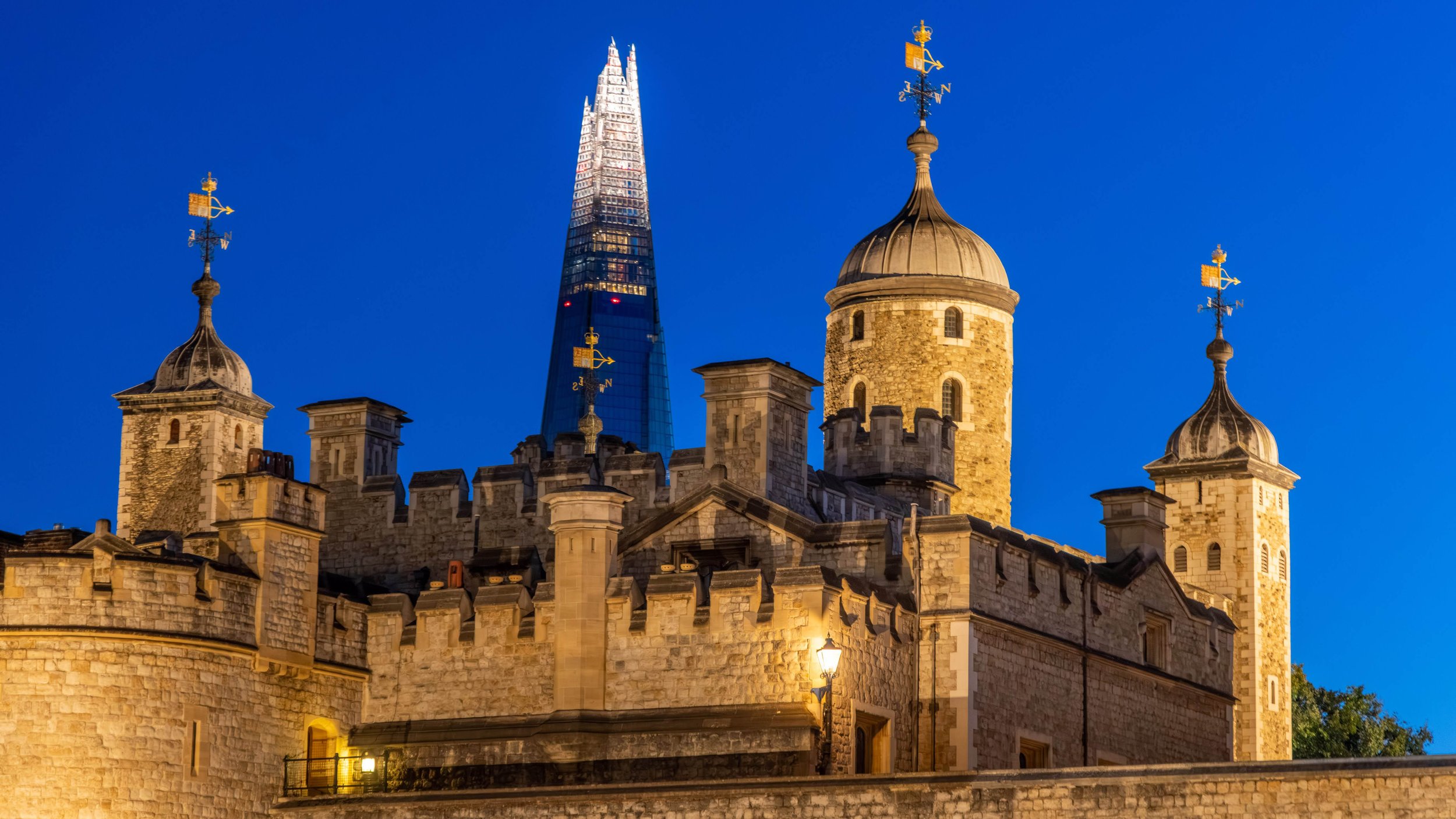
The Tower of London at dusk with The Shard in the background.
The Tower of London was built in the 1070s by William the Conqueror as a symbol of his power and as a fortress to protect against both foreign enemies and domestic rebellion. Over time it has seen its share of history - from the execution of Anne Boleyn to its use as a prison as recently as World War I - which seems rather incredible to me!
We’ve visited the Tower of London a few times, and what impresses one most is how it can absorb a lot of visitors without feeling overwhelmingly crowded. And if you like armor, this is the place for you; they have a huge, varied collection.
Taking a Beefeater led tour is helpful to really appreciate the full picture of the history - they are very engaging guides with their stories! These tours are free, and anyone can join with no tickets needed. They leave every 45 minutes from the Bell Tower, but they don’t enter any of the buildings.
We enjoyed getting a close-up view of a mini changing of the Guard ceremony there, as the guardsman walked right through the crowd to their post guarding the Crown Jewels.
The Crown Jewels display is the real star of the show; it's so well done and the sparkle will knock your socks off.
Pro tip - Arrive early and go straight to the Crown Jewels. It’s the only thing you really have to wait on line to see, but well worth it. Definitely a highlight you don’t want to miss, so get in the queue before tour groups arrive.
We have full details on how to visit the Tower of London and our best advice on planning your visit in our post Complete guide to visiting the Tower of London.
And let’s not forget that the Tower of London is situated right next to historic Tower Bridge. ❤️
I don’t think a trip to London is complete without a walk across the iconic bridge or a photo or two!! (Right, John? 😉)
There’s even a museum inside if you want to check out its history for a small fee, with displays as you walk up one of the towers to the highlight - a glass bottom walkway that stretches across the top of the bridge. I found it very cool! You can read more about that in our post Visiting Tower Bridge London: Tips, Tickets, and What to Expect.
The Houses of Parliament and Big Ben
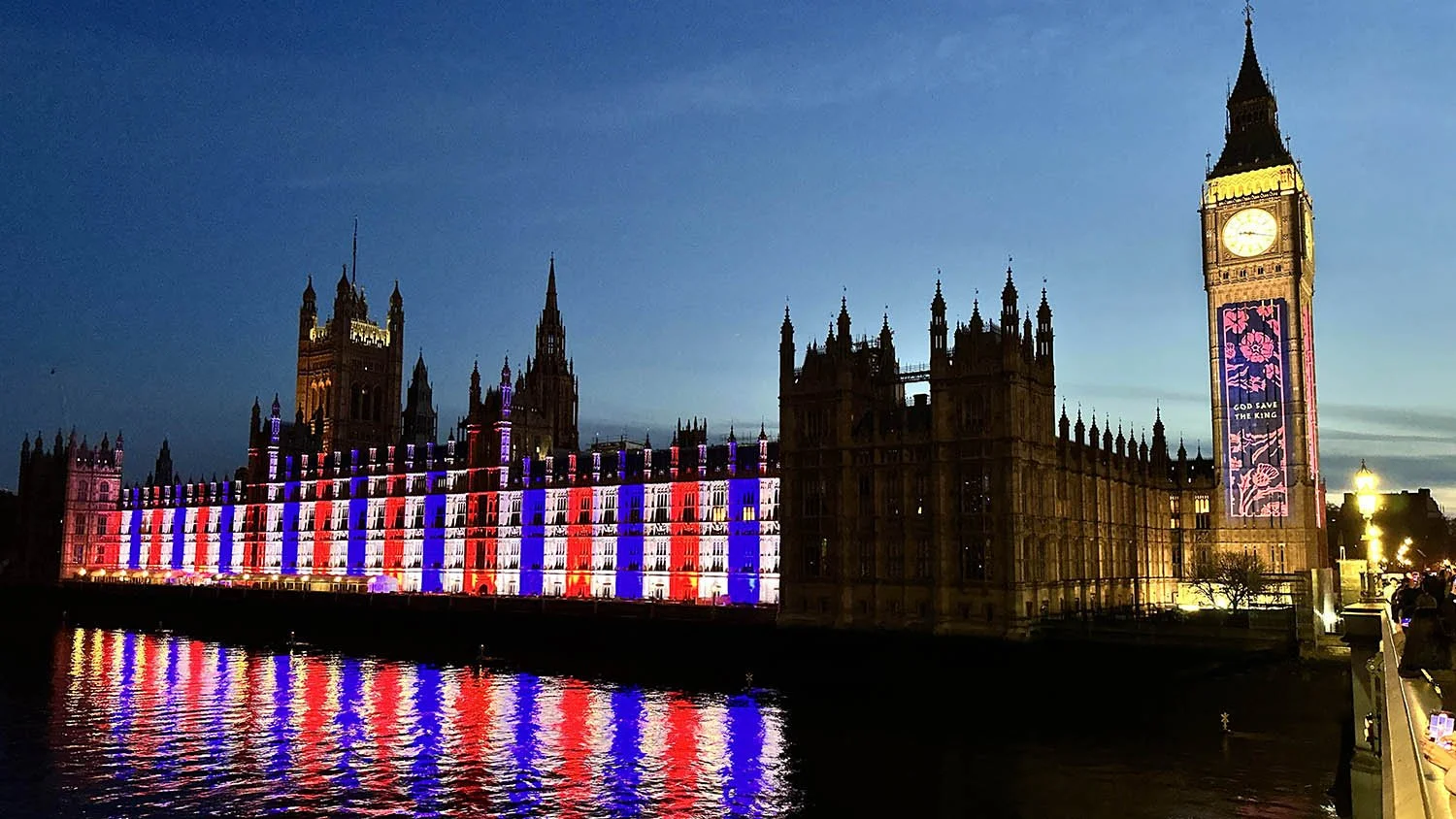
The Houses of Parliament, The Elizabeth Tower and Big Ben at dusk.
The Houses of Parliament (also known as the Palace of Westminster) along with the Elizabeth Tower (Big Ben) is such an impressive, beautiful building, one of the most recognizable structures in the world. John has photographed it many times, at all times of day. But on our last trip to London we decided to take a tour inside. All I can say is -wow!
There was so much to see on our self-guided tour, but John and I agree the highlight was walking on the floor of the House of Commons and standing next to the bench where the prime minister sits. It’s one of those places that is so familiar from the news and from movies that when you are actually standing there it feels rather surreal!
Photos are very restricted - you can only take pictures in Westminster Hall and St. Stephen’s Hall, not in the chambers or any of the other rooms you will visit, and this is strictly enforced.
But we share some photos from the House of Commons Flickr page, (with credit) as well as lots of detailed information and our impressions in our post How to Visit the Houses of Parliament in London.
We went in August which was a good time to go because Parliament isn’t in session. Tours typically run Saturdays year-round and Monday–Saturday during Parliamentary recess.
Going up in Elizabeth Tower (334 spiral steps up!) is a separate experience requiring a separate ticket. We did not opt to do it this time around, but it sounds like fun to see the inside workings of the clock and the Big Ben Bell itself for which the tower is nicknamed.
Climbing up the tower to see Big Ben is not for people with mobility issues, but visiting the Houses of Parliament is fine for everyone. UK Parliament is accessible for visitors with disabilities and other access needs.
Churchill’s War Rooms
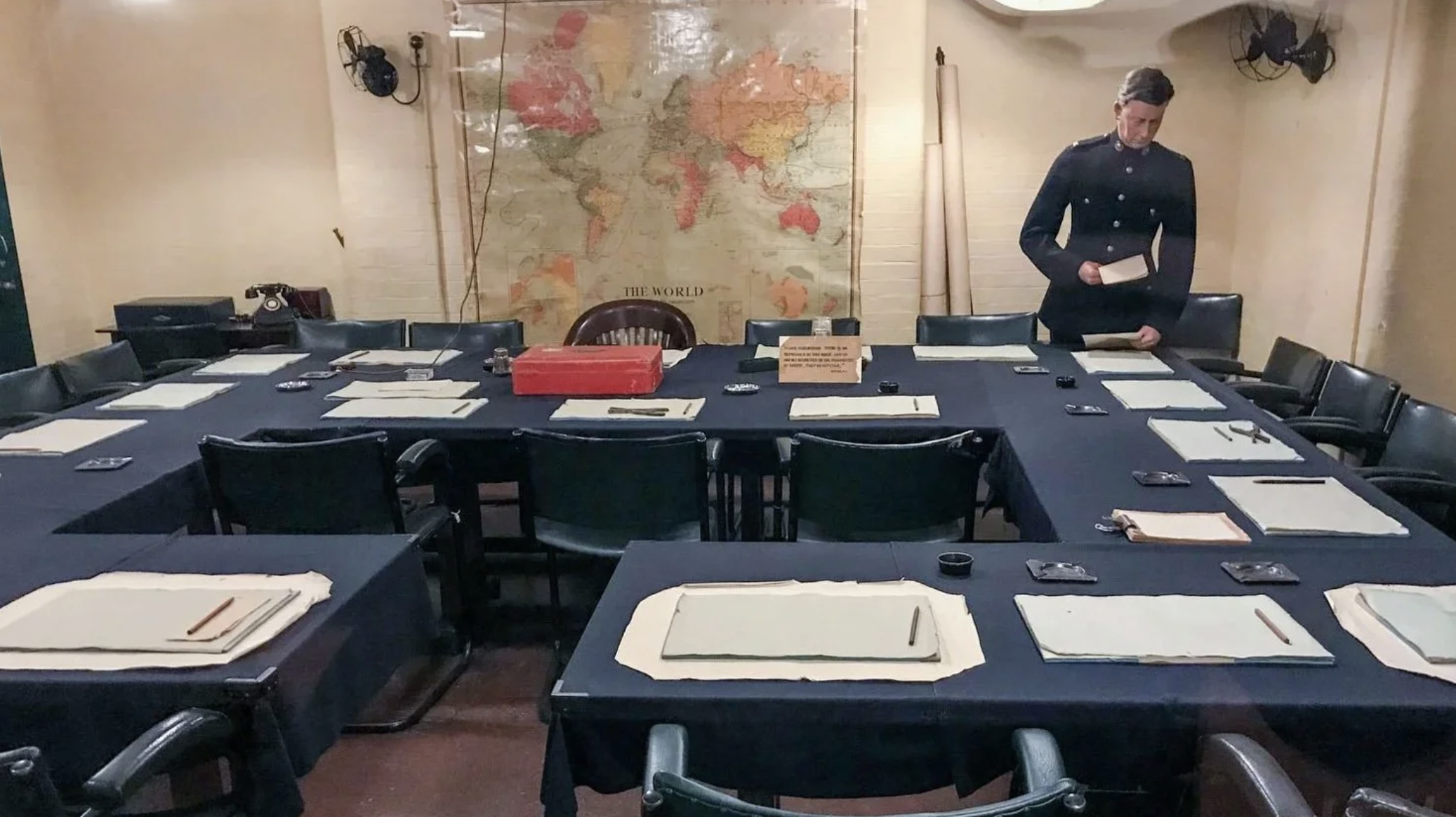
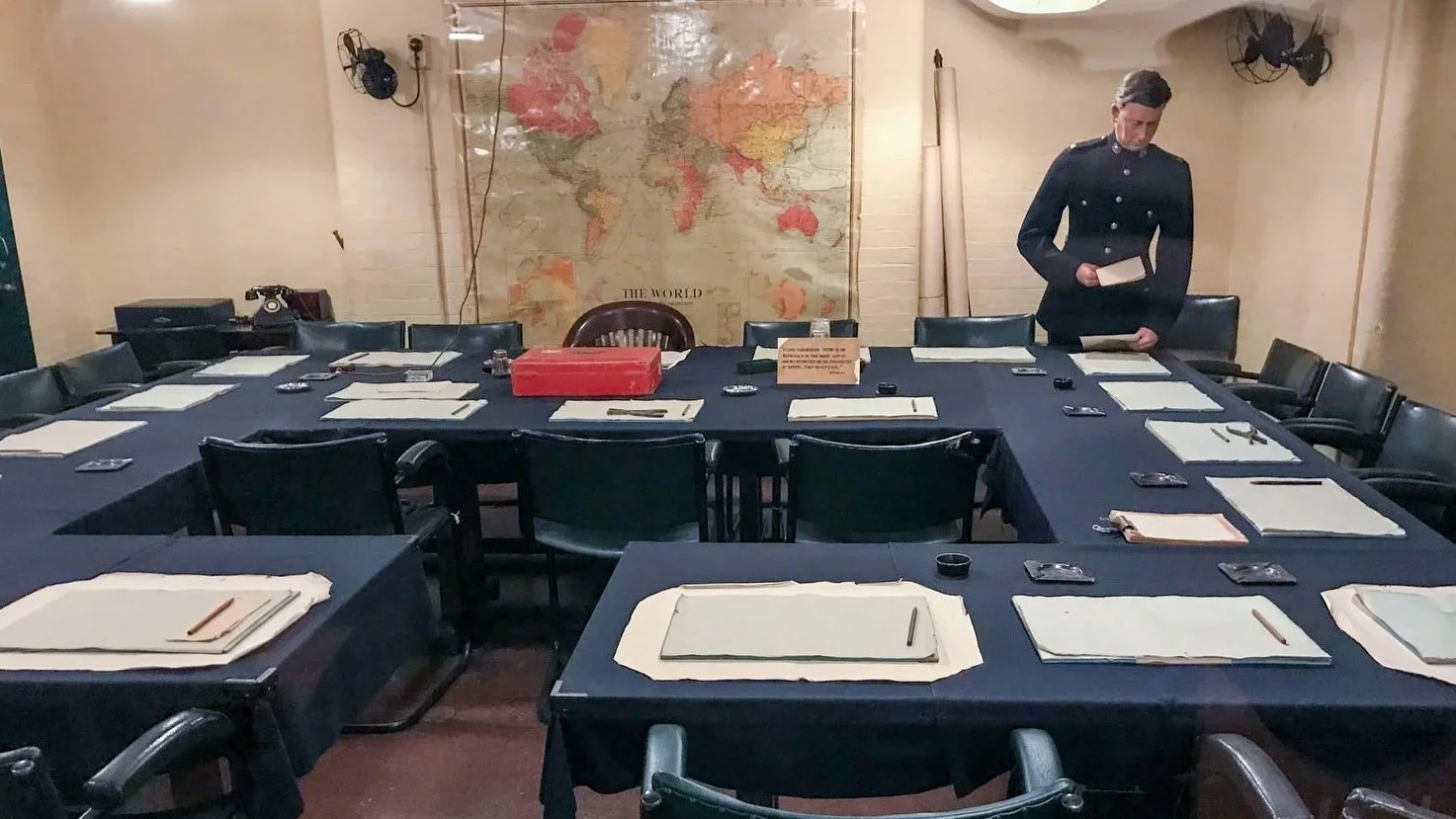
The Cabinet Room at Churchill’s War Rooms.
Talking about the Houses of Parliament of course makes one think of the most famous UK Prime Minister of all time - Winston Churchill. If you haven’t been to Churchill’s War Rooms, I highly recommend you get yourself there! It’s one of the most interesting historic places we’ve visited in London - I would go so far as to say it was my favorite museum experience of all. If you have any interest at all in World War II history, Churchill’s War Rooms shouldn’t be missed.
This museum of sorts is the actual underground bunker where Churchill and his Cabinet directed the war. In the thick of the fighting, bombardment was a constant threat, so this heavily fortified underground command center, located in the deep basement of a Whitehall office building, was a necessary arrangement.
When the war ended in 1945, the bunker was sealed and remained undisturbed for many years exactly how it was left. It was first opened to the public in 1984, and has undergone continuing restoration.
There are so many unique and historic details to this space, including actual maps, furniture, telephones and state-of-the-art (for the time) equipment that was used to monitor the wartime action. Plus, recorded stories of some of the people who worked there add to the depth of the experience There is also a museum dedicated to Winston Churchill, and (of course!) a recently added luxury afternoon tea experience.
We give you all the details you need to plan a visit and what we thought about it in our post Visiting Churchill's War Rooms, a must see in London.
City of London - the Square Mile walk
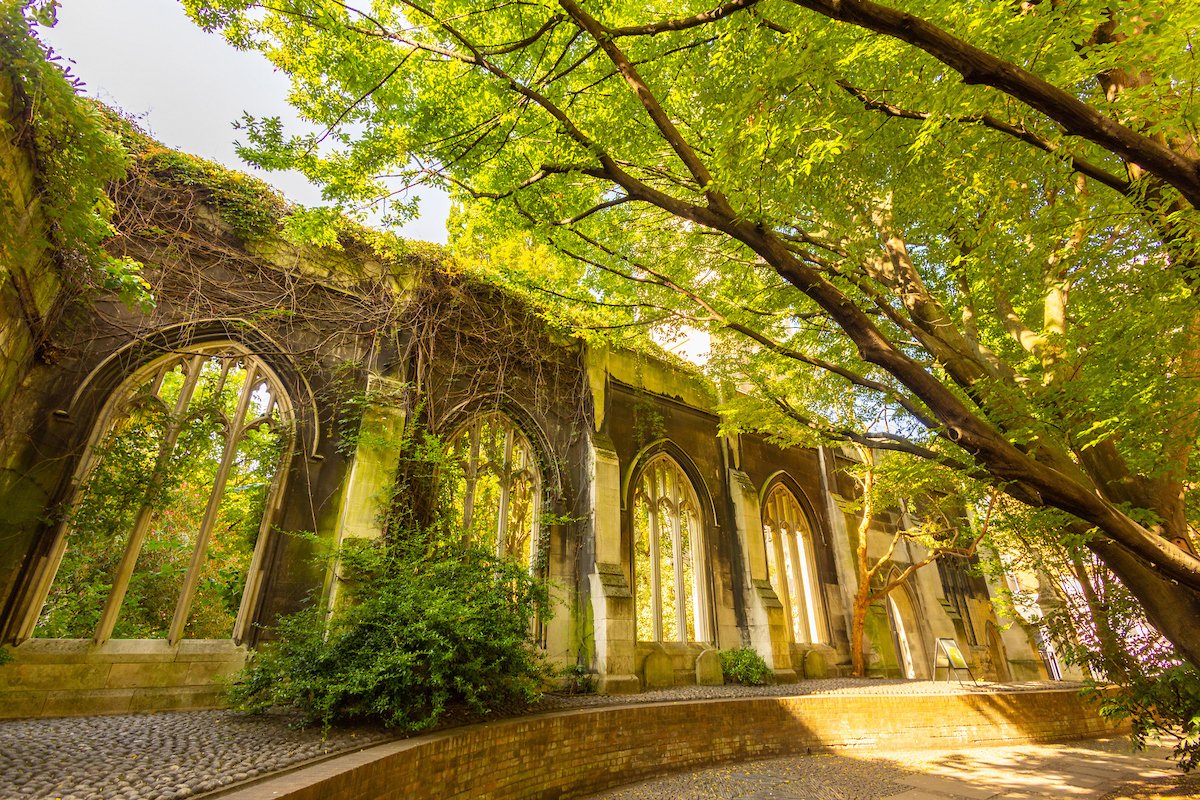
St Dunstan-in-the-East .
At the historic core of greater London is the district known as “the City of London”or simply “the City”. This is the oldest area of London, and is both a thriving, modern financial district and a place packed with history, with streets carrying traditional names that harken back to London’s earliest days.
This is one of my favorite areas of London just to have a walk around. It is full of interesting details and juxtapositions, intriguing architecture and a healthy modern buzz. In short - just the sort of things that keep pulling us back to London!
In our post, Visiting the City of London: our favorite attractions and photo spots, I’ve laid out a walk that starts at the Tower of London and ends at St. Paul’s Cathedral. This walk includes historic sites, noted landmarks, and specific stops that we enjoyed.
I had great fun laying out this walk, because it includes what I love most about London - the mix of the old and the new. The crazy modern skyline of quirky buildings that pays homage to majestic St Paul’s Cathedral by not getting in its visual way. Meticulously ornate Victorian covered markets and Roman ruins. Sneaky rooftop views and bridges stretching across the Thames. All packed into one Square Mile - another nickname this area goes by.
A hidden gem and photographer’s dream is St Dunstan-in-the-East, a medieval church that was bombed out in World War II, and today is a city garden set in its stone ruins. It is serene and surprising to find within a bustling city. John and I liked it so much, I just had to give it a post of its own, Visiting picturesque St. Dunstan-in-the-East Church Garden in London, where we share some of our favorite photos, as well as what we learned researching the site. Take a lot! It’s very interesting!
Greenwich
A visit to Greenwich can check a lot of boxes - it’s a neighborhood with a distinct feel, a historic site, a rambling park, it has a cool market, and since you can take a river boat there, it almost feels like a little bit of a day trip! What a deal!
This is where Greenwich Mean Time comes from, and we enjoyed standing astride the Prime Meridian at the Royal Observatory, which is a must-do in Greenwich.
Maritime history is the heart of Greenwich, and we highly recommend going aboard the Cutty Sark, considered one of the fastest merchant ships of its day in the 1800s. We had a great visit there learning about life at sea and even had a snack under the hull in their little cafe.
Greenwich makes a great half day out - it is easily accessed by tube or Uber boat (take the boat!!!) and you can be back in central London in time for dinner.
We have all the info you need to plan your visit to Greenwich in our post Guide to Visiting Greenwich, London: What to See and Do.
Walking along the River Thames
The Thames is the lifeline that runs through London. The Thames River Walk is free to all and an enjoyable way to take in the city with lots of opportunities for taking photos and for absorbing the history. Check out the details - like the ornate Victorian lampposts. (The Victorians thought everything, even mundane things, should be beautiful. I think I like that way of thinking!)
John had fun writing an in-depth post and sharing some of his favorite photos in A photo walk along the River Thames in London. He lays out a walk along the south side of the River Thames in great detail from Westminster Bridge to Tower Bridge.
Along the way, the walk passes icons such as the Parliament building on one end and Tower Bridge at the other end. It also winds through interesting side streets that lead past lots of smaller attractions, pubs, and restaurants.
Check it out to learn where to go and how to get great photos.
Markets and Neighborhoods - London's Funky Side
-
🎭 Covent Garden
Polished West End energy with street performers, antiques and handmade crafts. The easy pick for first-timers.
-
🎸 Camden Market
Punk roots in a canalside industrial setting. Best for vintage clothing and street food. Mind your pockets in the crush.
-
🎨 Shoreditch
Artsy East End neighborhood known for street art, vintage shops and nightlife. Where locals actually shop.
This is where London gets funky. We've talked a lot about history and royalty, but there is a totally different “b-side" of London’s character - the creative edgy side. We love London for its quirky personality. It can be old, rock-steady, and traditional; or modern, edgy, and wildly creative. Even a little weird perhaps - in a good way!
Shoreditch
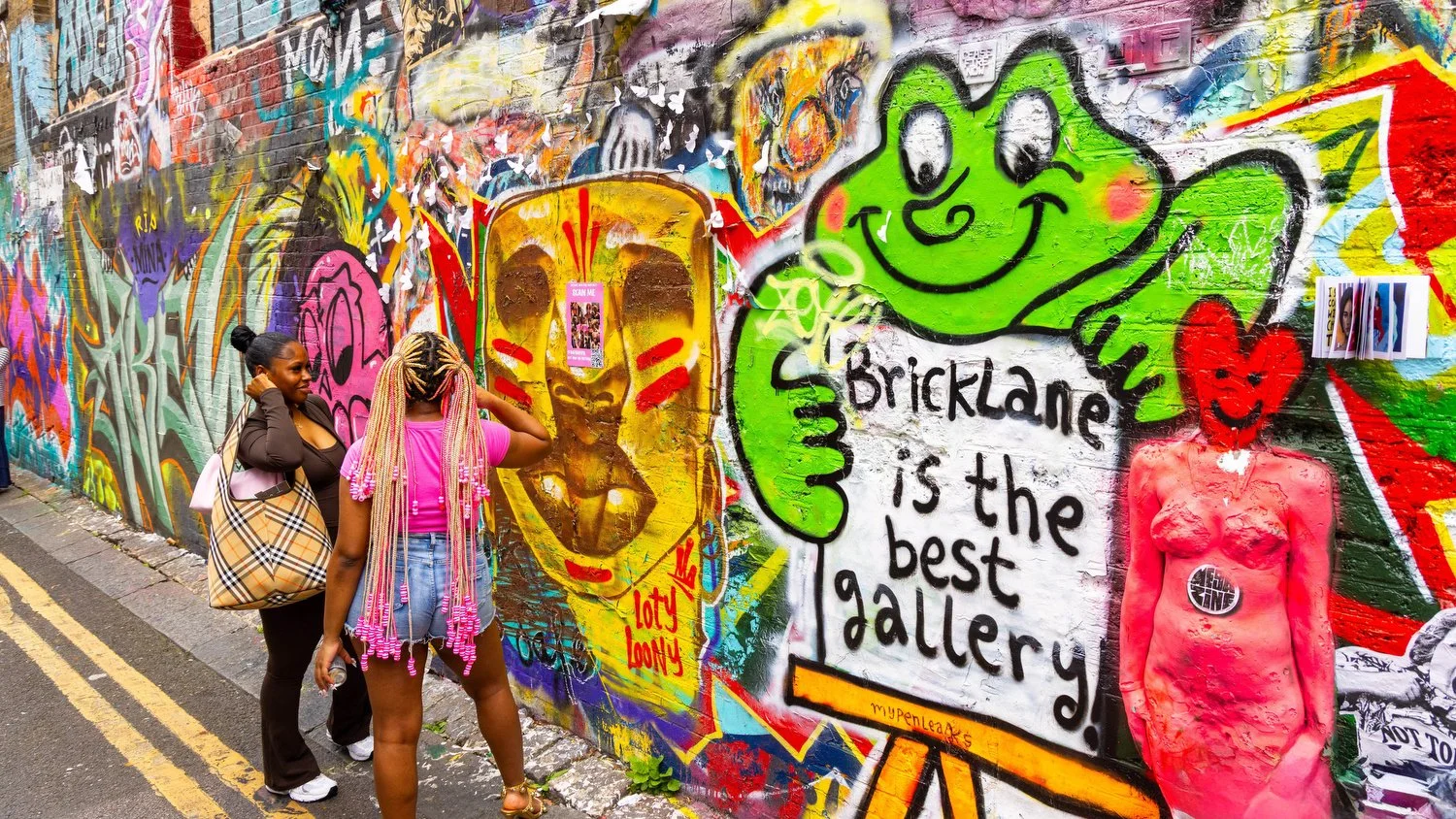
One of the many murals in Shoreditch.
Shoreditch is a lively section of London that is quite a different experience than official Westminster. An artsy East End vibe permeates this neighborhood known for its street art, nightlife, and eclectic markets.
Shoreditch is a great area to walk around for the afternoon or go out for the evening. It’s also a great place to shop - it is well known for its vintage clothing and unique items that are authentic in their London style. Locals shop here. We were there on a Sunday when the flower markets were open, and lots of people were strolling down the street with their giant potted plant purchases.
Read our complete post Top things to do in Shoreditch, London for our updated guide to Shoreditch bars, restaurants and activities.
Covent Garden

We always love visiting Covent Garden and its surrounding neighborhoods. Located in the heart of the West End, Covent Garden is easily accessible by tube, bus, or walking and is almost a no-brainer. There always seems to be something going on at Covent Garden.
Covent Garden comprises three main markets - the Apple Market, East Colonnade Market and Jubilee Market - that feature a rotation of antiques, handmade crafts, and general goods that change daily. It can be a little bit of a pricey area, but there’s no lack of things to do.
But there is much more. Covent Garden also has world class street performers - that actually have to audition. And we loved The London Transport Museum, with its real buses and fun equipment, plus an excellent gift shop if you want some London transport themed gifts. (The old transit posters are super cool. And yes I might have brought one home.)
Also close by are colorful Neal’s Yard and Seven Dials neighborhoods, which are worth a visit. Seven Dials is a good spot for eating - with a wide selection of restaurants and bars, as well as a popular food court.
Take a look at our post What to do in Covent Garden, London, for lots of details and ideas.
Camden Market
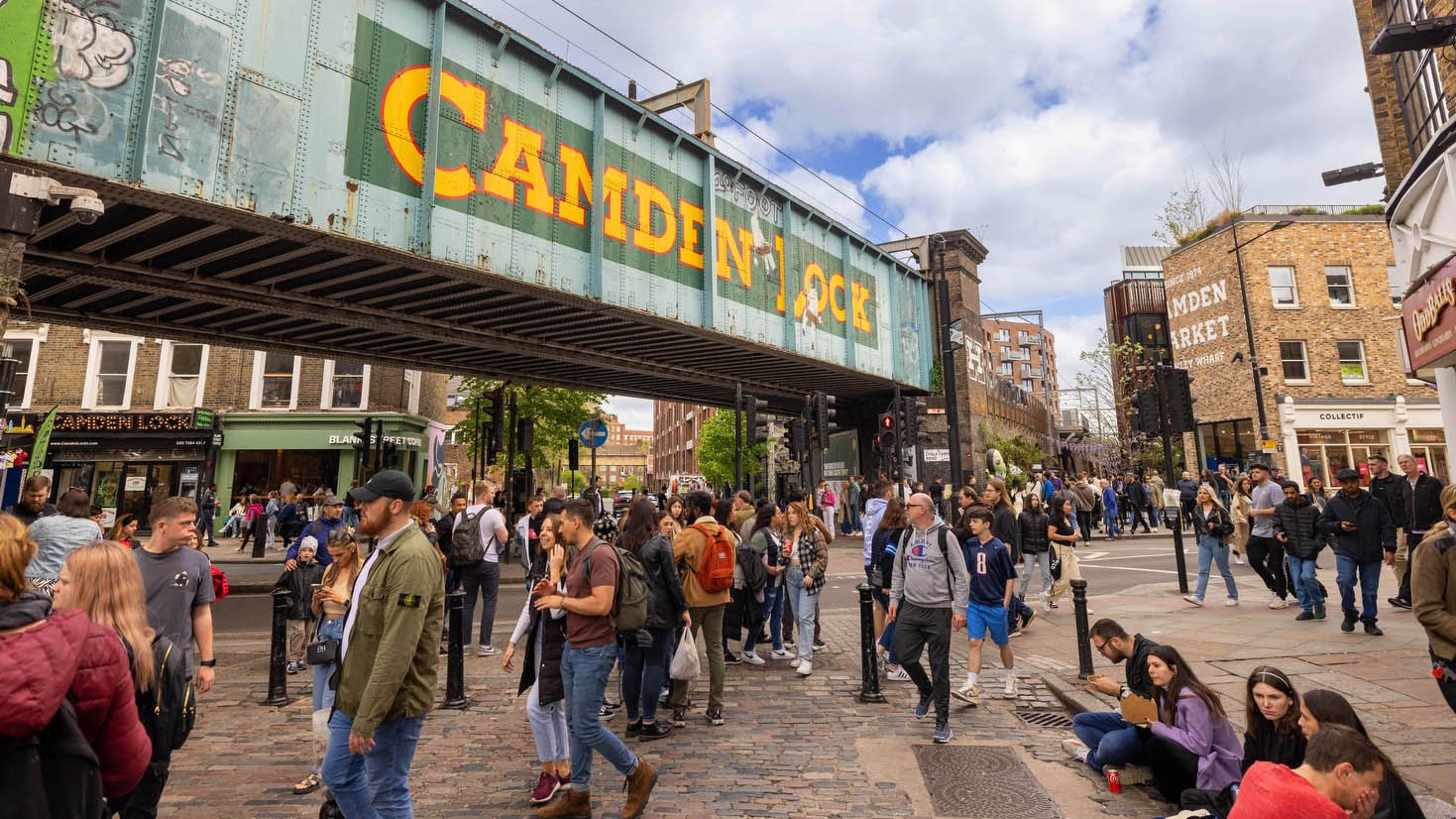
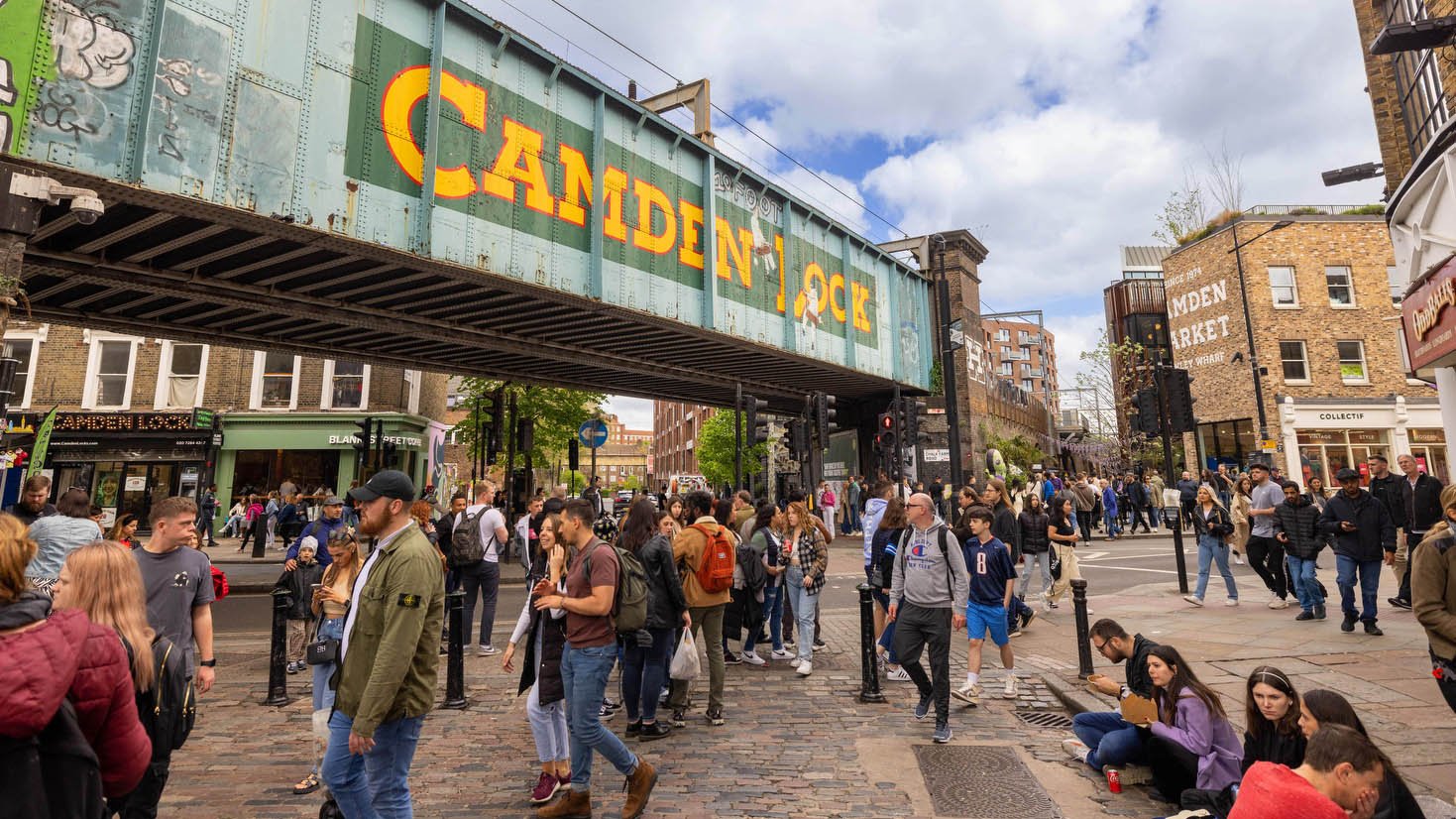
Camden Market offers a unique experience that combines an eclectic mix of over 1,000 unusual and unique shops, bars, and cafes. We had only visited Camden Market on a more recent trip to London, and we wish we had known about it sooner. There are so many interesting and unique items! I particularly enjoyed some of the vintage themed clothing shops.
Some people find Camden Market too touristic and I can see their point - the word is out, so to speak, so it does get very crowded and a certain amount of goods are clearly aimed at tourists.
But I think the setting in what was once an industrial area around Camden Locks and Regent’s Canal is unique and interesting enough to make it worth going. The markets started as a scrappy, counterculture gathering spot of a few stalls in the 1970s, and today it has grown into one of London’s most visited destinations. The punk and alternative roots never really went away though - you can still feel them. The energy is there and it celebrates another side of London’s character.
Just be smart- it is a heavy pickpocket and petty thief area, as are many spots that get lots of tourists. So be aware of your surroundings and keep your phone, wallet, purse, etc close to your body.
Read our post Visiting Camden Market in London: Tips, Food, and What to See for a complete rundown.
Battersea Power Station
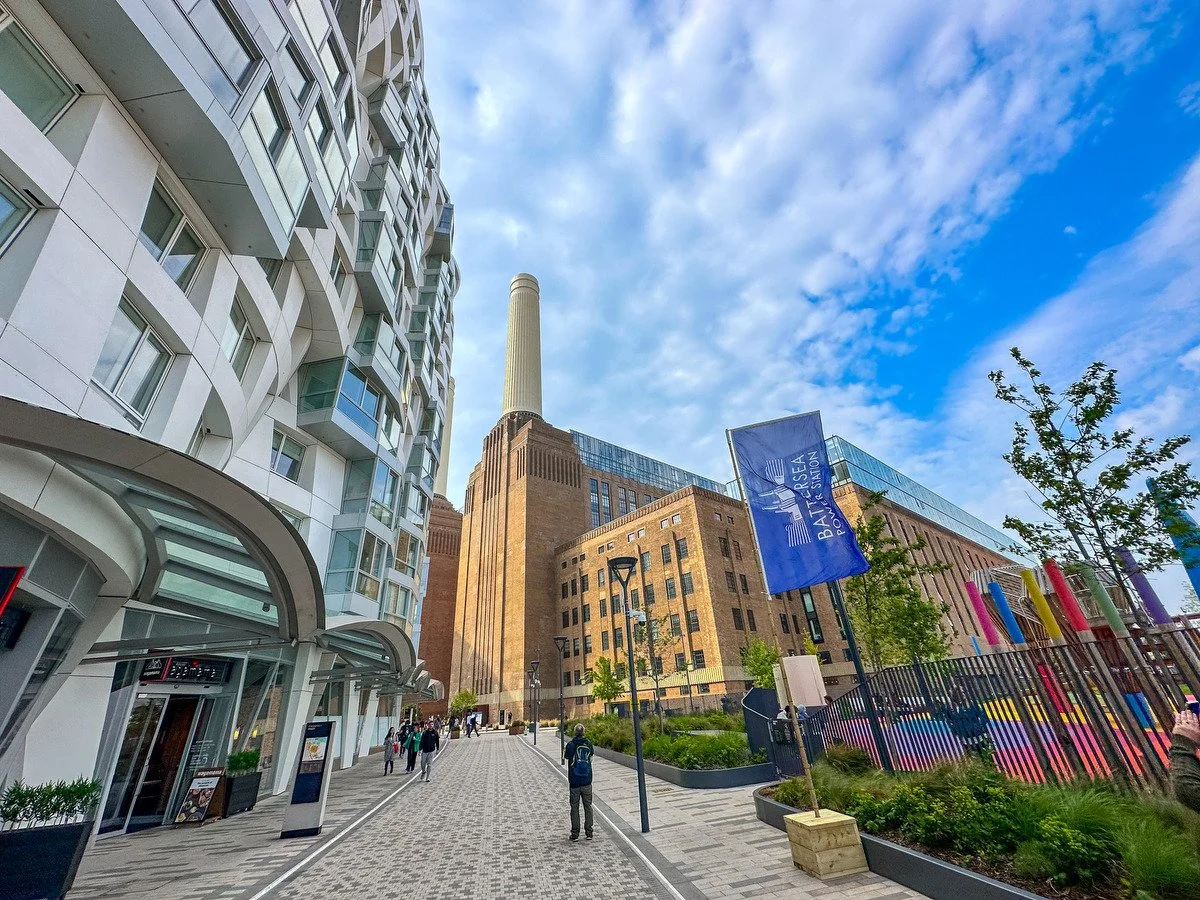
Battersea Power Station.
A slightly different neighborhood experience is Battersea Power Station, one of London’s latest trendy destinations. Once a derelict industrial site on the south side of the Thames, it is now a boujie neighborhood of luxury apartments, entertainments and riverside greenspaces, touted as one of the best mixed-use neighborhoods in the world.
It all centers around the newly renovated Power Station that once electrified London. The massive historic structure has been repurposed as a luxury shopping center and entertainment facility. There is plenty to do at Battersea - cinemas, restaurants, unique bars, even table tennis and indoor mini-golf. You can also take a ride up in one of the old chimney towers for a sweeping view of the city (and for a price).
Fun fact - If you are of a certain age, you might recognize Battersea Power Station from the iconic Pink Floyd album cover Animals.
We enjoyed visiting Battersea Power Station - it was something a little different. Read our take on this fun area in our post What to do in Battersea, South London.
Free Things to do in London
London has a reputation for being expensive - and it can be. But there is a surprising amount of great things to do that cost nothing. We’ve made it our mission to take advantage of free things to do on every visit, from enjoying the many parks and greenspaces, to walking along the Thames and visiting free museums.
In our comprehensive post, Free things to do in London, we lay out our best ideas for enjoying free experiences in London.
Museums
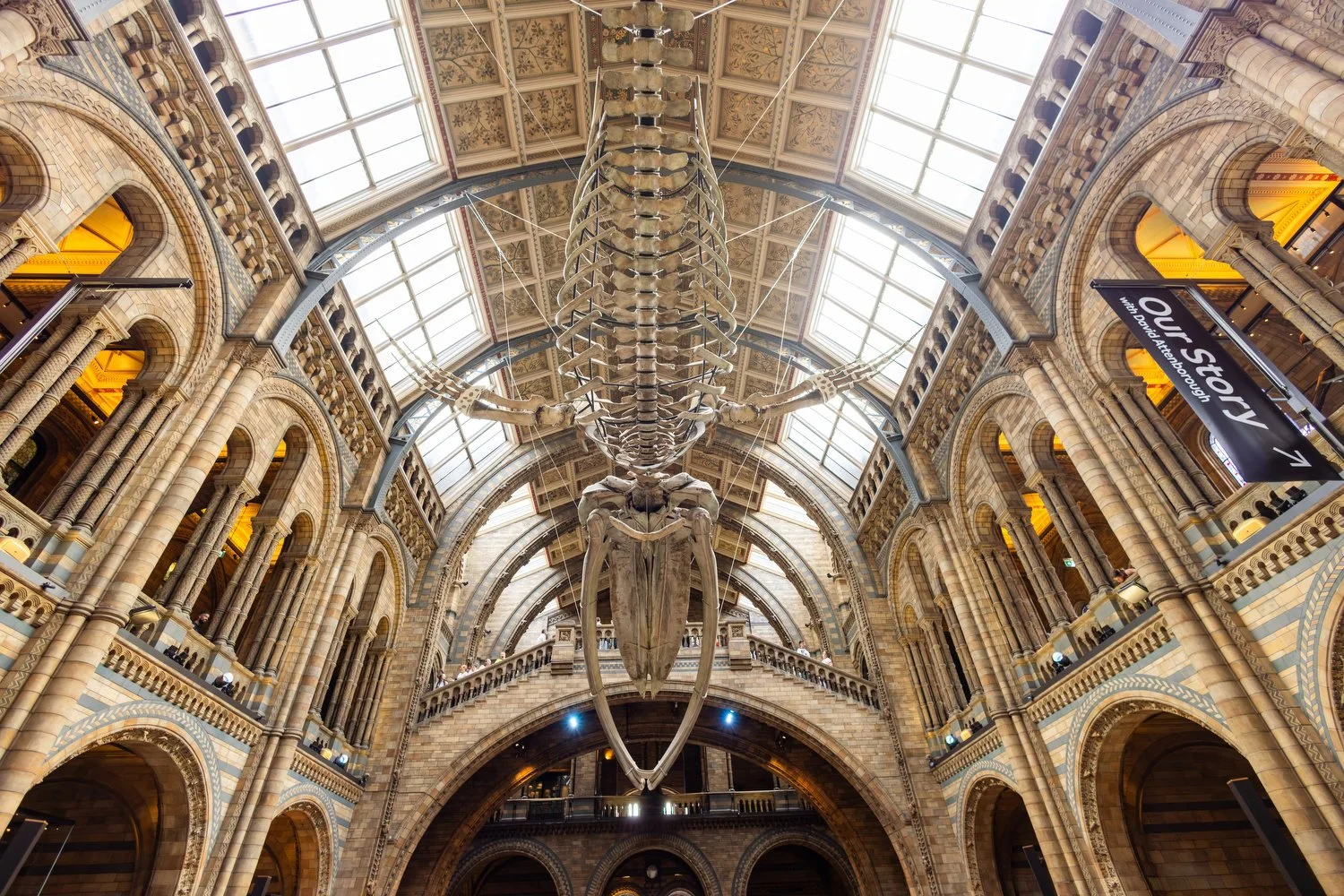
The Natural History Museum is amazing and crowded.
Museums - London has many first class museums that are free to enter. Special exhibits may require a paid ticket, but the general admission for most are free. This may be changing soon - there is talk of making them only free to residents, so as visitors we need to take advantage while we can!
I really enjoy The National Portrait Gallery, featuring portraits of notable Britons, it is one of my very favorite museums and I feel like I can just get lost in there.
Only last summer did I visit The Victoria & Albert for the first time. I wanted to see the special Cartier Exhibit - which bowled me over! (Check our Youtube channel for a short video if you want a taste of the bling.) Aside from that limited run exhibit, the museum was quite remarkable and I think most visitors would find something to enjoy there. And do have lunch at the V&A Cafe! The setting alone is worth it! (of course that isn’t free but worth a mention!)
Free Skyline Views

The atrium area in the Sky Garden.
I’ve said it before and I’ll say it again, London’s skyline is a unique and wonderful thing. With a modern building like the Shard poking out behind something as ancient as the Tower of London, it never ceases to impress.
In our post, Best Free Views of the London Skyline, John lays out all the free viewpoints for taking photos or for just taking it in.
Our favorite free observation deck is Sky Garden, which we just walked up to one day in January a few years back, but these days you do need to book a timed ticket. It’s worth it though. Sky Garden is located on the 43rd floor of the famous “Walkie-Talkie” building at 20 Fenchurch Street, right in the heart of London. It is also London’s highest public garden.
Horizon 22, the newest and highest free observation deck, offers an almost 360-degree view of Central London. It is located at Level 58 of 22 Bishopsgate.
We actually love the Garden at 120, located on the 15th floor of 120 Fenchurch. Though it isn’t high up, it’s a lovely rooftop garden space, very peaceful and green, and you feel like you are sitting among these giant skyscrapers sculpted around you.
There are lots more viewpoints in the post, so check it out.
London parks, gardens and nature spots
Many visitors to London are surprised by how much green space there is in the center of the city. In fact, London is home to over 3,000 parks and public green spaces, making it one of the greenest major cities in the world.
Royal Parks
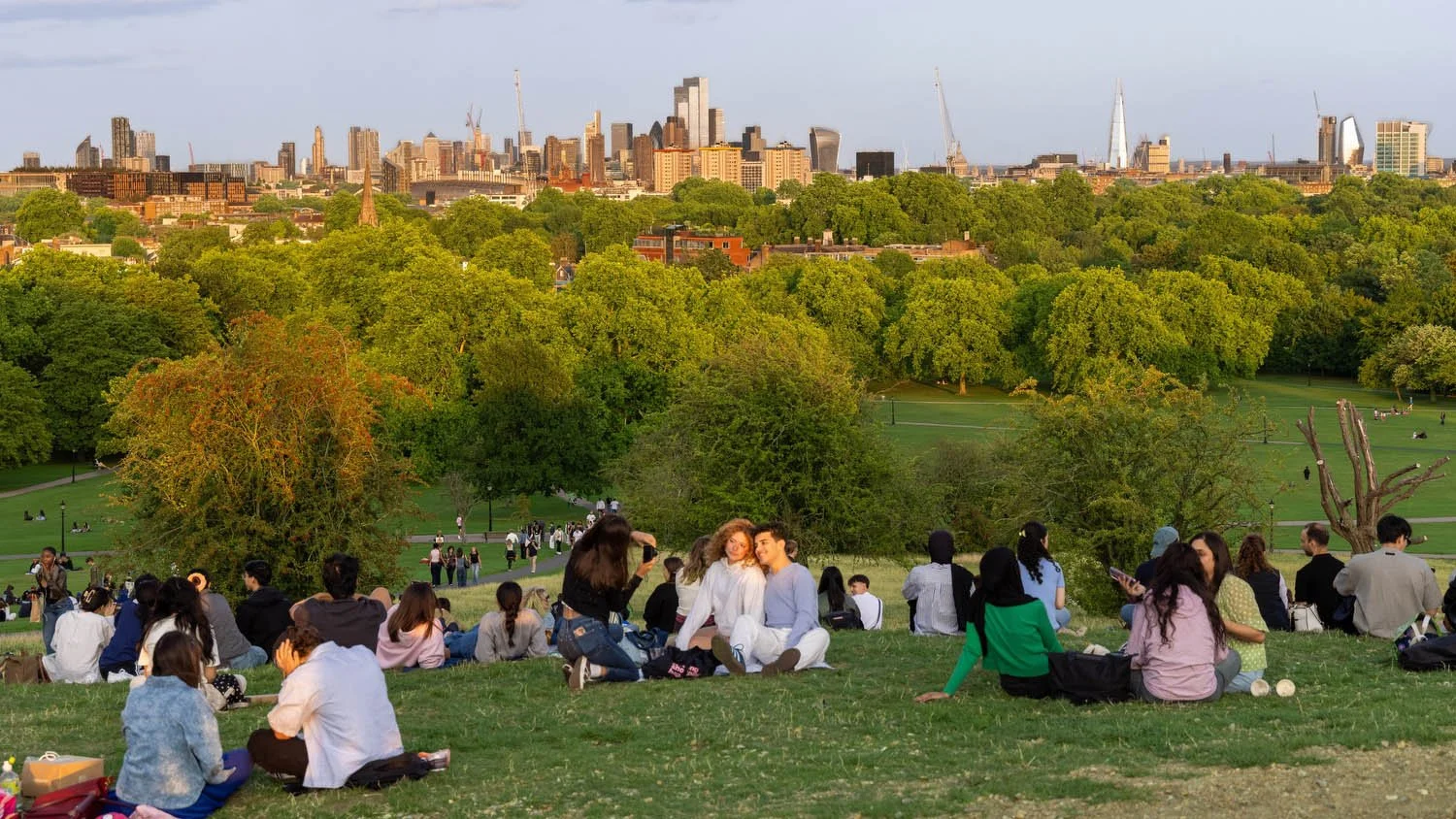
Primrose Hill is a wonderful spot to join locals to watch the sunset.
Londoners love their parks - and so do I! Actually, the Royal Parks are some of my favorite places in London, and some of the best things you can enjoy for free. They are so well done and managed. Right through the heart of Central London runs St James’ Park, Green Park and Hyde Park all in a connected chain and that’s only the beginning.
Kensington Gardens, part of Hyde Park, is really one of the most enchanting places in London. The flowers, the ducks on the water, the sculptures dotted throughout, all make it a joy to visit. But there’s also beautiful St James’ Park with its view of Buckingham Palace and Big Ben, (where the small fee to rest in a deck chair was the best investment we made on a particularly busy day in London last summer!) and the lovely sunsets up on Primrose Hill near Regent’s Park. There are so many, it’s really hard to pick a favorite!
Read my post A Guide to Exploring London Parks for a full list of London’s parks and what is unique about each.
Kew Gardens

One of the many highlights at Kew Gardens.
While it isn’t free, if you love nature and gardens, Kew Gardens is a wonderful visit, one of those places that earns its ticket price.
Kew is the world's largest collection of living plants and a UNESCO World Heritage Site. It sits just outside central London, a short ride on the District Line, and it feels like stepping into a completely different world. Victorian glasshouses, towering trees, a Japanese landscape, a treetop walkway, and over 300 acres to wander through.
Read more in our post, Visiting Kew Gardens London: A Complete Guide.
Practical Advice for Visiting London
Here’s a few things worth knowing before you go:
How many days do you need in London?
If you're asking us, the honest answer is: more than you think! But for a first visit, we recommend 3 to 4 days as a good starting point.
Three days lets you cover the heavy hitters at a comfortable pace. Think one day for Royal London (Buckingham Palace and the Changing of the Guard), one for the historic side (the Tower of London, Tower Bridge and a walk along the Thames), and one to wander a market or two and just soak in the neighborhoods.
With a fourth day, you can add Greenwich, Kew Gardens, or one of the wonderful day trips by train.
What you don't want to do is try to cram it all into a day or two. Some of our favorite memories aren't attractions at all; they're the slow afternoons in a deck chair in St James' Park or having afternoon tea.
And if you have more time? Use it. We once stayed for two full weeks and never ran out of things to do. Not even close! That's the thing about London, there is always something happening.
Getting around London
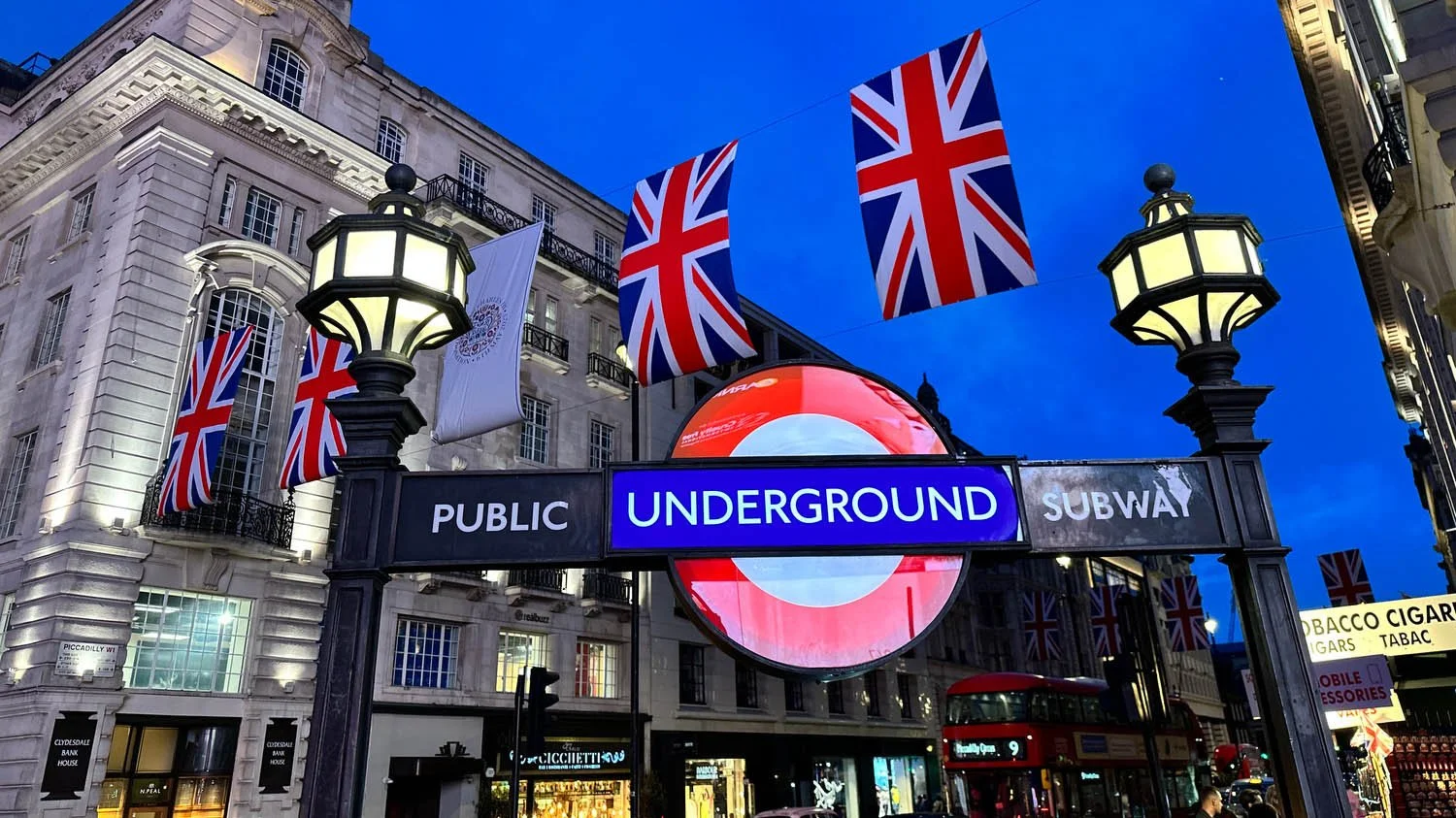
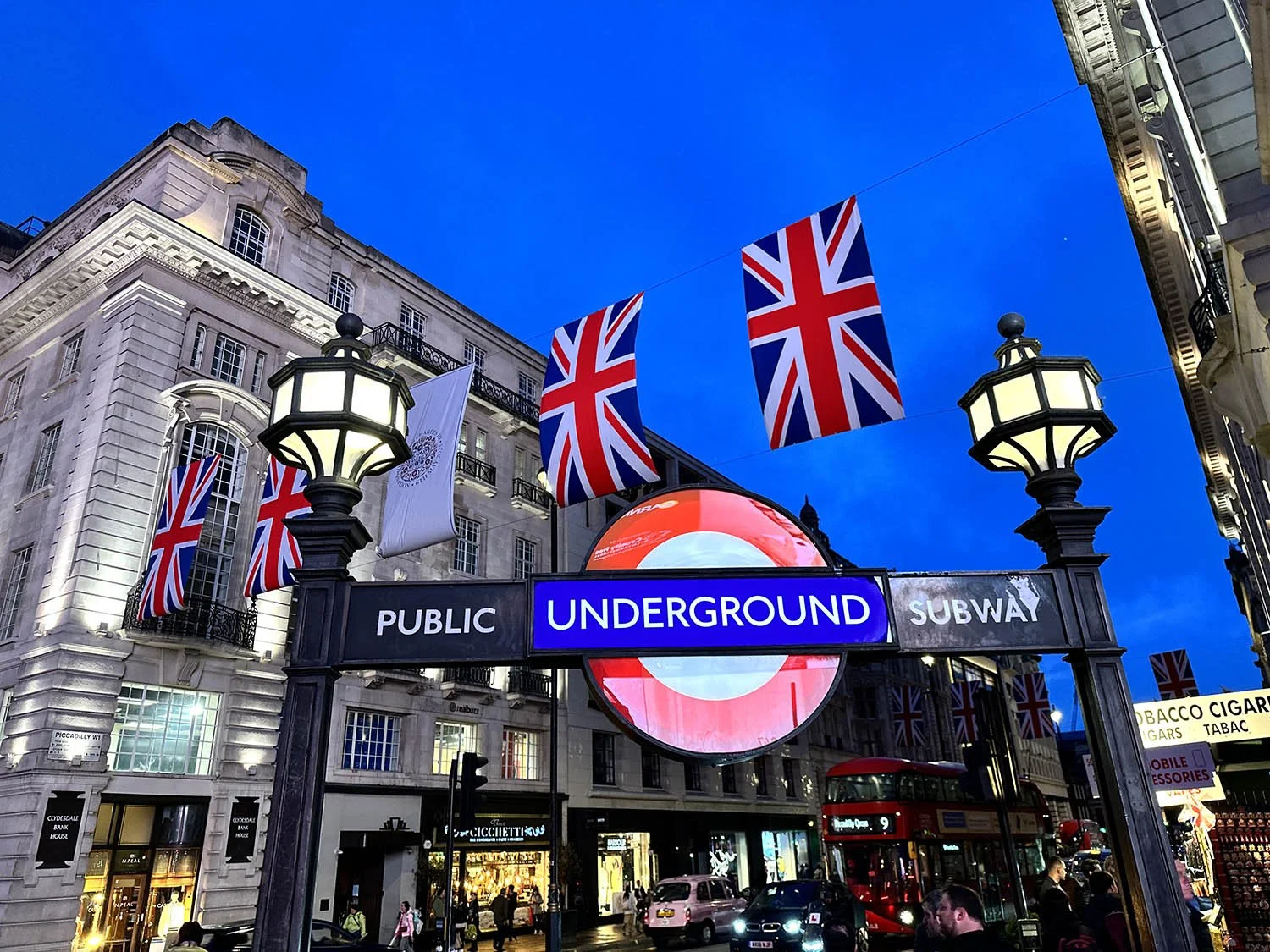
Getting around London is easier than you might think. The transport system is extensive - you can take the Underground or an iconic red bus to get pretty much anywhere you want to go. There are also river boats, famous black cabs and other railways.
With the new easy-to-use tap-to-pay system, there isn’t really a need to purchase an Oyster card for TfL these days. There are Daily Price Caps as well, so once you hit that limit you won’t pay more for the day.
Taking the Elizabeth Line from Heathrow Airport into central London has quickly become the "sweet spot" for 2026 travelers arriving at Heathrow. The line offers a balance of comfort and value.
We delve into this topic and lots more in our post, How to Use London’s Public Transportation: A Guide for Visitors.
When to go to London
| Season | Crowds | What's Great | Tradeoffs |
|---|---|---|---|
| 🌸 Spring ✅ OUR PICK | Moderate | May is the sweet spot: gardens in bloom, good weather, attractions open | Summer schedules not yet started |
| ☀️ Summer | Busiest | Palace summer opening, daily guard change (Jun–Jul), long evenings | Packed museums, higher prices |
| 🍂 Fall ✅ OUR PICK | Easing off | September keeps the fine weather without holiday pricing | Days getting shorter |
| ❄️ Winter | Lightest | Christmas charm, cheap fares, no queues in January | Short daylight, some attractions limited |
Because it is a big city with plenty to do and fairly mild weather, London is actually great in all seasons. Honestly, there is no “bad time” to go. But each season has its tradeoffs.
We love the “shoulder seasons” - May and September.
We think May is the perfect time to visit London - and we’ve been several times around our anniversary. The weather is good, and it’s not too crowded yet with summer visitors. Gardens are in bloom and attractions are open, though not yet on their summer schedules.
September is also a great time with summer crowds dispersing and busy holiday happenings (and pricing!) not yet kicking in.
But we’ve also been to London in the height of August, and I have to say, it was quite nice! I was expecting the worst as far as crowds go, and yes it was busier than May, but not terrible, and the fine weather truly makes up for a lot of that bother. London is glorious in summer. And where has “strawberries and cream” been all my life??
I’d say the worst of the crowds were at the various museums - some quite undoable in my view - so maybe save those for another time.
London in winter has its own unique charm. If you are a lover of Christmas and the holidays, nowhere does it better. We’ve been in January and it was a great experience. There are less crowds and travel fares tend to be cheaper. The weather isn’t too cold, but do expect some rain. (But that could be anytime in London really.)
The main tradeoff is less daylight hours and not every attraction is fully available (ie, no garden access at Buckingham Palace, no tours at the Royal Mews) but long queues just don’t seem to be a thing in January.
For a full rundown, read our post Planning your visit to London in Winter.
A note on booking ahead
No matter what time of year you go, we do recommend booking ahead for popular attractions in London. Things like the Tower of London, Buckingham Palace, the wildly popular 2026 Queen Elizabeth II: Her Life in Style exhibit at the King’s Gallery, and even the Sky Garden really do sell out.
We don’t generally like to be over-planners, but if there is something you don’t want to miss, get your tickets ahead of time so you won’t be disappointed. Even if it’s a free one, like the Sky Garden, you may need to book a timeslot.
It couldn’t be easier with Get Your Guide:
A quick note: some links here are affiliate links. That means if you book or buy something through them, we earn a small commission. You pay nothing extra, and it helps keep this blog going. We only recommend things we actually believe in.
Day Trips from London
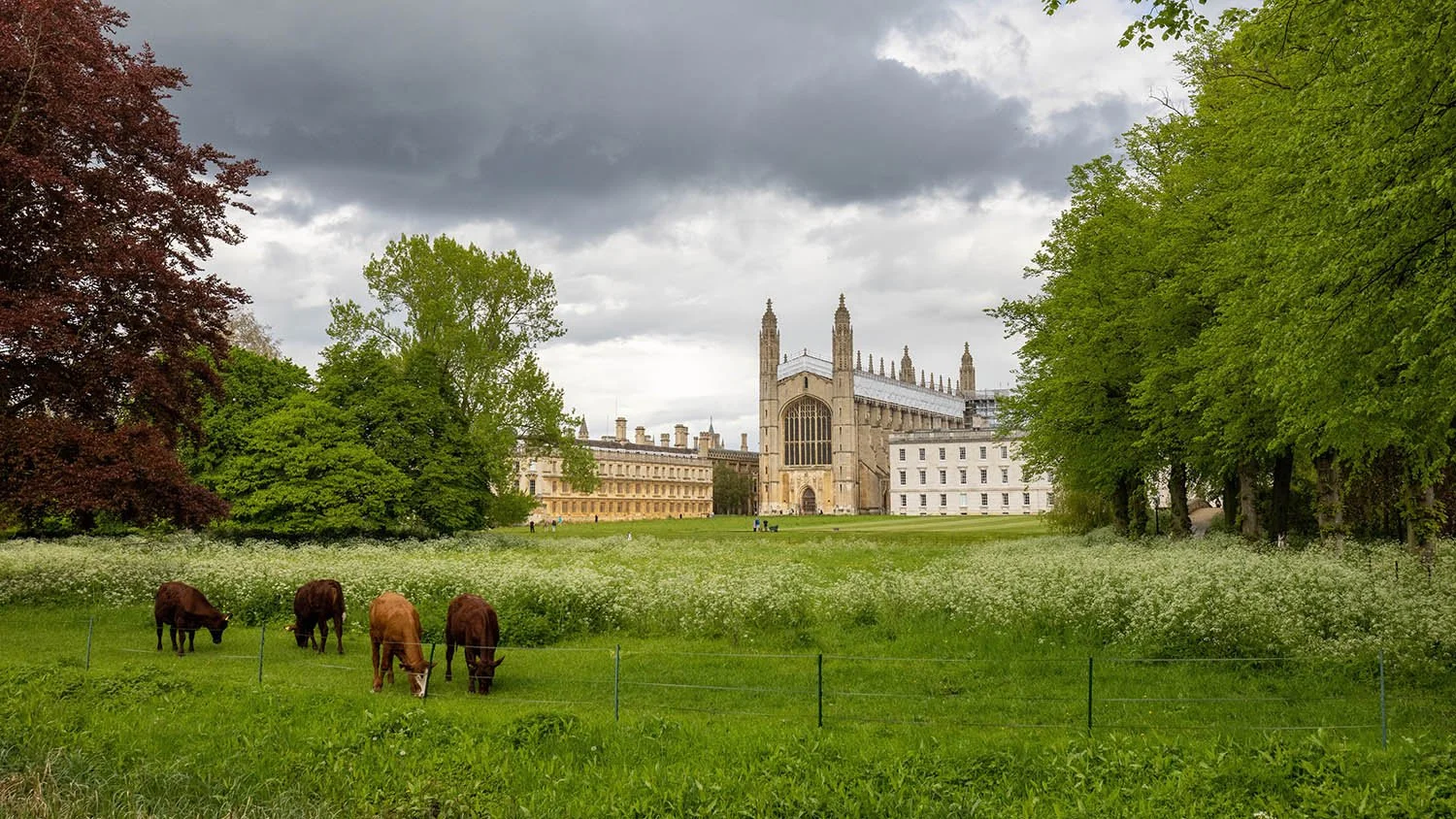
An iconic Cambridge scene while Walking the Backs.
Last but not least, London makes a great base for exploring further afield. I can’t think of any other city with as many first class day trips within easy reach.
We adored the White Cliffs of Dover - truly one of my best English experiences. Walking along the iconic cliff trail on a glorious day won’t soon be forgotten. So different from being in the city, and only a short train ride away.
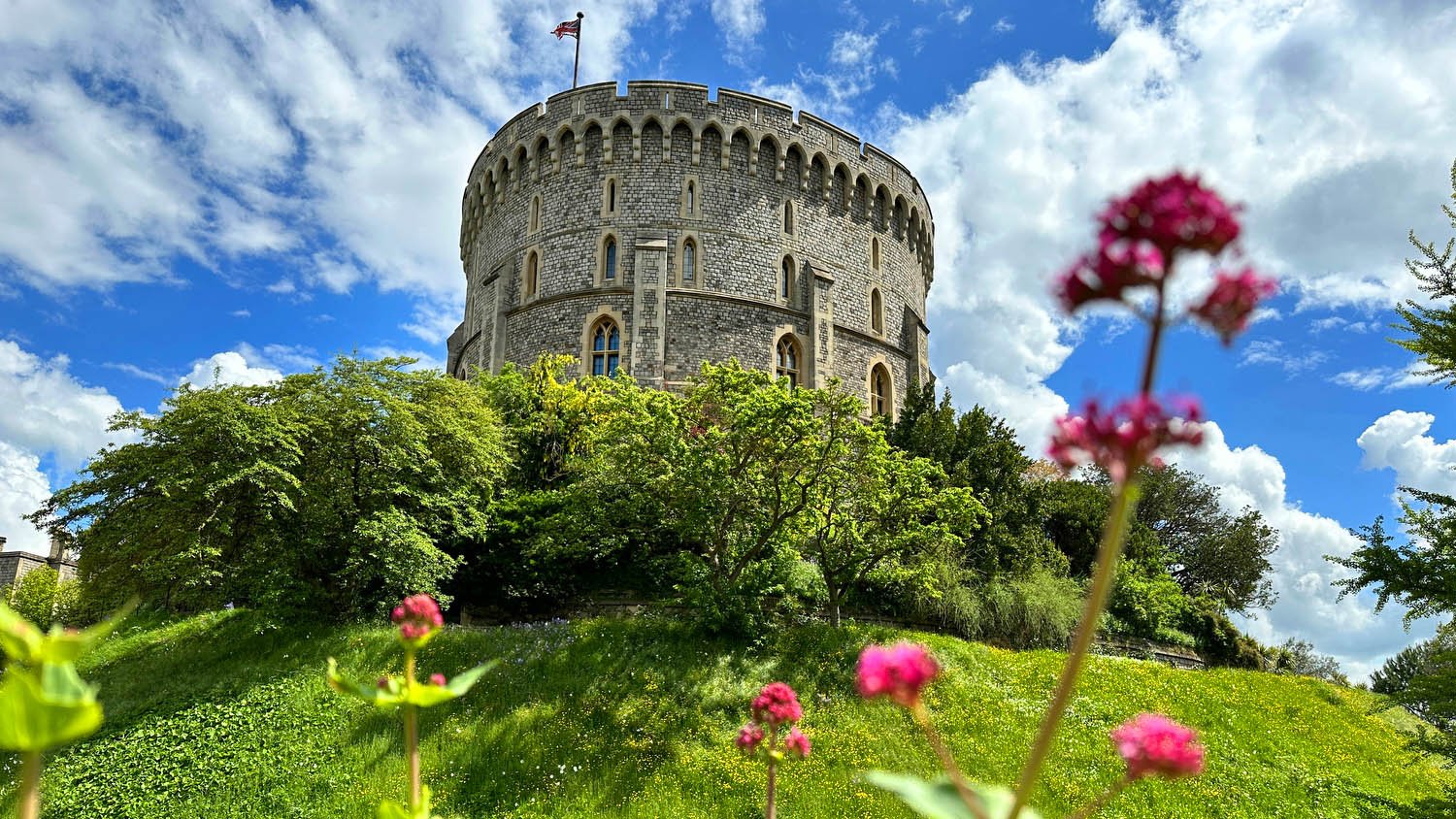
We’ve also taken trains to visit Windsor Castle, to Cambridge and to Brighton for very different experiences and easily back in London for dinner. No extra stays.
To explore more about London’s great day trips, read our post Day Trips from London by Train: Our Favorites.
As a place to start for planning logistics, read our guide Traveling by train in Britain: a guide for beginners.
And on that note, I’ll close here. There’s no place we’ve enjoyed in our travels as much as London.
It has a personality all its own; diverse but with a universal thread through its style, traditions, architecture and history. Anchored yet adaptable. A sort of practicalness with a designer flair. Proud, but not loud, with a raised eyebrow of skepticism.
Visiting London never gets old to me. I find myself looking at every detail and wanting to unlock all the stories.
Now, isn’t London calling you?
About the Authors

|
John and Debbie O'Boyle are the team behind The Empty Nest Explorers. John is a professional photographer whose work has been published by The New York Times, NBC News, and Getty Images. He is a member of the American Society of Media Photographers, has been part of a Pulitzer Prize-winning team, and has received two New York Emmy nominations. Debbie is a writer with 30+ years of professional photography experience, formerly with The Star-Ledger and NJ.com. Together, they create in-depth travel guides for couples and empty-nest travelers who want to make the most of every destination. |
Some well reviewed activities:
Our other England blog posts:




London was the first European city we visited, and we keep going back.
Here is everything we have learned to make your first trip go smoothly, from the ETA and the Tube to where to stay and the best day trips.