
Visiting Balmoral Castle, what to see and is it worth it
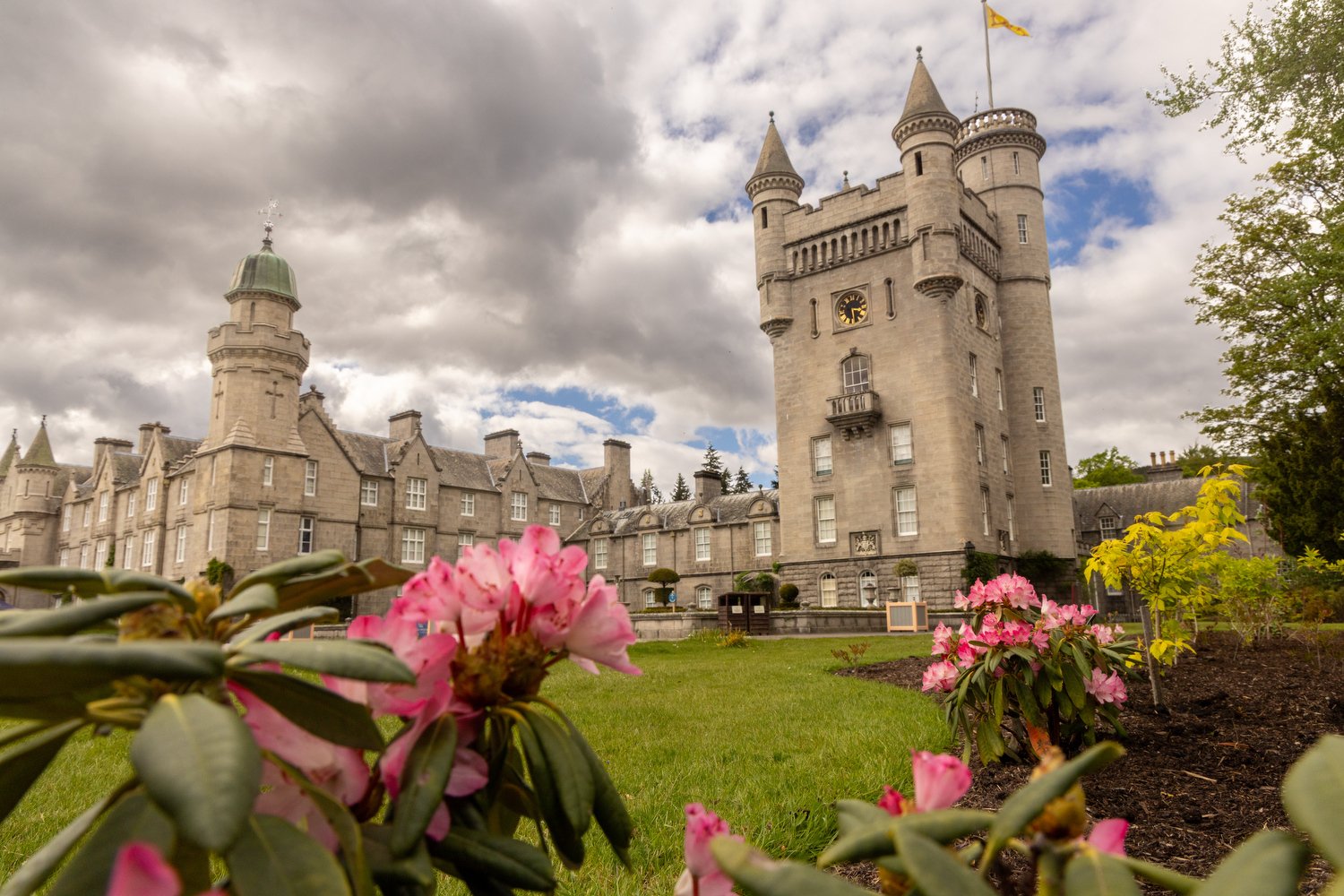
Balmoral Castle, the Highland home of the Royal Family in Royal Deeside, Scotland. All photos by John O’Boyle / The Empty Nest Explorers
Visiting Balmoral, the country estate of the British royal family in the Highlands of Scotland, is a very elegant yet comfortable experience. The impeccably beautiful gardens and grounds immediately around Balmoral Castle have been open to the public to some extent for some time, but starting in 2024, King Charles III has allowed limited access to the interior of the castle as well.
The first thing I was aware of upon arriving was the rushing sound of the River Dee, as we crossed a bridge from the parking lot to the entry gate. The river looks, sounds and smells fresh, earthly and clean. No wonder the royal family has loved coming here for generations. There might just be something to the restorative reputation of “the air of the moors.”
Balmoral was said to have been Queen Elizabeth II’s favorite residence, having spent holidays there since her childhood days and passing the tradition down to her own children and grandchildren. Indeed, she spent many significant moments of her life at Balmoral. Prince Philip proposed to her in the gardens here, and the couple spent part of their honeymoon at Birkhall, a cottage on the estate that is a favorite of the current King and Queen, Charles and Camilla.
The last weeks of Elizabeth’s ninety-six years were spent at her beloved Balmoral, and she became the first British monarch to pass away in Scotland in 480 years.
Balmoral is a privately owned residence - not a property of the Crown, and not a museum, so the king certainly didn’t have to make it available to the public at all. As it is still very much used by the royal family, the interior tour is understandably limited and a bit costly.
But, like many of King Charles’ initiatives, it is meant to be an exclusive luxury experience - i.e., one pays for it - so the price and limited availability of the tickets is not unexpected.
| Location | Royal Deeside, on the A93 at Crathie. Set your GPS to AB35 5TB. Ballater is 6 miles east, Braemar 7 miles west. |
| General Admission | Adult £18.50, Child £8.30 (ages 5 to 16), Family £36.75. Covers the grounds, gardens, Ballroom Exhibition, gift shop and restaurant. |
| 2026 Season | Open daily from March 28 to August 9. The estate closes to visitors when the Royal Family arrives for the summer holiday. |
| Hours | 10am to 5pm. Last admission is recommended by 4pm. |
| Interior Tour | Around £110, adults only, limited to 12 people per tour. It sells out months ahead and is sold out for 2026. |
| Photography | Fine across the grounds and gardens. No photos allowed inside the castle on the interior tour. |
| Parking | £6 at the machines, cash or card. Blue Badge parking is available inside the grounds on request. |
| Time Needed | Half a day at least. A full day if you walk down to the River Dee and have lunch at the restaurant. |
Is the interior tour of Balmoral Castle worth it? Tickets, prices and thoughts
Previous to 2024, a visit to Balmoral included select grounds and gardens and one interior room, the Ballroom, which features a seasonal exhibit. The visitor experience changed massively in 2024, when very limited interior tours were launched as an experiment. It was a success, and ticket availability was expanded for the 2025 and 2026 seasons.
But the availability is very limited, both by tour size (12 per tour) and by dates. The open season is only from the end of March to early August (when the royals decamp to Scotland for their holiday.)
Interior tour tickets sell out months in advance, so I would expect the “experiment” to continue, due to its success.
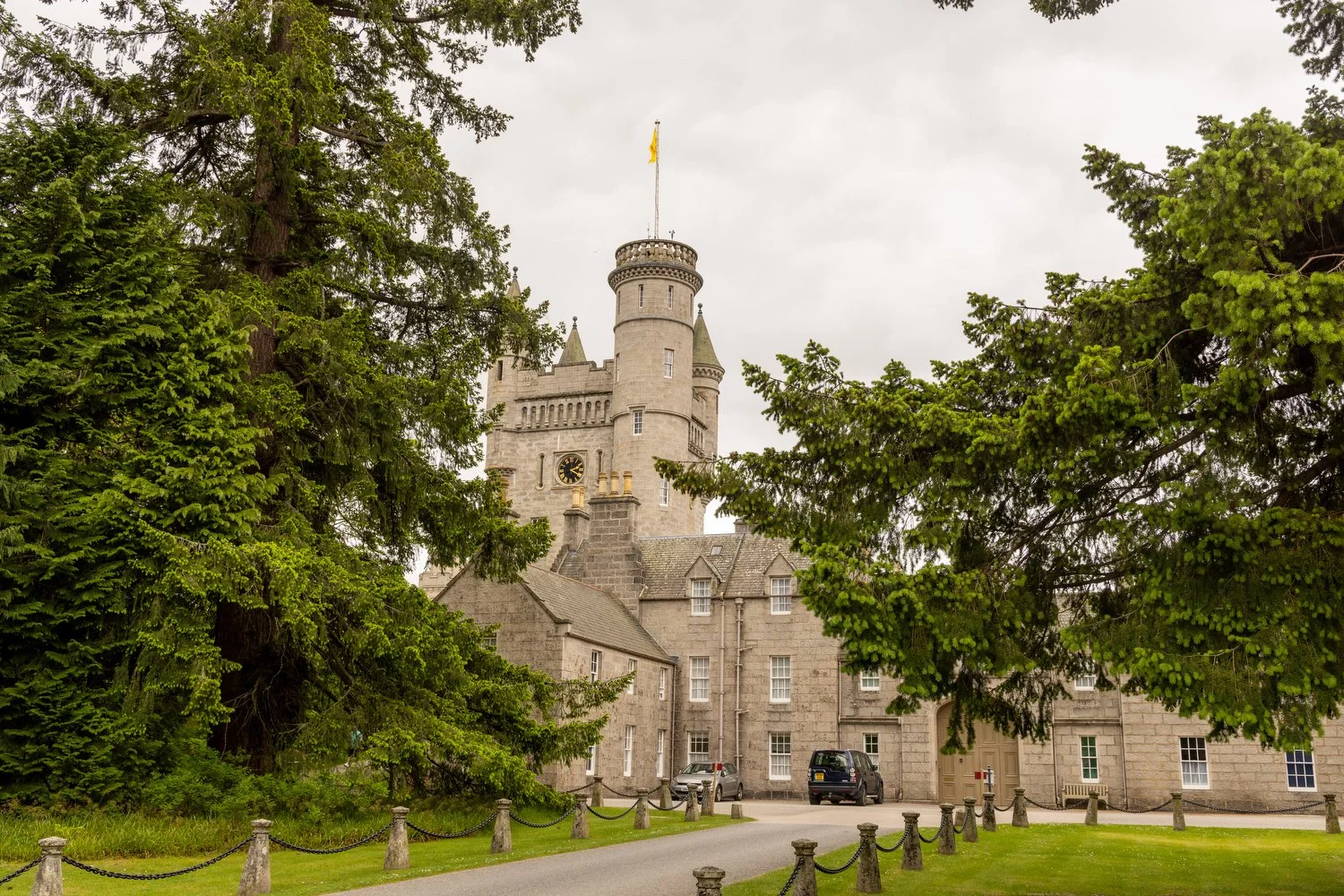
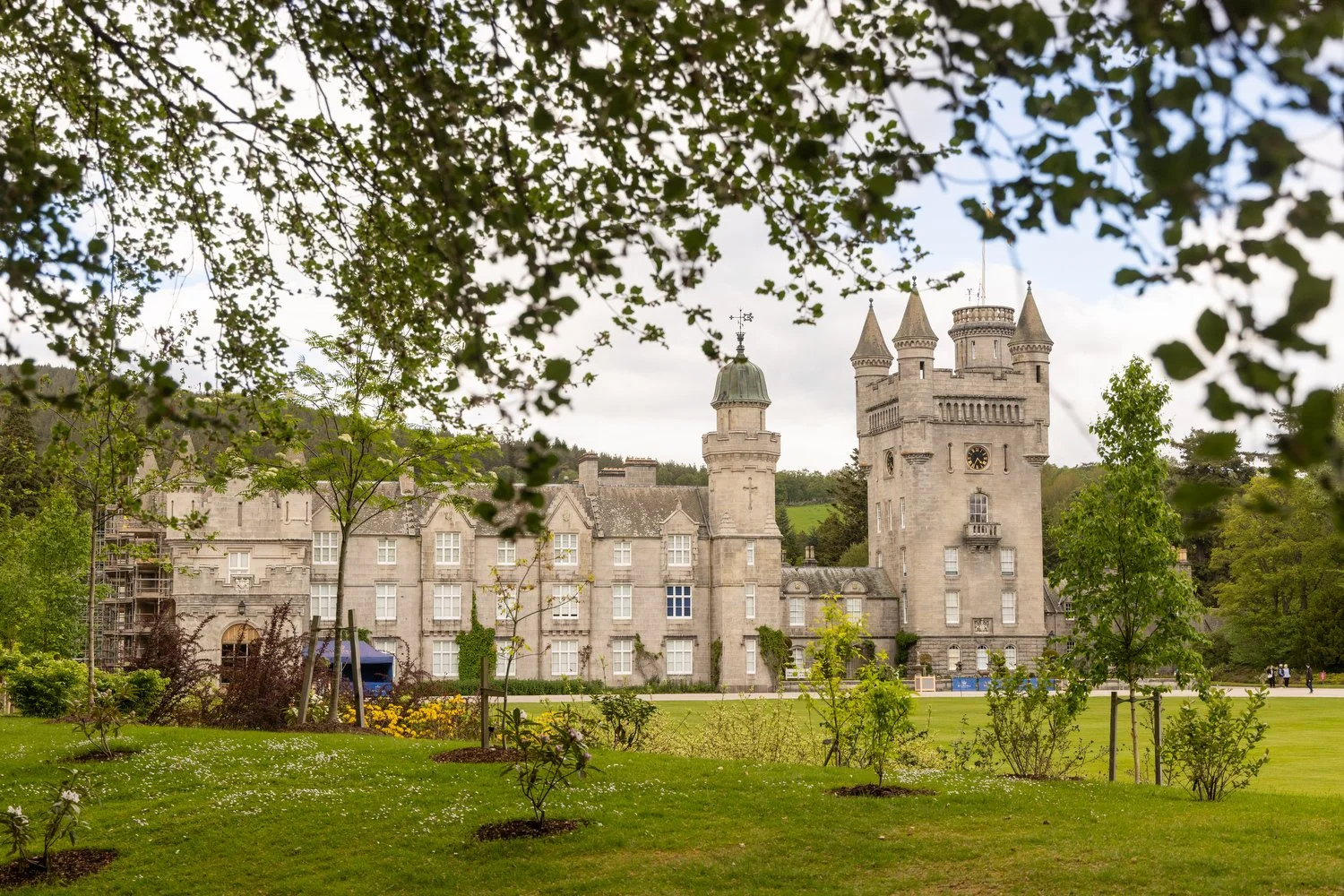
Our first glimpse of Balmoral Castle from our lunch table.
Here are the basics the two-tier ticket system:
General admission - £18.50 for adults; Child £8.30 (5 thru 16 yrs).
General admission includes access to the Castle Ballroom, where visitors can view the 2026 exhibition, a photographic exhibition commemorating the centenary of Queen Elizabeth II.
The grounds, gardens, Mews Gift Shop, Restaurant and Ballroom Exhibition are open daily, 10am - 5pm, from approx. March 28 to August 9.
Interior guided tour - £110.00 (adults, over 16yr only)
This includes everything in general admission plus a guided tour through a few of the downstairs rooms of the castle. At this point, it includes family dining rooms, an entrance hall, the Green Drawing Room, the King’s private study and the Ballroom, (but as this is still a relatively new tour, that could change.)
Expect the tour to last about 45 minutes.
No photography is allowed and the family’s private rooms upstairs are off limits.
There are also other offerings; a £175.00 combo ticket that includes afternoon tea (at the restaurant), and a £380.00 2-hour Expedition Tour via Land Rover all over the estate for up to 6 people. Sounds like a truly royal experience and something I might perhaps enjoy even more than the interior tour! But of course that’s a pretty expensive date.
Tickets can be booked through the official Balmoral Castle website.
| Ticket | 2026 Price | What You Get | 2026 Availability |
|---|---|---|---|
| General Admission | Adult £18.50 Child £8.30 Family £36.75 |
Grounds, gardens, Ballroom Exhibition, gift shop and restaurant | Available |
| Interior Guided Tour | Around £110 (adults 16+) | General admission plus a guided walk through several downstairs rooms, about 45 minutes | Sold out |
| Interior Tour with Afternoon Tea | Around £175 | The interior tour plus afternoon tea in the restaurant | Sold out |
| Balmoral Expedition Tour | Around £380 for up to 6 | A 2-hour guided Land Rover tour across the wider estate | Books up fast |
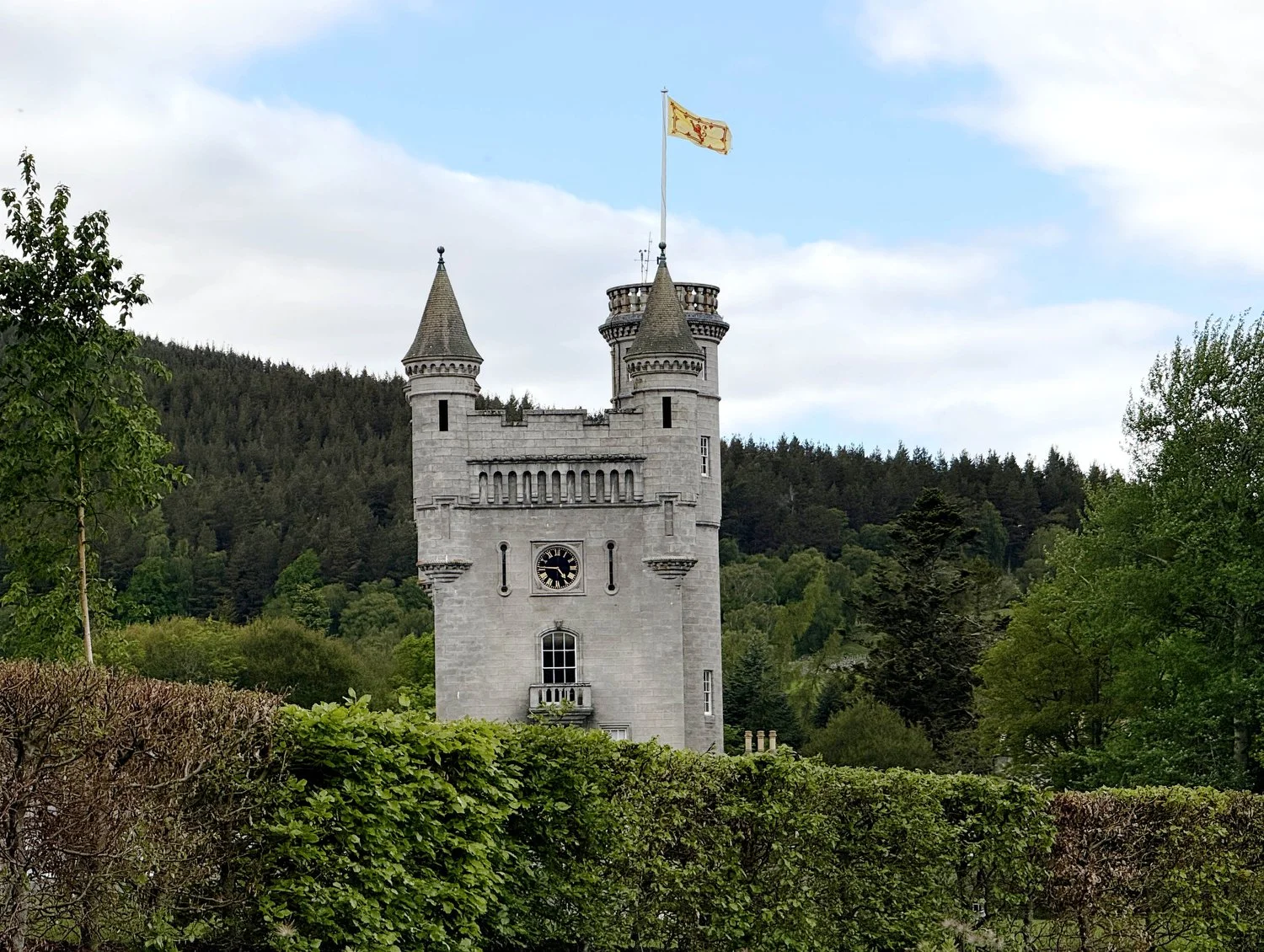
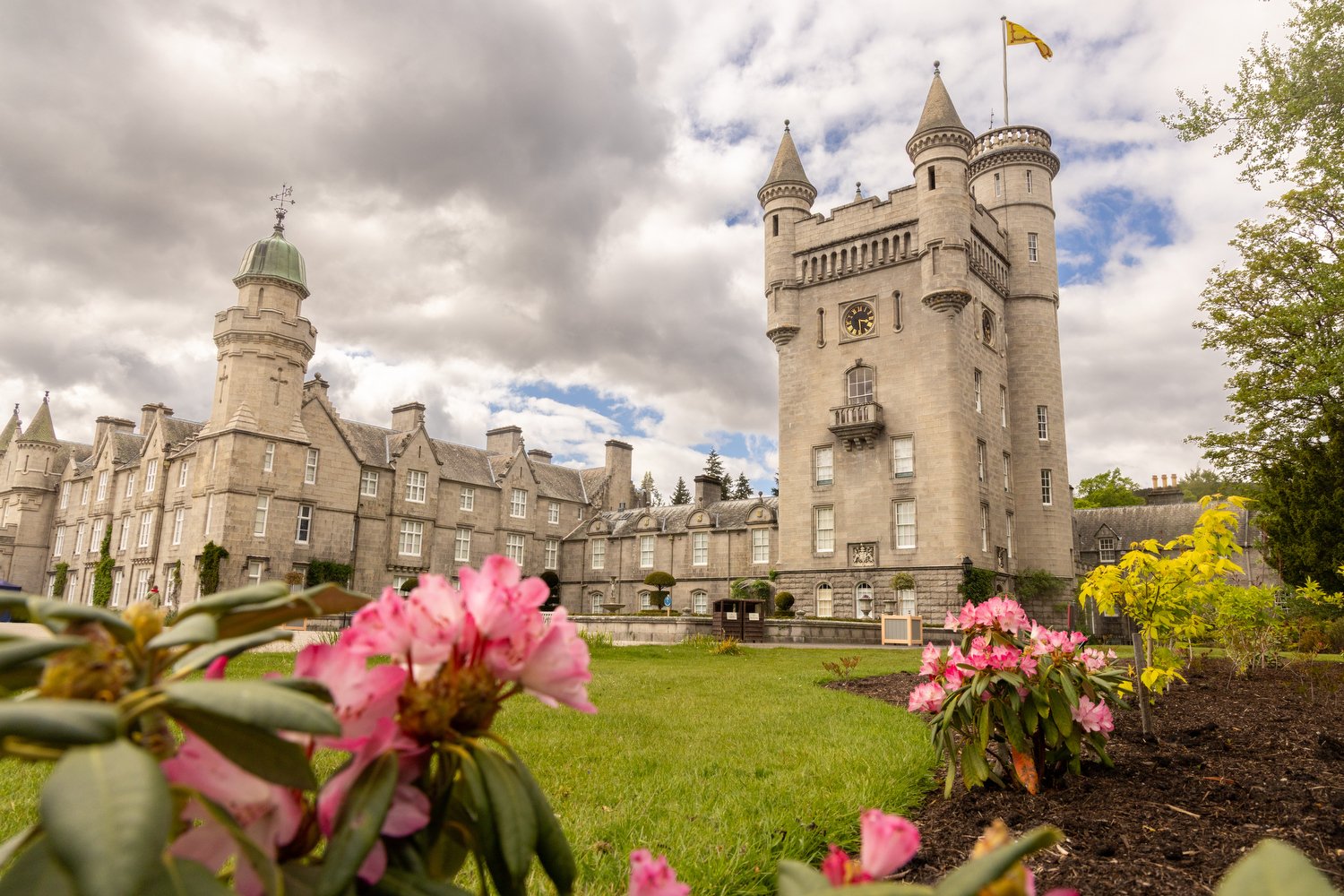
The turreted tower of Balmoral Castle looms over the hedges of the sunken flower garden.
Up front, I’m going to tell you that we opted not to buy the interior ticket. I would have loved to see the rooms on display, but I felt the cost was high. Not that I don’t appreciate that it is meant to be a luxury experience, but Scotland is a pretty expensive trip in general, so sometimes you have to make choices.
More important than the cost, though, was the fact that we were traveling with our grown son on this trip, a treat for John and myself. He was a good sport about visiting a few royal-related sites for my research on a little passion project of mine. (See our post on Glamis Castle and King George VI’s connection to it.)
We rounded out our royal adventures in Scotland with a visit to the Royal Yacht Britannia in Edinburgh. And though our son really enjoyed that one, I didn’t want to make our family vacation all about that stuff.
Of course I could have done the interior tour alone and left the boys to wander, but what fun is that? Plus, since it sells out so quickly, I needed to make this decision way back in January if I really wanted to do it. So the decision was made, no regrets.
Bottom line: I do think the interior tour is a genuinely special offering, but it is expensive and hard to book.
No worries though - if it’s details on the interior tour you’ve come here for, I’ve rounded up enough information to help you decide for yourself, and of course we have lots to say about the rest of our experience, which, in a word, was wonderful.
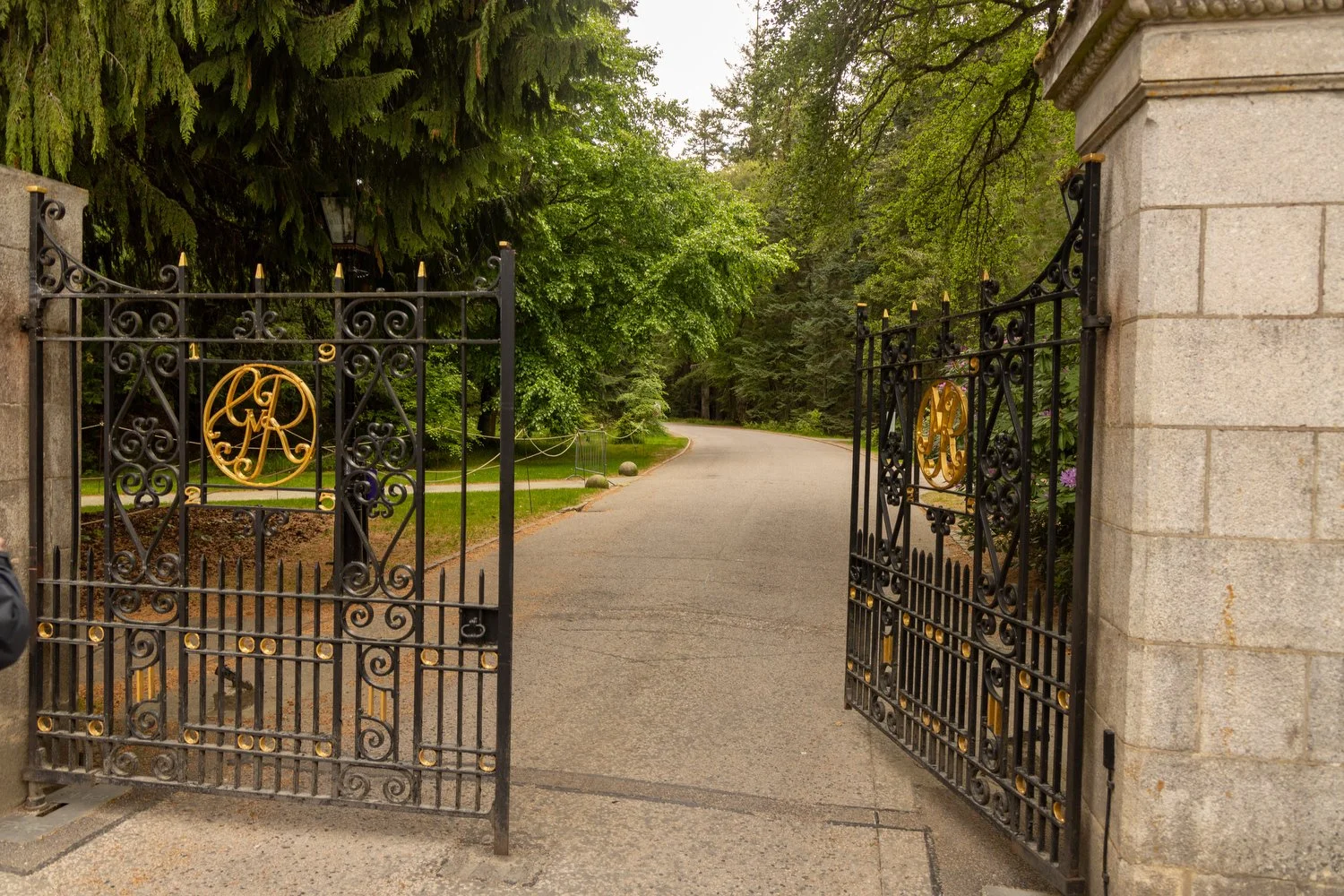
A royal welcome. The front gates of the Balmoral Estate, bearing the cyphers of King George V and Queen Mary.
What you see on the interior tour of Balmoral Castle
Though we didn’t take the interior tour, I’ve done enough research to share.
The BBC was allowed a preview of the interior tour when it was first opened, and the rooms they described are as follows:
Entrance Hall - the tour begins through a grand entrance that leads to the main Entrance Hall, with walking sticks and fishing poles leaning against the walls for use by the family and their guests.
Red Corridor - lots of influence of Queen Victoria here; with her original flock wallpaper and an enormous sculpture of beloved Consort, Prince Albert. Queen Victoria’s influence runs throughout the castle, and King Charles has brought back some of her original items and ideas.
Main Dining Room - where the King dines and entertains his guests; the drapes are in Royal Stewart tartan.
Family Dining Room - a less formal dining room used for breakfast and afternoon teas for the Royal Family.
Drawing Room - where the last public photo of the late Queen was taken; some refer to it as the “green drawing room” because of the pale green couches. This is a living space for the Royal Family and has some interesting items and photos in it.
Library - currently used by the King as his own working study, and where he has hosted meetings with numerous dignitaries. (not sure I’d want people preening through my home office, hahaha, but then again I don’t have a staff to keep it presentable!)
Grand Ballroom - after your tour, you can visit the Grand Ballroom as with any other ticket. There is usually a seasonal exhibit of art, photos and other royal artifacts.
Of course, these offerings could change, especially since it is a new tour. Because the spaces are small, tour sizes have to be limited. Along with limited dates, these tours sell out very quickly, so if you want to do it, it’s best to book as soon as the tickets go on sale.
By all accounts the rooms are grand but smaller and cozier than expected, and actually that doesn’t surprise me. I had that same feeling when we visited HMY Britannia- that these spaces are more comfortable than you might expect, though of course they are well appointed.
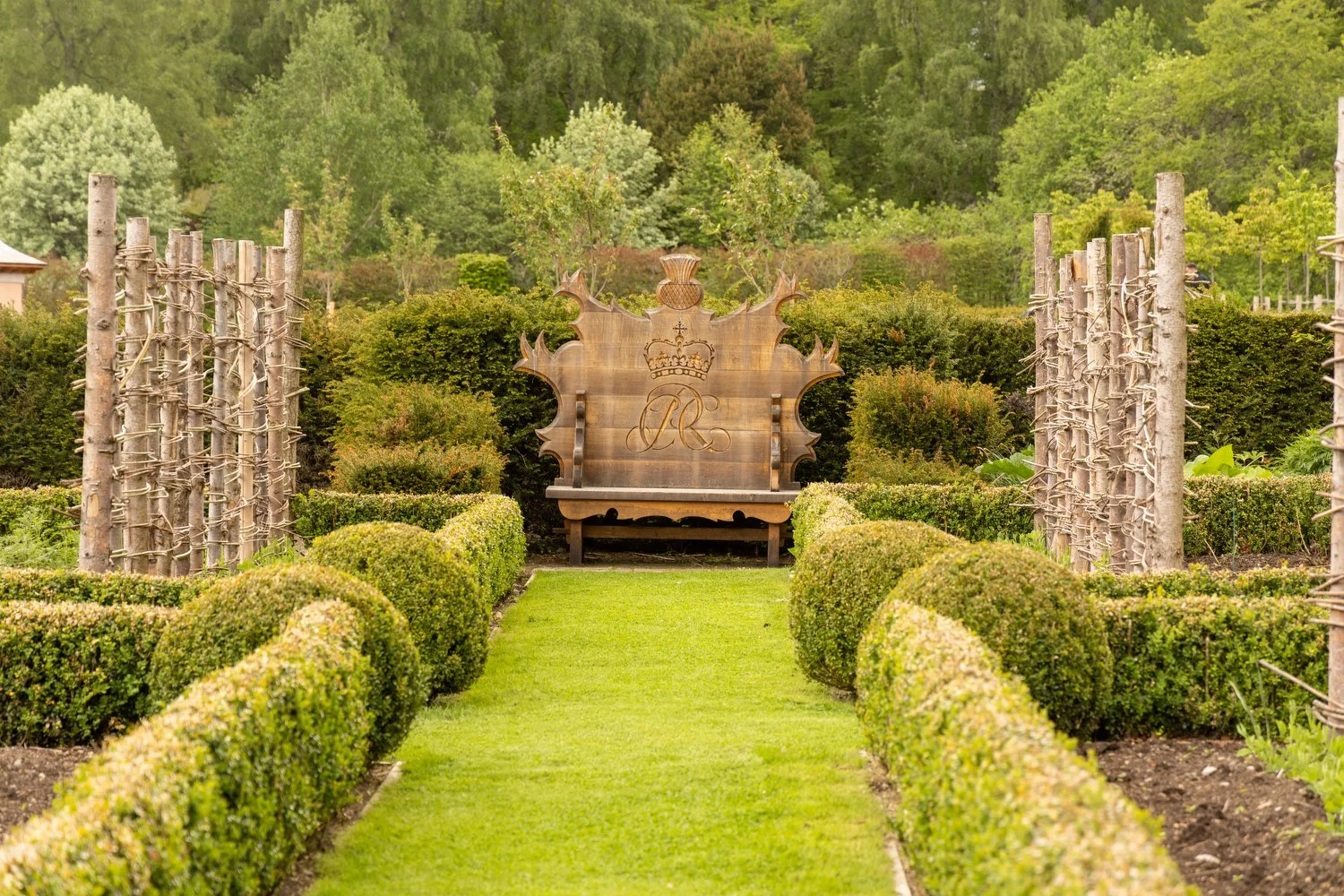
A quiet corner in the South Gardens. The bench bears the cyphers of the current King and Queen, Charles III and Camila.
Some interesting history of Balmoral Castle
Most visitors to Balmoral come because of curiosity about the royal family. The history is the travel experience - otherwise it’s just a big granite house in the rain! (or sunshine, in our case!) Of course, the grounds are beautiful, as it is located in Cairngorms National Park, and the private gardens are lovingly cared for. But I still think it’s primarily of interest to those who are interested in the royal family.
Fans of The Crown on Netflix may remember the episode “The Balmoral Test”, which dramatized the way the royal family assesses potential brides, grooms, and prominent guests for how they fit into the royal lifestyle. Though that sort of thing is pretty relaxed in the modern era, there may be some historical truth to it. For sure, a certain amount of “soft power" has always been exercised in the informal settings of country estates like Balmoral.
(The Roosevelts were famous for this kind of “country house diplomacy”; you can read about it in our posts about FDR’s home, Springwood and Eleanor’s home, Val-Kill in Hyde Park, NY.)
Despite being on summer holiday, the sovereign is still expected to entertain a certain number of “official” visitors at Balmoral. The guest list is generally a mix of senior government officials, visiting dignitaries and close family and friends.
Traditionally, the British Prime Minister and his/her spouse spend a long weekend toward the end of the summer recess, which includes formal audiences with the monarch and attendance at the Sunday service at nearby Crathie Kirk.
The monarch is never truly “off duty”. Even on vacation.
Here are just a few chapters in the Balmoral story that I find most interesting.
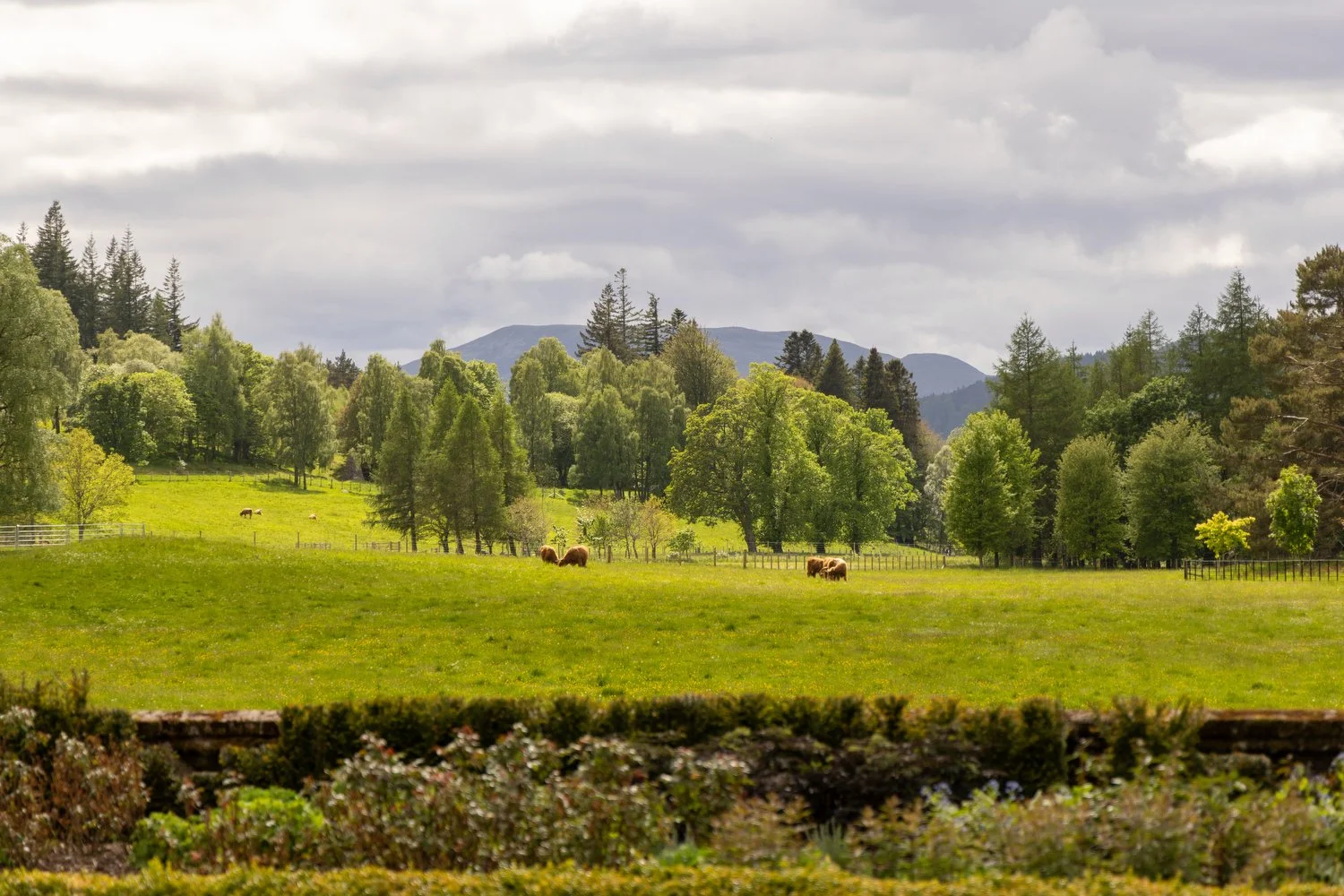
Highland cows graze on the Balmoral estate. Queen Victoria and Prince Albert fell in love with the beauty of the Highlands. Lochnagar is the prominent hill in the distance.
In the beginning - Victoria and Albert established Balmoral Castle
Balmoral isn’t one of those ancient fortress-style castles that goes back centuries like Edinburgh Castle. It’s actually not very old at all; it was built in 1853, following the purchase of the estate by Queen Victoria and Prince Albert in 1852, who were captivated by the magic of the Scottish Highlands.
There was already a tower house on the property, but they had it torn down and a new house built to accommodate their large family. Two historical stones were created to mark the foundation and footprint of the original 16th-century structure, and you can see the front entrance marker on the front lawn today.
The only thing that makes it a “castle” are the faux turrets on top of the rectangular tower, but they are more a design feature than anything else; a nod to the original building. The castle really is an elaborate country house. There was never any real need for defensive features.
Since it was Victoria and Albert who started this tradition, it makes sense that much of the historical emphasis for today’s visitor is on Queen Victoria.
The castle has been inherited as a personal property through the five generations that followed Victoria and Albert, and the family have much enjoyed their holidays in the tranquil surroundings of the Highlands. It has witnessed many world events and celebrations over the years.
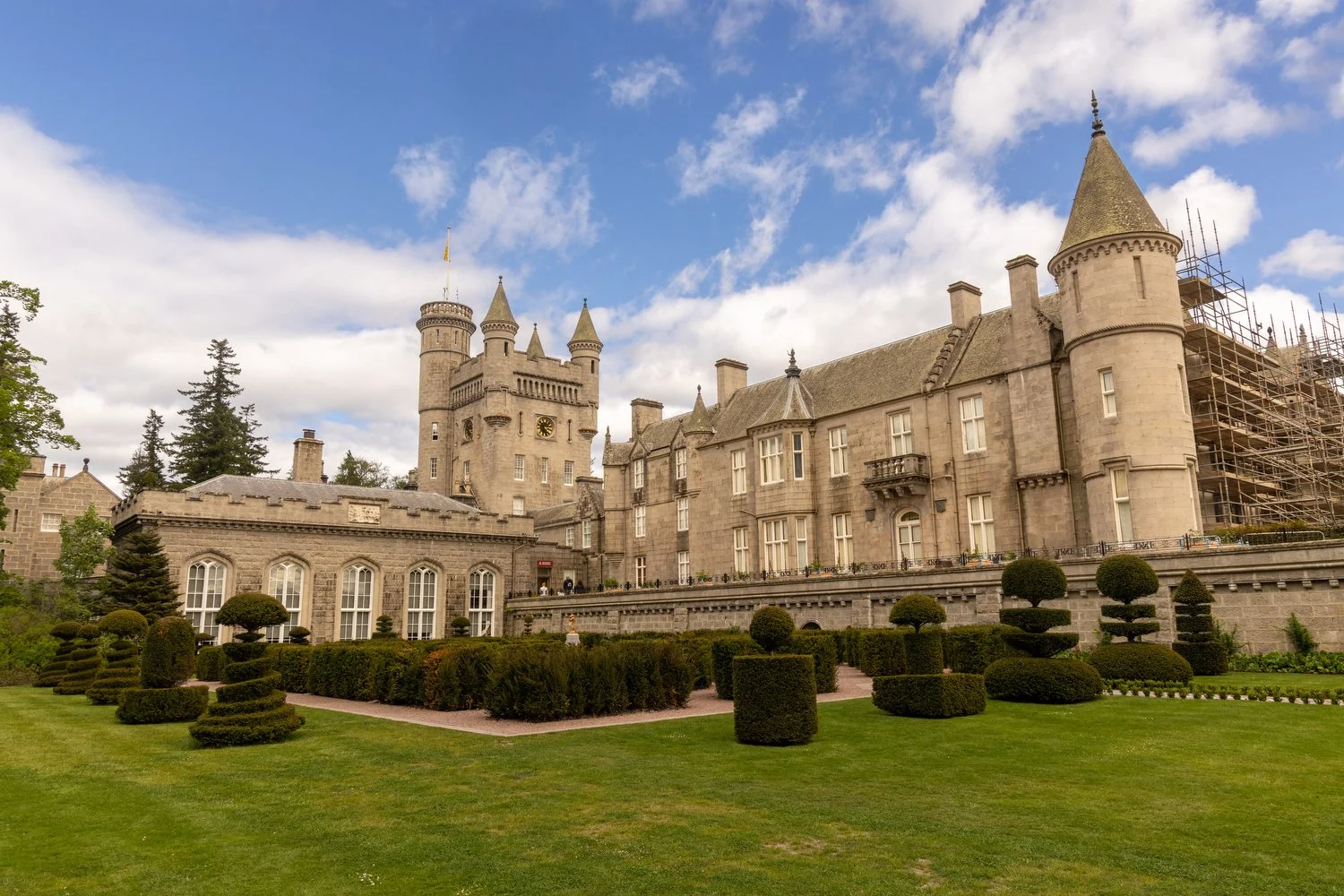
The north side of Balmoral Castle. The terrace above leads to the Ballroom entrance, and the garden below is the Ballroom Maze Garden, outside the ballroom windows. Scaffolding can be seen on the west facade where essential maintenance is being done.
How George VI saved Balmoral Castle for the Royal Family
An interesting twist in the history of Balmoral: it was almost lost to the main line of the Royal family in 1936, when King Edward VIII famously abdicated the throne to marry American divorcee Wallis Simpson.
Edward had inherited the personal properties of Balmoral and Sandringham from his father, King George V. Because they were privately owned and not official residences of the Crown estates, Edward retained ownership. They didn’t automatically pass to his younger brother Albert, who ascended the throne as King George VI.
Edward wasn’t much interested in the country pursuits of his father - the shooting, stalking and fishing that were traditional royal pastimes. He preferred other kinds of holidays such as cruising the Mediterranean. He didn’t have much affection for Balmoral.
When Edward threatened to sell off these estates, George VI had to negotiate a financial settlement to buy Balmoral and Sandringham back from his brother. Without that purchase, Balmoral would have left royal use entirely, as Edward would most likely have divided up the property and sold it off to the highest bidder.
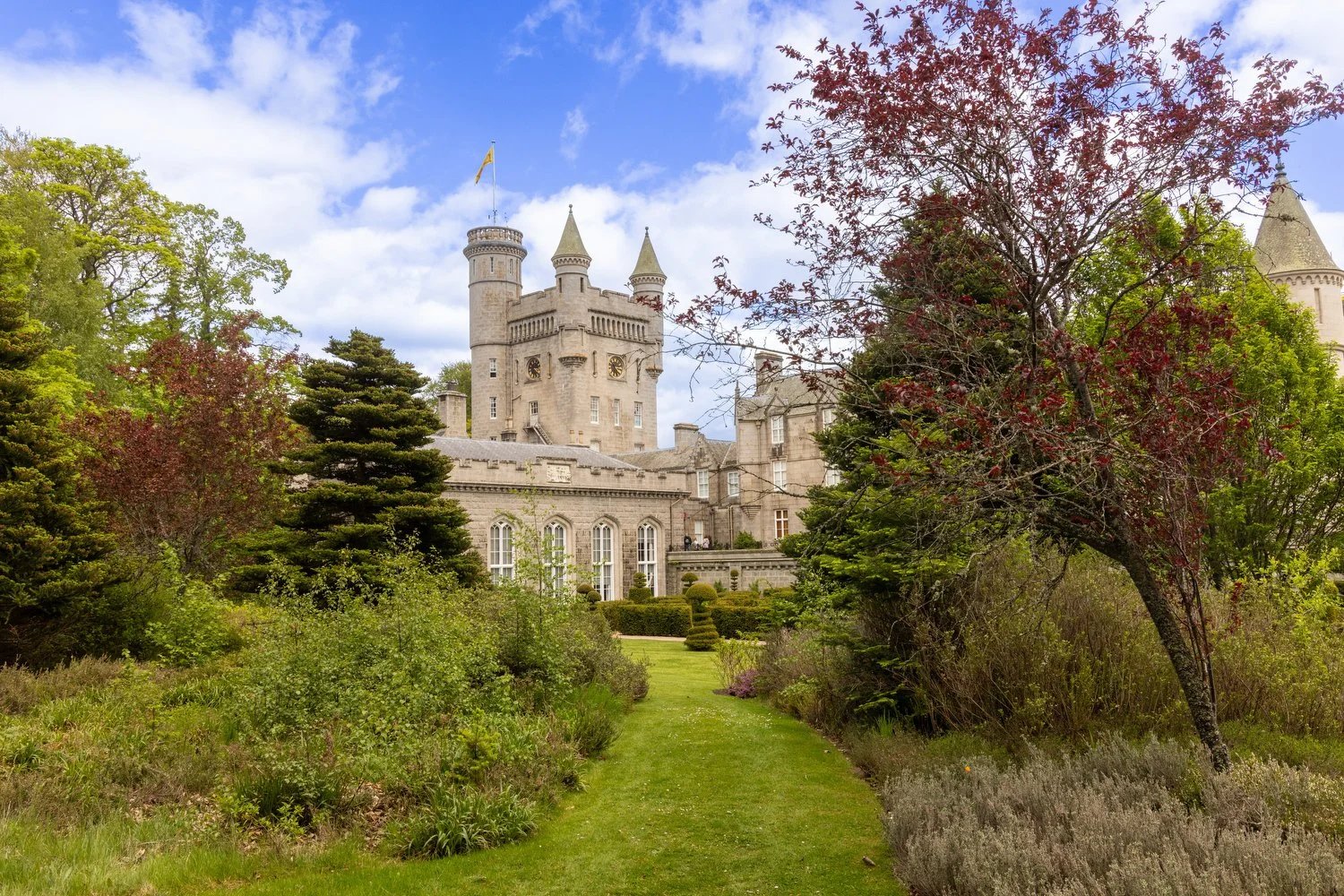
Varied trees and plants along the walking trails at Balmoral offer a depth of view. King George VI was particularly fond of creating layered vistas at the estate.
During his reign, George VI did much to make Balmoral his own. Visitors to the Castle at that time remarked on how it was much more relaxed than it had been in his father’s day.
George VI was on summer holiday at Balmoral in 1939 when the news came that war was inevitable. He hurried back to London, and Queen Elizabeth (later the Queen Mother) followed shortly after. Their daughters, Princesses Elizabeth and Margaret remained behind at Balmoral for another three months. Later, the princesses were moved to Windsor Castle which was deemed easier to protect.
Visits to Balmoral during the war were greatly curtailed. Traditional, extended summer holidays largely ceased during the conflict, and the family only retreated there for short stays of a few weeks. During these visits, defense measures were put in place and hundreds of soldiers protected the Royal Family.
To learn more about Windsor Castle during WWII, check out our post Visiting Windsor Castle: a complete guide
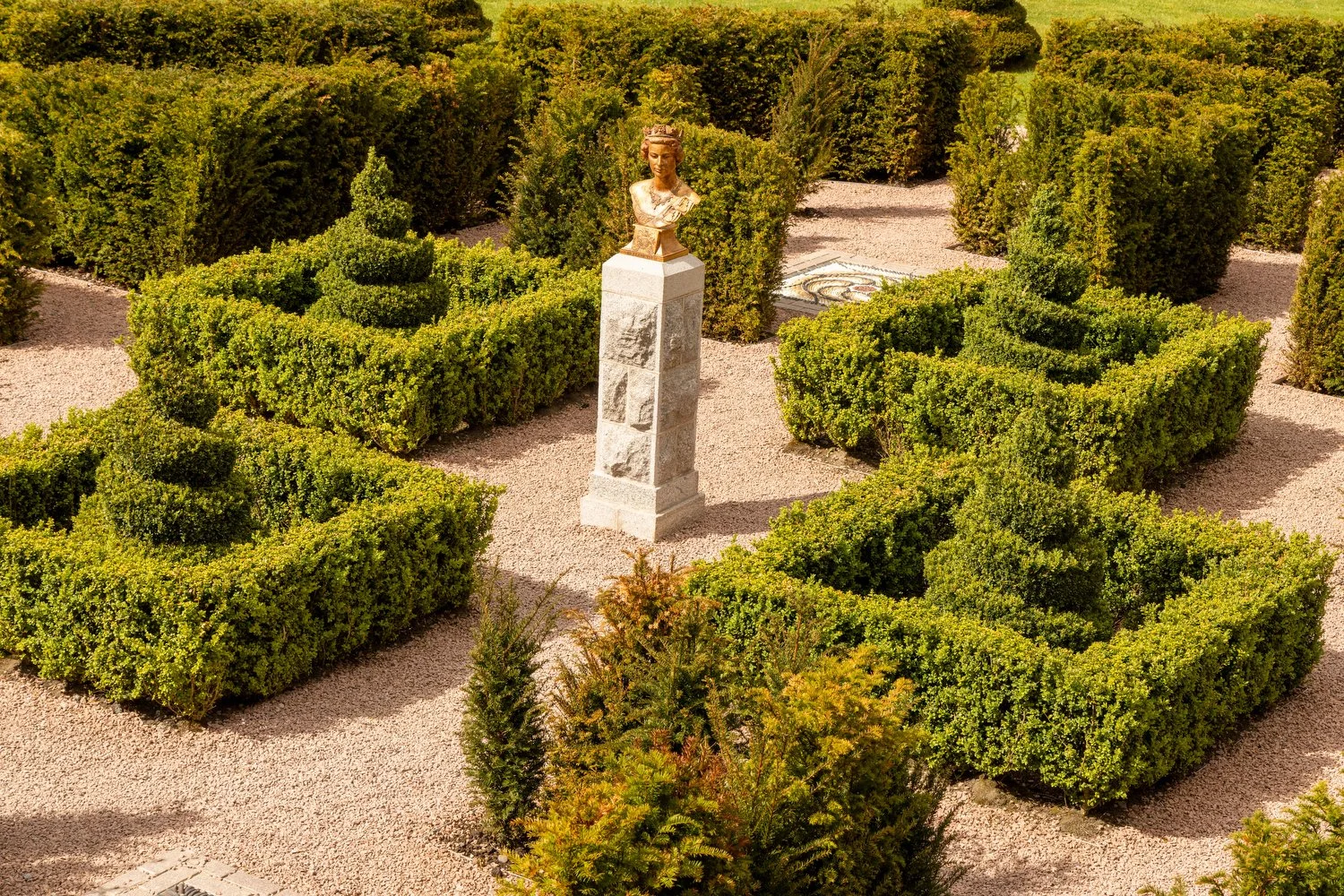
A bust of Queen Elizabeth II stands in the Ballroom Lawn Maze.
Queen Elizabeth II’s last public image was taken at Balmoral, and she died there
Queen Elizabeth II had been at the castle since July 2022 for her annual summer holiday. In a break with tradition, she received the new Prime Minister, Liz Truss, at Balmoral Castle instead of Buckingham Palace on September 6, 2022.
The last public image taken of the Queen was in the Drawing Room of the Castle, showing a smiling Elizabeth greeting the new Prime Minister. This caused a bit of a buzz among royal watchers because photos of the private rooms of Balmoral Castle have been extremely rare. This Drawing Room is one of the rooms you can see on the interior tour, which carries quite a sense of history for our generation. As the longest reigning monarch, that will certainly be a very significant historical news photo for years to come.
Elizabeth II died at Balmoral two days later at the age of 96, on September 8, 2022. She was the first monarch to die at Balmoral, and this was the first time a monarch had died in Scotland since James V died in 1542 at Falkland Palace.
The Queen's coffin lay in repose in the ballroom of the castle for three days, to allow members of the Royal Family, estate staff and neighbors to pay their respects. This is the same ballroom you can see as part of your general admission ticket. For the Queen’s centenary year, there is a photographic retrospective of her life that is very moving.
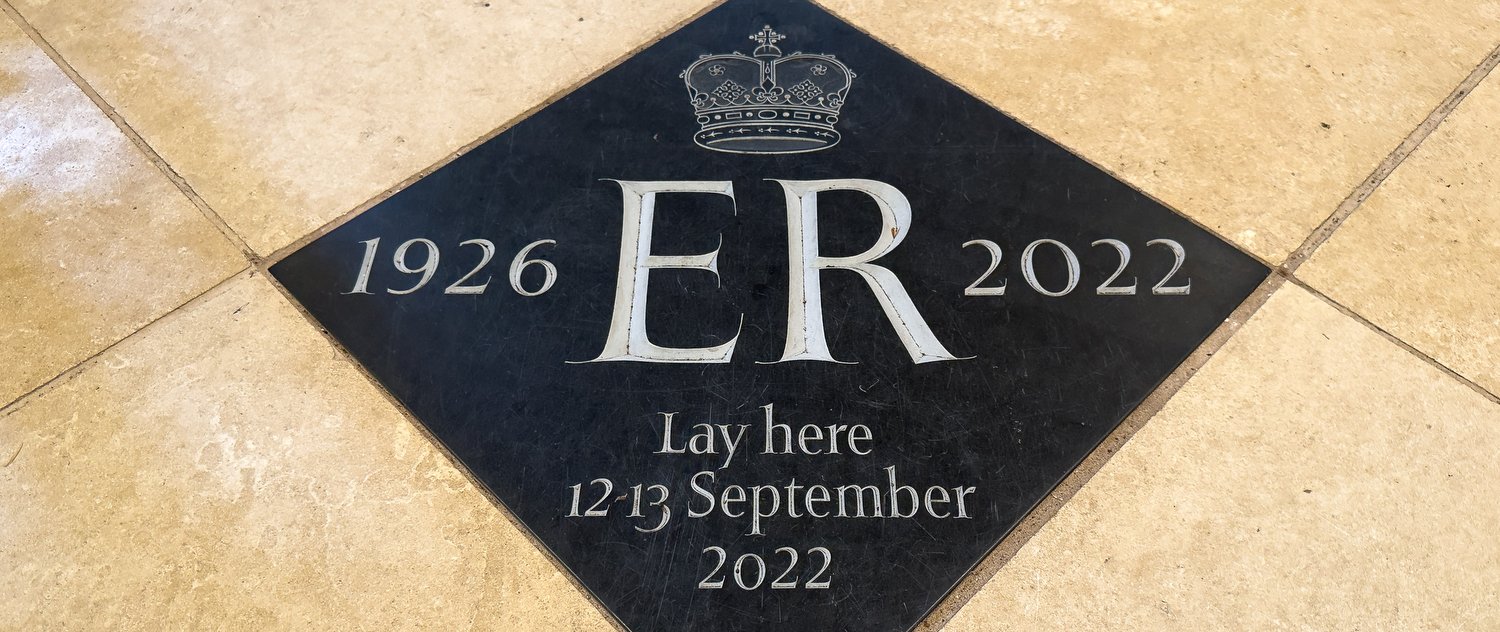
A marker at St. Giles Cathedral in Edinburg, where Queen Elizabeth II’s coffin lay in repose in 2022. Queen Elizabeth II was the first monarch to die in Scotland in 700 years.
On September 11, her coffin was transported to the Palace of Holyroodhouse in Edinburgh for the start of the state funeral proceedings. It also lay at rest in the historic St Giles' Cathedral in Edinburgh for 24 hours so members of the public could pay their respects before the funeral services continued onto London. A marker is on the floor at the cathedral today where the Queen lay at rest. (The Cathedral is very beautiful and is worth a visit if you are walking the Royal Mile in Edinburgh.)
For most of us, Queen Elizabeth II was the only British monarch we remember. I felt very affected by her death. It’s one of those moments I think, where one will always remember where they were when they heard the news.
| Castle | What It Is | Royal Connection | Adult Entry | Open Season | Best For |
|---|---|---|---|---|---|
| Edinburgh Castle | A real medieval fortress on a volcanic rock | Historic royal stronghold, home of the Crown Jewels of Scotland | Around £23.50 online, everything included | Year round, closed Dec 25 and 26 | First timers who want the classic castle on a hill |
| Inverness Castle | A Victorian courthouse reborn as an immersive experience | Light. More about Highland culture and folklore | Around £20 online, everything included | Year round, closed Christmas Day | Highland culture fans and that rooftop city view |
| Glamis Castle | A true old fortress and family home with turrets | Childhood home of the Queen Mother, loved by George VI | Around £19.50 with the interior tour included. Grounds only £9.50 | 20 March to 31 October, grounds to 22 December | Castle lovers who want a rich interior tour |
| Balmoral Castle | A grand Victorian country house built to look like a castle | A working royal home and Queen Elizabeth II's favorite | £18.50 grounds. Interior tour around £110, sold out 2026 | Approx 28 March to 9 August | Royal family fans and Royal Deeside scenery |
Getting to Balmoral Castle
Balmoral sits in Royal Deeside, right along the A93 at Crathie. Ballater is about six miles east. Braemar is about seven miles west. It is situated within the stunning scenery of The Cairngorms National Park, which is the United Kingdom’s largest National Park.
We really think driving is the easiest way to get to Balmoral. It’s right off A93 and there’s plenty of parking. You get to walk from the car park at Crathie over the River Dee via a bridge toward the entrance which is really lovely, and one of the first indications that you are somewhere special.
What’s it like to drive in Scotland? John talks about his experience in Edinburgh to Glencoe: Scotland's Most Scenic Drive.
If you aren’t too keen on driving in the UK, this might be the perfect situation for booking a day tour to handle your logistics. The public transportation options are available but Balmoral is a bit remote, so it’s not the easiest thing.
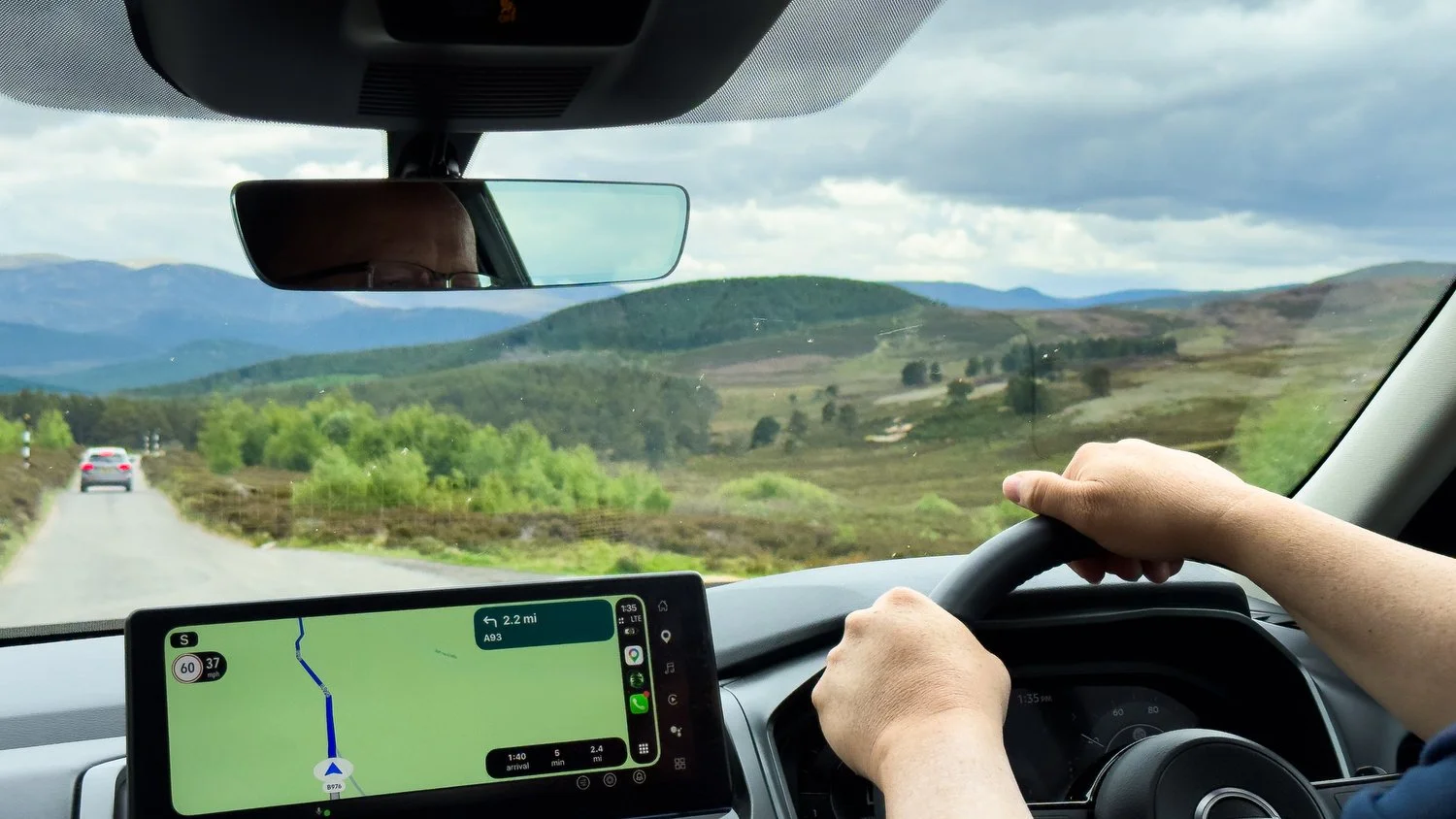
On the road to Balmoral with John at the wheel.
Here’s all the options in detail:
Driving
Driving is the easiest way to get to Balmoral.
Aberdeen is roughly 50 miles east, or about an hour and a half on the A93.
From Edinburgh, plan on around three hours.
From Inverness, figure two to three hours depending on your route.
Set your GPS to AB35 5TB. The car parks are clearly signposted off the A93 at Crathie.
Parking costs £6 and you pay at the machines with cash or card. Blue Badge holders can ask for disabled parking inside the estate grounds. Just speak to staff at the admission desk.
By bus
Stagecoach Bluebird runs the 201 and 202 from Aberdeen's Union Square bus station out along Deeside.
Ask for the stop called "Crathie for Balmoral."
The ride takes about two hours and the scenery is lovely. Timetables change with the season, so check stagecoachbus.com before you go.
By train
There is no rail service to Balmoral. Aberdeen is the nearest station, and you would pick up the bus or a rental car from there.
We book UK rail through Trainline when we travel by train.
Guided tours
If you would rather not drive the A93 yourself, day tours run from Aberdeen and from Edinburgh.
Most tours pair Balmoral with Royal Lochnagar Distillery or a stop in Braemar.
You can browse options on Viator.
A quick note: some links here are affiliate links. That means if you book or buy something through them, we earn a small commission. You pay nothing extra, and it helps keep this blog going. We only recommend things we actually believe in.
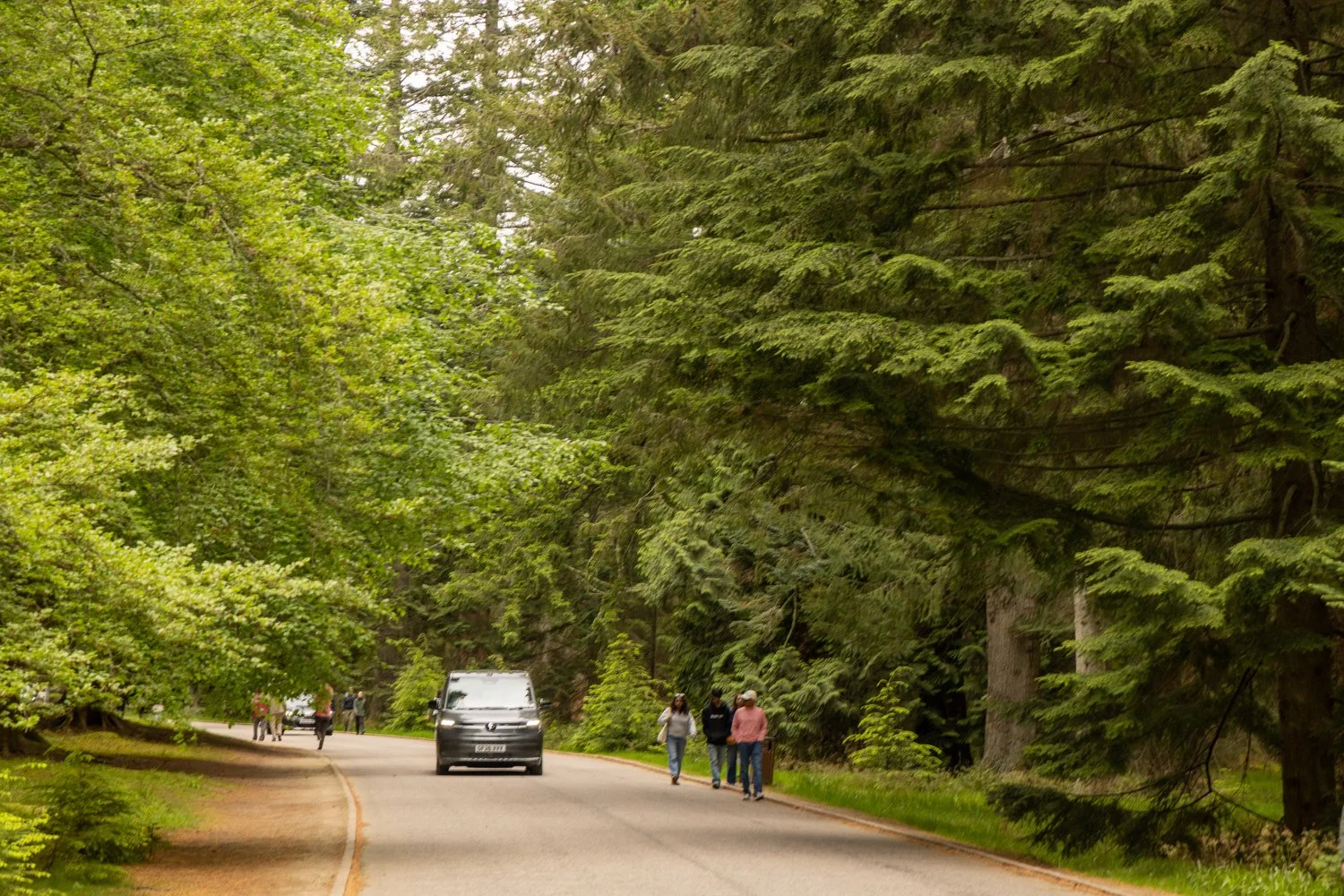
The wooded walk from the entry gates to Balmoral Castle
What you get for General Admission - The Grounds, Gardens and Ballroom at Balmoral
You actually get quite a lot for the general admission £18.50 ticket. It includes the grounds and gardens around the castle and access to the Ballroom. You can also walk down to the River Dee and explore some lovely walking trails. A gift shop and very good restaurant are also on the property.
Definitely download the free audio tour app - it’s very helpful to appreciate the details of what you are looking at. You can download it from the Apple AppStore or Google Play. There are numbered signs around the grounds and all you have to do is click the number you want to listen to. Just remember your headphones!
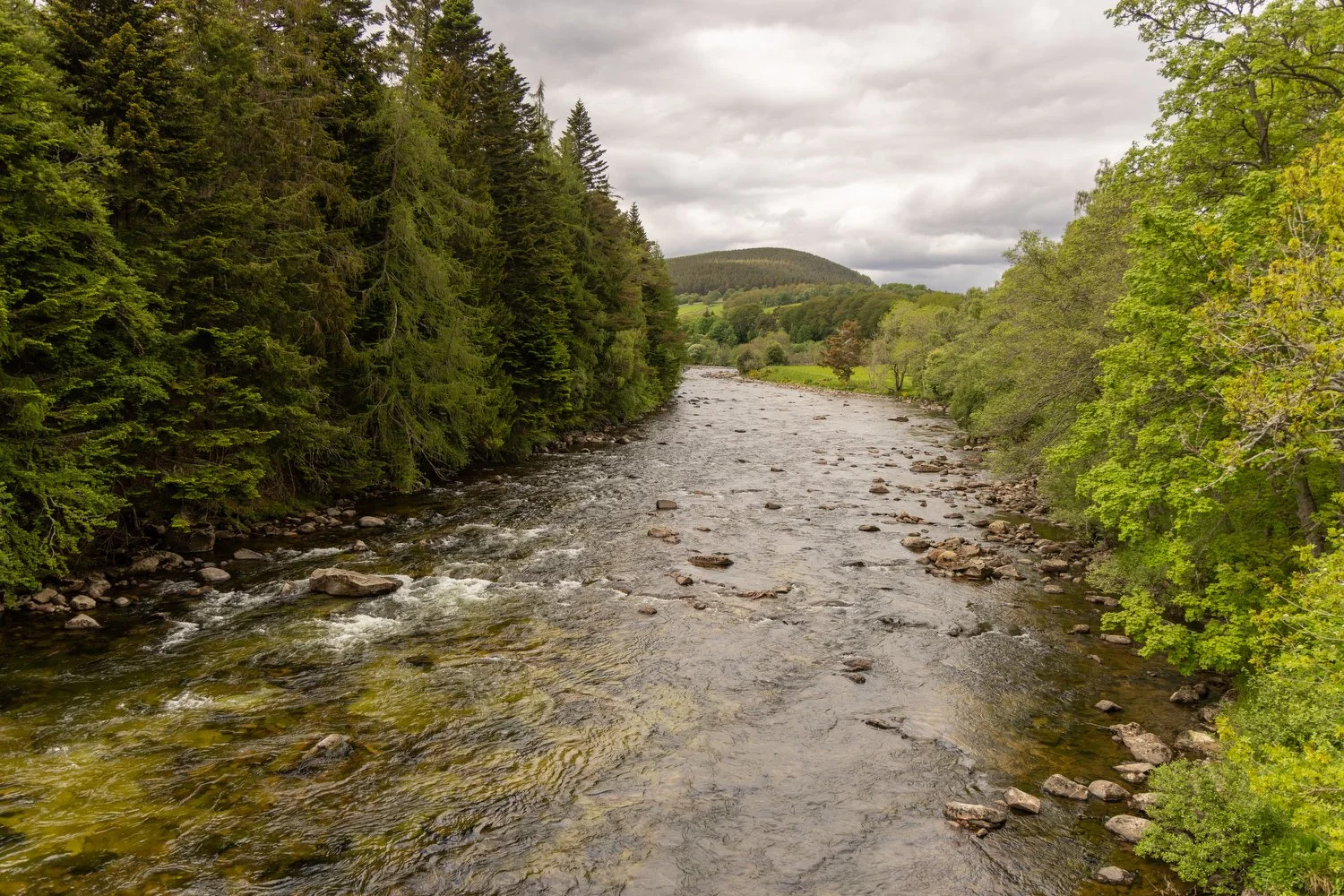
Crossing the beautiful River Dee on the way into the Balmoral estate.
After paying for parking at the Kiosk (£6) there’s a lovely walk to the gates over the River Dee. I was so excited to actually see it after reading so much about Royal Deeside. Wow, it really is beautiful.
Approaching the gates is another semi-surreal experience, as it is something I’ve seen so often on television and newsreels. Most recently when Queen Elizabeth passed away, there were many images of the family arriving in their SUVs. It’s not a large space - and you can clearly imagine where the media stood across from the gates for those images. Again, smaller spaces than I thought.
We were greeted cordially (of course!) and given a map. I may have been a little too enthusiastic with my typically American “I’ll take one!” response. I think the attendant was taken a little aback! I have to remember be more understated and polite in these situations.
Having the gates open for you is magical - with King George V and Queen Mary’s gilded cyphers on the gates just as I’ve read about. Then there is a lovely wooded walk up the main path. The ancient Caledonian pine trees are incredibly tall! There is that fresh pine scent and a cleanness in the air that makes you realize why this is such a favored retreat.
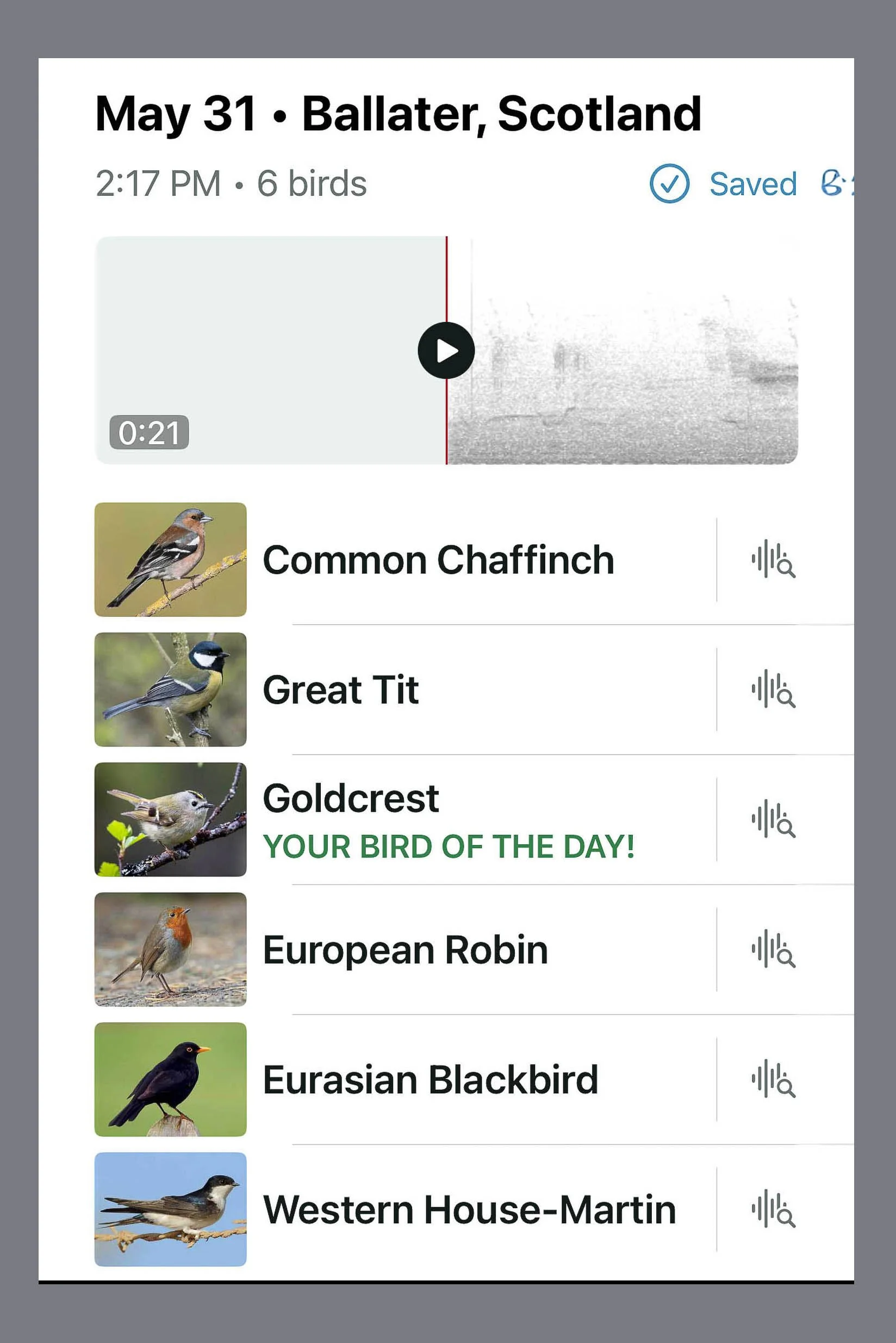
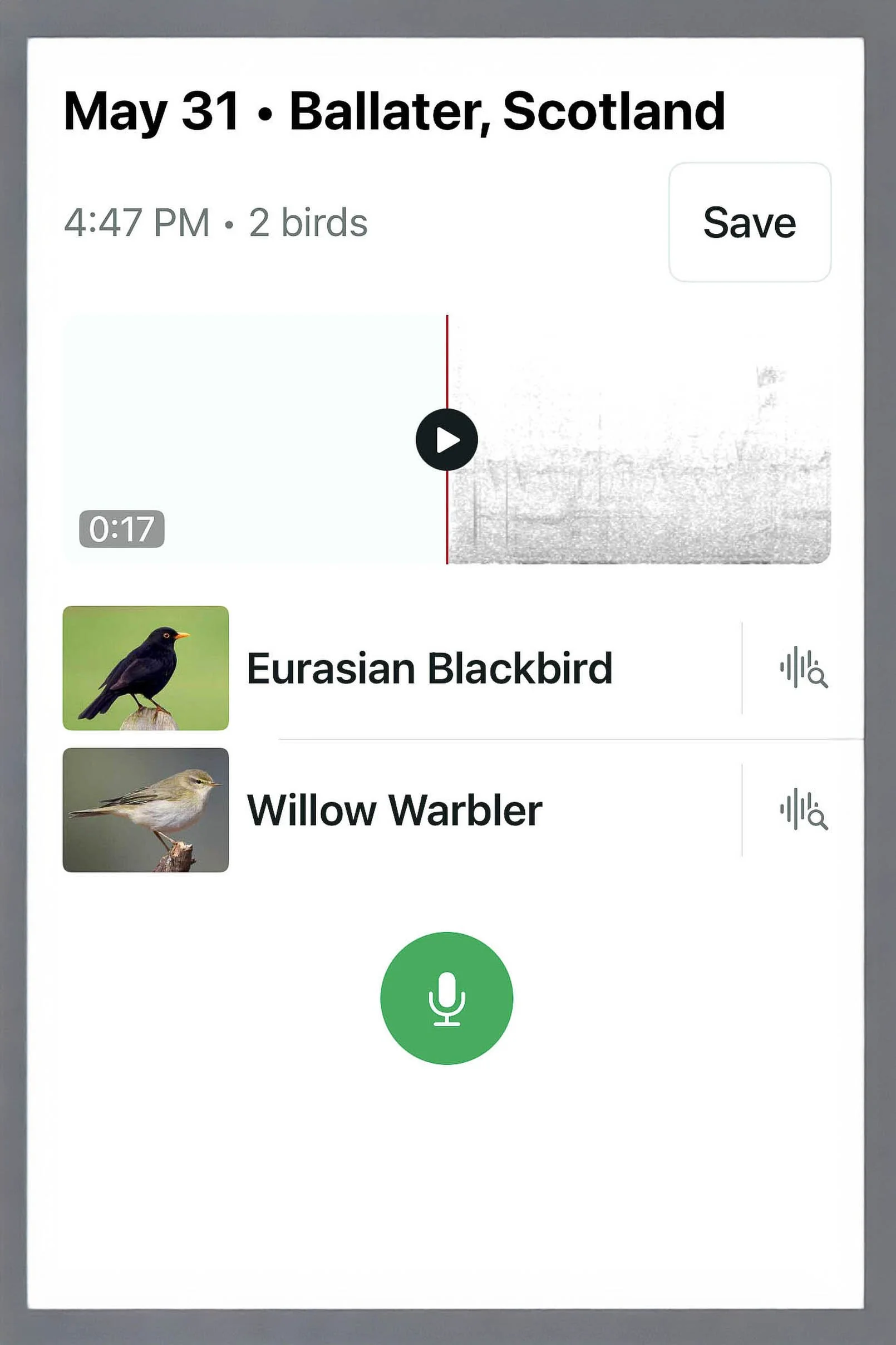
And the birds! I got right to work with my Merlin App and there was just so much birdsong, mostly unfamiliar. I really do think it’s amazing how the app knows where I am and I don’t have to punch anything in. It’s so quiet, the birds and the river are like a musical background score.
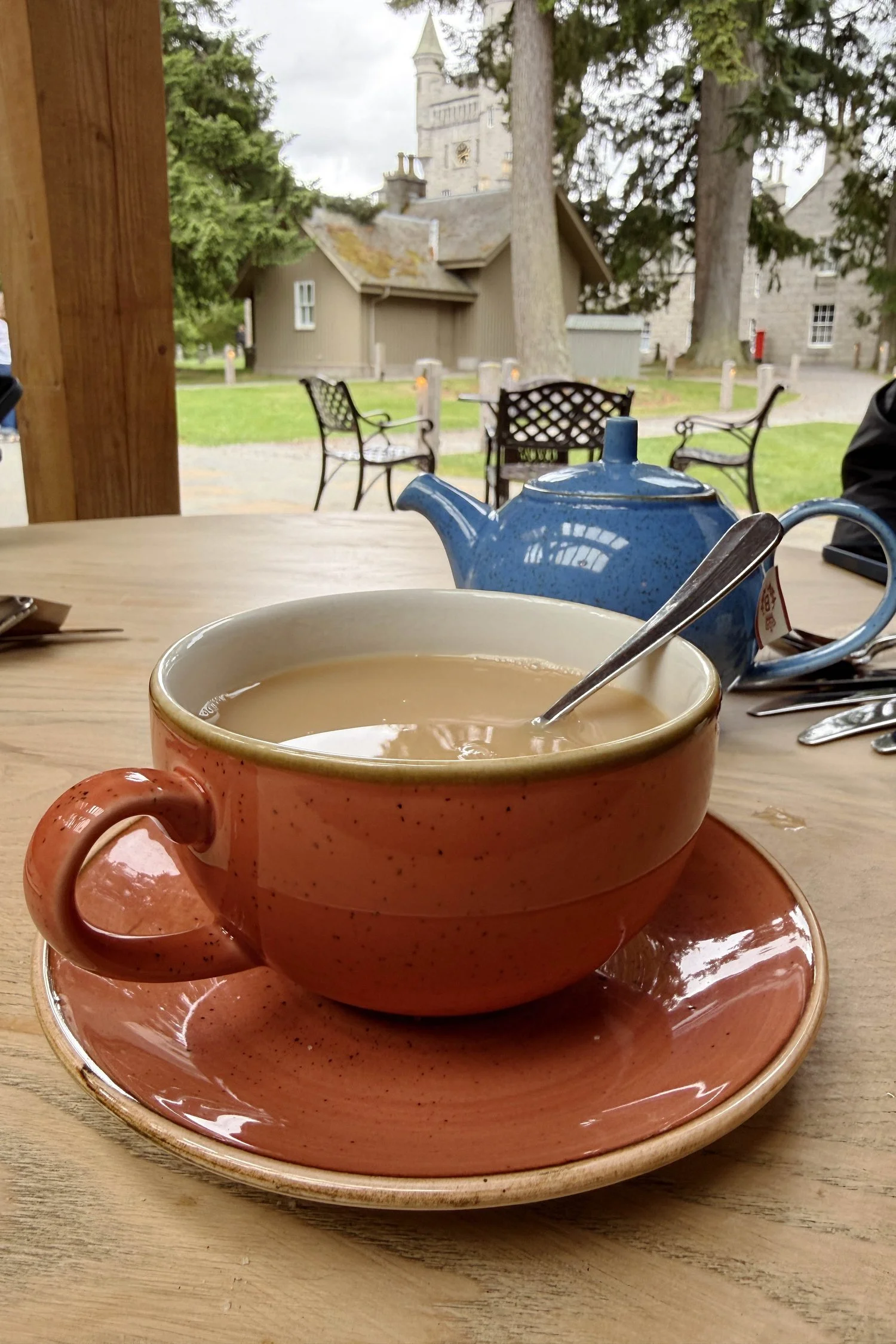
We had lunch first, as we had driven in from Inverness and it was just about lunchtime. It was really delicious! We all especially enjoyed the cullen skink!
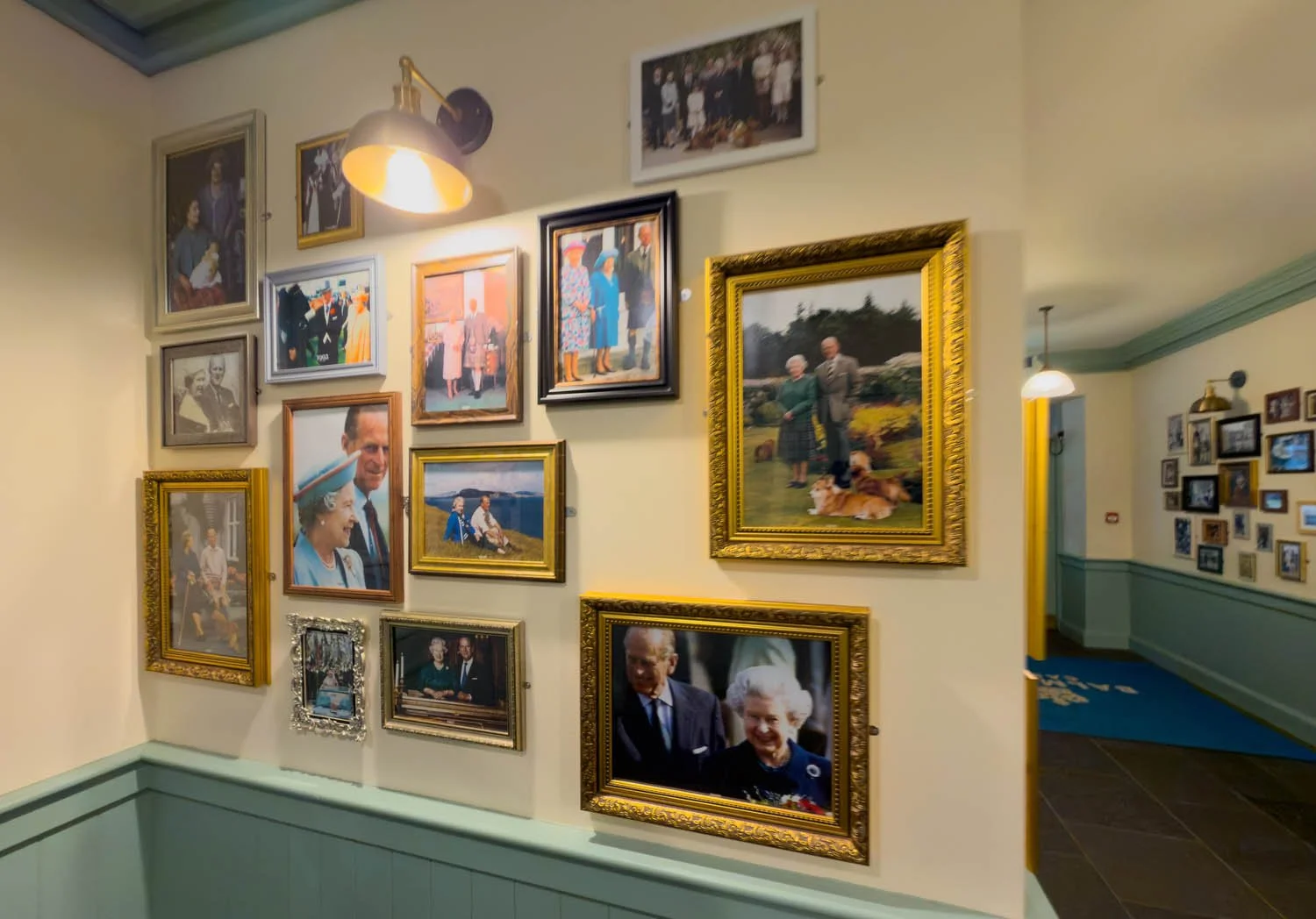
More on that experience in the “Eating at Balmoral” section below. But I will mention right now that the photos of the Royal Family displayed near the bathrooms are not to be missed, and what a fun introduction into the royal world we were just beginning to enter.
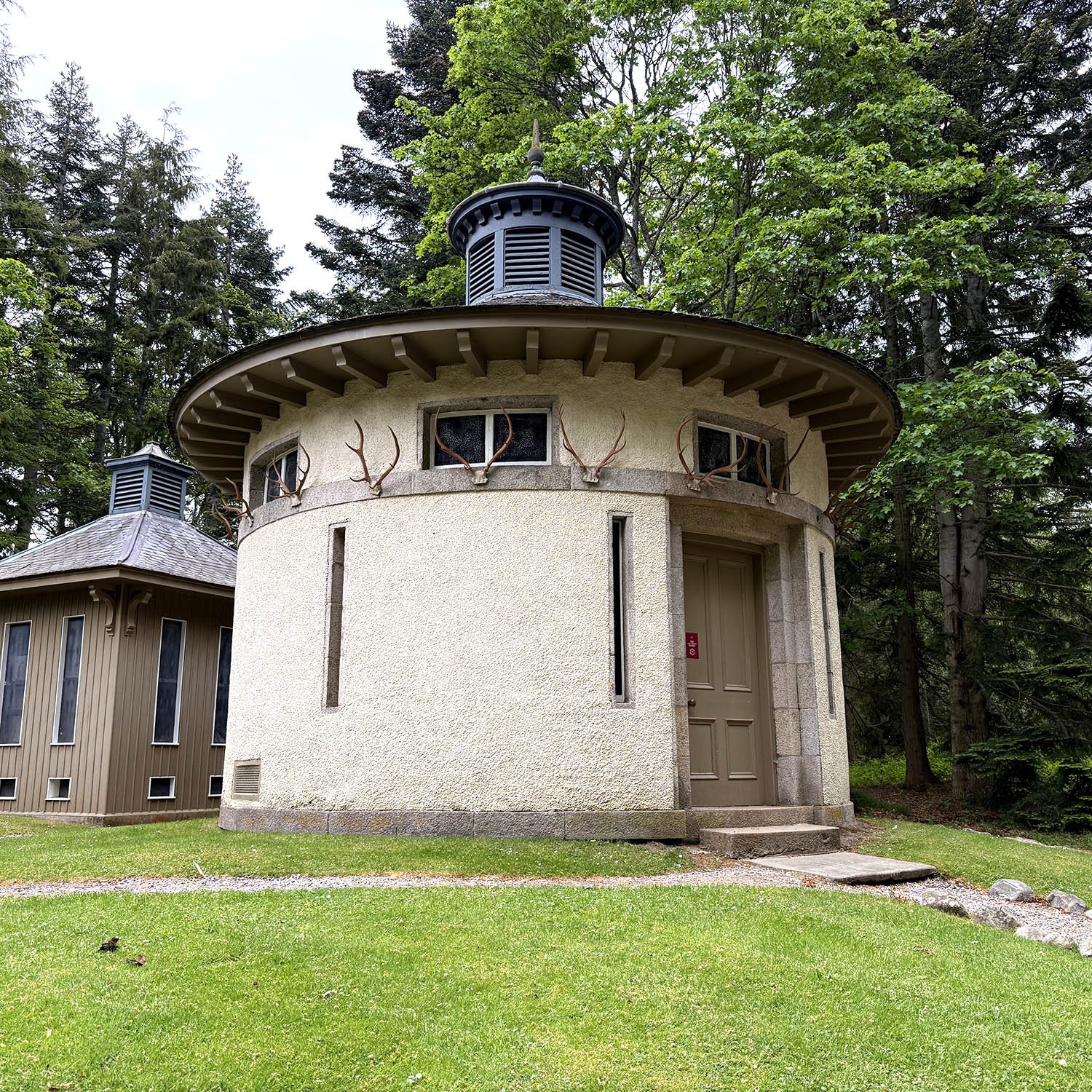
One of the first things we came across was the original game larders - where game collected on the estate is processed. The original deer larder is a round, tidy building decorated with a ring of antlers. It just felt very “Balmoral-ish” to me, as it has long been a site of “country sport”.
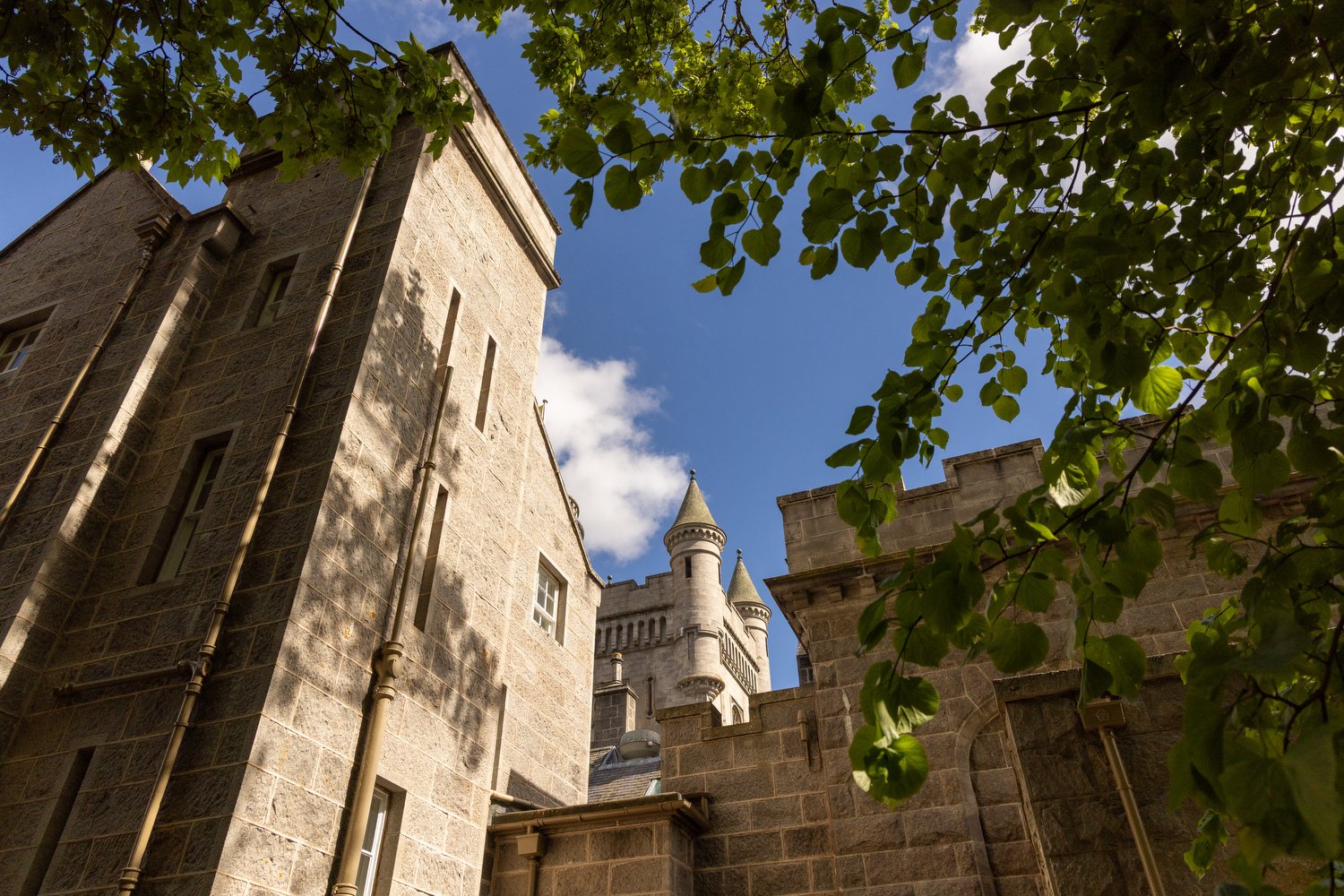
Dramatic light and shadows on Balmoral Castle. King Charles has said that the shadows on the Castle make his “painting finger itch”.
The Castle is a magnificent gray granite structure bathed in sunlight in the center of a luxurious rolling green landscape. I don’t know how something can be completely natural and feel luxurious at the same time, but it does.
The Balmoral Estate is located inside Cairngorms National Park, which is known for its magnificent hiking trails. Honestly if I lived nearby, that £18.50 ticket is not a bad deal just to come and walk around in a beautiful atmosphere.
If you are taking the interior tour, there is an obvious blue tented entrance that you can’t miss.
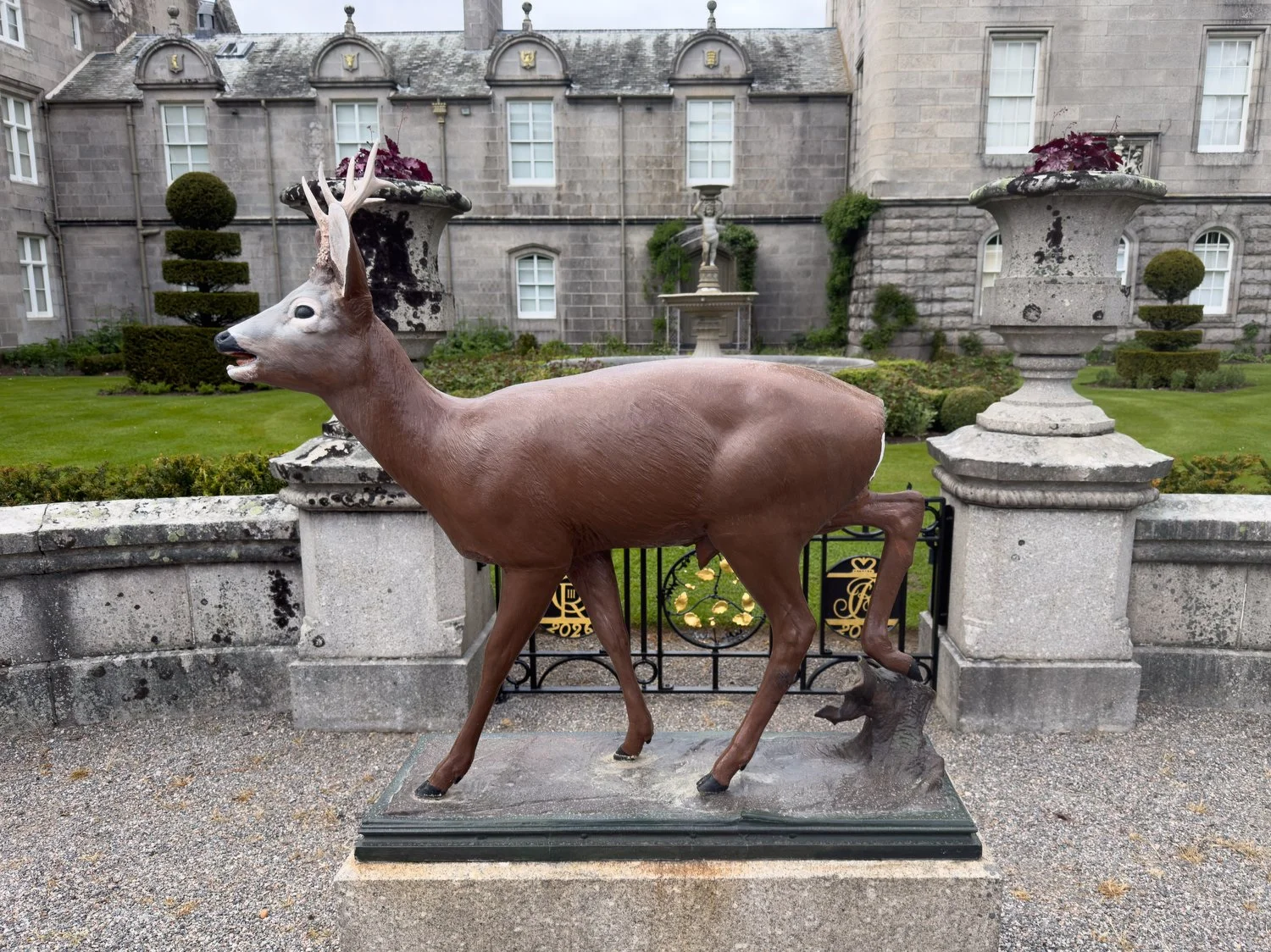
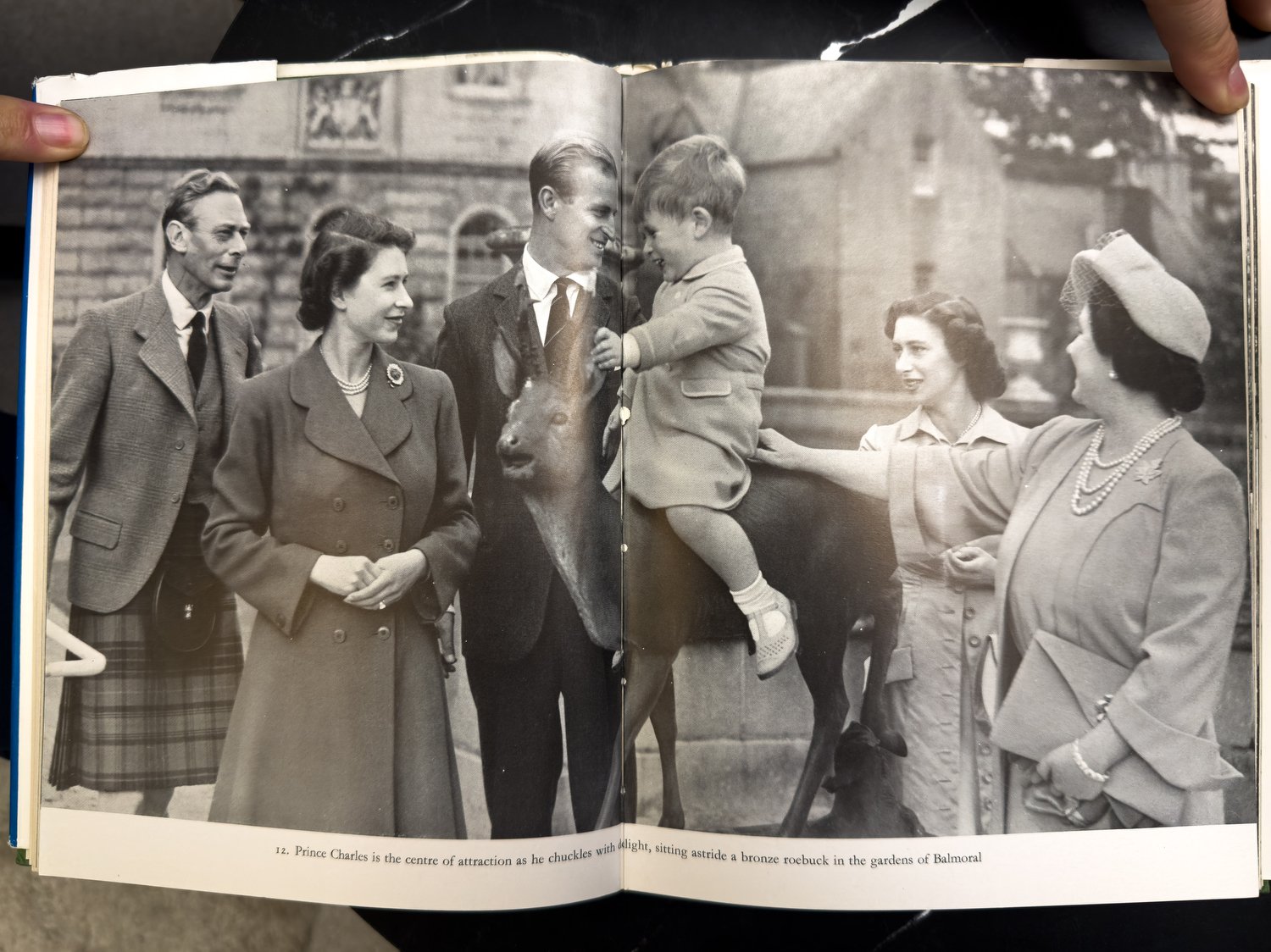
A fun little “IYKYK” detail is the bronze deer sculpture out front of the castle. There are historical photos of King Charles as a small boy sitting on this deer surrounded by his parents and grandparents. It gave me a smile, just to think how the generational connections are preserved here. Not everyone gets to have that in their lives. It’s good to be royal I guess!
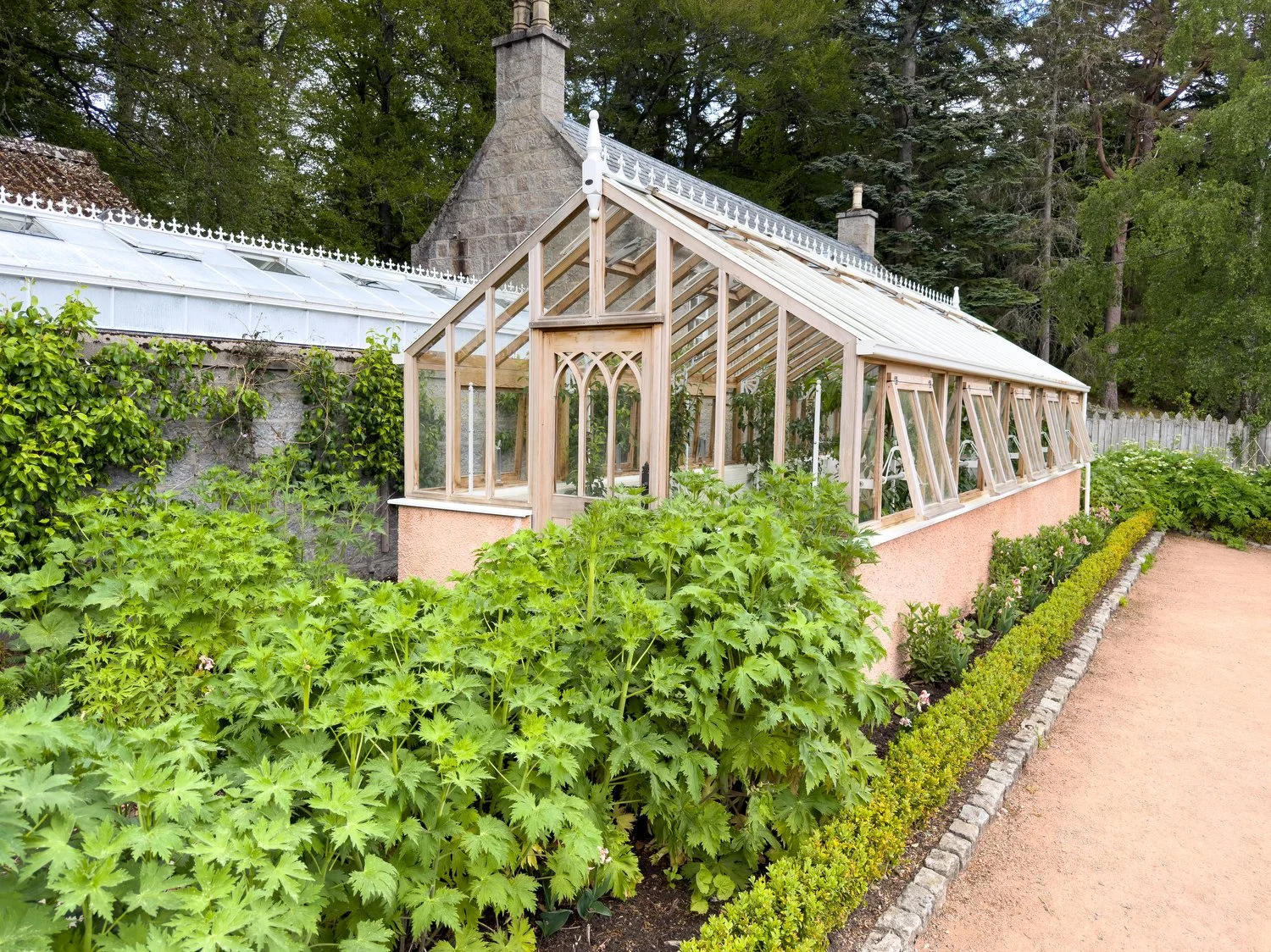
There are a number of formal gardens around the castle that you can visit. The audio tour gives you good information on everything you are looking at, and all the gardens have some history to them, so do have a listen.
One of the more interesting gardens to me was the Kitchen Garden, located among a series of plots and greenhouses in the South Gardens area. Prince Philip laid out the current design of the fruit and vegetable garden in the 1970s, bringing the goods closer to the castle kitchens. Sensible. I was touched to see a memorial to him there.
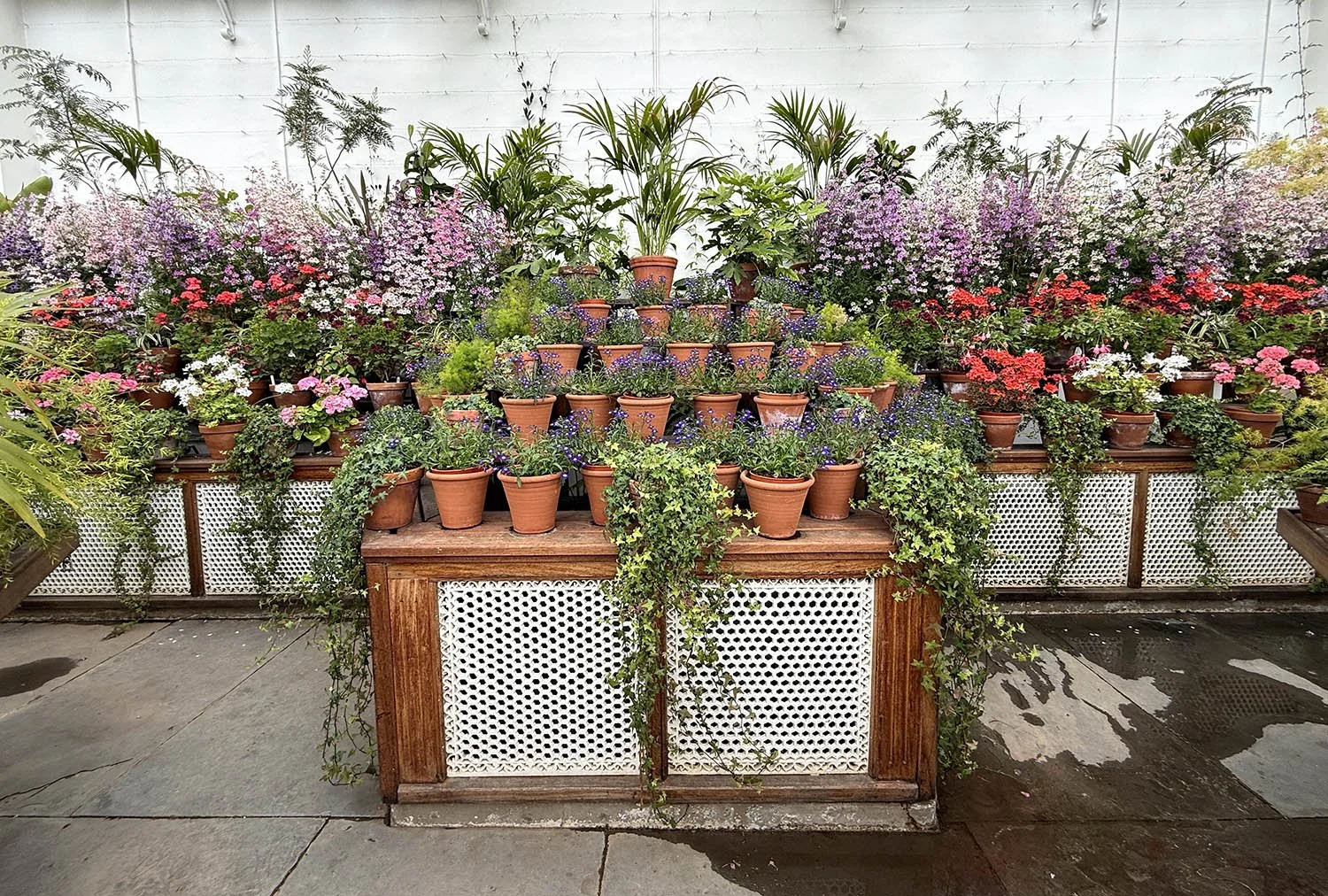
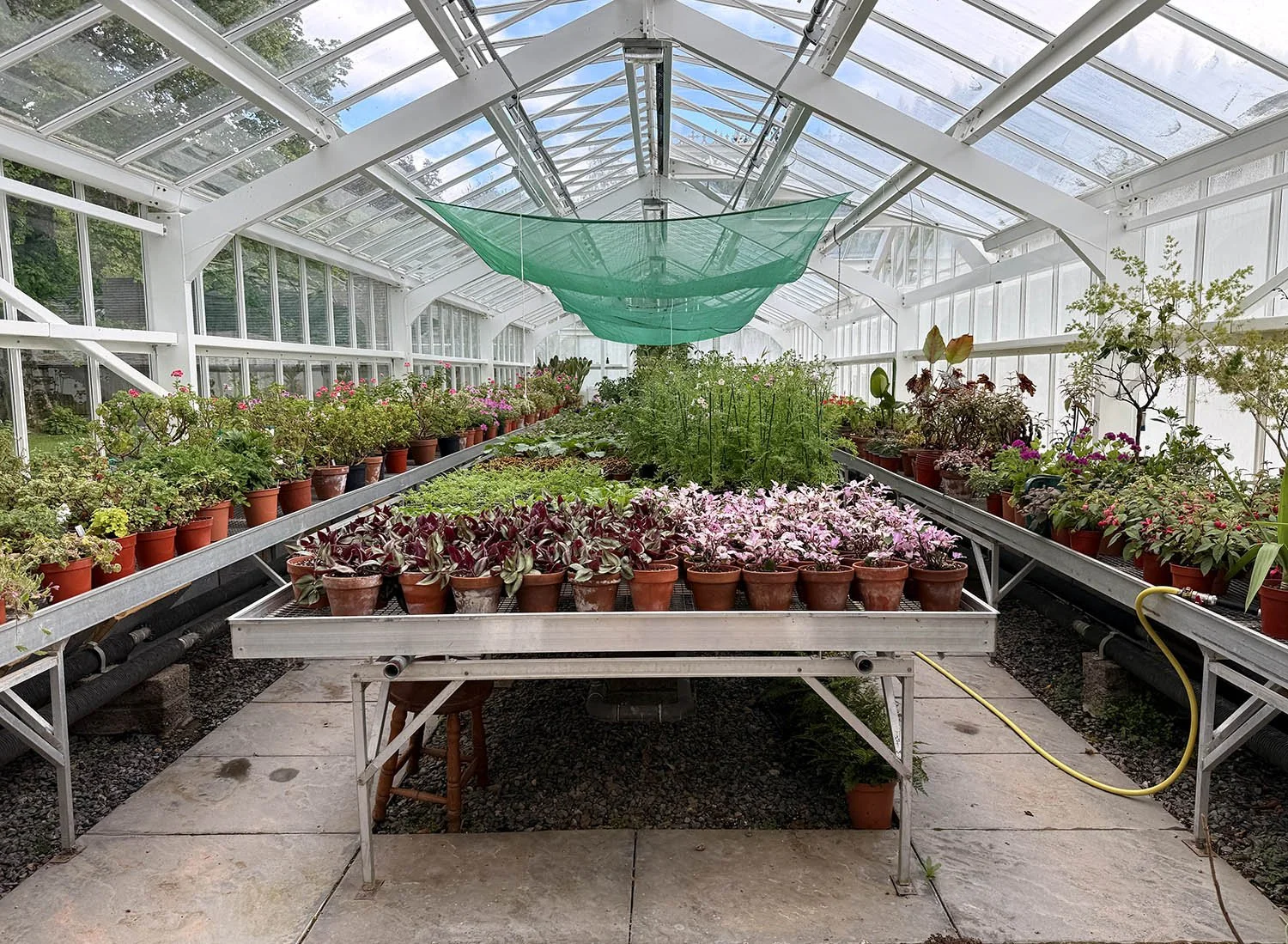
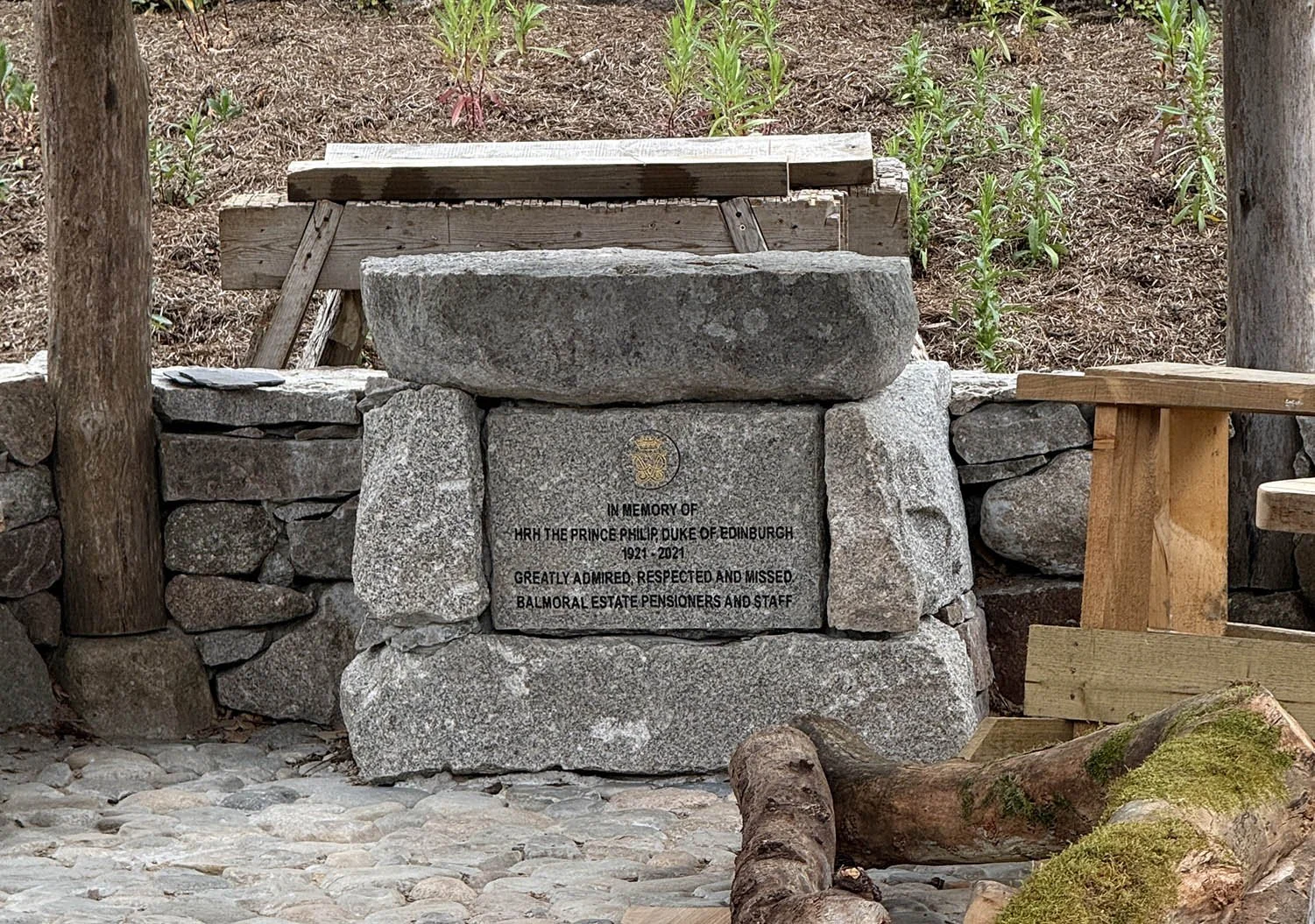
Another one of my favorites was the Sunken Garden, which was installed by Queen Victoria but owes most of its current design to Queen Mary. George VI added a compass to it and cleared some of the telescoping view. This garden is just below the terrace of the west facade, and lovely views of the hills can be seen over it. Well done, Victoria.
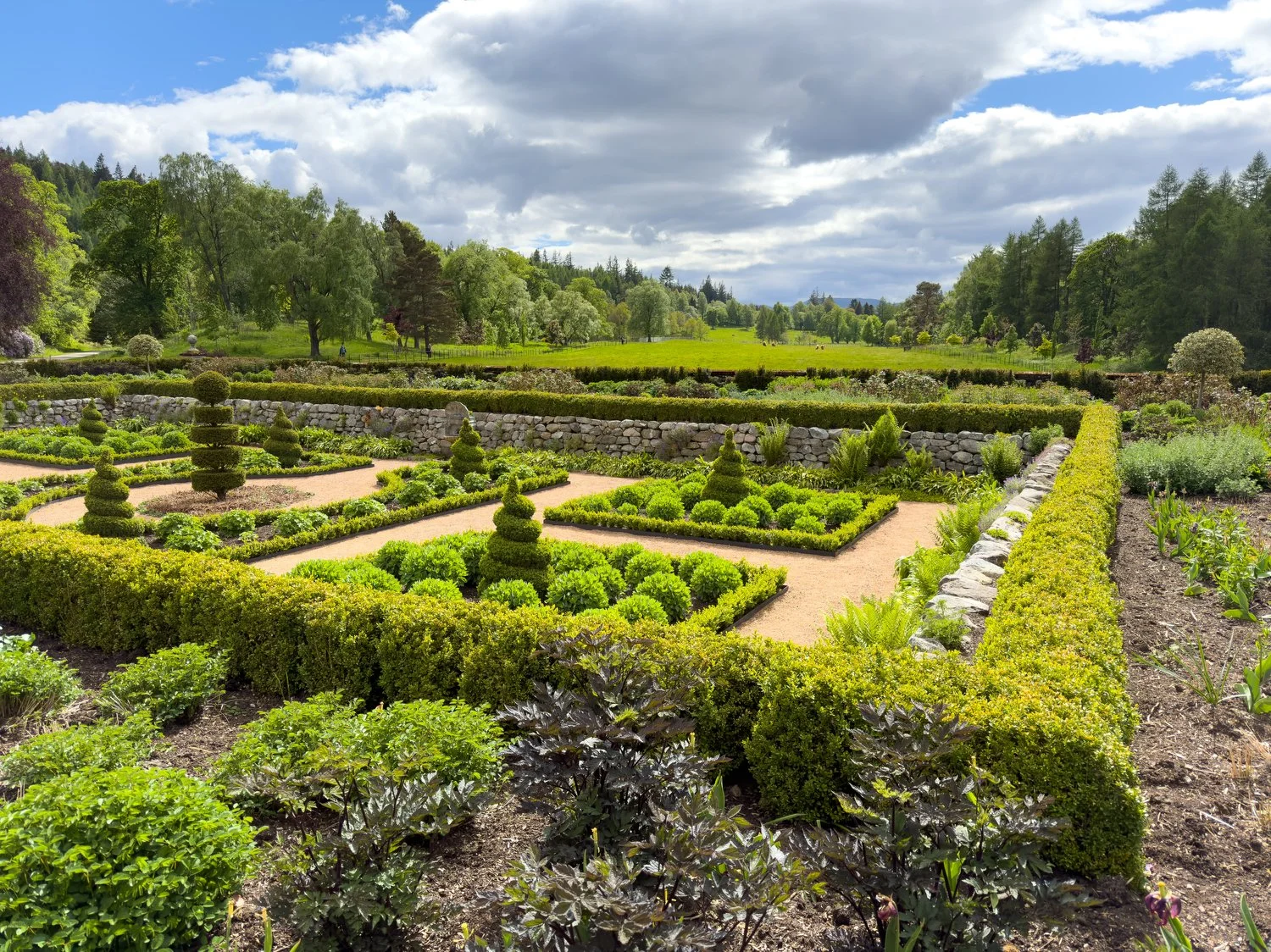
The Sunken Garden does not block the beautiful vistas that can be seen from the west side of the castle. Queen Victoria had her private rooms on this side, precisely for this view. In Queen Mary’s day, this garden was planted with alpine flowers but now it has a lot of topiaries.
I was disappointed that scaffolding was up in front of this facade, as this was another of my little photo pilgrimages. The cover of a very lovely vintage book in my collection called The Royal Gardeners features a photo of King George VI and Queen Elizabeth standing in front of the west facade.
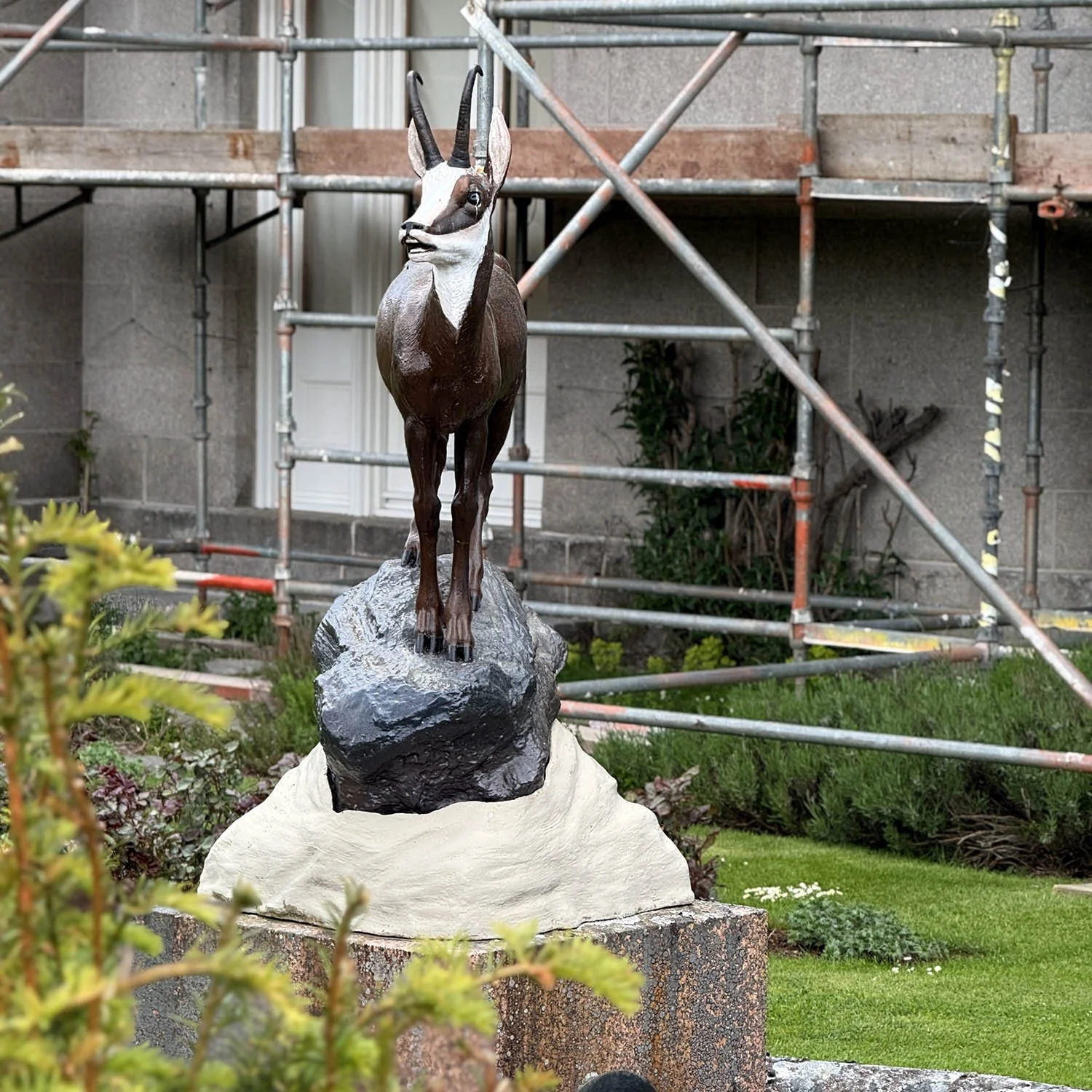
If it wasn't for the little goat figure on the small fountain out front, I would not have even recognized the location! (Google tells me its a chamois goat, if that matters!)
Cooperating with this very charming book was one of the last things King George did in his life, and that photo is from his last trip to Balmoral.
But for any normal visitor, this scaffolding doesn’t affect your life at all! And at least the little goat is still there which made me smile!
Every monarch has made their mark on the gardens in some way. Queen Mary added a sunken flower garden among the South Gardens. King Charles of course is making his mark, adding a thistle-shaped hedge maze in honor of his late mother, as well as lots of sustainable practices, which is his thing.
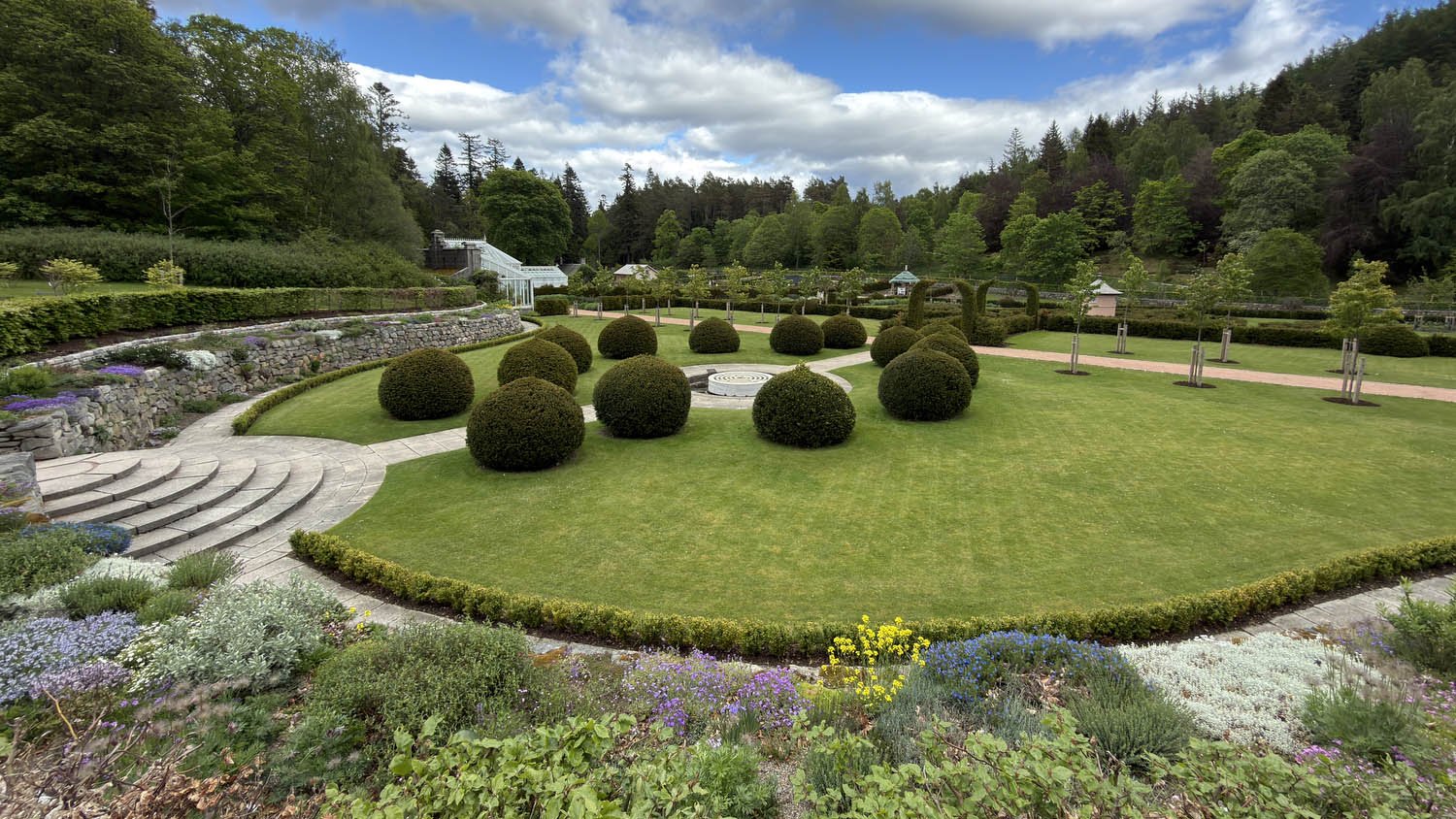
Queen Mary’s Flower Garden is another sunken garden added to the South Gardens during her time at Balmoral.
Just outside the door where you enter the Grand Ballroom, there is another garden maze - the Ballroom Lawn Maze. I enjoyed exploring this one, and communing with a golden bust of Queen Elizabeth II in the center. The design of the maze is inspired by the Book of Kells, and is the vision of King Charles. There was once a pansy garden in this space, but the taller maze is perhaps more visually interesting.
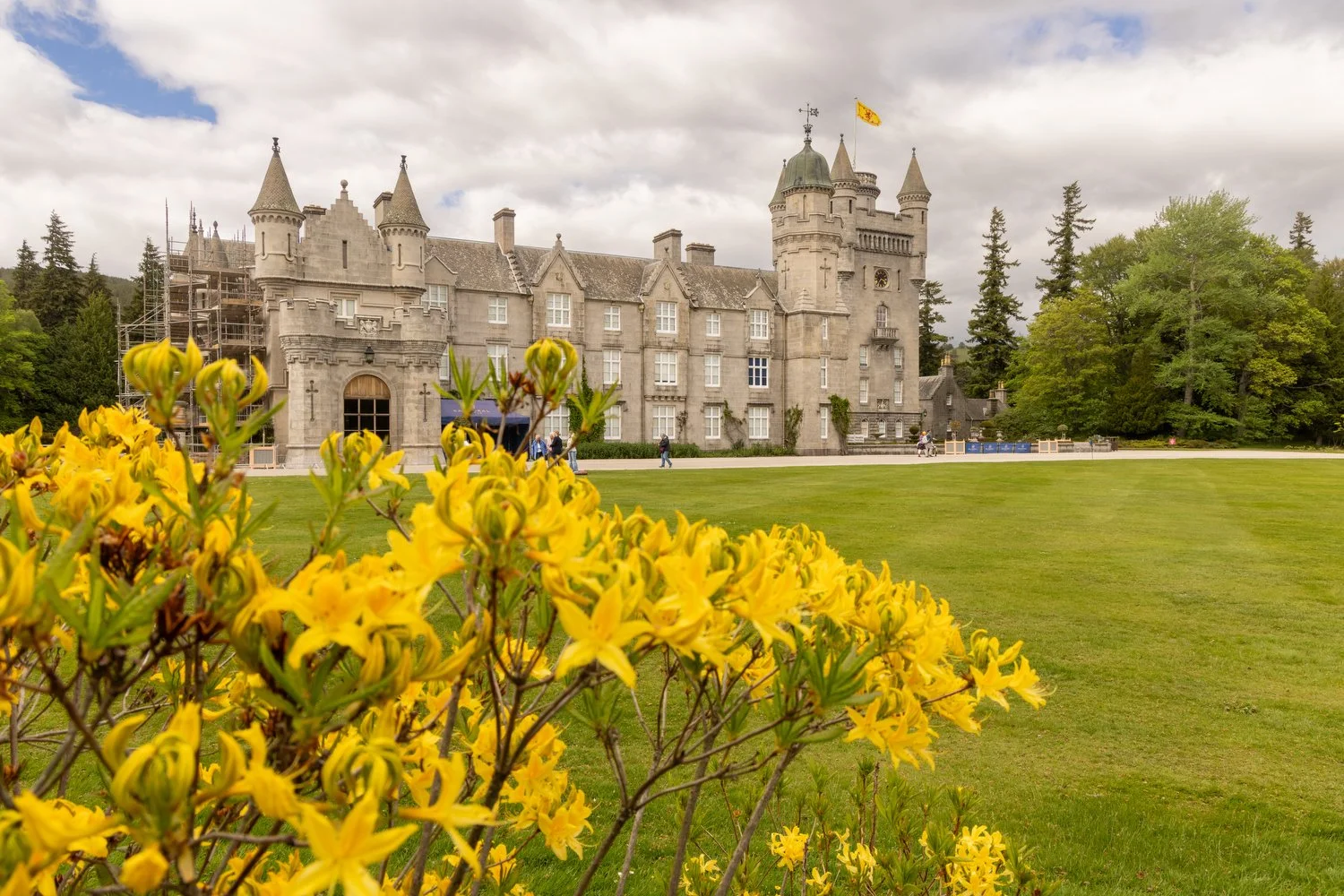
A view from across the great lawn to the castle.
The massive front lawn is a feature in its own right. Many famous visitors to Balmoral have posed on this lawn, with the Castle behind them. I’m thinking particularly of Dwight and Mamie Eisenhower posing with their royal hosts in 1946 when he was General of the Army. He also visited in 1959, becoming the first sitting US president to visit Balmoral.
There is an interesting little gardener’s cottage on the lawn that you can peek into the windows of, where Victoria is said to have spent some time writing in her diaries and working. It’s a peaceful spot, and the furnishings inside are said to be much as she left them, though the cottage has had other uses.

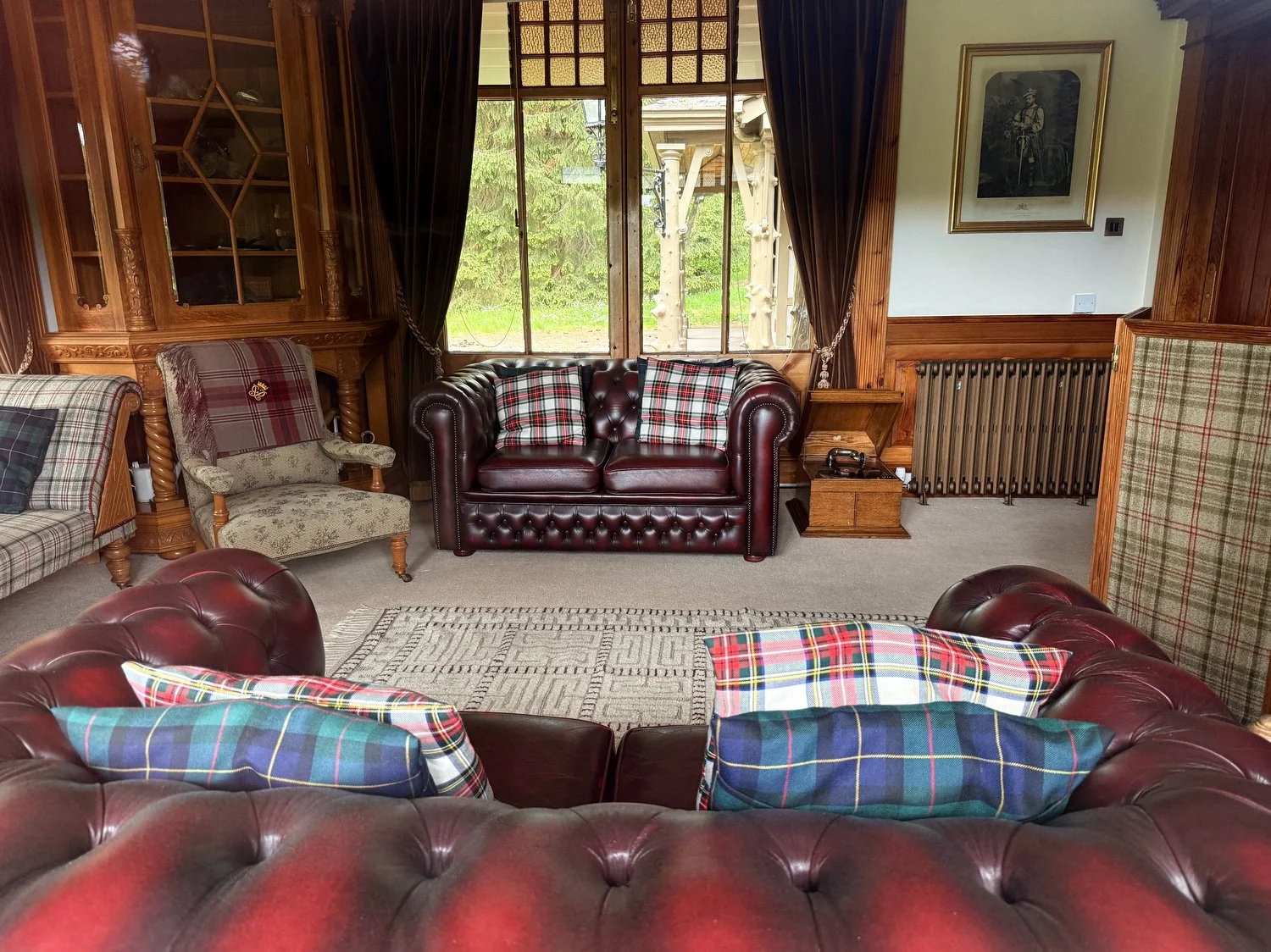
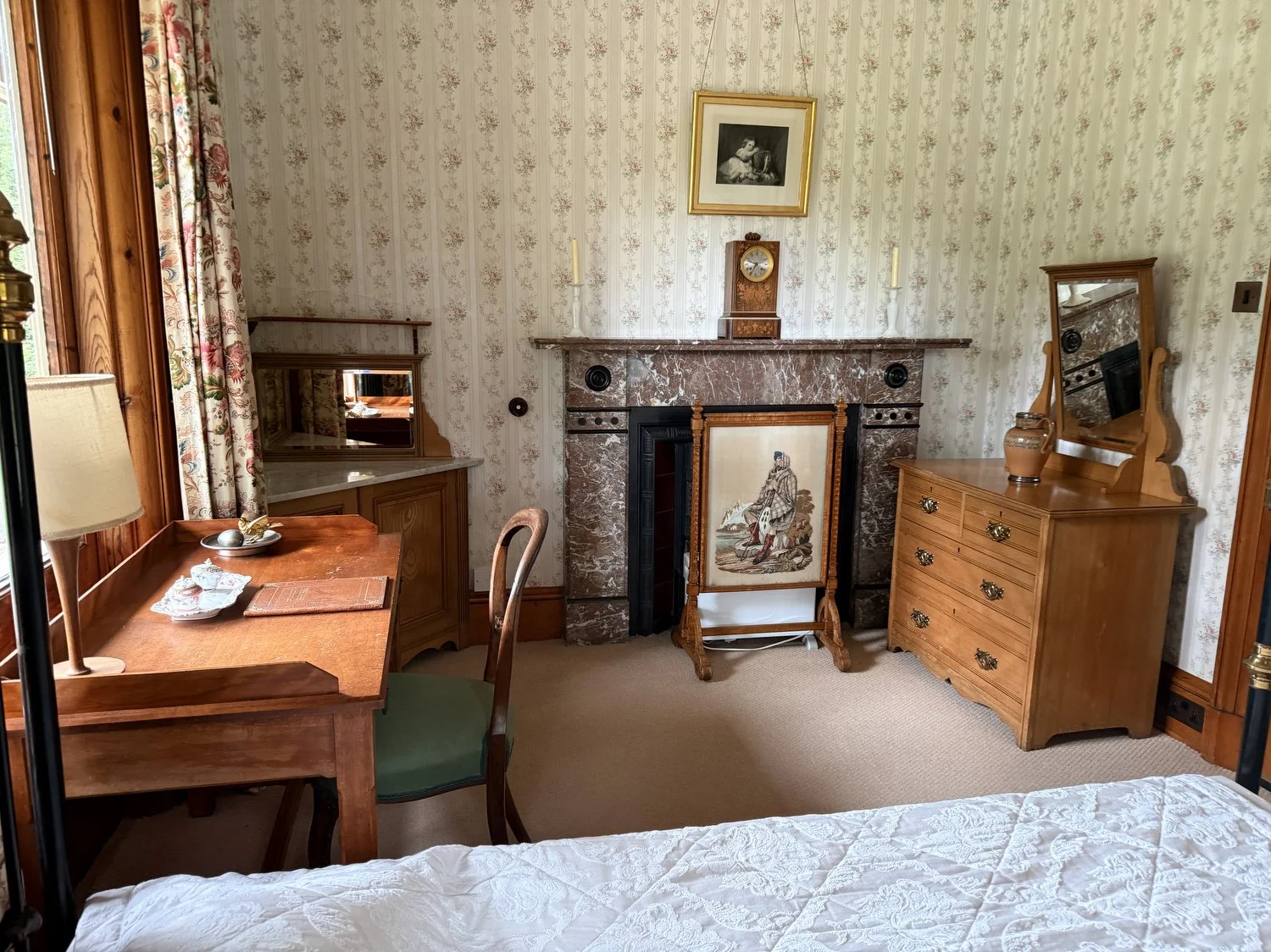
Peeking in the windows like that, I had the vibe that I was back in my childhood days peaking into the display cottages of the Seven Dwarves at Fairy Tale Forest, a modest and quirky little attraction in my home state of New Jersey. (Of course the Queen had better furniture!)
We headed down the trails to the River Dee, the paths adorned with beautiful woodland plantings and fir trees. The River itself was just so fresh and beautiful, almost a movie set. There are lots of little structures and points of interest along the trails, including a touchingly humble memorial to King George V, dedicated by estate workers.
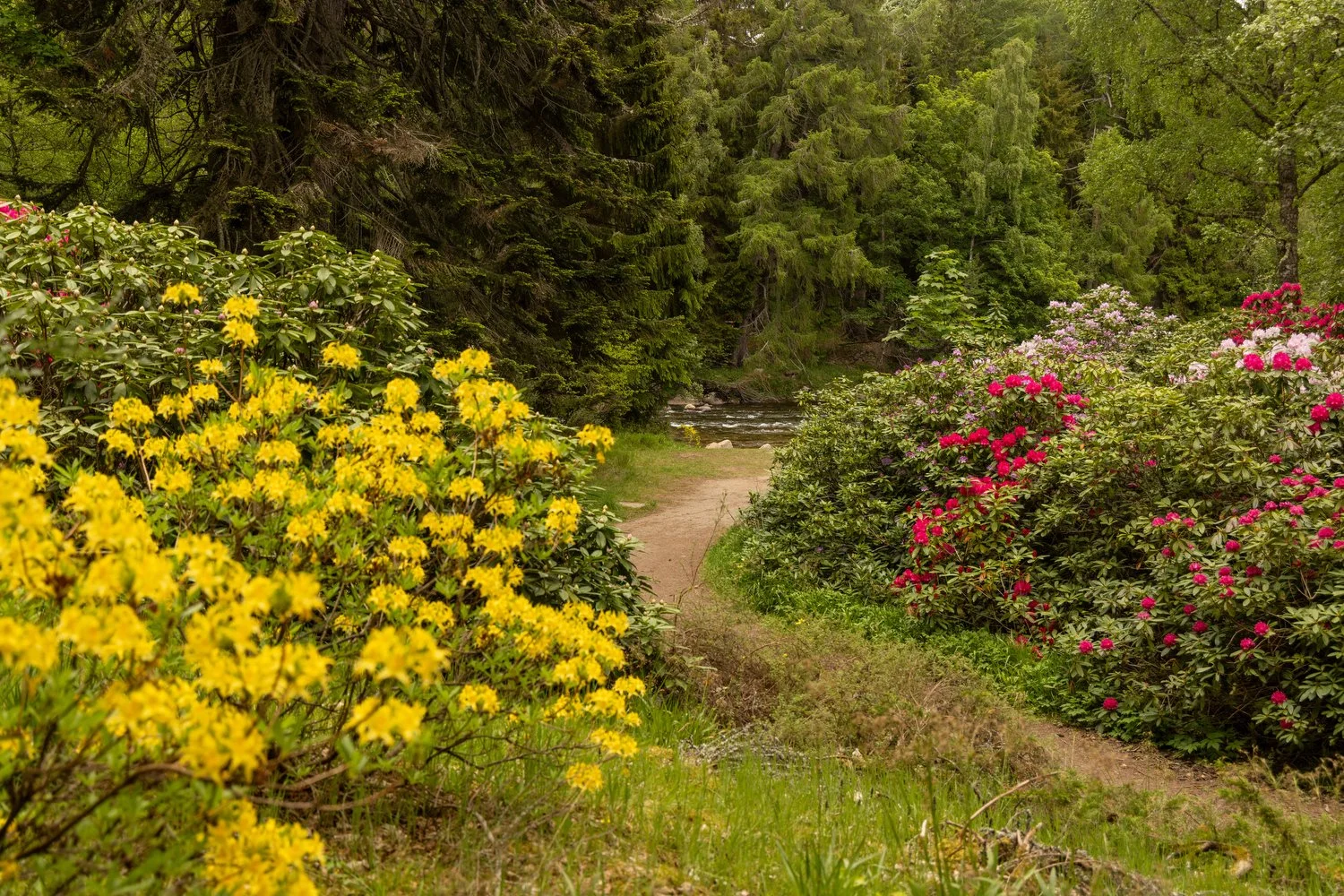
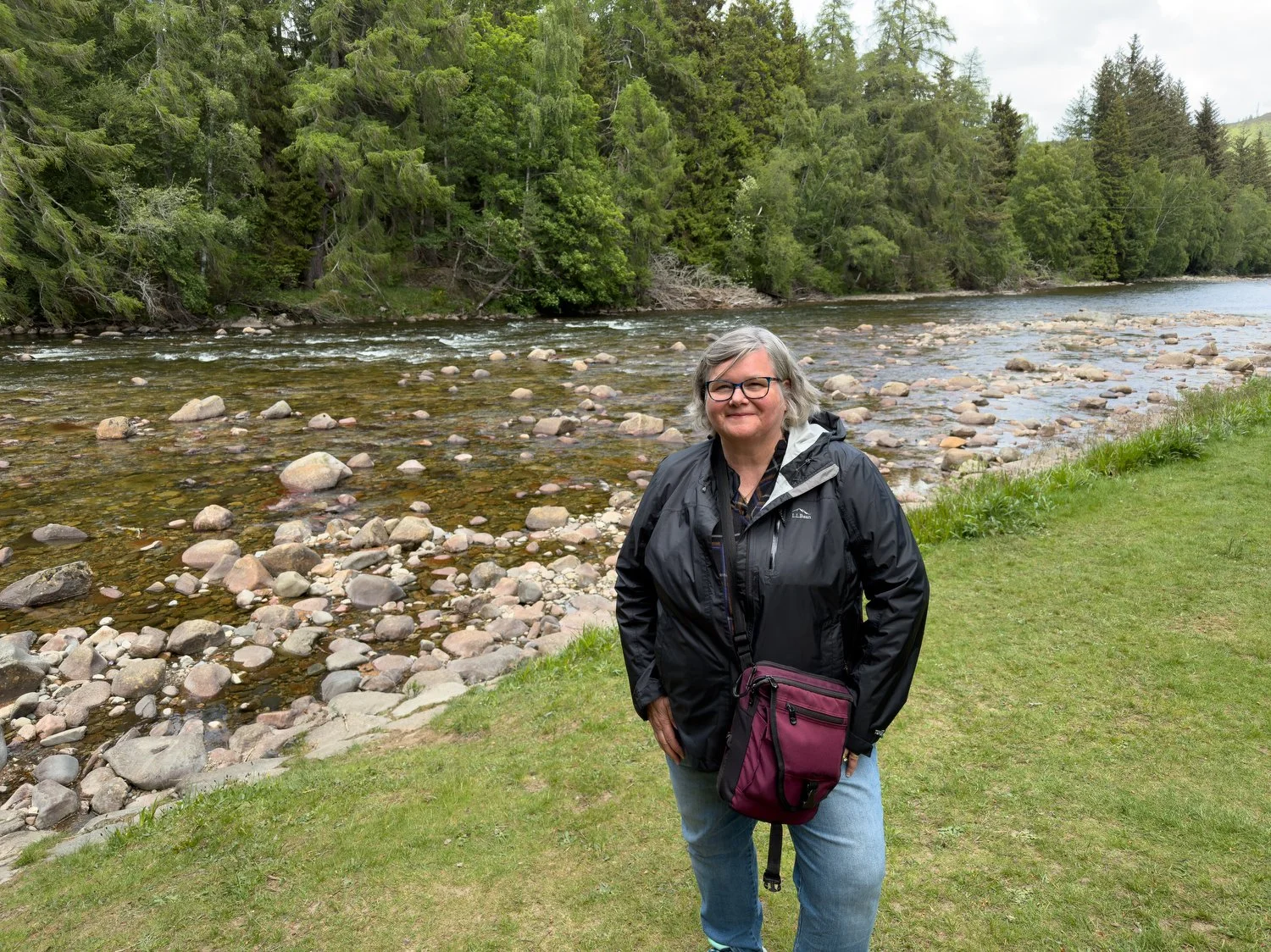
There is also a 6km trail you can take to Prince Albert’s Cairn, a rock pyramid built in honor of Victoria’s beloved consort, but we didn’t partake of this. Only so much one can do in a day! Especially in the kind of “taking it all in” pace I can be guilty of in these kinds of places!
In fact, it was getting pretty late and the visiting hours were coming to a close. When we looked around, no one else was there but us and some Highland Coos down one of the paths. (though it never actually felt crowded - it’s such a big space, it swallows you up.)
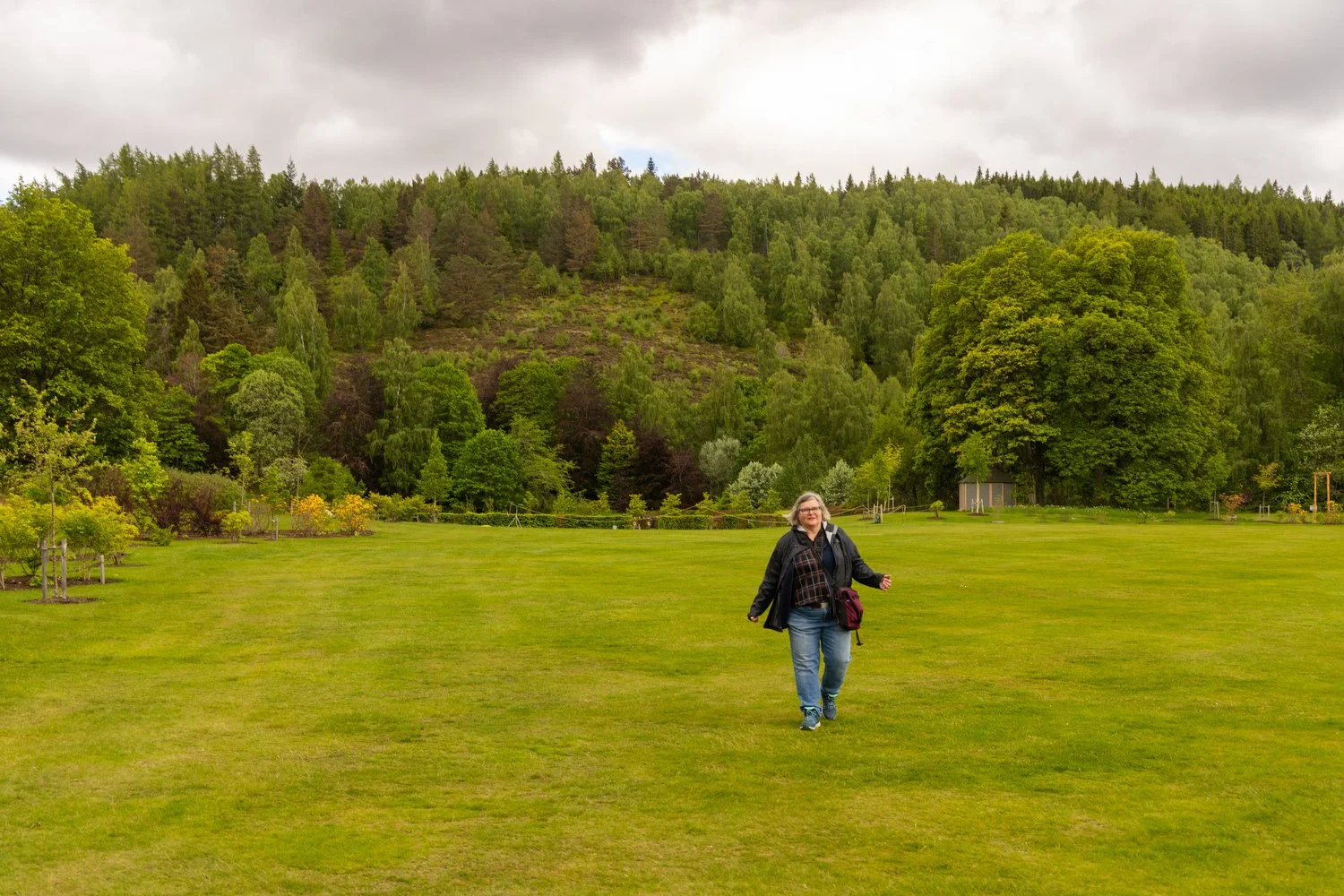
Debbie on the grounds of Balmoral Castle - all alone!
It's a rather surreal feeling to have all of Balmoral seemingly to yourself! (though I’m sure discreet cameras were watching. Discreet may just be the watchword for how everything is handled at Balmoral.)
The final touch was pressing a button to let ourselves out and watching the gates slowly swing open for us. I could almost hear Charles’ casual voice saying “just let yourselves out, wonderful having you.”
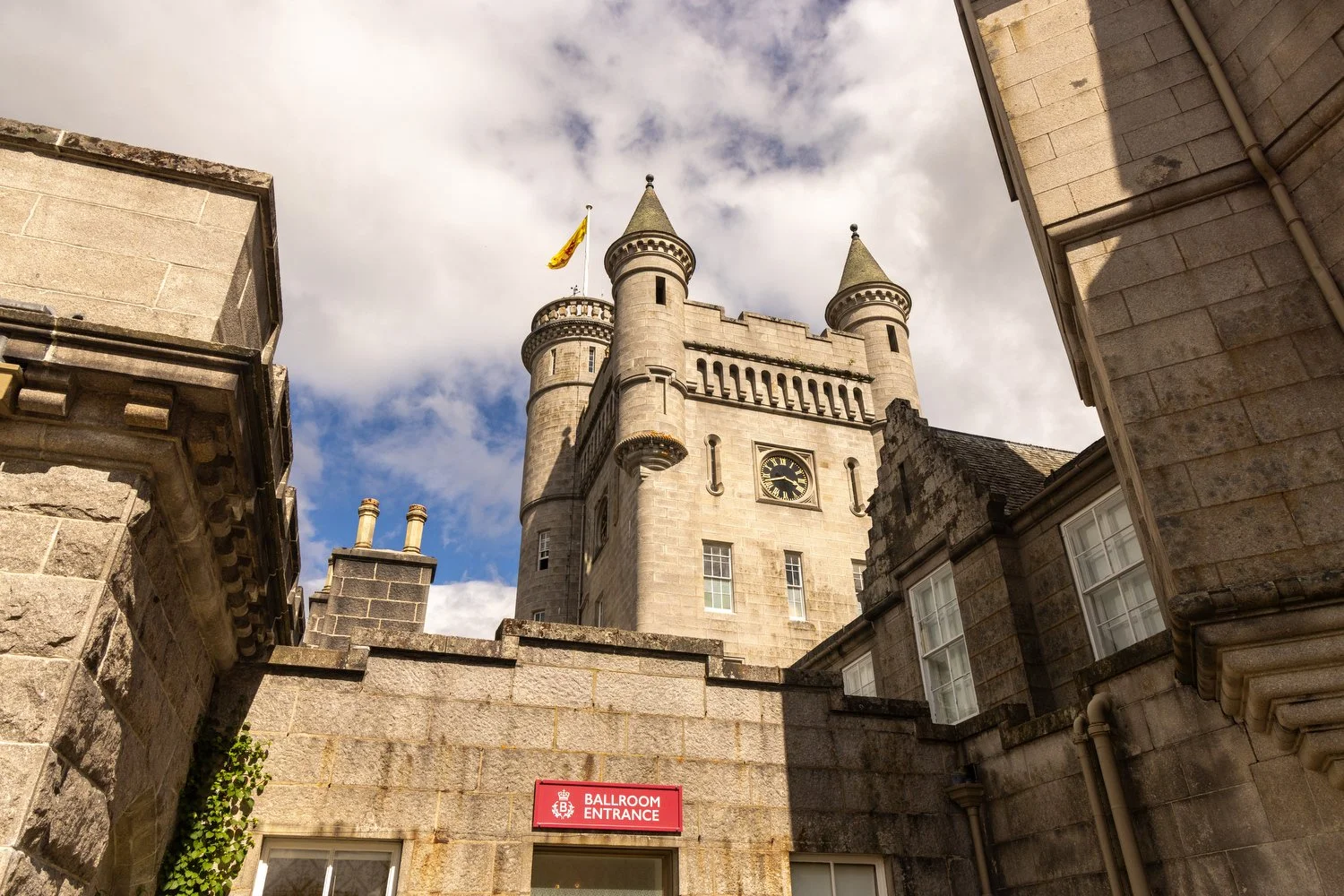
Delightful shadows on the castle over the entrance to the Ballroom exhibit. The Ballroom is included with any ticket.
The Ballroom Exhibit at Balmoral Castle
The Ballroom was exactly what I was expecting - yet surprising in certain ways. Famous for the annual “Ghillies Ball” that has been held here since the days of Victoria and Albert, you can see it with any visitor ticket. (A ghillie is a Scottish term for an attendant or guide who assists with outdoor sports like hunting, fishing, or deer stalking.)
This traditional Scottish dance hosted by the British monarch serves as an annual end-of-summer gesture of thanks to estate workers, gamekeepers, castle staff, and the local community. The royal family participates in the dancing, but takes their leave early to let the estate workers have their fun without the boss watching.
The royals enter and leave through a double set of stairs that is the same entrance you take as a visitor. I couldn’t help thinking of the history, the ghosts that descended those same stairs that I was now using. I will admit I was caught with unexpected emotion walking in those footsteps.
The room is smaller than expected - for a ballroom anyway - and decked out with lots of deer antler trophies - a very “rich country house” aesthetic. I’ve read descriptions of this room many times from different periods, and recognized the red leather couches of the elevated area where the senior royals would sit to watch the goings on and rest between traditional Scottish reels.
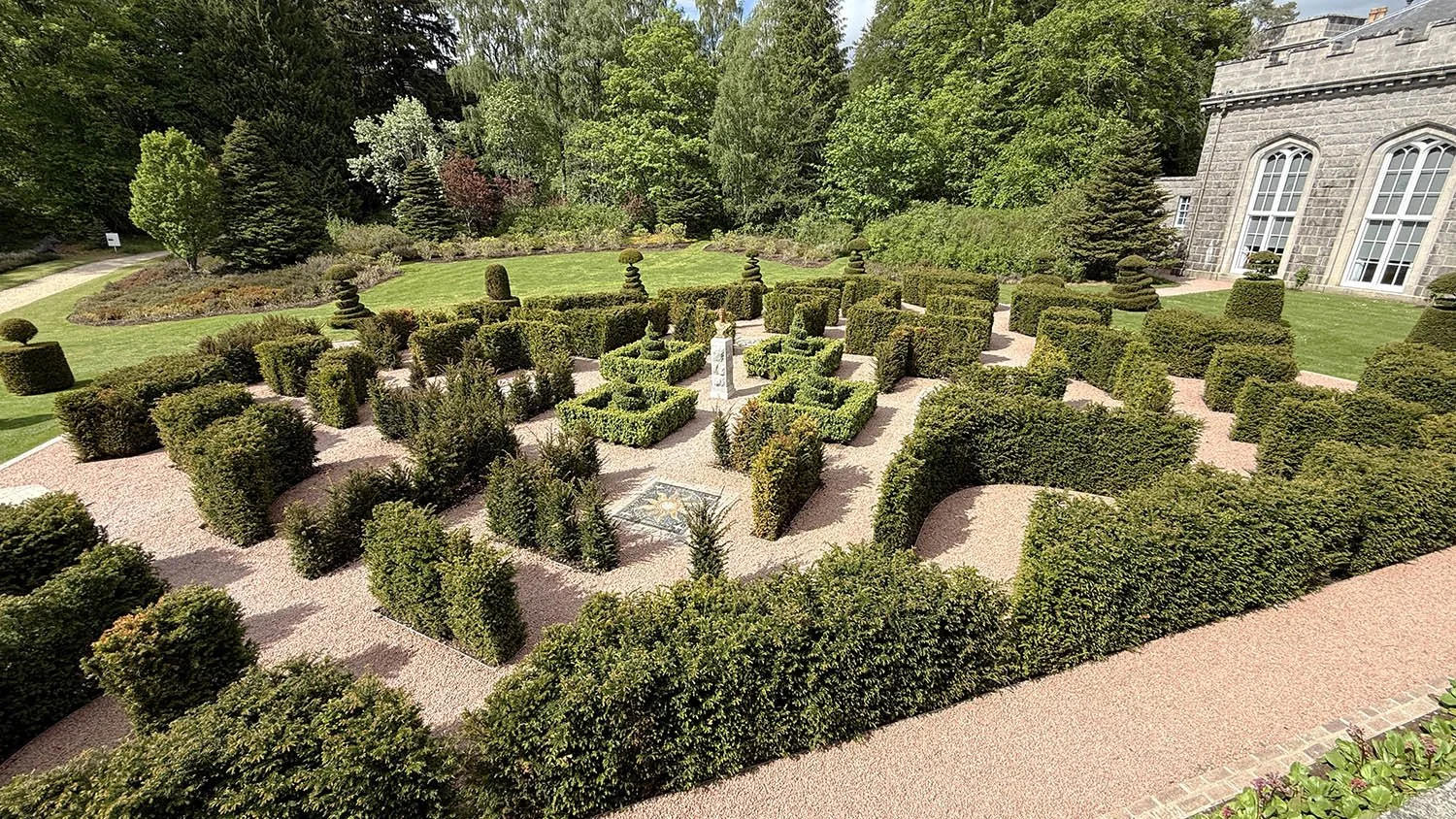
A wide-view of the Ballroom Maze Garden. No photos are allowed inside the Ballroom, but the large ballroom windows can be seen on the right.
There was a special exhibit in the ballroom for the 100th anniversary of Queen Elizabeth II’s birth, and it was a retrospective of her life in photos, but it had a Scottish bent, which was a nice touch. I particularly loved seeing the early photos when she was just a baby, holding the fingers of her parents, the then Duke and Duchess of York, and with Queen Mary at Balmoral.
Strange to think that her coffin lay in repose here as well.
In that red-leathered area I just spoke of was a great presentation of a very famous photograph of Queen Elizabeth in her robes of the Order of the Thistle, the highest order of Scottish chivalry, taken in an outdoor Highland setting. Not only did it show the stunning photograph taken by British photographer Julian Calder in August 2010, but it had a sign in his own words telling the “behind the scenes” story of the photo session. As professional photographers, we very much enjoyed reading that!
What is interesting to me about the photograph itself is that it was taken when she was a little older and white haired (in her 80s en fait) and there is the wizened expression in her eyes of a woman who has seen a thing or two. It was taken here in the hills of Balmoral, an area she knew so well and fit right into, as familiar as her own skin.
At the center of the exhibit is the robes of the Order of the Thistle that are used by King Charles III. Quite beautiful.
The whole experience felt very much “on brand” for royal experiences and how they treat you like a special guest.
Eating at Balmoral
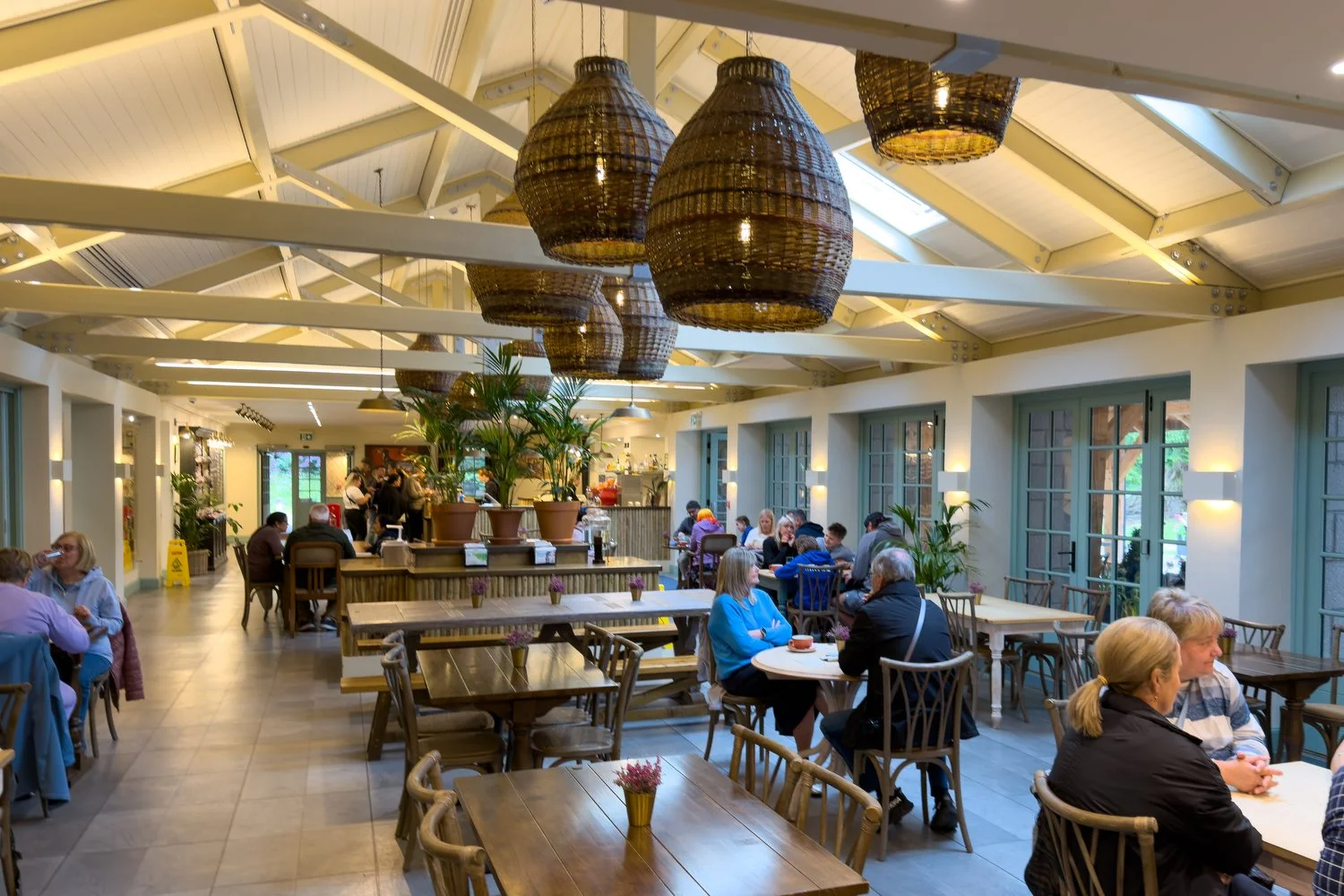
We actually had lunch first, as we did arrive just around lunchtime and were hungry. It wasn’t overly crowded when we entered the restaurant. But then a tour bus unloaded!! OH NO!
But actually, there was plenty of room to find a nice outside table looking toward the castle tower.
The restaurant has been newly refurbished and has that refined “rich but informal” feel that royal attractions do so well. It’s an elegant restaurant that operates with a cafe-style setup, where you join the queue to order your food and carry it to your table.
The menu is very good - offering Scottish specialities like haddock goujons, cullen skink and even a Balmoral venison burger.(Remember those larders we saw??)
Also tasty ciabatta sandwiches, mac-n-cheese, and chicken & ham pie. And of course there scones and baked treats.
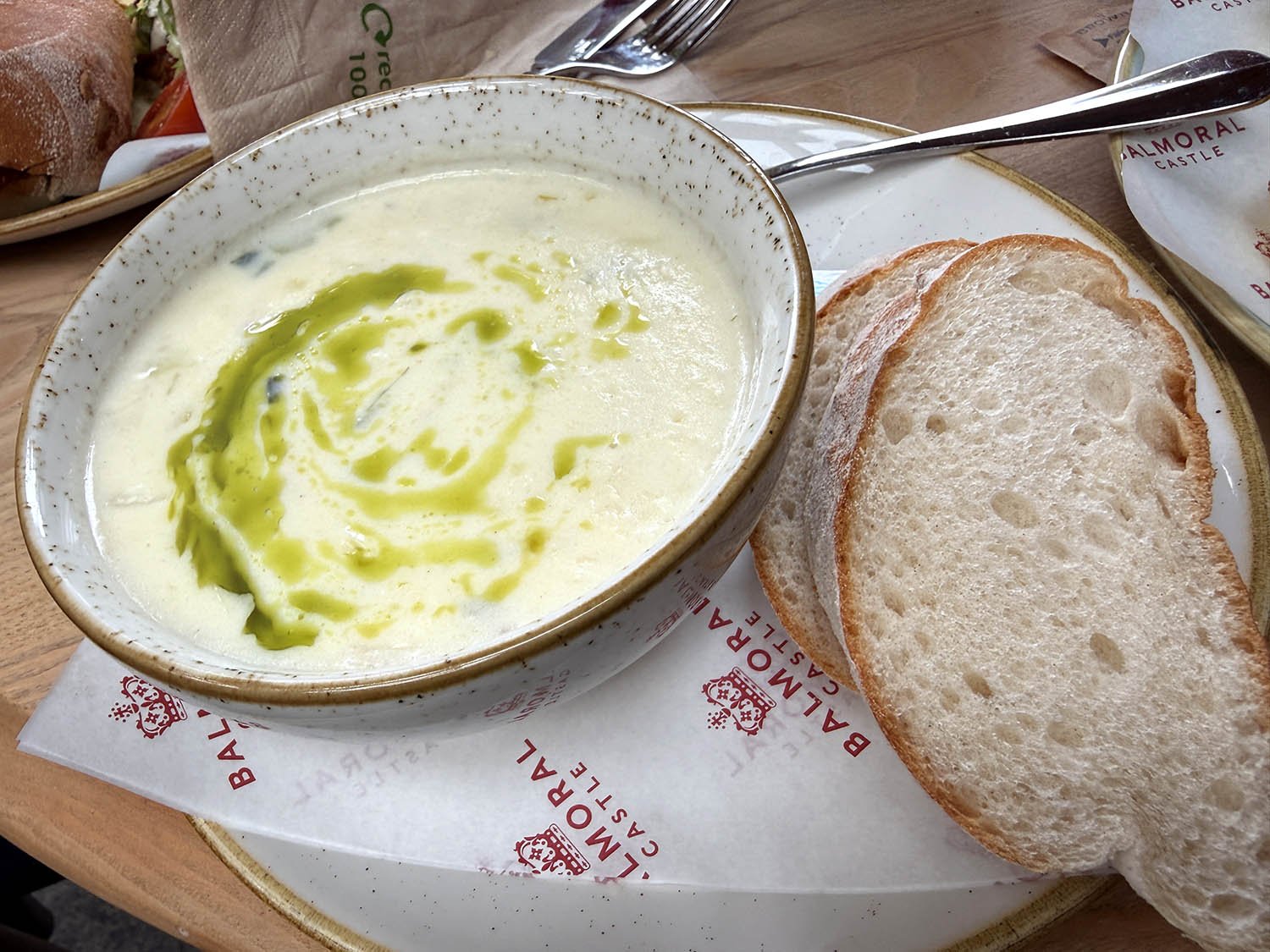
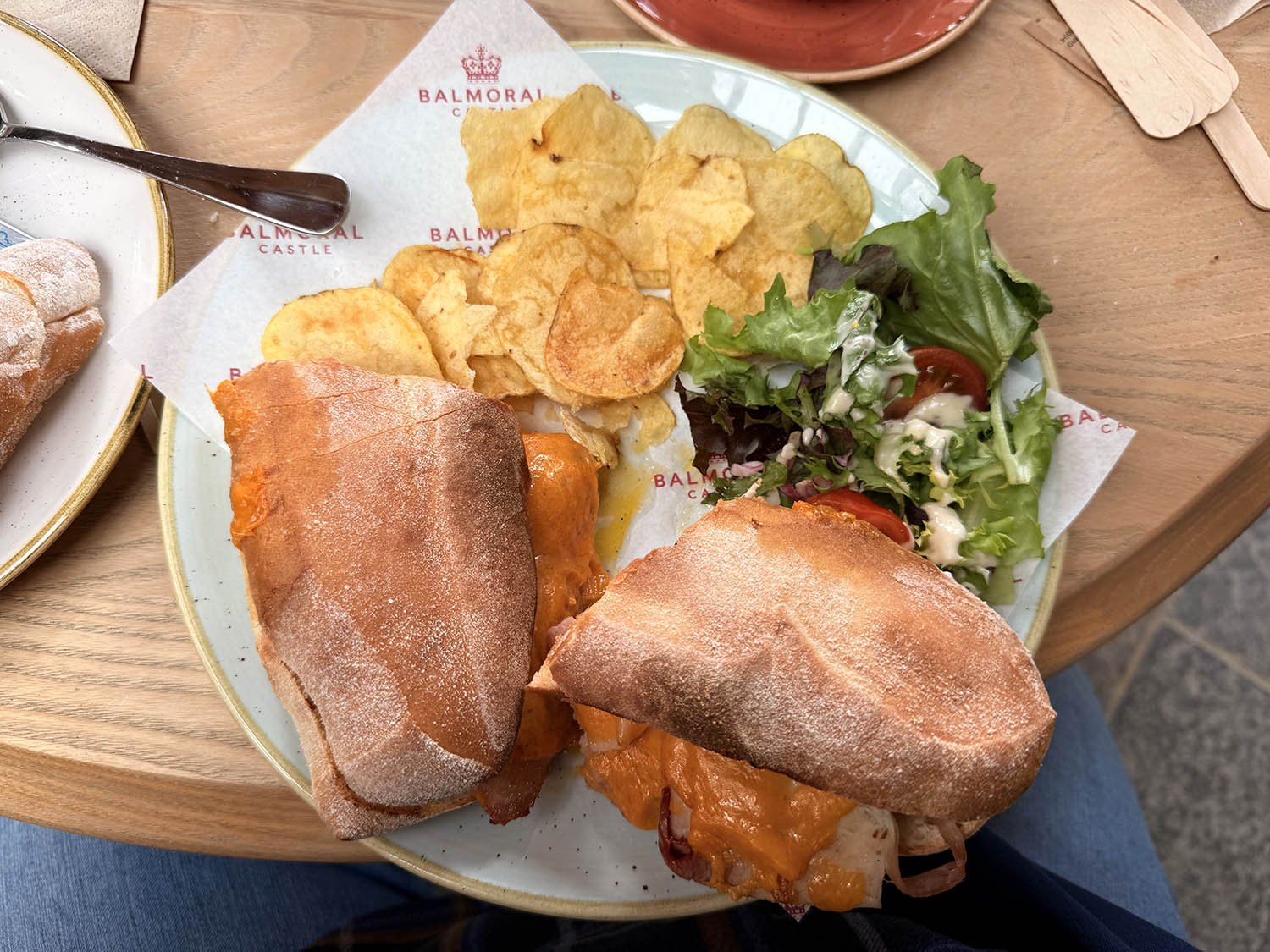
The Cullen Skink was excellent (in case you are unfamiliar, it is a hearty soup of smoked haddock and potatoes. Think clam chowder without the clams.) I also ordered a ham, cheese & tomato ciabatta, while John enjoyed Brie & cranberry. Drinks were also just perfect - my son enjoyed a flat white and I just had to try the Balmoral blend tea.
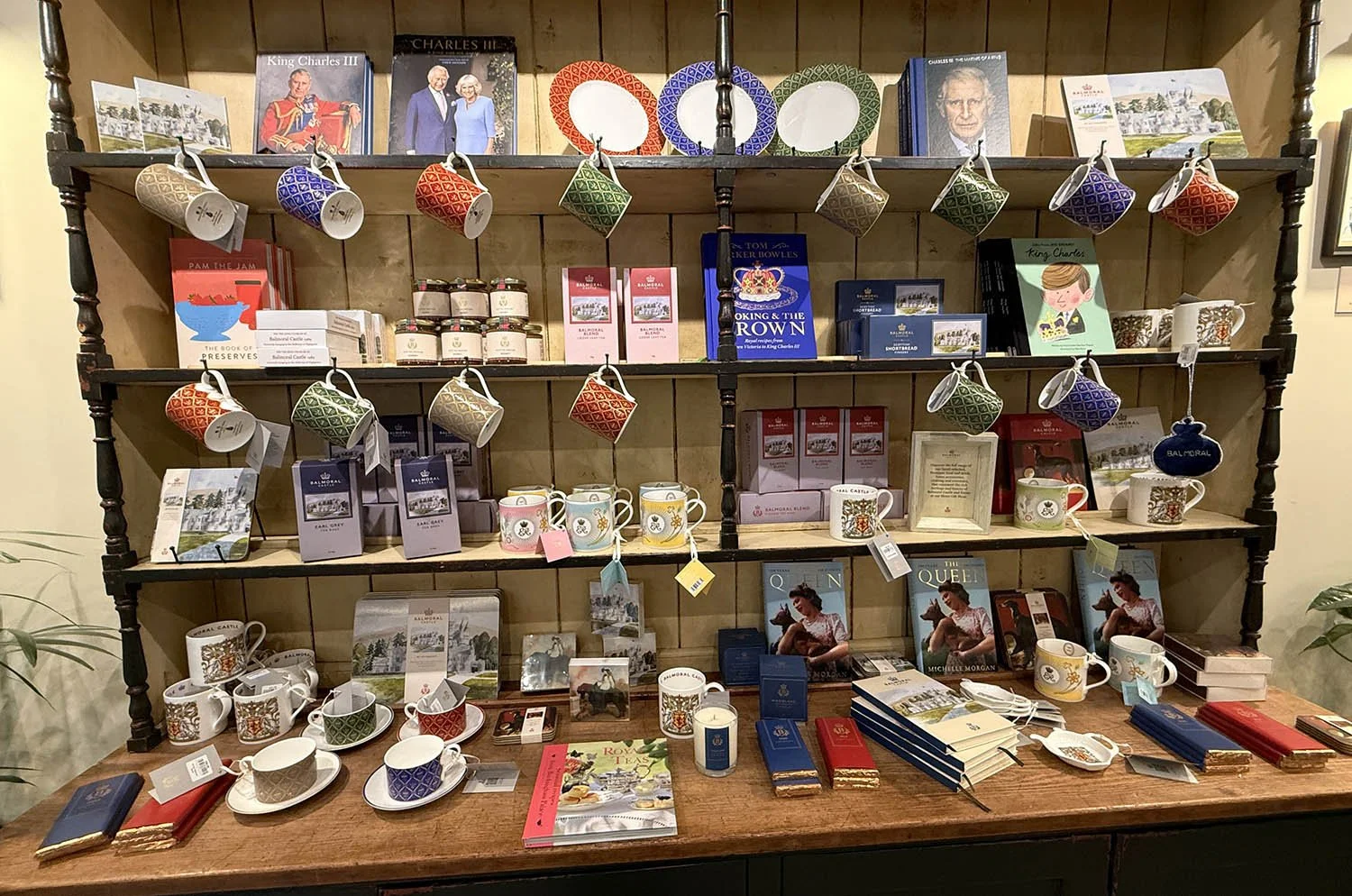
You can buy exclusive Balmoral mugs, teas and knick-knacks here, but they do have a proper gift shop - the Mews Shop - in a separate building that was formerly stables and where Queen Victoria kept her pony carts.
A fun little detail not to miss is the walls of framed family photos near the restrooms in the restaurant. It’s a collection of family moments like you might find on the wall of your grandma’s house - only with better photography! There are quite a lot of photos in this casual little galley and I loved poring over them all.
Do use the restrooms here at the restaurant as they really are the only public restrooms on the premises. The only other ones are outside the main gates, at Crathie Gallery, which is the main parking lot.
Also note that everything closes at 5pm.
A little bit extra…
During the summer months, the restaurant transforms to host a formal Balmoral Castle Afternoon Tea experience. This requires a dedicated, pre-booked ticket and features tea served on an exact replica of the castle's bone china that is used at the King’s table.
The restaurant is also open to visitors for free throughout the winter opening.
(The “winter opening” refers to specific autumn and winter months when the estate selectively opens its outdoor grounds, restaurant, and gift shop to the public, offering free admission to explore the snowy Highland landscapes. These dates are a moving target dependent on weather so you will need to check their website.)
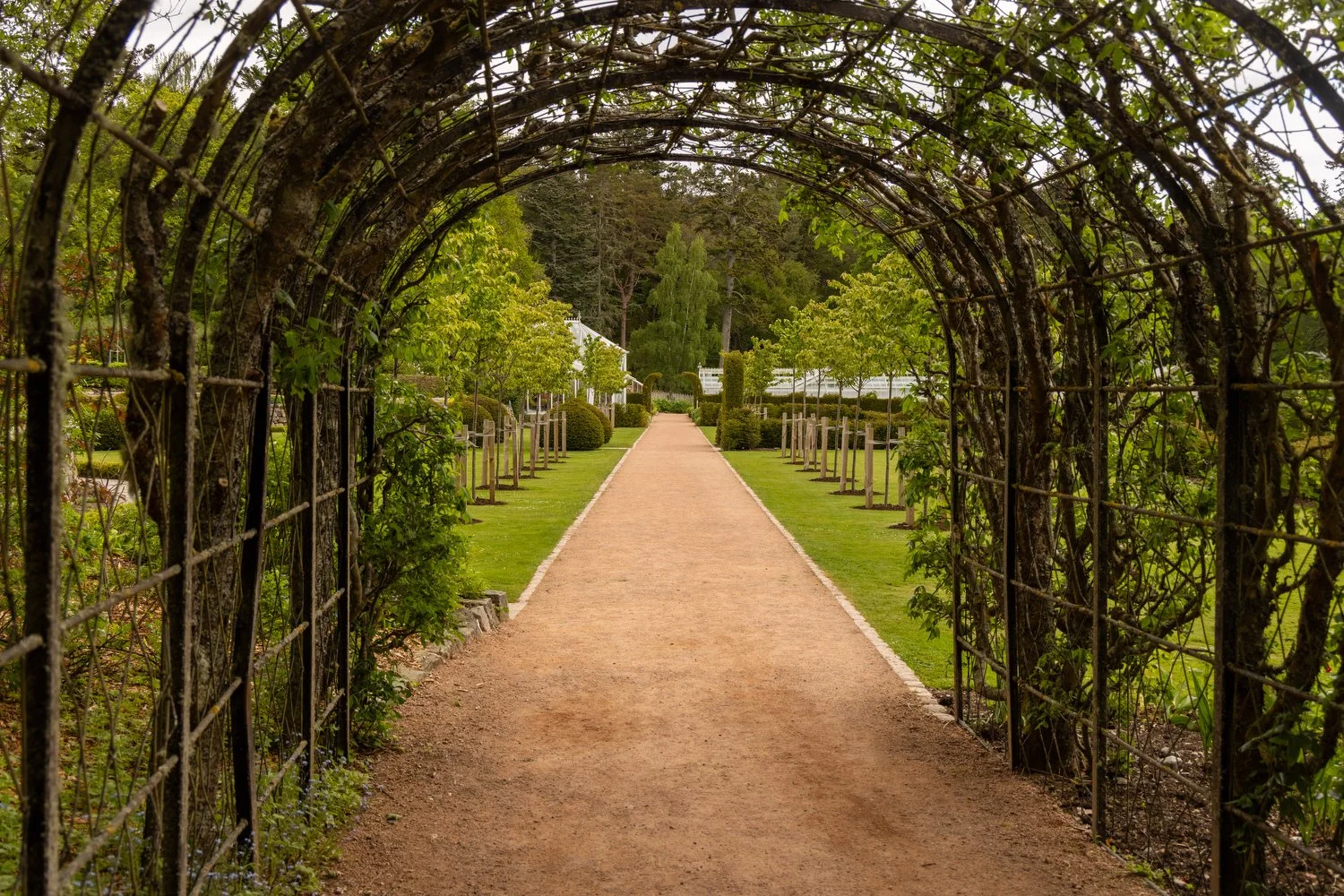
An arbor in the Kitchen Garden. Vegetables, fruits and herbs grown in the gardens are used in the Restaurant at Balmoral.
Crathie Kirk
Crathie Kirk, the parish church where the royal family worships while in residence, is across A93 from the car park, up on a little rise, in a little wooded area.
We stayed a little too long at the castle to be able to visit Crathie Kirk, which was a disappointment, but I still walked the grounds a bit as the gate was open - the George VI Memorial Gate, I might add! It was nice to see the affectionate tribute to my favorite monarch. There is also a bust of him inside the church which I really wanted to see, but alas, it was not to be.
Actually, access to the interior is extremely limited anyway, so it’s unlikely I would have been able to see it even if I had gotten there earlier. You can usually only go inside for Sunday services or very rare weekday visiting hours. So I would not count on seeing inside.
However the church grounds, graveyard (including the grave of Queen Victoria's personal attendant, John Brown), and the ruins of the 14th-century church can be viewed year-round.
Signs all around the church ask for visitors not to take any photos on the premises, so I complied. (I don’t want to ignore signs at a church - I might get struck by lightning!) But I can describe how very tiny and simple it feels from the outside. Built of granite and Scotch pine in Gothic Revival style, it looks cozy and secluded in this peaceful little spot.
Queen Victoria laid the foundation stone in 1893 for the version of the church that stands today. She actually caused a bit of a stir when she started worshipping there from 1848, as it was expected that she would worship in the Scottish Episcopal Church, which recognised the authority of the Archbishop of Canterbury.
Every monarch since Victoria has worshiped at the kirk with regular members of the Crathie parish, although the south transept is reserved for royal use.
Princess Anne and Sir Timothy Laurence were married there in 1992. At the time, the Church of England did not permit remarriage after divorce, but the Church of Scotland had no objection to it. So that’s an interesting little tidbit.
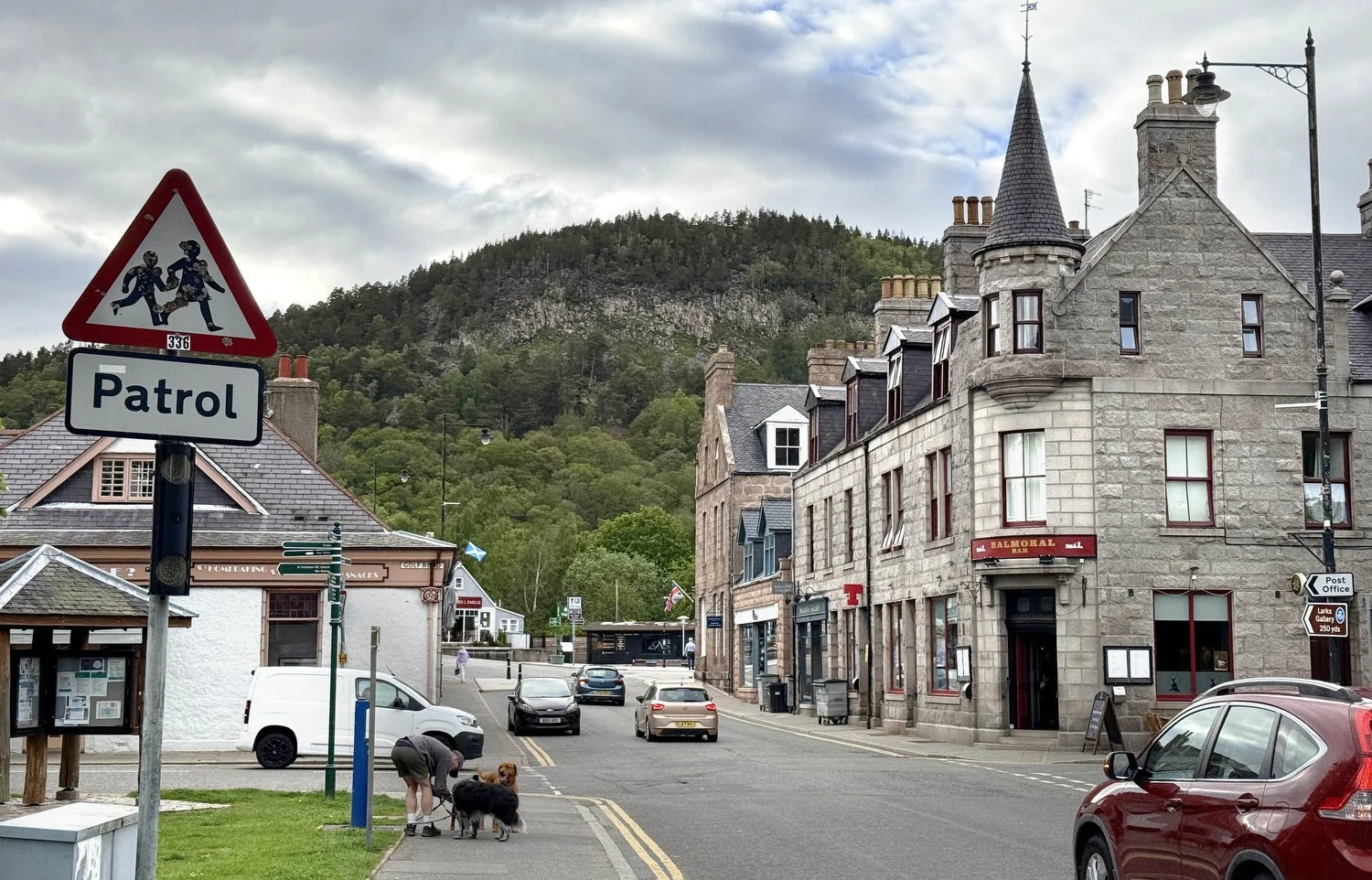
A view down Bridge Street in Ballater, the village just east of Balmoral.
Ballater, the Village Next Door to Balmoral
Ballater sits about six miles east of Balmoral, right along the River Dee. It is the closest village of any size, and it is where the royal family has shopped for generations.
We stayed at Balmoral until late in the day, so we only drove through Ballater and didn’t spend much time there. Even from the car it looked lovely. Gray granite storefronts, flower baskets, hills rising behind the rooftops. It looked almost like a dreamy movie set. But people going about their business, walking dogs and riding bikes made it obviously a real town.
If you plan better than we did, give yourself an hour or two here. Here’s what to see:
The Old Royal Station
The village's biggest draw is the Old Royal Station. Queen Victoria's train line ended here, since she did not want a station any closer to Balmoral. Oh Vicky!
The line closed in 1966, and a fire badly damaged the building in 2015. The rebuilt station reopened in 2018. Inside you will find the visitor center, a restored royal waiting room, and a replica of Queen Victoria's carriage.
Hours change with the season, so check before you go.
Shops and the royal warrants
Ballater shopkeepers held royal warrants for decades. Several storefronts still show the royal arms, including the butcher H.M. Sheridan.
Poke around the main streets and you will find bakeries, a bookshop, gift shops, and cafés. It is a small village, so a walk from one end to the other won't take long.
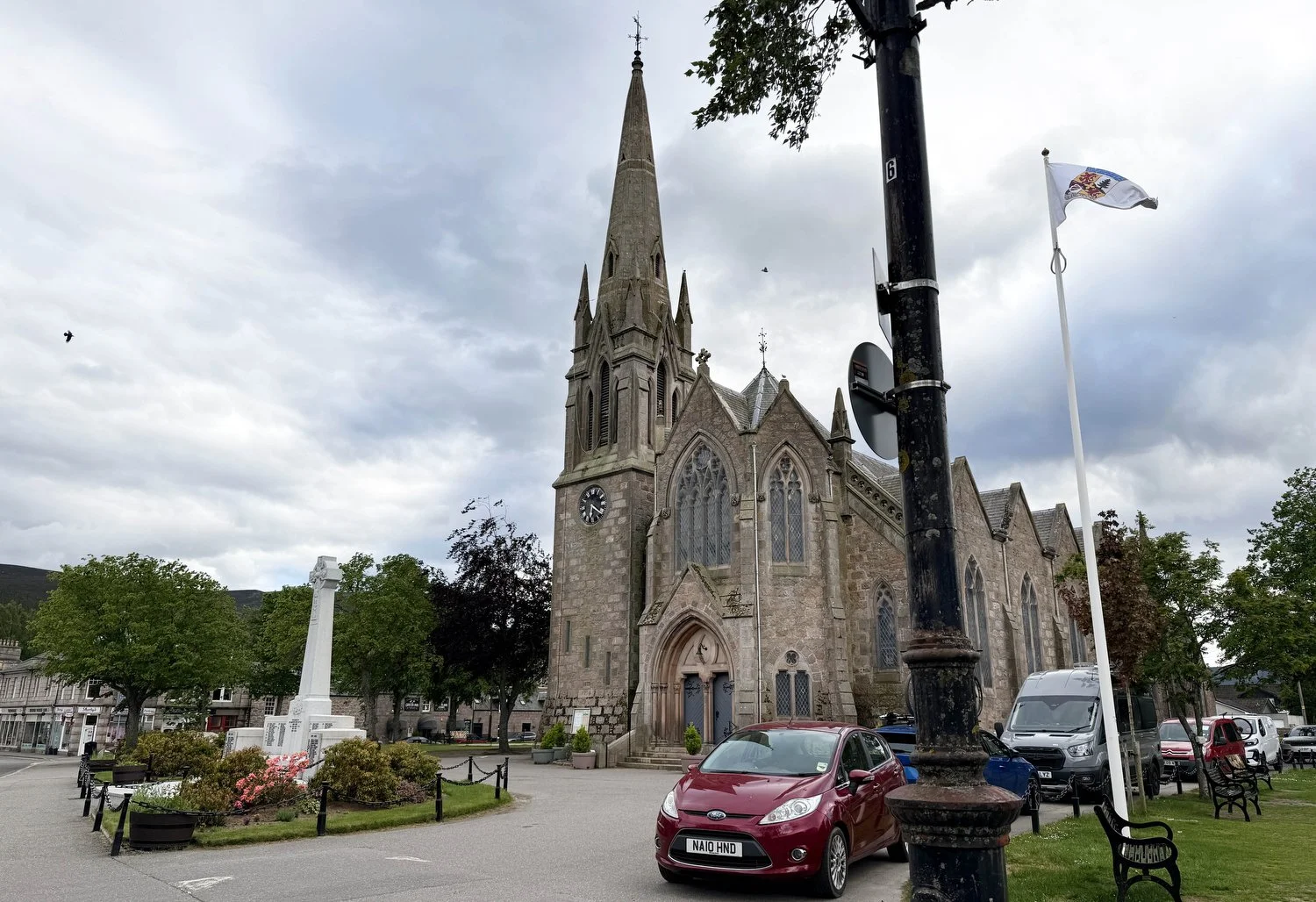
Glenmuick Church in the center of Ballater.
Walks from the village
Craigendarroch is the wooded hill right above town. The climb is short and steep, and from the top there are views over Deeside.
Loch Muick sits southwest of Ballater at the head of Glen Muick. Queen Victoria walked there often, and the loch still feels remote.
If you go in August
Victoria Week runs each August and celebrates the village's ties to Queen Victoria and Balmoral. Expect events, music, and a busy main street. Do remember that you cannot visit Balmoral in August though, as that is when the King is in residence there.
Where to stay
Ballater makes a good base if you want a night on Deeside rather than a long drive back to Aberdeen. You can compare local inns and guesthouses on Booking.com.
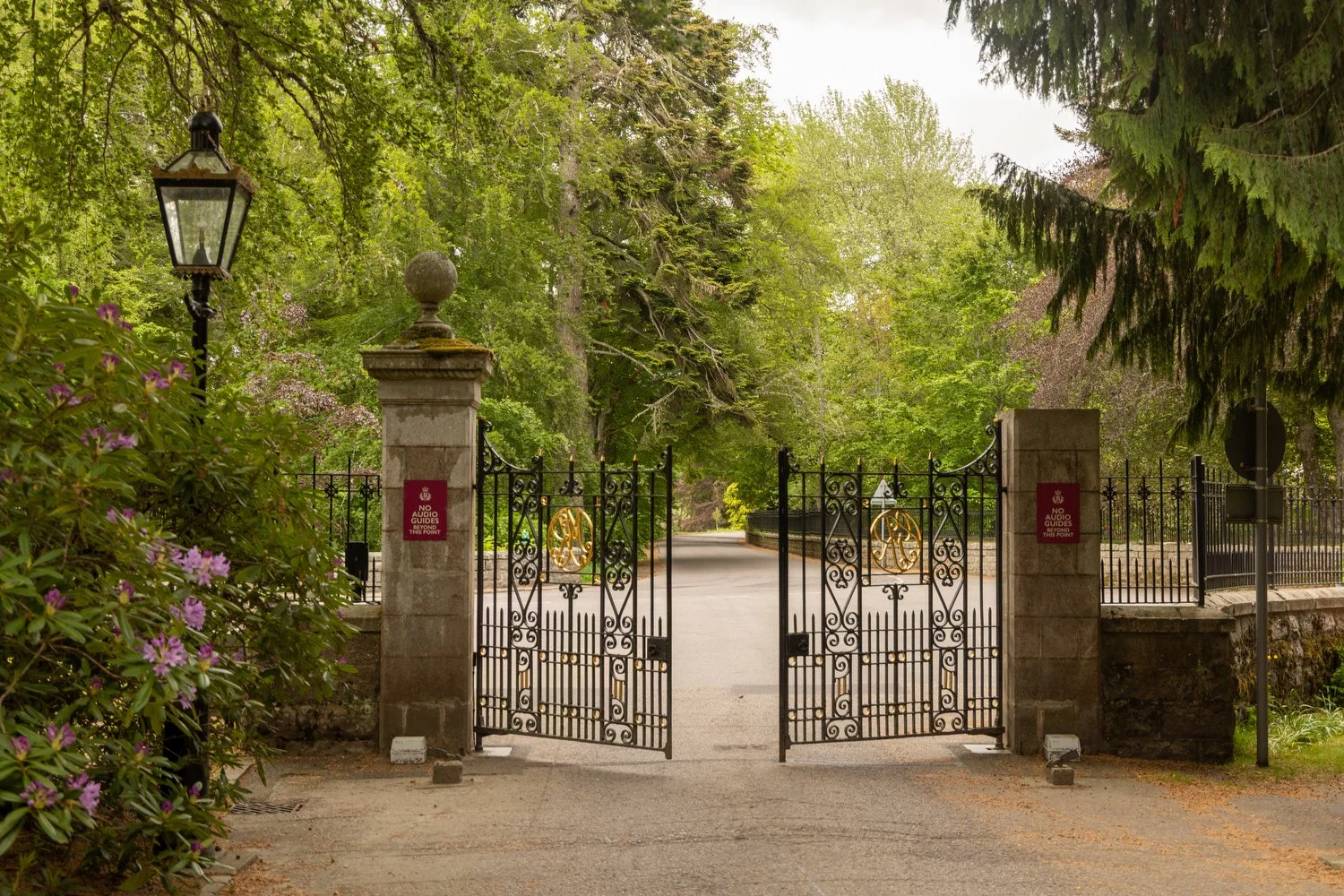
A perfect ending - letting ourselves out at the gates of the Balmoral Estate.
About the Authors

|
John and Debbie O'Boyle are the team behind The Empty Nest Explorers. John is a professional photographer whose work has been published by The New York Times, NBC News, and Getty Images. He is a member of the American Society of Media Photographers, has been part of a Pulitzer Prize-winning team, and has received two New York Emmy nominations. Debbie is a writer and photographer with 30+ years of experience, formerly with The Star-Ledger and NJ.com. Together, they create in-depth travel guides for couples and empty-nest travelers who want to make the most of every destination. |
Some well reviewed Scotland tours:
Our other Scotland travel blog posts:
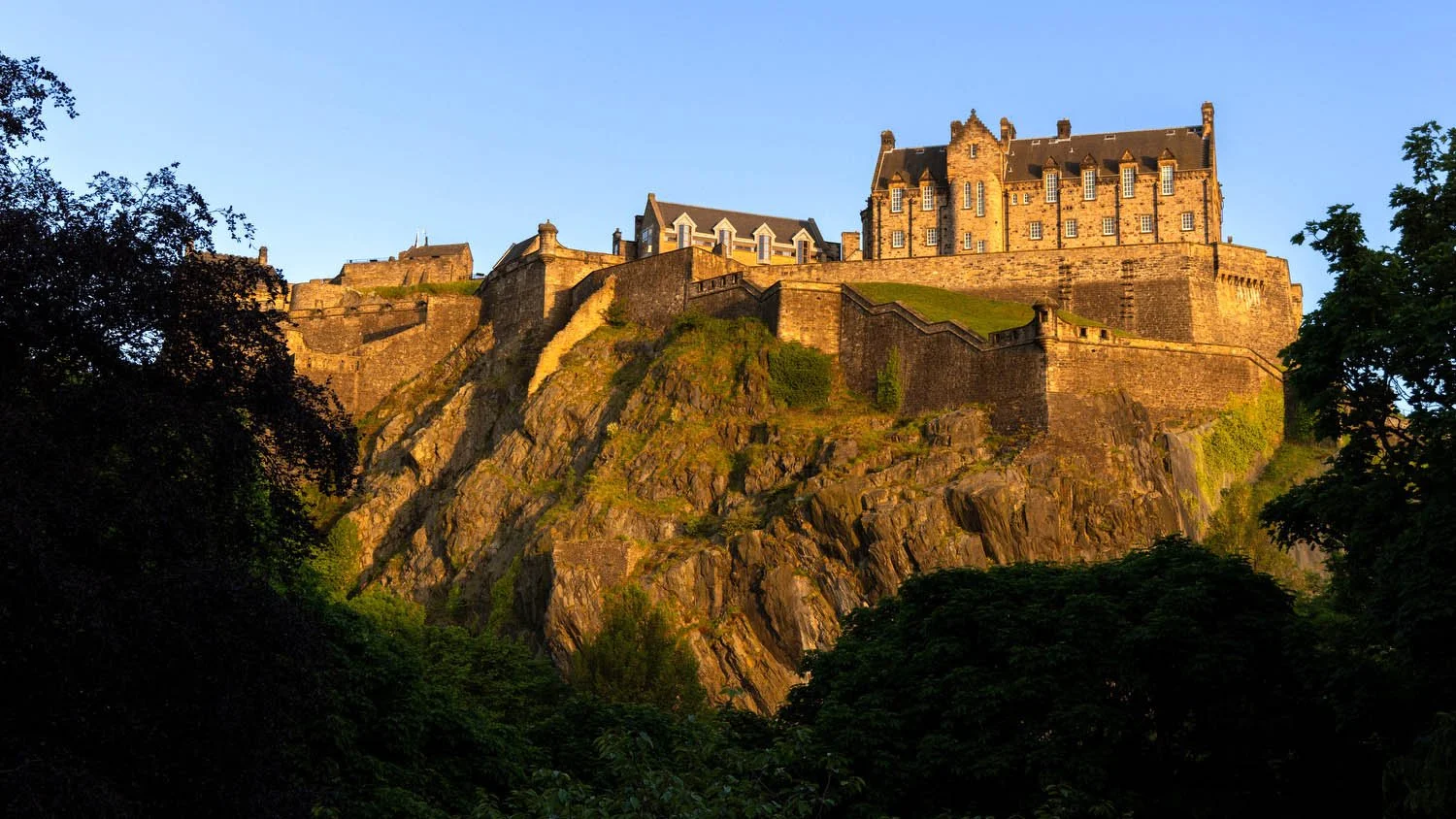
While The Royal Mile is touristy, it's also the historic heart of Edinburgh.
Here's our honest walk from the castle down to the palace, with the closes, St Giles' Cathedral, Victoria Street, and the best free stops along the way.