
Visiting Mount Rainier National Park: Complete Guide 2026
Updated - April 11, 2026
A trip to Washington state would not be complete without a visit to the beautiful Mount Rainier National Park. It is a fantastic spot for scenic drives, nature photography, hiking, and mountain climbing, as well as for skiing and other winter activities.
We visited in summer, an especially lovely time to be there, and the most popular – for good reasons. Summer is when Mount Rainier National Park really shines with the rich beauty of wildflowers and waterfalls.

Hanging out on Crystal Mountain after taking the gondola ride to the summit (see below).
But Mount Rainier does have much to offer in other seasons - gorgeous foliage in fall and glistening snowfalls in winter that beckon skiers, snowboarders, and snowshoers. Snow can last a long time on Mt. Rainier - from mid-autumn through late spring and even mid-summer! The best time for fall foliage is usually the last week of September through mid-October, as the first snowfall usually comes in November.
As the tallest mountain in Washington state, the 14,410-foot (4,392-meter) peak - which is actually an active volcano (!) - towers over everything near and far. You can see its stately presence, ghostly white due to its glaciers, from Seattle and other Washington cities, and from as far away as Vancouver. On clear days, it can be seen all the way to Victoria in British Columbia, which is 300 miles away.
I can now totally understand why its image is everywhere; on license plates, official signs, and product labels - the majestic mountain really does dominate and oversee the landscape. We saw it from the sky as we approached Sea-Tac Airport.
| Entrance Fee | ~$30–$35 per vehicle — check NPS for current pricing |
| America the Beautiful Pass | $80/year — covers all National Parks |
| Best Time to Visit | Late July through September |
| Distance from Seattle | About 1 hr 40 min to 2 hours by car |
| Closest Town | Ashford, WA |
| Timed Entry (2026) | Not required — but check NPS before you go |
| Payment at Gate | Card only — no cash accepted |
| Cell Service | Very limited — download NPS app offline before arrival |

Black and white photo of a cloudy day at Mount Rainier.
That picturesque image of Mt. Rainier makes it as attractive to photographers and artists as it is to hikers and outdoor enthusiasts. Naturalist and environmental pioneer John Muir, who climbed Mount Rainier himself in 1888 and advocated for its protection, said that it was best appreciated from below.
In 1899, the mountain and its surrounding area was established as the country’s fifth National Park.
You can do a lot or do a little - the beauty of Mount Rainier is that even just a bit of exploring can be a rich experience. Whether you are daytripping or planning on spending a few days, here are some great things to do while visiting Mount Rainier National Park.
How to get to Mount Rainier National Park
As with most national parks in the United States, driving is really the only way to get there. Considering the size of the park, having your own vehicle is the only way to get around. Unfortunately, there is no public transportation that directly accesses Mount Rainier National Park, and no shuttle buses operate within the park.
Mount Rainier National Park is located in west-central Washington state, 60 miles southeast of Seattle in the Cascade Mountain Range. It is about a 2-hour drive from Seattle and about 2 ½ hours from Portland, Oregon. The closest town to Mount Rainier National Park is Ashford, Washington.
Mount Rainier - the mountain itself - is located in the center of the national park, and due to its size and terrain, no roads cut through the center. The main roads will take you around the perimeter of the mountain and shorter access roads will take you in closer to Mount Rainier.

Debbie and John take in the view.
There are four entrances into the park:
Nisqually entrance - SW
Stevens Canyon entrance - SE
White River entrance - NE
Carbon River entrance - NW
Always check the park’s road status page before hitting the road for your visit. Unexpected road closures may occur at any time due to the dynamic nature of Mount Rainier.
We visited Mount Rainier as the first stop of our Washington trip, and it took us about an hour and 40 minutes from Sea-Tac.
The entrance fee to Mount Rainier is about $30 per private vehicle.
Tip: The America the Beautiful Pass will give you access to all National Parks in the United States for a year.
NOTICE: Construction work is ongoing in parts of the park through 2026, and some areas may have limited access. Check the Mount Rainier National Park alerts page before your visit for the latest road conditions.
One practical note: the park is fully cashless at all entrance gates. Credit and debit cards work fine, but leave the cash in your wallet.
For 2026, timed entry reservations are not required to visit Mount Rainier. That said, this has changed from year to year, so it is worth checking the NPS website before your trip.

The view from Mount Rainier’s Sunrise Visitor Center.
Mount Rainier as a Day Trip from Seattle: Is One Day Enough?
Mount Rainier is one of the most popular day trips from Seattle, and honestly, it deserves that reputation.
The drive from Sea-Tac is about an hour and forty minutes, and from downtown Seattle, you are looking at roughly two hours. We drove straight from the airport on our trip, and it worked out perfectly.
So, is one day enough? It depends on what you want out of it. If your goal is to see the mountain, walk a trail or two, and take in some views, then yes, a well-planned day will absolutely deliver. The key is picking one area and committing to it. You really cannot do both Paradise and Sunrise in a single day without feeling rushed. Pick one, arrive early, and enjoy it properly.
If we were doing Mount Rainier as a day trip from Seattle, we would head straight to Paradise. It is the most popular area in the park for good reason. The wildflower meadows, the glacier views, and the trails are all right there. Grab lunch at the Paradise Inn, and you have yourself a full, memorable day.
That said, if you can swing two days, do it. Staying overnight lets you visit both Paradise and Sunrise, and spending a couple of days in mountain air is really good for the soul. We stayed at Crystal Mountain Resort just outside the park and loved it. More on that below.
A few tips for day trippers: arrive before 10 am to avoid lines at the entrance gate, or come after 2:30 pm when crowds thin out. Midweek visits are much less hectic than weekends. And go early in the season if you can, before the summer crowds peak.
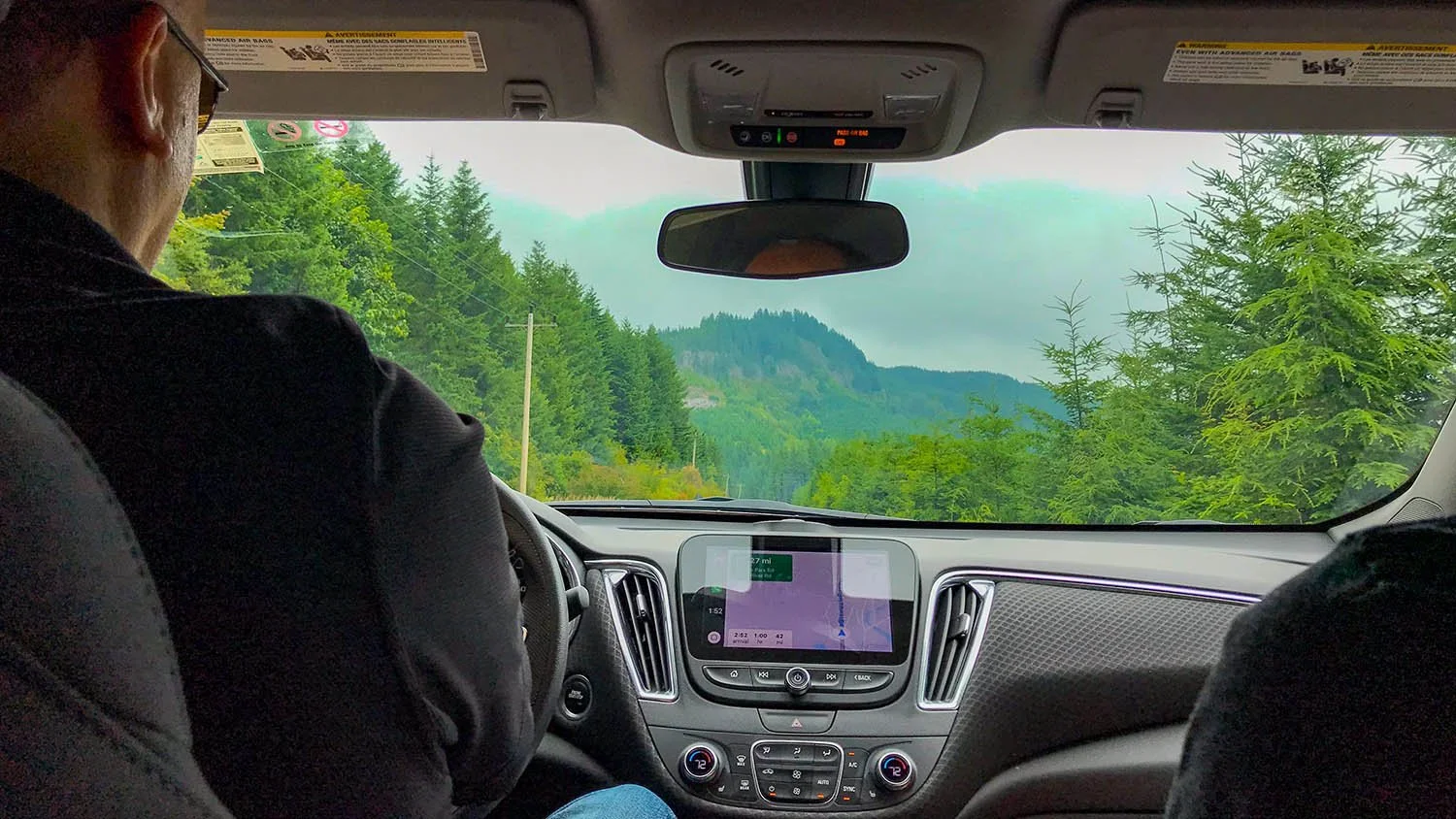
John driving to Mount Rainier.
Layout of the Regions of Mount Rainier National Park
The two most popular and most accessible areas of the park for visitors are Paradise, on the southern side of the mountain, and Sunrise, on the northeast side. Each offers a unique view of the glaciers and different perspectives on the terrain.
There are five main areas of Mount Rainier National Park:
Sunrise: Located on the northeastern side of Mount Rainier, Sunrise is the highest point that can be reached by vehicle at the park, at an elevation of 6,400 feet. The high-elevation trails offer stunning views of the surrounding peaks of Mount Rainier but can be a little challenging. It is one of the most popular areas of the park and offers a visitor center and picnic area.
Sunrise is only open in summer, however, as these higher elevations are prone to earlier snow conditions.
Ohanapecosh: Located in the southeastern part of the park, Ohanapecosh is a forested area offering wooded trails, hot springs, and a visitor center, and a top-rated campground.
Paradise: Moving westward is Paradise, the most popular region in Mount Rainier National Park. The scenery at Paradise features stunning wildflower meadows and vistas of glaciers and waterfalls, seen from very popular trails such as the Skyline Trail.
It is also home to the lodge Paradise Inn, designated as one of the “Great Lodges of the West” and a nice spot for lunch.
Paradise is open year-round.
Longmire: Just below Paradise in the southwestern part of the park, Longmire is an historic district featuring the Longmire Museum and easy scenic trails near the Nisqually Entrance.
This was the original entrance to the park and the museum once housed the park headquarters when it first became a National Park.
Carbon River / Mowich: This is the most remote area of the park, located on the northwest side of Mount Rainier. Getting there requires navigating a 20-mile unpaved road. This area is less crowded than the rest of the park, but I would consider it an area for serious campers and hikers.

Trails extending from the Sunrise Visitor Center (left).
When is the best time to visit Mount Rainier?
For the best weather, plan to go to Mount Rainier in late July to September. Believe it or not, there can be snow on the roads through mid-July! Once the snow has melted, roads should be clear.
Of course, this is the most popular time so it can be crowded. Arriving at the park either before 10 am or after 2:30 pm can help avoid delays getting in.
Summer is a great time for wildflowers and wildlife, so that was particularly attractive to me. We aren’t skiers or snowboarders, so a winter trip to Mount Rainier wasn’t really a consideration for us. Although the ranger-led snowshoe treks sound pretty amazing!
Honestly, unless you are a serious outdoors person, summer just seems to offer the most things to do there
| Season | Conditions | Best For |
| Summer July – September |
Best weather, all roads open, wildflowers peak in mid-July | First-time visitors, wildflower viewing, hiking, day trips from Seattle |
| Fall Late Sept – Oct |
Fewer crowds, beautiful foliage, first snow usually arrives in November | Photography, quieter visits, fall color |
| Winter Nov – March |
Heavy snow, many roads closed, Paradise open some days | Skiing, snowshoeing, snowboarding — serious winter visitors only |
| Spring April – June |
Snow can linger through mid-July at higher elevations, roads gradually reopening | Waterfalls at peak flow, fewer crowds, but check road conditions carefully |
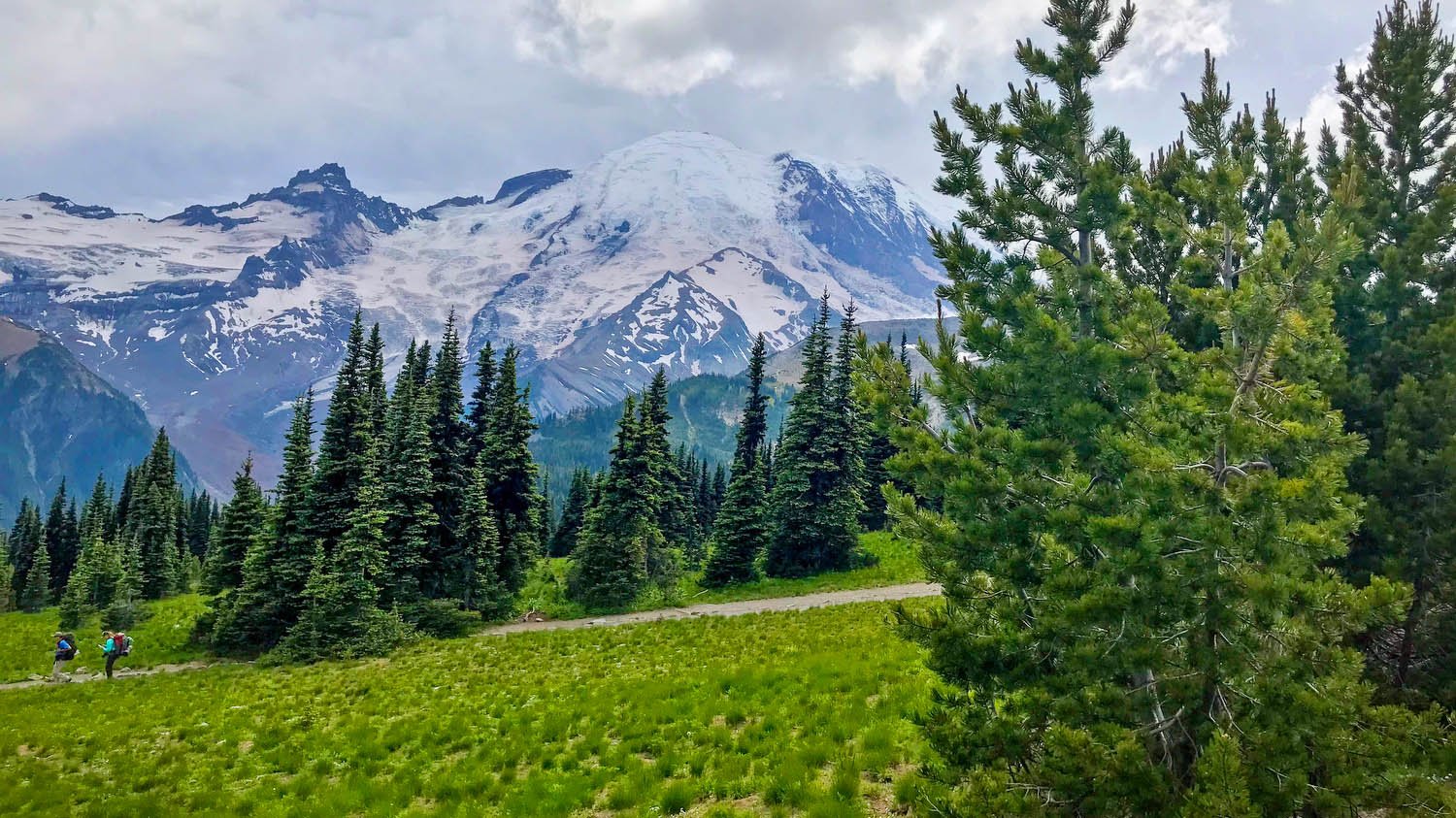
Hiking trails near the the Sunrise Visitor Center.
Exploring the hiking trails of Mount Rainier
Do stop at the Visitor’s Center at Paradise or Sunrise, whichever area you choose, to get information on trails and goings-on in the park. Rangers are happy to answer your questions and are extremely knowledgeable.
Rangers update whiteboards with info on wildflowers and wildlife to look for, weather and trail conditions every day.
You might be surprised to learn that you don’t have to wander too far down any trail to get some truly breathtaking views. There are many short, relatively easy trails that offer gorgeous views of Mount Rainier.
The Skyline Trail in Paradise is iconic, and really a must-do for any visitor to the park. Hiking the Skyline Trail to Panorama Point is considered to be one of the best hikes in the park.
Shorter, easier trails include the Alta Vista Trail and the Nisqually Vista Trail. These are only a little over a mile and take you up to good viewpoints.
Mount Rainier is also known for its beautiful waterfalls and lakes, many of which are accessible by short paved trails. Ask your ranger how to access Myrtle Falls and Reflection Lake for easy views. Some of the other waterfalls may require a little rock scrambling if you don’t mind that!
There are many trails at Sunrise as well. For beginners or casual explorers, the Sunrise Nature Trail is a good start, stretching 1.5 miles from the upper end of the Sunrise picnic area, in a self-guided loop tour through subalpine meadows and offering breathtaking views of Mount Rainier and the Cascades.
Reflection Lake is one of those spots we did not make it to on this trip, but it is firmly on our list for next time. On a calm morning, the lake gives you a mirror image of Mount Rainier that is about as perfect a photography composition as you will find anywhere in the park. It is an easy, flat walk from the parking area, which makes it accessible for just about anyone. If you are a photographer or just want that classic Mount Rainier shot, do not skip it the way we did.
Tipsoo Lake is another one we missed because of time, located near Chinook Pass on the eastern side of the park. It is a short, easy loop around a small alpine lake surrounded by wildflower meadows in summer, with Mount Rainier reflected in the water on clear days. Several visitors we have spoken to since our trip said it was one of their favorite stops. We will be going back.
Download the new NPS App before arriving at the park for helpful information and to make the most of your visit. Since Mount Rainier National Park has very limited cell coverage, best planning would be to save the Mount Rainier National Park section of the app before your visit so that you can use the app offline while in the park.
The Wonderland Trail at Mount Rainier
For east-coasters like us, the Wonderland Trail at Mount Rainier brings to mind the Appalachian Trail in the east. Like the AT, the Wonderland Trail is a strenuous trail, where through-trekkers attempt the entire trail with planning, and day trekkers may do just a little bit of it.
The approximately 93-mile (150 km) hiking trail circumnavigates Mount Rainier, passing through all the major life zones and terrains of the park. Many of the other trails connect to it.
This is more of a “hard core” hiking experience and not for beginners or casual hikers. The trail is always climbing or descending the ridges of the mountain.

Wildflowers along a trail at Mount Rainier.
The Wildflowers and Wildlife of Mount Rainier
The environment of Mount Rainier National Park includes lowland forests, wetlands, alpine tundra, and the most glaciated mountain in the contiguous United States. This makes for a very diverse community of plant and animal life. There are over 1000 species coexisting at Mt. Rainier, several of which are federally listed threatened or endangered species.
Both Paradise and Sunrise are well-known for their wildflower meadows, so either choice is a good one!
In most years, Mt. Rainier’s famous wildflowers bloom by mid-July, and by the beginning of August the lush meadows should be full and impressive to see. But weather conditions affect this schedule greatly so it’s hard to predict a “peak” time for wildflowers. Frost can occur as early as late August, but after the flowers come seed pods and autumnal leaf color change which can be equally as beautiful.

Park rangers draw the flowers in bloom at the Sunrise Visitor Center.
It is well known that being in nature is good for the body and soul. Mt. Rainier is a good place to immerse oneself in nature and refresh the mind. In the spirit of this philosophy, I may have gotten a little too obsessive about finding and identifying wildflowers during my hikes in Mt. Rainier, but it really does draw one in. I find it therapeutic to engage myself in the experience this way.
I bought myself a couple of those laminated Mac’s Field Guides, one for plants and one for birds & wildlife, from one of the Ranger Stations and was armed and ready. (If you frequent national parks, you know the ones I mean! Aren’t those guides just the greatest thing? I have quite a collection from over the years!)
Luckily the park’s website keeps an up-to-date Wildflower Guide, so you can check out what’s blooming during your visit if you aren’t the laminated field guide type! ;)
As in all national parks, please remember to practice the principles of Leave No Trace. Do not pick wildflowers or collect any other samples.

View from a Mount Rainier hiking trail.
Weather at Mount Rainier
Mount Rainier encompasses a wide diversity of environments, from glaciers and volcanic peaks to river valleys and old-growth forests.
Conditions in such a setting can change rapidly, sometimes within the same hour.
One thing we learned quickly is that the weather at the park entrance and at Paradise or Sunrise can be completely different. Always pack layers at the base, even on a warm, sunny day.
The table below gives you a general sense of what to expect by season at Paradise, which sits at around 5,400 feet in elevation. Longmire, down at the base, typically runs 5 to 10 degrees warmer.
| Season | Avg High | Conditions | What to Expect |
| Summer July – August |
Around 60°F (16°C) | Best weather of the year, low chance of rain | Warm days, cool nights — always bring a jacket |
| Fall September – October |
Mid 40s to low 60s°F | Crisp and clear early, first snow arrives by November | Beautiful foliage, fewer crowds — pack warm layers |
| Winter November – March |
20°F to 30°F (-7°C to -1°C) | Heavy snow, many road closures | One of the snowiest places in the US — serious winter visitors only |
| Spring April – June |
30s to low 50s°F | Snow lingers at elevation through mid-July | Roads gradually reopening — check conditions before you go |
Note: Longmire, at the base of the park, typically runs 5 to 10°F warmer than Paradise.
One thing worth knowing: high temperatures at the park peak at around 64°F in August, with rainfall dropping to just around 2 inches for both July and August, making those the most reliable months for clear skies and open trails.
Before heading to the park, check the weather, trail conditions, and road closures at the official National Park Service Alerts and Conditions page. You can also follow @MountRainierNPS on Facebook and Instagram for daily updates.
Note that some trails, ranger stations, and other facilities may be closed in winter.

Crystal Mountain Resort and Scenic Gondola Ride to the top of Crystal Mountain.
The Crystal Mountain Resort and Scenic Gondola Ride
We stayed at the Crystal Mountain Resort, which serves skiers in winter but is just a nice place to stay in summer!
We aren’t skiers, but we really enjoyed the alpine atmosphere and quaint surroundings. Our room was basic but cozy and we enjoyed the relaxed, natural feel of the place.
Even in July, at this elevation, it was quite chilly, so sitting around an outdoor fire was delicious and cozy. And the warm, festive lights of the resort against the mountains at sunset made me feel like I was in a European Christmas village of sorts.
I think the most memorable thing we did at Mt. Rainier was the Scenic Gondola Ride, located at the resort. I am a fan of these types of things - as you might have gathered from some of my other posts about gondola rides and cable cars - and this one was particularly memorable.
The ear-popping ride up 2,400 vertical feet to the summit was great fun. Once we got to the top, the views of Mt. Rainier and the Cascade Range were just stunning! I literally felt as if I was floating in the clouds as we sat in lounge chairs looking over the edge. The temperature drops quickly up there so wear a jacket even in summer.
There are snacks as well as a nice restaurant, The Summit House, up top.
If you want to check it out, you can purchase tickets here.
Check the Crystal Mountain website for current hours and ticket prices before you go.
| HOTELS | Booking.com Lots of search options. The customer reviews are very helpful. | Link ↗ |
| ACTIVITIES | Viator A wide variety of tours, food experiences and historical guides. | Link ↗ |
| AIRFARE | FareDrop Alerts for cheap flights customized by your home airport. | Link ↗ |
| PHONE | Airalo Easy to use eSIM for data and calls in every country. | Link ↗ |
| TRAIN TRAVEL | Trainline We book all our trains here. Easy to use and comprehensive listings. | Link ↗ |

Debbie enjoys the view after a ride in the Crystal Mountain Gondola.
Where to stay at Mount Rainier National Park
As mentioned above, we stayed at the Crystal Mountain Resort and completely enjoyed it.
There are numerous other privately owned lodgings in the area. Here’s a link to learn more about Mount Rainier lodging.
While we enjoyed the Crystal Mountain Resort, we have also enjoyed staying inside National Parks. Mount Rainier offers two choices inside the park - National Park Inn and Paradise Inn.
The National Park Inn is open year-round and offers 25 guest rooms, a full-service dining room, and a general store. The Paradise Inn has 121 guest rooms, a gift shop, a post office, a café, and a full-service dining room.
Just keep in mind that many of the lodging options inside National Parks tend to be more rustic than you might be used to. For example, there is no wifi at the Paradise Inn.
But what these lodgings sometimes lack in amenities, they more than make up for in character and unforgettable experiences.
Frequently Asked Questions About Visiting Mount Rainier National Park
Is Mount Rainier worth visiting for a day trip?
Absolutely. We drove straight from Sea-Tac Airport and still managed to have a really full, memorable day. The biggest mistake people make is trying to do too much. Pick one area (either Paradise or Sunrise) and stick with it. We chose Paradise and never felt rushed. If you can get there before 10 am, you’ll beat most of the crowds and have plenty of time to hike, take in the views, and grab a relaxed lunch before heading back.
What is the best area for first-time visitors?
Paradise, without a doubt. It’s the spot that really gives you that classic Mount Rainier experience, wide open meadows, incredible views, and plenty of easy-to-moderate trails. It also just feels more accessible overall. We loved being able to wander a bit without committing to a long hike. If you only have one day, this is where we’d go again.
Do you need a reservation to visit Mount Rainier in 2026?
No timed entry reservations are required for 2026. You’ll just pay the entrance fee when you arrive. That said, this is one of those things that seems to change every year, so it’s worth double-checking the NPS website a few days before your trip just in case anything’s been updated.
What is the entrance fee for Mount Rainier?
It’s about $30 per vehicle. If you’re planning to visit more than one national park in a year, the America the Beautiful Pass is an easy win at $80. It covers over 2,000 federal recreation sites. We’ve used it on multiple trips, and it pays for itself pretty quickly.
Can you see Mount Rainier from Seattle?
Yes. On a clear day, it’s impossible to miss. We actually spotted it from the plane as we were flying into Sea-Tac, which was a pretty cool first glimpse. From the city, it kind of just rises up in the distance—huge, bright white, and almost unreal looking when the weather cooperates.
What should I wear to Mount Rainier in summer?
Layers, always. Even in the middle of July, it can feel surprisingly cold, especially once you gain a little elevation. We were at Crystal Mountain one evening and ended up sitting around an outdoor fire; it definitely didn’t feel like summer. A light jacket or fleece is a must, no matter what the forecast says.
Is the Crystal Mountain Gondola worth it?
We think so, especially if you want incredible views without a big hike. The ride climbs about 2,400 vertical feet in roughly ten minutes, and the views at the top are pretty spectacular. Honestly, it ended up being one of the highlights of our trip, even though we hadn’t originally planned around it. Just be sure to check their website ahead of time because hours and operations can change with the weather.
When do the wildflowers bloom at Mount Rainier?
Typically, wildflower season starts in mid-July, with peak blooms hitting in late July to early August. That said, it really depends on the snowpack each year. Some years everything is a little early, other years it’s delayed. The NPS wildflower updates are actually really helpful. We checked them before going, and it made timing our visit a lot easier.
Some more posts about the Pacific Northwest area you might enjoy:
This post was researched and written by Debbie O'Boyle of The Empty Nest Explorers.
Debbie is a professional photographer with over 30 years of experience and a former staff member at the Star-Ledger/NJ.com, where she managed the digital photography technical team. She and her husband John travel extensively and write from firsthand experience at every destination they cover. You can learn more about Debbie and the Empty Nest Explorers here.
Some well-reviewed Seattle area tours:
Other travel blog posts you might like:

Debbie and I are in Manhattan most weeks, for work and to visit our son, and we still love showing people around.
Here are our honest picks for the best things to do, the ones worth your time, the few we would skip, and how to see the city without cramming your days.