
First Time in London: A Complete Guide from Two Frequent Visitors
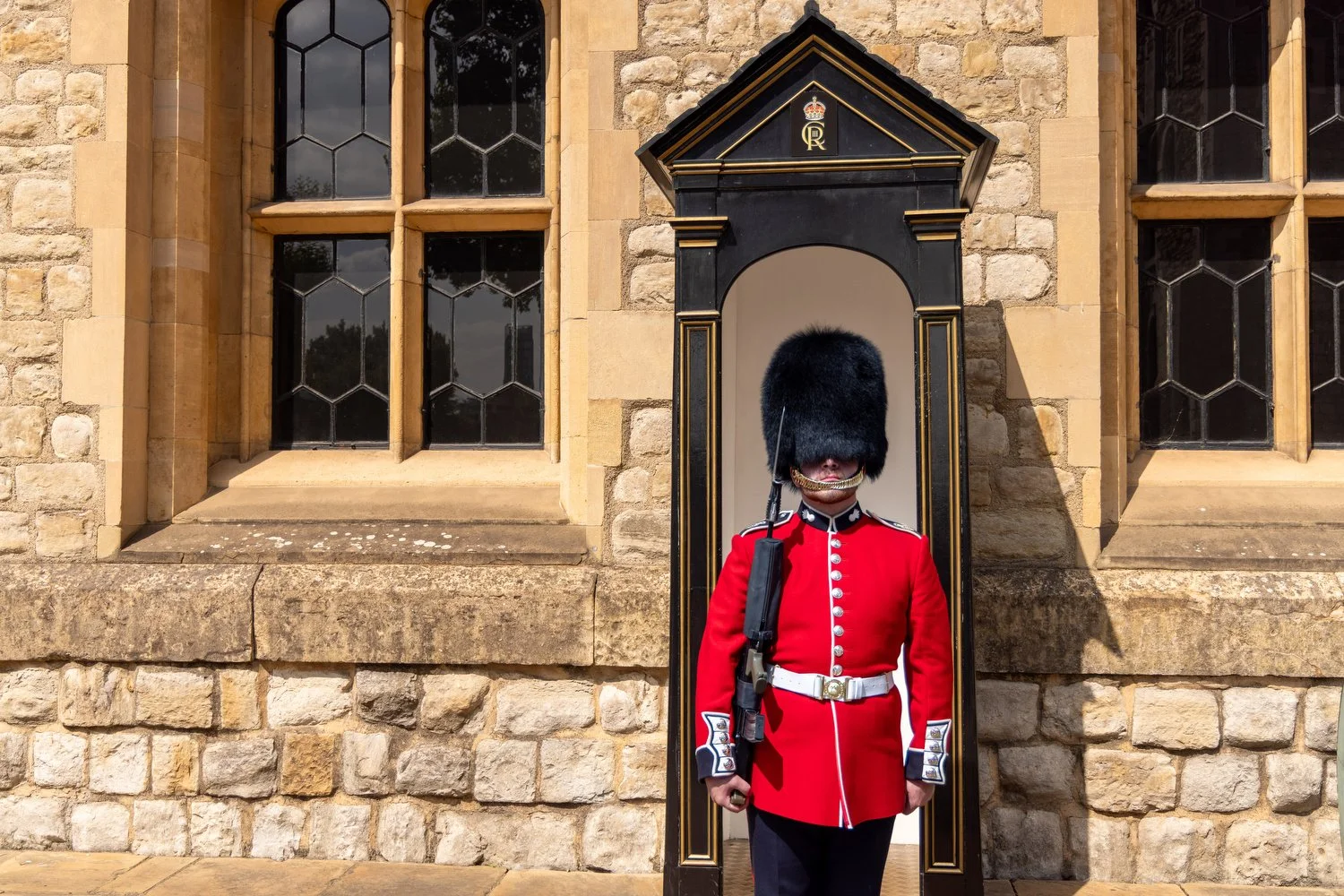
A guard outside the Crown Jewels exhibit at the Tower of London. Photos by John O’Boyle/The Empty Nest Explorers
London was the first European city we visited together. It was our honeymoon, close to 30 years ago now. It is also the city we keep coming back to.
Most people picture London for its rich history, and for good reason. But that’s not all it’s about. There is so much waiting for you.
For an American, London is an easy way to dip a toe into European travel. The language, the customs, and the food all feel familiar, making it a comfortable place to land on your first European adventure.
It’s important to remember though that London is a huge city. Don’t expect to do it “all” in a one short trip - it’s just not possible. Pick a few things you really want to do, keep your options open for the rest. I promise you will want to go back anyway!
This guide pulls together what we have learned over many trips, so yours goes smoothly.
| Entry | US visitors need a UK ETA. About £20, valid 2 years. Apply at gov.uk or the UK ETA app. |
| Best Time | Spring or fall for lighter crowds. We honestly think any season works. |
| From Heathrow | Take the Elizabeth line into central London. Faster and cheaper than the Heathrow Express. |
| With Luggage | All 41 Elizabeth line stations are step-free, street to platform. |
| Paying for Transit | Tap a contactless card or your phone. No Oyster card needed. |
| Where to Stay | Central and near a Tube station. Westminster, Covent Garden, or South Kensington. |
| Money | Nearly cashless. Cards work almost everywhere. |
| Getting Around | Walk plus the Tube. Google Maps handles directions. |
Entry requirements: the UK ETA
If you hold a US passport, you now need a UK ETA to enter. That stands for Electronic Travel Authorization.
It has been required for US visitors since 2025. The fee is about £20 per person. It is good for two years, or until your passport expires.
Everyone needs their own ETA, including babies and children. Apply on the official UK government site or the UK ETA app. Skip any third-party site that tacks on extra fees.
The process is quick and simple. We went to London last summer and for this year’s trip to Scotland, it was easy to check if ours was still valid by using the app on our phone.
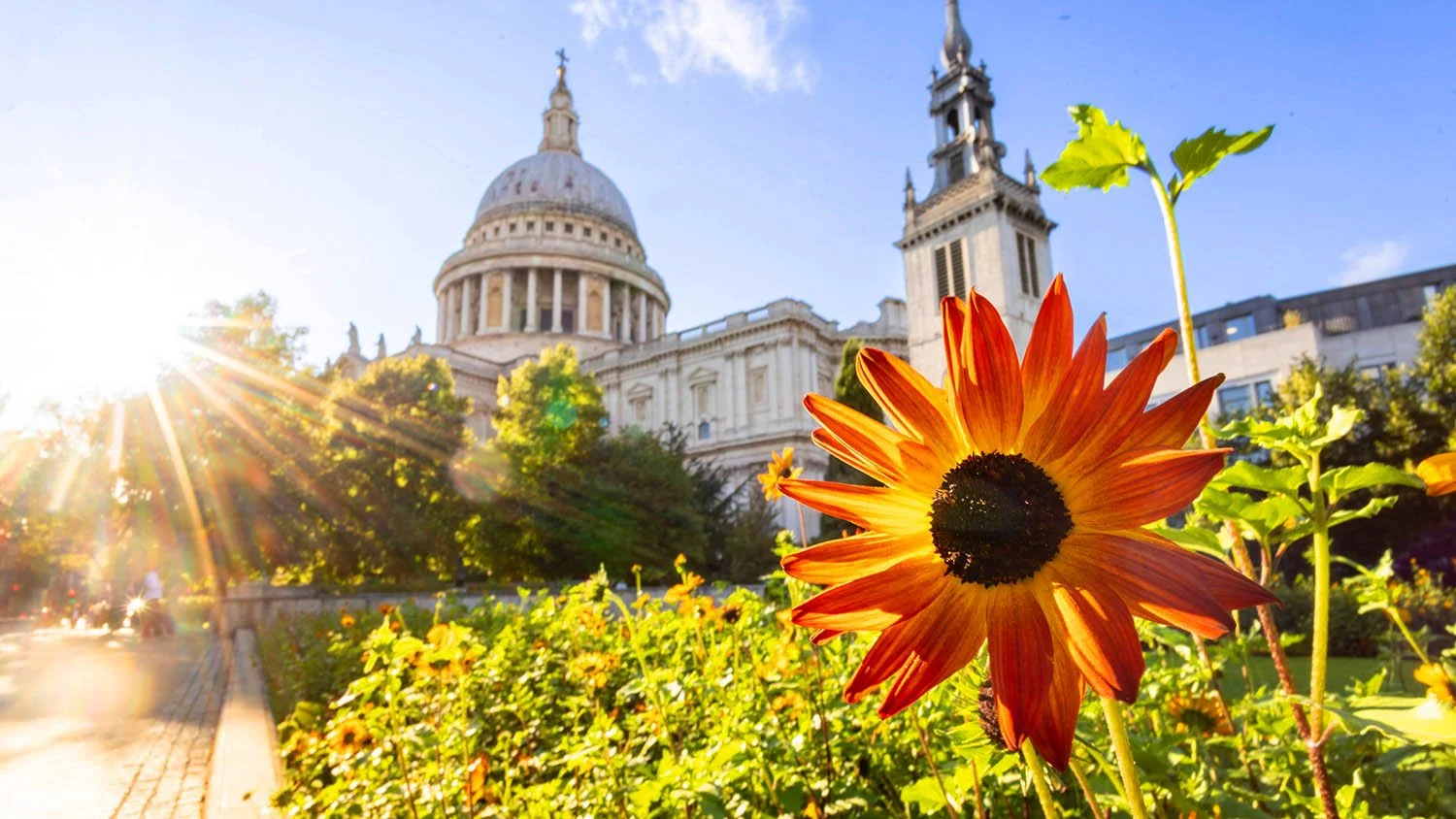
Spring flowers outside Saint Pauls Cathedral.
Best time to visit London
Over the years we have been to London in winter, spring, and summer. The usual advice is to aim for the shoulder seasons. The weather is nicer, the crowds are lighter, and hotel rates stay reasonable.
Honestly, we do not think there is a bad time to visit London!
Summer
Our last visit was in August and it beat our expectations. Yes, it was crowded, but we managed it anyway.
We booked timed tickets ahead wherever we could. We started early and saved indoor stops for the hottest part of the day. We would recommend skipping the Natural History Museum in summer, since it fills up with kids on school break.
The best part of a summer visit is the late sunset. Those long evenings hand you hours of extra sightseeing.
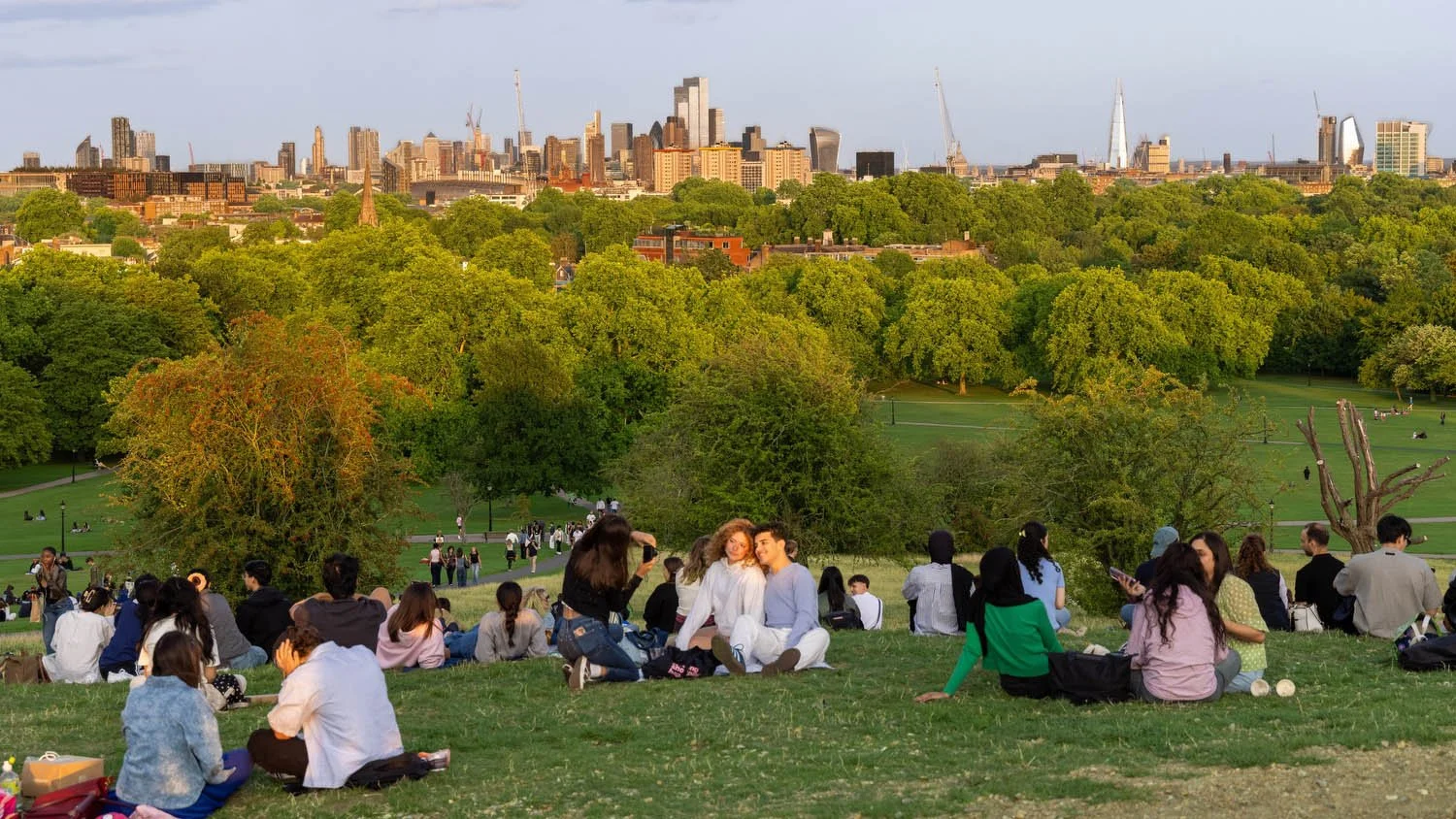
Primrose Hill is a popular sunset spot in the summer.
Winter
We have also gone in January. Flights are at their cheapest, and so are the hotels.
A few royal attractions run shorter hours or have different availability than in the summer. Even so, London never really slows down. We walked into the Tower of London with no line at all. That simply does not happen any other time of year.
The downside is the short daylight. The Uber Boats are also less fun in the cold!

Debbie outside Buckingham Palace during a winter trip to London.
Spring and fall
We have visited in May several times and love it. I really think it is the best time to be in London. The weather is lovely and everything is open. You get the outdoor spaces without the summer crush. Early fall feels much the same. As the fall progresses is can get a bit chilly and moderately rainy, but if you dress for it, you’ll be fine.
Getting from the airport to London

Debbie and John taking the Elizabeth Line from Heathrow Airport.
If you land at Heathrow, take the Elizabeth line into central London. It is faster than the old Piccadilly line and far cheaper than the Heathrow Express. Figure roughly £15 versus around £25.
The Elizabeth line is the only way we get in from Heathrow now. It is the best mix of price and comfort we have found.
All 41 Elizabeth line stations are step-free from the street to the platform. If you are hauling a suitcase or watching your knees, that matters. Older Tube stations can sometimes mean long stairs.
We break down every airport option, with a table, in our guide to trains in Britain.
Getting around London
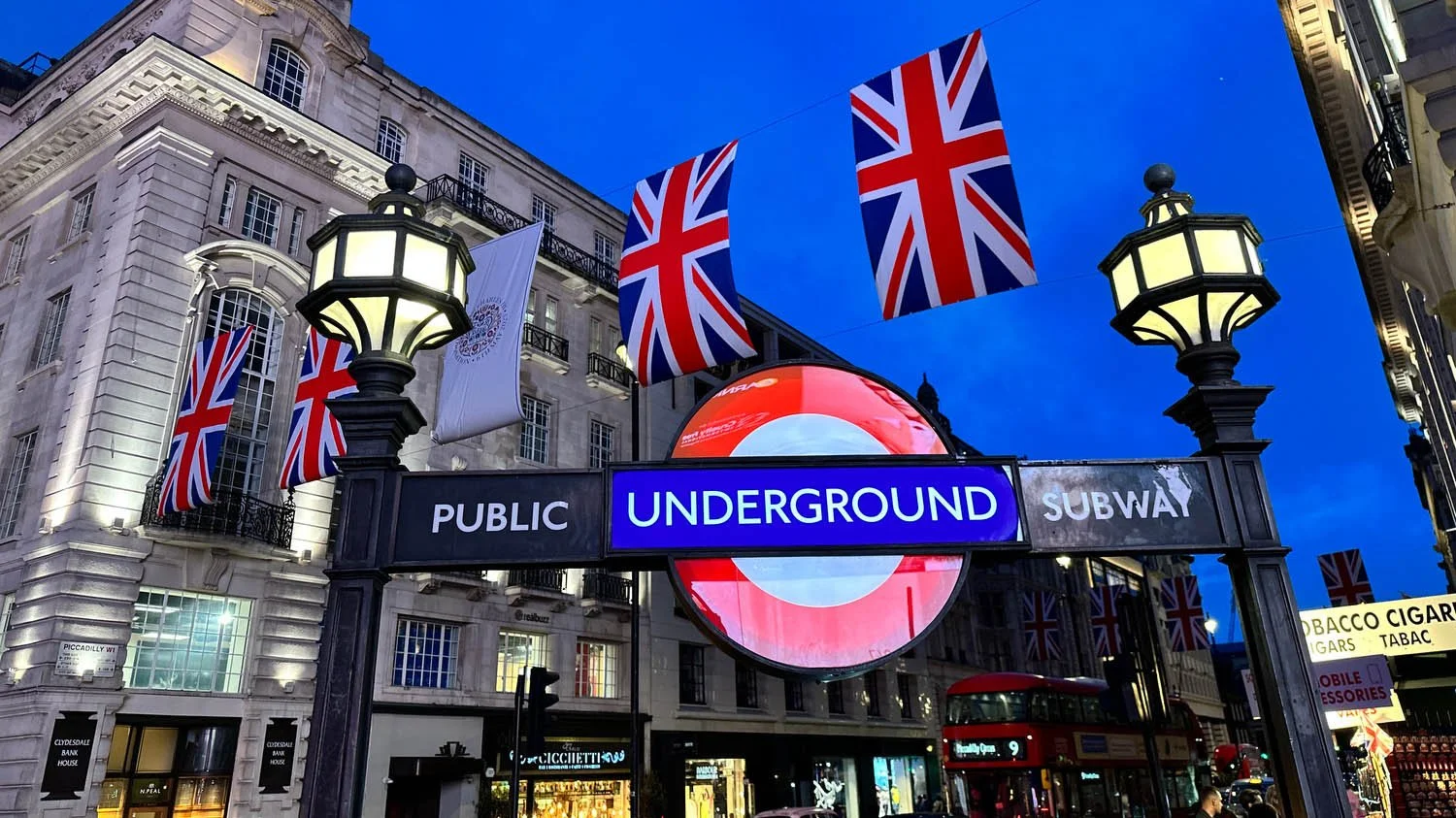
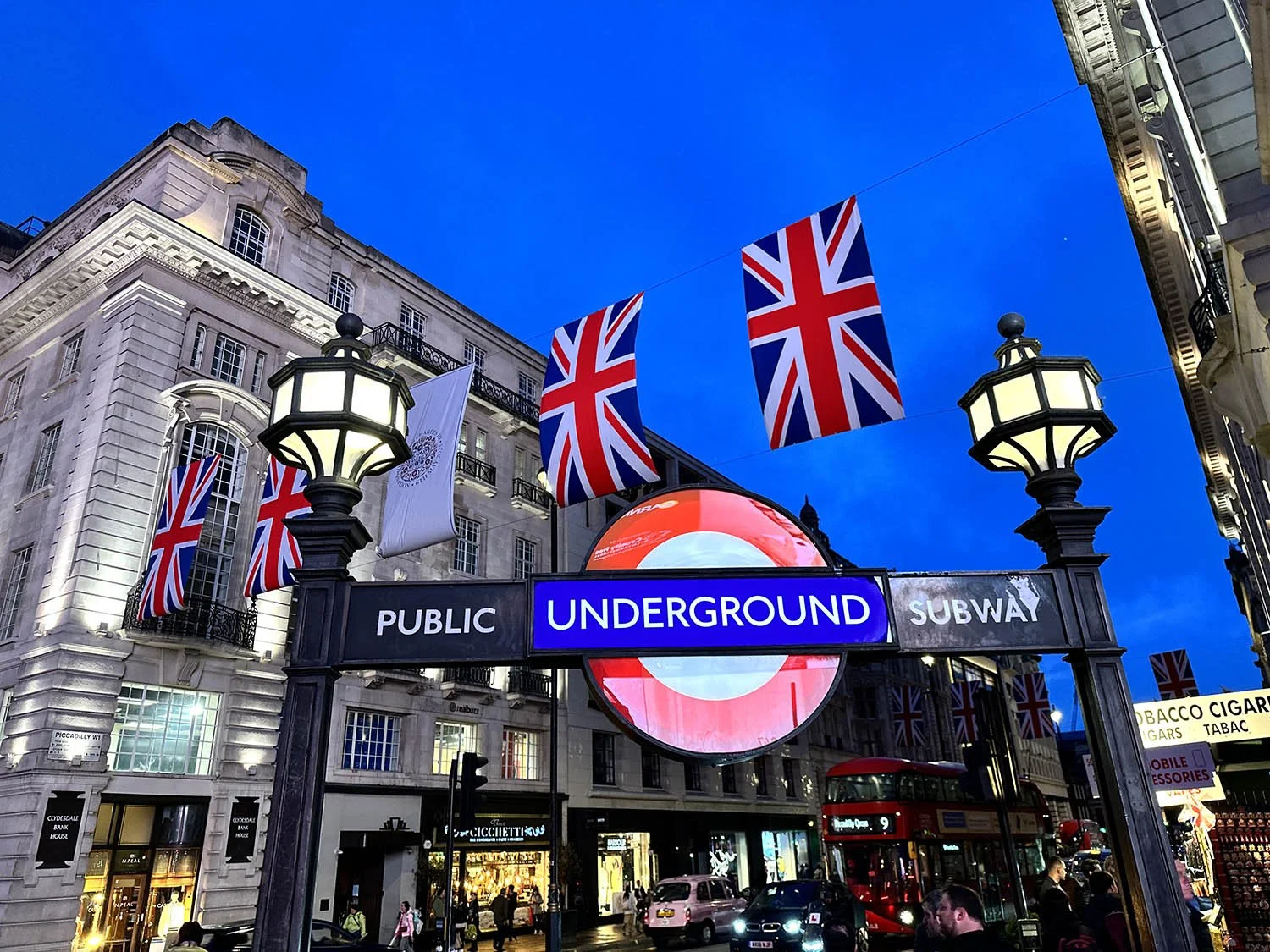
A London Underground sign at Piccadilly Circus.
Many of London's central sights are walkable. But walking everywhere will wear you out fast. So we recommend making good use of the transit system.
If you are visiting from the United States and don’t use public transportation often, don’t be worried. Google Maps will steer you in the right direction, payment is Tap to Pay and it’s the absolute best way to get around London.
Keep your valuables zipped and out of sight, and you will be in good shape.
A few tips we always share:
One card per person. Everyone age 11 and up taps their own card or phone. You cannot tap two people through on one.
Use the Hopper fare. A single bus or tram fare is a flat £1.75, and it covers unlimited bus and tram rides within one hour. Tap the same card each time. The fare is set to rise to £1.85 in November 2026.
Let the daily cap work for you. The system tracks your taps and stops charging once you hit the cap. For Zones 1 and 2 that is about £8.90 a day.
Stand on the right on escalators. The left side is for people walking. Blocking it is the fastest way to look like a tourist.
Dodge rush hour. Weekday crowds peak from about 6:30 to 9:30 in the morning and 4 to 7 in the evening. Fares are cheaper off-peak too.
For the full rundown on the Tube, contactless, and buses, see our London public transport guide.

The Earls Court Underground station.
Do I need cash in London?
London runs almost entirely on cards. Contactless, Apple Pay, and Google Pay work nearly everywhere, from the Tube to a coffee shop.
You will not need much cash. We carry a little for the odd market stall or tip, and that is about it.
Many restaurants add a service charge to the bill, often around 12.5 percent. Check the bill before you add anything on top.
Where to stay in London
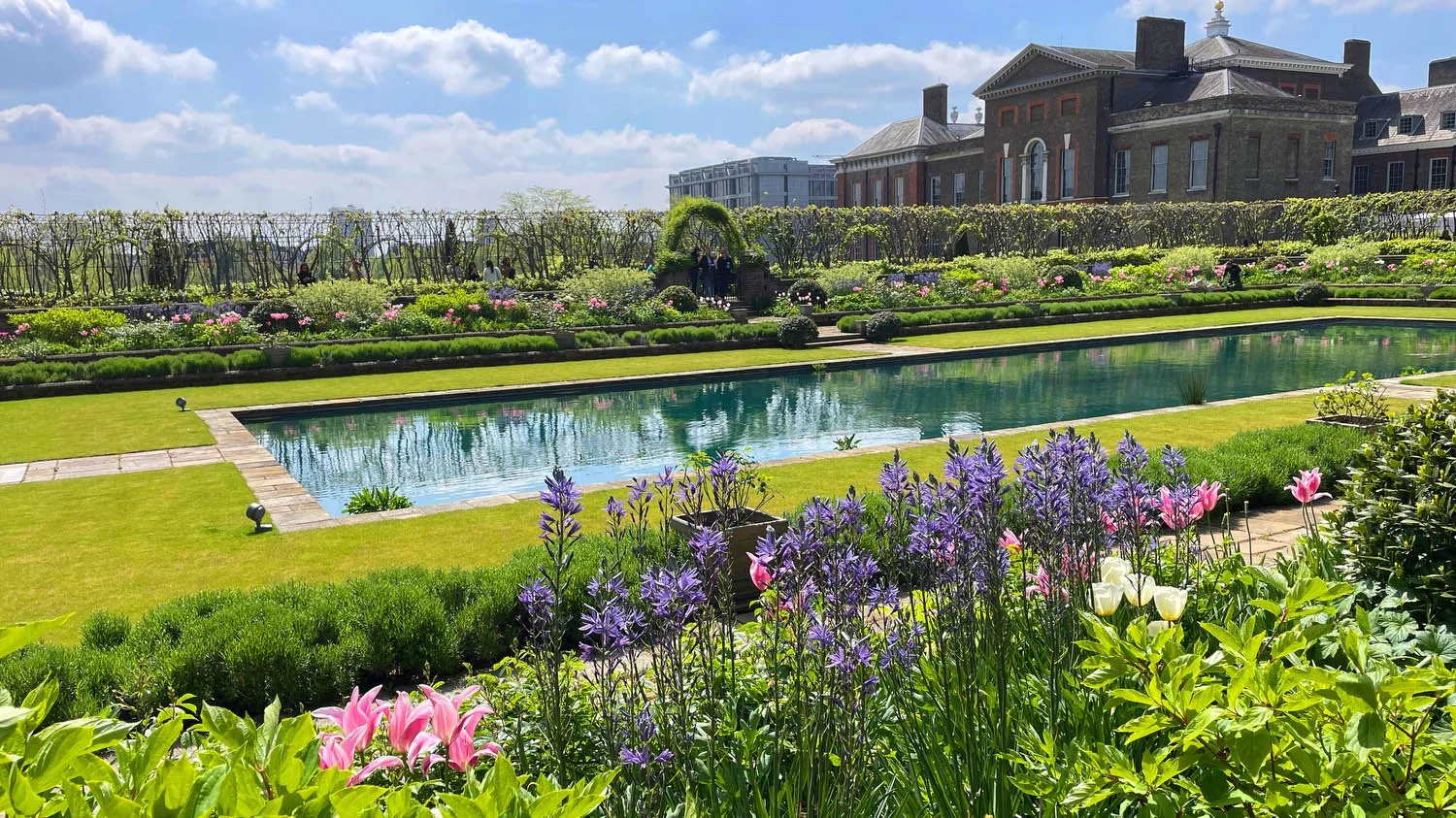
A garden outside Kensington Palace. We have stayed in the Kensington section of London may times.
Where to stay is the question we find hardest to answer. Here is how we usually handle it.
Our first rule: stay near a Tube station and as central as your budget allows. London is huge. It is very easy to lose an hour a day on the train if you book too far out.
Our second point is budget. London hotel prices run an enormous range. The good news is you can find far more in the affordable range than you can in a city like New York. Book early, since the well-priced rooms in good areas go fast.
Our third tip is the one we feel strongest about. Europe has many more small independent hotels than the US does. A lot of them are wonderful. Do not skip a place just because the name is not a chain you recognize.
Check whether the hotel has a lift. Many of these charming townhouse hotels have stairs only. That matters with luggage or cranky knees. It may not matter at all to you but it is good to know when you book it so you will know what to expect.
We have based ourselves in South Kensington a few times, so you can guess we like it. It sits a little outside the center but still feels close to everything. Plenty of restaurants and shops, and it feels very London-y without the Covent Garden crowds.
We use Booking.com to research our hotel options, check out London hotels here.
A quick note: some links here are affiliate links. That means if you book or buy something through them, we earn a small commission. You pay nothing extra, and it helps keep this blog going. We only recommend things we actually believe in.
| Neighborhood | Good For | Hotels |
|---|---|---|
| Westminster and St. James's | Steps from Buckingham Palace, the Abbey, and Big Ben. Postcard London. | Check hotels |
| Covent Garden and Soho | Right in the middle, heart of the West End theaters. Lively and central. | Check hotels |
| South Bank and Bankside | Across the river, near Tower Bridge and Borough Market. Lovely walks, often better value. | Check hotels |
| Bloomsbury | Quiet and well priced, by the British Museum. Handy for day trips by train. | Check hotels |
| South Kensington | Calm and elegant, by the free museums. Our repeat pick. | Check hotels |
| Marylebone | Villagey and low key, still central. Nice independent hotels. | Check hotels |
What to pack for a trip to London
We like to pack as light as we can. It’s just no fun to be dragging a lot of stuff around with us. We like items that are sort of classic that fit any situation, and that we can wear more than once or repurpose with just a quick add-on. Above all, be ready for a lot of walking so leave the high heels home.
Neat, casual attire with comfortable shoes is the way to go.
The one exception: If a fancy afternoon tea is on your list, check the dress code first. We had afternoon tea once at Claridge's, which is about as grand as it gets, and John packed a sports coat, and I threw in a simple dress and a nice pair of sandals into my bag (they don’t take a lot of room!). Beyond a splurge like that, practical clothes win every time.
A small umbrella or a light rain jacket is always worth room in the bag that’s heading for London.
Must-see sights for first-timers to London
There are some classic visitor experiences in London that I think everyone should do at least once.
Royal and official London
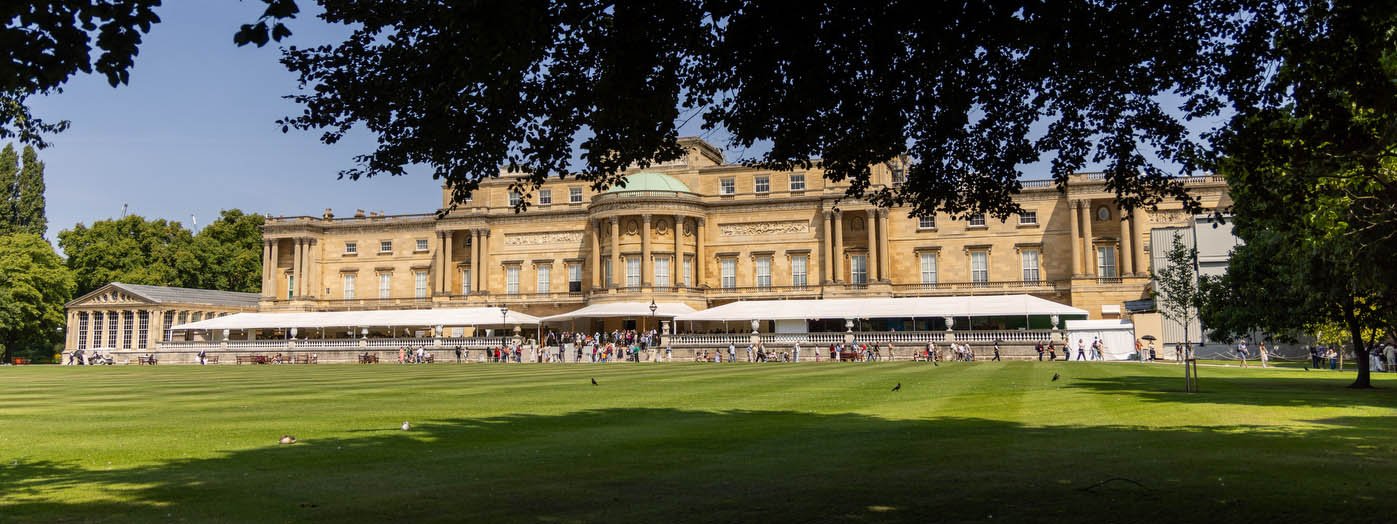
The rear garden of Buckingham Palace after a summer tour.
Walk the royal route. I love this walk, and you can do it as just a total walk-by, or as part of a day where you have tickets to one or more of the epic attractions along the way.
Start at Buckingham Palace. It's fun just to wander outside and have a look at the iconic building, but I really think the indoor tour is one of the best things to do in London. It’s pretty hard to beat as a London experience. Add on a visit to the Royal Mews if you want the complete royal treatment. It’s located right by the palace.
Then head up the Mall to Horse Guards Parade. Everyone should walk the Mall, I think - it’s laid out to be a sort of “red carpet” between Buckingham Palace and Admiralty Arch. Be sure to take in some of the sights along the way, including my favorite memorial in London, the statues of King George VI and Queen Elizabeth the Queen Mother, and lovely St James Park.
At Horse Guards, you can visit the Household Cavalry Museum, and catch a change of the Horse Guards if you time it right. Even if you don’t catch the bigger ceremony, the sentries on horseback at the front of the Horse Guards building facing Whitehall are a big attraction for tourists, as you can get rather close (but not too close - please obey the rules) and these sentries change every hour.

You can get up close to the action at Horse Guards Parade.
Just past Horse Guards, peek down the gates at Number10 Downing Street, the official home and office of the Prime Minister of the United Kingdom. It’s fun just to see it - of course you can’t walk up to it but it's so famous it’s worth the look. Maybe you will catch a glimpse of the famous Mouser in Chief, Larry the cat.
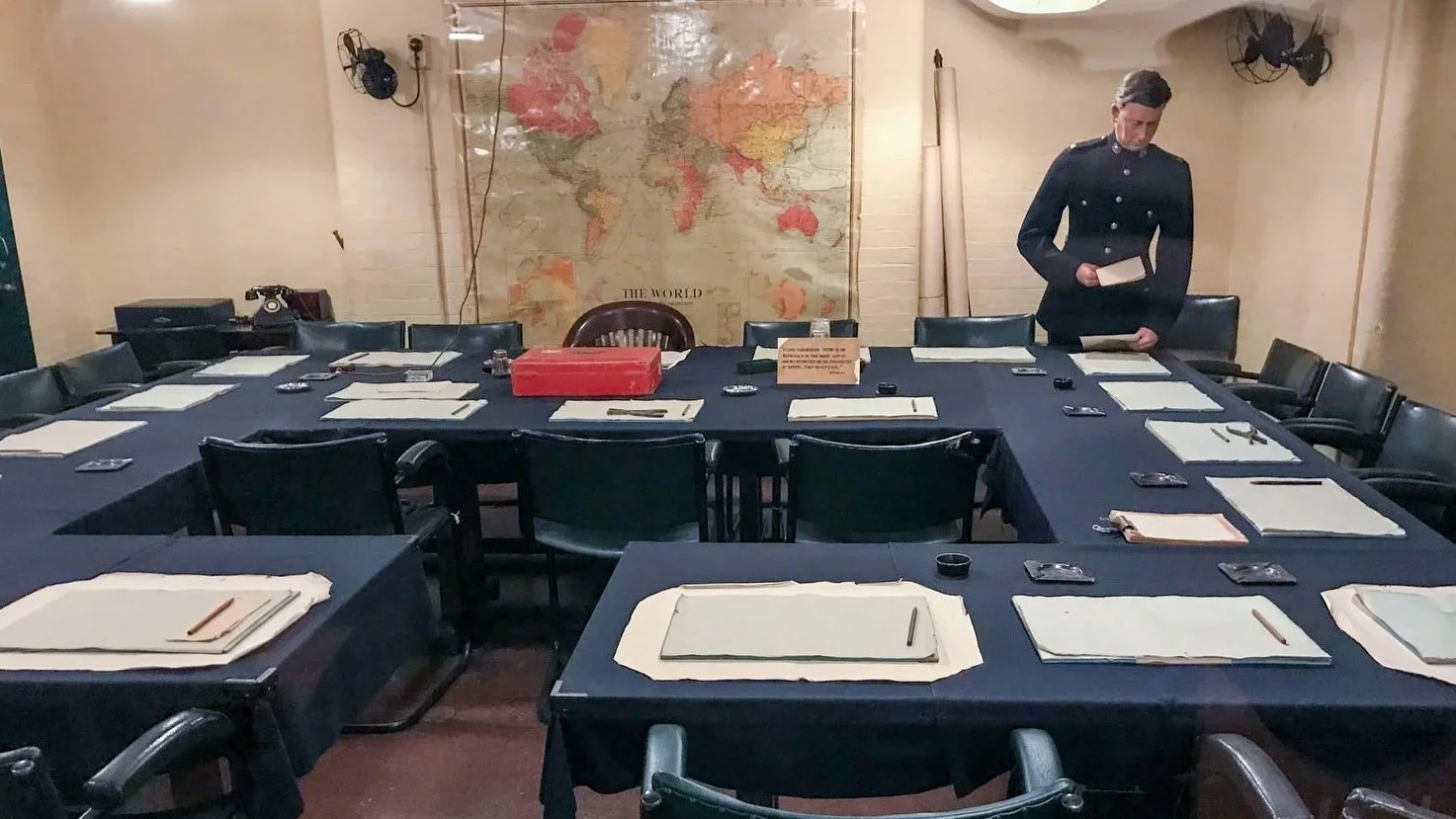
Nearby, at the end of King Charles Street, is the Churchill War Rooms. This original, carefully preserved, secret bunker where Churchill ran the war is in the basement beneath the HM Treasury building. It’s so interesting to realize that it was hiding in plain sight under an ordinary office building in Whitlehall.
(You’ll need to book that ticket in advance if you want to visit the War Rooms, and I highly recommend you do if World War II history interests you at all. It’s the ultimate “in the room where it happened” experience. Endlessly fascinating).
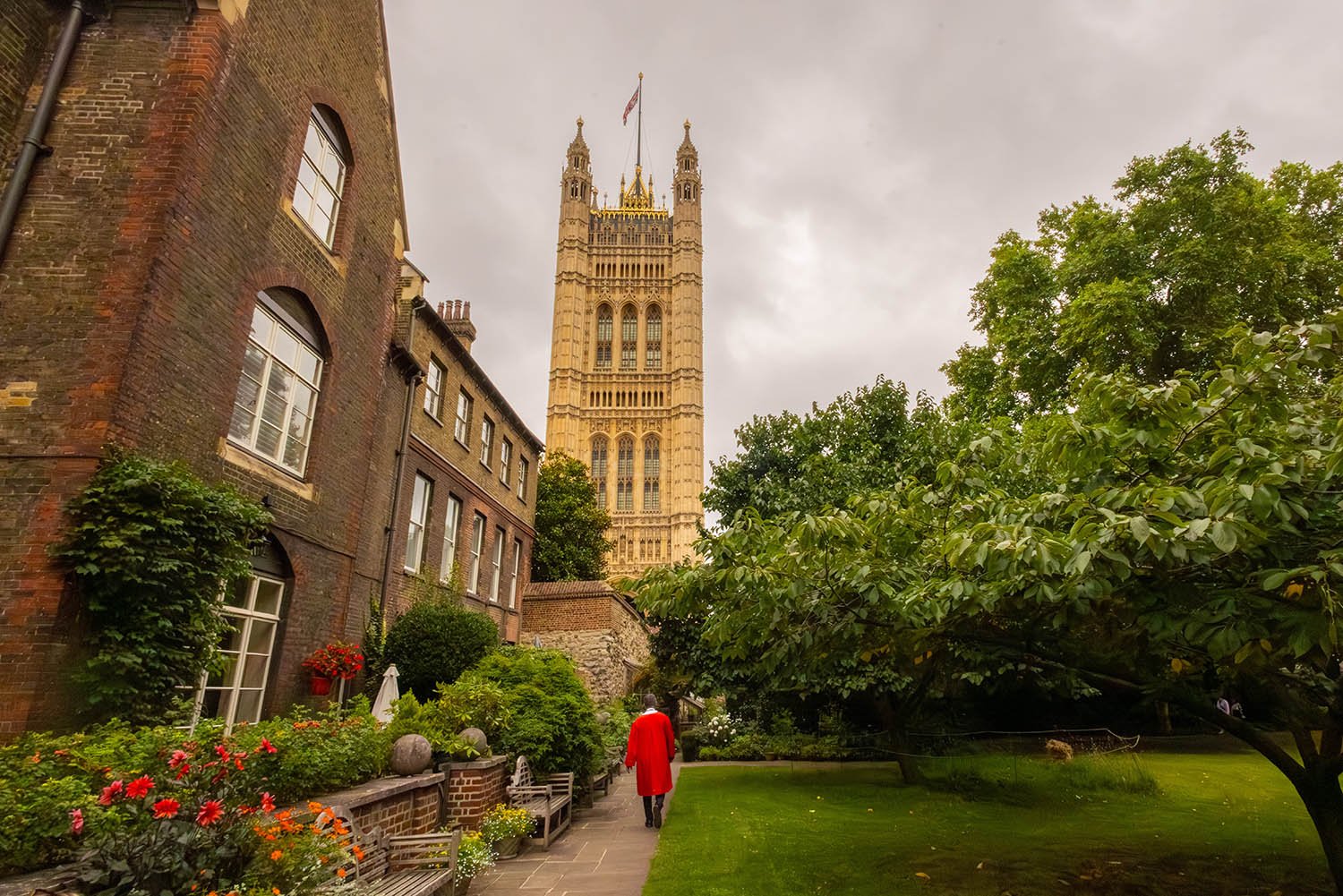
Parliament’s Victoria Tower is visible from the College Gardens of Westminster Abbey.
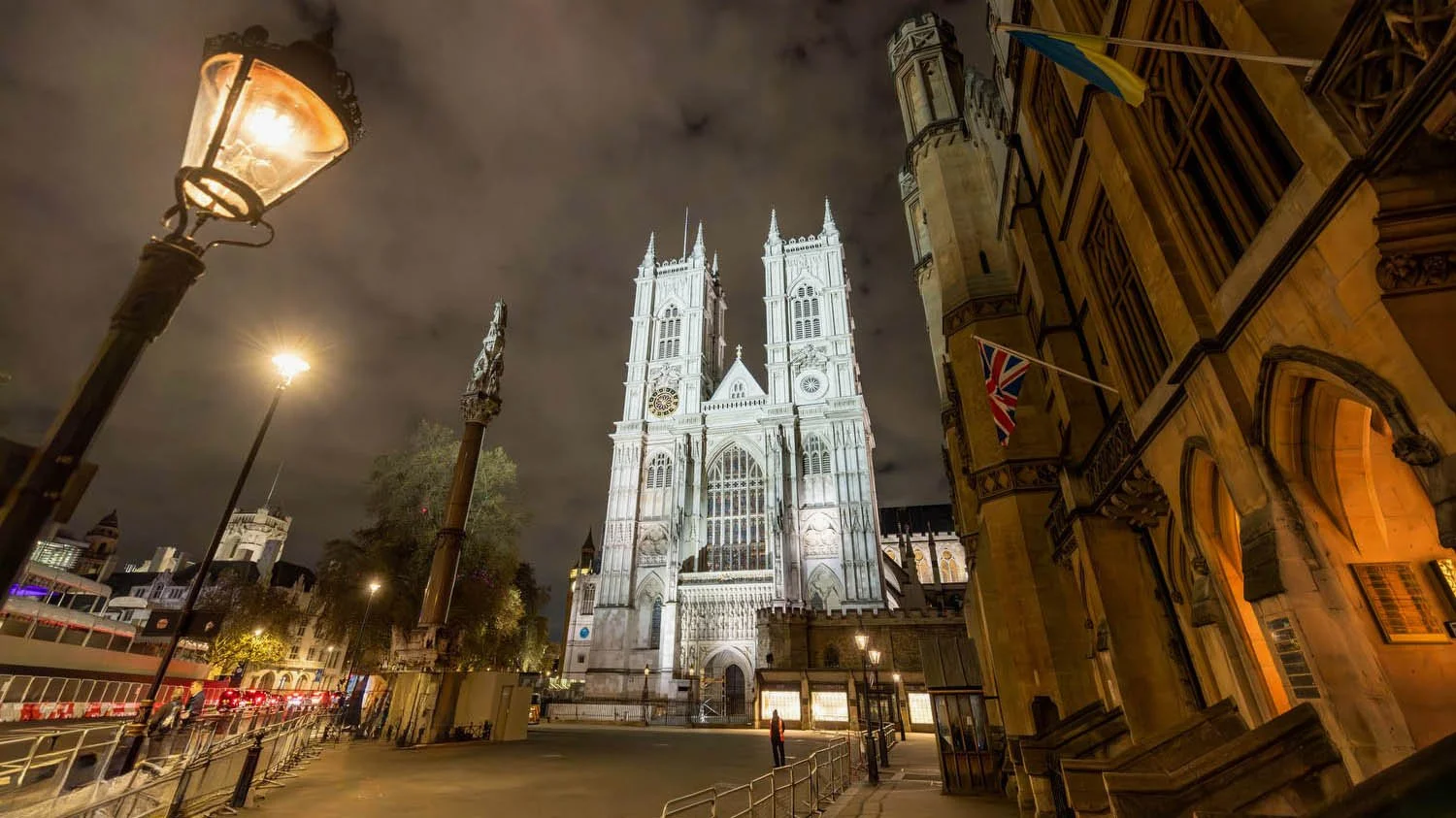
Carry on to Westminster Abbey, the Houses of Parliament, and Big Ben. Always fascinating to just have a look at the impressive architecture and monstrous size of these buildings - the walk down Whitehall through Parliament Square will make you feel like you just woke up in a vintage postcard - or Peter Pan movie. Plus this stretch is dotted with prestigious statues and monuments, and surprisingly, not all of the figures are British.
You can tour both Westminster Abbey and the Houses of Parliament, and both are great experiences. Last summer, we toured the Houses of Parliament for the first time and we loved it - standing at the Table of the House in the Commons was rather surreal. We actually did both the Abbey and Parliament on the same day, having lunch at the cafe in the Abbey in between. If you time your tickets right, it works quite well.
Finish by crossing Westminster Bridge for the classic postcard view looking back. It’s so photogenic! You will definitely feel like you have arrived in London.
The Changing of the Guard
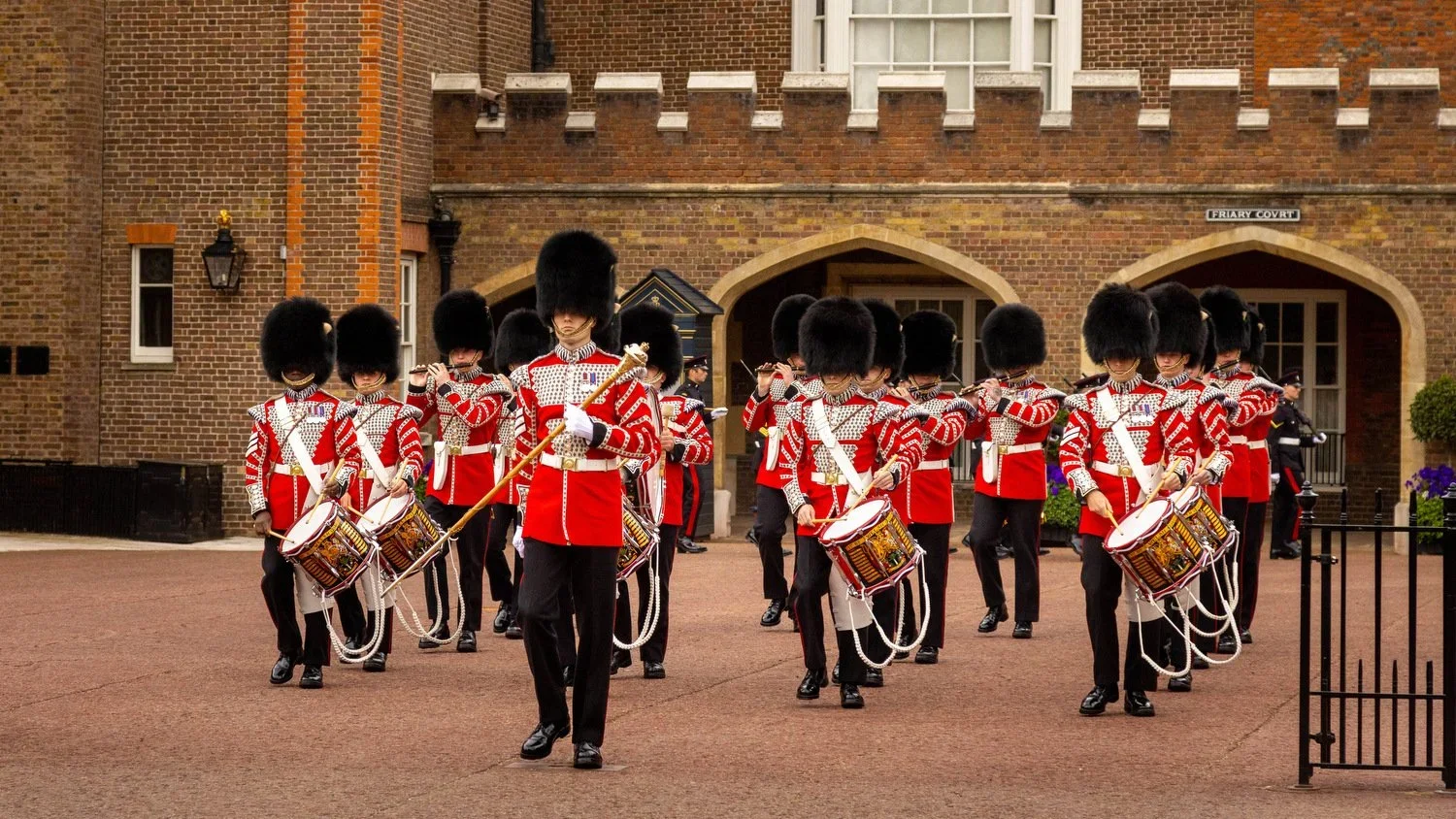
The Changing of the Guard kicks off at Saint James Palace.
If you want to see the Changing of the Guard, it’s best to plan a little. It is free, and it is one of London's great spectacles of military and royal splendor that are such an iconic part of British tradition and heritage.
The full ceremony happens in the forecourt of Buckingham Palace, generally on Monday, Wednesday, and Friday at 11am. The schedule is confirmed about four weeks ahead. It can change or be cancelled at short notice. Check the Household Division calendar before you build your morning around it. (There are other ceremonial activities on the off days, but the timing is different, so check the website.)
Get to the Palace at least 45 minutes early for a spot by the railings or on the Queen Victoria Memorial. That is our advice if you want to see the real thing - the actual guard change. As a first time visitor, that might be just what you want.
If you have seen it before, or you just want a closer look at the uniforms and don’t want to fuss with getting there that early, try the other locations. The Old Guard forms up at Friary Court by St James's Palace, and then the troops march along The Mall. The Old Guard heads back to Wellington Barracks around 11:45.
For a calmer option, the mounted Household Cavalry have their own guard change at Horse Guards Parade, also at 11am, with far smaller crowds.
We walked this whole route and learned what actually works. Our full Changing of the Guard guide has the map and where to stand.
| Time | What Happens | Where |
|---|---|---|
| 10:30 am | Old Guard forms up and is inspected | Friary Court, St James's Palace |
| 10:40 am | New Guard inspected, band plays | Wellington Barracks |
| 10:43 am | Old Guard marches off down The Mall | St James's toward Buckingham Palace |
| 10:57 am | New Guard marches toward the Palace | Wellington Barracks to Buckingham Palace |
| 11:00 am | The ceremony begins | Buckingham Palace forecourt |
| ~11:45 am | Old Guard marches back | Buckingham Palace to Wellington Barracks |
The River Thames: the lifeline of London
The River Thames ties the whole city together, reflecting its deep role in London’s history, growth, and identity. A walk along the River is a must for a first time visit to London. There is much to see along the way, including hidden bits of history that have survived generations, and great views of landmarks along the banks.
Our photo walk along the Thames maps out the best stretches and views. The post is geared toward photographers but it has good tips for anyone exploring the area.
The most historic part of London
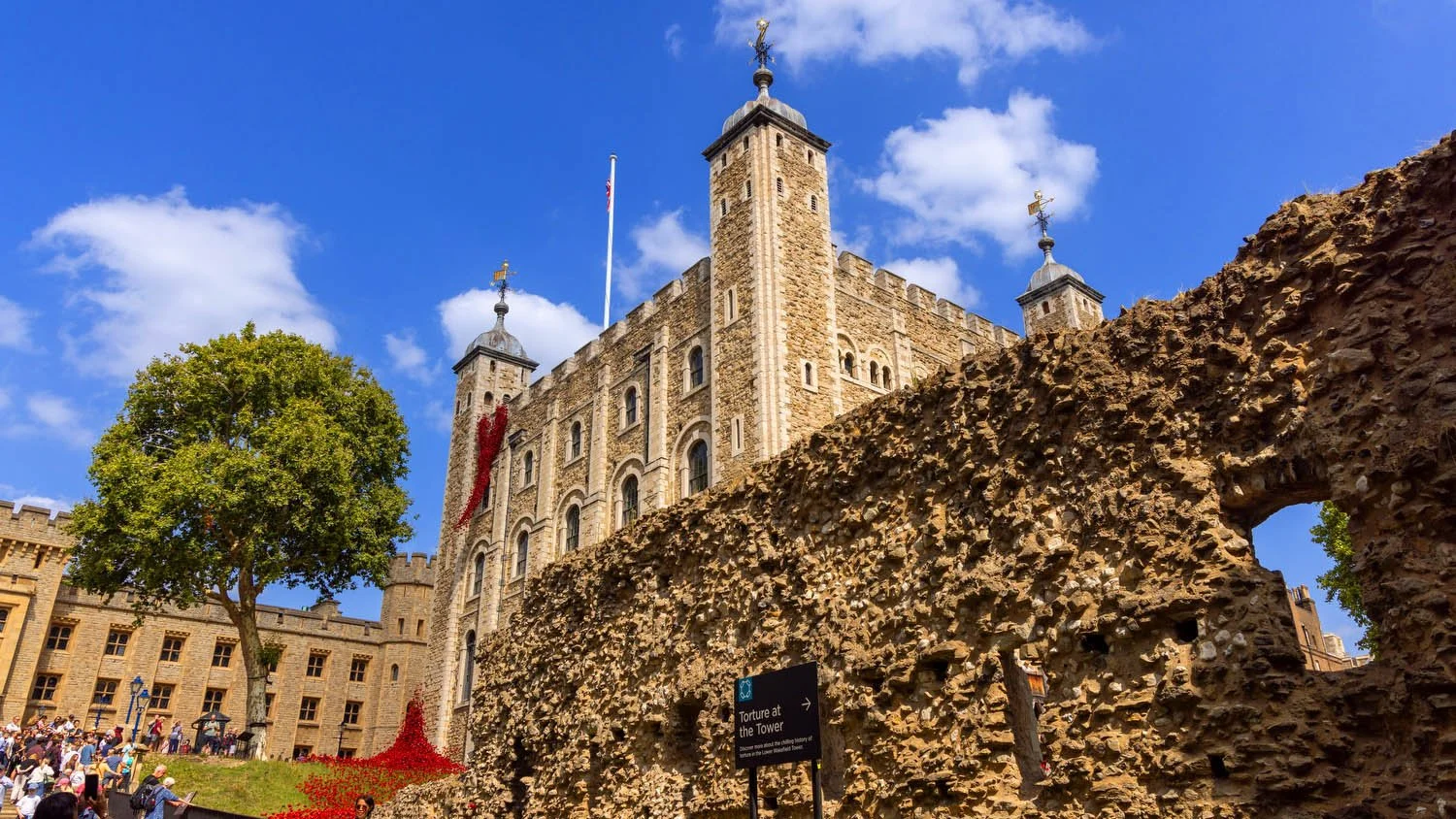
One of the many buildings inside the Tower of London.
The oldest area of London is the district known as the City of London, or the Square Mile. It’s always been an area of commerce, and today it is the financial center of London, where many of the city’s funky modern buildings are mixed in with the oldest historic sites. And while it might sound boring to visit the “financial district” of a city like London, there’s actually a lot of cool stuff there, and the juxtaposition of the very old and the very new is nowhere as evident as it is here.
The Tower of London and Tower Bridge are both must-sees in the City of London for a first-timer. They are centerpieces of history and no visit to London is really complete without them.
The Tower packs in a thousand years of history and really, you could spend a lot of time there and learn a lot. It is also where the Crown Jewels are kept, and they are marvelous to see. The way they have them displayed is breathtaking.
Check out Tower of London ticket opens here on Viator.
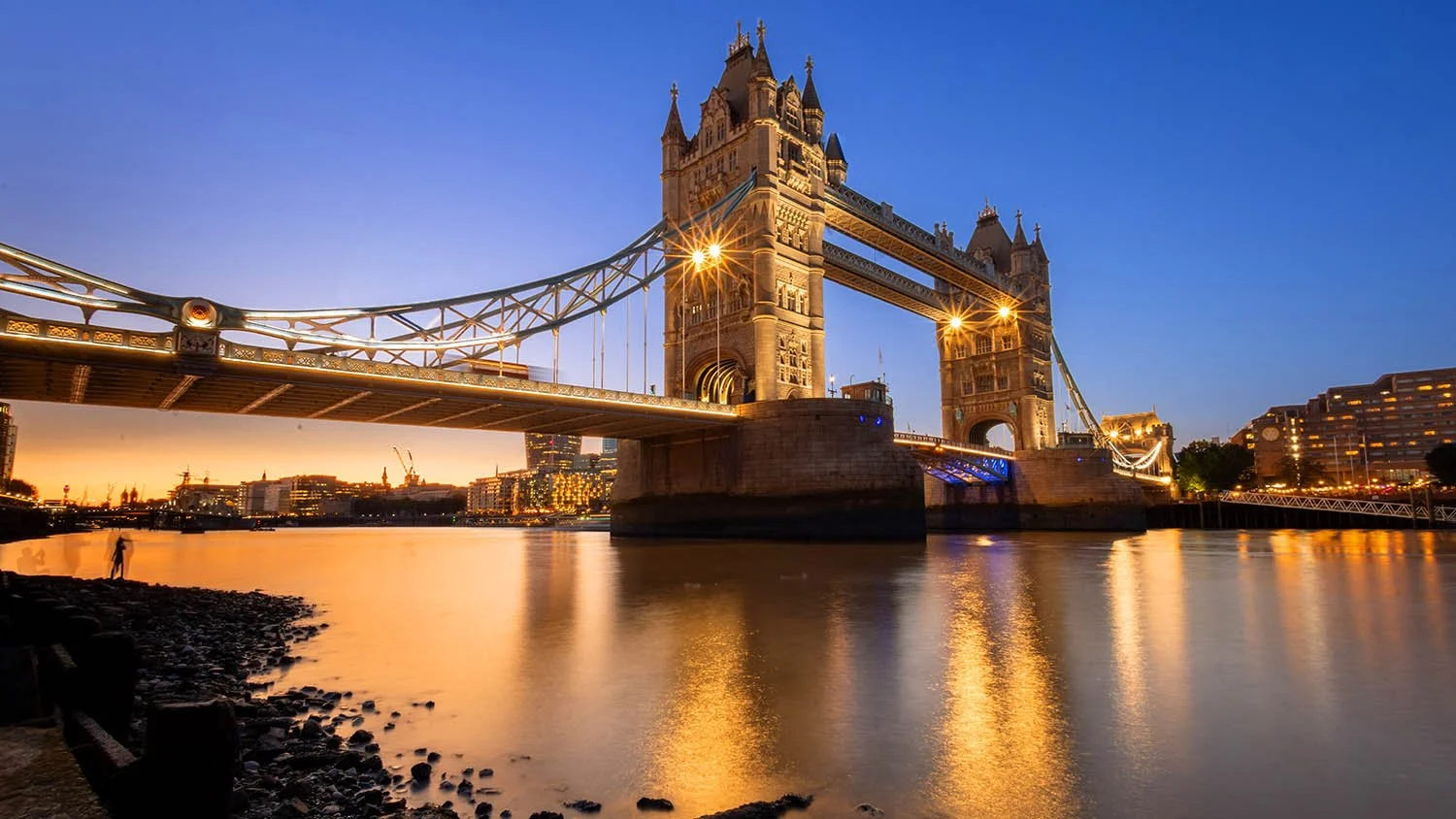
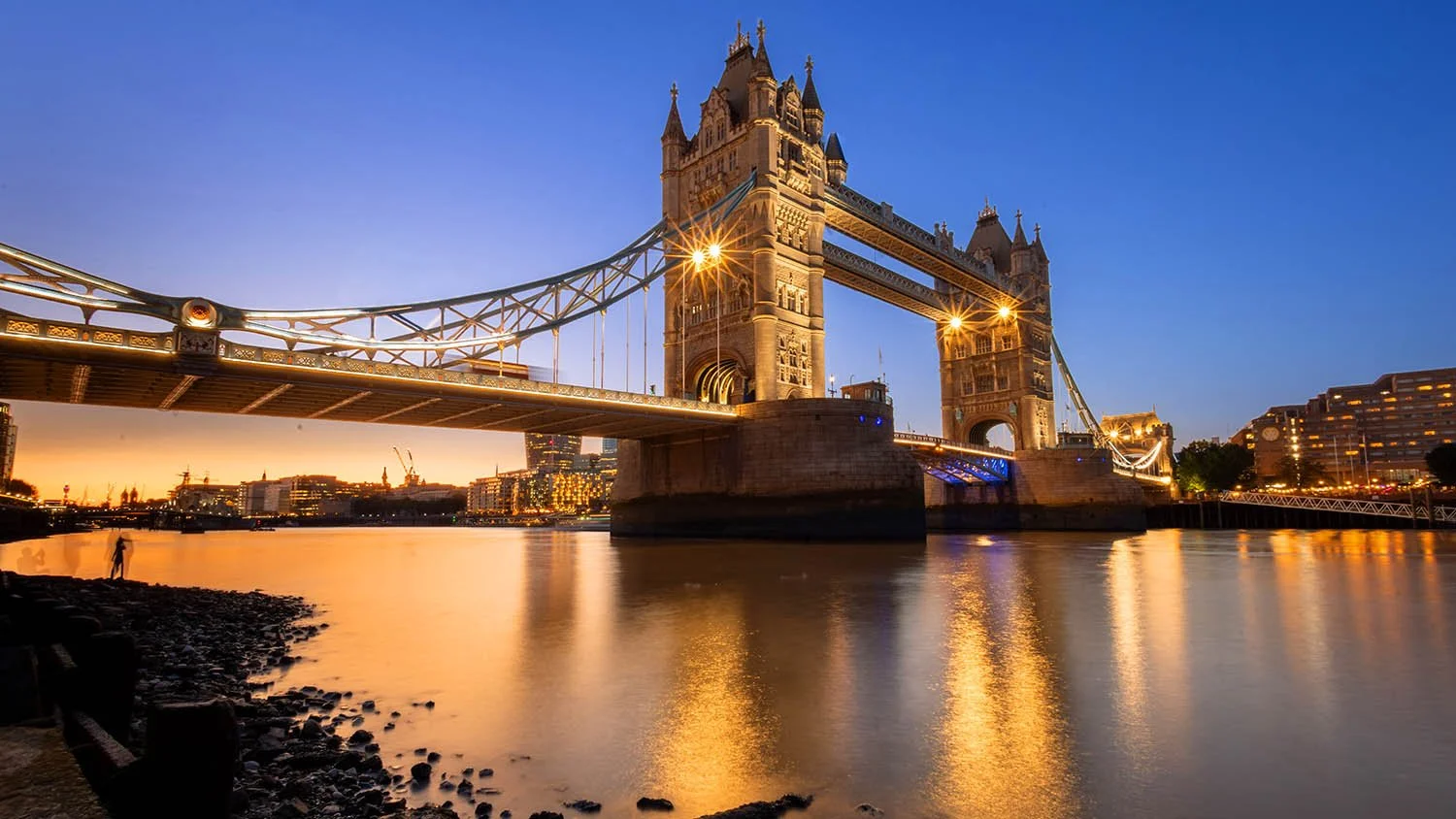
Tower Bridge photographed by John at sunset.
Tower Bridge is right next door, spanning the Thames. We have a great affection for the ol’ Tower Bridge; to me it is so iconic and puts me back in the mood for London whenever I see a photo of it. So many great memories of just walking across it, finding new ways to photograph it, or just hanging out in the area. It is so photogenic with its Victorian era architecture and blue accents. Walk across it for free or pay a small price to climb up to a platform over the bridge with a glass floor. Getting to see it open up to let a larger ship through is also a treat. It happens pretty often, so you just might get to see that.
At the other end of the Square Mile is St Paul’s Cathedral, another of London’s most iconic and beautiful buildings. We love St Paul’s - it's a photographer’s dream the way the dome stands out in the skyline - a protected view, actually and for good reason. The cathedral was a symbol of British resistance during the Second World War, remaining standing as much of the city around it burned and crumbled during the Blitz.
You really don’t have to fork over the £24 for the sightseeing tour inside to appreciate St Paul’s, I would recommend you at least go see it, stroll the gardens and take it in. Or simply admire it from a distance, as it can be seen from many places.
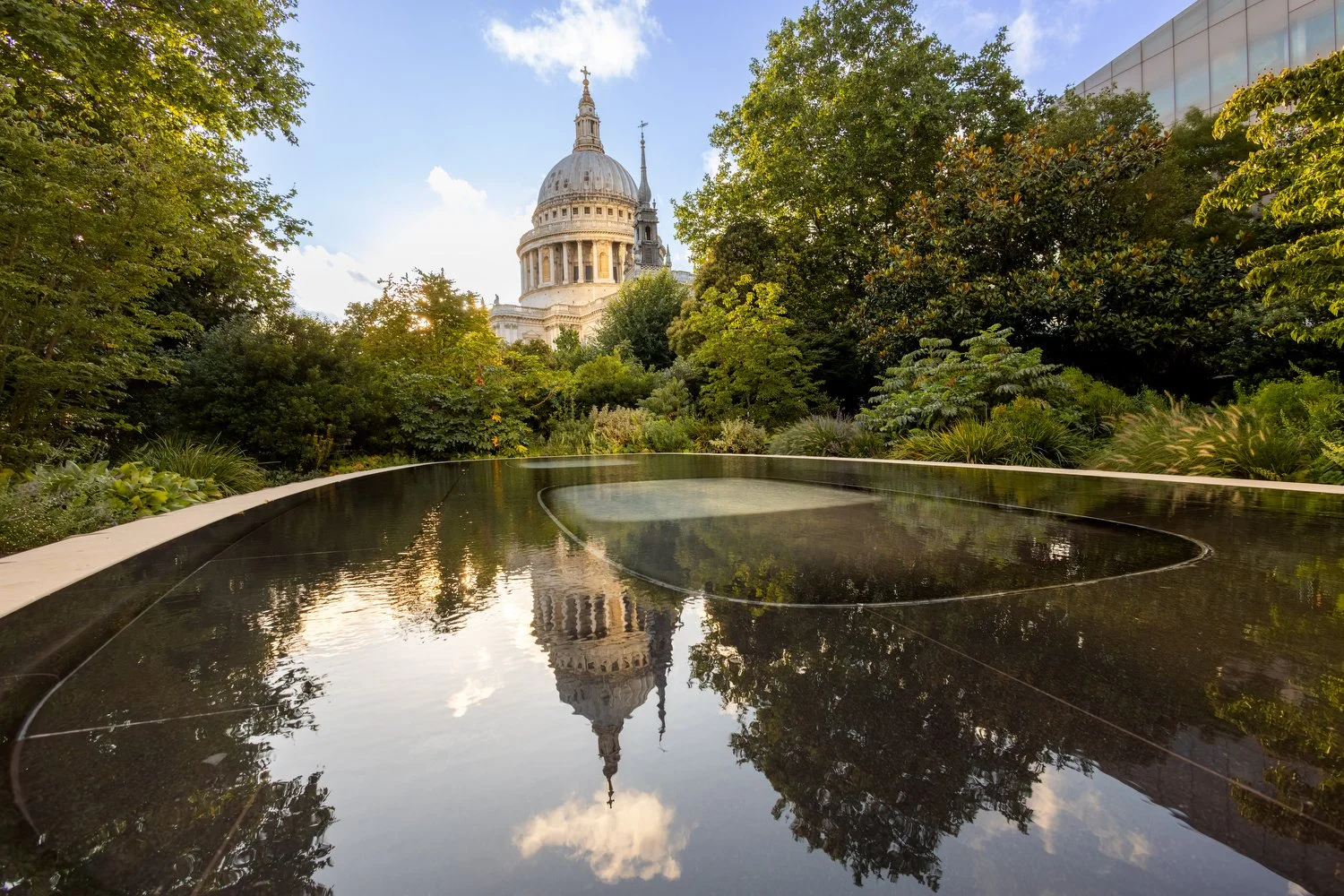
Saint Paul’s Cathedral reflected in a nearby pool.
Views of the city from above in London
And that’s the perfect segue into talking about views. You do not have to pay for a great London view. Our guide to the best free skyline views has our favorites.
One paid spot we love is breakfast at the Sky Garden. Normally this observation deck is free to visit, but booking an opening breakfast gets you up early with the views nearly to yourself. It is mostly indoors too, so it works in any weather, but still has an outdoor terrace as well.

View of the Tower of London and Tower Bridge from The Sky Garden.
London parks
When the city gets to be too much, the parks are your reset. London has many, many greenspaces, and the royal parks (formerly royal hunting grounds but now beloved and used by the public) are some of the most delightful.
Our guide to London parks covers the best ones.
Easiest to enjoy on your first trip to London would be Hyde Park (which contains Kensington Gardens) and St James Park. Both are centrally located close to Buckingham Palace.
I remember falling in love with Hyde Park on our very first visit to London, when John and I were lolling about in some deck chairs in the grass and were suddenly invaded by a galloping Household Cavalry unit in full helmeted regalia, practicing ceremonial maneuvers in the park. One does not soon forget such a day!

The Regents Park.
Interesting neighborhoods of London
London rewards a good wander. When you want a break from the big sights, give a neighborhood an afternoon. (Here’s where those comfortable walking shoes come in handy.)
Shoreditch is our favorite for that. It is the creative, edgy heart of East London. Street art covers the walls, the markets are full of finds, and the food and coffee are excellent. Read our guide to Shoreditch.
Battersea is another spot we like, on the south side of the river. It went from a forgotten industrial patch to one of London's trendiest corners. The restored Battersea Power Station anchors the whole area. See our Battersea guide.
A walking tour is a great way to see London’s neighborhoods: check out a huge variety on Viator.

Sunday is the busiest day in Shoreditch.
Day trips from London
Few cities offer as many first-class day trips as London. Here are the ones we recommend most, all an easy hop from the city.
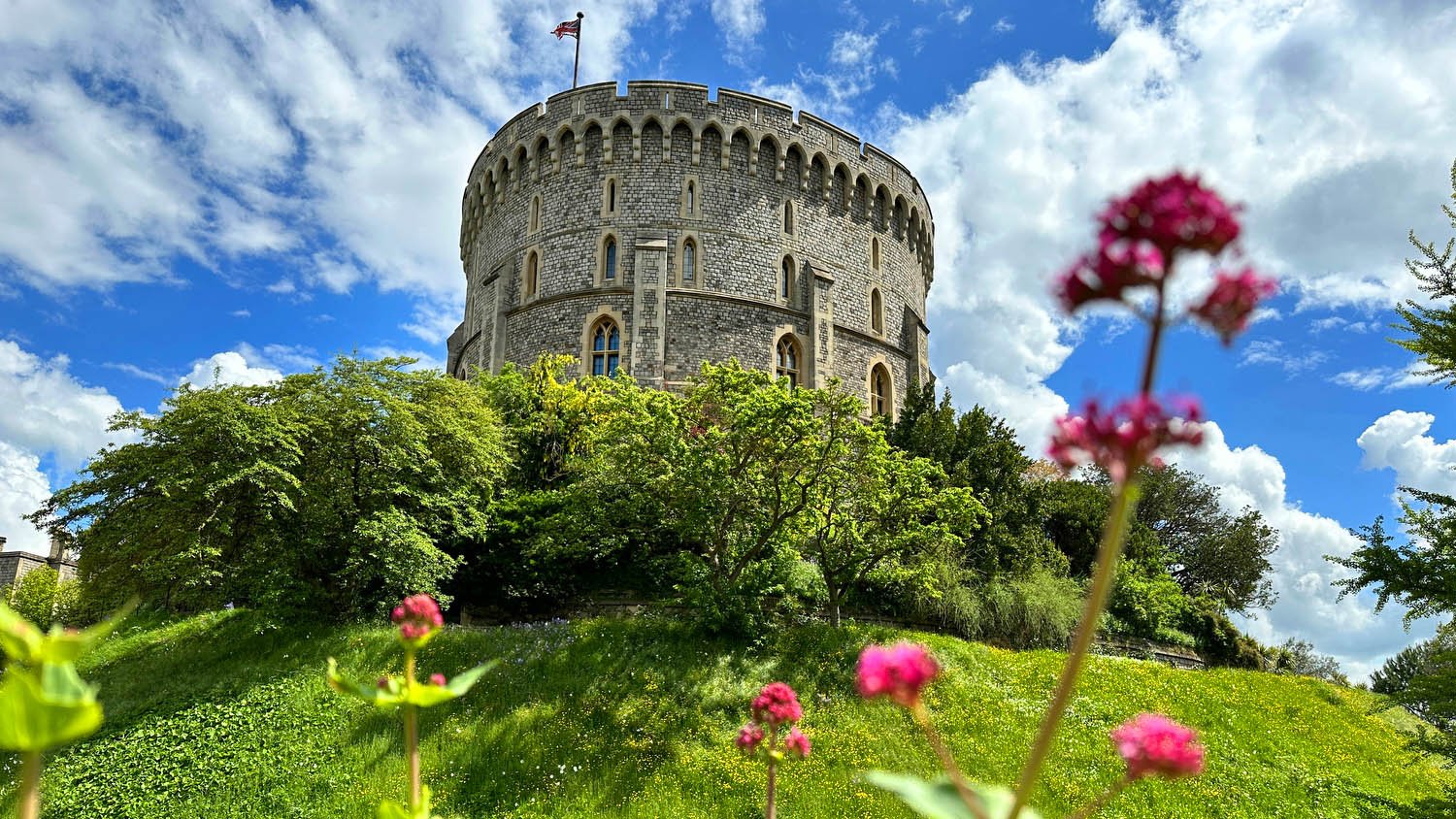
The Round Tower at Windsor Castle.
Windsor. Maybe the best day trip from London. Windsor Castle is the longest occupied royal residence in the world, and the town is full of history, pubs, and small-town charm. It is close and simple to reach. See our Windsor Castle guide.
White Cliffs of Dover. Spectacular and iconically British. The clifftop walk is one of the best in the UK, with views across the Channel to France on a clear day. Best in nice weather. Read our White Cliffs of Dover guide.
Brighton. A vibrant seaside city about an hour by train. Think the quirky Royal Pavilion, the North Laine shops, and a lively pebble beach and pier. Here is our Brighton day trip guide.
Greenwich. Not really a day trip, since it is part of the city, but taking an Uber Boat there feels like a proper adventure. Read our guide to Greenwich.
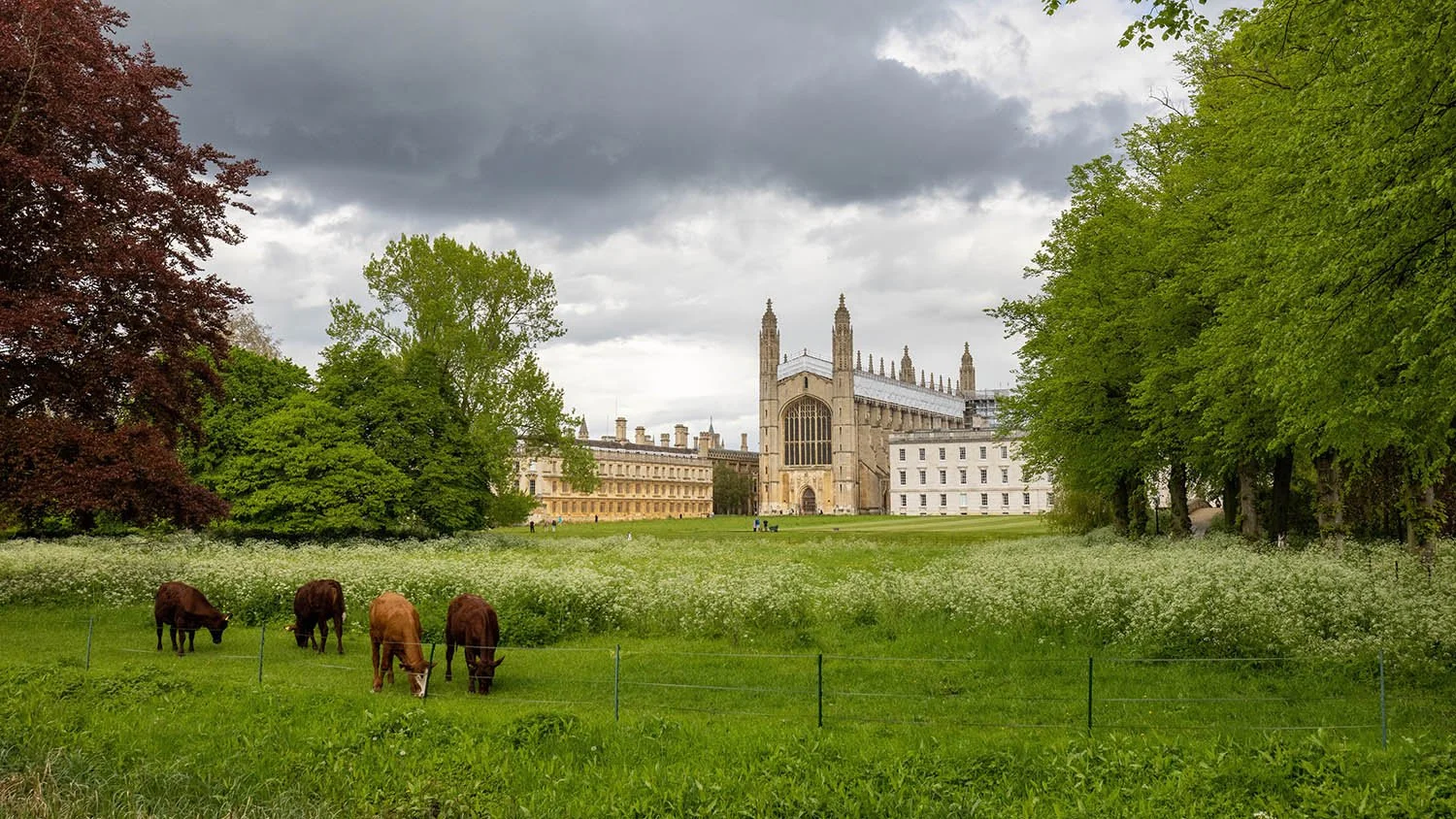
Cambridge. If we had to pick just one for a first time visitor, this is it. Easy to reach, and it does not eat the whole day. Cambridge looks like a movie set, except it is real. We took a walking tour and would tell you to do the same to make the most of it. See our day trip to Cambridge.
For the full roundup, see our day trips from London by train guide.
There are many great organized day trip tours available: you can find many here on Viator.
A beautiful view in Cambridge.
Food and drink
Years ago London had a reputation for dull food. That is simply not true anymore.
You can find anything here, from a tasting-menu dinner to a sausage roll to go. London is one of the most international cities on earth, so nearly every cuisine is covered.
The British classics hold their own too. Nothing beats bangers and mash after a long day on your feet. The food markets are worth seeking out too, from Borough to Camden.
No trip is complete without a visit to a pub. That is pure British culture at its best. They are everywhere, and we mean everywhere.
A few notes on ordering. Many pubs have a dining area with table service. Look for a sign that says something like "wait to be seated." It might be upstairs, off to one side, or in the back.
If you are not in a served area, you order at the bar. Get up, walk over, and order your food or drinks from the bartender. You pay when you order, not after.
Every pub is a little different. Everything is usually well marked with signage, so do not overthink it.
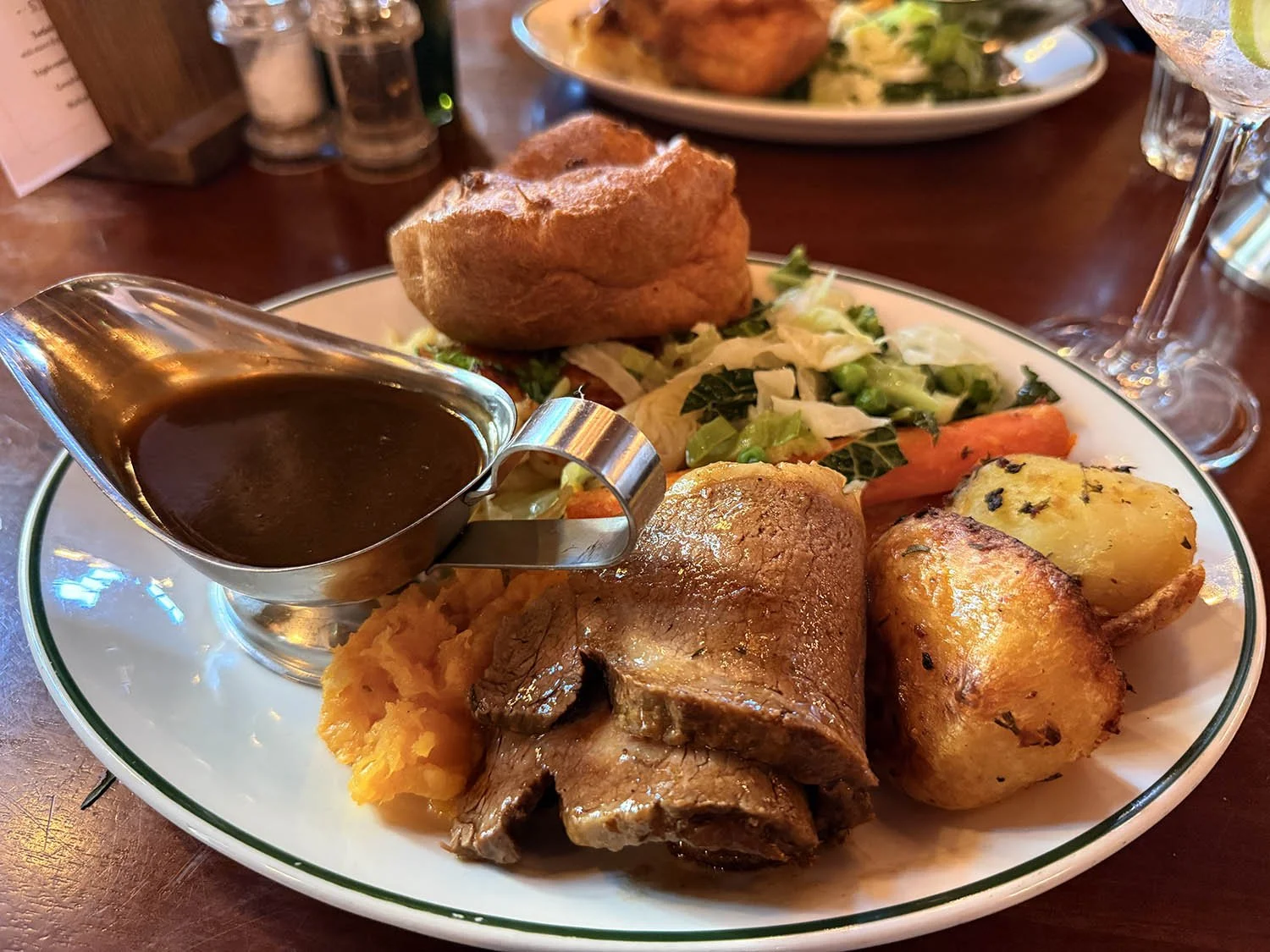
Our Sunday Roast at a London pub.
|
Royal London
Buckingham Palace · Changing of the Guard · Kensington Palace · Royal Mews · Horse Guards Parade · Westminster Abbey
Markets and Neighborhoods
Plan Your Trip
|
Historic London
Tower of London · Tower Bridge · Houses of Parliament · Churchill's War Rooms · The City of London · Greenwich
Parks, Gardens and Photo Spots
Day Trips from London
|
Frequently asked questions
Do Americans need a visa to visit London?
Not a visa, but you do need a UK ETA. It is an online travel authorization, about £20, good for two years. Apply on gov.uk or the UK ETA app before you fly. We keep ours in the app and check it before each trip.
How many days do you need in London for a first visit?
Most first-timers are happy with three to four full days. That covers the royal sights, a museum or two, and time to wander. Add a day or two if you want a day trip like Windsor or Cambridge.
Is London expensive?
It can be, but it does not have to be. Hotel prices swing widely, and you can find good value if you book early. Many of the best museums are free. Contactless caps your daily transit cost automatically.
Do I need an Oyster card, or is contactless fine?
Contactless is fine. Tap a credit card or your phone on the Tube and buses. There is no need to buy an Oyster card for a normal trip. Just use the same card all day so the daily cap works.
What is the best area to stay for a first trip?
Somewhere central and near a Tube station. Westminster puts you by the big sights. Covent Garden is lively and close to the theaters. We have loved South Kensington, near the free museums.
When is the best time to visit London?
Spring and fall bring nice weather and lighter crowds. Summer is busy, but the long evenings are wonderful. Winter is quiet and cheaper (but not so at the Christmas season), with shorter days. We honestly enjoy all of them. There is no “bad time” to be in London!
When does the Changing of the Guard happen, and do I need tickets?
It is free, and no tickets are needed. The full ceremony is usually Monday, Wednesday, and Friday at 11am at Buckingham Palace. The schedule can change, so check the Household Division site. Arrive about 45 minutes early for a good spot.
About the Authors

|
John and Debbie O'Boyle are the team behind The Empty Nest Explorers. John is a professional photographer whose work has been published by The New York Times, NBC News, and Getty Images. He is a member of the American Society of Media Photographers, has been part of a Pulitzer Prize-winning team, and has received two New York Emmy nominations. Debbie is a writer and photographer with 30+ years of experience, formerly with The Star-Ledger and NJ.com. Together, they create in-depth travel guides for couples and empty-nest travelers who want to make the most of every destination. |
Some well reviewed London activities:
Our London travel posts:




London was the first European city we visited, and we keep going back.
Here is everything we have learned to make your first trip go smoothly, from the ETA and the Tube to where to stay and the best day trips.