
Travel Insurance for Mexico: Gang Violence, Hurricanes, and What Is Actually Covered
I used to think travel insurance was about lost luggage and delayed flights. The pandemic and recent violence at popular destinations have changed that.
In the past few years, Debbie and I have purchased standalone travel insurance, mostly for medical coverage, for trips to very safe countries like England and France.
If you’re traveling to Mexico, especially during periods of cartel violence or hurricane season, here’s what actually matters.
Why Travel Insurance Matters Now
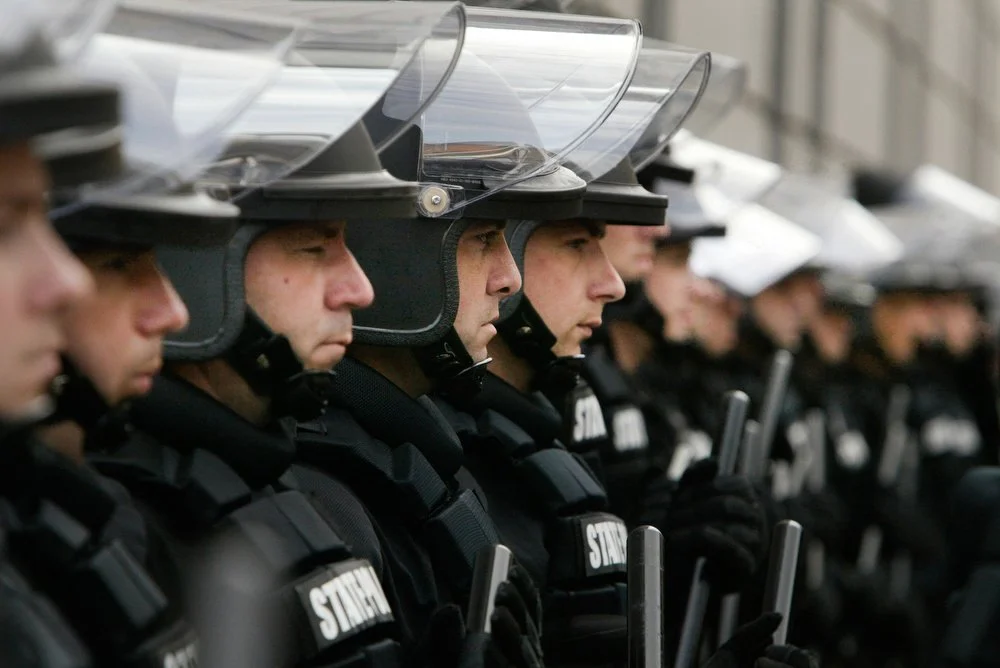
This photo is from my days as a newspaper photographer. All photos by John O’Boyle / The Empty Nest Explorers
Recent drug cartel violence in Puerto Vallarta and other parts of Mexico has left a lot of travelers asking uncomfortable questions:
Will travel insurance cover a hotel cancellation if things suddenly feel unsafe?
What happens if a rental car is damaged during unrest?
Does a government travel warning automatically void coverage?
None of this felt urgent to me ten years ago, but now the parts of travel insurance policies I used to ignore are suddenly the parts that matter most.
What Travel Insurance Actually Covers (Credit Cards vs. Policies vs. CFAR)
TL;DR — What You Need to Know
- Most travel insurance policies do not explicitly cover cartel or gang violence.
- Credit card rental car insurance often excludes damage tied to unrest or organized crime.
- Hurricane coverage only applies if the policy is purchased before the storm is named.
- Travel advisories usually trigger coverage only if issued after you buy insurance.
- Terrorism benefits rarely apply to cartel violence due to official classification rules.
- For higher-risk destinations, CFAR and Primary Medical Coverage matter most.
The Biggest Myth: “Comprehensive” Covers Everything
Most travelers assume that if a policy is labeled “comprehensive,” they’re protected from anything that goes wrong. In reality, nearly all standard travel insurance policies—whether from premium credit cards or stand-alone insurers—contain broad General Exclusions.
These often include:
War, rebellion, or insurrection
Civil disorder, riots, or unrest
Criminal or organized crime activity
Cartel violence is rarely listed explicitly as a covered peril. Claims usually hinge not on what happened, but on how the insurer classifies it. That distinction becomes painfully important only after something goes wrong.
Rental Car Damage in Mexico: Where Most Claims Fall Apart
Credit Card Rental Insurance (CDW)
Premium cards like Chase Sapphire Reserve and Amex Platinum include rental car coverage, but that coverage typically excludes losses caused by:
Hostilities of any kind
Civil unrest or riots
Criminal activity tied to organized violence
If your rental car is damaged during a roadblock, arson incident, or shootout, the credit card administrator may deny the claim—especially if the event is linked to unrest rather than simple theft or vandalism.
All this used to be crazy until this week, when I saw damaged cars on the news coverage of gang violence in Puerto Vallarta.
The Rental Company Insurance (Yes, the Expensive One)
I used to roll my eyes at the rental desk upsell. I would rely entirely on my credit card insurance and decline everything else.
I don’t do that anymore.
Rental companies are increasingly aggressive about damage claims, and many now use AI scanners that flag even tiny dings. Arguing a damage dispute from another country is frustrating at best.
In higher-risk destinations, the rental agency’s full insurance package is often the safest option, even if it feels overpriced, because the rental company is far more likely to absorb the loss instead of forcing you into a months-long claim battle.
What Travel Insurance Actually Covers (Credit Cards vs. Policies vs. CFAR)
| Scenario | Credit Card | Stand-Alone Policy | CFAR |
|---|---|---|---|
| Rental car damaged during unrest | ❌ Usually excluded | ⚠️ Depends on classification | ❌ Not applicable |
| Cancel due to safety concerns | ❌ No | ❌ No | ✅ Yes (50–75%) |
| Hurricane cancellation | ⚠️ Limited | ✅ Yes (if unnamed) | ✅ Yes |
| Medical care in Mexico | ⚠️ Very limited | ✅ Yes | ❌ Not medical |
Trip Cancellation and Interruption: The Advisory Trap
Government Travel Advisories
Many stand-alone travel insurance policies allow cancellation if a Level 4 “Do Not Travel” advisory is issued after you purchase the policy.
The catch is timing:
If the advisory is already in place when you buy insurance, many policies consider this “traveling against advice.”
In those cases, coverage may be limited or void unless the policy explicitly states otherwise.
Credit card insurance rarely honors cancellations based on travel advisories. This is one of those details that only shows up in the fine print.
Terrorism Coverage (and Why It Rarely Applies)
Some stand-alone policies include terrorism benefits, and on paper, this sounds reassuring.
In practice, it rarely helps in Mexico.
For terrorism coverage to apply, the incident must usually be officially certified as a terrorist act by a recognized authority. Cartel violence is almost always categorized as criminal activity or civil disorder instead. If it’s labeled “criminal unrest,” the terrorism benefit doesn’t apply—no matter how frightening the headlines look.
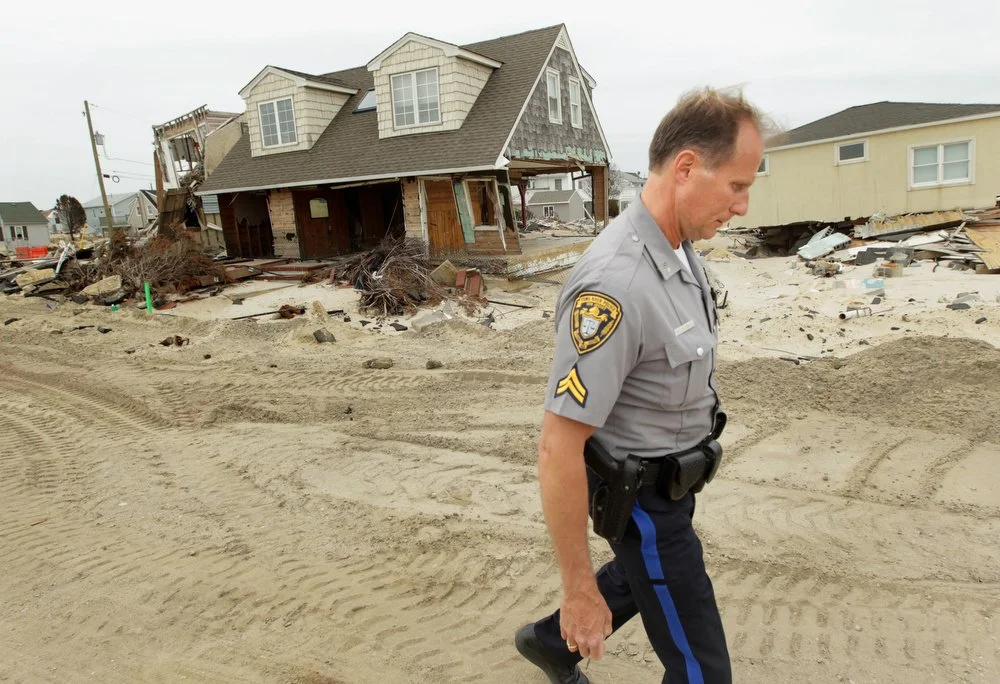
Another photo from my newspaper photography days. A police officer walks past damaged homes after Hurricane Sandy hit the New Jersey shore.
Hurricanes in Mexico: Where Timing Is Everything
Hurricanes deserve their own section, because this is where a lot of travelers get burned.
When Hurricane Coverage Applies — and When It’s Already Too Late
- Before storm is named: ✅ Hurricane coverage applies
- After storm is named: ❌ Storm becomes a known event
- After warnings issued: ❌ Too late to buy coverage
- Hotel damaged or evacuation ordered: ✅ Trip interruption may apply
The Foreseeability Rule
Travel insurance only covers unforeseen events. With hurricanes, “foreseeable” is determined by when the storm is officially named.
Most policies require you to purchase insurance at least 24 hours before a storm is named.
Once a storm has a name, it becomes a known event.
Any policy purchased after that point will not cover losses related to that specific storm.
Strength doesn’t matter. Naming does.
Personal note - during my newspaper photography days, I covered the Republican National Convention in Tampa. Conventions are always fun to photograph, but unfortunately, a hurricane was heading straight to Tampa.
I was staying at a beautiful hotel on the beach, but the thought of losing the rental car was disturbing.
Luckily, I bought the full insurance before it became a named storm, and even better, the storm veered away from Tampa.
What Actually Triggers a Cancellation
Bad weather alone isn’t enough. To qualify for a full cancellation or interruption benefit, one of the following usually must occur:
Your hotel becomes uninhabitable (loss of power, water, or structural damage)
Local authorities issue a mandatory evacuation that includes your accommodations
Your airline or cruise line ceases operations for a defined period, usually 12–24 consecutive hours
A three-hour delay or a rainy forecast won’t cut it.
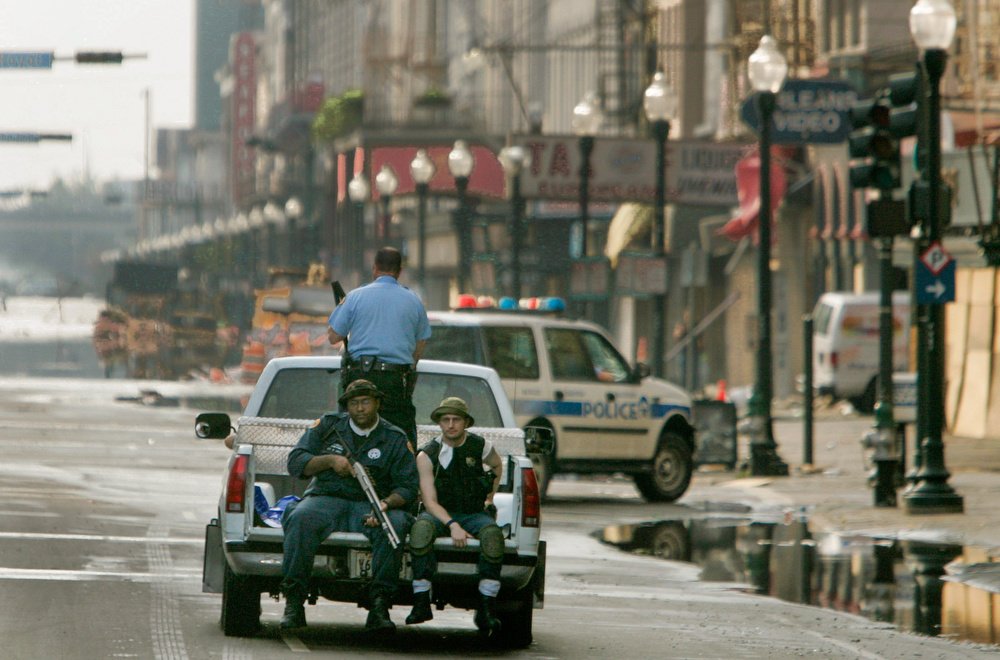
Police officers patrol in New Orleans after Hurricane Katrina. Photo by John O’Boyle / The Empty Nest Explorers
Trip Interruption vs. Trip Delay (Already on the Ground)
If you’re already in Mexico when a storm or emergency hits, the distinction matters:
Trip Interruption reimburses you for unused portions of your trip and may cover one-way transportation home.
Trip Delay covers extra hotel nights, meals, and essentials if you’re stuck due to airport closures or canceled transportation—usually capped at around $150–$200 per day. Pro Tip - Remember to keep documentation and receipts.
Medical Coverage: The Risk Most People Underestimate
U.S. health insurance is generally not accepted in Mexico. Private hospitals often require proof of payment or a guarantee of coverage before providing non-emergency treatment.
Primary vs. Secondary Medical Coverage
Secondary coverage (common with credit cards) means you pay out-of-pocket and wait for reimbursement.
Primary medical coverage pays the hospital directly.
In higher-risk destinations, primary medical coverage isn’t a luxury. It’s what determines whether care starts immediately or after paperwork and deposits.
COVID, Quarantines, and Illness Coverage
By 2026, most major insurers treat COVID-19 and similar illnesses as standard sicknesses:
Medical treatment is usually covered.
Trip cancellation is typically covered if you have a confirmed diagnosis and a doctor certifies you are unfit to travel.
The limits:
Rising case numbers alone are not a covered reason.
Quarantines must usually be ordered by a physician or government authority and require strict isolation.
Voluntary self-quarantine rarely qualifies for reimbursement.
Choosing Insurance Based on Risk
Low-Risk Destinations
Credit card insurance may be sufficient if:
Healthcare is high-quality and affordable
Trip costs are moderate
You have no major pre-existing conditions
Even then, I still buy a basic medical-only policy. Medical coverage is the one risk that follows you everywhere.
Higher-Risk Destinations (Including Parts of Mexico)
This is where fine print really matters. Two features rise above everything else:
1. Cancel For Any Reason (CFAR)
Standard insurance only pays if you cancel for a covered reason—things like illness or a family emergency. Feeling unsafe doesn’t count.
CFAR:
Allows you to cancel for any reason
Typically reimburses 50–75% of non-refundable costs
Must usually be purchased within 14–21 days of your first trip payment
Often requires insuring 100% of prepaid trip costs
It’s expensive, but it’s the only true escape hatch.
Should You Buy Cancel For Any Reason Insurance? A Quick Reality Check
| Your Situation | CFAR Worth It? |
|---|---|
| Low-cost domestic trip | ❌ Probably not |
| Non-refundable international trip | ⚠️ Maybe |
| Travel to higher-risk destination | ✅ Yes |
| You want flexibility over max refund | ✅ Yes |
2. Primary Medical Coverage
In higher-risk areas, hospitals are businesses first. Direct payment from an insurer can mean the difference between immediate treatment and delays.
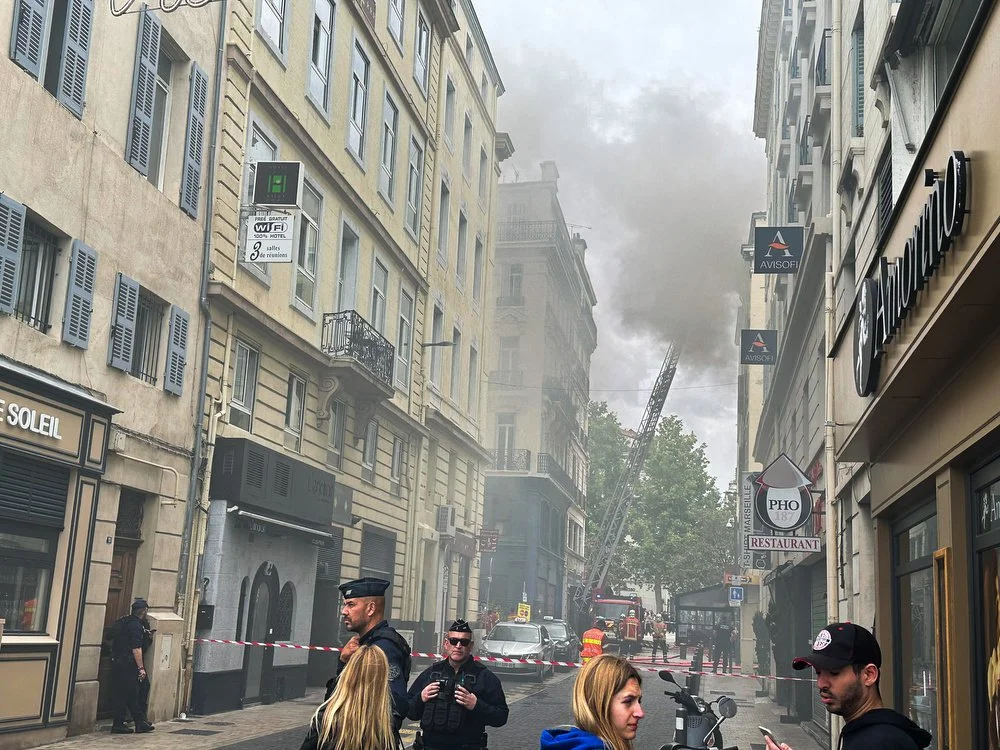
From the “You Never Know” file. This was the scene as we arrived at our hotel in Marseille, France. A fire across the street from our hotel forced us to find a new hotel. The protections on my Amex Platinum card allowed me to get a refund. If you are interested in Marseille, here’s our blog post: What to do in Marseille: visiting the vibrant port city
Some important traveler info websites:
1. The Main Mexico Travel Advisory
2. Smart Traveler Enrollment Program (STEP)
Sign up for this program here. It’s free and allows the Embassy to text you if a crisis breaks out while you are on the ground.
3. National Hurricane Center (NHC)
4. CDC Travel Health Notices for Mexico
Frequently Asked Questions: Mexico Travel Insurance
1. Does travel insurance cover cancellations due to cartel violence?
Generally, no. Most standard policies categorize cartel activity as "civil unrest" or "criminal acts," which are common exclusions. To be covered for a cancellation due to safety fears, you must have a Cancel For Any Reason (CFAR) rider. Without CFAR, you can usually only cancel if there is a certified "Terrorist Act" or if your hotel is physically destroyed.
2. If the U.S. State Department issues a travel warning, can I get a refund?
Only if the warning is a Level 4 "Do Not Travel" advisory and it was issued after you purchased your policy. Many stand-alone policies (like Tin Leg or Allianz) include this trigger. However, if the area was already under a high advisory when you booked, you are "traveling against advice," and the warning likely won't trigger a refund.
3. What is "Security Evacuation" coverage, and do I need it for Mexico?
Security Evacuation is a specialized benefit that pays for a private security firm to extract you if a city becomes unsafe due to political violence or cartel blockades. Following the unrest in Jalisco, this is highly recommended for Puerto Vallarta travelers. Standard medical evacuation only moves you if you are sick; security evacuation moves you if the environment is dangerous.
4. Will my credit card insurance cover damage to a rental car from a shootout or fire?
Likely not. Most premium credit cards (Chase, Amex) provide "Collision Damage Waiver" (CDW), but their fine print explicitly excludes damage caused by "hostilities," "insurrection," or "civil commotion." If your car is caught in a cartel blockade or arson incident, the credit card company will likely deny the claim. Buying the rental agency's full coverage at the desk is safer in high-risk zones.
5. Can I buy travel insurance after a hurricane is named?
No. Once a storm is named by the National Hurricane Center, it is a "foreseen event." Any policy purchased after that point will exclude coverage for that specific storm. To protect your trip from a hurricane, you must buy your policy while the weather is still "clear" on the charts.
6. Does Medicare or U.S. health insurance work in Mexican hospitals?
Rarely. Medicare does not provide coverage outside the U.S., and most private U.S. plans only reimburse for emergencies after you pay out-of-pocket. Because many Mexican private hospitals require a cash deposit or a "Guarantee of Payment" upfront, having Primary Travel Medical Insurance is essential to ensure you receive immediate care without a massive credit card charge.
Final Takeaway
In lower-risk destinations, credit card coverage may be enough. In higher-risk places, it usually isn’t. Paying more upfront isn’t fun, but being stuck overseas arguing definitions and exclusions is far worse.
Disclaimer
This article is for informational purposes only and does not constitute insurance, legal, or financial advice. Travel insurance policies vary by provider, plan, and jurisdiction. Always review the full policy wording and confirm coverage directly with the insurer before purchasing.
This post was researched and written by John O'Boyle of The Empty Nest Explorers.
John is a professional photographer and videographer whose work has been published by the New York Times, NBC News, and Getty Images. He has been part of a Pulitzer Prize-winning team and nominated for New York Emmy Awards. You can learn more about John and the Empty Nest Explorers here.
Other travel posts you might like:













KLM let us add two nights in Amsterdam on the way to Scotland, at no extra airfare.
Here is how the stopover works, what we did without the big museums, and which airlines run the best programs.